Here’s an interesting new tool from the R&D labs at The New York Times. It’s a chronological graphing tool that maps search terms against dates from 1860 until the present day.
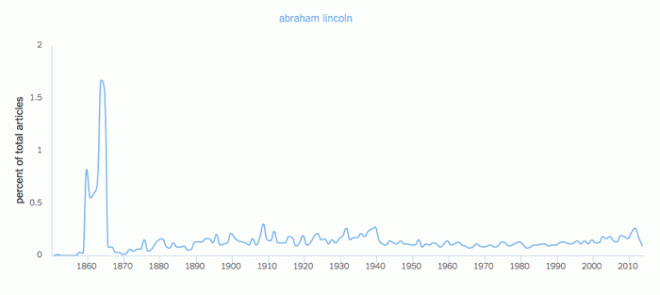
So: Abraham Lincoln—he appeared in 1 or 2 percent of all NY Times articles during his presidency (and in its aftermath), and long-term, he’s been a fair stable presence.
George Washington preceded The New York Times, but the newspaper has been more interesting in George than in Abe about a century and a half. Lots of interest in the 1930s (I wonder why), but a good solid plater through the second half of the 20th century. Tall man, long shadow.

According to The New York Times, Teddy Roosevelt’s big stick didn’t produce much long-term interesting, so I tried FDR instead. I suspect there’s something wrong somewhere—FDR should have been represented with much more coverage in the 1930s and 1940s than the graph allows. I guess that’s why this is still an R&D effort—George should not outpace FDR during the Great Depression and the Second World War.

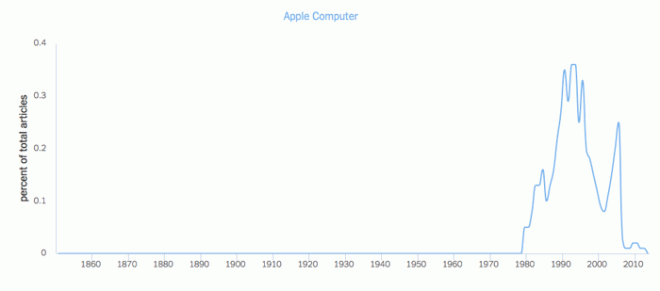
Apple Computer made a splash in the 1980s, and seems to have peaked in the early 1990s, with the combination of iPhone and iPad causing a second peak just a few years ago.
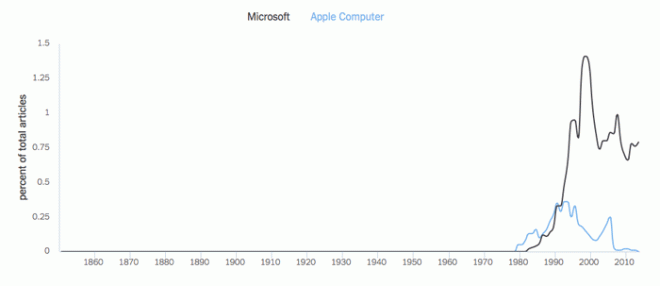
How does Apple compare with Microsoft? Not even close—Microsoft’s coverage was much, much greater. If the graphs are correct—which, again, I question because Apple has been so prominent in the past two or three years, especially when measured against the snooze of Microsoft news.
Add Google to the mix (green line) to the mies, and things look about right. The orange line is IBM, which was, somehow, interesting around 1865 or so, more interesting than any time in the 20th century.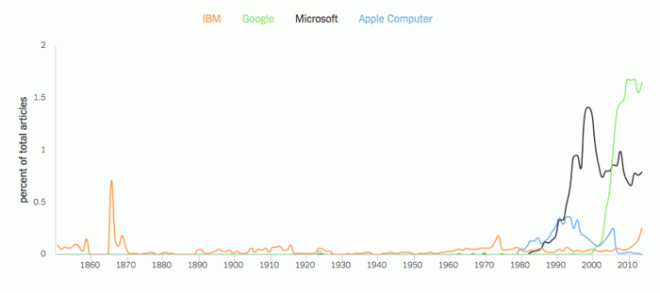
These are percentages—the more articles the Times published, the less value for each individual article. So what about the raw numbers? Just for fun, I added Teddy and also John F. Kennedy. There isn’t a huge difference between the percentages and the raw numbers, not for this set of searches, but it’s worth flipping the $ / # switch for every graph to see anything there is to see.
So: next time there’s a rainy afternoon and you don’t feel like doing anything useful (or you’re deep in analysis of historical trends), The New York Times Chronicle is a tool worthy of your time and attention. And, by the way, if you click on any point on any graph, the Times provides a list of relevant articles that you can read online. For even the most casual researcher, this is a terrific tool, one that would be SO MUCH BETTER if every newspaper followed the lead of the NYT, and then shared their databases for combined graphing! But this is a wonderful first step.
 Three across, seats A, B, and C in a exit row. All three of us reading a book. The ten year old girl who happened to sit in the window seat: a fat novel by Rick Riordan. My wife: The One Hundred Mile Walk, now being released as a Helen Mirren motion picture. Me, a terrific long novel by New York City newspaper legend Pete Hamill, who writes about his city with street smarts and an appealing sense of mysticism.
 So what are we supposed to do about this? How are we supposed to think about 2025? Some of the answers are in a report prepared by the

 On Tuesdays and Wednesdays, Bob Mankoff rejects most everything he sees. He works as the cartoon editor at the New Yorker, a magazine whose sense of cartoon humor is famous, but extraordinarily difficult to define. This is not a new problem. In fact, the New Yorker has always suffered from a rough case of not being able to explain itself (the problem goes back to the 1920s when Writer’s Digest asked the New Yorker’s editors to advise writers interested in the magazine; in essence, the New Yorker editors could not).
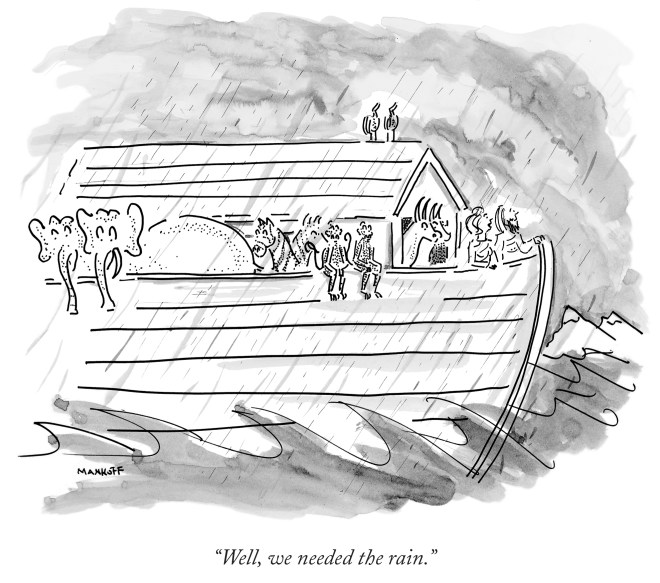 “How About Never – Is Never Good for You?: My Life in Cartoons” is a kind of small-scale coffee table biography, half text and half cartoons. As with the New Yorker magazine, it’s difficult not to be attracted to the cartoons, but I was good: I read the whole book including all of Mankoff’s confessional text and all of his chosen cartoons. What surprised me: only a few of the cartoons made me smile or laugh. And that got me to thinking about how difficult it must be, to select from the stack of 500 cartoons from regular contributors and an equal number from wannabes. Mankoff writes, “eventually, I cull the pile down to fifty or so, which I’ll take to the Wednesday afternoon cartoon meeting…” where the stack will be winnowed down to just seventeen, maybe eighteen cartoons that will be published in the magazine. (There are, and have always been, so many rejects, Mankoff started a new venture called Cartoon Bank to give exposure to the rejects—and earn some money for himself [before he joined the magazine as cartoon editor] and for other working cartoonists.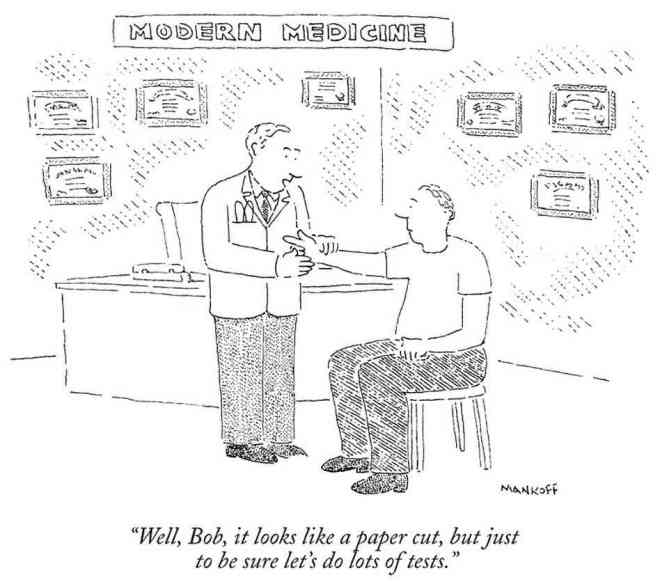


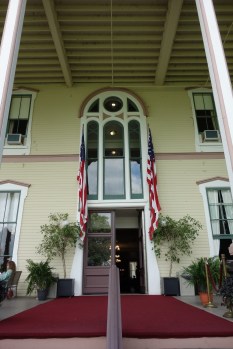 Yesterday afternoon was busy with reading on the Hotel Atheneum’s wraparound porch, studying the lake, selecting the perfect rocking chair, becoming distracted by what sounded like a full orchestra nearby. Wandering is what folks do on a summer’s day at Chautauqua, so I followed the music to the amphitheater where a rehearsal of Madame Butterfly kept me and perhaps two hundred other people busy for an hour. On Saturday night, the theater will be filled with nearly four thousand people, mostly residents who either spend their summers here, or, at least, several weeks each year. I was reluctant to linger: I wanted dinner before heading to the theater. Back at the
 Me? I’m off to Sol Messinger’s “Yiddish Language Conversation” back up near the main road at the relatively new (few Chautauqua structures are new) Emerson Jewish Life Center, built in 2009. Sol is sitting at a conference table with four or five people, interviewing each of them, each of us, about our family history. He is speaking in Yiddish. I understand only a bissel—the tiniest portion—but just the act of listening is joyful. Here and there, one of the people at the table translates key ideas for me. The conversation drifts in and out of English. The people are not young. I wonder what will happen to Yiddish, but only for a moment. My head is filled with ideas, but the yellow broadsheet—the detailed schedule for this Chautauqua week, contains far too many things for me to do, so I keep moving, grab a quick quiche at the informal lunch place above the bookstore (not wonderful: Chautauqua’s food for short-term visitors is a weak link), and manage to get to Philosopher’s Hall in time to get a seat just on the perimeter. It has been raining, so some seats are wet. I sit on my Daily, my bun is a little wet for a while, but I quickly forget my personal issue when the speaker begins. He’s compelling—
 No time to linger. A Chautauquan keeps busy, does not lollygag (except when the day is beautiful and there is a book to be read under a century-old tree while children are racing around on bicycles and otherwise living a perfect small town American life). That glimpse of what America might have been is just that—a glimpse—for there is music to be enjoyed in one of the old churches. An hour of art songs performed by students from Chautauqua’s music school on the north side of town (no time to visit, but I understand practice sessions and rehearsals are open, and a bit like Tanglewood). Then, at 5:00PM, I wander back to the hotel for a daily wine tasting. I was invited by my new friends at last night’s Community Table. Mostly, my contribution to the table of six chatty people was recommendations of novels by Reynolds Price because one of the women was interested. Then, we headed down to dinner in the hotel’s main dining room. Steak dinner. Fresh cut.
 Next morning, it’s up at 7:00 am for the Farmer’s Market, then a spiritual bit, then a visit to the Methodist House (many religions, many houses, used for residents and for small events) for a July 4 lecture about the specific wording of the Declaration of Independence. I intended to stay for just a few minutes, but stayed for an hour and learned a lot about what Thomas Jefferson wrote and what Richard Henry Lee wrote. Half of the people in the audience seemed to know the speaker as a friend. I suspect he was a long-time Chautauqua resident or visitor, and that revealed one more piece of this fascinating puzzle: the people who attend Chautauqua are not just visiting because the lake is pretty in July. They attend because the combination of leisure and learning, family and fellowship, curiosity and creativity is, for nine special weeks every summer, available here and almost nowhere else.

 Privacy: As part of our ongoing commitment to respecting your privacy, we won’t use your documents, photos or other personal files or what you say in email, chat, video calls or voice mail to target advertising to you.
 Transparency: We updated our Code of Conduct so you can better understand the types of behaviors that could affect your account, and added language that parents are responsible for minor children’s use of Microsoft account and services, including purchases.
 Simplicity: We tailor our privacy statements for each of our products to help make it easier for you to find the information that is important to you
 Much as the 1960s was associated with independent thinking—and free love, for they often come together—so, too, were the 1920s. Before that, in the 1910s, Greenwich Village began to take shape as a neighborhood Bohemia. Today’s hipsters seem to be a pale counterpart, in part because they have money in one pocket and the internet in the other. A century ago, “Bohemians” (a bundle of misnomers generally not associated with the Czech region) “flocked to avant-garde exhibitions and modern dance performances, and bought paintings, lithographs, and photographs, helping the real bohemians pay the rent and get public attention…”