Welcome to Silicon Alley (Hollywood 3.0)


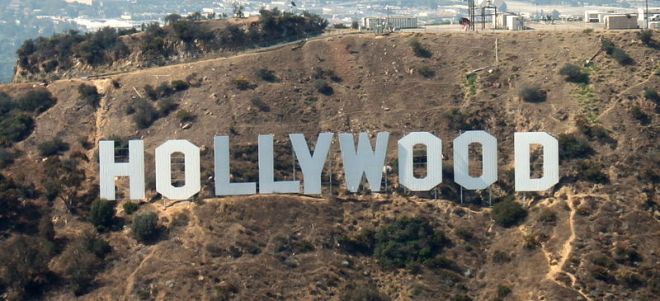
Aerial_Hollywood_SignThe next big thing has already begun… on Silicon Beach. If the term is unfamiliar, think in terms of a third generation’s reinvention of Hollywood (with a far larger SoCal geographic area)–first came movies, then TV, now Internet. This fast-growing community makes use of the (hungry) local creative community, welcomes investment from 20th century moguls, and offers instruction and consulting to old school Hollywood studios.

Read all about in this article, published in Variety just before Thanksgiving.

It’s official: everything has changed.


I just reviewed an astonishing PowerPoint from Mary Meeker at Kleiner Perkins. It contains a thorough explanation of our rapidly changing, and changed, world. From mobile phones and to the Rose Bowl, newspapers to cash registers, borrowing and lending money to door locks, hiring to education, our contemporary wave of technology  has transformed the world.

The deck is 88 pages long, and worth all of the time you will spend thinking about it today, this week, this year.

I will add to this post tonight. Right now, it’s off to work, transforming an old TV station into something entirely new. (Thanks, Mary, for the encouragement. And for the pile of useful, persuasive data.)

Your New TV: The Ideal Screen Dimensions

Watching television in 1958.

Buying a new television set is not easy. Some stores tweak the settings of their TV sets, some tweak the lighting, some show the sets with no adjustment whatsoever, and others optimize to make each set look great. Of course, all of this is utter nonsense because no store can reproduce the environment where you will be watching at home. The next time you visit Best Buy, do not make any judgment about brightness, color rendition, or other qualities of the image–whatever you see in the store, it won’t be what you see at home.

There is one thing you can do in the store, of course. You can stand in front of the screen and wonder whether the set will be too big, too small, or just right for your room. Actually, you probably shouldn’t stand in front of the screen. Instead, with the set at eye level (not mounted six feet above your head), you can make a reasonable judgment. Here’s how.

Before you leave home, grab a tape measure. You’ll want one person to sit down in the chair where they are most likely to watch TV. Measure from the tip of the person’s nose to the place you intend to place the screen. In most American living rooms, this dimension will be about 10 or 12 feet. In smaller rooms, it might be 7 or 8 feet. Just for the sake of example, let’s assume the measurement equals 11 feet. Jot down this calculation:

  • Feet = 11
  • Inches per foot = 12
  • Inches from nose to screen = 132
  • Divide by THREE = 44 inch screen maximum
  • Divide by FOUR = 33 inch screen minimum

Try that again, this time with a larger distance to the screen, say, 16 feet. That’s pretty far away, larger than most U.S. living rooms. Here’s how the numbers look:

  • Feet = 16
  • Inches per foot = 12
  • Inches from nose to screen = 192
  • Divide by THREE = 64 inch screen maximum
  • Divide by FOUR = 48 inch screen minimum

Sure, we’re Americans! We love our television screens!! We want them as large as possible!!! (You’ll find article after article insisting that bigger really is better. For some people, that’s true. For most people, nose-to-screen distance is not more than 9 feet–not 11 or 16 feet as in our illustrations above). Add 10 or 20 percent if you’re VERY serious about sports or movies. Add 50 percent if your entire life revolves around a home theater.

No doubt. Certainly, many retailers would certainly prefer that you buy a set that costs $2,000 or so instead of $1,000 or less. For most principal viewing conditions, a TV in the 46-55 inch range will be suitable. For a bedroom, the answer is probably under 40 inches.

Hey, one more thought. There’s a lot of confusion about LED vs. plasma screens, and if you’re not lucky enough to connect with a knowledgable floor sales person, you could make a poor (and heavy) decision in the wrong direction. LED sets are bright and ideal for rooms where there’s lots of ambient light. Good for spots, not so great for movies because their color rendition is, well, extended and somewhat unnatural. Plasma sets are not as bright, but they do a better job with skin tones and lifelike color rendition. But they run hot, use more power than LED sets, and tend to be heavier, too. If your room has any significant ambient light (coming from windows or fixtures), you may be spending a lot of time fighting reflections. For several years, plasma sets were not popular, but a renewed focus on this technology, especially from Panasonic and Samsung, has resulted in plasma screens now widely available, even from big box retailers.

Before you buy, study the reviews. Editorial reviewers have the benefit of seeing many sets under the same (simulated real world) viewing conditions, so their comments are often more meaningful than the advice of people on the sales floor. I think cnet does an especially good job with TV reviews.

One more thought. I’m sitting here writing on a 21-inch iMac, a computer whose screen I regularly use to watch videos. The screen is not much more than a foot from the tip of my nose, so there’s no way that my formulas make any sense for those of us (lots of us) who watch videos, and the occasional movie, in this way. That makes me wonder whether we’re again crossing the great digital divide to some new way of thinking about the relative sizes of humans and their screens. Maybe our next screens will seem small at 100 inches. Maybe one wall of every room will be a TV screen. Heck, maybe every wall of every room will be a screen. Lots to think about!


Five Rules for Happiness

20121111-225133.jpgRayChambers is the first link in the chain. Ray has been an inspiring force in New Jersey generally, and in Newark, specifically. (I’ve seen it first hand, both at the New Jersey Peace Education Summit and in the midst of a New Jersey Network gala).

For LinkedIn CEO Jeff Weiner, Ray has been a mentor, and man who passed on five rules for happiness that Weiner now passes along in today’s New York Times.

  1. Live in the moment.
  2.  It’s better to be loving than to be right.
  3. Be a spectator to your own thoughts, especially when you become emotional.
  4. Be grateful for at least one thing every day.
  5. Every chance you get, help others.
20121111-225216.jpg

Peter DaSilva for The New York Times

When Weiner speaks with students, he adds thoughtful consideration of his own:. He asks students, “Looking back on your own career, what do you want to say you accomplished?” If a student cannot answer quickly and easily, Weiner strongly encourages a thought process leading to an answer.

He adds more advice. His own: “surround yourself with amazing people.” And from MIT Media Lab leader Joi Ito: “maintain a childlike sense of wonder throughout your entire life.”

And, finally, from Einstein: “There are only two ways to live your life. One is as though nothing is a miracle. The other is as though everything is a miracle.”
I prefer the latter. And if you’ve read this far, I suspect that you do, too.

Read the article. It’s a good one.

Media Shift / Cutting the Cable

Although I am probably late to the game, I just discovered two very useful tools. The first is a blog post and the second is the blog itself.

Blog post: 2012 Guide to Cutting the Cable

Blog: Media Shift

One at a time:

The article explains the available hardware and software, then provides several case studies of users who have cut the cable, and ends with a very useful list of other articles on the subject.

The blog is stupendous. Here’s local, national and international news and commentary on shifts in just about every modern media industry. The coverage gets down to the hyper-local level, and also offers an extremely wide view of, say, the recent announcement of a merger between two of U.S. publishing’s giants: Penguin and Random House (the latter wins). That article, and this blog, does what so few do: it provides context. So the article about book publishers looks not only at consolidation’s impact on publishing, but also compares the situation with consolidation in the music industry.

Kudos to PBS for this lesser-known project. I now plan to read Media Shift every day.

Hurricane Hackers – A New Way to Help, or Be Helped

“Hola! Welcome to #HurricaneHackers: a shared space for gathering information and organizing tech+social projects related to Hurricane Sandy.”

“Dear Civic Media fans —

If you’re in a safe, powered, Internet’d place, here’s a great opportunity to contribute to realtime and future work around Hurricane Sandy…

http://bit.ly/hurricanehackers-gdoc

Civic’s “Hurricane Hackers” is collecting ideas and datasets to create tools related to the storm…and already building tools with them. Everything is welcome. Well-developed projects already include a dynamic timeline, a map of livestreams, and an incredible set of hurricane-related resources — both historical and for Sandy.” (from their introductory email)

This pop-up site may become a very useful tool in the next 24-72 hours. It’s a contributory document, a group collaboration to gather relevant links and guidance. The organization behind the project is the Center for Civic Media at the MIT Media Lab. Find it here.


It’s best explained by example. Below, some excerpts (1045AM eastern time on Monday):

—–

Project Brainstorming:

What might we make? Add your own idea, or +1 those you like.

Ways to help

  • SandBag.it: a map of places that need sandbagging, and a way for people to sign up to help sandbag at particular locations.
  • AfterSandy Benefit Parties: when Sandy’s over, have people hold house parties as benefits for people who lose something. Start organizing these early, while there’s lots of attention. Maybe just use MeetUp to do this.
  • CrashPads? Matching people with spare rooms with people who need them?

Sandy Impacts

Apologies for the sometimes-ugly formatting. Cut-and-paste is not always perfect.

More later. Be safe.

Debates Are Ridiculous; Let’s Move On

Associated Press/Pool-Win McNamee – Republican presidential nominee Mitt Romney and President Barack Obama answer a question during the third presidential debate at Lynn University, Monday, Oct. 22, 2012, in Boca Raton, Fla. (AP Photo/Pool-Win McNamee)

A half century ago, the idea of televising a debate between two Presidential candidates was breakthrough thinking. Beginning in 2016, I think we can use our new and emerging media to do a better job, and, presumably, to choose our new leader with greater insight, wisdom, and knowledge.

Let’s begin with some pre-reading materials. During the primary process, each candidate for president should be required to complete and submit a job application. The application should require work history, evidence of compliance with laws (for example, age and place of birth), and so on. Prior to each party’s national convention, each candidate should be required to clearly present his or her platform, in detail, by category, complete with data and factual references (given the dynamic nature of our economy and such, each candidate may revise this document at pre-appointed intervals). Then, each candidate should be required to present the platform by speaking directly to the American public, on television, without interruption. If we’re clever, I’m sure we can come up with a web-based extension of the written and televised presentation. With this mechanism in place, I can easily research where each candidate stands on, say, Syria, or health care. Of course, the people ought to have some digital means of asking questions, and the candidates should provide some reasonable means of answering their questions.

Next up, let’s change our rules regarding the use of television advertising. Whether by law or by policy, candidates should be required to use their commercial airtime to explain their own views, and not to criticize or attack the other candidate (this higher standard should be applied to all elections, at least on television commercials where stations often set policies with regard to acceptable material).

With all of that in place, let’s rethink the debate. Running a grudge match is a waste of everybody’s time, and so is allowing candidates to drift from the questions to their own message points. Candidates are welcome to speechify, but that’s not the purpose of the debates. Instead, I would either eliminate the debates and replace them with one-on-one conversations with everyday people and vetted journalists, or reformat them entirely. Last night’s Bob Schieffer format stopped the candidates from moving around and nearly slugging one another. That’s a start. A quiet, reasoned conversation; mostly, closeups of each candidate so we can study their faces; a journalist who asks the questions and is not overwhelmed by the power of candidates to disobey the rules–this format provides a better opportunity to study the candidates and their presentations. And let’s not call it a debate, or think of it as debate, because we should discourage the unseemly role modeling by potential leaders of the free world. There should be no winner or loser. Instead, the debate ought to be a skillfully moderated conversation by people, each of who believes that he or she can successfully lead the nation and play a very significant role on the world stage. That’s enough for me.

But there’s a piece missing: verification of facts. I’m not very interested in what the network’s commentators have to say about who “won” because the debate should not be reduced to such simple-minded thinking. Instead, immediately following the debate, I’d like to see an intelligent, compelling presentation of what each candidate said, and whether it was factually correct, kinda hazy, or utter nonsense. If the candidates understood that they would be immediately followed by an independent fact-check seen on TV, they would be more likely to curb their fanciful interpretations of fact.

Do we need to see two presidential candidates “go at it” as if they were wrestlers? I think we can do a lot better, and I know we possess the tools and the need to approach the whole intersection between presidential candidates and media. But do we possess the will to shift the entire election process into the 21st century?

Tale of Two Presidents

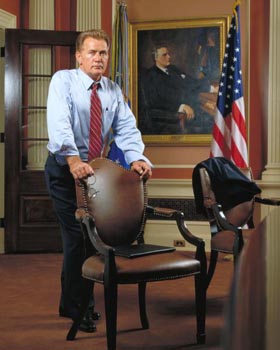
THE WEST WING — NBC Series — Pictured: Martin Sheen as President Josiah Bartlet — Warner Bros. Photo

From this morning’s New York Times, just in case you missed it…Aaron Sorkin mixes real life with his own characters. Even if you’re not much interested in U.S. politics, the dance between reality and fiction is fun.

Two Presidents, Smoking and Scheming

By 

AFTER the debate, I was talking to Aaron Sorkin, who was a little down. Or, as he put it, “nonverbal, shouting incoherently at a squirrel, angrier than when the Jets lost to the 49ers last Sunday without ever really being on the field.”

Aaron was mollified when he learned that President Obama, realizing things were dire, privately sought the counsel of a former Democratic president known for throwing down in debates. I asked Aaron if he knew how the conversation between the two presidents had gone and, as it happened, he did. This is his account.

The lights from the presidential motorcade illuminate a New Hampshire farmhouse at night in the sprawling New England landscape. JED BARTLET steps out onto his porch as the motorcade slows to a stop.

BARTLET (calling out) Don’t even get out of the car!

BARACK OBAMA (opening the door of his limo) Five minutes, that’s all I want.

BARTLET Were you sleepy?

OBAMA Jed —

BARTLET Was that the problem? Had you just taken allergy medication? General anesthesia?

OBAMA I had an off night.

BARTLET What makes you say that? The fact that the Cheesecake Factory is preparing an ad campaign boasting that it served Romney his pre-debate meal? Law school graduates all over America are preparing to take the bar exam by going to the freakin’ Cheesecake Factory!

OBAMA (following Bartlet inside) I can understand why you’re upset, Jed.

BARTLET Did your staff let you know the debate was gonna be on television?

OBAMA (looking in the other room) Is that Jeff Daniels?

BARTLET That’s Will McAvoy, he just looks like Jeff Daniels.

OBAMA Why’s he got Jim Lehrer in a hammerlock?

BARTLET That’s called an Apache Persuasion Hold. McAvoy thinks it’s the responsibility of the moderator to expose — what are they called? — lies.

WILL (shouting) Did Obama remove the work requirement from Welfare-to-Work?!

LEHRER No!

WILL And you didn’t want to ask Romney about that because? It would’ve been impolite?!

BARTLET Let’s go in another room, Mr. President. You want a cigarette?

OBAMA I stopped smoking.

BARTLET Start again. (Leading the way into his study) I’m a father of daughters, you’re a father of daughters. It looked to me like right before you went on stage, Sasha told you she likes a boy in her class who has a tattoo.

OBAMA That’s not what hap —

BARTLET Here’s what you do. You invite the boy over for dinner, you have a couple of fellas from your detail brush their suit coats back just enough so the lad can see the .44 Magnums — problem solved. You have what every father of a daughter dreams of — an army and a good dog.

OBAMA The girls are fine, that wasn’t the problem. In the debate prep we —

BARTLET Whoa … there was prep?

OBAMA (shouting) Enough! (taking a cigarette and lighting it) I appreciate that the view’s pretty good from the cheap seats. Gore chalked up my debate performance to the altitude. He debated at sea level — what was his excuse?

BARTLET They told you to make sure you didn’t seem condescending, right? They told you, “First, do no harm,” and in your case that means don’t appear condescending, and you bought it. ’Cause for the American right, condescension is the worst crime you can commit.

OBAMA What’s your suggestion?

BARTLET Appear condescending. Now it comes naturally to me —

OBAMA I know.

BARTLET It’s a gift, but I’m likable and you’re likable enough. Thirty straight months of job growth — blown off. G.M. showing record profits — unmentioned. “Governor, would you still let Detroit go bankrupt as you urged us to do four years ago?” — unasked. (shouting) I’m talkin’ to you, too, Lehrer!

WILL (in the other room) I got him, sir!

BARTLET All right! (back to OBAMA) And that was quite a display of hard-nosed, fiscal conservatism when he slashed one one-hundredth of 1 percent from the federal budget by canceling “Sesame Street” and “Downton Abbey.” I think we’re halfway home. Mr. President, your prep for the next debate need not consist of anything more than learning to pronounce three words: “Governor, you’re lying.” Let’s replay some of Wednesday night’s more jaw-dropping visits to the Land Where Facts Go to Die. “I don’t have a $5 trillion tax cut. I don’t have a tax cut of a scale you’re talking about.”

OBAMA The Tax Policy Center analysis of your proposal for a 20 percent across-the-board tax cut in all federal income tax rates, eliminating the Alternative Minimum Tax, the estate tax and other reductions, says it would be a $5 trillion tax cut.

BARTLET In other words …

OBAMA You’re lying, Governor.

BARTLET “I saw a study that came out today that said you’re going to raise taxes by $3,000 to $4,000 on middle-income families.”

OBAMA The American Enterprise Institute found my budget actually would reduce the share of taxes that each taxpayer pays to service the debt by $1,289.89 for taxpayers earning in the $100,000 to $200,000 range.

BARTLET Which is another way of saying …

OBAMA You’re lying, Governor.

BARTLET “I want to take that $716 billion you’ve cut and put it back into Medicare.”

OBAMA The $716 billion I’ve cut is from the providers, not the beneficiaries. I think that’s a better idea than cutting the exact same $716 billion and replacing it with a gift certificate, which is what’s contained in the plan that’s named for your running mate.

BARTLET “Pre-existing conditions are covered under my plan.”

OBAMA Not unless you’ve come up with a new plan since this afternoon.

BARTLET “You doubled the deficit.”

OBAMA When I took office in 2009, the deficit was 1.4 trillion. According to the C.B.O., the deficit for 2012 will be 1.1 trillion. Either you have the mathematics aptitude of a Shetland pony or, much more likely, you’re lying.

BARTLET “All of the increase in natural gas has happened on private land, not on government land. On government land, your administration has cut the number of permits and licenses in half.”

OBAMA Maybe your difficulty is with the words “half” and “double.” Oil production on federal land is higher, not lower. And the oil and gas industry are currently sitting on 7,000 approved permits to drill on government land that they’ve not yet begun developing.

BARTLET “I think about half the green firms you’ve invested in have gone out of business.”

OBAMA Yeah, your problem’s definitely with the word “half.” As of this moment there have been 26 recipients of loan guarantees — 23 of which are very much in business. What was Bain’s bankruptcy record again?

BARTLET And finally?

OBAMA Governor, if your ideas are the right ideas for our country, if you have a plan and it’s the best plan for our future, if your vision is the best vision for all of us and not 53 percent of us, why aren’t you able to make that case in the same ZIP code as the truth?

BARTLET And?

OBAMA Tell John Sununu anytime he wants to teach me how to be more American he knows my address for the next four years. He used to have an office there before he was fired.

BARTLET You picked a bad night to have a bad night, that’s all. You’ve got two more chances to change the scoreboard, and Joe unplugged should be pretty good television too. Make Romney your cabana boy in New York.

OBAMA Got it.

BARTLET (taking the cigarette out of OBAMA’s hand and stubbing it out) These things’ll kill you. Pull McAvoy off Lehrer on your way out.

And, hey, this wasn’t the first time that Dowd and Sorkin played this game. Here’s one from 2008!

What’s News?

Photo by Norbert Nagel, Mörfelden-Walldorf, Germany via Wikipedia –Creative Commons Attribution-Share Alike 3.0 Unported license.

When a dog bites a man that is not news, but when a man bites a dog that is news.
Charles Anderson Dana, American journalist, 1819-1897

News is what somebody somewhere wants to suppress; all the rest is advertising.
Lord Northcliffe, British publisher 1865-1922

Okay, that’s a good start. We define news as information that is (i) novel, and (ii) potentially disruptive. A more modern journalist broadens the definition to its breaking point:

Well, news is anything that’s interesting, that relates to what’s happening in the world, what’s happening in areas of the culture that would be of interest to your audience.
Kurt Loder, American journalist, b. 1945

So I guess (iii) is, pretty much, anything at all.

Right now (8:48PM on the east coast of the US on Thursday, September 27, 2012), top news stories include:

  • A Florida woman who lost her leg to an alligator
  • A dog who is the only full-time employee (?)  of a New Mexico police force
  • Israeli Prime Minister Netanyahu’s United Nations speech about Iran
  • The launch of a new Facebook service that allows users to send gifts
  • An office shooting in Minnesota in which two people where killed
  • Curiosity, the Mars Rover, finding an ancient stream
  • The imminent opening of the opera La Boheme in Philadelphia

Obviously, these stories represent a small sampling of the day’s news. Most of the stories are (i) novel because they don’t happen every day; but few are (ii) potentially disruptive in a meaningful way. And, per Kurt Loder’s definition, just about all of this would amuse an audience (particularly, and sadly, the alligator story). And that may the point: news as entertainment. Maybe a higher standard is unreasonable, and perhaps, undesirable, but just the same, let’s give the higher standard a try.

So about that alligator story…How many alligator-related accidents occur each year? Turns out, this woman was 84 years old, lived in a trailer park, fell into a canal, and the alligator did the rest. Accidents happen, but how often? The story tells of two other alligator amputations: one hand (a man) and one arm (a teenager), both earlier this year. Are there laws or common sense rules about living near alligators (beyond the obvious, don’t go near them). Why do we allow people to live near alligators? Why do we allow alligators to live near people? Is this a problem specific to Florida? Anyway, that’s what I want to know. But I’m not sure whether that’s news–and the likes of Yahoo! News seems happiest when there are LOTS of news stories, lots of spicy little items to peruse. All of it, you know, “new” because that’s what news (the plural of new) is all about. And I’m pretty sure “new” should not be primary criteria by which ABC News ought to determine the stories that should be told, or the resources it ought to muster in order to keep us informed.

What about highlights of Netanyahu’s U.N. Speech. Why bother reading it? It’s just the story of a politician going on about his country’s foe. Did you click on the link? I wasn’t going to click on it, but I did. And, it turns out, Reuters did a darned good job. Why? Because Reuters chose not to build the story from script excerpts–which is the normal news treatment. Instead, Reuters explained the story in context, and provided just enough history for me to understand why Netanyahu delivered the speech, why he did so today, what he hoped to accomplish, how the rest of the region would likely respond, and what it all might mean. It’s not just a headline with some bland repetitive crap underneath. It’s a story written by Arshad Mohammed and edited by Todd Eastham. Mohammed is a Reuters foreign policy correspondent, and you can read other stories he has written here. The page includes a small bio so that we know something about Mohammed’s professional credentials and their relevance to his written work. Much of what Mohammed wrote in this story is not new. Instead, he uses today’s significant event and explains its importance. This would be the high standard described earlier.

What might happen if every story, by some sort of people’s requirement, was as well-researched and well-told as Mohammaed’s? Well, for one thing, we’d know a lot more about the unfortunate 84-year old woman’s life, and life in a trailer park, and we’d know a lot more about alligators. The higher standard lifts the sensational “man bites dog” headline from the lowest level of human consumption (lust for the novel) to a far more interesting place where we learn something meaningful about the human and gator conditions.

Extend the high standard and the storytelling becomes rich and, perhaps, more deserving of our time. Facebook gifts–how is this likely to change our gift economy and the faceless interactions made so convenient by Facebook? What’s so special about La Boheme? What else does Mars Rover likely to find, and what does this mean in terms of our understanding of the universe? Should we be looking into the increase in public shootings, and insisting that law enforcement approach the problem in new or different ways, or is there reason to be comfortable with current practice?

I sure would like to know a lot more than I’m being told. If it’s new, I really don’t care. If it’s new and important, tell me why so that I will understand.

What’s the best way to accomplish this? (a) Fewer news stories, but more meat on the bones of the ones that are published; (b) More news stories, presented in greater depth and with greater attention to audience needs; (c) Greater attention to advertiser and funder needs? I don’t know, but there’s a lot to discuss in future articles.

Nielsen: Connected TV on the Rise

Watch Pat McDonough, SVP Insights and Analysis at Nielsen. She knows a lot–perhaps more than any other human being–about how and why Americans watch television.

Americans spend more time watching video than we do working.

We continue to average about 155 hours of total viewing (all screens and devices) per month–over 4 hours per day, every day.

94% of video is watched on–what else–a traditional TV screen. YES BUT–in 2008, 99.4 percent was on TV, and less than four years later, in Q1 2012, we’re seeing 3 percent online plus 3 percent more on mobile devices–that is, (more than) 6 percent of viewing is online or mobile. By next year, my guess would be 10 percent of viewing not on TV, but on other devices. And it’s accelerating.

Nearly half of American households use a DVR. That’s up by nearly 80% over the most recent five year period. Three quarters of us have a high-definition set.

Half of us own a smart phone. Two thirds of American Asians own a smart phone.  More than two thirds of people 25-34 own a smart phone.

Internet TV is not yet popular, but penetration has grown to about 10 percent.