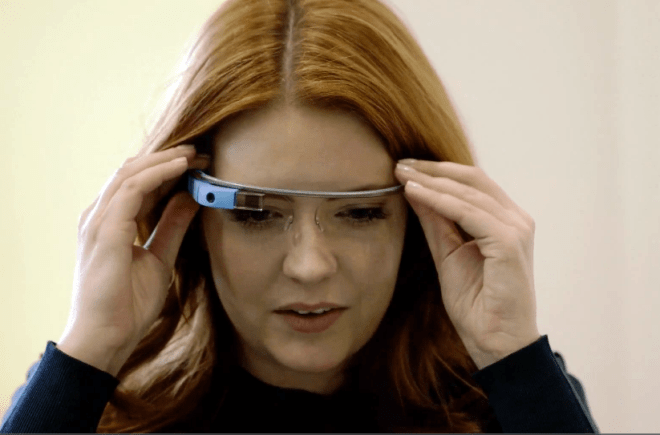
Google Glass: “technology closer to your senses”

Google Glass

You’re looking at a new invention that may revolutionize our interaction with digital devices.

Connecting devices to the body, or, at least, wrapping devices around parts of the body, will be the next big thing. Apple is developing a watch that cuffs the wrist and provides information via a curved glass display. Google is going further.

A wonderful story published in The Verge provides lots of interesting insight, for this is not simply a product concept, but a potential shift in the ways that we think about interaction between humans and between humans and machines. Here’s an excerpt:

Human beings have developed a new problem since the advent of the iPhone and the following mobile revolution: no one is paying attention to anything they’re actually doing. Everyone seems to be looking down at something or through something. Those perfect moments watching your favorite band play or your kid’s recital are either being captured via the lens of a device that sits between you and the actual experience, or being interrupted by constant notifications. Pings from the outside world, breaking into what used to be whole, personal moments.

Steve goes on. “We wondered, what if we brought technology closer to your senses? Would that allow you to more quickly get information and connect with other people but do so in a way — with a design — that gets out of your way when you’re not interacting with technology? That’s sort of what led us to Glass.” I can’t stop looking at the lens above his right eye. “It’s a new wearable technology. It’s a very ambitious way to tackle this problem, but that’s really sort of the underpinning of why we worked on Glass.”

I encourage you to go to The Verge report, watch the video (which is on the page), and start thinking differently about a future that may arrive as soon as 2014.
Amazon: Any Thing, Any Where, Any Time

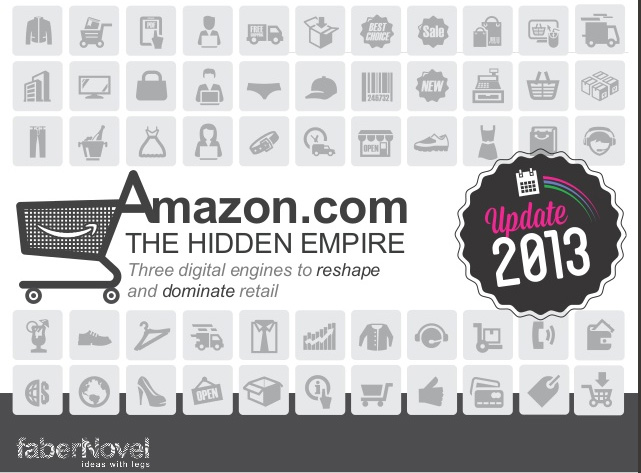
Amazon-HiddenEmpireFaberNovel is a website filled with interesting, well, I’m not sure what to call these packages of visual information. They’re kinda sorta PowerPoint presentations, but they feel more like a new kind of business book.

Originally, I was going to tell you that there’s a good (updated 2013) story of how Amazon is taking over the world. The presentation, above, tells a compelling tale about how the e-commerce giant has grown, offering considerable detail on the business side, and lots of insight about Amazon’s likely future.

As I went through the 84 slides, I became curious about who was telling the story, and became interested in FaberNovel, the publisher who offers this material under a Creative Commons license. As I browsed, I found an All About Google FaberNovel, too. And another about Google, Facebook, HTML5, the list is both impressive and multi-lingual (that is, presentations are available in multiple languages).

The stories are well-told, simply illustrated, and rely upon diagrams and other simple PowerPoint graphic techniques (nobody will be impressed by the visuals, but the stories are good; Edward Tufte’s magic wand would greatly benefit this material).

I’d start with the Amazon story because it contains so many “oh, that’s why!” or “that’s how, that’s a really good idea” or “what an awesome story of business strategy.” moments. Some of it is likely to be familiar, but it’s unlikely that most people have connected the dots. Sure, 84 pages may seem like a lot, but it’s not more than a half-hour of your life, unless you’re a serious student of e-commerce business.

Interesting discovery.

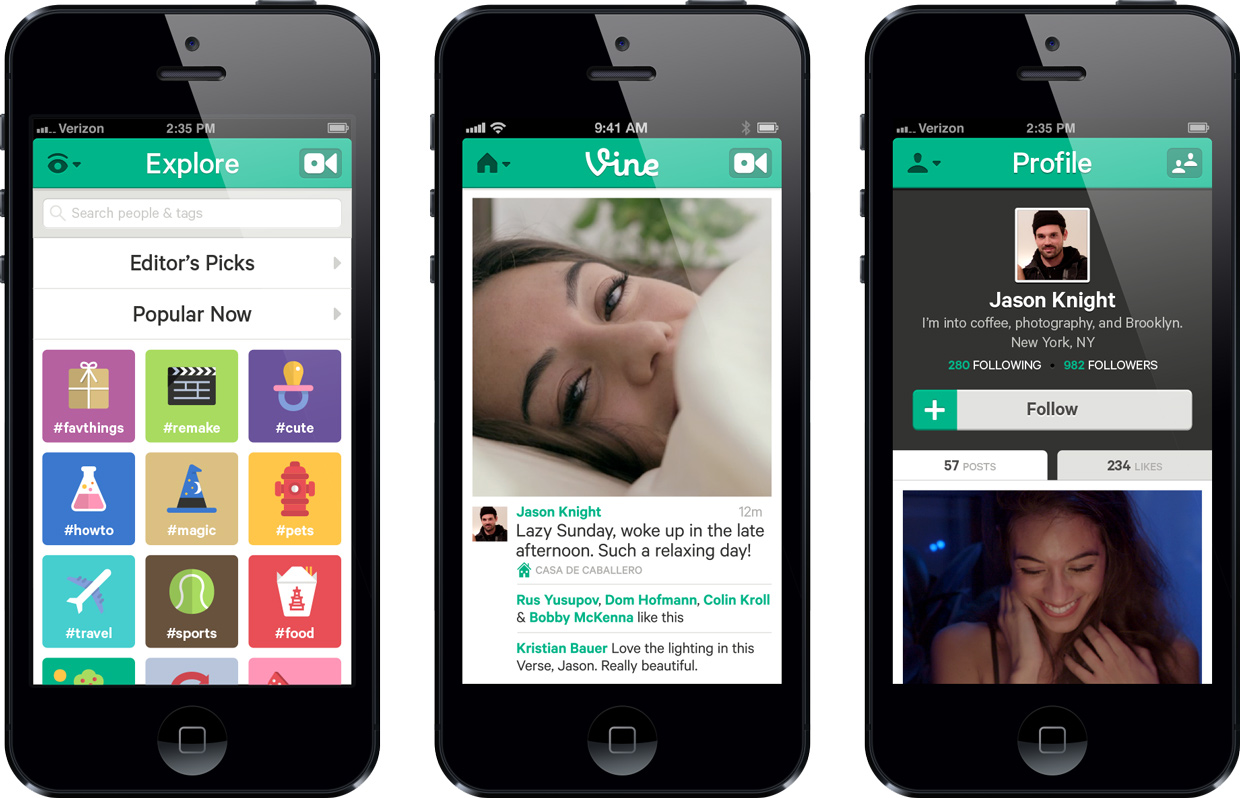
Mashup: Twitter, YouTube, Flickr, Tumblr = Vine

design02

What the world needs is… looping videos.

  • Norman, the Scooter Dog
  • A quick scream-filled ride downhill on a roller coaster
  • Laundry flapping in the breeze on a windy, cloudy day
  • A car covered in snow, with snow removed in a stop-action sequence
  • A banana being sliced
  • A little boy and a little girl, holding hands as they ride in an open-top train
  • A cartoon sketch of an elephant head shaking from side to side
  • Scenes from Chinese New Year in NYC
  • A teenage girl making funny faces
  • Hot air balloons in flight
  • A girl washing her face and brushing her teeth
  • A paper clip that unbends itself into a heart
  • A guy riding a bicycle and ringing a bell

So here’s Vine, now being used for local coverage of street news, brief documentation of automobile rides and walks on the beach, a great many people posing for the camera and sticking out their tongues (each in his or her own Vine video), producers whose stop-motion animation desperately needs a tripod, (inevitably) porn (find it on your own; there’s enough of it to require warnings and generate complaints).

Will it succeed? Well, Vine has been live for just two weeks, so it’s early days. But the company has already been acquired by a larger one that is likely to affect its prospects. Vine has been purchased by Twitter.

iPad4: Slightly Smaller, Lighter Package

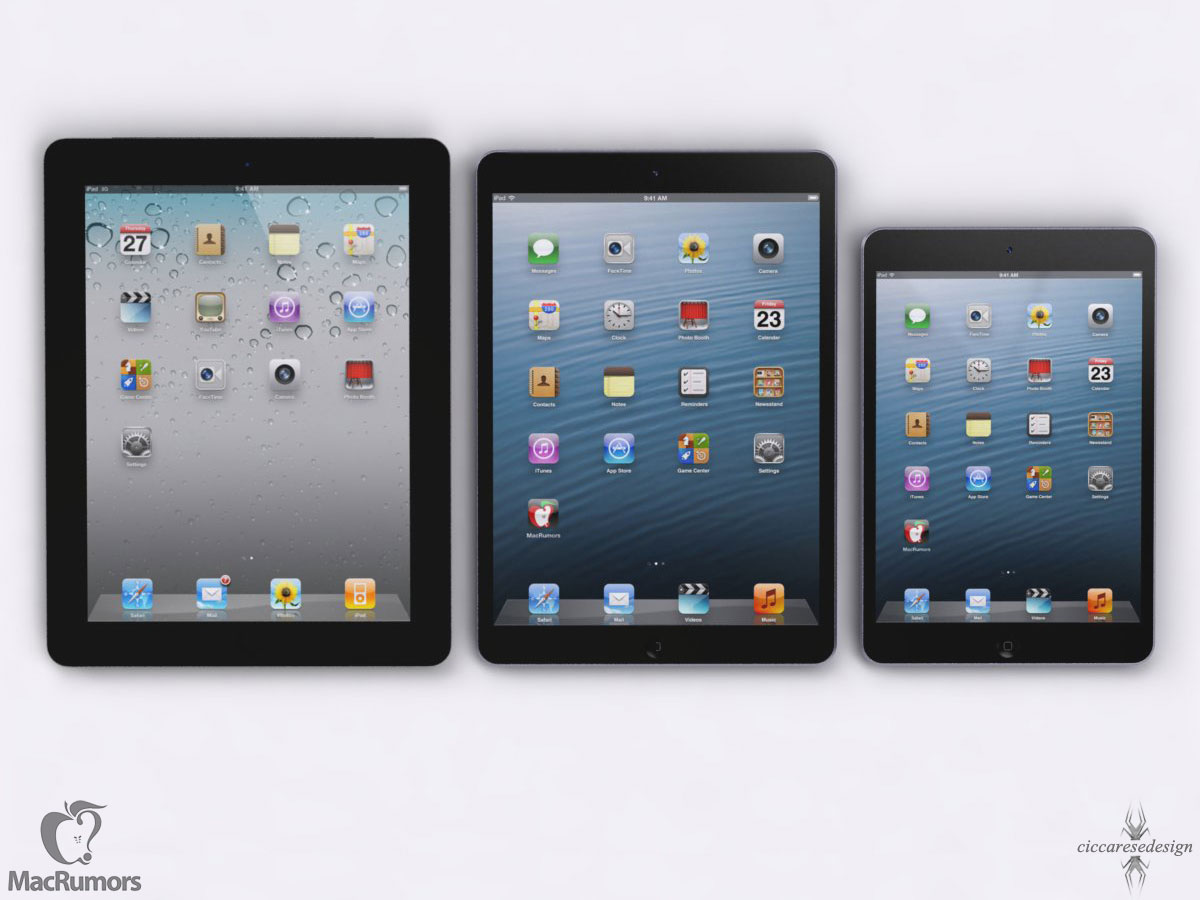
macrumors-ipad5cMacRumors published an interesting article about the new full-sized iPad, the one that will become available by September or October of this year.

The new model will be about 1 inch less wide, and about 2mm thinner than the current iPad Retina Display. It will resemble the current iPad Mini, which employs a far thinner border on the left and right sides of the screen.

And, in case you missed it, Apple introduced a new 128 GB version of the current iPad this week. It’s now available, and, I suspect, autumn will bring a 32 GB, 64 GB and 128 GB model, with no more 16 GB iPads after this year.

I really like MacRumors. They hold their sources to very high standards, and if they’re not always 100% on the money, their revelations are consistently sane, reasonable, and forward-thinking.

The Triple Revolution

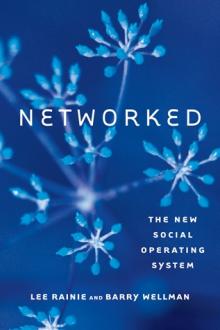
I think I prefer that name to the simpler Networked: The Social Operating System by Lee Rainie, who runs the Pew Research Center for Internet and American Life, and Barry Wellman, a professor who runs NetLab in Toronto. The triple revolution is easy enough to understand: we’re living at intersection of three significant changes in modern life:

  1. Social networks, which encourage connections between people regardless of their physical location
  2. The widespread availability of the internet, which provides a never-before-possible power for information access, and transmission and reception of messages in every medium.
  3. The mobile revolution has transformed digital devices into “body appendages” that allow “people to access friends and information at will, wherever they go…”

These trends define the new space in which we live, and, armed with both the necessary research and a knack for explaining a wide range of interlocking ideas with clarity, the adventure begins.

NetworkedProfessor Wellman’s work helps to make the case that the old idea of groups has become the new idea of networked individuals. At first, the distinction may seem, well, academic. Then again, consider the number of people with whom you interact every day or every week. If you lived in, say, Europe of the 1800s, most of these people would share proximity, language, culture, friends, family members, transportation routes, and more. Today, those ties are not fixed in a group. Instead, the connections are more fluid, more varied, more precisely defined by the individual and not by his or her membership in a group. Boundaries are permeable. Connections may or may not be long-term. Something’s lost here in terms of long-term friendships and relationships with family members (some or many may no longer live nearby), and something’s gained in the richness of more diverse lives.

I remember working for a client named Steve, who carried his cell phone in a case the size of a lunchbox, and I remember working for a successful entrepreneur whose phone was built into her car’s dashboard, like a car radio. Both date back to the 1980s. At the time, not more than a few thousand people owned mobile phones. In fact, that first decade was slow going, but after 1995, the trajectory is very nearly a 45-degree angle, running uphill to over 300 million cell phones today, and more on their way. Fully 83% of the U.S. population owns a cell phone.

Those stats aren’t surprising, but the combination of internet growth, changes in our individual behavior, and the fact that so much can now be accomplished any time and anywhere sets up the story. Public and private spaces begin to blur–think about the number of people you saw on TV during the inauguration who were checking their cell phones. Nowadays, it’s perfectly acceptable to work just about anywhere–and the need for offices is beginning to fade, certainly for creative workers, and now, for many other types of workers, too. Companies are shrinking or closing their offices and instructing employees to conduct their business from home (in one case, a friend was told to “take the office furniture because it is no longer needed.” The authors consider the idea of “place-to-place” networks to be hopelessly old-fashioned; these days, it’s all about “person-to-person” networks. As family composition and roles have shifted (women working outside the home; household free time spend on digital devices; the individual activity of computing; a 25% drop in the average number of hours devoted to housework since 1965), we interact in different ways that don’t always connect generations effectively. For example, the authors describe a young woman who communicates daily with both of her parents while they complain that they never hear from her. What they want is personal touch. What she wants is regular contact. These are not the same, and as a result, there is conflict.

When attempting to explain the changed world of journalism, the explanations do not come so easily, in part because it is so very difficult to understand what’s really happening and why. With so many people writing and communicating on the web, in so many different ways, the old and traditional role of a reporter is difficult to outline in the new world. Where does credibility or experience or context fall? Do we perceive more value in a local person telling a story on the spot in, say, the changing Middle East, or an experienced reporter who provides the experience and wider view? What about people who comment on the work of the local observer or the reporter? Not all are pundits; many are simply trying to understand what happened by reviewing many sources and many stories.

And so the layers are applied, one after another. It’s not just that there’s a remarkable internet or an astonishing Wikipedia, and it’s not just that we’re able to access this material and respond to it at any moment from any location. It’s these phenomena mapped over a much-changed society and dramatically shifted individual behavior patterns. It’s all one large idea, and it’s time that we begin to think about these changes in a more holistic way. The data is here… enough of it to get the conversation started, anyway. And in this iteration, the writing and smart and the analysis is sharp. It was written about 18 months ago–one of the ironies of the book writing, publishing and reviewing process is that it takes more time than our triple revolution deems reasonable.

P.S. After I write each article, I search for pictures. My first search on the term “Networked” yielded a Wikipedia article that provided my evening’s dose of irony:

networked book is an open book designed to be written, edited, and read in a networked environment. It is also a platform for social exchange, and is potentially linked to other books and other discussions. Wikipedia is a networked book.

From the FCC: A Summary of the Spectrum Auction Plan

imagesThe FCC posted a useful (11-page) summary that explains the upcoming television spectrum auction with a reasonable level of detail.

Why is the FCC beginning to shut down large amounts of television spectrum? Here’s why:

“In key areas, the United States leads the world in wireless infrastructure and
innovation. However, our successes in building a first-class wireless industry have also
created our greatest challenges; the skyrocketing usage of our wireless networks is
dramatically increasing demands on both licensed and unlicensed spectrum. The mobile
wireless landscape is undergoing a transformation as mobile broadband networks are
emerging not only as the foundation for communications services in the 21st Century,
but also as the infrastructure supporting economic growth and innovation in such wide-
ranging areas as entertainment, health care, public safety, education, and social service.
Like the railroads in the 19th Century, and the electrical grid in the 20th Century, our
mobile broadband networks are primary economic engines for our country. Spectrum is
a critical building block for these networks.”

Here’s more about the law that sets this process in motion:

“Congress, in passing the Middle Class Tax Relief and Job Creation Act of 2012
(“Spectrum Act”) in early 2012, authorized the FCC to conduct incentive auctions, with
the first auction to be of broadcast television spectrum. Congress further directed that
certain net proceeds from the broadcast incentive auction are to be deposited in the
Public Safety Trust Fund to fund a national first responder network, state and local
public safety grants, and public safety research, and the balance is to be used for deficit reduction.”

And how are they going about it?

Well, that’s the complicated part. The FCC needs to acquire spectrum from current users, and it needs to sell that spectrum to future users. This involves a pair of auctions. The mechanics of these auctions are not simple, and sometimes seem to be counter-intutitive.

As citizens, it’s important that people in the U.S. develop an understanding of what the FCC is doing, why, and what will happen as a result.

For those who do not live in the US, where a combination of local television stations, broadcast television networks, cable television networks, and a wide range of other services are commonplace, this whole adventure may be very difficult to understand, and may not make much sense. For those who wonder why the FCC directed a complete conversion from analog to digital television as a project separate from this latest shift, you should count yourself among the many.

CES 2013: What Mattered and Why

Just after Christmas, the Consumer Electronics Show convenes in Las Vegas to showcase all that’s new for the coming year. Most of it is upgrades, retreads, and modest improvements over the past year’s stuff. Some of it suggests a new shape for the industry, and for the ways that we work, play, and communicate. Here’s a brief rundown on what might matter most:

  • The disk drive maker Seagate will soon offer a “local cloud” storage device that you can set up in your home or office. Local storage, easily reached via local wi-fi. IT professionals will recognize this as a NAS, short for Network Attached Storage. At about $250 for 4TB, the lesser configurations don’t save enough money to be worth your time.
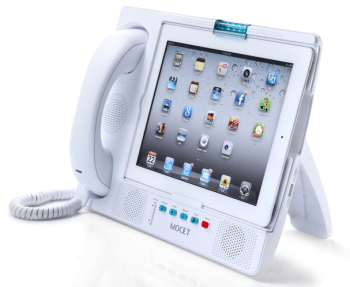
  • Expanded uses for phones and tablets. One shining example is the new MOCET iPad Communicator. Phones and tablets are extremely versatile. Adding capabilities beyond, say, a clock radio or external speakers, will become increasingly commonplace. Remember: you’re carrying a fairly powerful computer. Why not put it to use?

    MOCET

    To go to the site, click on the picture.

  • OLED is a video technology that allows for very thin screens–and flexible ones. The price of manufacture is dropping, so we’ll begin to see OLED screens enter the race between plasma and LED screens. Eventually, this organic (!) technology will win out, and become commonplace. (The “O” in OLED stands for “organic.)
  • Previously, I wrote about the new 4K screens. They’re beginning to be shown as demos.
  • Touch screens and gestures will begin to replace keyboards and remote controls. As the technology allows for greater precision, older ways of interacting with computers (and tablets) and with videogames and TV sets will shift our conception of an interface into the modern age.
  • Smart phones seem to be getting larger–more screen real estate is better for mail, web, games, and movies. Tablets seems to be getting smaller (the line between a small tablet and a big phone is becoming difficult to discern). Tablets are also becoming larger–imagine what you could do with a 20-inch portable tablet! Here, we’re starting to blur the distinction between a computer monitor, a TV set and a tablet. It’s tough to forecast where these trends are heading.
  • Samsung has become the Sony of the 2010s–an exciting company with innovation in every direction. The quality is there, too. But there are still lessons to be learned about user interfaces and design.
  • Very small storage devices are continuing to expand their storage dimensions. Kingston, for example, showed off a 1TB flash drive–larger than the popular thumb drives, but still quite portable.
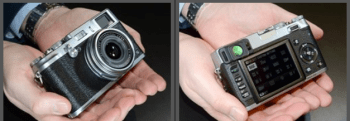
  • From DPReview's coverage, the latest Fujifilm digital camera. Click on the image to see their story.

    From DPReview’s coverage, the latest Fujifilm digital camera. Click on the image to see their story.

    It’s now a regular routine: cool new cameras introduced at CES. For a solid rundown, visit DPReview. I think my favorite stuff is the expansion of Fuji small-sensor line. These cameras look like the real think, shoot terrific images, and tend to be somewhat more intuitive in their interfaces. (More on these soon.)

  • Automotive electronics has always been a key aspect of CES. Sure, car stereos and car security systems remain center stage. Now that cars plug into wall sockets, the vehicles themselves are becoming digital devices. This time around, lots of cars as harbingers. Next time, I’ll bet we start seeing hybrid devices that confuse the definitions of bicycles, motorcycles, golf carts, and other short-range transportation devices.
  • Oculus Verge

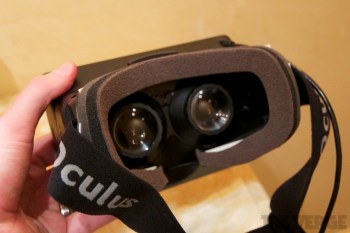
    To read The Verge’s story about the Oculus Rift, click on the image.

  • Your smartphone and/or your tablet will become a monitoring control center and remote control. You know how we’re beginning to program a DVR from afar? Or read date/time stamps on the foods in the fridge? It won’t be long before we all have a remote dashboard to tell us about the fuel in the car, the meds in the bathroom, when the last time the dog was walked, body fat, etc. add some robotic controls and digital life becomes even more interesting.
  • I’ve wondered why immersive video game displays have taken so long to gain traction in the marketplace. Now, it looks like the (Kickstarter-funded) Oculus Rift will change the way gamers see and experience the experience of game play. There’s good multimedia coverage in The Verge.

My Website Doesn’t Look So Good (on my mobile phone)

You’ve got a perfectly good website, looks great on any computer. The only problem: fewer and fewer people are seeing your website on a computer. More and more, it’s the way that the website looks on a mobile device that matters. Oh, sorry, one more problem: there are at least a dozen different mobile devices, and your website will not look the same on any two of them. Some text wraps, some does not. Some graphics are shown, others are cut-off. What a mess?

Check out the images below, and click on any of them to see a more complete picture with even more devices. Try it with your website, and then, either find a pre-made solution (WordPress offers one for blogs, for example), or start thinking about a secondary website design for your business, etc.

Every week, it’s a brave new world.

Diff view of website

The Fourth Good Idea (The One That Works!)

Good idea #1 – On every iPad, Apple includes a slot for an SD card. That way, I can copy a file from my computer, insert it into the player without any fuss, and edit a document or watch a movie.

Didn’t happen.

Good idea #2 – Recognizing the error of its ways, Apple introduces a $30 accessory called the Camera Connection Kit. It includes two small white blocks, one of which allows the insertion of an SD card into an iPad. But only for transferring pictures. Forget about editing a Pages or Numbers file, or watching a movie.

Good idea #3 – Seagate introduces GoFlex, a lightweight, portable disk drive that connects, wirelessly, to any iPad. The secret is a wireless network created by the device; that’s how the connection to the iPad is made. The capacity is 500GB, a very healthy amount of space for all sorts of files. Unfortunately, Seagate’s interface technology proves difficult to use, and, at least for me, it seems to work less often than other devices. (Seagate has provided help, not once but several times. New Year’s Resolution: Since I love this idea, I will try again and get it right.) It costs less than $200.

AirstashGood idea #4 – Maxell introduces AirStash. It’s a small wireless network, and it worked the first time. There are three parts, well-integrated. The first is an app, clean and simple, just a list of files organized by file type (movies, etc.) The second in an SD card (up to 32GB). You insert the SD card into your computer, load it up with files, and plug it into the third part. That’s a device roughly the size of a large cigarette lighter. On one end: an SD card slot. On the other, well, nothing you need to make the connection (more on that in a moment). You find the AirStash network in the list of available wireless networks, make the connection, return to the app, and just watch the movie (or whatever it is you want to do). From time to time, you need to recharge the AirStash battery–that’s the third part, a USB plug that you insert into any computer or USB/AC adapter for the recharge.

My test device was loaded with several good films: I watched The King’s Speech and Inception, and both played flawlessly.

Sorry, but I can’t resist:

Good idea #5: AirStash is updated so that it can be used without shutting down the WiFi network that you usually use. Right now, that’s a flaw. I hope it will be fixed.

So, that’s the story. AirStash is a product that really works. And it’s simple enough that I was able to write an article about half as long as usual, simply because, well, this really is a simple product to use, and to explain. Whoever made this happen, good work! (And thank you for solving the problem that Apple never should have created in the first place!)

AirStash Phone

Here’s a look at the AirStash app for the iPhone. Simple, straightforward and intuitive.

Amazon: The Sitcom(s)

Amazon PrimeWhat’s the difference between a bookstore and TV channel? Sounds like a riddle for a time traveler. Little more than a decade ago, Amazon started to pulverize the book business. Now, just about anybody with a computer or a mobile device (that would be, just about everybody) thinks about Amazon as the first stop for books. And music. And just about every other common retail item.

And now, Amazon is beginning its assault on (not sure whether to call it television, but let’s go with television for now). Here come the first six sitcoms from Amazon Studios, all intended to be shown, free, to Amazon Prime members (who get free shipping and other benefits from Amazon). These programs will be part of a rapidly growing (and pretty darned good) collection of available programming already in place. For example, Amazon Prime viewers can watch EVERY episode of Twilight Zone, Arrested Development, and other interesting TV series from the past, as well as a bunch of good moves (last night, we watched Good Night, And Good Luck). As Amazon Prime members, we keep forgetting that we pay Netflix money, too.

So, what are the series? List below. Most of them appear to be promising: the creative teams are experienced, and the concepts are less lowest-common-denominator than we usually see on TV. One new concept from Garry Trudeau that sounds promising. And I sure hope that The Onion does a better job with television this time around (past attempt: not so good).

The complete list comes from the story in Tech Crunch.

Alpha House – Alpha House was written by Academy Award nominee and Pulitzer-Prize winner Garry Trudeau (Doonesbury, Tanner ’88). Alpha House follows four senators who live together in a rented house in Washington DC.

Browsers – Written by 12-time Emmy-winning comedy writer David Javerbaum (The Daily Show) and to be directed by Don Scardino (30 Rock), Browsers is a musical comedy set in contemporary Manhattan that follows four young people as they start their first jobs at a news website.

Dark Minions – Written by Big Bang Theory co-stars Kevin Sussman and John Ross Bowie, Dark Minions is an animated workplace series about two slackers just trying to make a paycheck working an intergalactic warship. The pilot will be produced by Principato-Young (Reno 911).

The Onion Presents: The News – The Onion Presents: The News is a smart, fast-paced scripted comedy set behind the scenes of The Onion News Network that shows just how far journalists will go to stay at the top of their game. The Onion Presents: The News is from The Onion’s Will Graham & Dan Mirk (The Onion News Network, The Onion Sportsdome).

Supanatural – Supanatural is an animated comedy series about two outspoken divas who are humanity’s last line of defense against the supernatural, when they’re not working at the mall. The series, written by Lily Sparks, Price Peterson and Ryan Sandoval, will be produced by Jason Micallef (Butter) and Kristen Schaal (The Daily Show).

Those Who Can’t – Written by Andrew Orvedahl, Adam Cayton-Holland and Benjamin Roy (Grawlix), who were discovered through Amazon Studios online open door process, Those Who Can’t is a comedy about three juvenile, misfit teachers who are just as immature, if not more so, than the students they teach.

Just in case you missed it, this blog presents a useful introduction to one of the best TV series of all time.

Just in case you missed it, this blog presents a useful introduction to one of the best TV series of all time. To visit the blog, click on the image.