For many people, two of the most powerful words in the English language are “discovery” and “curiosity.” In fact, John Hendricks combined the two words to title his 2013 biography, “A Curious Discovery.” Now that he is no longer associated with the cable network that he founded—The Discovery Channel—Hendricks is launching a new venture, Curiosity Stream. Just as The Discovery Channel (now, simply “Discovery”) was precisely the right idea for a young cable television industry in 1985, Curiosity Stream sets the standard for special interest subscription ad-free video-on-demand in 2015. With HBO, CBS News and other new “SVOD” services available for an emerging marketplace.
 A monthly subscription fee buys access to a library of short- and long-form programs in four general categories: science, technology, civilization and the human spirit. Some programs are produced by Curiosity Studios—mostly, these are short-form interviews with scientists and other experts, often illustrated with animation. At the start, many of the long-form programs will come from TVO (that’s TVOntario, one of the best non-fiction producers in Canada), Japan’s NHK, France’s ZED, and of course, the BBC Worldwide. With two or three years, the service anticipates 2-3,000 titles; this year, subscribers will have access to about half that number of programs. Happily, John recognizes the challenges associated with VOD navigation, and I’m hoping to see Curiosity Stream reinvent the visual interface so that their programs are easy to find.
 The assortment of programs being assembled for the March 18, 2015 launch. Many are reminiscent of what The Discovery Channel used to be—before its prime time schedule began to resemble other cable channels (“Naked and Afraid,” etc.). Among the titles announced so far: “The Nano Revolution,” “Simon Schama: Shakespeare and Us,” “The Age of Robots,” “Destination Pluto,” and “Scotland: Rome’s Last Frontier.” There will be 4K programming, too—UltraHD for those who own the newer high-resolution TV sets—including a newly commissioned project called “Big Picture Earth” by the filmmaker responsible for “Sunrise Earth.”

For a look at Curiosity Stream’s demo site, click on the image above.
Hendricks and his team are deeply experienced in the acquisition, production, and marketing of these types of programs—so this is a startup with a high likelihood of success. The intelligence of their marketing model impressed me, and made me wonder why others don’t approach the market in the same way. For $2.99 per  month, you can watch in standard resolution—a terrific on-ramp for viewers who are either new to SVOD or are more likely to be fairly light users, at least the start. At this price, it’s almost a trial subscription with an easy upsell to 720 HD resolution at $3.99 per month (which is all that most people probably need right now). For those with more extravagant viewing habits, 1080 HD resolution costs $5.99 per month; the 4K Ultra HD service costs $9.99 per month (but at the start, there won’t be a lot of 4K programming available—still, some is far more than most other services offer today).
When I first read about the service—it was just announced—I reached out to John Hendricks and his team. Mostly, we talked about strategy. The program acquisition and production strategy is firmly rooted in international cable deals. The right deal spreads the risk among several programmers and distributors. For  example, let’s assume that a high quality outdoor production costs about $750K to produce. If one company foots the bill, their programming budget only goes so far. But if Curiosity, for example, puts in $250K to control North American rights, and finds two partners, perhaps one in Asia and another in Europe, and each of them also puts in $250K for their respective territories, then nobody is out of pocket for more than $250K. Rights beyond North America, Europe and Asia provide additional revenue, which is typically shared by the funding producers. This “split exploitation” concept has been around since the 198os, and it works. In the SVOD marketplace, there will be many opportunities for future exploitation, which makes the venture progressively more profitable, and steadily increases the programming budgets, which generate more and better programming, and more subscribers… the circle continues to grow.
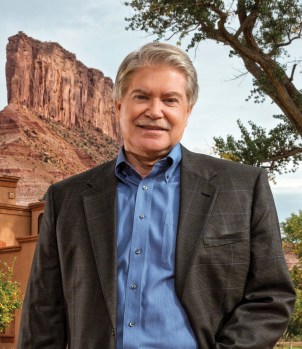 Unlike Ted Turner, whose approach to cable was mass market (TBS, TNT, and very broad-based news with CNN), Hendricks has always focused on nonfiction, documentaries, outdoors and reality (in the best sense, and also with many programming ventures way down market—Discovery owns TLC, so you can thank him for “Honey Boo Boo”). The point: he knows how to play the game, understands how to segment the market. His first pass: a three-bucket breakdown that includes (a) historically light TV viewers, the 1 in 8 of us, the 17 million U.S. households for whom TV is not a big part of daily life; (b) the connected world of perhaps 100 million cable and satellite homes, the ones that often complain that “there’s nothing good on TV” where he hopes to capture about 10 million households; and the rising 4K market, which he projects at 10 million households total and perhaps 5 million subscribers to Curiosity. By playing a more upmarket game from the start—he’s betting that there are enough documentary, adventure, curious viewers willing to pay at least a few dollars per month to see what Curiosity offers and to support what would seem to be a very promising future.
 Could he be defeated by Netflix hiring a former Discovery executive assigned to buying up lots of rights to Curiosity / Discovery -type programming from the short list of global suppliers? Sure, but it’s not likely that Netflix will zero-in on the nonfiction programs that Curiosity Stream plans to acquire. The nuanced understanding of programming for, and marketing to, this particular audience is not something that Netflix can easily replicate. Hulu probably won’t go there, and neither will Amazon. YouTube is interested in other aspects of the business, so it’s likely that John and his team will be able to build the same kind of success that they enjoyed with Discovery.
In some respects, John Hendricks is a smart guy who found the right long-term niche. Broadening the view, I suppose it’s possible that TCM will offer a similar service—a movie archive with a greater emphasis on old movies than Netflix or Amazon may offer. The days of exploiting an old Hanna-Barbera library (one of the foundation blocks of Cartoon Network in its infancy) are over, but I suppose an SVOD animation service might be able to support itself. Old TV shows are currently experiencing a nostalgic burst with over-the-air channels exploiting old libraries—I now record “Naked City” and sometimes waste a half-hour watching “F-Troop” on MyTV, or similar programs on Antenna and its competitors. Not much SVOD opportunity there. Sports wants to be live—so after-the-fact viewing of sports events doesn’t provide much marketplace power for SSVOD (sports subscription VOD?). Weather, news – same problem; neither is good SVOD product. Children’s programming works, and I’m sure some combination of Disney, Nickelodeon, Cartoon Network and PBS Kids will fight it out in a battle for market share—a newcomer would find it difficult to acquire sufficient product in this brand-obssessed (“Dora the Explorer,” etc. marketplace), but the BBC’s CBeebies might move in that direction. History never found a large enough audience to sustain historical programming, so it became a popular mass appeal network. Food Network doesn’t focus enough recipe programs any more, and their competition series aren’t likely to generate large numbers of individual subscriptions. Clever marketing schemes aside, most other cable networks are mass appeal, or broad appeal, so they’re probably better as cable networks with some VOD than full-scale SVOD services. I think there’s some potential in BBC America—their airtime is focused on mass appeal but the BBC library—even discounting for rights limitations—is probably large enough to succeed in SVOD. Comedy Central has potential, but Curiosity Stream trumps comedy because it benefits from a higher degree of program scarcity (there’s no shortage of comedy product available). I certainly wouldn’t discount the potential of a music channel’s success on SVOD—perhaps from MTV, BET, or a country music source.
Which is to say: I think Curiosity Stream has chosen its niche wisely; packaged and priced its product slightly ahead of the market; that it benefits from the right visionary and management team; that is it among a short list of non-movie / non-sports programming franchises where 4K truly enhances the viewing experience; and that it promises some terrific viewing experiences now sorely missed. The idea of a truly global, any-platform, anywhere service in this programming space is extremely appealing. In short, I think Curiosity Stream is the right idea for a clearly defined audience that is probably underserved and ready to pay a reasonable monthly fee for the privilege of watching high quality non-fiction programming from around the world.
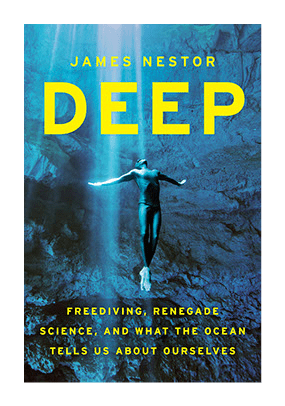 Freediving is “the most direct and intimate way to connect with the ocean.” During a three-minute freedive, “the (human) body bears only a passing resemblance to its terrestrial form and function. The ocean changes us physically, and psychically.” Unfortunately, “sometimes you don’t make it back alive.” Those words were written by James Nestor in his new book, “Deep: Freediving, Renegade Science and What the Ocean Tells Us about Ourselves.” It’s one of the best books I’ve read this year, an introduction to a part of our world that is unfamiliar to nearly everyone on the planet, and an adventure story, too.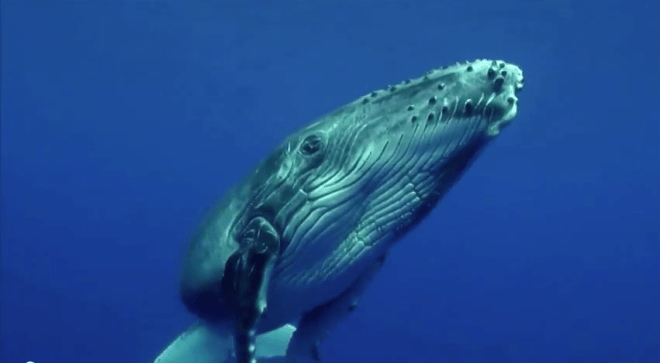

 Driving the rural roads of Scotland, Ireland, and Wales, I’ve occasionally been fortunate enough to be blocked by sheep being moved from one pasture to another.
 Here’s a question: Why are one-size-fits-all performance standards inappropriate to the point of silliness when applied to dogs, but accepted without question when applied to kids? If someone tried to set up a national program to teach every dog to do everything that various breeds are able to do, the Humane Society and the American Society for the Prevention of Cruelty to Animals would have them in court in a New York minute. But when authorities mandate one-size-fits-all performance standards for kids, and the standards aren’t met, it’s the kids and teachers, not the standards, that get blamed.
 Geri Allen is one of those extraordinary jazz musicians whose influence runs wide and deep, but somehow, has not become as well-known as it ought to be. She’s a pianist with a resume that begins with a serious educational foundation: a master’s degree in ethnomusicology that has served her well (easy for me to see this because I’m approaching her life’s work some 35 years into a very good story). Her professional work begins with Mary Wilson and the Supremes in the early 1980s, and Brooklyn’s
  The awards began to roll in. Allen was in and out of the remaining avant-garde, which sounds much less radical now than in 1996 when she recorded “Hidden Man” with Ornette Coleman’s Sound Museum. In fact, by 1999, she was sounding very comfortable in a commercial setting, recording her popular CD, The Gathering, with Wallace Roney on flugelhorn and trumpet, Robin Eubanks on trombone, Buster Williams on bass, and Lenny White on drums, and others whose names are well-known from mainstream jazz records. A 2010 record, “Flying Toward the Sound,” made it to the top of many critic’s best-of-the-year lists.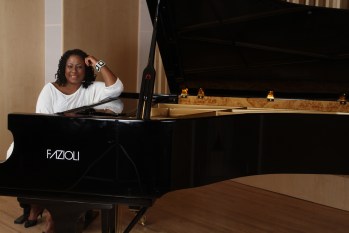
 Geri Allen has been one of those artists that I’ve wanted to know more about. Now that I’ve written this article, now that I’ve done some concentrated listening, I’m realizing that I am just beginning to understand what she’s all about. The latest album is elegant and wonderful, soulful and reflective, sophisticated and consistently interesting, but my collection is now woefully incomplete. I have listened to the two predecessors in the trilogy, but I want them for my very own. The same is true for the work she did with Paul Motian and Charlie Haden, and for the work she did in 2010 with her group, Timeline.
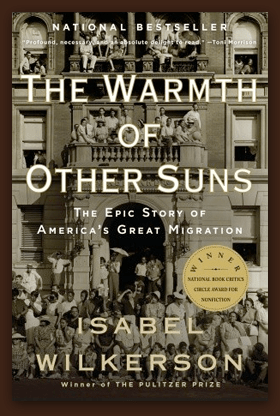

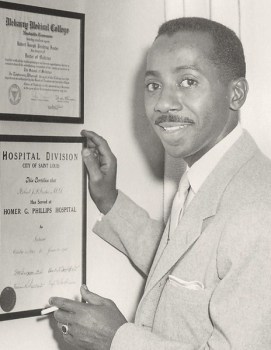






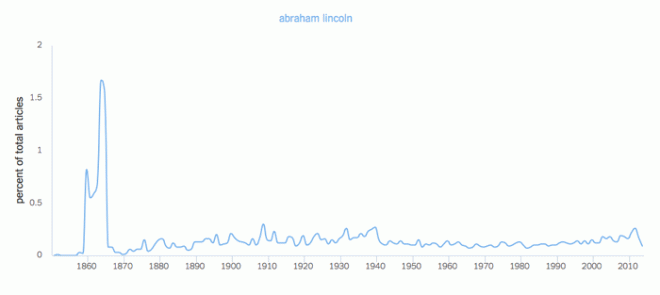


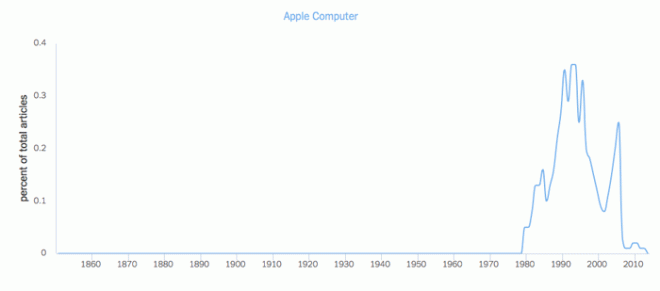
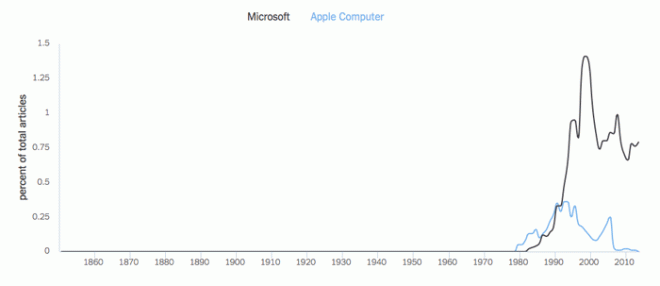
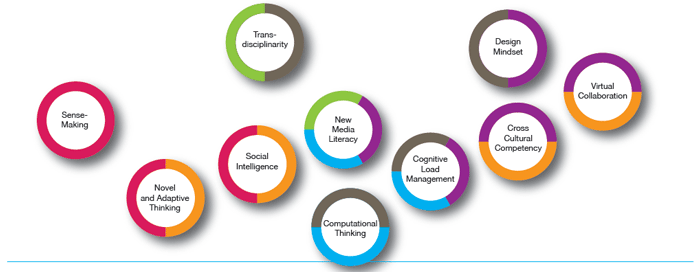 So what are we supposed to do about this? How are we supposed to think about 2025? Some of the answers are in a report prepared by the
 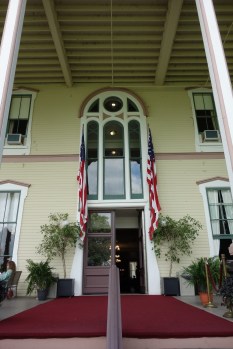 Yesterday afternoon was busy with reading on the Hotel Atheneum’s wraparound porch, studying the lake, selecting the perfect rocking chair, becoming distracted by what sounded like a full orchestra nearby. Wandering is what folks do on a summer’s day at Chautauqua, so I followed the music to the amphitheater where a rehearsal of Madame Butterfly kept me and perhaps two hundred other people busy for an hour. On Saturday night, the theater will be filled with nearly four thousand people, mostly residents who either spend their summers here, or, at least, several weeks each year. I was reluctant to linger: I wanted dinner before heading to the theater. Back at the
 Me? I’m off to Sol Messinger’s “Yiddish Language Conversation” back up near the main road at the relatively new (few Chautauqua structures are new) Emerson Jewish Life Center, built in 2009. Sol is sitting at a conference table with four or five people, interviewing each of them, each of us, about our family history. He is speaking in Yiddish. I understand only a bissel—the tiniest portion—but just the act of listening is joyful. Here and there, one of the people at the table translates key ideas for me. The conversation drifts in and out of English. The people are not young. I wonder what will happen to Yiddish, but only for a moment. My head is filled with ideas, but the yellow broadsheet—the detailed schedule for this Chautauqua week, contains far too many things for me to do, so I keep moving, grab a quick quiche at the informal lunch place above the bookstore (not wonderful: Chautauqua’s food for short-term visitors is a weak link), and manage to get to Philosopher’s Hall in time to get a seat just on the perimeter. It has been raining, so some seats are wet. I sit on my Daily, my bun is a little wet for a while, but I quickly forget my personal issue when the speaker begins. He’s compelling—
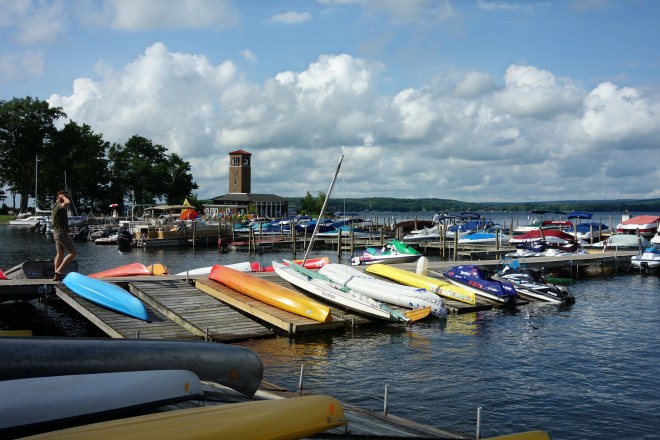 No time to linger. A Chautauquan keeps busy, does not lollygag (except when the day is beautiful and there is a book to be read under a century-old tree while children are racing around on bicycles and otherwise living a perfect small town American life). That glimpse of what America might have been is just that—a glimpse—for there is music to be enjoyed in one of the old churches. An hour of art songs performed by students from Chautauqua’s music school on the north side of town (no time to visit, but I understand practice sessions and rehearsals are open, and a bit like Tanglewood). Then, at 5:00PM, I wander back to the hotel for a daily wine tasting. I was invited by my new friends at last night’s Community Table. Mostly, my contribution to the table of six chatty people was recommendations of novels by Reynolds Price because one of the women was interested. Then, we headed down to dinner in the hotel’s main dining room. Steak dinner. Fresh cut.
 Next morning, it’s up at 7:00 am for the Farmer’s Market, then a spiritual bit, then a visit to the Methodist House (many religions, many houses, used for residents and for small events) for a July 4 lecture about the specific wording of the Declaration of Independence. I intended to stay for just a few minutes, but stayed for an hour and learned a lot about what Thomas Jefferson wrote and what Richard Henry Lee wrote. Half of the people in the audience seemed to know the speaker as a friend. I suspect he was a long-time Chautauqua resident or visitor, and that revealed one more piece of this fascinating puzzle: the people who attend Chautauqua are not just visiting because the lake is pretty in July. They attend because the combination of leisure and learning, family and fellowship, curiosity and creativity is, for nine special weeks every summer, available here and almost nowhere else.

 Digital Insider