![(Copyright 2006 by Zelphics [Apple Bushel])](https://diginsider.com/wp-content/uploads/2013/03/apple_bushel.png?w=660)
(Copyright 2006 by Zelphics [Apple Bushel])
Our intelligence has enabled us to overcome the restrictions of our biological heritage and to change ourselves in the process. We are the only species that does this.”
And, this one:
We are capable of hierarchical thinking, of understanding a structure composed of diverse elements arranged in a pattern, representing that arrangement with a symbol, and then using that symbol as an element in an even more elaborate configuration.”
Simple though it may sound, we may think in terms of not just one apple, but, say, a bushel filled with, say, 130 medium sized apples, enough to fill about 15 apple pies.
We call this vast array of recursively linked ideas knowledge. Only homo sapiens have a knowledge base that itself evolves, grows exponentially, and is passed from one generation to another.
Remember Watson, the computer whose total Jeopardy! score more than doubled the scores of its two expert competitors? He (she, it?) “will read medical literature (essentially all medical journals and leading medical blogs) to become a master diagnostician and medical consultant. Is Watson smart, or simply capable of storing and accessing vast stores of data? Well, that depends upon what you mean by the word “smart.” You see, “the mathematical techniques that have evolved in the field of artificial intelligence (such as those used in Watson and Siri, the iPhone assistant) are mathematically very similar to the methods that biology evolved in the form of the neocortex (from Science Daily: “[the neocortex is part of the brain and] is involved in higher functions such as sensory perception, generation of motor commands, spatial reasoning, conscious thought, and in humans, language.”
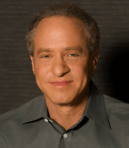
 Genius author Ray Kurzweil has spent a lifetime studying the human brain, and, in particular, the ways in which the brain processes information. You know his work: it is the basis of the speech recognition we now take for granted in Siri, telephone response systems, Dragon, and other systems. No, it’s not perfect. Human speech and language perception are deeply complicated affairs. In his latest book, How to Create a Mind: The Secret of Human Thought Revealed, Kurzweil first deconstructs the operation of the human brain, then considers the processing and storage resources required to replicate at least some of those operations with digital devices available today or likely to be available in the future. At first, this seems like wildly ridiculous thinking. A hundred pages later, it’s just an elaborate math exercise built on a surprisingly rational foundation.
 Much of Kurzweil’s theory grows from his advanced understanding of pattern recognition, the ways we construct digital processing systems, and the (often similar) ways that the neocortex seems to work (nobody is certain how the brain works, but we are gaining a lot of understanding as result of various biological and neurological mapping projects). A common grid structure seems to be shared by the digital and human brains. A tremendous number of pathways turn or or off, at very fast speeds, in order to enable processing, or thought. There is tremendous redundancy, as evidenced by patients who, after brain damage, are able to relearn but who place the new thinking in different (non-damaged) parts of the neocortex.
Where does all of this fanciful thinking lead? Try this:
When we augment our own neocortex with a synthetic version, we won’t have to worry about how much additional neocortex can physically fit into our bodies and brains as most of it will be in the cloud, like most of the computing we use today.”
What’s more:
In order for a digital neocortex to learn a new skill, it will still require many iterations of education, just as a biological neocortex does today, but once a digital neocortex somewhere and at some time learns something, it can share that knowledge with every other digital neocortex without delay. We can each have our own neocortex extenders in the cloud, just as we have our own private stores of personal data today.”
So the obvious question is: how soon is this going to happen?
2023.
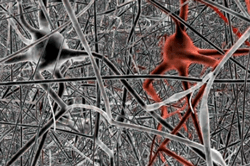
Skeptical? Click the image and watch the 2009 TED Talk by Henry Markham. It’s called “A Brain in a Supercomputer.”
In terms of our understanding, this video is already quite old. Kurzweil: “The spatial resolution of noninvasive scanning of the brain is improving at an exponential rate.” In other words, new forms of MRI and diffusion tractography (which traces the pathways of fiber bundles inside the brain) are among the many new tools that scientists are using to map the brain and to understand how it works. In isolation, that’s simply fascinating. Taken in combination with equally ambitious, long-term growth in computer processing and storage, our increasing nuanced understanding of brain science makes increasingly human-like computing processes more and more viable. Hence, Watson on Jeopardy! or if you prefer, Google’s driver-less cars that must navigate through so many real-time decisions and seem to be accomplishing these tasks with greater precision and safety than their human counterparts.
Is the mind a computer? This is an old argument, and although Kurzweil provides both the history and the science / psychology behind all sides of the argument, nobody is certain. The tricky question is defining consciousness, and, by extension, defining just what is meant by a human mind. After considering these questions through the Turing Test, ideas proposed by Roger Penrose (video below), faith and free will, and identity, Kurzweil returns to the more comfortable domain of logic and mathematics, filling the closing chapter with charts that promise the necessary growth in computing power to support a digital brain that will, during the first half of this century, redefine the ways we think (or, our digital accessory brains think) about learning, knowledge and understanding.
Closing out, some thoughts from Penrose, then Kurzweil, both on video:
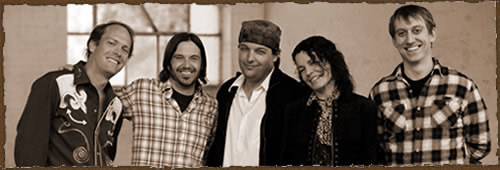 Western New York turns out to be one of those creative hotbeds that most people don’t know much about. Ever since 1874, summers at
  On every album, there’s a great feel for Americana, healthy doses of country and bluegrass, an old-timey sensibility when it feels right, pure form rock n’ roll, bits of soul and funk. It all comes together with a superior sense of how it all ought to be arranged and presented. What do I like about this music? I guess I like the sound of the two lead vocalists: Tara Nevins with her country style on some tunes, and Jeb Puryear with a folk / rock / rockabilly / country style on others, but that’s just the start. There’s Tara’s fiddle keeping time on “Tomorrow Never Knows,” and Jeb’s pedal steel on “Temporary Misery.” I like the way Kathy Ziegler sounds on backup vocals, a nice complement to Tara’s voice. I like the way the music dips into country music and rock, then goes funky.
![DIGIPAK-4PANEL 1TRAY [Converted]](https://diginsider.com/wp-content/uploads/2013/03/4064_taranevins_woodandstone_hires.jpg?w=350&h=313)


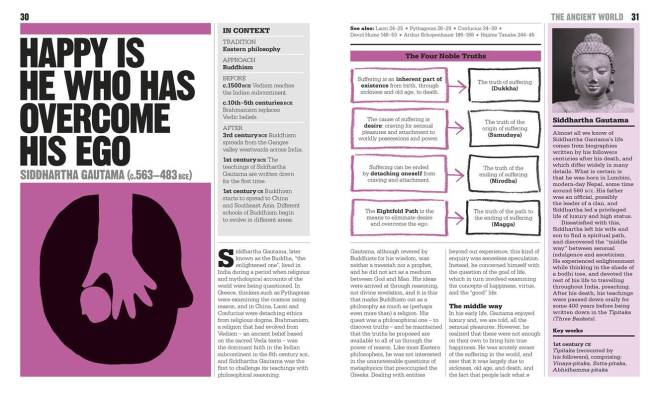
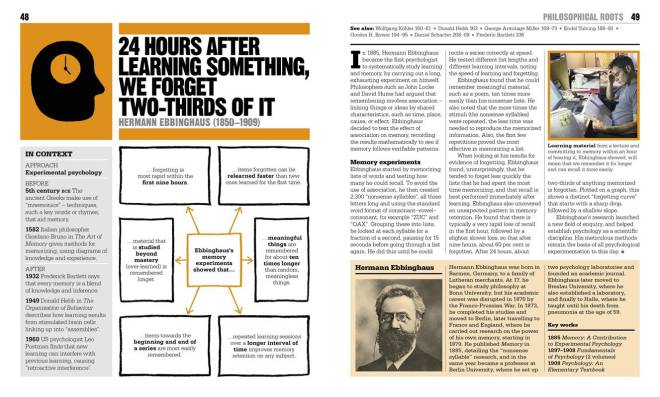 Third in the trilogy is the bright red volume, The Psychology Book. As early as the year 190 in the current era, Galen of Pergamon (in today’s Turkey) is writing about the four temperaments of personality–melancholic, phlegmatic, choleric, and sanguine. Rene Descartes bridges all three topics–Philosophy, Economics and Psychology overlap with one another–with his thinking on the role of the body and the role of the mind as wholly separate entities. We know the name Binet (Alfred Binet) from the world of standardized testing, but the core of his thinking has nothing whatsoever to do with standardized thinking. Instead, he believed that intelligence and ability change over time. In his early testing, Binet intended to capture a helpful snapshot of one specific moment in a person’s development. And so the tour through human (and animal) behavior continues with Pavlov and his dogs, John B. Watson and his use of research to build the fundamentals of advertising, B.F. Skinner’s birds, Solomon Asch’s experiments to uncover the weirdness of social conformity, Stanley Milgram’s creepy experiments in which people inflict pain on others, Jean Piaget on child development, and work on autism by Simon Baron-Cohen (he’s Sacha Baron Cohen’s cousin).
 Every day, about ten American die and about ten more are injured in motor vehicle crashes involving a distracted driver.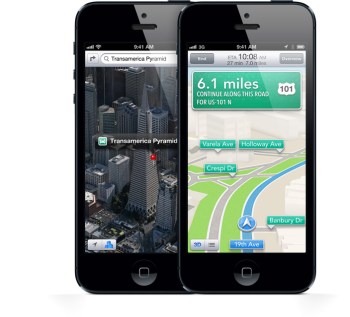
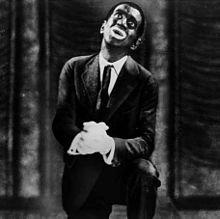
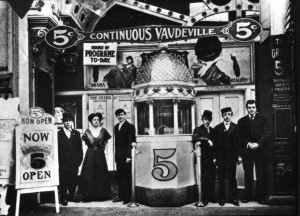

 By 1930, 40 percent of US households owned a radio, and by 1940, radio’s penetration was more than 80 percent. By 1930, there was a bona fide motion picture industry with large studios (Fox, Paramount, Loew’s/MGM, RKO and Warner), each with an elaborate distribution network of theaters throughout the country and a distribution infrastructure to service the nation and parts of the world. At the same time, the new NBC and its lesser rival CBS had built a similar structure for radio broadcasting. This structure supported the next level of development: a star system. Lon Chaney, Al Jolson, Fatty Arbuckle, Theda Bara, Duke Ellington, James Cagney, Fred and Adele Astaire, so many others became household names.

 I learned about the relationship between




 Digital Insider