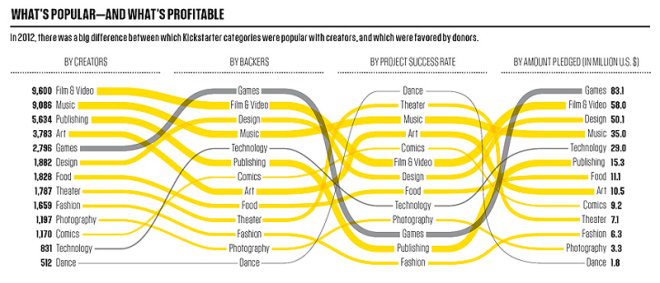
If the graphic appears a bit fuzzy, visit the Fast Company site for the article, scroll down, and click on the yellow-and-black infographic. You can magnify the infographic on their site, but nowhere else.
I missed this Fast Company article when it was published in April. Most useful was the infographic. In it, I learned:
- Among creators, film and video is the most popular type of Kickstarter project, but this category ranks second among backers, and sixth in the list of successes.
- The category most likely to be funded: projects related to dance (but there aren’t many of them, and there aren’t many people who back dance). Theater projects come in second, music in third, and and art in fourth. Both music and art are strong in terms of number of projects, and also, in terms of their success rate, ranking fourth and fifth on the list.
- There are lots of game projects, and lots of people who back game projects, but in terms of project success, odds are not so good. Still, games have generated more revenue than any other category.
- Video matters. More than four out of five Kickstarter projects are pitched with a video.
- For the past several years (that is, for as long as Kickstarter has been around), just over 2 in 5 projects are successfully funded.
There’s much more in the article.
![(Copyright 2006 by Zelphics [Apple Bushel])](https://diginsider.com/wp-content/uploads/2013/03/apple_bushel.png?w=660)

 Much of Kurzweil’s theory grows from his advanced understanding of pattern recognition, the ways we construct digital processing systems, and the (often similar) ways that the neocortex seems to work (nobody is certain how the brain works, but we are gaining a lot of understanding as result of various biological and neurological mapping projects). A common grid structure seems to be shared by the digital and human brains. A tremendous number of pathways turn or or off, at very fast speeds, in order to enable processing, or thought. There is tremendous redundancy, as evidenced by patients who, after brain damage, are able to relearn but who place the new thinking in different (non-damaged) parts of the neocortex.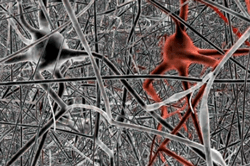

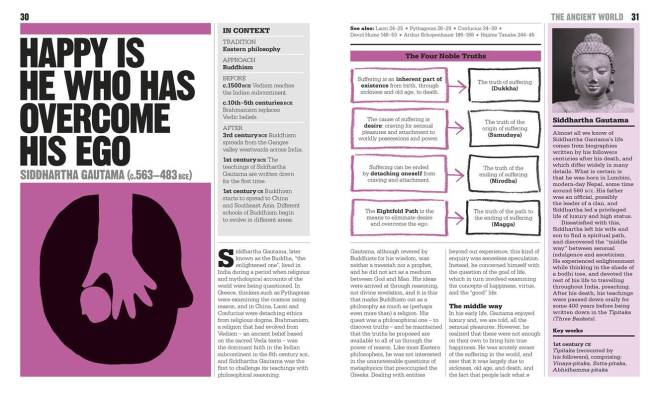
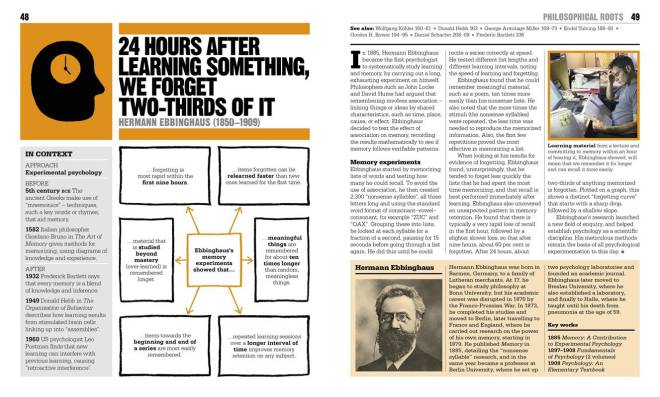 Third in the trilogy is the bright red volume, The Psychology Book. As early as the year 190 in the current era, Galen of Pergamon (in today’s Turkey) is writing about the four temperaments of personality–melancholic, phlegmatic, choleric, and sanguine. Rene Descartes bridges all three topics–Philosophy, Economics and Psychology overlap with one another–with his thinking on the role of the body and the role of the mind as wholly separate entities. We know the name Binet (Alfred Binet) from the world of standardized testing, but the core of his thinking has nothing whatsoever to do with standardized thinking. Instead, he believed that intelligence and ability change over time. In his early testing, Binet intended to capture a helpful snapshot of one specific moment in a person’s development. And so the tour through human (and animal) behavior continues with Pavlov and his dogs, John B. Watson and his use of research to build the fundamentals of advertising, B.F. Skinner’s birds, Solomon Asch’s experiments to uncover the weirdness of social conformity, Stanley Milgram’s creepy experiments in which people inflict pain on others, Jean Piaget on child development, and work on autism by Simon Baron-Cohen (he’s Sacha Baron Cohen’s cousin).











 Digital Insider