“How wonderful that we have met with a paradox. Now we have some hope of making progress.”– Niels Bohr
“How is it that you are raising your children to be very loyal/attached to the family and very independent individuals simultaneously?” That’s a wicked problem. A paradox worthy of debate. I found it on a enlightened website called Liberating Structures. Most wicked problems are not so easily contained. They’re sloppy, messy, extremely difficult to frame without all sorts of potential appendages and disruptions. There are likely to be a lot of stakeholders, and they are likely to perceive and deal with the problem with a wide variety of opinions and belief systems. As the problem is being analyzed, and perhaps mitigated on its way to a solution, the wicked problem changes–almost as if it has a life of its own. In other words, a wicked problem is not just a conundrum or a paradox, but a massively frustrating problem, often high on the list of nasties that keep us up all night.
A clear explanation of a wicked problem was nicely articulated in the Harvard Business Review, mostly as a framework for business strategy discussions about difficult problems that, IMHO, rarely rise to the level of a bona-fide wicked problem.

Image of Horst Rittel from Swedish Morphological Society, 2005

Melvin Webber, an urban planner, in a UC Berkeley portrait.
“Wickedness isn’t a degree of difficulty. Wicked issues are different because traditional processes can’t resolve them, according to Horst W.J. Rittel and Melvin M. Webber, professors of design and urban planning at the University of California at Berkeley, who described them in a 1973 article in Policy Sciences magazine (part of it appears below). A wicked problem has innumerable causes, is tough to describe, and doesn’t have a right answer, as we will see in the next section. Environmental degradation, terrorism, and poverty—these are classic examples of wicked problems. They’re the opposite of hard but ordinary problems, which people can solve in a finite time period by applying standard techniques. Not only do conventional processes fail to tackle wicked problems, but they may exacerbate situations by generating undesirable consequences.”
Curious, I tried to learn more, and found this handy list, also part of the HBR article.
The 10 Properties of Wicked Problems
If I made a list of, say, my top three, four or five wicked problems, I wonder which problems I would choose. Here’s my very preliminary pass (sloppy questions, in part because I’m new at this.)
- There are far more similarities among humans than there are differences. The problem is: we have always focused on the differences, resulting in slave trade, wide disparity of income and education, and all sorts of ethnic conflict. Is equality achievable on a massive scale? If so, how, and can it be sustained?
- War and fighting are very harmful to individuals, families, cultures, property (and animals, BTW). And yet, partly as a subset of my first question, we persist in all sorts of dangerous conflict, and we perpetuate these behaviors, perhaps because we have no better way of dealing with our differences. Can we evolve past fighting, or does this way of thinking and behaving run deep in every human?
- There are always people in need, people who are sick, poor, unfortunate in other ways. It’s clear that the only way these people will flourish is if others help them. On the one hand, we build massive medical structures people thrive. On the other, we deprive more than half of the people on earth of even the most fundamental resources to be healthy, not poor, and wise.
- Most of us acknowledge that children are our future, and that each child’s future success relies upon his or her education. And yet, we refuse to provide an adequate learning environment for all but the most fortunate children. Can we massively change the way we think about the future of children? If we can, will we?
I am certain that these are interesting ideas for discussion, but I am uncertain whether I have conceived or written these questions in anything resembling proper wicked question form, if such a thing exists. Help?
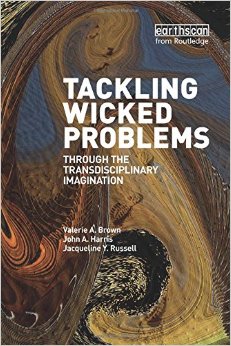
Maybe I’ll find help here: a book with a very promising subtitle. It’s called Tackling Wicked Problems through Transdisciplinary Imagination (I love that final phrase–it moves the problem from the logical left brain to the more visionary right). Or, from the free PDF published by the Australian government as a public policy entry point. Fascinating. But I’m a novice. And I look forward to learning more.

 Before we move on to specific types of equipment, consider this: the tiny stylus is likely to pick up not only the sound from the grooves in the record (and the inevitable scratches, clicks and pops), but also the sound of the turntable’s motor, the resonance of the tonearm, and any other sounds in the room, including conversations, dog barks, and other disturbances. For cartridge, tone arm, and turnable manufacturers, playing the design game requires tremendous attention to mitigation and near-elimination of vibration, resonance, and other unwanted sounds. At the same time, a properly-designed cartridge must make the very best of the available (physical) information inside the grooves of every record. Fortunately, every record is made in accordance with very precise manufacturing standards (in the U.S.,
 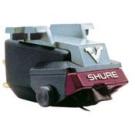 Fortunately, there are a fair number of audiophiles who listen to all sorts of equipment, and share their opinions. Chad Stelly, who works at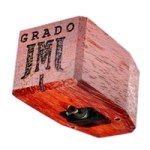
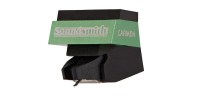
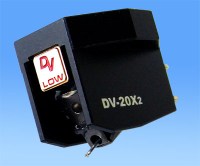
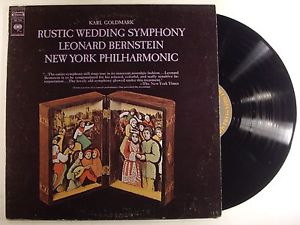 So l started listening. Or, first, I paid a local audio dealer to mount to cartridge properly—this is not an easy thing to do properly—and then I started listening to the DV20x20 on my Rotel RB900 turntable. I started with a favorite orchestral performance that I’ve written about
 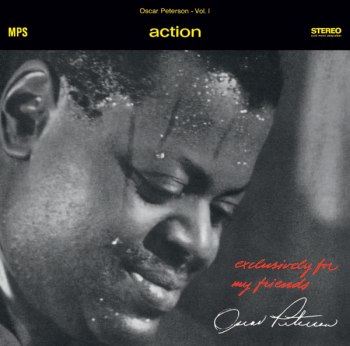 When I’m listening to a new piece of equipment—something I don’t do very often, to be honest, because I make my decisions with such care—one subjective test is how often I swap records. If I find myself sitting and listening, often to a whole side of an LP, I know that I’ve found a winner. So now I’m spending hours listening, and rediscovering discs that I know pretty well—and finding new joy because there is more detail, punch, clarity, and sense of being there with so many LPs. I’m very impressed by the Dynavector DV20x20, and I’ll attempt to close out with the reasons why. On classical recordings, I find the overall presence most appealing, closely followed by the punch and sweep of the more exciting passages, and increased refinement of solo violins, female voice, clarinets, oboes, and flutes. On jazz recordings, it’s undoubtedly the crispness of the drum kit—so precise, with just the right sense of attack and decay—though I do love what happens when I listen to Oscar Peterson playing piano, and I know that because I now find it difficult to listen to him as background music. I pay more attention to the music! On rock LPs, it’s the bass and the percussion that gets me, but also the higher tinkering on an electric or pedal steel guitar. When I listen to a singer, I hear nuances that I’m not sure I heard, or paid attention to, before. In short, this tiny component—a phono cartridge half the size of my pinky—is providing a whole lot of enjoyment.



 Most of all, I confirmed the importance of patient listening–confirming what I thought I heard by listening to the Goldmark symphony by also listening to jazz by Lee Morgan, vocals by Ricky Lee Jones and Linda Ronstadt, rock and roll jams on the obscure Music from Free Creek (with music by Eric Clapton, Dr. John, Jeff Beck), bringing some old Delaney & Bonnie & Friends recordings back to life. There is a consistency about the listening experience that not only sounds and feels right–amazing how much pure instinct and right brain judgement is involved in confirming my sense that the Insight is the right choice–instinct and behavior. If I notice that I’m just standing next to the turntable, intending to lift the stylus but deciding to listen to just one more song, I know I’m making a good decision.
 We started with one of the past century’s best–Herbert von Karajan conducting the Berlin Philharmonic in 1961-2 for Deutsche Grammophon. I had just picked up a $4 LP, in very good shape, from
 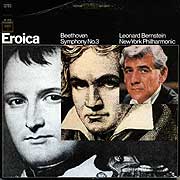 Next up: Leonard Bernstein from the same. Era. This was my LP, purchased decades ago, kept in it boxed set, played maybe ten times. This was a master work from Columbia Records at the label’s prime. The performance is ambitious, engaging, flowing–but the sound of the horns and the strings was compressed, very limited in highs and lows. We wanted to hear the depths of Beethoven explored by Bernstein in his prime–but the recording let us down.
 Before going modern, we decided to go for Toscanini and the NBC Symphony Orchestra, first on LP and then on CD, recorded in 1949–before stereo recording was available. This was state-of-the-art at the time, but the dynamic range was so limited on these recordings, they did not stand up to modern listening. Historical interest only.
 I had high hopes for my treasured 1995 CD set from Colin Davis and the Staastkapelle Dresden. Sure enough the CD really delivered–a full range of highs, lows and everything in-between. Wonderful placement of instruments. Lots of clarity, distinct individual violins and basses, just the right horn sounds. I was excited–but somehow, the listening experience was a few marks less than thrilling. After Karajan and Bernstein, the passion felt a little lacking. A fine performance is not the same as a thrilling performance, and when I’m listening to Beethoven’s Eroica, I want to be thrilled. But the sound was more satisfying here than it was on any of the LPs.
 Now here’s my last one. It’s a digital remaster from 1963, a CD box that I didn’t even know I owned. It’s the Gewandhausorchester Leipzig led by



 Digital Insider