 Professor Susan Engel remembers growing up. She recalls small details. Not only did she eat bugs, she remembers when and where, and which bugs she ate (potato bugs). As a pre-schooler, she remembers watching TV while sitting under the ironing board, comfortably asking all sorts of questions of Nonna, who was ironing the family’s clothes above her. In a one-room school house, Mrs. Grubb’s imbalanced approach to curiosity and education began a lifetime of inquiry. One of Professor Engel’s works-in-progress is a evaluative measure for curiosity, which seems consistent with the way most people think about school in the 21st century, and, to me, wildly counterintuitive.
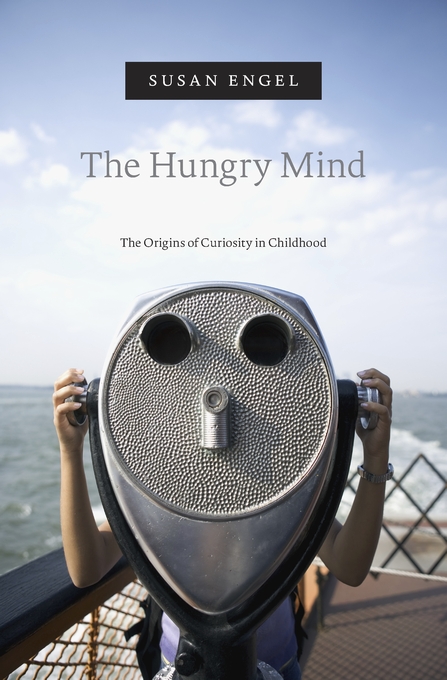
The right book tends to find me at precisely the right time. That’s what happened yesterday when I started The Hungry Mind: The Origins of Curiosity in Childhood. It’s fair to say that I devoured it in a single weekend.
In my studies and writing about creativity, curiosity has always been an underground river. I can hear it and sense it, but it’s difficult to see. Curiosity differs with each person and their current motivation, and with every situation. It also tends to vary in duration and intensity depending upon personal interest at the moment, and available information.
Curiosity behaviors are familiar, easy to recognize: “We pick up objects to look at them more closely, peel things open and take them apart, ask other people questions, read books, do experiments, and wander into unfamiliar situations.”
Some people are more likely to do this than others.
“The quality of a child’s attachment has a powerful influence on the vigor and depth of her exploration of the world around her.” When a child is insecure or uncertain about their bond with mom, he or she is less likely to “make physical and psychological expeditions to gather information.” As the book unfolds, this becomes one of its most important ideas. In lower-income, and/or lower-education households, parents tend to provide specific operating instructions for life (“put that down,” “come to the table,” “not now,” “leave the dog alone”), but parents in households less troubled with economic issues often encourage and entertain open questions, theoretical ideas, and forms of play. Reading and storytelling may have little to do with the practical. Open-minded freedom builds self-confidence, resilience, and curiosity. (Not so sure? This is a 200 page book extensive references to past work by serious scholars).
Unfortunately, curiosity is very difficult to define and even harder to measure. (Not that learning is easy to measure, unless it’s wrapped in the short-term evaluative tools that structure contemporary education.)
This 2015 book pays less attention to mobile devices and the internet and social media than I do. A Second Edition would be wonderful, especially if Professor Engel expands the book to connect these innovations to curiosity and personalized learning.
Returning to economic advantage and curiosity, “children growing up in poverty hear far fewer total number of words, have a harder time learning to read, and ultimately are less likely to do well in school by the time they are in third grade…” Professor Engel goes on, “if a child lives with parents who only use words to manage practical tasks, he may struggle to use language for less practical, more contemplative purposes.” In turn, this affects the ability of children to formulate and ask good questions, which is a very important way to express curiosity and learn about the world and one’s place in it.
Focus not on the school experience, because that’s only part of child’s experience. Instead, focus on what children hear adults say and see adults do. Early on, children overtly mimic. Grown adults mimic too… following a parent or aunt or uncle’s path as a result of a gift or what seemed to be an inconsequential conversation at the time. I just found a book about world cultures that my aunt and uncle gave me when I was nine years old. I remember reading the book dozens of times. Many decades later, it’s clear that the book shaped my current professional activities in global education. I did not learn much of this in school, or in any formal setting. It was my own curiosity that shaped these ideas, and continues to shape them today.
School simply isn’t the place to nurture curiosity. There’s just too much other stuff to do. There is constant pressure to prepare the students for the upcoming test, to complete the project on schedule, to score the grades necessary for advancement. Distractions–which are essential to curiosity and exploration–are deeply discouraged. Inquisitive students must be not derail the classroom conversation, however interesting and significant their questions may be.
Is curiosity the opposite of education?
The good Professor doesn’t take the argument this far, but she sometimes comes close. Borrowing some of her own thinking and adding it to my own… Curiosity is intuitive, fluid, wide, deep, driven by interest, exceedingly difficult to measure, and essentially unrestricted by time and space. Education is defined by curriculum experts and highly structured. It is highly structured to make efficient use of time and space, and adheres to a strict timetable measured by 45 minute intervals, weeks of achievement, school years and grade levels. Education cannot run too deep or too wide because there are so many items that must be taught to so many people. Education is driven by rules, not student interest (for some, this changes in higher education). Measurement of short-term impact can be done, but the longer the period of measurement, the more variables complicate the results.
Traditional coursework on The Civil War takes students through causes (difficult to understand without lots of broader context), Lincoln, Gettysburg Address, Emancipation Proclamation, John Wilkes Booth, funeral cortege, and the dull political history of Andrew Johnson and reconstruction. Lots of education happening here, but the sheer volume of information smothers any attempt at global context or personal investigation of related stories. The story is just too complicated for education. It’s better suited to the uneven and long-term learning that curiosity can provide.
A student guided by curiosity might begin with the failure of tobacco as the South’s cash crop, its replacement with cotton and big cotton’s reliance upon the slave trade. Follow that line and you’ll bump into the enormous economic leap made possible by the cotton gin. Then, it’s off to England where Manchester’s mills make a fortune with cheap cotton from American slaves. When that supply is threatened by events leading up to the Civil War, the British look to India for an alternative cotton source, amplifying the growth and power of the British Empire. India becomes a glorious distraction–stunning history, spectacular music, art, dance, religion, food. Later, a fight for independence with Gandhi and nonviolent protest as a new way of thinking that informs US student protests to help end the Vietnam War, and Martin Luther King, Jr. to challenge authority in very productive ways. Back to Manchester for its rivalry with nearby Liverpool; follow that line to the economic and social conditions that breed The Beatles and change popular music and culture (including George Harrison’s encounters with Indian music, and so on).
I know we don’t teach that way, but I know I learn that way.
As I understand more about how we teach, and how we learn, there may be more to eating bugs than there is to textbooks.
 This has been a rough week for the U.S. President. As questions pile up, I checked in on the line of succession. I cast no political aspersions. Instead, I just follow the rule of law, and check bios on government sites and in Wikipedia.
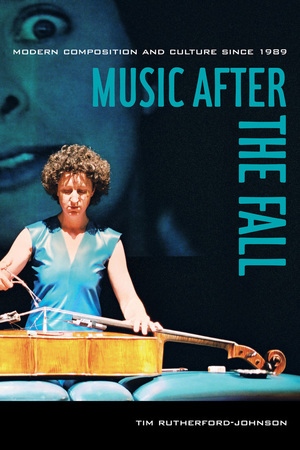

 In theory, Americans know a lot about how we elect our leaders. In practice, we may not. Returning to basics, here’s a quick rundown on what we need to know for Tuesday.
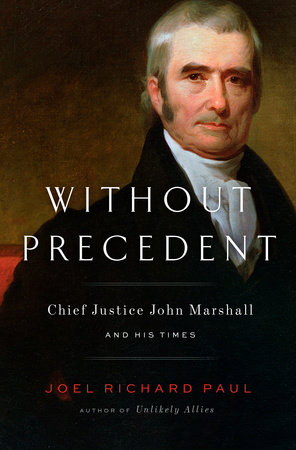 He wasn’t a rich man, and he wasn’t a well-educated man. “Marshall grew up in a two-room log cabin shared with fourteen siblings on the hardscrabble frontier of Virginia. His only formal education consisted of one year of grammar school and six weeks of law school.” And yet–this is the part that would make a terrific Broadway musical, or perhaps even an opera–Marshall becomes a military officer, influential attorney of local and then national renown, a diplomat to France, a congressman, U.S. Secretary of State, the biographer of George Washington, and eventually, the first really effective chief justice of the new United States of America (John Jay was the first, but the high court was just beginning to take shape; he was followed by one short-termer whose nomination went unapproved, and another, who was also operating in the early days of our judicial system).
 The fun begins in York about 10,000 years ago. The Romans showed up about 2,000 years ago–certainly by 71 AD–and you can walk the
  After the Vikings, York weathered a less distinguished period. One of the worst episodes: the burning of Jews supposedly under government protection in the 1100s–an old castle is still on the site. By 1300, York was both an important government and trading center for England, and remained so until the 1500s. You can walk the streets and see medieval buildings–not unlike walking the world of Harry Potter (celebrated by several souvenir shops).

 What have I missed? The quiet pub where the World Cup semi-final victory for England was celebrated in a most dignified manner. The streets outside where everyone’s cheeks (probably both kinds) were painted with tiny English soccer flags, where people sang, loudly with with tremendous dancing exuberance, about how the Cup was “coming home.” Nearly every pub in town was pounding with energy and music–including, inexplicably, “Take Me Home Country Roads” and other boisterous (?) John Denver tunes to which every Brit seemed to know every word; the medley ended with the British (?) classic, “Cotton-Eyed Joe.” All great fun!