 This has been a rough week for the U.S. President. As questions pile up, I checked in on the line of succession. I cast no political aspersions. Instead, I just follow the rule of law, and check bios on government sites and in Wikipedia.
If the current president remains in office for his full term, then there is no presidential succession.
If, somehow, Vice President Mike Pence was involved with the misadventures that caused the current president to leave office early, what happens next?
Every schoolchild seems to know that The Speaker of the House would become President of the United States. Certainly, this fact adds spice to Nancy Pelosi’s current effort to fill that role. At 70 years old, Mr. Trump wins the prize as the nation’s oldest man to take office. If there is a President Pelosi, two notable notes would accompany her way to the Oval Office. First, she would be the first non-male human to become President of the United States, notable because the U.S. would remain among the few rich nations that has never elected a female leader. Second, she would be 79 years old (by March 2019), taking the oldest incoming President from the the man currently in office. She would also become our second Catholic president (you’ll recall that John Kennedy was the first).
And here’s where we stump the school children. If, for some reason, Pelosi is unable to serve, who’s next? Here’s a quiz:
- Secretary of State
- Secretary of Defense
- Secretary of the Treasury
- Somebody else
- We hold a new election
The answer is Orrin Hatch (“somebody else”). He would win award for oldest incoming President. At 85 years old (his birthday is in March, and I assume none of this would happen before that time), our Senate president pro tempore is the next in line for the Oval. Presumably, the title is unfamiliar to just about everybody, so I checked senate.org for a definition. “The Constitution provides for a president pro tempore to preside over the Senate in the absence of the vice president. Except for the years from 1886 to 1947, the president pro tempore has been included in the presidential line of succession.” Orrin Hatch is the longest serving Republican Senator in the history of our nation. He would be our first Mormon President (not sure anybody cares about the religion of the President these days).
Next up would be Secretary of State, then Secretary of the Treasury, then Secretary of Defense (and then, Attorney General). Although it is theoretically possible that Pence may have been compromised if the Trump campaign was compromised, it’s likely that either of our 80+ year old legislators would serve out the term. Still, they are older than anyone who has served in that office before.
Secretary of State Mike Pompeo is only 54 years old, consistent with past presidents’ age on their start date, and also on religion (he’s Presbyterian, the presidents’ second most common religion). He is a former congressman and a former CIA Director.
Secretary of the Treasury Stephen Mnuchin is 55 years old, and he would be the nation’s first Jewish president. He’s a finance guy with a lot of motion picture producer credits on his resume, including The LEGO Movie, American Sniper, Mad Max: Fury Road, Wonder Woman, Sully, and about two dozen more.
Next in line would the Attorney General, but I haven’t done the research to figure out what might happen if the line of succession landed on the Acting Attorney General. I’m guessing that nobody knows that answer, but the quick and easy solution would be to drop down one more slot on the list to Secretary of the Interior, who is, of course, Ryan Zinke. He’s a former Navy Seal and a former congressman. That’s him fishing on the top of our succession report.



 In theory, Americans know a lot about how we elect our leaders. In practice, we may not. Returning to basics, here’s a quick rundown on what we need to know for Tuesday.

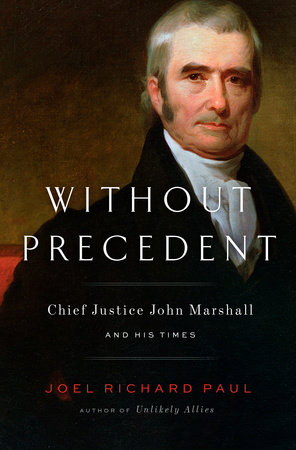 He wasn’t a rich man, and he wasn’t a well-educated man. “Marshall grew up in a two-room log cabin shared with fourteen siblings on the hardscrabble frontier of Virginia. His only formal education consisted of one year of grammar school and six weeks of law school.” And yet–this is the part that would make a terrific Broadway musical, or perhaps even an opera–Marshall becomes a military officer, influential attorney of local and then national renown, a diplomat to France, a congressman, U.S. Secretary of State, the biographer of George Washington, and eventually, the first really effective chief justice of the new United States of America (John Jay was the first, but the high court was just beginning to take shape; he was followed by one short-termer whose nomination went unapproved, and another, who was also operating in the early days of our judicial system).
 The fun begins in York about 10,000 years ago. The Romans showed up about 2,000 years ago–certainly by 71 AD–and you can walk the
  After the Vikings, York weathered a less distinguished period. One of the worst episodes: the burning of Jews supposedly under government protection in the 1100s–an old castle is still on the site. By 1300, York was both an important government and trading center for England, and remained so until the 1500s. You can walk the streets and see medieval buildings–not unlike walking the world of Harry Potter (celebrated by several souvenir shops).

 What have I missed? The quiet pub where the World Cup semi-final victory for England was celebrated in a most dignified manner. The streets outside where everyone’s cheeks (probably both kinds) were painted with tiny English soccer flags, where people sang, loudly with with tremendous dancing exuberance, about how the Cup was “coming home.” Nearly every pub in town was pounding with energy and music–including, inexplicably, “Take Me Home Country Roads” and other boisterous (?) John Denver tunes to which every Brit seemed to know every word; the medley ended with the British (?) classic, “Cotton-Eyed Joe.” All great fun!


 The tiger is George’s Clemenceau, great friend of hedgehog Claude Monet, who turns out to be the last of the impressionists. The story picks up long after Monet had moved to his lovely garden home in Giverny, about halfway upriver from Paris on the way to Rouen. And may recall Rouen because that’s home to the ancient cathedral that Monet painted more than thirty times under all sorts of light. Monet was that kind of artist—obsessive, meticulous, perfectly happy to spend endless hours interpreting the London fog or wheat stacks (similar to hay stracks) not far from his home in the country. When author Ross King picks up Monet’s story, the artist is less enthusiastic about travel, but eager to serve and take healthy part in a lavish lunch before touring the beautiful Giverny garden, visiting the pond and lily pads, or showing off his latest work, most often very large paintings. By now, Monet is far more active than many men his age, still active enough to build a new studio adjacent to the house and fill it with new paintings. Cataracts and other health problems make seeing, and therefore painting with the specific colors he requires, a terrifying challenge. And there is a Great War on the horizon, so his life’s work may be destroyed by the German forces already notorious for precisely this sort of mayhem.
 He is also an extraordinarily difficult, insecure, proud man who feels that he must do more for France, provided that doing more is possible on his own exacting terms.
 Author
 Digital Insider