If I had arrived several weeks earlier, I might have seen “La Traviata” or perhaps “Simon Boccanegra,” but I was only to be in Venice for a few days, and there was no opera scheduled at Teatro La Fenice. I was happy to settle for a Diego Matheuz conducting Shostakovich’s Fifth Symphony—just to spend an evening listening to music in one of Europe’s most extraordinary concert halls. Unfortunately, Matheuz did not perform because there was a general strike on Friday. I did, however, manage to attend a Saturday night performance of a contemporary work. More on that later.
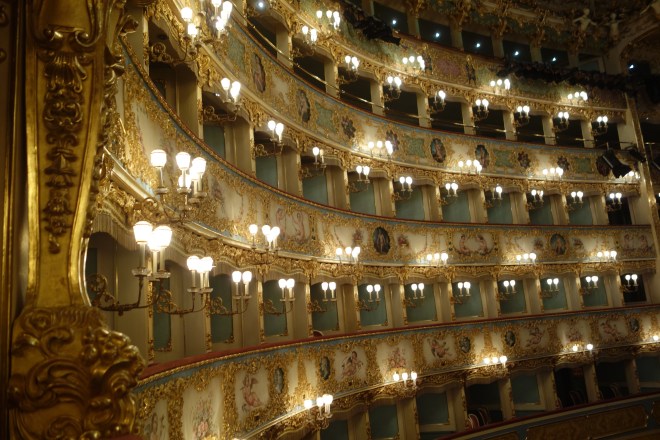
 Why did I care about this particular theater? The history, mostly. And the way it looks on the inside. Just being there, even if there isn’t the same there that was there before. This is the opera house where Verdi’s “La Traviata” made its debut. Same for “Simon Boccanegra,” where Maria Callas became a star. It is, or was, a remarkable place in the history of music. Why the dancing verbs? Because the place has a history that’s as crazy as any opera plot. Originally built as the San Benedetto Theatre in the 1730s, it burned down in 1774, and was rebuilt as Teatro La Fenice (“Fenice” translates as “phoenix”) to begin anew in 1792. Immediately, there was squabbles, the theater survived and by early 1800s, it was a world-class venue, mounting operas by Rossini, Bellini and Donizetti, the big names in Italy at that time. In 1836, it burned down again, and was quickly rebuilt a year or so later. That’s when Verdi started writing operas for La Fenice, including “Rigoletto” and “La Traviata,” which debuted there. So began a century and a half of magic—until 1996, when two electricians burned it to the ground. Remarkably, engineers had measured the theater’s acoustics only two months before, so the theater was rebuilt sounding much the same as its predecessor.
 That’s the theater that I visited, the 1,000 seat theater that hosted the premiere of “La grande guerra (vista con gli occhi di un bambino)” – a tale for men’s chorus, soprano, narrator and instruments with music by Claudio Ambrosini, featuring Sonia Visentin (soprano), Sandro Cappelletto (narrator), Matteo Liva (piano), Alberto Perenzin (trumpet), Giulio Somma (percussion), Coenobium Vocale (Maria Dal Bianco, choirmaster ). The title translates as: “The Great War (as seen through the eyes of a child”). The instrumentation was carefully chosen: the soprano Visentin represents the voices of the mothers and sisters and aunts who bore unceasing sorrow as they lived their short lives. The child, who wrote the World War I diaries, is manifest in the percussion work of a twelve-year-old musician who masterfully handled the xylophone, tympani and other instruments. The men’s choir—rather flawless in their relentless soldiering on through the era’s music—represent the soldiers. Capalletto’s narration tied everything together in the words of the child. So painful, so affecting. So frustrating—I wanted to understand every word, but I could only understand some of what was being said and sung.
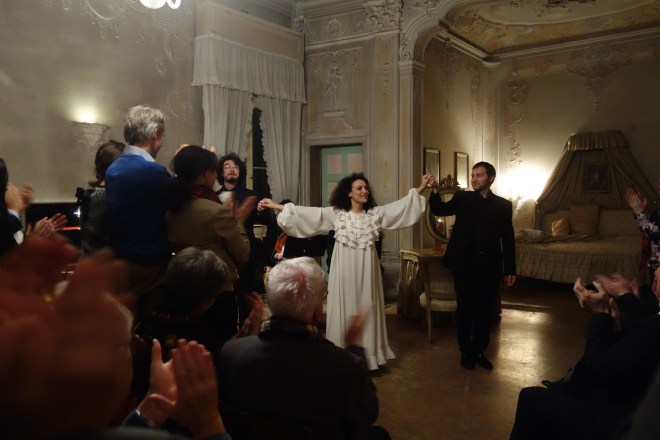 It was a beautiful performance in a beautiful place. But it was not my only engagement for the evening. Fearful of seeing no music in Venice, I also booked a seat at the tourist-oriented Musica a Palazzo, just a few dark alleyways, a campo (plaza), and several bridges away from the opera house. I raced over in the dark to catch the final act of an intimate staging of the story in an old mansion–the last Barbaggio family member died in 1804). Each act is staged in a different room of the mansion. I arrived in time for Violetta to die in her bedroom, the men in her life beside her, three performers singing their hearts out for perhaps a hundred people with the accompaniment of a quartet (violin, viola, cello, piano). The intimacy of the performance, and the the familiar strangeness of the setting in the old mansion, turns out to be a delightful for a tourist to spend an evening in Venice—but you must be willing to buy into the schtick. The audience seemed to delight in doing just that.
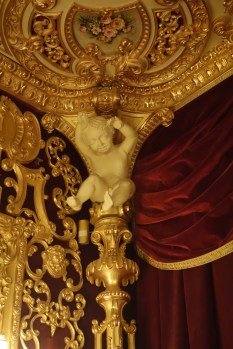 The contrast was fun to contemplate. On the one hand, a classic old opera house rebuilt from its own ashes less than twenty years ago presenting material from World War I in a 21st century setting. On the other, an old mansion dating back two centuries— Ca’Barbagio presenting an opera that debuted at La Fenice in 1853 for 21st century tourists visiting an old city of just 50,000 permanent residents whose long decline probably began more than 500 years ago. Today, the city exists mostly for its history and tourism—more than 20 million people visit Venice every year. I was lucky enough to spend my time at La Fenice sitting next to a local woman, Mirella, whose love for La Fenice has less to do with classic old operas and more to do with the many contemporary works, like those by Ambrosini, for this is, after all, her neighborhood music house.
 was an extraordinarily clear thinker about things that matter. That clarity, and her passion, and her just-plain-good writing are the reasons why I will spend the winter reading every one of about fifty articles and essays in a book that her daughter Nona put together. It’s called “The Essential Ellen Willis.” I’m guessing you won’t find it in many bookstores despite the best efforts of the University of Minnesota Press, but it’s certainly available online. For someone who enjoys smart writing with more than a small dose of social conscience, it’s an ideal holiday choice.

 You may recognize “Blue Diamond Mines,” or may think it sounds familiar (the chorus is similar to to “In the Pines,” a . It’s a bluesy bluegrass tune performed by
 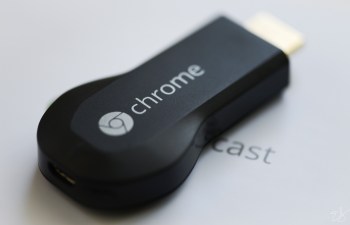 When I first saw Apple TV, I wondered what it was, and whether it was worth $100. By the time I saw Google’s Chromecast, I thought I understood what it was, and why it was worth $35. Neither device looks like much. Apple TV looks like a square hockey puck. Chrome cast looks like a thumb drive. Looks can be deceiving.
 ather Channel wasn’t at all concerned with weather forecasting. Instead, TWC was running an episode of “Fat Guys in the Woods” (in case there was any doubt that TV is in its pitiful final stages…). Nowadays, when I want a weather forecast, I no longer consult the TV; I find extremely local, extremely detailed, extremely up to date weather information on the internet.
 etflix, HBO GO, Showtime Anytime, YouTube, and a hundred other 21st century channels.
 Although many business leaders proceed with a comfortable pair of blinders that protect their minds from digital interference, every 21st century broadcaster, network, local TV channel must assume that the business of scheduled television is not a long-term proposition, and must also also assume that their job is to promote viewership of individual programs anytime anywhere via any device that the viewer wants to use. Apart from QVC, almost none of the original 24/7 cable experiences remains intact (MTV no longer shows music videos 24/7, CNN no longer shows news 24/7, The Weather Channel no longer shows weather 24/7, etc.) Still, the old TV channel brands face a bright future—on many platforms, not as TV channels.
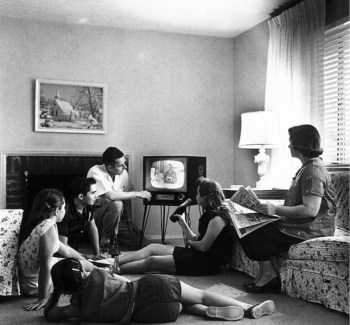 The broadcast spectrum is free, but we allowed, and encouraged, the likes of Comcast, to replace the use of free TV spectrum with a service that now costs more than a thousand dollars per year. Quite reasonably, the U.S. government figures, why reserve the spectrum for television broadcasters if so few people are watching those broadcasts over-the-air. In fact, why not sell off the spectrum for other purposes? That’s starting in 2016—probably about 10-15% of the TV spectrum will be sold by local TV stations to the government, which will flip the spectrum and resell it for wireless internet use.

 He’s a theater director and choreographer with a list of impressive, and recent,






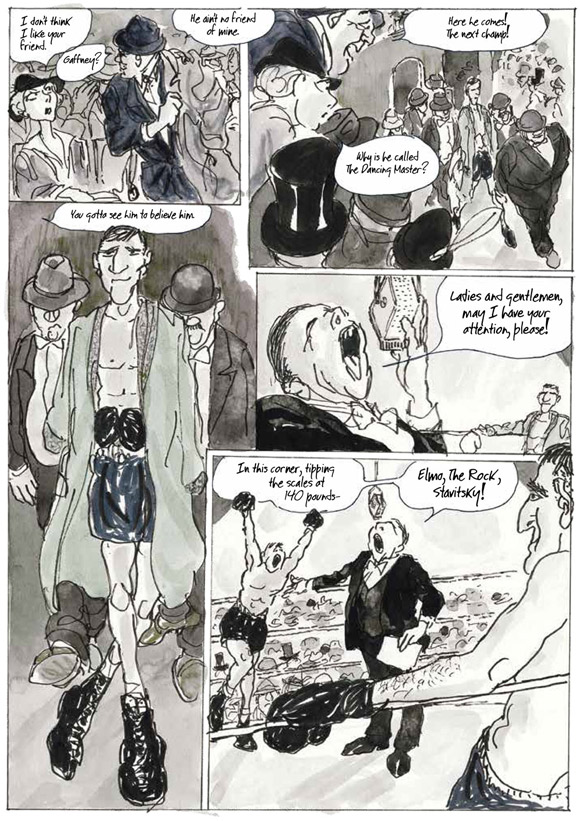
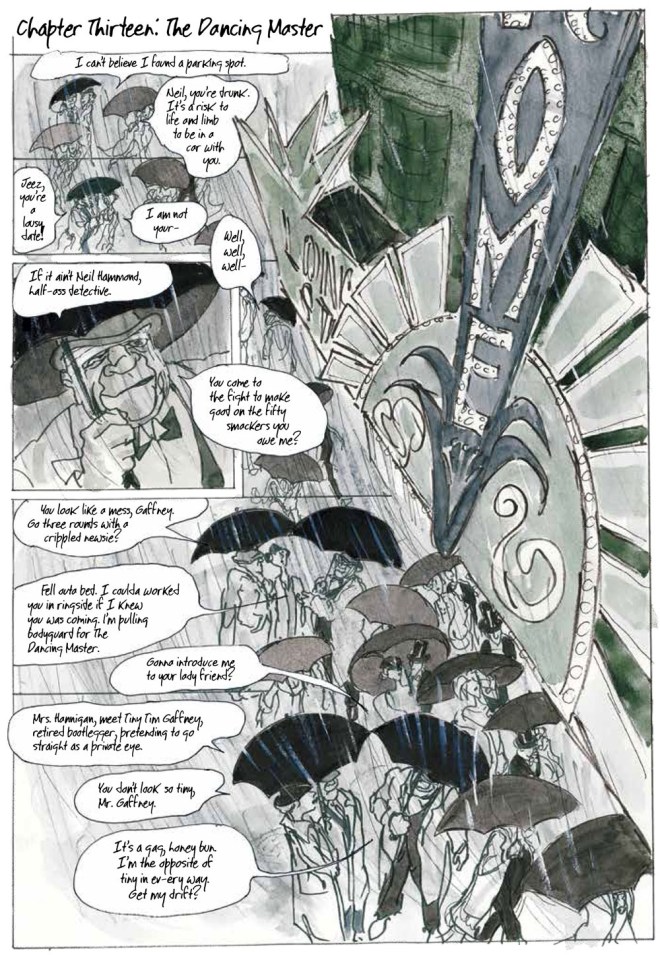
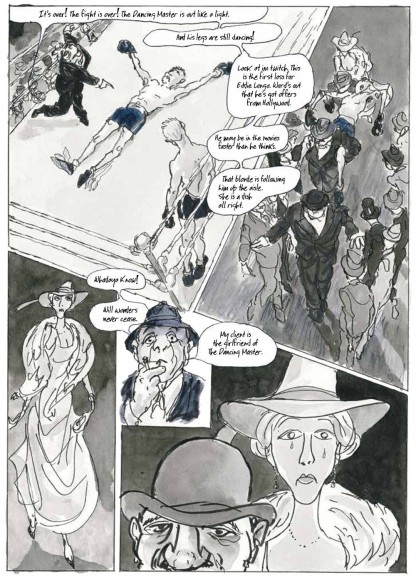
 Okay, more about Jules before begin. Actually, you get a fair sense of him from his 2008 cartoon for NYC’s Village Voice. I found it on Wikipedia. He won a Pulitzer Prize for political cartooning, was awarded a lifetime achievement award by the Writer’s Guild of America, and he’s got his place in the Comic Book Hall of Fame. And now, he’s got this new book.
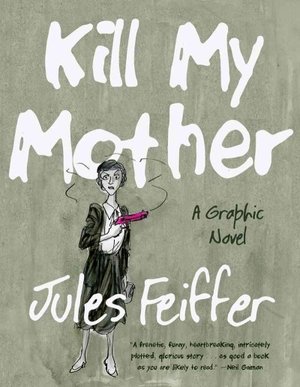 In theory, it’s the book that drives the story, but in practice, here, it’s the pictures. Actually, it’s the whole page, the whole well-designed, elegantly organized duotone watercolors and pen-and-ink that feel so dark, so thick with intrigue. Most of the book is rendered in sepia—not the old tones of photographs, but lively, contrasty, vaguely seedy renditions of what otherwise might have been black. The accent is usually a very pale green, the color of a Hollywood swimming pool on page, a cadaver on the next.
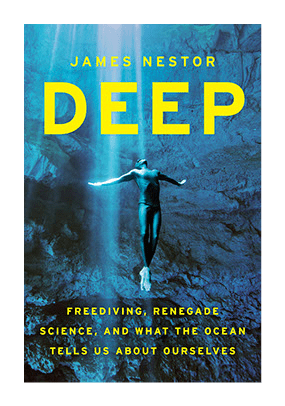 Freediving is “the most direct and intimate way to connect with the ocean.” During a three-minute freedive, “the (human) body bears only a passing resemblance to its terrestrial form and function. The ocean changes us physically, and psychically.” Unfortunately, “sometimes you don’t make it back alive.” Those words were written by James Nestor in his new book, “Deep: Freediving, Renegade Science and What the Ocean Tells Us about Ourselves.” It’s one of the best books I’ve read this year, an introduction to a part of our world that is unfamiliar to nearly everyone on the planet, and an adventure story, too.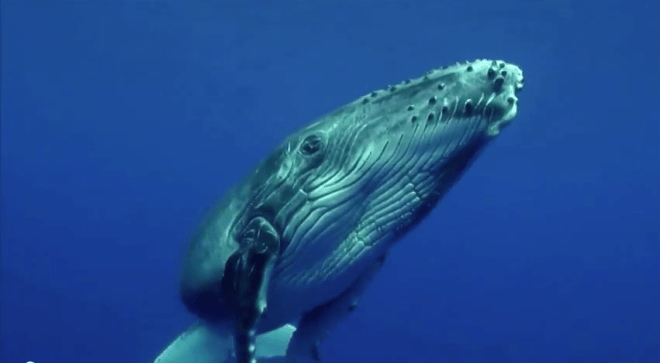

 New CD + DVD set: “Jazz & The Philharmonic,” recorded in Miami, dozens of performers doing a lovely job with jazz, classical (with a modern twist), traditional music, beautifully produced and engineered. You may have seen it on PBS—last February—but if you are among the many millions who missed out, this is a gift that you might consider for this year’s holiday season. Notably, it is one of the last recorded works supervised by Phil Ramone, whose list of
 To begin, think not about the objects, but about our desires. We want to know it all—but not all of the time. Sometimes, we just want to know whether it’s cold outside, or whether the dog has been fed. We don’t know the details, don’t really need to know the precise temperature or the moment in time when the dog’s bowl was filled with food. So instead of a thermometer, or, more intensely, a digital thermometer that reports temperature to the tenth of a degree, how about a glowing orb? Or, as author-scientist-innovator-professor David Rose describes his invention, an Ambient Orb. He writes, in his new-ish book, Enchanted Objects, “They aren’t disruptive. They have a calm presence. They don’t require you to do anything…They are there, in every room of the house with the exact information you expect from them.” So he reimagined a crystal ball that contains LEDs that change color, and report the information you need by glowing in your choice of hues. “As the colors change, you glance and know if the pollen count in the air is higher than usual.”
 Why not a jacket that hugs the wearer every time she receives a “like” on her Facebook page? (This, from one of David’s students.) Or a toothbrush that knows it is being used (and being used properly), and recognizes your good work, rewarding you with a discount at the dentist? (Oy. The gamification of dentistry! Nah, not in David’s hands. He’s smarter than that—check this out.) One of his entrepreneurial firms was hired by a big pharmaceutical firm to bring some life to the little plastic pill containers. Hoping to change the behavior of the the many patients who do not take our prescribed meds, David’s company, Vitality, changed the cap. The cap glows when you’re supposed to take a pill. Even better, the GlowCap texts you when you’ve forgotten to take a pill, and automatically sends refill messages your local pharmacy. The “adherence rate” is up to 94 percent, far better than the 71 percent achieved by a standard (boring, non-glowing, non-internet connected) vial. It’s information at a glance, again non-disruptive.
 David’s vision of the future: whatever the device may do, it must be affordable, indestructible, easily used, and, when it makes sense, wearable. Lovable, too—his clever illustration of interactive medicine packaging are based upon faces that transform themselves. They’re happy when you’re doing the right thing, grumpy if you’re not.
 David dreams of on-demand objects, and objects that learn and respond to personal needs. Vending machines, for example, that customize their offerings based upon “a prediction of what the person will like.” He envisions “digital shadows” for objects—information associated with physical objects enhanced by digital projection.

