Peacock in the Coal Mine

Josef Adalian wrote a very provocative article about NBC and the network prime time model in his Vulture column for New York magazine. Based upon both prime time flops and shifts in audience attention, he wonders whether the network model is still viable, and if so, how much longer it will survive.
It was far easier to climb out of the Nielsen basement when there was just a handful of legitimate competitors. Now NBC is fighting for eyeballs at a time when millions of viewers don’t even watch TV on TV.
You can buy the "NBC Stress Toy" from the NBC Universal Store.

You can buy the “NBC Stress Toy” from the NBC Universal Store. Just click on the image.

Adalian presents a case that’s based upon three key factors: (a) NBC is performing very poorly throughout its prime time schedule, (b) temporary short-term solutions have masked the truth for several years and (c) the media environment no longer allows the kinds of turnarounds that ABC, for example, achieved when LOST, Desperate Housewives and Grey’s Anatomy all caught fire after the responsible programmers were long gone. With all of the noise from so many media outlets, Adalian discounts even the potential of star vehicles and the old tentpole strategy (Cosby and Seinfeld, for example).

He’s close to the industry, and perhaps, a bit too close. He analyzes the moves of senior executives in an industry where those moves often defy logic and reason. And, he makes it clear, this is not really an article about NBC, but about the future of prime time network television on all of the broadcast networks:
Networks can pretend all they want that the broadcast model isn’t broken, but denial didn’t forestall the end of big record-store chains, and it didn’t save Borders Books or Hostess. Five or ten years from now, there’s a good chance we’ll recognize NBC as the Peacock in the coal mine.
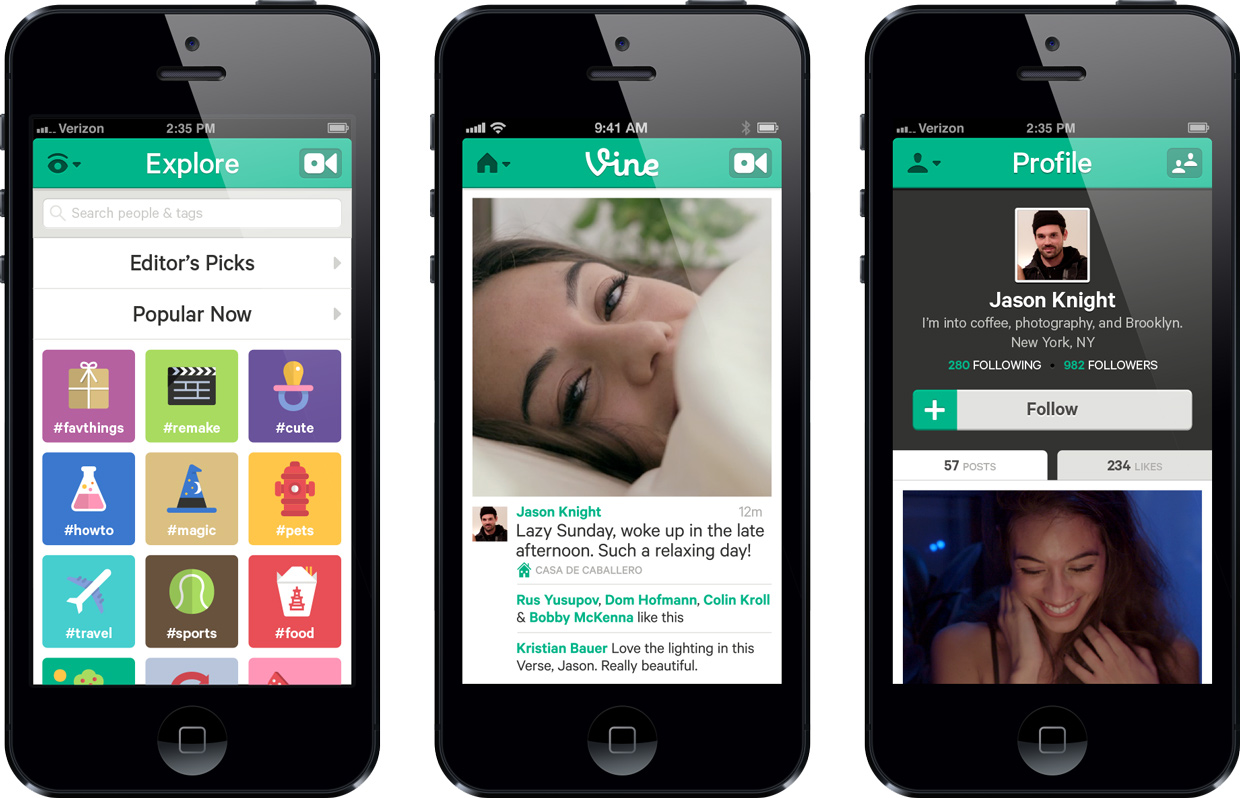
Mashup: Twitter, YouTube, Flickr, Tumblr = Vine

design02

What the world needs is… looping videos.

  • Norman, the Scooter Dog
  • A quick scream-filled ride downhill on a roller coaster
  • Laundry flapping in the breeze on a windy, cloudy day
  • A car covered in snow, with snow removed in a stop-action sequence
  • A banana being sliced
  • A little boy and a little girl, holding hands as they ride in an open-top train
  • A cartoon sketch of an elephant head shaking from side to side
  • Scenes from Chinese New Year in NYC
  • A teenage girl making funny faces
  • Hot air balloons in flight
  • A girl washing her face and brushing her teeth
  • A paper clip that unbends itself into a heart
  • A guy riding a bicycle and ringing a bell

So here’s Vine, now being used for local coverage of street news, brief documentation of automobile rides and walks on the beach, a great many people posing for the camera and sticking out their tongues (each in his or her own Vine video), producers whose stop-motion animation desperately needs a tripod, (inevitably) porn (find it on your own; there’s enough of it to require warnings and generate complaints).

Will it succeed? Well, Vine has been live for just two weeks, so it’s early days. But the company has already been acquired by a larger one that is likely to affect its prospects. Vine has been purchased by Twitter.

20th Century Triumph

Here we are, deep into the era of home theater and giant screens and digital sound. (Big deal.)

Compare what we have today to what was still around, and popular, a half century ago. I’m a big fan of technology, but I sure wish there were places where we could spend afternoons and evenings watching great movies on a truly gigantic screen. Once upon a time, that was the way people watched movies..in grand palaces. One such theater, a reminder of the era when Jamaica, Queens was one of New York City’s busier shopping districts, was called the Loew’s Valencia. Stars appeared on stage, and major motion pictures were shown to audiences who were grateful not to travel all the way to Brooklyn, Manhattan, the Bronx or Newark, where so many of the showcase theaters were located.

Things have changed. So much about this particular theater has not.

ValenciaAccording to a spectacular article by a NYC movie location scout identified only as “Scout,” this 1929 movie palace is still standing–and it is in fabulous condition. You must read the article, if only to gaze at the pictures of this place. And, yes, you can visit. Today, it’s a Tabernacle.

Designed by John Eberson, the Valencia was the largest theater in Queens, New York. It was lorious. For a look at the theater from street view with a competitive theater across the street (you cross under the subway to get there), click here. Inside, there are over 3,500 seats. The over-the-top decor was inspired by Mexican and Spanish baroque designs, with rows of cherub heads, elaborate tile work, swirls and flourishes (this from the New York Chronology).

Valencia2

Loew’s Valencia is now part of the Registry of Historic Places. If you enjoy the magic of old theaters, the best place on the web to learn about them is Cinema Treasures. In its way, Cinema Treasures is the registry for all sorts of theaters, most of them long gone (cool thing: often, CT explains what happened and why).

Valencia3From its painted sky to the beautiful seats and elegant balconies, the Valencia recalls a time when movie-going was an experience. It may seem incredible, but there were a lot of movie theaters that looked like this…many just a few miles away from this one. The RKO Theater in Flushing was another large one in Queens was one of them. After a very long period of being ignored, the building site will become a high school. Some of the fabulous theaters in Newark, NJ (then, a vibrant city with an exciting movie, theater and nightlife scene) are still represented by their fading facades–and it’s worth a walking trip to get a sense of what was there so many years ago.

We’ve gone from dressing up to sit in a huge, elegant dark room to watch big pictures of even bigger stars to the magic of watching movies on a little B/W box in our own homes to, nowadays, choosing from tens of thousands of films to watch any time, anywhere, just an instant after deciding what to watch.

Along the way, we’ve lost a lot.

The Perfect Gift (for the Couple Who Has Everything)

Couple

To watch the (short) video, click on the pic. I wonder if the term “conspicuous consumption” applies if (a) the object of affection is concealed in the backyard, and (b) if it can be stowed underground.

From the FCC: A Summary of the Spectrum Auction Plan

imagesThe FCC posted a useful (11-page) summary that explains the upcoming television spectrum auction with a reasonable level of detail.

Why is the FCC beginning to shut down large amounts of television spectrum? Here’s why:

“In key areas, the United States leads the world in wireless infrastructure and
innovation. However, our successes in building a first-class wireless industry have also
created our greatest challenges; the skyrocketing usage of our wireless networks is
dramatically increasing demands on both licensed and unlicensed spectrum. The mobile
wireless landscape is undergoing a transformation as mobile broadband networks are
emerging not only as the foundation for communications services in the 21st Century,
but also as the infrastructure supporting economic growth and innovation in such wide-
ranging areas as entertainment, health care, public safety, education, and social service.
Like the railroads in the 19th Century, and the electrical grid in the 20th Century, our
mobile broadband networks are primary economic engines for our country. Spectrum is
a critical building block for these networks.”

Here’s more about the law that sets this process in motion:

“Congress, in passing the Middle Class Tax Relief and Job Creation Act of 2012
(“Spectrum Act”) in early 2012, authorized the FCC to conduct incentive auctions, with
the first auction to be of broadcast television spectrum. Congress further directed that
certain net proceeds from the broadcast incentive auction are to be deposited in the
Public Safety Trust Fund to fund a national first responder network, state and local
public safety grants, and public safety research, and the balance is to be used for deficit reduction.”

And how are they going about it?

Well, that’s the complicated part. The FCC needs to acquire spectrum from current users, and it needs to sell that spectrum to future users. This involves a pair of auctions. The mechanics of these auctions are not simple, and sometimes seem to be counter-intutitive.

As citizens, it’s important that people in the U.S. develop an understanding of what the FCC is doing, why, and what will happen as a result.

For those who do not live in the US, where a combination of local television stations, broadcast television networks, cable television networks, and a wide range of other services are commonplace, this whole adventure may be very difficult to understand, and may not make much sense. For those who wonder why the FCC directed a complete conversion from analog to digital television as a project separate from this latest shift, you should count yourself among the many.

CES 2013: What Mattered and Why

Just after Christmas, the Consumer Electronics Show convenes in Las Vegas to showcase all that’s new for the coming year. Most of it is upgrades, retreads, and modest improvements over the past year’s stuff. Some of it suggests a new shape for the industry, and for the ways that we work, play, and communicate. Here’s a brief rundown on what might matter most:

  • The disk drive maker Seagate will soon offer a “local cloud” storage device that you can set up in your home or office. Local storage, easily reached via local wi-fi. IT professionals will recognize this as a NAS, short for Network Attached Storage. At about $250 for 4TB, the lesser configurations don’t save enough money to be worth your time.
  • Expanded uses for phones and tablets. One shining example is the new MOCET iPad Communicator. Phones and tablets are extremely versatile. Adding capabilities beyond, say, a clock radio or external speakers, will become increasingly commonplace. Remember: you’re carrying a fairly powerful computer. Why not put it to use?

    MOCET

    To go to the site, click on the picture.

  • OLED is a video technology that allows for very thin screens–and flexible ones. The price of manufacture is dropping, so we’ll begin to see OLED screens enter the race between plasma and LED screens. Eventually, this organic (!) technology will win out, and become commonplace. (The “O” in OLED stands for “organic.)
  • Previously, I wrote about the new 4K screens. They’re beginning to be shown as demos.
  • Touch screens and gestures will begin to replace keyboards and remote controls. As the technology allows for greater precision, older ways of interacting with computers (and tablets) and with videogames and TV sets will shift our conception of an interface into the modern age.
  • Smart phones seem to be getting larger–more screen real estate is better for mail, web, games, and movies. Tablets seems to be getting smaller (the line between a small tablet and a big phone is becoming difficult to discern). Tablets are also becoming larger–imagine what you could do with a 20-inch portable tablet! Here, we’re starting to blur the distinction between a computer monitor, a TV set and a tablet. It’s tough to forecast where these trends are heading.
  • Samsung has become the Sony of the 2010s–an exciting company with innovation in every direction. The quality is there, too. But there are still lessons to be learned about user interfaces and design.
  • Very small storage devices are continuing to expand their storage dimensions. Kingston, for example, showed off a 1TB flash drive–larger than the popular thumb drives, but still quite portable.
  • From DPReview's coverage, the latest Fujifilm digital camera. Click on the image to see their story.

    From DPReview’s coverage, the latest Fujifilm digital camera. Click on the image to see their story.

    It’s now a regular routine: cool new cameras introduced at CES. For a solid rundown, visit DPReview. I think my favorite stuff is the expansion of Fuji small-sensor line. These cameras look like the real think, shoot terrific images, and tend to be somewhat more intuitive in their interfaces. (More on these soon.)

  • Automotive electronics has always been a key aspect of CES. Sure, car stereos and car security systems remain center stage. Now that cars plug into wall sockets, the vehicles themselves are becoming digital devices. This time around, lots of cars as harbingers. Next time, I’ll bet we start seeing hybrid devices that confuse the definitions of bicycles, motorcycles, golf carts, and other short-range transportation devices.
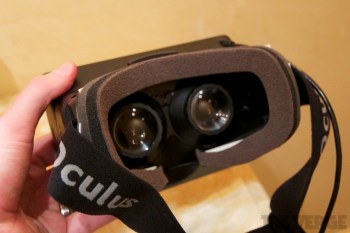
  • Oculus Verge

    To read The Verge’s story about the Oculus Rift, click on the image.

  • Your smartphone and/or your tablet will become a monitoring control center and remote control. You know how we’re beginning to program a DVR from afar? Or read date/time stamps on the foods in the fridge? It won’t be long before we all have a remote dashboard to tell us about the fuel in the car, the meds in the bathroom, when the last time the dog was walked, body fat, etc. add some robotic controls and digital life becomes even more interesting.
  • I’ve wondered why immersive video game displays have taken so long to gain traction in the marketplace. Now, it looks like the (Kickstarter-funded) Oculus Rift will change the way gamers see and experience the experience of game play. There’s good multimedia coverage in The Verge.

Snow Fall: Two Ways to Tell a Story

Several weeks ago, in the midst of a busy holiday season, The New York Times attempted to understand its future by telling the story of an avalanche. The story requires about a half hour of your time, and it is best experienced in a quiet room with a reasonably large screen.

Snow Fall

The place to begin is with the text-ish story, the one that requires a lot of on-screen reading, the one that includes various animated maps that show just where, how, and why the avalanche happened. Short videos (each one about a minute long) illustrate the story, and bring the people in the story to life. There are audio files of the emergency calls to Ski Patrol. There are slide shows that help us to understand the life of each skier. The writing is strong and skillful. The whole presentation is an impressive demonstration of how we might experience news and features in the rapidly-advancing future.

It feels like an experiment. The writing is long, more like a NY Times Magazine story than a web story. I felt myself drawn into the story and its environment, and found myself pressing the “volume up” buttons on my keyboard in expectation of some sort of soundtrack to accompany the reading of the text.  Short videos satisfied some of the craving for additional stimulation; they were nicely integrated into the flow of the story and the text presentation. The slide shows that introduce each character are a more awkward fit because they require the reader to leave the chronology of the intense storyline–which is told, mostly, in shades of grey–and to consider each character’s past life–which is told, mostly, in vivid digital color. The visual shift is jarring, made worse by the inclusion of completely irrelevant advertisements that are large enough to disrupt the entire experience (for this type of storytelling, I think I’d prefer a micropayment or subscription model, but I wouldn’t mind seeing an opening, mid-break and closing sponsorship presentation).

After I read, looked at the pictures, followed the maps, watched the short videos, and so on, I felt that I understood what happened at Tunnel Creek.

And then, I watched the 11-minute video documentary that told the whole story. I was struck by how much more effectively the documentary told the same story. The story was tight, the characters were crisply defined, the maps and visuals made more sense because they were narrated, the pace was brisk, the emotions were sharp and devastating. Less was a whole lot more. The documentary made the print-pictures-video-maps presentation feel like a bunch of reporters’ notes and script drafts. I felt certain that the doc had been produced by another team, but no, it had been made by the same New York Times staff.

And all of that confused me. I love to read (less so on the screen, moreso from paper), and I was very impressed by the quality of storytelling in the multimedia format. But after watching the documentary, I found myself wondering whether we’re making too much of this transmedia idea, and whether a well-produced audio-video presentation might provide a more reasonable multimedia future.

Sure, this is just one example, and an early one at that. I’m anxious to see what Atavist has online, and will write about their multimedia storytelling in the next few weeks.

In the meantime, do take the take to explore the NY Times presentations. They’re well worth your time and attention.

Amazon: The Sitcom(s)

Amazon PrimeWhat’s the difference between a bookstore and TV channel? Sounds like a riddle for a time traveler. Little more than a decade ago, Amazon started to pulverize the book business. Now, just about anybody with a computer or a mobile device (that would be, just about everybody) thinks about Amazon as the first stop for books. And music. And just about every other common retail item.

And now, Amazon is beginning its assault on (not sure whether to call it television, but let’s go with television for now). Here come the first six sitcoms from Amazon Studios, all intended to be shown, free, to Amazon Prime members (who get free shipping and other benefits from Amazon). These programs will be part of a rapidly growing (and pretty darned good) collection of available programming already in place. For example, Amazon Prime viewers can watch EVERY episode of Twilight Zone, Arrested Development, and other interesting TV series from the past, as well as a bunch of good moves (last night, we watched Good Night, And Good Luck). As Amazon Prime members, we keep forgetting that we pay Netflix money, too.

So, what are the series? List below. Most of them appear to be promising: the creative teams are experienced, and the concepts are less lowest-common-denominator than we usually see on TV. One new concept from Garry Trudeau that sounds promising. And I sure hope that The Onion does a better job with television this time around (past attempt: not so good).

The complete list comes from the story in Tech Crunch.

Alpha House – Alpha House was written by Academy Award nominee and Pulitzer-Prize winner Garry Trudeau (Doonesbury, Tanner ’88). Alpha House follows four senators who live together in a rented house in Washington DC.

Browsers – Written by 12-time Emmy-winning comedy writer David Javerbaum (The Daily Show) and to be directed by Don Scardino (30 Rock), Browsers is a musical comedy set in contemporary Manhattan that follows four young people as they start their first jobs at a news website.

Dark Minions – Written by Big Bang Theory co-stars Kevin Sussman and John Ross Bowie, Dark Minions is an animated workplace series about two slackers just trying to make a paycheck working an intergalactic warship. The pilot will be produced by Principato-Young (Reno 911).

The Onion Presents: The News – The Onion Presents: The News is a smart, fast-paced scripted comedy set behind the scenes of The Onion News Network that shows just how far journalists will go to stay at the top of their game. The Onion Presents: The News is from The Onion’s Will Graham & Dan Mirk (The Onion News Network, The Onion Sportsdome).

Supanatural – Supanatural is an animated comedy series about two outspoken divas who are humanity’s last line of defense against the supernatural, when they’re not working at the mall. The series, written by Lily Sparks, Price Peterson and Ryan Sandoval, will be produced by Jason Micallef (Butter) and Kristen Schaal (The Daily Show).

Those Who Can’t – Written by Andrew Orvedahl, Adam Cayton-Holland and Benjamin Roy (Grawlix), who were discovered through Amazon Studios online open door process, Those Who Can’t is a comedy about three juvenile, misfit teachers who are just as immature, if not more so, than the students they teach.

Just in case you missed it, this blog presents a useful introduction to one of the best TV series of all time.

Just in case you missed it, this blog presents a useful introduction to one of the best TV series of all time. To visit the blog, click on the image.

All I Want for Christmas (Next Year) is My Apple TV

I want what you want: a new TV with the smart design and feature set that ties into the rest of my Apple gear. I want to be able to use Mail and Safari, Pages and Keynote, YouTube and Dropbox, and I want it all on a 45-inch screen that I can operate with an iPhone or iPad. I want to use my Apple TV for FaceTime with friends and family–a telephone that is also my TV screen. I want apps that work across TV, phone and tablet platforms, and more apps designed for the TV. I want a lot of stuff… but I haven’t thought about this nearly as much, or in as much detail, as Jeremy Allaire, the CEO of BrightCove, a forward-thinking cloud-based software provider. Below, a sample screen from a wonderful guest article on All Things Digital by Allaire, followed by the link to his article. Have fun!

8a-apple.com-tech-specsHave a look at the article “All I Want for Christmas is My Apple TV” here.

Playing, Studying and Designing Games

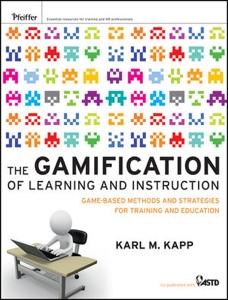
20121209-124333.jpgI’ve been searching for a book like this one for a while. A comprehensive overview of game play, academic research, application of games in all sorts of learning situations, lots of ideas and examples written in a fast-paced format filled with examples, illustrations and recommendations for further investigation. Give Bloomsburg University professor Karl M. Kapp the full one- thousand points for a terrific, accessible, smart book, but deduct a few points from the publisher’s total because the appealing title, The Gamification of Learning and Instruction isn’t really what this book is about…mostly, Kapp is writing about game design and not gamification.

What’s the difference? Well, that’s precisely the kind of issue that the professor addresses. Turns out, the distinction matters.

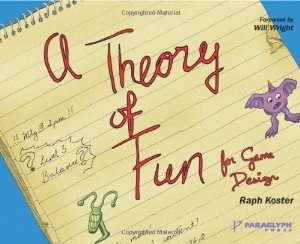
I like this definition of a game, provided by Raph Koster in a Theory of Fun and quoted by Kapp;

20121209-152224.jpg

a game is a system in which players engage in an abstract challenge, defined by rules, that results in a quantifiable outcome often soliciting an emotional reaction.

Kapp attempts to define gamification as:

…using game-based mechanics, aesthetics, and game thinking to engage people, motivate action, promote learning, and solve problems.

In short, gamification seems to be game design with a pro-social purpose.

Certainly, the book is filled with examples of purpose-built games for use in elementary school classrooms, training for firefighters, process improvement instruction, road safety, medical operations, and so on.

Most of the book is about game design, and associated psychology. Some examples:

When designing to teach high-level skills and high-order thinking, as applied to teaching leadership talent, it’s important to focus on ultra-quick decision making, the split-second shifts that a leader must make when considering and sometimes over-riding consensus, the encouragement of risk-taking for greater success, and thinking about leadership not as a role but as a task that can be passed among team members as the situation requires. The overarching idea here is “game thinking” – shorthand for an immersive environment in which real-life is reshaped to emphasize specific issues and de-emphasize others.

20121209-152426.jpg

I appreciated Kapp’s recap of Man, Play, and Games by the French philosopher, Roger Caillois. It was Caillois who identified for types of games: Agôn (competition), Alea (chance), Mimicary (simulation, role play) and Ilinx (state of dizziness and disorder). The last of these, Ilinx, is “the pursuit of vertigo, and trying to destroy the stability of perception”–children spinning around, and mountain climbing are examples.

There is a rundown on studies by serious researchers that suggest a string connection between games and learning, most with small sample sizes and narrow perspectives. To a greater extent than we may wish to admit, the connections between games, intent and measurement are young. We’re all learning what all of this means, and, in a world where digital engagement can be so closely aligned with learning, what it’s all going to mean as schools, K-12 education, and adult learning take their rightful place in the 21st century.