 It might not mean much to people who don’t buy paint to create artwork, or ink to make prints, but Dan Smith’s company went ahead with a big decision this month. They stopped selling art supplies. That is, they stopped selling art supplies made by others, and decided to bet the farm on the paints, inks and other supplies that they make and sell under their own name.
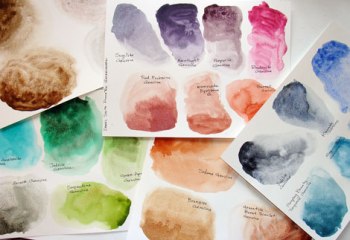 Putting this another way, Daniel Smith Art Supply decided to leave the business of being a middleman. The company didn’t have much to say about the change, apart from the warehouse clearance notices that now arrive in my email box every day. On their website, one statement clearly expresses the company’s purpose: “Daniel Smith is a leading manufacturer of superior-quality lines of watercolor paints, sticks & grounds, acrylic paints & gesso, oil & water-soluble oil paints. Our products are available worldwide.” This is not a new idea: when Brooks Brothers has been selling its own clothing, in its own stores, Zachary Taylor was our 12th President.
And that made me start wondering about Ken Burns, and a guy who worked for me twenty years ago who just showed up with his own documentary. If the connections are not immediately clear, please bear with me.
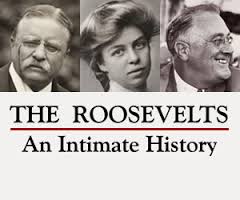 This week, millions of Americans are spending their evenings with the Roosevelts. That is, they are watching a series of documentaries made by Ken Burns and his Florentine Films staff, a series that tells the story of Theodore, Franklin, Eleanor, their families, and their political careers. Burns is closely aligned with WETA, a public television station in Washington, DC, but neither Burns nor WETA is the distributor. Instead, that job first falls to PBS, and then, to nearly 200 local television stations. That’s the way it has worked since The Civil War, or, at least, since around 1990. I didn’t think much about that until someone I know ranted about missing the first half hour of one of the episodes. I figured the episode was available online, did a bit of exploring, and found that all of the episodes were available online, even before they were released on television. And that made me wonder about the chain of distribution. Quite reasonably, there is a website devoted entirely to The Roosevelts. The site’s logo is the show’s logo. The top menu items seem to be focused on the project, not on the distribution. Scroll down to the bottom and the site is copyrighted by WETA and Florentine Films. In fact, there is a modest PBS presence, and in fact, there is no real need for a middleman here at all. Ken Burns has made a fine series of films, and now, with the miracle of web distribution, he can distribute those films directly to his (admiring) public. Something feels right about PBS’s relationship with Ken Burns and his work, but look closely, and it’s clear that PBS, Burns, Florentine, WETA, and PBS’s member stations are taking this new digital distribution idea one step at a time.
And that made me think about the guy who used to work for me who produced an independent documentary. It’s a lovely documentary about the nasty behavior of a big company, and, of all things, a public passion for a particular soda pop. The produce and I were exploring how this documentary gain some exposure. In essence, the producer was seeking a middleman, a Netflix, an exhibitor to bring the film to the public. Old habits die hard. New thinking would probably involve, somehow, contacting every person passionate about the soft drink, and encouraging them to (a) watch the film, and (b) tell their friends. This is a new kind of magic, and it only works sometimes.
And that made me think about a friend who is wondering about the future of the music business. In times past, record labels signed and marketed artists. Now, artists communicate directly with fans, and many record labels are struggling to find their way. At the same time, authors are publishing their own books while dreaming of the money and marketing clout that a large publisher could provide (no more crates of books in the garage, no more handling every detail).

 So here we are, caught between two ideas, two eras. In the former, large fortunes were made by the middleman. In the latter, there is no middleman. Make what you sell—the old American way (and, in fact, the way that many people in undeveloped nations continue to operate, with no clear path to a digital future). And then I think about Macy’s, Wal-Mart, and going back a bit, the much-criticized market domination of A&P and Rexall Drug. All of them hawking their self-branded merchandise, all of them making a fortune by selling other companies’ stuff.
Usually, I finish an article with a sense of direction. This time, it’s more complicated. Kudos to Dan Smith for doing something that makes sense instead of doing too many things that don’t. Kudos to the musicians and the authors and the documentary producers who have figured it out, and to Ken Burns and WETA for working within and beside and around the system as they invent a future that sustains everyone in their food chain. Let’s not pretend that this is easy, and let’s accept our era as the mass of contradictions that our world has become. In fact, some of our greatest internet success stories have been stories of middlemen with eBay and Amazon leading the way, and plenty of successful companies including Pinterest, Etsy, and Netflix populating a very long list of middleman enterprises.
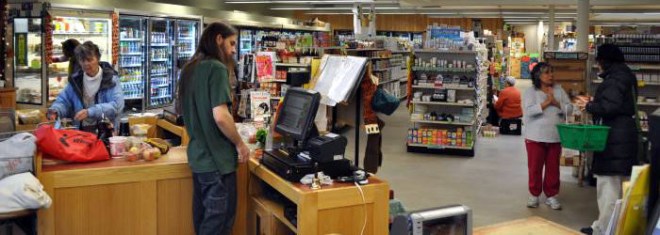
At first, I thought I’d be writing an article entitled “Death of the Middleman,” but as I wrote, I realized that my initial approach was naive. Now, I suspect there will always be a role for the middleman. That’s the reason why the altogether excellent Brattleboro Food Co-op exists, to create a marketplace for local farmers and small time operators who make, but cannot directly market, their local cheeses (imagine visiting every creamery for every block of cheese, every week). And thank goodness for the local artisinal ice cream makers who have opened small shops nearby, more than compensating for the closing of the century-old country dairy that closed before its time (and sold only its own ice cream).
Has the digital revolution washed over the middleman? Nope. Not yet. He’s still traveling from town to town, still making the same sales calls he did a century or so ago. Looks a bit different now, made and lost a few fortunes along the way, but he’s still a part of the landscape, not about to give it up any time soon, near as I can see.






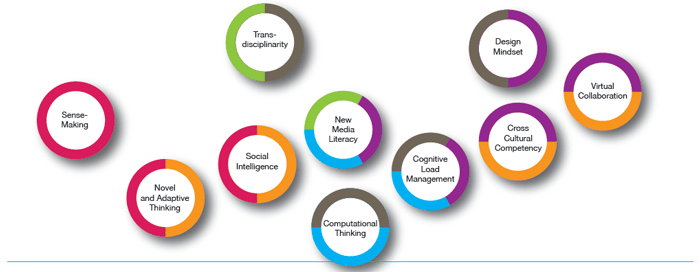 So what are we supposed to do about this? How are we supposed to think about 2025? Some of the answers are in a report prepared by the
 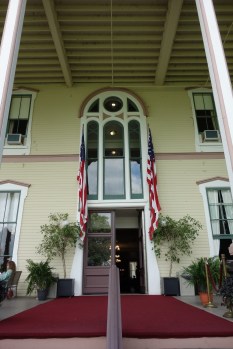 Yesterday afternoon was busy with reading on the Hotel Atheneum’s wraparound porch, studying the lake, selecting the perfect rocking chair, becoming distracted by what sounded like a full orchestra nearby. Wandering is what folks do on a summer’s day at Chautauqua, so I followed the music to the amphitheater where a rehearsal of Madame Butterfly kept me and perhaps two hundred other people busy for an hour. On Saturday night, the theater will be filled with nearly four thousand people, mostly residents who either spend their summers here, or, at least, several weeks each year. I was reluctant to linger: I wanted dinner before heading to the theater. Back at the
 Me? I’m off to Sol Messinger’s “Yiddish Language Conversation” back up near the main road at the relatively new (few Chautauqua structures are new) Emerson Jewish Life Center, built in 2009. Sol is sitting at a conference table with four or five people, interviewing each of them, each of us, about our family history. He is speaking in Yiddish. I understand only a bissel—the tiniest portion—but just the act of listening is joyful. Here and there, one of the people at the table translates key ideas for me. The conversation drifts in and out of English. The people are not young. I wonder what will happen to Yiddish, but only for a moment. My head is filled with ideas, but the yellow broadsheet—the detailed schedule for this Chautauqua week, contains far too many things for me to do, so I keep moving, grab a quick quiche at the informal lunch place above the bookstore (not wonderful: Chautauqua’s food for short-term visitors is a weak link), and manage to get to Philosopher’s Hall in time to get a seat just on the perimeter. It has been raining, so some seats are wet. I sit on my Daily, my bun is a little wet for a while, but I quickly forget my personal issue when the speaker begins. He’s compelling—
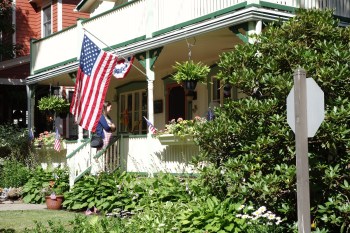
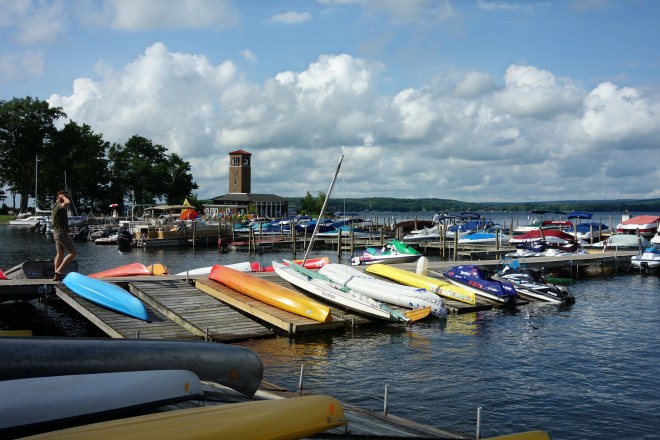 No time to linger. A Chautauquan keeps busy, does not lollygag (except when the day is beautiful and there is a book to be read under a century-old tree while children are racing around on bicycles and otherwise living a perfect small town American life). That glimpse of what America might have been is just that—a glimpse—for there is music to be enjoyed in one of the old churches. An hour of art songs performed by students from Chautauqua’s music school on the north side of town (no time to visit, but I understand practice sessions and rehearsals are open, and a bit like Tanglewood). Then, at 5:00PM, I wander back to the hotel for a daily wine tasting. I was invited by my new friends at last night’s Community Table. Mostly, my contribution to the table of six chatty people was recommendations of novels by Reynolds Price because one of the women was interested. Then, we headed down to dinner in the hotel’s main dining room. Steak dinner. Fresh cut.
 Next morning, it’s up at 7:00 am for the Farmer’s Market, then a spiritual bit, then a visit to the Methodist House (many religions, many houses, used for residents and for small events) for a July 4 lecture about the specific wording of the Declaration of Independence. I intended to stay for just a few minutes, but stayed for an hour and learned a lot about what Thomas Jefferson wrote and what Richard Henry Lee wrote. Half of the people in the audience seemed to know the speaker as a friend. I suspect he was a long-time Chautauqua resident or visitor, and that revealed one more piece of this fascinating puzzle: the people who attend Chautauqua are not just visiting because the lake is pretty in July. They attend because the combination of leisure and learning, family and fellowship, curiosity and creativity is, for nine special weeks every summer, available here and almost nowhere else.
 Privacy: As part of our ongoing commitment to respecting your privacy, we won’t use your documents, photos or other personal files or what you say in email, chat, video calls or voice mail to target advertising to you.
 Transparency: We updated our Code of Conduct so you can better understand the types of behaviors that could affect your account, and added language that parents are responsible for minor children’s use of Microsoft account and services, including purchases.
 Simplicity: We tailor our privacy statements for each of our products to help make it easier for you to find the information that is important to you
 Digital Insider