Sure, you could buy friends and family member an Amazon gift card, or a pair of gloves, but it’s fun to think beyond the obvious. Here’s a fresh idea:
Get a Yeti
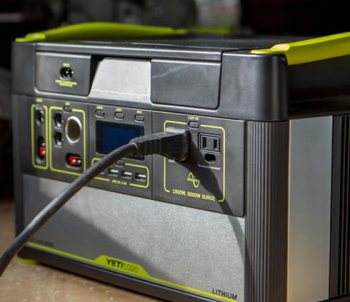 Sure, Yeti has done an amazing job with their line of pricy coolers that now seem to be available in a great many retail stores. They’re terrific for camping trips, tailgating, and long car trips. However, that’s not the Yeti I mean. I suppose it might be interesting to give someone an abominable snowman, which is the origin of the term Yeti. What I mean is the kind of Yeti that’s made by Goal Zero, a company that specializes in portable power.
The front panel looks a bit complicated, but that’s because the Yeti does a lot of different things. Basically, you’re looking at a big battery that can power all sorts of things. Model 1000, which costs about $1,300, is new for this season. You charge the battery by either plugging it into an AC outlet (18 hours for a full charge), or attaching a set of solar panels, also made by Goal Zero, available separately (in a variety of sizes and capacities). When you need the power, you discharge the battery in a number of different ways: you can recharge a laptop computer more than fifteen times, or a mid-sized LCD television about a dozen times, or your smart phone more than fifty times, or any combination. On this particular model, there are two AC outlets for output, five USB slots, and a 12-volt (car charger), and more. The Yeti 1000 weighs about 40 pounds.
You can spend less money for a lighter, simpler Yeti: the 12-pound Model 150 costs about $200, and you can use it charge a laptop once or twice, or a smart phone about ten times. There is one AC output and there are two USB outlets. There are seven different models; if you are considering a purchase, aim higher than your current needs.
Go Smaller
 When I traveled this summer, I insisted upon reliable portable power for my flashlight, tablet and smart phone, but I wasn’t about to carry a Yeti. Fortunately, Goal Zero offers a nifty small battery and charger that makes an ideal gift. No AC power, but the USB system is very well designed. I especially like the Venture 70 Recharger because it will charge a tablet once or twice, or a phone a half dozen times. And, it comes with a built-in (very bright) flashlight. The USB cables frame the device and never get lost. You can charge the device via an AC/USB combination overnight. The Venture 70 costs $150, and you can add a Nomad 20 portable Solar Panel for another $200. The combination allows you to operate, and recharge, just about anywhere. A smaller version, the $99 Venture 30, can be purchased as part of a pre-packaged kit.
For the car
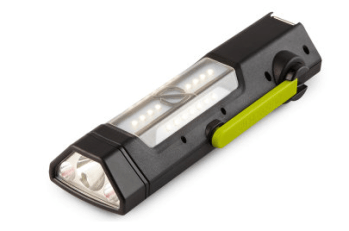
I’ve got my eyes on a combination flashlight, solar panel and floodlight called the Goal Zero Torch 250. I feel more secure because the light can be lit by hand crank, an increasingly popular option for flashlights used in vehicles (crank it for a minute and get two minutes of light). I like the built-in solar panel: it’s modest, and it requires 24 hours of sunlight to fully charge. This clever, well-built device is priced right at $80.
Get a Flashlight

If you haven’t shopped for a flashlight in a while, you may be surprised. I was. Today’s flashlights are high-tech, high power devices that cost $100 or more–and provide a remarkable amount of light. I’ve had good luck with LEDLenser, a German company now controlled by Oregon-based Leatherman, which makes pocket multi-tools. I especially like the model P7-2, which costs $70. It operates on three AAA batteries, and if you press the special button, it will provide 320 lumens–a great deal of light if you are, for example, walking a dog at night. It’s small enough to fit into your hand, or into a purse (or a man bag). I tried some of LEDLenser’s lesser lights because they’re smaller, lighter and less expensive, but I’ve come back around to the P7.2. There are options for flashlights that operate with button batteries, and also flashlights that can be recharged via USB. Lots of options here.
LEDLenser competes in a crowded field, but I like their products and I prefer shopping on their website. Nitecore and Fenix are among the quality competitors. And if you would like to do some serious research about innovative flashlights and features, here’s the place to go.
 For many years, the very best place on planet earth to shop for LPs (or, if you prefer, records), was Yonge Street in Toronto, Canada. As it happens, Yonge (pronounced “Young”) is one of the world’s longest streets, but that’s not why I visited as often as possible. There were two very large record stores on Yonge Street around Gould and Dundas Streets — A&A Records, and my multi-floor, multi-building favorite, the flagship store for what became a 140-store chain,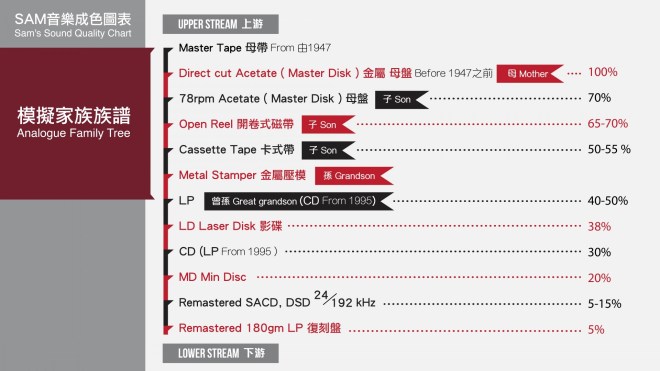
 The process begins with the master tape, but the metal stamper used to make the vinyl record is already second generation (“grandson” to the master tape), and the first pressing of the consumer record is the third generation, or great grandson. To James’s ears, you’re hearing less than half of the sound, and sound quality, that you would hear on the master tape. And that’s with a first pressing, under ideal conditions, listening to product from a record label that took the time and spent the money to get things right. Of course, most record companies don’t, or did not, lavish so much attention, which is why even the best used vinyl recordings from the golden age (say, 1960s and early 1970s before the oil crisis) don’t score much more than a 40 percent.



 A violin is not invented or perfected in a moment. It must be played, enjoyed, improved, adjusted, and sometimes, rebuilt, often over years, decades or centuries. In fact, many high quality violins are antiques that been rebuilt and rebuilt so often that little of their original material remains. Still, this is the way the culture has evolved. And that culture is not especially welcoming to an inventor with a better mousetrap. That’s why so many of Hutchins’ instruments ended up in musical instrument museums, and so few have been heard on stage in performance. Happily, there is the
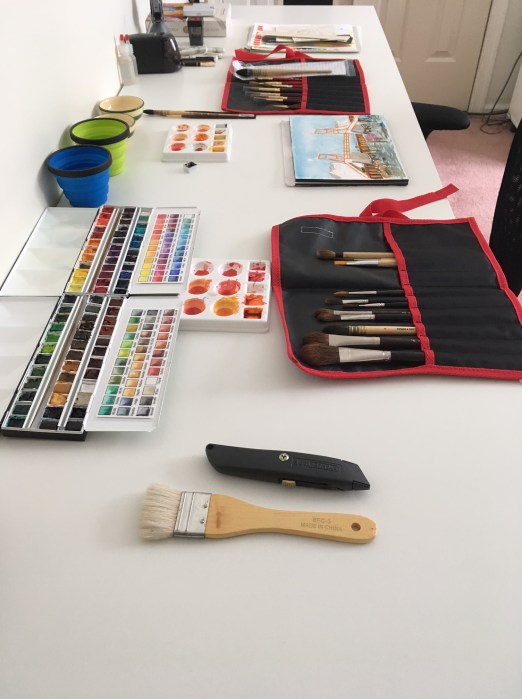 I started by creating as much open desk space as possible. IKEA to the rescue: a pair of white Limmnon 79-inch long, 23 inch deep desktops, each costing $45. One for each long wall, plus an ALEX 9-drawer white cabinet for storage, and a variety of old storage cubes recaptured from the basement and from other rooms. So far, I have not found the perfect roll-around task chair–a future project. The bookcases remained in place–the white Billy shelf units that are both inexpensive and look great.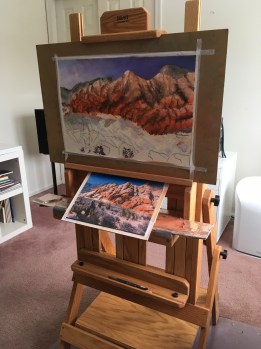
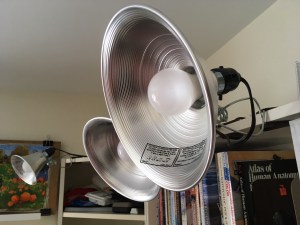 The flood lights were wonderful for work at the easel, but far too bright for every day room lighting, and totally useless for watercolor and drawing at the desk, I researched task lights–somewhat unfamiliar to me–and found a very cool company called
  The new


 What else? Plenty of time to organize too many art supplies. The need for pleasant music (mission accomplished thanks to some forgotten stereo equipment in the basement). And–big discovery, however obvious it may seem–once a painting is complete, it needs to live somewhere. When I kept all of the finished work in a box flat box, this was not a problem. Now, I felt the need to display recent work, if for no reason except my own assessments. Once again, IKEA provided a solution: 45-inch long Mosslandia “picture ledges” (just reduced: now just $9.99– and I hope they’re not being discontinued).
 l, I wondered whether a greater investment would significantly improve the experience of listening to records. As I wondered, I found myself spending $20-30 in record shops specializing in vinyl—not buying the new pristine artisan pressings that seem to cost $25-40, but used copies that cost a tenth as much (so $30 bucks buys 8-10 LPs in surprisingly good condition).

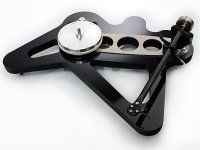


 Of course, listening in a well-appointed professional listening room is not much like listening at home. I decided to give the VPI Prime a try. We added the Dynavector DV-20X2L that sounded so good on the Rotel turntable, and connected it to the Sutherland Insight pre-amp, also a wonderful friend for the Rotel. And off we go with a DG recording of Emil Gilels performing Brahms’s first piano concerto with the Berlin Philharmonic—with its bombastic opening, now so clearly rendered with absolute distinction between the instruments, and minimal (if any) congestion in the extreme sequences with what sounds like tons of instruments all blasting their hearts out. Shift to the quieter string and wind sequences, and everything is sweet, present, energetic, really wonderful.
 And yet, none of that matters. Not when Emil Gilels is playing the piano, and I’m litening to a turntable, a cartridge and a phono stage that were, five months ago, a completely theoretical idea. Now, the sound feels so natural, so effortless, so entirely pleasant, so exhilarating, that I wonder why I waited so long to improve the “analog front end” of an otherwise terrific stereo system.




 Before we move on to specific types of equipment, consider this: the tiny stylus is likely to pick up not only the sound from the grooves in the record (and the inevitable scratches, clicks and pops), but also the sound of the turntable’s motor, the resonance of the tonearm, and any other sounds in the room, including conversations, dog barks, and other disturbances. For cartridge, tone arm, and turnable manufacturers, playing the design game requires tremendous attention to mitigation and near-elimination of vibration, resonance, and other unwanted sounds. At the same time, a properly-designed cartridge must make the very best of the available (physical) information inside the grooves of every record. Fortunately, every record is made in accordance with very precise manufacturing standards (in the U.S.,
 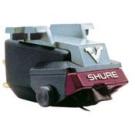 Fortunately, there are a fair number of audiophiles who listen to all sorts of equipment, and share their opinions. Chad Stelly, who works at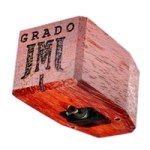
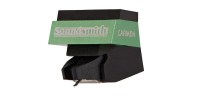
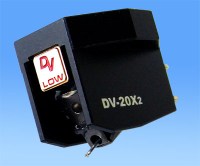
 So l started listening. Or, first, I paid a local audio dealer to mount to cartridge properly—this is not an easy thing to do properly—and then I started listening to the DV20x20 on my Rotel RB900 turntable. I started with a favorite orchestral performance that I’ve written about
 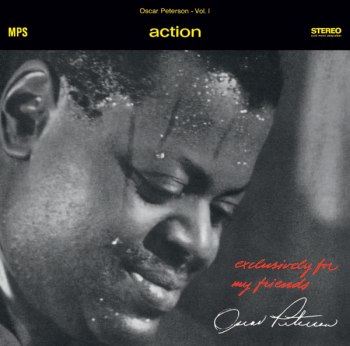 When I’m listening to a new piece of equipment—something I don’t do very often, to be honest, because I make my decisions with such care—one subjective test is how often I swap records. If I find myself sitting and listening, often to a whole side of an LP, I know that I’ve found a winner. So now I’m spending hours listening, and rediscovering discs that I know pretty well—and finding new joy because there is more detail, punch, clarity, and sense of being there with so many LPs. I’m very impressed by the Dynavector DV20x20, and I’ll attempt to close out with the reasons why. On classical recordings, I find the overall presence most appealing, closely followed by the punch and sweep of the more exciting passages, and increased refinement of solo violins, female voice, clarinets, oboes, and flutes. On jazz recordings, it’s undoubtedly the crispness of the drum kit—so precise, with just the right sense of attack and decay—though I do love what happens when I listen to Oscar Peterson playing piano, and I know that because I now find it difficult to listen to him as background music. I pay more attention to the music! On rock LPs, it’s the bass and the percussion that gets me, but also the higher tinkering on an electric or pedal steel guitar. When I listen to a singer, I hear nuances that I’m not sure I heard, or paid attention to, before. In short, this tiny component—a phono cartridge half the size of my pinky—is providing a whole lot of enjoyment.
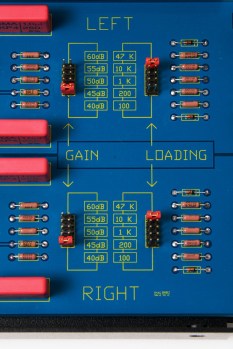


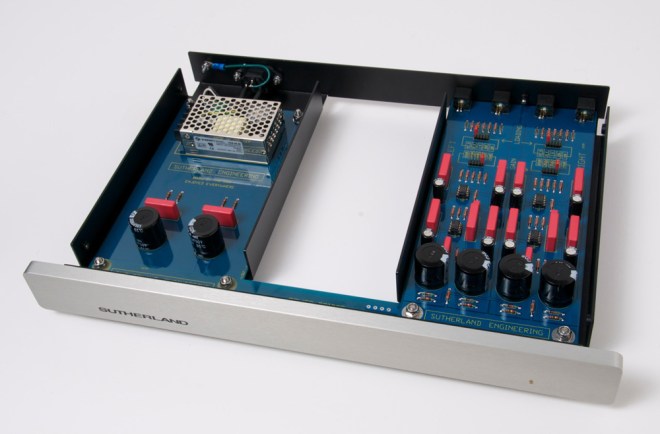
 Most of all, I confirmed the importance of patient listening–confirming what I thought I heard by listening to the Goldmark symphony by also listening to jazz by Lee Morgan, vocals by Ricky Lee Jones and Linda Ronstadt, rock and roll jams on the obscure Music from Free Creek (with music by Eric Clapton, Dr. John, Jeff Beck), bringing some old Delaney & Bonnie & Friends recordings back to life. There is a consistency about the listening experience that not only sounds and feels right–amazing how much pure instinct and right brain judgement is involved in confirming my sense that the Insight is the right choice–instinct and behavior. If I notice that I’m just standing next to the turntable, intending to lift the stylus but deciding to listen to just one more song, I know I’m making a good decision.
 Digital Insider