Chopping Down the Tree of Knowledge

So, during the past few weeks, I’ve been thinking a lot about the visual mapping of ideas.

Scott McCloud suggested that I have a look at the animation being done by Cognitive Media. You’ve probably see their work. I especially enjoy their lectures, often associated with TED-Ed, and their RSA work.

Back to mapping. I’ve been struggling with the tree of knowledge–and its modern equivalent, the mind maps now found in so many places on the internet and in classrooms. This means of structuring information provides the basis for the often-awkward corporate organization chart, now as often undermined by concepts of matrix reporting (you report to me, but we both also report to a lot of other people, kinda, sorta). I’m experimenting with several mind mapping programs, and one (Curio) is especially promising. That’s coming in a later post.

A few years ago, I worked with some folks from Wharton on a new approach to organizational design in which everybody is responsible to everybody else. I liked the idea because (a) I thought it represented what happens in a modern organization with greater precision, and (b) it represented the kind of productive, modern place I wanted to work. The design was a simple circle with about 100 points–and every point was connected to every other point. The concept: simple. The illustration: ridiculously complicated and difficult to understand.

So back to Cognitive Media. They’ve produced a nifty cartoon that helped me to understand the inadequacies of the tree-based design, the plusses and minuses of the network design, and the need for a universal design.

Watch it:

Dream of a Nation: Inspiring Ideas for a Better America

DONCover

Happy new year.

We are the ones we have been waiting for.

That sentence, and the ideas below, are parts of a book entitled Dream of a Nation: Inspiring Ideas for a Better America. Here are some of those ideas:

Shift the rules for campaign financing so that most of the money comes from most of the people. Currently, one-third of one percent of the people provide 90% of campaign funds. This drives special interests, and encourages a system based upon lobbyists that was never a good idea. And, while we on this track, let’s reduce the ratio of lobbyists to legislators: the current ratio of 23:1 (lobbyist to legislator) is probably too high by half (or more).

Let’s take control of our Federal budget (and, in time, our state budgets, too). In Porto Allegro, Brazil, a “citizen participation” approach to budgeting resulted in a 400% percent increase in school funding, and a dramatic increase in funds for clean water and sewers. Budgeting by citizen participation is a new movement that we want to encourage.

If Americans cut bottled water consumption by 80%, then the number of bottles, laid end-to-end, would circle the equator just once a day. Right now, we can circle the equator with bottles every 5 hours.

If each of us thinks more clearly about what we spend, and where we spend it, then the people living in an average American city (say, 750,ooo population) can add over 3,000 new local jobs and shift about $300,000 more into the local economy. How? By spending just 20% more on local, not national, businesses. Go to the local hardware store, the farmer’s market; don’t go to Wal-Mart or Walgreens. In the end, you’ll be richer for it. We all will.

Recognize that the high school drop out crisis is costing the U.S. at least half a trillion dollars each year. Every 26 seconds, a student drops out of school in the U.S. Encourage your legislators to take the time to fully understand the problem and to work with states and school districts to end this problem. The problem is not just the schools: it’s the support systems that do not provide sufficient support for lower-income families. An astonishing one in four American children live in poverty. We know how to change this: we need to focus on what worked during the LBJ years and the Clinton years, and do more of it. And, along the way, we need to invest about $360 million to fix crumbling school buildings. This priority pays off in so many ways: GDP, elimination of crime, family stability, reduction in prison population, so much more. We should no longer accept the idea that 25% of earth’s prison population resides in a U.S. prison–an outsized number for a nation with just 8 percent of the world’s people. Similarly, we should no longer accept the high price of education and the middling results that we achieve with those dollars. Other countries do better because their systems are more reasonable. We need to change the way we think about all of this, and we need to make it clear to legislators that this will be their last term if they do not accomplish what we need done.

Let’s get started on two substantial changes in the ways we work with our money. First, let’s start thinking in terms of a V.A.T., as most Western nations do. If the book’s calculations are correct, this should increase our available funds by about 13%. And second, let’s eliminate the 17% (average) payroll tax, reducing hiring costs for employers, as this model is proving to be more effective than our current approach. For more about this, Get America Working! (not the easiest website for clear presentation of ideas; the book is better).

In Canada, they spend $22 per person on noncommercial educational media (we call it public TV, public radio). In England, they spend $80 per person per year. In the U.S., we spend $1.37 per person per year (less than a bottle of water). If we increase funding to a more reasonable level, of, say, $75 per person per year (one bottle of water per week), we get something as good as the BBC for ourselves and our children. Noncommercial matters.

There’s much longer discussion about carbon footprints, waste, overconsumption, and the need for cars that average 100mpg. And another about rethinking just about everything related to the outsized defense budget and its underlying strategies. We haven’t got the health care concept down yet, but moving it into the public goods shopping cart seems to be a step in an appropriate direction.

We should all become familiar with, and promote, the 8 Global Millennium Development Goals that aim to:

  • Eradicate extreme poverty and hunger
  • Achieve universal primary education
  • Promote gender equality and women’s empowerment
  • Reduce child mortality
  • Improve maternal health
  • Combat HIV/AIDS, malaria, tuberculosis, and other diseases
  • Ensure environmental sustainability and better access to water and sanitation
  • Create a global partnership for development

So that’s a start. It’s going to be a busy year. And, I hope, one of our best.

Unreasonable

As the year winds down, a call-out to some unreasonable people.

One is called The Unreasonable Institute.

Why We Exist: To create a world in which no one is limited by their circumstances.
Our Mission: To unlock entrepreneurial potential to overcome our world’s greatest challenges.

Three recent college graduates decided to take on the world’s biggest problems–no shortage of idealism here–by causing interactions between promising entrepreneurs with big ideas, mentors, and funders. They do all of this–quite reasonably, I might add–by having everybody work and live together in a big house for several weeks. I’m not sure that “institute” (their term) is the ideal description, but this combination networking fest and dorm experience makes a lot of sense. There are lots of informal interactions between smart, interested, connected people who want to make things happen. I love this idea, and I suspect you will, too.

The second is called Charity: Water.

charity: water is a non-profit organization bringing clean and safe drinking water to people in developing nations.

Two simple ideas here. One is clean water for everyone, everywhere in the world. That’s a tremendous challenge, one that can be solved only on a local level, well-by-well, source-by-source. It’s also a transformative idea: clean water means healthier people, far less time each day caring for the ill; empowerment of women (who, in many places in the world, expend an enormous amount of time at the well or other source, and carrying water home).

20121227-172439.jpg

To play the video, please click on the image.

Both are mentioned here are examples of a new way of thinking about the world’s problems: a small entrepreneurial group with big ideas, unique approaches to management, operations and funding, plenty of attention to details, and, far less reliance upon large organizations to provide solutions. And one more thing: the internet is central to the success of these new conceptions. Be sure to explore Charity: Water’s use of internet mapping for every project, a solid example of things to come.

BTW: while searching for a link, I ran into a Huffington Post story that explains the trend in more detail. It’s definitely worth reading, especially at a time of year when we’re all trying to figure out how to do it even better next week.

The Virtues of Daydreaming

From the author of a very good article (see below) about challenging our assumptions about learning:

Among its many benefits, daydreaming has been associated with longer attention span, increased resolve, creativity and even higher IQ.

To which I am tempted to add:

If a creative person does not spend at least a half hour a day, half paying attention to the world, lost in thoughts about what might be, how it might be done, and how everything could change, he or she is not doing what needs to be done. Drifting off, checking out from the “normal,” simply shutting out the real world for a bit… if you don’t do that, how in the world will you accomplish anything useful at all.

Daydream

Now, consider these assumptions:

  1. Playing scary and violent video games help children master their fears in real life
  2. Practical classroom science lab work provides children little learning
  3. Gardening improves children’s desire to learn and boosts their confidence
  4. Teaching kids at a very early age is counterproductive to their learning
  5. Green spaces elevate children’s learning through discovery
  6. Learning is affected by classroom acoustics, artificial learning, and windows
  7. Young children learn about prejudice by instruction, older children by experience
  8. Laughing results in increased memory retention

Now, read the article from InfomED: An online commentary for the education industry.  And allow yourself a good half hour to further explore other terrific articles including “Can We Teach Compassion?” (an infographic); “Facilitating Collaborative Learning: 20 Things You Need to Know from the Pros” and “The Tyranny of Homework…”

Amazon: The Sitcom(s)

Amazon PrimeWhat’s the difference between a bookstore and TV channel? Sounds like a riddle for a time traveler. Little more than a decade ago, Amazon started to pulverize the book business. Now, just about anybody with a computer or a mobile device (that would be, just about everybody) thinks about Amazon as the first stop for books. And music. And just about every other common retail item.

And now, Amazon is beginning its assault on (not sure whether to call it television, but let’s go with television for now). Here come the first six sitcoms from Amazon Studios, all intended to be shown, free, to Amazon Prime members (who get free shipping and other benefits from Amazon). These programs will be part of a rapidly growing (and pretty darned good) collection of available programming already in place. For example, Amazon Prime viewers can watch EVERY episode of Twilight Zone, Arrested Development, and other interesting TV series from the past, as well as a bunch of good moves (last night, we watched Good Night, And Good Luck). As Amazon Prime members, we keep forgetting that we pay Netflix money, too.

So, what are the series? List below. Most of them appear to be promising: the creative teams are experienced, and the concepts are less lowest-common-denominator than we usually see on TV. One new concept from Garry Trudeau that sounds promising. And I sure hope that The Onion does a better job with television this time around (past attempt: not so good).

The complete list comes from the story in Tech Crunch.

Alpha House – Alpha House was written by Academy Award nominee and Pulitzer-Prize winner Garry Trudeau (Doonesbury, Tanner ’88). Alpha House follows four senators who live together in a rented house in Washington DC.

Browsers – Written by 12-time Emmy-winning comedy writer David Javerbaum (The Daily Show) and to be directed by Don Scardino (30 Rock), Browsers is a musical comedy set in contemporary Manhattan that follows four young people as they start their first jobs at a news website.

Dark Minions – Written by Big Bang Theory co-stars Kevin Sussman and John Ross Bowie, Dark Minions is an animated workplace series about two slackers just trying to make a paycheck working an intergalactic warship. The pilot will be produced by Principato-Young (Reno 911).

The Onion Presents: The News – The Onion Presents: The News is a smart, fast-paced scripted comedy set behind the scenes of The Onion News Network that shows just how far journalists will go to stay at the top of their game. The Onion Presents: The News is from The Onion’s Will Graham & Dan Mirk (The Onion News Network, The Onion Sportsdome).

Supanatural – Supanatural is an animated comedy series about two outspoken divas who are humanity’s last line of defense against the supernatural, when they’re not working at the mall. The series, written by Lily Sparks, Price Peterson and Ryan Sandoval, will be produced by Jason Micallef (Butter) and Kristen Schaal (The Daily Show).

Those Who Can’t – Written by Andrew Orvedahl, Adam Cayton-Holland and Benjamin Roy (Grawlix), who were discovered through Amazon Studios online open door process, Those Who Can’t is a comedy about three juvenile, misfit teachers who are just as immature, if not more so, than the students they teach.

Just in case you missed it, this blog presents a useful introduction to one of the best TV series of all time.

Just in case you missed it, this blog presents a useful introduction to one of the best TV series of all time. To visit the blog, click on the image.

All I Want for Christmas (Next Year) is My Apple TV

I want what you want: a new TV with the smart design and feature set that ties into the rest of my Apple gear. I want to be able to use Mail and Safari, Pages and Keynote, YouTube and Dropbox, and I want it all on a 45-inch screen that I can operate with an iPhone or iPad. I want to use my Apple TV for FaceTime with friends and family–a telephone that is also my TV screen. I want apps that work across TV, phone and tablet platforms, and more apps designed for the TV. I want a lot of stuff… but I haven’t thought about this nearly as much, or in as much detail, as Jeremy Allaire, the CEO of BrightCove, a forward-thinking cloud-based software provider. Below, a sample screen from a wonderful guest article on All Things Digital by Allaire, followed by the link to his article. Have fun!

8a-apple.com-tech-specsHave a look at the article “All I Want for Christmas is My Apple TV” here.

Playing, Studying and Designing Games

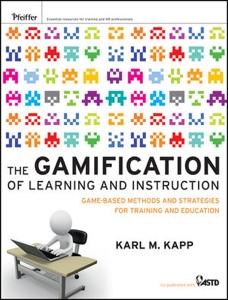
20121209-124333.jpgI’ve been searching for a book like this one for a while. A comprehensive overview of game play, academic research, application of games in all sorts of learning situations, lots of ideas and examples written in a fast-paced format filled with examples, illustrations and recommendations for further investigation. Give Bloomsburg University professor Karl M. Kapp the full one- thousand points for a terrific, accessible, smart book, but deduct a few points from the publisher’s total because the appealing title, The Gamification of Learning and Instruction isn’t really what this book is about…mostly, Kapp is writing about game design and not gamification.

What’s the difference? Well, that’s precisely the kind of issue that the professor addresses. Turns out, the distinction matters.

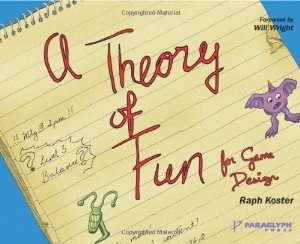
I like this definition of a game, provided by Raph Koster in a Theory of Fun and quoted by Kapp;

20121209-152224.jpg

a game is a system in which players engage in an abstract challenge, defined by rules, that results in a quantifiable outcome often soliciting an emotional reaction.

Kapp attempts to define gamification as:

…using game-based mechanics, aesthetics, and game thinking to engage people, motivate action, promote learning, and solve problems.

In short, gamification seems to be game design with a pro-social purpose.

Certainly, the book is filled with examples of purpose-built games for use in elementary school classrooms, training for firefighters, process improvement instruction, road safety, medical operations, and so on.

Most of the book is about game design, and associated psychology. Some examples:

When designing to teach high-level skills and high-order thinking, as applied to teaching leadership talent, it’s important to focus on ultra-quick decision making, the split-second shifts that a leader must make when considering and sometimes over-riding consensus, the encouragement of risk-taking for greater success, and thinking about leadership not as a role but as a task that can be passed among team members as the situation requires. The overarching idea here is “game thinking” – shorthand for an immersive environment in which real-life is reshaped to emphasize specific issues and de-emphasize others.

20121209-152426.jpg

I appreciated Kapp’s recap of Man, Play, and Games by the French philosopher, Roger Caillois. It was Caillois who identified for types of games: Agôn (competition), Alea (chance), Mimicary (simulation, role play) and Ilinx (state of dizziness and disorder). The last of these, Ilinx, is “the pursuit of vertigo, and trying to destroy the stability of perception”–children spinning around, and mountain climbing are examples.

There is a rundown on studies by serious researchers that suggest a string connection between games and learning, most with small sample sizes and narrow perspectives. To a greater extent than we may wish to admit, the connections between games, intent and measurement are young. We’re all learning what all of this means, and, in a world where digital engagement can be so closely aligned with learning, what it’s all going to mean as schools, K-12 education, and adult learning take their rightful place in the 21st century.

Welcome to Silicon Alley (Hollywood 3.0)


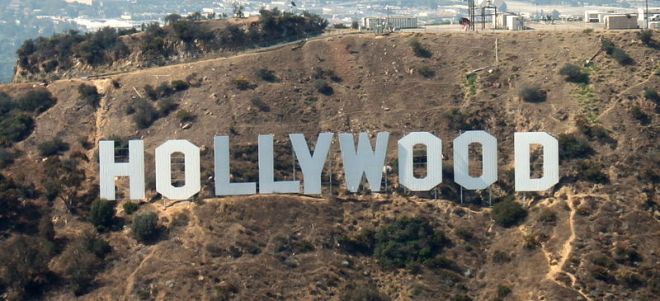
Aerial_Hollywood_SignThe next big thing has already begun… on Silicon Beach. If the term is unfamiliar, think in terms of a third generation’s reinvention of Hollywood (with a far larger SoCal geographic area)–first came movies, then TV, now Internet. This fast-growing community makes use of the (hungry) local creative community, welcomes investment from 20th century moguls, and offers instruction and consulting to old school Hollywood studios.

Read all about in this article, published in Variety just before Thanksgiving.

It’s official: everything has changed.


I just reviewed an astonishing PowerPoint from Mary Meeker at Kleiner Perkins. It contains a thorough explanation of our rapidly changing, and changed, world. From mobile phones and to the Rose Bowl, newspapers to cash registers, borrowing and lending money to door locks, hiring to education, our contemporary wave of technology  has transformed the world.

The deck is 88 pages long, and worth all of the time you will spend thinking about it today, this week, this year.

I will add to this post tonight. Right now, it’s off to work, transforming an old TV station into something entirely new. (Thanks, Mary, for the encouragement. And for the pile of useful, persuasive data.)

A Fact Can Be a Beautiful Thing

It’s often tempting to consider the past through a present-day lens, and that causes distortion. Take, for example, the idea of a fact. Our ancestors did not elevate the fact as anything of importance. Instead, they considered facts to be evil, in opposition with God’s plan. This way of thinking begins with perception, a capacity that we share with animals. “For them, knowledge had to be something more than what we learn from our senses, because it is such a distinctly human capability of our God-given and God-like soul.”

Thomas Bacon, known for the Scientific Method and for his cool combination of dapper hat, moustache-goatee combo, and stylish  collar.

Thomas Bacon, known for the Scientific Method and for his cool combination of dapper hat, moustache-goatee combo, and stylish collar.

It isn’t until the 1700s that the current idea of a fact takes shape. In the Italy of the 1500s, double-entry bookkeeping is among the first presentations of fact as a decision-making tool. In England, in the 1700s, Francis Bacon’s work on the scientific method led the way toward building theories based upon “particulars,” not deduced from a grand theory. Of course, this way of thinking sidelined generally accepted beliefs, a radical idea at that time, and in our times, too.

220px-Thomas_Malthus

Thomas Malthus

You may recall that Thomas Malthus theorized that food supply would not keep pace with population growth. His initial documents were based, mostly, upon deduction. His later documents were based upon well-researched fact. The shift in thinking occurred during his watch, before and after the year 1800.

Portrait of Jeremy Bentham by Henry William Pickersgill

Portrait of Jeremy Bentham by Henry William Pickersgill

Enter Jeremy Bentham, a Malthus contemporary. Bentham’s theory, simplified: government ought to provide “the greatest happiness of the greatest number [of people]” In order to do the job, government would need a clear picture of the people it served (also a new idea, government as service, but that requires another article).

The word “statistics” enters the language around this time: stat, of course, is German for the state.

By the 1830s, the British government is obsessed with this powerful tool: facts. They commission a series of Blue Books filled with facts, statistics, anecdotes, interviews and more. The Blue Books are reports about “poverty, crime, education, and other social concerns.”

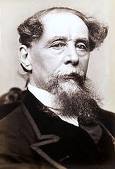
Charles Dickens, who made fun of his government's newfound love for facts.

Charles Dickens, who made fun of his government’s newfound love for facts.

By the 1850s, the clever novelist Charles Dickens grows weary of the fact-based Blue Books. From Dickens’ Hard Times, “We hope to have, before long, composed of commissioners of facts, who will force the people to be a people of fact and of nothing but fact.”

By around the 1900s, fact-finding missions had become common, and World War I becomes the first war fought, largely, upon the basis of facts.

At the risk of capturing the obvious idea, our contemporary media environment is skewed because opinion and pontificating is, often, more entertaining than fact-based thinking. Rush Limbaugh gets the ratings; the Encyclopedia Britannica ceases publication. Constitutional scholar Cass Sunstein says, “Many people are mostly hearing more and louder echoes of their own voices.” His context is the internet, where groups of like-minded people share their beliefs, and by their numbers, magnify ideas that may not be fact-based into cultural touchstones. He goes further to explain that members of those groups are becoming less likely to communicate with people outside the group, and wonders whether this supportive groupthink is detrimental to democracy. (So much for the hope that the abundance of information, and facts, on the internet would encourage interaction between these groups.)

And that leads to Nicholas Carr, author of The Shallows: What the Internet Is Doing to Our Brains, who believes that the internet is “weakening our capacity for the kind of ‘deep processing’ that underpins ‘mindful knowledge acquisition, inductive analysis, critical thinking, imagination, and reflection.”

220px-Al_Gore_at_SapphireNow_2010_croppedA parallel path also leads to Al Gore, who asked this question in his book, The Assault on Reason: Why do reason, logic and truth seem to play a sharply diminished role in the way American now makes its important decisions?”

Perhaps the answer to Mr. Gore’s question is complexity. We learn arithmetic but not calculus, we have been taught to think in simple linear terms, not in terms that help us to understand the complex, dynamic system that our society has become. Our contribution to the chain begun by Bacon: the mapping of complex systems that change over time. It is these systems that draw facts into the future, and these models that provide potent vaccination against those who theorize on the basis of beliefs, not facts.

On another parallel path is the passionate amateur. Included in that class would be both Charles Darwin and Gregor Mendel, neither one a scientist, each a relentless cataloguer of observations, and, as a result, a theorist whose ideas are based upon endless study and analysis.

Jenny_McCarthy_at_E3_2006And, there is the celebrity whose role is related to a megaphone. Ideas that might not otherwise reach a large audience become popularized because a celebrity become involved. When former Playboy model Jenny McCarthy and actress Jenny McCarthy started making noise about vaccinating our children, people paid attention. The Michael J. Fox Foundation is attempting to resolve the delicate balance between Mr. Fox’s own story and fame, and the broader agenda that must drive the Parkinson’s foundation (that carries his name). The Fox foundation has been intelligent and thoughtful in its use of social media, engaging individuals, on a large scale, to participate in trials and other research. Here, the “particulars” are the individual cases, the undeniable truth of daily life with a disease not yet cured.

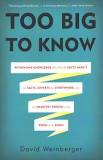
Too Big To Know

How does all of this come together? The fact is, we’re still figuring out the answer to that question. David Weinberger’s book, Too Big To Know, the source of many of the ideas and all of the quotes in this article, does a fine job in raising questions and providing examples. Addressing the crisis of knowledge (his belief, with which I do not wholeheartedly agree), Weinberger suggests that we open up access to a much broader range of facts; link everything in sight; dig deeply into institutions to make their knowledge available to a larger population; and relentless teach so that we all gain a better understanding of how our world works, and how it might work in the future.

BTW: The article’s title, A Fact Can Be a Beautiful Thing refers to love as explained by lyricist Hal David for the Broadway musical, Promises, Promises.