Not White

When Mike Nichols was directing the Broadway musical, Annie, one scene that was supposed to be funny was failing to get laughs. He tried everything. Nothing worked. The audience watched the scene, but didn’t laugh. So, Nichols asked a fellow director, Jerome Robbins, to take a look. Then, Nichols asked Robbins how to fix the scene. Robbins pointed to a white towel hanging on the back of the set.

“The towel should be yellow,” Robbins explained.

“That’s it? That will make the scene work?” Nichols thought, but did not say aloud.

Nichols changed the towel. From then on, the scene got laughs.

When it comes to creativity, everything is subjective. Except when it isn’t.

(From The Creative Habit by Twyla Tharp)
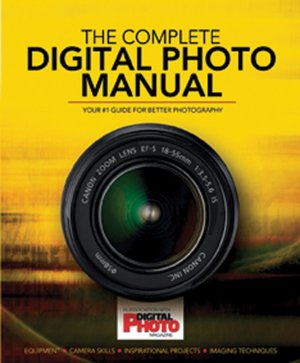
You Bought the Camera. Now Buy the Book.

You spend $300, maybe $400, on a feature-rich digital camera. You start by shooting in automatic mode, then experiment with aperture or shutter priority, white balance, low light shooting and maybe a few special effects.

You want to understand image manipulation, image processing, image retouching, but these are not easy to learn, and they are difficult to master.

There’s a large gap between (a) what today’s cameras and software can do, and (b) our understanding of these features and how to use them.

After a Goldilocks routine (too artsy, too techy, etc), I found a wonderful guide in The Complete Digital Photo Manual. Just the right balance for me–written in plain language with lots of helpful diagrams and photographs.

The book begins with an illustrated section about compact cameras–higher end models like Canon’s G10, cameras built for extreme conditions, super zooms–followed by a walk through various types of DSLR cameras and the most common features. There’s an important sidebar about image sensors. Then, it’s on to a similar section about lenses.

Next, the book explains how to set up the camera, explaining each of the features commonly offered on digital camera menus. The are good, clear explanations about metering patterns and histograms, white balance and image sharpness.

And then, about 1/3 of the way through the book, comes the best stuff. Every significant Photoshop tool and menu item is simply explained, often with step-by-step diagrams and abundant examples and illustrations. Two-page spreads include Hue/Saturation, clone Stamp and Healing Brush, Layer Masks, Channels, Hand Coloring, and more.

Then, there’s another group of spreads offering specific direction to, for example, Replace a Boring Sky, Blur Waves with a Long Exposure, lots more.

The last of the truly helpful sections explains how to make good use of RAW images, a feature viable on most serious cameras.

The Complete Digital Photo Manual was produced in association with England’s Digital Photo Magazine.

The book costs less than $25 at Barnes & Noble (and other fine retailers). Think about it: you spent how much on the digital camera? Why wouldn’t you make this investment?

Tools: Publish your own eBook (or, iBook)

Within the next 30 days, I am going to publish my first eBook. How I wish Mashable had published this chart of eBook publishing software applications before I got started. I struggled through Adobe InDesign and gave up. I would have used Apple iBook Author but it was not available. For me, Scrivener was the best available solution–and it seems to be working, but Apple has upped the game with its (and free) software.

Have a look, and be sure to pass this post on to anyone who might be considering their first eBook.

A chart comparing all the ePub tools available to users.

How iBooks Author Stacks Up to the Competition [CHART]

1 in 25 Work as Creative Pros

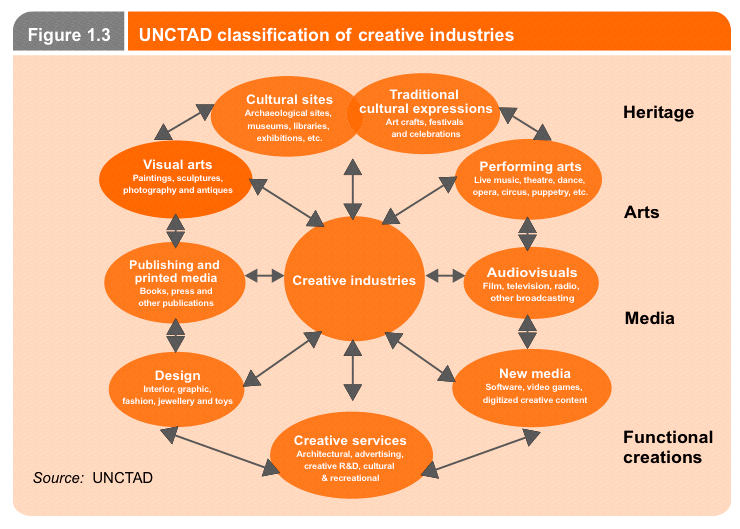
Above, an elegant way to think about the global creative economy, as presented in a 400+ page United Nations report.

1 in 25 people–that’s the revised figure for 2010–work in creative industries in the U.S. More than doctors, lawyers, even accountants. Industry sectors above, details below.

In the United States, roughly 150 million people work full-time. Six million of us work in creative professions. We’re writers and performers; musicians and visual artists; marketers and strategists; architects and specialists who invent, improve, or bring ideas to life. In total, more people work as creative professionals in the U.S. than doctors (700,000), lawyers (800,000), accountants (1,300,000), and engineers (1,600,000) combined. The number of creative professionals exceeds the number of teachers (3,500,000 teachers pre-K through high school, plus 1,700,000 more who teach in colleges and universities).

Our output–which provides employment for lawyers, accountants, executives, retailers, and many others–is responsible for more than ten percent of the U.S. Gross Domestic Product.

A reasonable global workforce estimate would exceed 10 million creative professionals. Nations with significant creative economies include Germany, the United Kingdom, France, Italy, the Netherlands, Ireland, Japan, China, India, Canada, Australia, and, among countries with developing industries, Mexico, Thailand, Indonesia, Argentina, Singapore, and Chile. According to the United Nations Creative Economy 2008 report, the export value of creative in 2005 was over $300 billion, or about 2-3% of the global economy. (Yes, I am reviewing the 423 pages of the 2010 report to update these figures–overall, trends are up).

The long list of creative industries was nicely summarized in the 2008 U.N. report, presented at a United Nations Conference on Trade and Development. The orange version, above, makes it all that much more clear.

Within each of these clusters, the professional model is similar. Projects are developed, produced, and distributed. Mostly, revenues are generated through direct transactions with individual consumers (movie admissions; DVDs; iTunes downloads;physical goods such as jewelry), sometimes through subscriptions; or by advertising to consumers who receive goods and services by paying only a modest transaction fee (magazine subscriptions), or no fee at all (most internet sites; broadcast radio and TV).

You can download the 2010 UN report here. (Yes, I will update my 2008 numbers when time permits.)

Just My Type

US, UK covers - the UK version is more fun.

My dad taught me to appreciate the distinctions between one font and another. Before I finished high school, I knew about serifs, descenders, x-height, and Bodoni Bold. This was secret knowledge exclusive to graphic artists (and their attentive children).

Then, desktop publishing happened, and suddenly, everybody seemed to know about Baskerville, Times New Roman, Optima and Helvetica.

Fonts became cool. A movie was made about Helvetica.

Now, there’s a surpassingly energetic–and fun!–book about fonts, Just My Type, written by Simon Garfield.

In it, you’ll find the unfortunate story of Comic Sans, and the movement to eradicate its use.

I never thought much about the reasons why we have Helvetica, Ariel, Univers and Futura. And why I started to use Frutiger and Gill Sans in place of other sans serif fonts. Or why I never loved Brush Script or Souvenir. Turns out, each of these fonts is part of a story, either about technology’s progress or shifts in public sensibility or the renovation of a mass transit system (which requires signs of every size, plus maps).

Yes, this book is ridiculously geeky. No, there’s no reason why chapters must be read in order. Yes, there are lots of pictures–and examples that reminded me of our graphic past as defined by Gilligan’s Island, Obama’s first presidential campaign, the London underground, Letraset and Dymo tape, Pet Sounds, Penguin Books, Ikea, and T-Rex.

I wish I had the patience to read every story of every type font, designer and context. And I wish there were dozens of visual examples–more and more visuals to tell this very visual story.

“Absolutely, extraordinarily bad”

That’s how innerfidelity.com editor-in-chief Tyll Hertsens described the sound quality of  Beats by Dr. Dre headphones on the front page of this morning’s NY Times Business section (link below).

Yeah, they’re very heavy on the bass. And they’re best for music where bass drives the musical experience. And sometimes, if you listen loud, there’s distortion. On the other hand, Beats are fashion statement, and people wear them not only to listen, but to be seen listening.

Headphones as pictured (from the company website): $349. That’s a lot of money for a pair of headphones. Industry observers are impressed by the team of Dr. Dre and Monster Cable because they’ve opened a new market where price sensitivity matters less than lifestyle choices.

By comparison, a pair of AKG K240 Professional Studio Headphones cost $199.

If you have a pair of Beats, or manage to try a pair in a store, share your impressions.

http://beatsbydre.com/Default.aspx

http://www.nytimes.com/2011/11/20/business/beats-headphones-expand-dr-dres-business-world.html?partner=yahoofinance

http://www.innerfidelity.com/

Bill Evans: Last & Found

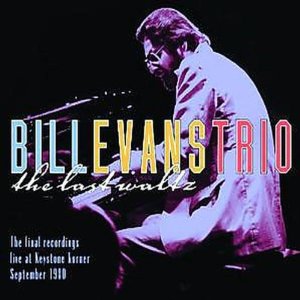
Late in the summer of 1980, pianist Bill Evans played several trio sessions at San Francisco’s Keystone Korner. Marc Johnson played bass. Joe LaBarbera played drums. Evans knew he was dying, knew that these would be his last sessions. Fortunately, the sessions were recorded. Two weeks later, he was gone.

Twenty years later, in 2000, Milestone released a box of eight CDs, one for each evening’s performance. For the past week or so, I’ve been listening to the discs. (You can, too: I just checked, and you can buy them on Amazon. The link is below.)

The performances are wonderful. Evans’ work has always been described as lyrical, poetic, introspective, relaxed, and a kin to European salon music.

Everybody Loves Bill Evans is one of his most popular single albums–perhaps a place to begin before buying the more expensive box. In a review from a long-ago book about jazz, I wrote: “Classic 1958 piano jazz, played by a musician so widely respected that Miles Davis, George Shearing, Ahmad Jamal, and Cannonball Adderley signed their written praises for use as the album’s cover art. Most songs are confident variations on jazz standards like Sonny Rollins’s “Oleo” and Cole Porter’s “Night and Day.” Leonard Bernstein’s “Some Other Time” is also a highlight. Bassist Sam Jones and (unrelated) drummer Philly Joe Jones keep things moving. More distinctive are Evans’s unaccompanied solos, particularly “Peace Piece” and “Tenderly,” both haunting because of the pianist’s light touch, tiny flourishes, patience, and willingness to allow the piano to resonate.”

In fact, I rediscovered the Last Sessions box after hearing one of Evans’ duets with Tony Bennett on the radio. When the albums was recorded, Bennett was just beginning to taste a possible comeback, and it was this album that led to his remarkable second-round success. I wrote: “Bennett was in his mid-fifties when he recorded this album in 1975. HIs voice is a tad husky and a bit light on the high notes, but his endless experience shapes and sells every word of every song. This adds meaning and depth to “Some Other Time,” “Waltz for Debby,” and other titles that had been in Evans’s repertoire for almost two decades. Evans’s accompaniment is perfect, and his solos are magnificent, fitting ever so perfectly between Bennett’s verses (“Some Other Time” includes a particularly fine example). Some songs such as “The Touch of Your Lips” and “We’ll Be Together Again,” are generally romantic and often sentimental.” The album was called The Tony Bennett/Bill Evans Album.

There are lots of Evans albums, and most are still available. But the more I listen, the more I favor the Last Sessions box, partly for its intimate club feel, partly because he speaks directly to the audience from time to time, mostly because the work causes me to sit up and listen because it is so clean, so well crafted, and so compelling. Nicely recorded, too.

Moyers to Public TV: Reinvent Yourself!

These are some of my favorite excerpts from an inspiring speech by one of public television’s long-term heroes, Bill Moyers. He delivered the speech in November, 2010 at a gathering of public television programming executives…

“The core problem is that we still don’t have an expansive national vision of what we’re about, where we want to go and what we want to become. Until we are able to say clearly and comprehensively what it is we really want to do, how much it will cost, and how we intend to get there, we can’t blame Congress, the White House or even the foundations for not supporting us more fully.

…There’s a huge vacuum between the [public television] system, nationally and locally, and the big foundations and no one has yet been inspired or capable enough to link the two at the level of a consensus national plan.

There are always people who remain afraid of change or an unknown process, fearful of where it might lead.  But by contrast, the British and Canadians go through periodic charter reviews that invoke a national conversation; there’s a culture of discussion and planning for public media in those nations that help them survive even the worst assaults from detractors or vested interests. This could be a reason that public support for public media in nations like the U.K. exceeds $80 per capita, while we’re still limping along on $1.49 per capita.

…In the meantime, I’m here to tell you that even within the fiscal crisis public television currently faces, we have an opportunity to serve the public — to renew our bond to our communities.

You may not have money for in-depth documentaries or other high-end productions but you have cameras, microphones, studios and the trust of the community. You can be the ombudsman for the public within your reach, provide the venue for forums, teach-ins, town meetings, and debates over the issues that matter to people where they live, telecast in an atmosphere of openness and clarity without the mean and mindless rhetoric or cant that are so triumphant today. Civic engagement is the lifeblood of democracy and the bedrock of its legitimacy. No media can nurture, foster, and empower it the way we can.

…Meanwhile, let me offer just a few other ideas for you to consider:  Take a whole evening of primetime and give it to a forum for the fight in your neighborhoods over charter schools. Do the same for other distressed public institutions — your libraries, for example.

Or how about one week inviting as many social workers as you can get into your studio and asking them to share what they see every day — how people are coping each day with these worst hard times?  Do a series of workshops on Occupy Wall Street, pro and con.  Out there in Iowa, find the lady carrying the placard I saw last weekend on television that read: “I couldn’t afford to buy a politician so I bought this sign.” Bring her into the studio with her local member of Congress — have them talk frankly to each other about their different perceptions of money in politics. Do an evening of primetime on the fight going on right now in your state over redistricting — gerrymandering — the outcome will influence your state’s position and power for the next 10 years. Get folks aware and involved. If you don’t, who will? Certainly not the commercial stations in your market, that’s for sure.

…since David H. Koch of Koch Industries is on the board of both WGBH and WNET, I’d ask him to round up his billionaire buddies — and in a nonpartisan spirit reach out to civic-minded progressive billionaires like George Soros — and together create an independent, fully endowed, self-governing production center (free of any partisan strings or influence) for American drama that would bring our epic history and culture to the screen just like we’ve brought over the Brits’ Downton Abbey, make room for Jefferson’s Monticello! Now, there’s an Upstairs Downstairs story the public would make a pledge to see.

…What we need is a makeover of our own — a rebirth, yes, of vision, imagination, and creativity, but above all a structure and scheme for the 2lst century, one that uses the resources that the digital platform provides to realize the goals of our founders: diversity, public access, civic discourse, experimentation, a welcoming place for independent spirits.

The whole speech–including his idea for public television’s equivalent of a constitutional convention– can be found here:

http://www.current.org/pb/pb1122moyers-remarks.html

Resume: DaVinci (no kidding!)

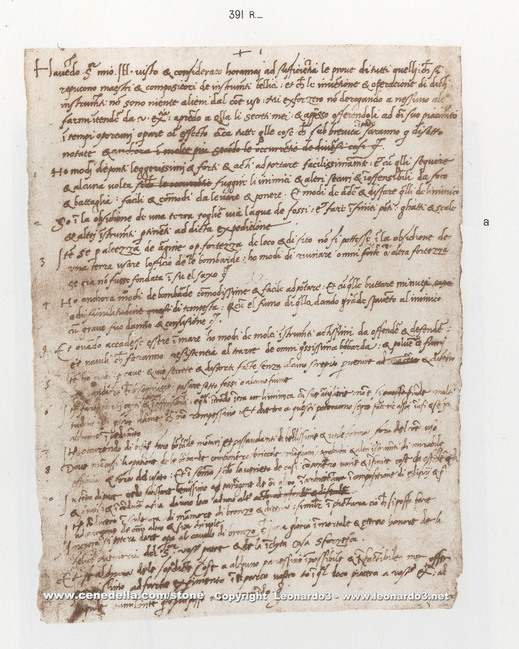
The iconic creative professional and proto-technologist looking for work. Comes complete with English translation and modern commentary:

From The Ladders.com, “the translation of this letter is quite remarkable:

“Most Illustrious Lord, Having now sufficiently considered the specimens of all those who proclaim themselves skilled contrivers of instruments of war, and that the invention and operation of the said instruments are nothing different from those in common use: I shall endeavor, without prejudice to any one else, to explain myself to your Excellency, showing your Lordship my secret, and then offering them to your best pleasure and approbation to work with effect at opportune moments on all those things which, in part, shall be briefly noted below.

1. I have a sort of extremely light and strong bridges, adapted to be most easily carried, and with them you may pursue, and at any time flee from the enemy; and others, secure and indestructible by fire and battle, easy and convenient to lift and place. Also methods of burning and destroying those of the enemy.

2. I know how, when a place is besieged, to take the water out of the trenches, and make endless variety of bridges, and covered ways and ladders, and other machines pertaining to such expeditions.

3. If, by reason of the height of the banks, or the strength of the place and its position, it is impossible, when besieging a place, to avail oneself of the plan of bombardment, I have methods for destroying every rock or other fortress, even if it were founded on a rock, etc.

4. Again, I have kinds of mortars; most convenient and easy to carry; and with these I can fling small stones almost resembling a storm; and with the smoke of these cause great terror to the enemy, to his great detriment and confusion.

5. And if the fight should be at sea I have kinds of many machines most efficient for offense and defense; and vessels which will resist the attack of the largest guns and powder and fumes.

6. I have means by secret and tortuous mines and ways, made without noise, to reach a designated spot, even if it were needed to pass under a trench or a river.

7. I will make covered chariots, safe and unattackable, which, entering among the enemy with their artillery, there is no body of men so great but they would break them. And behind these, infantry could follow quite unhurt and without any hindrance.

8. In case of need I will make big guns, mortars, and light ordnance of fine and useful forms, out of the common type.

9. Where the operation of bombardment might fail, I would contrive catapults, mangonels, trabocchi, and other machines of marvellous efficacy and not in common use. And in short, according to the variety of cases, I can contrive various and endless means of offense and defense.

10. In times of peace I believe I can give perfect satisfaction and to the equal of any other in architecture and the composition of buildings public and private; and in guiding water from one place to another.

11. I can carry out sculpture in marble, bronze, or clay, and also I can do in painting whatever may be done, as well as any other, be he who he may.

Again, the bronze horse may be taken in hand, which is to be to the immortal glory and eternal honor of the prince your father of happy memory, and of the illustrious house of Sforza.

And if any of the above-named things seem to anyone to be impossible or not feasible, I am most ready to make the experiment in your park, or in whatever place may please your Excellency – to whom I comment myself with the utmost humility, etc.”