Amazon: The Sitcom(s)

Amazon PrimeWhat’s the difference between a bookstore and TV channel? Sounds like a riddle for a time traveler. Little more than a decade ago, Amazon started to pulverize the book business. Now, just about anybody with a computer or a mobile device (that would be, just about everybody) thinks about Amazon as the first stop for books. And music. And just about every other common retail item.

And now, Amazon is beginning its assault on (not sure whether to call it television, but let’s go with television for now). Here come the first six sitcoms from Amazon Studios, all intended to be shown, free, to Amazon Prime members (who get free shipping and other benefits from Amazon). These programs will be part of a rapidly growing (and pretty darned good) collection of available programming already in place. For example, Amazon Prime viewers can watch EVERY episode of Twilight Zone, Arrested Development, and other interesting TV series from the past, as well as a bunch of good moves (last night, we watched Good Night, And Good Luck). As Amazon Prime members, we keep forgetting that we pay Netflix money, too.

So, what are the series? List below. Most of them appear to be promising: the creative teams are experienced, and the concepts are less lowest-common-denominator than we usually see on TV. One new concept from Garry Trudeau that sounds promising. And I sure hope that The Onion does a better job with television this time around (past attempt: not so good).

The complete list comes from the story in Tech Crunch.

Alpha House – Alpha House was written by Academy Award nominee and Pulitzer-Prize winner Garry Trudeau (Doonesbury, Tanner ’88). Alpha House follows four senators who live together in a rented house in Washington DC.

Browsers – Written by 12-time Emmy-winning comedy writer David Javerbaum (The Daily Show) and to be directed by Don Scardino (30 Rock), Browsers is a musical comedy set in contemporary Manhattan that follows four young people as they start their first jobs at a news website.

Dark Minions – Written by Big Bang Theory co-stars Kevin Sussman and John Ross Bowie, Dark Minions is an animated workplace series about two slackers just trying to make a paycheck working an intergalactic warship. The pilot will be produced by Principato-Young (Reno 911).

The Onion Presents: The News – The Onion Presents: The News is a smart, fast-paced scripted comedy set behind the scenes of The Onion News Network that shows just how far journalists will go to stay at the top of their game. The Onion Presents: The News is from The Onion’s Will Graham & Dan Mirk (The Onion News Network, The Onion Sportsdome).

Supanatural – Supanatural is an animated comedy series about two outspoken divas who are humanity’s last line of defense against the supernatural, when they’re not working at the mall. The series, written by Lily Sparks, Price Peterson and Ryan Sandoval, will be produced by Jason Micallef (Butter) and Kristen Schaal (The Daily Show).

Those Who Can’t – Written by Andrew Orvedahl, Adam Cayton-Holland and Benjamin Roy (Grawlix), who were discovered through Amazon Studios online open door process, Those Who Can’t is a comedy about three juvenile, misfit teachers who are just as immature, if not more so, than the students they teach.

Just in case you missed it, this blog presents a useful introduction to one of the best TV series of all time.

Just in case you missed it, this blog presents a useful introduction to one of the best TV series of all time. To visit the blog, click on the image.
Playing, Studying and Designing Games

20121209-124333.jpgI’ve been searching for a book like this one for a while. A comprehensive overview of game play, academic research, application of games in all sorts of learning situations, lots of ideas and examples written in a fast-paced format filled with examples, illustrations and recommendations for further investigation. Give Bloomsburg University professor Karl M. Kapp the full one- thousand points for a terrific, accessible, smart book, but deduct a few points from the publisher’s total because the appealing title, The Gamification of Learning and Instruction isn’t really what this book is about…mostly, Kapp is writing about game design and not gamification.

What’s the difference? Well, that’s precisely the kind of issue that the professor addresses. Turns out, the distinction matters.

I like this definition of a game, provided by Raph Koster in a Theory of Fun and quoted by Kapp;

20121209-152224.jpg

a game is a system in which players engage in an abstract challenge, defined by rules, that results in a quantifiable outcome often soliciting an emotional reaction.

Kapp attempts to define gamification as:

…using game-based mechanics, aesthetics, and game thinking to engage people, motivate action, promote learning, and solve problems.

In short, gamification seems to be game design with a pro-social purpose.

Certainly, the book is filled with examples of purpose-built games for use in elementary school classrooms, training for firefighters, process improvement instruction, road safety, medical operations, and so on.

Most of the book is about game design, and associated psychology. Some examples:

When designing to teach high-level skills and high-order thinking, as applied to teaching leadership talent, it’s important to focus on ultra-quick decision making, the split-second shifts that a leader must make when considering and sometimes over-riding consensus, the encouragement of risk-taking for greater success, and thinking about leadership not as a role but as a task that can be passed among team members as the situation requires. The overarching idea here is “game thinking” – shorthand for an immersive environment in which real-life is reshaped to emphasize specific issues and de-emphasize others.

20121209-152426.jpg

I appreciated Kapp’s recap of Man, Play, and Games by the French philosopher, Roger Caillois. It was Caillois who identified for types of games: Agôn (competition), Alea (chance), Mimicary (simulation, role play) and Ilinx (state of dizziness and disorder). The last of these, Ilinx, is “the pursuit of vertigo, and trying to destroy the stability of perception”–children spinning around, and mountain climbing are examples.

There is a rundown on studies by serious researchers that suggest a string connection between games and learning, most with small sample sizes and narrow perspectives. To a greater extent than we may wish to admit, the connections between games, intent and measurement are young. We’re all learning what all of this means, and, in a world where digital engagement can be so closely aligned with learning, what it’s all going to mean as schools, K-12 education, and adult learning take their rightful place in the 21st century.

Welcome to Silicon Alley (Hollywood 3.0)


Aerial_Hollywood_SignThe next big thing has already begun… on Silicon Beach. If the term is unfamiliar, think in terms of a third generation’s reinvention of Hollywood (with a far larger SoCal geographic area)–first came movies, then TV, now Internet. This fast-growing community makes use of the (hungry) local creative community, welcomes investment from 20th century moguls, and offers instruction and consulting to old school Hollywood studios.

Read all about in this article, published in Variety just before Thanksgiving.

Michael Freeman’s Eye, Vision and Mind

Over time, I’ve bought, or browsed, dozens of books about photography. Most of these books are either too basic, too technical, or remarkably unfocused on the impact of picture making. Several books by Michael Freeman set a high standard for smart books with a strong aesthetic and storytelling sense, and yet, they are written at a level that provides solid, practical advice for even the most casual photographer. I’ve become a big fan of these books, and I would recommend one, two or all three volumes as holiday gifts for anyone with even a passing interest in digital photography, and, I would strengthen that recommendation if the gifts are intended for someone who is serious about photography.

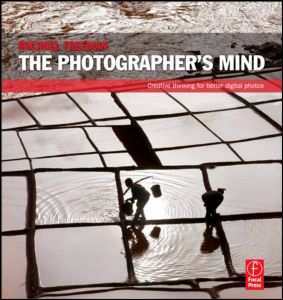
Photographers MindOf the three, I think I like The Photographer’s Mind best. The opening chapter is not about lenses or exposure. Instead, the book opens with a chapter entitled, “Intent.”

If you want people to pay attention to your photography and enjoy it, you have to give them a reason to look at it for longer than a glance… [and this is] more about why than how.

And so begins a well-illustrated consideration of beauty, cliche, irony, the mundane, revelation, and other core concepts that go far beyond the snapshot. The second chapter, “Style,” explores harmonics and balance, relationships between visual style and musical style, opposition, minimalism, engineered disorder… you get the idea. This is a smart, thinking person’s approach to photography, aspirational but practical, nicely written but the focus is on the (many) sample images. And the pictures really are terrific–Freeman’s intelligent, emotional approach to teaching is well-represented by his work.

Photographer's EyeAll three books are personal favorites, but the second book I would buy is (rhymingly) The Photographer’s Eye, a book about design. Freeman considers the relative merits and artistic potential of various frame formats, horizons, frames within frames, and other tools/tricks of the trade. My favorite chapter is the second one, in which musical and aesthetic concepts offered in opposing pairs: soft/hard, thick/thin, diagonal/circular, much/little, sweet/sour, and more. Consider figure and ground, rhythm, single vs. multiple points, dynamic tension. I know that these ideas are dancing in my head when I’m out shooting for the day, but they’ve always been disorganized, and never quite coherent. With Freeman as a teacher, my perspective changes. I study his images, read his words, and understand the tool in my hands differently. And I want to spend hours and hours practicing.

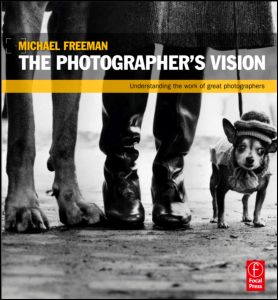
Photographer's VisionI think of the third volume, The Photographer’s Vision, as the most advanced of the three. This is the one that considers purpose and greatness, the volume that places Lee Friedlander, Robert Capa and Brassaï in contexts where their work, or, at least, their unique creative approaches, are presented so that a contemporary amateur can both appreciate and perhaps emulate the work of legendary professionals.

Gosh, these books are good.

And then, I take a deep breath. I search for Michael Freeman online, and it turns out, he is a cottage industry. So many great ideas, so much valuable instruction, so little time.

Buy these books for a family member or a friend. They’ll be counted among this year’s favorites, I promise.

Superior Gift: Piano CDs by Corea, Jarrett and Lubimov

Yeah, it took me a while to understand what I was listening to, or two, and why I kept playing a pair of paired discs time and again. (Okay, sorry, I will slow down.)

For much of this past month, I have been listening to passionate, impressionistic performances by several extraordinary piano players (plus one more).

This sequence of listening began when I attended a wonderful performance by Chick Corea and his friend and frequent collaborator, Gary Burton. They’ve been on tour with the Harlem String Quartet, presenting a remarkably consistent, and now quite differentiated, version of late 20th and early 21st century jazz. Corea is a tireless composer, a man filled with ideas, a creative person never satisfied with one course of action. Like Yo-Yo Ma, Bela Fleck (also a Corea collaborator), and others who have been performing for several decades, Corea has one career with Burton, another as part of a jazz trio (with Christian McBridge and Brian Blade), and still another with Bobby McFerrin. The Burton performance was stunning, perfect in its way, endlessly interesting, and sufficiently inspiring to make me want to see Corea in his other formats.

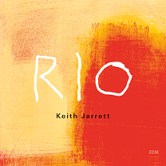
Which leads (at long last!) to the focus of this particular blog post, whose initial conception did not include Corea at all. Instead, it was to focus on Keith Jarrett, whose career has been somewhat more conventional in that he plays fabulous solo concerts–the newest being Rio, which was recorded in Rio de Janeiro–and as part of a trio with Gary Peacock on bass and Jack DeJohnette on percussion. There are probably two dozen Jarrett solo recordings, and every one is similar, but in its way, exhilarating, original, compelling, and consistently inventive. This is probably one of the best of the lot, but there are so many fine examples, it’s difficult to choose (and you certainly won’t go wrong if you purchase any of them). Rather than recommending one or two, I think it’s wiser for me to point you to a page that lists all of them on the wonderful All Music Guide site.

Jarrett and Corea worked together in Miles Davis’s band in 1970–a very long time ago in musical terms. It’s fascinating to listen to those nearly-a-half-century-old recordings, those initial flights into a fresher, freer, easier, less structured form of jazz and to consider the stops along the way, a way that has been so elaborately documented on some many recordings (for the most part, excellent recordings, with only the occasional excursion into dubious territory).

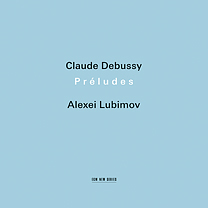
Now I find myself comparing Jarrett’s RIO with something much older, but very much from the same spring. Here, the composer is Claude Debussy. The pianist is Alexei Lubimov, sometimes playing his Bechstein beside another Alexei, in this case, Alexei Zuev, on his Steinway piano. Perhaps it’s the elegance, the presentation, the combination of control and fireworks, the seriousness… or the extraordinary skill that compels me to consider Debussy and Jarrett’s recordings as ideal companions for an extended listening session on a gloriously rainy or snowy afternoon. The latter is not new music–it predates Jarrett by more than a century–but the sense of freedom, the phrasing, the flights of fantasy and ecsstacy on, for example, “La puerta del vino,” sounds more like 21st century jazz to my ears than it sounds like traditional classical music.

At a certain point, writing about music really is like dancing about architecture, so I’ll stop here and not embarrass myself with a flurry of comments about Debussy’s individual preludes and how nicely they’re carried off by Lubimov on Preludes.

As the music begins to fade, and friends are pulling up to the house after a long drive (they’ll be hungry), allow me to simply recommend a pair of very good piano recordings, each a pair in itself (each is a 2-CD set), perhaps the ideal gift for just about anybody willing to take the time to really listen. Both packages are excellent.

Let me end with a note to myself: I need to learn a lot more about Alexei Lubimov, and spend time listening to his past work. He’s a new name for me, and after of month of listening to him play the piano, I am beginning to understand the many internet claims… he may be one of our contemporary keyboard musicians. I suspect Lubimov deserves a proper article of his own. Getting to work right now…

Five Rules for Happiness

20121111-225133.jpgRayChambers is the first link in the chain. Ray has been an inspiring force in New Jersey generally, and in Newark, specifically. (I’ve seen it first hand, both at the New Jersey Peace Education Summit and in the midst of a New Jersey Network gala).

For LinkedIn CEO Jeff Weiner, Ray has been a mentor, and man who passed on five rules for happiness that Weiner now passes along in today’s New York Times.

  1. Live in the moment.
  2.  It’s better to be loving than to be right.
  3. Be a spectator to your own thoughts, especially when you become emotional.
  4. Be grateful for at least one thing every day.
  5. Every chance you get, help others.
20121111-225216.jpg

Peter DaSilva for The New York Times

When Weiner speaks with students, he adds thoughtful consideration of his own:. He asks students, “Looking back on your own career, what do you want to say you accomplished?” If a student cannot answer quickly and easily, Weiner strongly encourages a thought process leading to an answer.

He adds more advice. His own: “surround yourself with amazing people.” And from MIT Media Lab leader Joi Ito: “maintain a childlike sense of wonder throughout your entire life.”

And, finally, from Einstein: “There are only two ways to live your life. One is as though nothing is a miracle. The other is as though everything is a miracle.”

I prefer the latter. And if you’ve read this far, I suspect that you do, too.

Read the article. It’s a good one.

An Antidote for Pizza

I steer clear of the gummy crap that’s delivered in pizza boxes from the chain stores. No Pizza Hut for me; the ingredients, the preparation, the lack of loving care, all are good reasons to buy pizza elsewhere.

More often than not, the local pizza shop is only a bit better. The dough is rarely fresh, the mozzarella is pre-shredded and made weeks or mints before it becomes a pizza topping. The sauce may or may not come out of a can, but it’s exceedingly rare to find an actual tomato anywhere in a pizzeria. Some pizza places make some of their own stuff, and add some love. Certainly, there are some of NYC pizza places where it all comes together nicely, but they are the exception.

So, what do I want? I want what DiMeo Brothers does. It’s worth a trip to (of all places) Wilmington, Delaware (an hour from Philly) to taste the fresh cheese, the fresh dough, the fresh sauce. This particular pizza restaurant imports ingredients from Italy. Even the water used in dough. Baked in a perfect brick oven, the pizza is sublime–and only vaguely resembles the round, flat, gutless things that Pizza Hut / Papa John / Domino are selling.

Too far away from Wilmington (or their new place in Philadelphia’s Andorra neighborhood) to make a go of it? There are options. One is a book.

20121110-224811.jpgThe book–My Pizza, written by a baker named Jim Lahey–promises a “no-knead way to make spectacular pizza at home”. The book is filled with wonderful photographs of equally wonderful pizzas. No surprise that they look, and taste, as good as the best of DiMeo’s. Fresh ingredients and loving preparation are everything.

You begin with a pizza stone. Three-quarters thick is best because it retains heat more efficiently than the more common half-inch consumer model; visit a restaurant supply shop if you can’t easily find one online. A pizza “peel”–the paddle–is essential, but the long ones used in pro kitchens may be too long for yours, and a smaller one will be fine.

Leahy is okay with conventional flour but extremely picky about the olive oil. The best comes from Chile. The freshest cheese, the finest available tomatoes, these are critical.

Ovens are tricky. They need to reach high heat. Buy the book, read the chapter, because this part is a little complicated. You can do it–make great pizza in your own kitchen–but take care to do the work properly to avoid incident.

Next chapters: how to make the dough, then the tomato sauce, both from scratch. This is not a quick job. This is a messy job, gloriously so. But then here’s that first tomato pie–your freshly made dough, your freshly made tomato sauce, a touch of fin sea salt, and a drizzle of your best olive oil. Three (!) minutes later, maybe five if you let it cool, you’re eating the best pizza of your young life. A week later, you’re completely addicted to your own variation on Leahy’s veal meatball pie, one of a few dozen specialty pies in this handsome cookbook.

Frozen pizza? Domino? Fuhgeddaboudit. Go buy the book and make your own.

Tech Changes Education

The Schoology logo connects classroom management, online learning and social networking.

Late in October, just before the storms, Forbes ran a useful summary of several trends that promise to reshape classroom education. It was swritten by Jeremy Friedmanthe CEO of Schoology, a company that makes software for the classroom.

No surprise that the key trends emphasize individualized learning based upon technology. Certainly, the ubiquity of cloud computing encourages document sharing, and collaboration regardless of each individual student’s location. “The 2012 Horizon Report, which provides insights into education technology trends, predicts that collaborative environments are about one year away from mainstream adoption.” That seems ambitious to me, but I’m sure that the most advanced, well-funded, tech-enabled schools will begin to make this statement true.

Given the realities of most schools, the idea of cross-platform integration may seem like an impossible dream, but vendors are beginning to work together to unify their approaches to digital learning. Forbes believes more strongly in this future than I do, or, perhaps, than most teachers probably do.

It’s now nearly impossible to imagine a classroom without mobile technology, but again, imagination is ahead of reality. Certainly, “(Mobile apps) are abundant, inexpensive and easily accessible…” but the question is not the apps, it’s the devices. A new movement toward BYOD (“Bring Your Own Device,” of course) is gaining traction. In itself, this is remarkable: just two years ago, many teachers, principals and administrators were doing everything they could to keep Twitter, Facebook, Tumblr and other “distractions” away from the classroom. Still, the levels of coordination present major challenges: Apple, Android or Windows? Curriculum at the national, state, district, school, classroom, or individual level? For all students, advanced students, average students, challenged students? Apps are easier to develop and produce than traditional software, but it’s not the software engineering that’s the issue, it’s what it does, and how what it does fits into any sort of master plan.

This raises the issue of adaptive learning, a domain that is already being addressed by at least one company: Knewton “responds in real time to the activity of each user on the system and adjusts to provide the most relevant content…” What’s more: “Knewton is able to capture every move a student makes – scores, speed, accuracy, delays, keystrokes, click-streams and drop-offs. The platform collects this data and the software adapts to challenge and persuade the user to learn based on his/her individual style. Pretty amazing stuff!

The buzz idea of the year seems to be gamification–that is, just about everything becomes a kind of game. At first, this seems to be a frivolous undertaking, but you need to think more broadly about games and how they work. A good game is a simulation of life, a design for activity within bounded rules. In this regard, games are a simplification, a reduction of real life situations that allow learners to focus on specific learning objectives. And, these learning objectives are readily scored, and, under the best of circumstances, presented in a way that connects learning and fun.

There’s funding behind this approach: “Game-based learning is even one of the priorities of the Bill & Melinda Gates Foundation, which earlier this year helped launch the Games, Learning and Assessment (GLASS) Lab. According to the organization, GLASS Lab is “based on the understanding that digital games and simulations can support student learning by providing immediate feedback for students, teachers and parents on students’ progress toward established learning goals”” The article describes even more funding from the game maker Electronic Arts, and the Entertainment Software Association, and, also, from the MacArthur Foundation. The non-profit at the center of all of this: Institute of Play. I looked at their website. I need to visit. Soon.

Immersive Storytelling

From the Toverlandarn site, an example of a magic lantern image… immersive entertainment from the 1800s.

At its simplest level, immersive storytelling requires nothing more than a good book, or, in simpler form, a really good storyteller, preferably on a chilly night near a campfire.

Immersive storytelling is hardly a new idea. In the days of magic lantern shows (which preceded nickelodeons and movie theaters), a storyteller would captivate an audience in a dark room with his narration of projected images. (For more, here’s a wonderful web site about magic lantern shows that includes thousands of images.) As early as the 1700s, magic lantern shows were popular–and scary–entertainment. At about the same time (give or take a few decades), Daniel Defoe was concocting written tales in novel form, an art perfected by Charles Dickens, whose immersive tales of dreary London captured the attention of large audiences. As theater, and movies, and videogames, and other forms evolved, they have done by building on fundamentals established by these early immersion artists.

Today, the power of computing can provide spectacular realism and the promise of deeply interactive experience–in which the individual participant and the story framework become one. That’s the area that author Frank Rose explores in an interesting new-ish book entitled, appropriately, The Art of Immersion. The more I read, the more I realized that Rose’s interpretation of immersion is more closely aligned with internet communities than large-scale digital immersion on, say, a James Cameron scale.

For much of the book, Rose tells stories about commercial ventures into lite forms of community engagement related to media. These stories are fun to read, and in some cases, familiar, but the intensity of the immersive experience is, often, both minor and fleeting. For example, he tells of Dunder-Mifflin’s virtual employees, paid in Schrute bucks, over a quarter of a million people in all, many more if you count the YouTube video of JK Wedding Entrance Dance. Rose muses on the relative importance of Dr. Horrible’s Sing-Along Blog, Quarterlife, and other early attempts at a web-based version of web-based TV shows with a twist. The discussion continues with various YouTube, Twitter, and, at last, interactive gaming experiences–and that’s where the immersive concept starts coming together. Viewing comedy or music on a modest screen doesn’t quite do it for me, not as immersive storytelling. Dr. Horrible is funny, but not immersive. Immersive takes me a different place, and alters my sense of reality in a convincing way.

My first dose of modern immersion was probably a cineplex viewing of James Cameron’s Titanic. Without the benefit of 3-D, I was on that ship, able to feel the motion, the king of the world freedom, the pull of the sinking ship. It was more than a motion picture. It was an experience that filled my senses. I was in awe. One member of my family were in the bathroom, overcoming a difficult-to-explain feeling which resembled seasickness.

As it turns out, immersion through dramatic audi0-visual presentation or community interaction is the least interesting part of Rose’s book… but it takes over 250 pages to reach the “good part.” The book takes off when immersion is defined not by the external experiences that are manufactured with technological trickery, but by the intense, simple manipulation of mental mechanics… the advanced psychology associated with addiction, game theory, decision science, and emotion–the domains of science fiction innovator Philip K. Dick, and twisted author Lewis Carroll, and, when at his very best, Alfred Hitchcock. Mastery matters. Authenticity overrules realism. Movies do it well. Videogames of the future will do it better than we ever thought possible. The combination of the two is on its way–probably preying more on emotion and psychology than the now-easier-to-achieve realist simulations of fantasy environments. It’s character that drives the narrative, and when you become that character, you won’t shake off the experience in an hour or two. It will take days, and maybe weeks. An immersion vacation.

And that brings us back ’round to the charlatans of the 1700s who could draw their victims into a dark cave, project an unexplainable ship on the wall, and wrap all sorts of spooky storytelling around the mysterious image. One image, perhaps four slides in sequence, not so different from the ocean-going graphic that has been distracting your attention since you started reading this article. We are drawn to these images, drawn in by the darkness and the storyteller’s inescapable magic. Twitter isn’t quite the same thing, and it’s difficult to imagine an internet community with this kind of intense power. Then again, we’ve only seen the start of massively multiple player games, and we’ve only begun to understand what happens when a community of LOST or Star Wars fans authors its own encyclopedia (the Lostpedia and the Wookiepedia, in case you didn’t know). As these worlds collide, as deep information, worlds of characters, movie-making magic, and gaming combine, the era of immersion shall begin to change the way we think about modern storytelling. But that’s the future. The present, sadly, is best represented by the likes of the new TV series, Revolution, and so, we’ve got a ways to go.

The Mind of Howard Gardner

From his Harvard bio, one of my personal heroes. Few academics have captured my imagination, and affected my thinking, as consistently or as deeply as Howard Gardner.

Harvard Professor Howard Gardner has written more than a dozen books with the word “mind” in the title. Few researchers have spend so much of their professional careers thinking about how our minds work, whether our minds might be better trained, and whether our minds can be put to better use. He’s a brilliant thinker, and I have thoroughly enjoyed reading his evolving work over these past few decades.

Earlier this year, with co-author Emma Laskin, Gardner republished Leading Minds: An Anatomy of Leadership with a new introduction, and that led me to the slimmer 5 Minds for the Future, a slim book that captures his evolving philosophy in a succinct, deeply meaningful way.

From the start, Gardner’s 5 Minds for the Future is more contemporary, acknowledging the tangentially  overlapping work of Daniel Pink, Stephen Colbert (“truthyness“)  and the enormous changes brought about by globalization. Gardner is famous for his theories about multiple intelligences (“M.I.” these days), but M.I. is not what this book is about. Instead, Gardner presents his case as a progression from basic to higher-level thinking, and his hope that we will climb the evolutionary ladder as a collective enterprise.

He begins by revisiting one of his favorite themes, the disciplined mind (which provided both title and subject matter for his 1999 book). Here, the goal is mastery, which requires a minimum of a decade’s intense participation, a thorough examination of all relevant ideas and approaches, deep study to understand both the facts and the underlying fundamentals, and interdisciplinary connections. This is serious work, and it must be accomplished despite the sometimes crazy ways that schools think about learning, and the equally crazy ways that the workplace may value or advance those with growing expertise. The disciplined mind does not simply accept what has been written or taught. Instead, the disciplined mind challenges assumptions, and digs deep so that it may apply intelligence when conventional thinking does not produce valuable results. No surprise that Gardner is deeply critical of those who invest less than a decade in any serious endeavor, or those who fake it in other ways.

Next up the ladder is the synthesizing mind which accomplishes its work by organizing, classifying, expanding its base of knowledge by borrowing from related (and unrelated) fields. Placing ideas into categories is an important step up the ladder because the process requires both (a) a full understanding of  specific disciplines and how they relate to one another, and (b) the means to convey these ideas to others. And so, Gardner views the Bible (a collection of moral stories), Charles Darwin’s theories, Picasso’s Guernica, and Michael Porter’s writings about strategy as related endeavors. At first, this seems to be a stretch. Then again, each of these are bold combinations of ideas based upon a complete understanding of a domain–(a) above–conveyed in a way that connects people to the synthesized ideas (b).

You may know Mihaly Csikszentmihalyi as the author of the excellent book FLOW, but his best work may be a book simply entitled CREATIVITY.

Then, there’s the creating mind. At this stage, the progression begins to make a lot of sense. Novel approaches are not based upon random ideas that may or may not work. Instead, the creating mind grows from deep study of a specific domain in a disciplined manner, followed by various attempts to organize that knowledge in ways that propel an argument forward. At a certain point, the argument has been advanced, and the opportunity for new thinking presents itself. Many creative professionals are required to advance new ideas without the requisite discipline, and so, our society generates lots of ephemeral stuff. In the creative space, Gardner’s thinking has been affected by Mihaly Csikszentmihalyi, who believes:

creativity only occurs when–and only when–an individual or group product is recognized by the relevant field as innovative, and, sooner or later, exerts a genuine, detectible influence on subsequent work in that domain.”

I would argue that the respectful mind ought to precede the disciplined mind as the ladder’s first rung, and Gardner provides ample evidence to support my argument. For one thing, the respectful mind is the only one of Gardner’s five minds that can be nurtured beginning at birth. What’s more, the ability to “understand and work effectively with peers, teachers and staff” would seem to be a prerequisite for any disciplined approach to learning and personal development. The whole chapter is nicely encapsulated by a sentence from renowned preschool teacher Vivian Paley:

You can’t say ‘you can’t play.'”

A decade ago, Gardner, Csikszentmihalyi, and William Damon wrote a book called Good Work, and this effort has expanded into The Good Work Project. Central to this effort is the ethical mind, which carries a meaning well beyond the ethical treatment of others. Here, we begin to touch upon the idea of professional or societal calling, and one’s role within a profession or domain. It begins with doing the best work possible–that is, the work of the highest quality, as well as work of redeeming social value–but it’s not just the work itself, it’s the way that you apply yourself to the job at hand. Here, Gardner covers the diligent newcomer, the mid-life worker who continues to pursue excellence every day, the older mentor or trustee whose role is to encourage others to build beyond what has already been accomplished.

In less than 200 pages, Gardner accomplishes a great deal. If time permits you to read only two Gardner books, I would start with Frames of Mind, which explains his theory about multiple intelligences, then jump to 5 Minds for the Future. After these two, you’ll probably want more. His book about leadership, mentioned above and discussed below, is certainly worthwhile. And Good Work will fill your head with wonderful ideas and inspiration for all you could do to help make the world a better place.

BTW: If you want to watch Gardner discuss 5 Minds for the Future, you’ll find his 45-minute video here.

As for Leading Minds, it’s an extraordinary book, a collection of analytical biographies written as parts of a whole, a cognitive view of leaders and leadership. He examines leaders by taking part their fundamental identity story: who they are, how their domain and influence grew, how and why they succeeded, how and why they were unable to accomplish their ultimate goals. This is not a book whose core ideas can be reduced to a few bullet points. Instead, it’s a few hundred pages of reflection on the nature of leadership shown through the examples of Albert Einstein, Mahatma Gandhi, Martin Luther King, Jr., Alfred P. Sloan, Eleanor Roosevelt, and a half dozen other 20th century figures. The significance of some names is fading; it was disappointing to find that this revised edition of a 1995 work did not include anyone who made his or her mark in the 21st century.