A Teacher Who Paints Ideas

When a student faces a new subject, there is a certain comfort in structure, process, facts, and the rigorous routine that defines most teaching situations. Teachers find comfort in that structure: first, the basics, then, perhaps, the materials, then, the history followed by waves of increasingly specific information. In theory, it all makes sense. In practice, when faced with the sloppiness of real life, the structure may be exactly what’s not needed because it interferes with the real learning that occurs as a result of experimentation and making glorious mistakes.

I guess that’s why I had so much trouble understanding what Tom Hoffman was doing. Instead of writing a book that began with materials (in this case, watercolor paints, brushes, papers, and accessories), he begins by admitting that watercolor painting is not easy to do, that it is sloppy, messy, difficult to master, wasteful of expensive paper, and then eschews anything resembling a traditional learning process. Instead, he focuses on the most dangerous of all educational concepts: ideas.

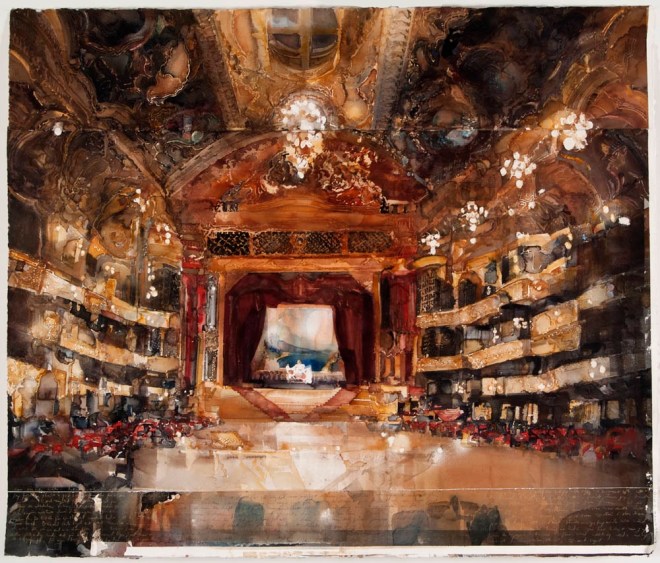
Allow me to begin where he first captured my imagination, with a watercolor painting by an extraordinarily talented artist named Lars Lerin.
operaQuoting Hoffman:

The palette is limited to three colors, and almost all of the edges of the shapes are hard. In the realm of value, however, the artist pulls out all the stops. Never merely black, his deepest darks remain full of color. He limits the lightest lights to just a few stops, making everything else seem to be lit by the low gleam of a lantern in a gilded pattern.

With this glorious visual introduction, he begins where most instruction books ought to begin: by encouraging direct observation, followed by critical thinking (would this make a good painting? what appeals to me, and might also appeal to the person looking at my finished work?) and creative thinking (how can I bring the visual ideas to life in the best possible way?) Hoffman does not begin by focusing on materials. He begins by focusing on the process that every artist shares. This leads to two very helpful essays, one entitled “Knowing Where to Begin” and the other, quite reasonably, “Knowing When to Stop.” In between, he explains the process by examining a very common part of the painting process: thinking through the best way to visualize the shapes and forms and values with just enough detail to pull it all together.

Hoffman Skaftafell

Simplicity in pattern and form, a very effective work by Tom Hoffman.

Step back for a moment. Imagine learning history that way. It’s never about the details. It’s always about the whole form. (But in school curriculum, it’s always about the details. Which we always forget.)

A very colorful Juarez Market in Oaxaca is filled with detail. It’s the centerpiece of a chapter entitled “Knowing What Not to Paint.” This leads to thoughts and illustrations about shape and form, and a key concept: simplicity.

A lovely streetscape by the esteemed watercolorist Alvaro Castagnet show how color and light can be handled in the simplest possible way, and yet, with skill, they can result in a painting that appears to be quite complex. The secret, Hoffman explains, is thinking in layers.

Thinking in layers is an additive technique–place one layer of color, then another–but it requires subtractive thinking to begin. That is, you must look at a scene, observe it carefully, determine which areas can be isolated and painted with a single color wash without interfering with other areas. For example, a red wall might be washed, but the blue roof should not be washed in the same layer–unless you’re seeking purple results.

A market in Puerto Rico, painted by Tom Hoffman, provides an illustration of wide dynamic range (note the darks at the top, the lights in the distance),  layering and simple design for optimum impact.

A market in Puerto Rico, painted by Tom Hoffman, provides an illustration of wide dynamic range (note the darks at the top, the lights in the distance), layering and simple design for optimum impact.

Hoffman also encourages the use of a wide dynamic range: the lightest lights and the darkest darks are what makes a painting come to life. Too often, he explains, the range is almost exclusively in the middle tones, and, as a result, the work lacks energy, contrast, and a compelling reason for anybody to pay much attention. Again, appreciate the metaphor because it applies to so many aspects of life: dark and light, silent and boisterous, and so on.

Final lesson: simplify to the point of abstraction. His most powerful work tends to be simple masses of color, artfully arranged.

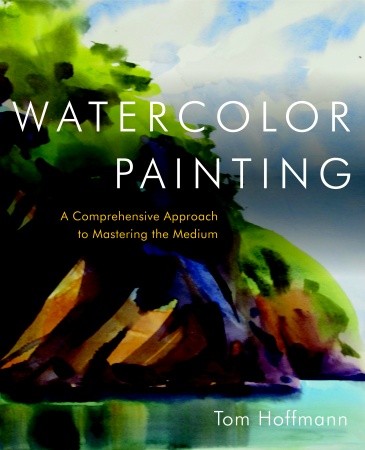
The name of the book is Watercolor Painting: A Comprehensive Approach to Mastering the Medium.
Watercolor Hoffman

Steve Wozniak: 1984 Speech

What fun! Here’s Apple co-founder Steve Wozniak speaking about the earliest days of Apple Computer, working with Steve Jobs, and more. It’s a moment in time, a speaking engagement from 1984. He is speaking to the Denver Apple Pi Computer club. Thank you, Vince Patton, for uploading these videos to YouTube for all to see. You can watch the whole speech, in order, here, or just sample some of the best moments on the video clips below.

Attending College, Ended up at Hewlett Packard (including the excitement of obsoleting the slide rule!)

Wozniak and his passion for programming:

College Pranks:

Making the Apple I Computer:

There are more, I think, but this will keep us all busy for a half hour or so.

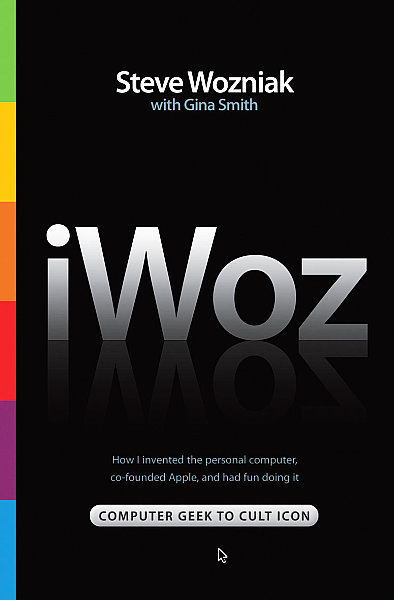
BTW, Wozniak is an articulate, engaging public speaker. The same is true of his work as an author. If you haven’t read his book, iWoz, I wholeheartedly recommend it.

iWoz

Donna and The Herd

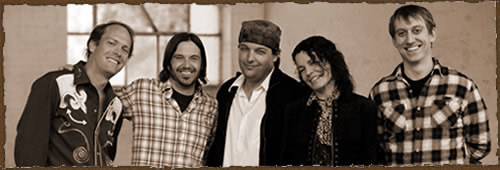
Donna the BuffaloWestern New York turns out to be one of those creative hotbeds that most people don’t know much about. Ever since 1874, summers at Chautauqua have been filled, for a fortunate 100,000 visitors, with recreation, arts, lectures, and spiritual fulfillment. Buffalo, Rochester and Ithaca have long supported outsized music scenes. And then, there’s Donna the Buffalo.

Donna is one of those bands I’ve heard from time to time, but never really discovered. They come from the Finger Lakes region, and they remain the creative core of the annual Finger Lakes Grassroots Festival of Music and Dance in tiny Trumansburg, New York (this year, the festival begins on Thursday, July 18, and I’m hoping to be a part of it). Donna the Buffalo has been playing and recording together for over twenty years. It’s not too late to join the party.

Truth be told, before I started writing this article, I had never completely listened to a Donna the Buffalo album. For the past month or two, I’ve been listening to a half dozen DTB CDs over and over again. They’re terrific. I really like this band. They’re authentic, deeply rooted, and seem to be having a whole lot of fun. They seem to get the commercial thing–this music is neither experimental nor challenging–but they’ve managed to keep their integrity, to stay just to the side of the commercial craziness of the music business.

Tara-NevinsOn every album, there’s a great feel for Americana, healthy doses of country and bluegrass, an old-timey sensibility when it feels right, pure form rock n’ roll, bits of soul and funk. It all comes together with a superior sense of how it all ought to be arranged and presented. What do I like about this music? I guess I like the sound of the two lead vocalists: Tara Nevins with her country style on some tunes, and Jeb Puryear with a folk / rock / rockabilly / country style on others, but that’s just the start. There’s Tara’s fiddle keeping time on “Tomorrow Never Knows,” and Jeb’s pedal steel on “Temporary Misery.” I like the way Kathy Ziegler sounds on backup vocals, a nice complement to Tara’s voice. I like the way the music dips into country music and rock, then goes funky.
The work is really tight–I love it when a band is really tight, really together, hitting every musical idea with perfect timing. Most, but not all, of the work is original, the vast majority written by the band’s lead singers, Nevins and Puryear. They tend to write catchy songs with memorable hooks, and after nearly 200 original compositions for this wonderful group, they know how to make it all work. They do touch base with respected influences: an especially handsome version of “Man of Constant Sorrow” pays homage to Ralph Stanley, for example.

Allow me recommend a few of the albums I’ve especially enjoyed.

PositiveFrictionSo far, I think my favorite is Positive Friction, released in 2000. This is album that I seem to play most often, probably because I enjoy Tara’s vocals, the chorus, and the arrangement, the catchy “No Place Like the Right Time” almost as much as I enjoy one of her other tunes, “Yonder.” The latter is both appealing as a catchy tune and as the kind of earnest social commentary that is so much of Donna the Buffalo’s creative approach. Nice lyrical treatment, too; here’s an example:

The waters led to the promised land

Seeds of  greed washed upon its shore

White footprints in the settling sand

Brought the ways of an ignorant man

Silverlined is a newer album, circa 2008, is a more mature work, more subtle, more varied in its instrumentation and soundscape. Puryear’s “Meant to Be,” for example, reminds me of Emmylou Harris’ work on Red Dirt Girl. “I Don’t Need a Riddle” combines Nevins’ more mature voice with a Cajun accordion and an interesting, vaguely funky rhythm track. The songs roll on, but they seem to be more contemporary, more artful, arranged less to please an audience ready to dance than a single listener enjoying a handsome combination of an interesting arrangement, a plaintive voice, and thoughtful lyrics; “Beauty Within” is a good example with Nevins on lead vocals.

DIGIPAK-4PANEL 1TRAY [Converted]A band that counts its time together in decades ought to encourage some solo work, and that’s precisely the approach here. Right now, I’m enjoying Wood and Stone, a 2011 solo album by Tara Nevins. Here, there’s a healthy amount of straight-ahead country (perhaps bluegrass / old-time / country is a more accurate description), as in “The Wrong Side” with some lovely instrumental breaks. Nice version of “Stars Fell on Alabama,” too. It’s all easy, natural, and a wonderful side journey just close enough to her work with Donna to keep fans happy (I’ll include myself here).

After I wrote all of this, I figured I would check on what others have written about Donna the Buffalo. On Amazon, Alanna Nash wrote this:

Donna the Buffalo–hard to categorize, but easy to love–are meant to be heard live. The six-member group thrives on jams and grooves, blending, bending, and veering from Appalachian country to Cajun, reggae, zydeco, folk, and roots rock often in the same song (check out the nearly 13-minute “Conscious Evolution”).

Intrigued, I kept reading:

Frequently compared to the Grateful Dead, DTB evoke Jerry Garcia and pals, both musically and with their rabid, nomadic fan base (the Herd). But in mixing tribal celebration with spiritual, social, and political issues, the band, which travels the country in a 1960 tour bus, recalls so many other hippie-era ensembles.

Not so sure I agree. DTB reminds me of at least a dozen other bands, but the Dead wouldn’t be high on that list. This doesn’t feel like a California band, not to me, anyway. Instead, I’m hearing a distinctly Appalachian vibe here, probably by way of Nashville, with a mix of lots of other styles I associate with Mississippi, Virginia, and other places on this side of the country.

LiveFromTheAmericanBallroomThen again… there’s this live album from 2001, probably a better representation of the band than the individual CDs. It’s a compilation of tour recordings called Live from the American Ballroom. The sixties are alive and well on “Conscious Evolution,” a kind of tribal chant by way of rock n’ roll, world music, Cajun, funk, lots of styles bubbling up to the surface, then fading into the next musical idea. In fact, the whole album is filled with long songs and the kinds of improvisation that filled so many live albums in the 1970s. I think my favorite is “Standing Room Only,” kind of Cajun, kind of a chant, great dance song for a Saturday night.

Those days are gone (but available online and from any well-stocked vinyl-oriented record store), but Donna the Buffalo keeps on going. A few months ago, I wasn’t sure what these guys were all about. Now, I like them enough to recommend them to you. Who knows? Maybe we’ll all meet up in the Finger Lakes in July.

Enjoy.

P.S. Lots of Donna the Buffalo video on You Tube.

Big Ideas Simply Explained

Three subjects that I can never seem to understand as completely as I would like:

  • Philosophy
  • Economics
  • Psychology

Whenever I read a book about any of these subjects, I feel like a student, which means, I am reading because duty requires me to complete the book. The subjects interest me, but too many of the books I have read on these subjects are dreary, slow-moving, too dense with ideas for any reasonable person to sort out and retain their valuable understanding. Pictures help, but many of the ideas held within these disciplines are difficult to illustrate with anything better than wordy diagrams.

A year or so ago, I noticed a series of three books put together by Dorling Kindersley (DK)’s collaborative teams in the UK and India. They’ve got the formula right, and as a result, I have spent the last year happily browsing, and learning, from:

  • The Philosophy Book: Big Ideas Simply Explained
  • The Economics Book: Big Ideas Simply Explained
  • The Psychology Book: Big Ideas Simply Explained

A month or so ago, the same company released The Politics Book: Big Ideas Simply Explained, and at some point, I’ll get to that one, too. Right now, I’m still working my way through the first three volumes (about 1,000 pages total).

Three DK BooksSo what’s so special?

First,there is no single author. The collaborative approach focuses on presentation, clarity and consistency. This is less the work of a brilliant psychology teacher, more like a good old fashioned browse through, say, The World Book Encyclopedia from days of old. The type treatments are bold. There are pull-out quotes. There is color. No single idea runs more than a few pages. Everything is presented in a logical flow. There are boxes filled with biographical details. There is a clear statement of predecessor ideas and influences for each idea, and there is an equally clear statement about those in the future who built upon each idea. There are color pictures and diagrams. It’s tidy, presented for smart adult readers but certainly suitable research material for any school report.

The Philosophy Book is written by four academics and two writers: Will Buckingham is a philosopher and novelist with a special interest in the interplay between philosophy and narrative storytelling. Marcus Weeks is a writer, and author. Clive Hill is an academic focused on intellectualism in the modern world. Douglas Burnham is a philosophy professor and prolific writer on the subject. Peter J. King is a doctor of Philosophy who lectures at Pembroke College, University of Oxford. John Marenborn is a Fellow of Trinity College, Cambridge, UK, whose expertise is medieval philosophy. Taken as a group, they’ve got their philosophical bases covered (each of the books is put together by a team with similar skills). Marcus Weeks is the connection between all three books.

The bright yellow Philosophy book introduces the whole idea in comfortable language:

Philosophy is…a chance simply to wonder what life and the universe are all about…Philosophy is not so much about coming up with the answers to fundamental questions as it is about the process of trying to find out those answers, using reasoning rather than accepting…conventional views or conventional authority.”

So begins an introductory essay that introduces debate and dialogue, existence and knowledge, logic and language, morality, religion, and systems of thought and beliefs. A red color burst is the bridge into a timeline that begins the conversation in 624 B.C.E. And so, early on, we meet Pythagoras, who should be famous for more than his geometric theorem. In 428 B.C.E.–that’s about 2,500 years ago–Pythagorus developed a remarkable idea, that everything in the universe conforms to mathematical rules and ratios, and determined that this was true both of forms and ideas. Pythagorus was the leader of a religious cult, in which he was the Messiah, and his followers thought of his work as revelations. Here was a man for whom reasoning was the secret of the universe. He wrote, or said:

There is geometry in the humming of the strings, there is music in the spacing of the spheres.”

And:

Reason is immortal. All else is mortal.”

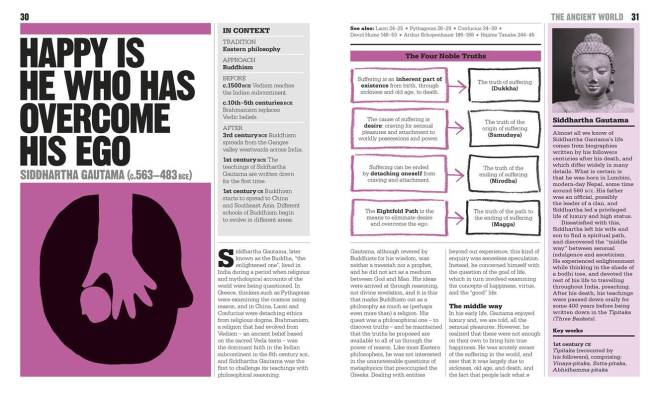
SiddharthaTurn the page and there’s Siddhartha Gautama and Buddhism’s four noble truths, explained in terms that anybody can understand, followed by the Eightfold Path presented in the Dharma Wheel. Siddhartha is covered in four good pages, and then, it’s time for Confucius and his Five Conscious Relationships.

All three of these men–Pythagorus, Siddhartha and Confucius–lived and worked around 500 B.C.E. More or less, they were contemporaries. A century later, philosophy turns to what is later called science, as Democritus and Leucippus come with the idea of atoms and the emptiness of space. (Seemed very early to me, too!) At about the same time, this from Socrates:

The life which is unexamined is not worth living.”

Jumping ahead to the middle of the book, Britain’s David Hume is considering human nature in the mid-1700s, and, in particular, the ways we cobble together facts:

In our reasonings concerning fact, there are all imaginable degrees of assurance. A wise man therefore proportions his beliefs to the evidence.”

Thinking in the present day, Palestinian philosopher Edward Said criticizes imperialism, Australian Peter Singer advocates for animal rights, and Bulgarian-born French philosopher Julia Kristeva questions the relationship between feminism and power. It’s a large field, and with The Philosophy Book, it’s possible for the average person to navigate with greater confidence than before.

The other two books are equally good.

The Economics Book begins with an article about Thomas Aquinas’s thoughts on prices, markets, and morality; the provision of public goods with thoughts by David Hume, whose words from the 1700s certainly resonate today:

Where the riches are engrossed by a few, these must contribute very largely to the supplying of the public necessities.”

Hume is among the few whose ideas appear in more than one of these volumes. And–I just noticed–The Philosophy Book tends to be stories about the people behind the ideas, The Economics Book tends more toward the ideas with less frequent stories about the people behind them (often because economic ideas are credited to multiple sources, I suppose). Making our way through The Age of Reason (“man is a cold, rational calculator;” “the invisible hand of the market brings order”);  on to economic bubbles (beginning with tulip mania in 1640); game theory and John (A Beautiful Mind) Nash; market uncertainty, Asian Tiger economies, the intersection of GDPs and women’s issues, inequality and economic growth, and more. Great book, but a bit slower going than Philosophy.

Psych Book SpreadThird in the trilogy is the bright red volume, The Psychology Book. As early as the year 190 in the current era, Galen of Pergamon (in today’s Turkey) is writing about the four temperaments of personality–melancholic, phlegmatic, choleric, and sanguine. Rene Descartes bridges all three topics–Philosophy, Economics and Psychology overlap with one another–with his thinking on the role of the body and the role of the mind as wholly separate entities. We know the name Binet (Alfred Binet) from the world of standardized testing, but the core of his thinking has nothing whatsoever to do with standardized thinking. Instead, he believed that intelligence and ability change over time. In his early testing, Binet intended to capture a helpful snapshot of one specific moment in a person’s development. And so the tour through human (and animal) behavior continues with Pavlov and his dogs, John B. Watson and his use of research to build the fundamentals of advertising, B.F. Skinner’s birds, Solomon Asch’s experiments to uncover the weirdness of social conformity, Stanley Milgram’s creepy experiments in which people inflict pain on others, Jean Piaget on child development, and work on autism by Simon Baron-Cohen (he’s Sacha Baron Cohen’s cousin).
When I was in high school and college,  I was exposed to all of this stuff, but only a small amount remained in my mind. Perhaps that was because I was also trying to read the complete works of Shakespeare, a book a week of modern utopian fiction, The Canterbury Tales, and studying geology at the same time. In high school and college, these topics were just more stuff to plough through. No context, no life experience, no connection to most of the material. Now, as an adult, it’s different. Like everyone I know, and everyone you know, I’m still juggling way too much in an average week, but I can now read this material with a real hope of understanding and retaining the material. Cover to cover, times three, these books will take you a year or two, but… without a test the next morning, you’ll be surprised how interesting philosophy, psychology and economics turn out to be. Just read them in your spare time, and behold (great word, “behold”) the ways in which humans have put it all together over several millennia. It’s a terrific story!

You Know, A Lot Can Happen In A Century

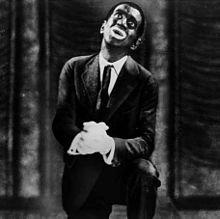
In his time, Al Jolson was a superstar. We've managed to get past the need for blackface, and although it keeps changing, showbiz marches on.

In his time, Al Jolson was a superstar. Thankfully, we’ve managed to get past the need for blackface. Show business keeps changing, adapting to times and tastes. And until recently, there was one place to read about these changes, day after day, year after year. Now, that’s changing, too. How? Read on. (You ain’t heard nothin’ yet!)

Today, we’re digital. We live in modern times. These times, we believe, are so new, so unique, that they have no historical precedent. The mythology is tempting, but that’s because the history is just beyond the edge of our ken. We focus on the new. We forget what happened before. Until, of course, we’re reminded of our history as the result of a really good documentary, or a really good book.

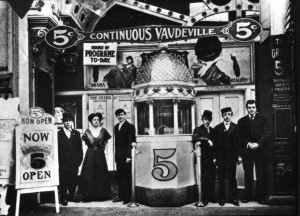
vaudeville theatre

A hundred years ago, minstrel shows were just beginning to lose their luster, but it was unclear whether theater audiences would eventually prefer skating rinks, a vaudeville industry based upon national tours (new, in 1906), or bawdy burlesque as a the most popular ways to spend leisure time. Movies were just starting out with an industry of tiny, dubious start-ups and few places where they could be seen by anyone. Live theater was the popular entertainment; actors traveled from one city to another to perform in popular plays, just as they had since the time of John Wilkes Booth. It was a confusing time… The Great War was just beginning and the large theater lobbies were as useful as recruiting stations as they were for pre-performance gatherings. After the war, everything seemed to coalesce. Charlie Chaplin, who had debuted in a US theater in 1910, was sufficiently powerful by 1918 to join forces with movie stars Douglas Fairbanks, Mary Pickford, and director D.W. Griffith to form United Artists. Then as now, everything happened quickly.

Prior to the 1920s, just about all entertainment was live. The movies were beginning to change that, and as the decade began, a new idea called radio was began as a kind of experiment, it’s post-military use future not yet clear. The year 1920 was one of vaudeville’s best ever. By 1925, radio was becoming popular, but its business model was entirely unclear. From a July 1925 article:

the broadcasters and radio manufacturers continue to tell Department of Commerce officials that no broadcasting station in the country is making money.

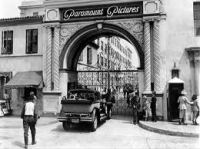
Paramount theaterParamount studioBy 1930, 40 percent of US households owned a radio, and by 1940, radio’s penetration was more than 80 percent. By 1930, there was a bona fide motion picture industry with large studios (Fox, Paramount, Loew’s/MGM, RKO and Warner), each with an elaborate distribution network of theaters throughout the country and a distribution infrastructure to service the nation and parts of the world. At the same time, the new NBC and its lesser rival CBS had built a similar structure for radio broadcasting. This structure supported the next level of development: a star system. Lon Chaney, Al Jolson, Fatty Arbuckle, Theda Bara, Duke Ellington, James Cagney, Fred and Adele Astaire, so many others became household names.

The industry grew. There were cartoons from Warner Bros, and Disney, comedy shorts from Hal Roach (Our Gang, Laurel and Hardy), child stars including Shirley Temple, and within a decade, major long-term successes including Gone with the Wind and The Wizard of Oz. There was Mussolini, Hitler, FDR, the Roaring Twenties followed by the Great Depression.

Variety bookVariety covered it all. This small, speciality newspaper, a trade rag, was always at the center of it all. When anything happened in or near show biz, Variety told the world. Everybody in “the business” read it, and to be mentioned in it was a clear indication of career success (I was in it, at lease once, and I still have the clipping).

This week, Variety announced that it would cease publishing its daily edition (the weekly remains in print, at least for the foreseeable future). This is not simply a cost cutting measure. Variety, once the trendiest of publications, has been badly beaten in the online entertainment journalism game, and some industry insiders question its survival as a 21st century brand.

Given its illustrious past, I suspect Variety has more fight in it than pundits allow. If you have any doubt, you must spend some time with a book about Variety’s history published by Rizzoli in a tidy coffee table format. The book is entitled Variety: An Illustrated History of the World from the Modt Important Magazine in Hollywood. The last headline in this volume: “Comcast buys 51% of NBC Universal.” I think it’s interesting to note that neither Comcast nor NBC nor Universal existed when Variety’s story began, and even more interesting to consider just how much has happened over the span of a single century. (Parallels with today’s innovative world are particularly fascinating).

Okay, why not? Here’s one of my favorite Variety headlines. This one was on the front page on July 12, 1950:

VIDEO NOW VAUDE’S VILLAIN
Acts and Agents Fear TV Inroads

Can’t help but wonder about a headline that could be written for July, 2050:

WEB, VID DEAD
TV and internet replaced by…

The Global Art Gallery

oil229SAbove, a lovely British landscape, described, in the words of the artist Rob Adams on his Painter’s Blog, as follows:

This is towards the end of the day on the charmingly named “Hogs Trough Hill”. The light was super, though once I stopped it was very cold! 20in by 12in.”

Here’s another picture by Rob, one that he likes very much, and I do, too.

2010S01S

I mention Rob, and his paintings, in part because I enjoyed my visit to his site and the art I found there, but also to note a remarkable phenomenon.

Rob’s site is filled with his work. Some of it is very, very good. Some of it, by his own admission, needs more time and attention, and yet, he is perfectly comfortable posting both the good and the not-great, along with comments that detail where he feels he fell short, what he intends to complete or rework later on.

In itself, this is a rather new way to think about the interactions between artists and their public. It’s very much like visiting an artist in his (or her) studio, and being allowed to see everything the artist has on hand, including works-in-progress, complete with extensive commentary. Rob is a good writer, too, and he often writes interesting essays about his work, some instructional, some musings, many quite interesting. So here we are, citizens of the world, with the newfound ability to visit art studios throughout the world, to gain insights from artists about their work, and, if we like, we can grab the occasional jpeg or png and use their work as digital wallpaper (with or without their knowledge or permission–a pitfall of the present system).

Some of Rob’s artwork is oil, a bit of it is acrylic, much of it sketchbook work from life drawing classes, and, to my delight, some of it is watercolor.

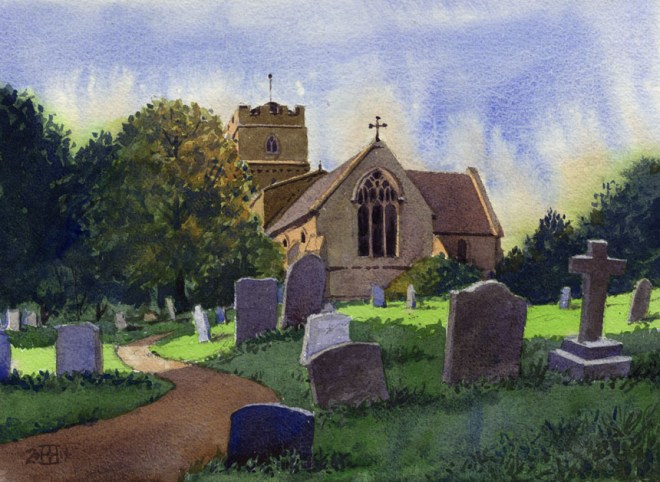
Water116SI have never met Rob, but he mentioned that he enjoys painting old church graveyards, even though nobody buys those paintings. That made me think about my role in all of this. A few hours ago, I did not know that Rob existed. I’ve enjoyed Rob’s portfolio this evening, and I liked this particular painting enough to show it to you, and to suggest that you explore the carousel of images available by clicking on the graveyard work. So here I am, promoting the efforts of an artist in a far off nation, and here you are, contemplating the way he gets the texture of the stones just right, how the light plays in the path and on the green grass, and maybe, just maybe, you will click on the image to see more of his work. Who knows, you might even buy one of his paintings.

We’ve all been at this internet thing for a good long while now. It never ceases to amaze me, the ways that we’re all connected, the ways in which we influence one another’s time and behavior via little more than a screen, a keyboard and some circuitry.

Rob, I wish I could paint half as well as you do. I learned a lot by looking at your paintings. And I will do so again, soon.

Before I Shelve These CDs…

It’s winter, so I’ve spent more time indoors than out. And that means weekend afternoons listening to lots of fine music. Before these CDs get lost on the shelves, allow me to share some recommendations:

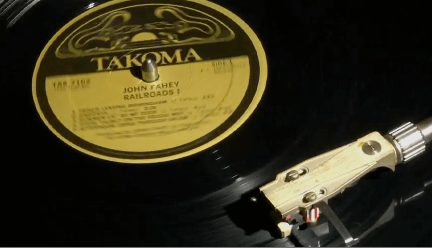
Fahey Takoma

(Yes, I know this is vinyl, not a CD. Please read on…)

John Fahey was an acoustic guitar player with a nearly mythical story. He lived from 1939 until 2001. Beginning in the mid-1960s and until the early 1970s, Fahey recorded a remarkable series of acoustic guitar albums, each firmly rooted in the 1920s acoustic blues of the south, and yet, in their own way, contemporary and wholly original. For some time, these records were hard to find, but nowadays, there isn’t much music that’s hard to find. And in Fahey’s case, there is now a series of wonderful CDs available at popular prices. Two of my favorites are The Legend of Blind Joe Death and America. In time, I will make it my business to listen to most or all of his work. And, along the way, I intend to track down a film produced about Fahey in 2010. It’s called In Search of Blind Joe Death: The Saga of John Fahey, and it’s the source of the image at the top of this paragraph. Click on the picture and you’ll see the trailer.

Karl Jenkins. Be sure to search on his image on the web. This is a very conservative portrait of a very colorful guy.

Karl Jenkins. Be sure to search on his image on the web. This is a very conservative portrait of a very colorful guy.

When I was visiting the UK this past year, I stopped by Blackwell’s Music in Oxford and requested listening recommendations. I left the store with several Oxford choral CDs, and with a three-CD box by composer Karl Jenkins entitled The Platinum Collection. According to his website, he is “the most performed living composer in the world.” Who knew? I missed him completely, and again, I’m only now getting up to date. Jenkins came up as a jazz guy, playing at the famous Ronnie Scott’s club in London, then forming the popular jazz group Nucleus with Ian Carr, and then, as part of one of my then-favorite British progressive bands, Soft Machine. After a period of writing music for commercials, he composed Adiemus: Songs of Sanctuary which is included in my box set. Like the other two discs, Adiemus combines a contemporary approach to choral music, a wide range of instruments (classical, jazz, rock, whatever works best), and a wonderful range of energy from contemplative to soaring. At first, I’ll admit that I listened to Jenkins as background music (bad idea). This is music that requires full-throttle listening, preferably on a top-notch sound system with the widest possible dynamic range, accuracy, and superior reproduction of vocal parts. Jenkins can be a crowd-pleaser in the sense of, say, music composed for the Olympics, but I found more nourishment when I listened carefully, and allowed myself the time to pay attention to these works in their complete form.

I’m equally intrigued by the Kronos Quartet, a forward-thinking classical ensemble I’ve been following for decades. I missed out on their 2009 2test-600x0release, Floodplain, and now that I’ve got a copy, I’ve been playing it a lot. It’s an album of music from various nations and cultures located in and near the Middle East, mostly instrumentals, some traditional, played with the deep knowledge that this music was composed in the part of the world where “human civilization was born and first flourished.” There is respect and beauty. Respect because this is not Middle Eastern music. Instead, there is “Lullaby,” which is Black Iranian but affected by other cultures, and there is “Wa Habini” a Christian devotional song sung on Good Friday, part of the sacred tradition of Lebanon. “Tew semagn hagere” (Listen to Me, My Fellow Countrymen) comes from Ethiopia, and it is played on instruments constructed for Kronos by their designer, Walter Kitundu, who hails from Tanzania. The album opens with a hit song, from the 1930s, from Egypt: “Ya Habibi Ta’ala.” In fact, many of the songs were hits long ago. This is music you’ll want to buy on CD: the liner notes add texture and important background to the listening experience.

Garth KnoxGarth Knox’s 2012 release, Saltarello, was released by ECM New Series in 2012, and it, too, has become a favorite. Knox performs on viola, viola d’amore, and fiddle. As he performs an interesting selection of old and very new music, he does so with the attentive accompaniment of Agnes Vesterman on cello and Sylvain Lemetre on percussion. The repetoire here begins with the early British composer Henry Purcell (“Music for a While”) and continues on the old track with Hildegarde von Bingen, and John Dowland. I like the idea that this music is contrasted with work by, for example, the contemporary Finnish composer Kaija Saariaho, and that Knox manages to pull it all together as a cohesive whole. The Saariaho piece is challenging, extreme in its special effects. To be honest, I had to check the unfamiliar name–Guillaume de Machaut–to determine whether he was an old composer or a new one (he lived in the 1300s, and was equally famous as a poet whom Geoffrey Chaucer apparently admired).

300px-Machaut_1

Well, I found this tapestry on the Wikipedia site for Machaut. Clearly, he is not a contemporary composer.

Andy Sheppard

Andy Sheppard (click on the link for a bunch of neat pictures of Sheppard at play.)

Also on ECM, and also from 2012, Trio Libero is an album that I’ve enjoyed time and again. It’s one of those albums with a distinctive series of opening notes that sounds wonderfully familiar, and causes me to follow the lead line all the way through the first song (“Libertino”). Here, I’m listening to a terrific saxophone player named Andy Sheppard (he also plays soprano sax). Sheppard’s solo leads to a long, comfortable bass solo by Michel Benita (who is a major presence throughout, moreso than one typically finds on albums by a sax trio). As I said, I’ve listened to this album quite a few times, and now that I’m listening while writing about it, there’s a smile on my face. It’s just really good jazz. It’s quite varied. There’s a nice tender rendition of “I’m Always Chasing Rainbows” on the third track, a Weather Report-like texture entitled “Space Walk, Part 1.” And, the more I listen, the more I come to realize how much I enjoy listening to a well-played soprano sax. This is one of those albums where everything comes together beautifully, and I encourage you to be among the (inevitable) few who come to enjoy it as much as I do.

Okay, everything on this list now gets placed on the shelves, making room for the new, or, at least, for music that’s new to me.

Film with Feeling

Alex Kirke is a director with a keen interest in the cinematic experience, and, as it turns out, an equally keen interest in the measurement of biophysical responses to storytelling. Inevitably, this led Mr. Kirke to the development of software that would read sensors attached to the bodies of audience members. The sensors provide real-time feedback on muscle tension, perspiration, heart rate, and brain wave activity. As the software collects the data, it compiles the results, and, in accordance with the director’s wishes, the film automatically branches from one audio-visual file to another.

By using this technology, a director can amplify or dial-down emotional impact, shorten or lengthen the story, cut to another sequence entirely, and so on. Of course, all of the branching must be worked out before production begins because each sequence must be produced, edited, and integrated into the file management system.

Says one of the actresses:

It will be quite interesting to know, so well, how the audience reacts. The ending they choose reflects their reactions.

Not just the ending, of course. Anywhere in the film, the story can change course. So, too, can the soundtrack. Or any visual or visuals. In theory, there may be a large number of branches (for the professional, this becomes an obsessive, difficult way to tell a story, but it’s interesting to consider the possibilities). And, in theory, the sensors could be connected to the seats or the armrests throughout the theater, but that’s all in the future.

For the present, do watch the video. It’s rough, more of a professorial demonstration that any sort of slick production, and, if time permits, have a look at Mr. Kirke’s blog, too. There, he covers an interesting range of technical innovations related to entertainment and storytelling.

A Parisian History in Color

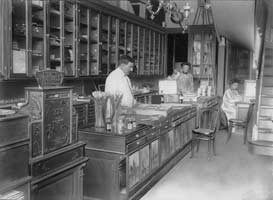
sennelier_couvertureIn Paris, on the Quai Voltaire, amidst antique dealers of the highest order, along the left bank of the Seine, directly across the river from the famous Louvre museum, there is a shop.

Sennelier-Interieur-In 1887, or, perhaps, 1888, the shop was nearly bankrupt. With the sale, former shop owner M. Prevost, makes dreams come true. The new owner, Gustave Sennelier, always hoped to own a shop where he could manufacture and sell his own artist’s pigments. And so, the shop became known by the sign visible to all of Paris, Sennelier: Couleurs Pour Artistes.

This was an especially exciting time to be selling colors and working with artists in Paris. The impressionists enjoyed their first successful group show in Paris in 1886.  Painters were experimenting with color and light, trying new formulas and new ideas, and often relied upon the good advice of the chemists who were emerging as colorists. (Previously, pigments were sold in pharmacies as a sideline; art supply stores were still a relatively new idea.) As chemistry and art intertwine, artists now regarded as legend were working professionals who purchased their supplies from Sennelier. Cezanne was one of many in Paris who frequented the shop; others included Pierre Bonnard, Robert Delauney, and Pablo Picasso.

Seeking new products and new opportunities, Sennelier’s pigments found popular use for batik (the pigmentation of decorative fabrics), painting on porcelain, and in new formulations for artists, including, for example, new oil pastels. “Picasso adopted it immediately. He asked for it in 48 colors of which–Picasso’s grey period required it–10 were shades of grey, a heresy in the age of colors.” Artists used the new oil pastels to start an oil painting, allowing the fluidity and ease of sketching onto the canvas. Then, the painting would be completed in a classical oil painting style.

facade-quai-GFThe Sennelier family has passed knowledge, chemistry, color sense and business sense from generation to generation. In a sense, the new book, Sennelier: A History in Color by Pascale Richard, is a family biography. As with the Parisian landscape, the family is part of a bolder story: the powerful relationship between science (chemistry) and a tremendous assortment of artistic accomplishments. The book is filled with full-page images of Jackson Pollack paintings and store shelves filled with pigments; photos of antique paint tubes and pastel drawings by Edgar Degas; spectacular old city scape photos of the old shop and inside the old lab and photos of the shop today, a place that hasn’t changed much in a century. If you are planning a visit to the Louvre, do find the time to cross the Seine, make the left turn, follow the classic old buildings until you reach number 3 Quai Voltaire. At the least, you will buy a notebook or a sketchbook (Picasso bought lots of them), and perhaps you will be persuaded to buy a set of Sennelier pastels, which are among the finest in the world, or oils or watercolors, or artist’s pads. You can buy some, or even most, of this merchandise in many U.S. art supply stores, but it’s not the same experience. There is magic in the old shop, magic that is so loving transported into book format.

dan

Daniel Greene is one of my favorite artists. Click on the picture to explore his spectacular work.

It is a joy filled story: the idea of bringing Sennelier products to the U.S., the magic of those pastels in the hands of a great contemporary artist. Daniel Greene is such an artist, and his two-page spread of Manhattan’s Franklin Street subway station is a wonder. So, too, are the simple photos of the neatly-ordered tortillons in a century-0ld drawer in the old shop.

For about ten years, I have so enjoyed using Sennelier pastels. The freshness and depth of their color makes every painting special. When I have a Sennelier pastel in my hand, I sense that there is legend there. I visited the shop in Paris, and sensed some of the history, but it was difficult to understand how the story fit together. When I started reading the book, I loved the combination of new and vintage photographs, art and artists at work, and the story told in both French and English blocks of prose. About a third of the way through the book, I realized that I was grinning. And I wondered about the last time I had grinned my way through the reading of an entire book.

Several years ago, NPR did a wonderful story about the Sennelier shop. Listen to it here.

Even better, I think, is the photo essay and commentary on the blog A Painter in Paris. The photo below should encourage you to visit both the blog and the store. Enjoy!

aa_DSCN3354

20th Century Triumph

Here we are, deep into the era of home theater and giant screens and digital sound. (Big deal.)

Compare what we have today to what was still around, and popular, a half century ago. I’m a big fan of technology, but I sure wish there were places where we could spend afternoons and evenings watching great movies on a truly gigantic screen. Once upon a time, that was the way people watched movies..in grand palaces. One such theater, a reminder of the era when Jamaica, Queens was one of New York City’s busier shopping districts, was called the Loew’s Valencia. Stars appeared on stage, and major motion pictures were shown to audiences who were grateful not to travel all the way to Brooklyn, Manhattan, the Bronx or Newark, where so many of the showcase theaters were located.

Things have changed. So much about this particular theater has not.

ValenciaAccording to a spectacular article by a NYC movie location scout identified only as “Scout,” this 1929 movie palace is still standing–and it is in fabulous condition. You must read the article, if only to gaze at the pictures of this place. And, yes, you can visit. Today, it’s a Tabernacle.

Designed by John Eberson, the Valencia was the largest theater in Queens, New York. It was lorious. For a look at the theater from street view with a competitive theater across the street (you cross under the subway to get there), click here. Inside, there are over 3,500 seats. The over-the-top decor was inspired by Mexican and Spanish baroque designs, with rows of cherub heads, elaborate tile work, swirls and flourishes (this from the New York Chronology).

Valencia2

Loew’s Valencia is now part of the Registry of Historic Places. If you enjoy the magic of old theaters, the best place on the web to learn about them is Cinema Treasures. In its way, Cinema Treasures is the registry for all sorts of theaters, most of them long gone (cool thing: often, CT explains what happened and why).

Valencia3From its painted sky to the beautiful seats and elegant balconies, the Valencia recalls a time when movie-going was an experience. It may seem incredible, but there were a lot of movie theaters that looked like this…many just a few miles away from this one. The RKO Theater in Flushing was another large one in Queens was one of them. After a very long period of being ignored, the building site will become a high school. Some of the fabulous theaters in Newark, NJ (then, a vibrant city with an exciting movie, theater and nightlife scene) are still represented by their fading facades–and it’s worth a walking trip to get a sense of what was there so many years ago.

We’ve gone from dressing up to sit in a huge, elegant dark room to watch big pictures of even bigger stars to the magic of watching movies on a little B/W box in our own homes to, nowadays, choosing from tens of thousands of films to watch any time, anywhere, just an instant after deciding what to watch.

Along the way, we’ve lost a lot.