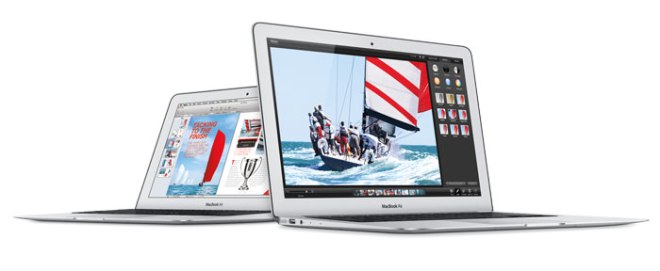
 I raced home tonight to watch two hours of programming that will never appear on television. You may not even recognize the name of the program: “WWDC2013” I don’t know how many other people watched, but I suspect it’s over a million.
It’s difficult to think of any company whose business partners are also its biggest fans. Throughout today’s Apple Worldwide Developer’s Conference, every time an Apple executive introduced a new feature, the crowd went wild–just like they do on “The Price Is Right.” Here, we’re talking about the addition of tags to file icons in the Finder menus, so the applause (which seemed genuine, and was likely not prompted by the “Applause!” signs that hang above game show audiences).
Think about this: Apple one of the top companies in the world. Twice a year, they hold an event in a large auditorium to tell partners and customers about the latest MacBook Air, or improvements in their operating system, and they generate more excitement than the majority major league sporting events ( more press, too).
This phenomenon goes far beyond traditional product marketing or consumer behavior. On the very popular MacRumors website, which does nothing but track possible directions that Apple may go, there was a countdown clock with the number of days, hours and seconds until the big event. I checked the site at least once a day (okay, three or four times a day) to see whether anything new was posted. This is obsessive behavior, not at all reasonable, and completely dissimilar to anything else in my life. I’m hardly the only one who is engaging in this silliness.
Today, Apple announced that they now own the number one slots in desktop and notebook computer sales. Their five year growth is more than 5x the entire PC industry. Their iPad and iPhone are industry leaders. The entire ecosystem works together as one–and they’re improving their iCloud systems so that the experience is that much more satisfying, rich, and competitive. Each successful product adds to the value of the whole, not just for the company, for every participant in Apple’s supremely well-constructed and well-managed ecosystem. It’s a brilliant bit of 21st century thinking, and it’s remarkable that there aren’t a dozen other companies with similar schemes.
I probably spent more combined time with my iPhone, iPad and iMac than I do with anything else I own. They contain my creative work, my communications with just about everybody I know, my schedule, my written work… in short, they play a very significant role in my daily life. Do I have an emotional connection to these metal and plastic parts? I want to say no, but I did spend the evening watching two hours of Apple propaganda this evening (and rushed home to do it).
Is this some sort of a man-machine addiction? I do find myself at something of a loss if I’m separated from my stuff for too long. I do spend time with Apple products just as soon as I wake up and in the minutes before I head for my bedroom and sleep. And I’m not disclosing these personal habits because I think they’re unique. I suspect there are a few million people who are behaving in ways that are far more extreme than the ways I think about these tools.
I could go on, but I do have some things I want to do tonight. (No, I’m not going to stroke an iPad while I confirm tomorrow’s schedule. I’m going to watch the Samsung TV downstairs because we recorded the TONY Awards on CBS using the Verizon FiOS DVR last night when we were too busy shopping at IKEA to make it home in time for the show.) I am pleased with all of these brands because they deliver upon their promises, but none of them have managed to become a part of my life in the way that Apple has managed to do.
Why? Mostly because the Apple stuff works so well (and if it doesn’t there’s the Genius Bar at the Apple stores, and Apple Care by phone). Nothing else I own has achieved that level of interoperability (to use a tech term). Taken individually as products or collectively as a complete system, it’s all elegant, reliable, and cool. And although my iMac tends to crash from time to time, and the iCal sync doesn’t work too tell on one of my devices, the whole thing is very, very impressive. Better, in fact, than just about anything else I own.




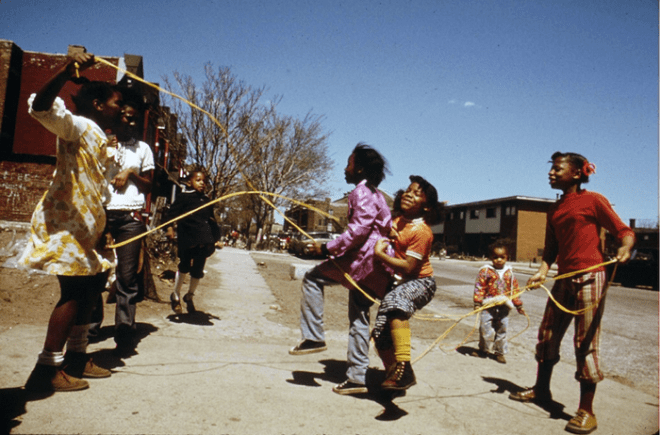
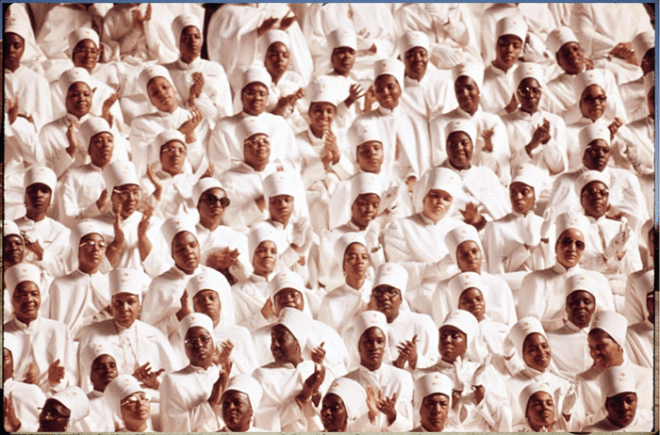

 The woman in the photograph was a poor soul, without friends, the subject of ridicule among Seattle schoolchildren. She lived in a hovel. When the growing city of Seattle cleared its native population, she remained where she was, and the city grew up around her. Kick-is-om-lo was her name, but that was difficult to pronounce, so the local folk called her Princess Angeline. In 1896, Kick-is-om-lo was paid one dollar to pose for this picture–the equivalent of what she was able to earn in a whole week–by a struggling young photographer named Edward Curtis. To say this would be the first of many such images would be a substantial understatement.
 So what’s the big deal about OmniFocus? There are dozens of to-do and reminder apps, with sync, available for far less than OmniFocus.
  Although it is possible to make a quick task entry, the more complete entry panel is more useful. After naming the task, I select a context from my own list that includes: Awaiting Response, Call, Create, First Contact, Followup, Just Do It, On Hold, Purchase, Research, Schedule, Visit Web Site, and Write. Then, I select a project, again from my own list that includes: Art, Books, Digital Insider, Home, Music, Software, Travel, Web Site, and various, specific work-related projects. I can stop there, deciding to add a flag to any high-priority tasks, but I prefer to add a due date to every task (start dates are also an option, but I don’t work that way). There’s a nice big note field, and I use hat to capture URLs, reminders of the most recent attempted contact (left phone message on 3.13.2013; sent reminder email on 10.12.2012). I can add a photograph, .jog, .gif, .png, or record an audio message.

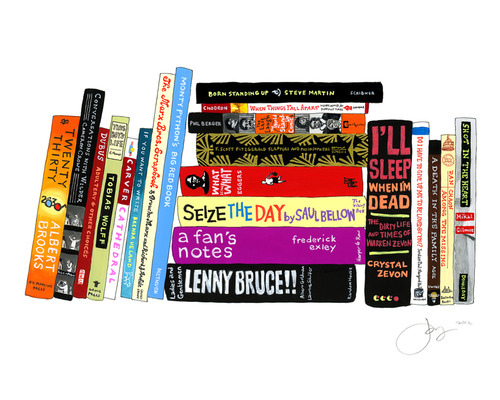 Judd Apatow, famous for his comedy movies, surprised me with James Agee’s A Death in the Family, and reminded me of a popular book about comedians that I wanted to read, but never did: The Last Laugh.
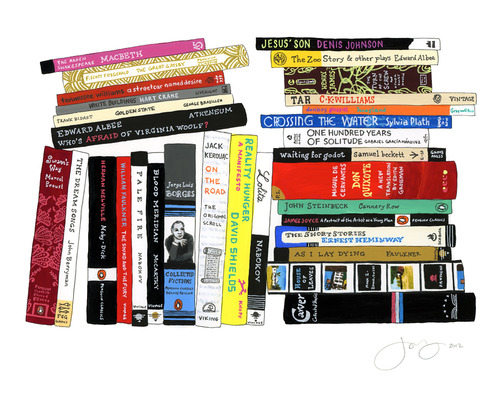 James Franco wins for the most cluttered bookshelf, also the one with the most books. From his stacks, I think I will pick up another set of Raymond Carver stories, and the original scroll version of Kerouac’s On The Road. I suppose I should read Melville’s Moby Dick, which I have avoided so far for no good reason. Ditto for writer Philip Gourevitch’s suggested A Good Man Is Hard to Find by Flannery O’Connor and Dostoevsky’s The Idiot.



 Digital Insider