Snow Fall: Two Ways to Tell a Story

Several weeks ago, in the midst of a busy holiday season, The New York Times attempted to understand its future by telling the story of an avalanche. The story requires about a half hour of your time, and it is best experienced in a quiet room with a reasonably large screen.

Snow Fall

The place to begin is with the text-ish story, the one that requires a lot of on-screen reading, the one that includes various animated maps that show just where, how, and why the avalanche happened. Short videos (each one about a minute long) illustrate the story, and bring the people in the story to life. There are audio files of the emergency calls to Ski Patrol. There are slide shows that help us to understand the life of each skier. The writing is strong and skillful. The whole presentation is an impressive demonstration of how we might experience news and features in the rapidly-advancing future.

It feels like an experiment. The writing is long, more like a NY Times Magazine story than a web story. I felt myself drawn into the story and its environment, and found myself pressing the “volume up” buttons on my keyboard in expectation of some sort of soundtrack to accompany the reading of the text.  Short videos satisfied some of the craving for additional stimulation; they were nicely integrated into the flow of the story and the text presentation. The slide shows that introduce each character are a more awkward fit because they require the reader to leave the chronology of the intense storyline–which is told, mostly, in shades of grey–and to consider each character’s past life–which is told, mostly, in vivid digital color. The visual shift is jarring, made worse by the inclusion of completely irrelevant advertisements that are large enough to disrupt the entire experience (for this type of storytelling, I think I’d prefer a micropayment or subscription model, but I wouldn’t mind seeing an opening, mid-break and closing sponsorship presentation).

After I read, looked at the pictures, followed the maps, watched the short videos, and so on, I felt that I understood what happened at Tunnel Creek.

And then, I watched the 11-minute video documentary that told the whole story. I was struck by how much more effectively the documentary told the same story. The story was tight, the characters were crisply defined, the maps and visuals made more sense because they were narrated, the pace was brisk, the emotions were sharp and devastating. Less was a whole lot more. The documentary made the print-pictures-video-maps presentation feel like a bunch of reporters’ notes and script drafts. I felt certain that the doc had been produced by another team, but no, it had been made by the same New York Times staff.

And all of that confused me. I love to read (less so on the screen, moreso from paper), and I was very impressed by the quality of storytelling in the multimedia format. But after watching the documentary, I found myself wondering whether we’re making too much of this transmedia idea, and whether a well-produced audio-video presentation might provide a more reasonable multimedia future.

Sure, this is just one example, and an early one at that. I’m anxious to see what Atavist has online, and will write about their multimedia storytelling in the next few weeks.

In the meantime, do take the take to explore the NY Times presentations. They’re well worth your time and attention.
The Art of Inge

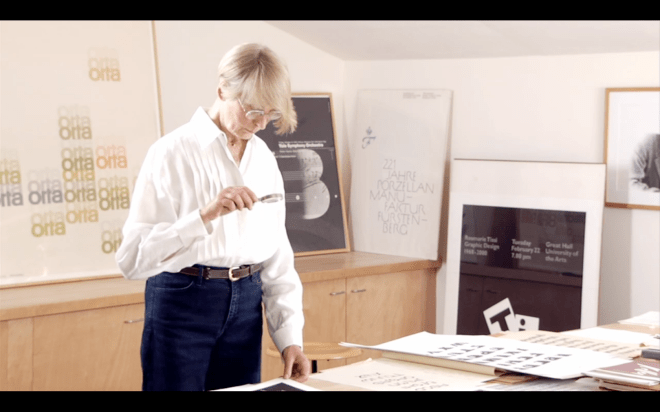
Below, a picture of Inge Druckery with her reducing glass. Why a reducing glass, and not, say, a traditional magnifying glass? Because a reducing glass allows the user to step away from the visual work. By stepping away, the artist/designer can see the whole, and the relationship between the many pieces of a visual presentation.

Inge 1Inge Druckery is one of the world’s truly great teachers of type design, and, more generally, she has provided designers of all kinds with tremendous inspiration, especially in the combinations of typography and graphic design that so dominate our world, our screens, our print materials.

And now, Edward Tufte (one of her students) has executive produced a 37-minute film, available free, about Druckery’s life and work. The images are striking in their simple elegance, and there are plenty of them. You can watch the film by visiting Mr. Tufte’s site, or simply clicking on the video at the top of this article. This is a film to watch full-screen, in a quiet room free from distracting glare, without interruption, with a patience and a keen eye. Do so, and you will be rewarded with an experience very much akin to attending an extremely well-crafted art museum exhibition on an extremely interesting topic. Do not hurry. Do this when your time permits. The images and ideas will stay with your afterwards.

What sorts of things are presented? The extremely precise Roman alphabet, the letterforms that are so solidly architectural in their L, E, T, and V forms, and so much in motion in the S, so beautifully balanced as curves meet straight edges in the B and, especially, the tricky R form. Simple explanation, elegant presentation.

Fascinating.

Here’s a progression of the letter R, rendered by hand with a proper broad lettering brush, with each letterform progressing toward an ideal. Here, the most basic of old analog form presages a perfection now commonplace in digital typography. Commonplace, but not common. And in the common hand, perhaps there is greater perfection, more of the Lord’s hand and the human progress toward excellence, than digital allows.

R Progression

Eating One’s Way Through the British Isles

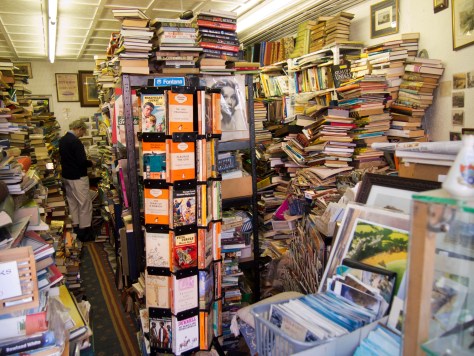
When I turned to page one, I knew I was reading the right book. There’s a half page photo of Plantaneget, a terrific seafood restaurant that hugs the hillside in the old Welsh fishing town of Tenby–the one with my very favorite cluttered bookstore just across the way. How can you not love a bookstore that looks like this one?

Bookstore in Tenby

I digress.

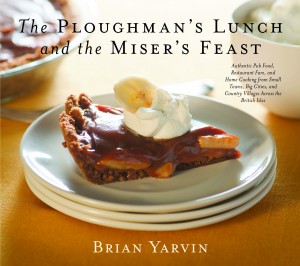
PloughmansLunchCover9781558324138-300x266But I do love wandering around the UK. And when I’m not wandering, on say, a cold winter’s day here in the US, it’s fun to find a book that causes me to think about my next trip. This morning, I enjoyed a wonderful book about British, Welsh, Irish and Scottish food entitled The Ploughman’s Lunch and the Miser’s Feast. It comes with the inconveniently long subtitle, Authentic Pub Food, Restaurant Fare, and Home Cooking from Small Towns, Big Cities and Country Villages Across the British Isles. The title accurately describes the book’s contents, but fails to mention that there are lavish (and luscious) photographs, and lots of recipes, too.

Of course, the names are fun. Let’s begin with breakfast. Scotch Woodcock contains no game; it’s a seasoned approach to scrambled eggs. Jugged Kippers is a herring dish, popular in the north, full of sea-driven flavor, strong for breakfast in a place where the extra nutritional kick in the morning is a good thing.

There’s tea throughout the day, and a nice article about why and how it has become so important to the day.

And there’s a thorough explanation of the ploughman’s lunch, perfectly served with artisanal cheddar cheese, a good thick slice of rare roast beef (often, from last night’s dinner), mixed greens, chutney, and a mini-baguette. Pickled onions are nice, too.

I never acquired a taste for the go-anywhere, anytime Scotch Eggs, a hard-boiled egg coated in sausage and crumbs, and often, carried for lunch away from home.

Author Brian Yarvin and I share something in common: we will travel for food. He, to Stoke-on-Trent in the county of Staffordshire for freshly made oatcakes. These are made on the grill, often purchased by the dozen for use at home, or enjoyed one-at-a-time, filled with, say, cheese and mushroom (Yarvin’s favorite). There’s a distinctly local specialty, but you’ll find various small “cakes” throughout the islands.

Scottish Oatcakes from Brian's  book, "The Ploughman's Lunch and the Miser's Feast"  (Use allowed for book promotions and reviews only.)Author Brian Yarvin is also a superior food photographer. Here's a look at a Curried Mutton Turnover. There's lots more to see--mostly Asian--by clicking on the image.

Scottish Oatcakes from Brian’s book, “The Ploughman’s Lunch and the Miser’s Feast” (Use allowed for book promotions and reviews only.)
Author Brian Yarvin is also a superior food photographer. Here’s a look at a Curried Mutton Turnover. There’s lots more to see–mostly Asian–by clicking on the image.

Cock-a-leekie is another of those wonderful Scottish names, this time assigned to a soup that contains, rather obviously, chicken and leek, and not very obviously, prune, too. The prune recalls a history when dried fruits were quite the delicacy, exotic and expressive of a higher station. Cullen Skink is another great name: it’s potato soup with smoked haddock… spectacular!

Beef Wellington suggests a dish that we made up here, like Chow Mein, but it is, in fact, quite British, and every bit as delicious as it was two decades ago (the last time I had one). Basically, it’s a good piece of beef wrapped in mushrooms and then in puff pastry. Old-school, but terrific.

There’s a nice bit about how to choose the best of fish-n-chips shops, or, in the local lingo, a chip shop. If you see a sign for “fish tea,” that’s a good thing–the term resonates with the locals (who, presumably, know both their fish and their tea). If the menu lists only fish, chips, peas, and tea, that’s a good, thing, too–it suggests focus. It’s not good if the same place lists burgers or kabobs. Anything suggesting “Best in Britain” without appropriate documentation posted in the window. Nix on pre-fried fish in the window, and pre-battered fish, too. Extra points for using local fish (nothing in Britain is very far from the sea).

Also, a useful note regarding bacon. What we call bacon, they call streaked bacon. What they call bacon is a boneless pork chop, sliced thin and fried.

What’s a faggot? It’s a meatball, heavy on the liver. Just so you know. One the next page: Lamb’s Tongue (with Raisin Sauce).

Brian Yarvin

Mr. Yarvin

What’s the most popular food in Britain? Probably Chicken Korma, the lead player in an extensive Indian cuisine that’s found just about everywhere. Nice coverage of various Indian dishes here, resplendent in their bright colours.

When in Britian, I like my pies. Set me in front of a menu with, say, Chicken, Ham and Mushroom Pie, and a local ale, and I’m a happy traveler. Leek Pie, Shepherd’s Pie, Fish Pie with Mashed Potato Crust, all good with me. Not so much for the Steak and Kidney Pie, which is made not with Kidney Beans, but instead, with the kidney of a lamb (tubes removed). No thank you. Yes to Cornish Pasties, essentially a local take on an empañada. And a definite yes to Yorkshire Pudding, which is a pudding in the British sense, which means, well, I’m not sure how the British use the term because it seems to apply to most desserts, of which Yorkshire is not one.

The term Flapjacks was a surprise to me; I picked up a pair at a train station for a quick snack. Turns out, they’re similar to granola bars.

At a tea shop in Cardiff, I tried my first (and probably, my freshest) Clotted Cream. It sounds a bit unappealing, but it is, in fact, it’s a bit sweet, a bit thick, and a perfect accompaniment to, say, a scone.

Other terms I learned… Perry is a pear cider (excellent at the small stand in the local market just next to the West Canterbury train station)… Fairy Cake is, more or less, our cupcake… Bap is something like a cross between a hamburger roll and sandwich roll… and Chocolate Vermicelli is our Chocolate Sprinkles.

What fun! Get the book. Then, go!

Michael Freeman’s Eye, Vision and Mind

Over time, I’ve bought, or browsed, dozens of books about photography. Most of these books are either too basic, too technical, or remarkably unfocused on the impact of picture making. Several books by Michael Freeman set a high standard for smart books with a strong aesthetic and storytelling sense, and yet, they are written at a level that provides solid, practical advice for even the most casual photographer. I’ve become a big fan of these books, and I would recommend one, two or all three volumes as holiday gifts for anyone with even a passing interest in digital photography, and, I would strengthen that recommendation if the gifts are intended for someone who is serious about photography.

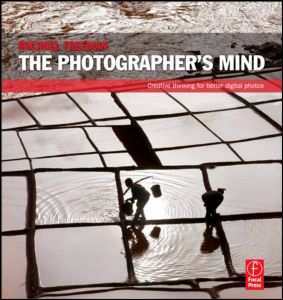
Photographers MindOf the three, I think I like The Photographer’s Mind best. The opening chapter is not about lenses or exposure. Instead, the book opens with a chapter entitled, “Intent.”

If you want people to pay attention to your photography and enjoy it, you have to give them a reason to look at it for longer than a glance… [and this is] more about why than how.

And so begins a well-illustrated consideration of beauty, cliche, irony, the mundane, revelation, and other core concepts that go far beyond the snapshot. The second chapter, “Style,” explores harmonics and balance, relationships between visual style and musical style, opposition, minimalism, engineered disorder… you get the idea. This is a smart, thinking person’s approach to photography, aspirational but practical, nicely written but the focus is on the (many) sample images. And the pictures really are terrific–Freeman’s intelligent, emotional approach to teaching is well-represented by his work.

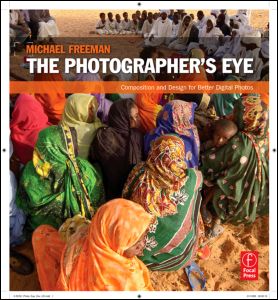
Photographer's EyeAll three books are personal favorites, but the second book I would buy is (rhymingly) The Photographer’s Eye, a book about design. Freeman considers the relative merits and artistic potential of various frame formats, horizons, frames within frames, and other tools/tricks of the trade. My favorite chapter is the second one, in which musical and aesthetic concepts offered in opposing pairs: soft/hard, thick/thin, diagonal/circular, much/little, sweet/sour, and more. Consider figure and ground, rhythm, single vs. multiple points, dynamic tension. I know that these ideas are dancing in my head when I’m out shooting for the day, but they’ve always been disorganized, and never quite coherent. With Freeman as a teacher, my perspective changes. I study his images, read his words, and understand the tool in my hands differently. And I want to spend hours and hours practicing.

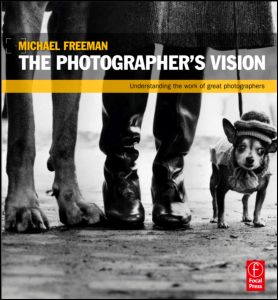
Photographer's VisionI think of the third volume, The Photographer’s Vision, as the most advanced of the three. This is the one that considers purpose and greatness, the volume that places Lee Friedlander, Robert Capa and Brassaï in contexts where their work, or, at least, their unique creative approaches, are presented so that a contemporary amateur can both appreciate and perhaps emulate the work of legendary professionals.

Gosh, these books are good.

And then, I take a deep breath. I search for Michael Freeman online, and it turns out, he is a cottage industry. So many great ideas, so much valuable instruction, so little time.

Buy these books for a family member or a friend. They’ll be counted among this year’s favorites, I promise.

It’s official: everything has changed.


I just reviewed an astonishing PowerPoint from Mary Meeker at Kleiner Perkins. It contains a thorough explanation of our rapidly changing, and changed, world. From mobile phones and to the Rose Bowl, newspapers to cash registers, borrowing and lending money to door locks, hiring to education, our contemporary wave of technology  has transformed the world.

The deck is 88 pages long, and worth all of the time you will spend thinking about it today, this week, this year.

I will add to this post tonight. Right now, it’s off to work, transforming an old TV station into something entirely new. (Thanks, Mary, for the encouragement. And for the pile of useful, persuasive data.)

A Fact Can Be a Beautiful Thing

It’s often tempting to consider the past through a present-day lens, and that causes distortion. Take, for example, the idea of a fact. Our ancestors did not elevate the fact as anything of importance. Instead, they considered facts to be evil, in opposition with God’s plan. This way of thinking begins with perception, a capacity that we share with animals. “For them, knowledge had to be something more than what we learn from our senses, because it is such a distinctly human capability of our God-given and God-like soul.”

Thomas Bacon, known for the Scientific Method and for his cool combination of dapper hat, moustache-goatee combo, and stylish  collar.

Thomas Bacon, known for the Scientific Method and for his cool combination of dapper hat, moustache-goatee combo, and stylish collar.

It isn’t until the 1700s that the current idea of a fact takes shape. In the Italy of the 1500s, double-entry bookkeeping is among the first presentations of fact as a decision-making tool. In England, in the 1700s, Francis Bacon’s work on the scientific method led the way toward building theories based upon “particulars,” not deduced from a grand theory. Of course, this way of thinking sidelined generally accepted beliefs, a radical idea at that time, and in our times, too.

220px-Thomas_Malthus

Thomas Malthus

You may recall that Thomas Malthus theorized that food supply would not keep pace with population growth. His initial documents were based, mostly, upon deduction. His later documents were based upon well-researched fact. The shift in thinking occurred during his watch, before and after the year 1800.

Portrait of Jeremy Bentham by Henry William Pickersgill

Portrait of Jeremy Bentham by Henry William Pickersgill

Enter Jeremy Bentham, a Malthus contemporary. Bentham’s theory, simplified: government ought to provide “the greatest happiness of the greatest number [of people]” In order to do the job, government would need a clear picture of the people it served (also a new idea, government as service, but that requires another article).

The word “statistics” enters the language around this time: stat, of course, is German for the state.

By the 1830s, the British government is obsessed with this powerful tool: facts. They commission a series of Blue Books filled with facts, statistics, anecdotes, interviews and more. The Blue Books are reports about “poverty, crime, education, and other social concerns.”

Charles Dickens, who made fun of his government's newfound love for facts.

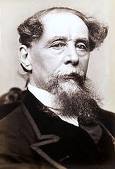
Charles Dickens, who made fun of his government’s newfound love for facts.

By the 1850s, the clever novelist Charles Dickens grows weary of the fact-based Blue Books. From Dickens’ Hard Times, “We hope to have, before long, composed of commissioners of facts, who will force the people to be a people of fact and of nothing but fact.”

By around the 1900s, fact-finding missions had become common, and World War I becomes the first war fought, largely, upon the basis of facts.

At the risk of capturing the obvious idea, our contemporary media environment is skewed because opinion and pontificating is, often, more entertaining than fact-based thinking. Rush Limbaugh gets the ratings; the Encyclopedia Britannica ceases publication. Constitutional scholar Cass Sunstein says, “Many people are mostly hearing more and louder echoes of their own voices.” His context is the internet, where groups of like-minded people share their beliefs, and by their numbers, magnify ideas that may not be fact-based into cultural touchstones. He goes further to explain that members of those groups are becoming less likely to communicate with people outside the group, and wonders whether this supportive groupthink is detrimental to democracy. (So much for the hope that the abundance of information, and facts, on the internet would encourage interaction between these groups.)

And that leads to Nicholas Carr, author of The Shallows: What the Internet Is Doing to Our Brains, who believes that the internet is “weakening our capacity for the kind of ‘deep processing’ that underpins ‘mindful knowledge acquisition, inductive analysis, critical thinking, imagination, and reflection.”

220px-Al_Gore_at_SapphireNow_2010_croppedA parallel path also leads to Al Gore, who asked this question in his book, The Assault on Reason: Why do reason, logic and truth seem to play a sharply diminished role in the way American now makes its important decisions?”

Perhaps the answer to Mr. Gore’s question is complexity. We learn arithmetic but not calculus, we have been taught to think in simple linear terms, not in terms that help us to understand the complex, dynamic system that our society has become. Our contribution to the chain begun by Bacon: the mapping of complex systems that change over time. It is these systems that draw facts into the future, and these models that provide potent vaccination against those who theorize on the basis of beliefs, not facts.

On another parallel path is the passionate amateur. Included in that class would be both Charles Darwin and Gregor Mendel, neither one a scientist, each a relentless cataloguer of observations, and, as a result, a theorist whose ideas are based upon endless study and analysis.

Jenny_McCarthy_at_E3_2006And, there is the celebrity whose role is related to a megaphone. Ideas that might not otherwise reach a large audience become popularized because a celebrity become involved. When former Playboy model Jenny McCarthy and actress Jenny McCarthy started making noise about vaccinating our children, people paid attention. The Michael J. Fox Foundation is attempting to resolve the delicate balance between Mr. Fox’s own story and fame, and the broader agenda that must drive the Parkinson’s foundation (that carries his name). The Fox foundation has been intelligent and thoughtful in its use of social media, engaging individuals, on a large scale, to participate in trials and other research. Here, the “particulars” are the individual cases, the undeniable truth of daily life with a disease not yet cured.

Too Big To Know

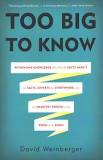
How does all of this come together? The fact is, we’re still figuring out the answer to that question. David Weinberger’s book, Too Big To Know, the source of many of the ideas and all of the quotes in this article, does a fine job in raising questions and providing examples. Addressing the crisis of knowledge (his belief, with which I do not wholeheartedly agree), Weinberger suggests that we open up access to a much broader range of facts; link everything in sight; dig deeply into institutions to make their knowledge available to a larger population; and relentless teach so that we all gain a better understanding of how our world works, and how it might work in the future.

BTW: The article’s title, A Fact Can Be a Beautiful Thing refers to love as explained by lyricist Hal David for the Broadway musical, Promises, Promises.

Einstein through a Distant Mirror

Context matters. Today, Einstein is the very model of a modern genius. That’s an easy image in the era of the internet, when folks can say and do pretty much whatever they please. A century ago, when the young theoretician conducted “thought experiments,” things were different. In a world where “innovation” appears in just about every business magazine, it’s difficult to imagine just how different life might have been in those days before the First World War.

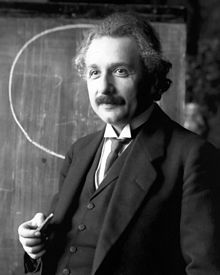
Albert Einstein in 1921, the year he won the Nobel Prize, and first visited the USA.

That’s the key learning from Einstein’s Jewish Science by Steven Gimbel, a professor at Gettysburg College. The author and his book do a wonderful job in framing the time, and the science, and the politics, and the religion, but neither musters much energy from its underlying question. (Spoiler alert: In the end, the author concludes that relativity is not an especially Jewish science.) He explains:

Einstein came to the scientific stage at a time when Western culture was in flux. Old social, political, artistic and intellectual structures were failing. Assumptions that had been protected for centuries were suddenly rejected despite all attempts to maintain them. And here, offering a new and bizarre way to see the entire universe was Einstein. The theory of relativity stands as a symbol of Gestalt shift, a complete change in perspective where you can never view the familiar in the same old way.”

(As I type, I wonder whether the shift that we’ve experienced via the Internet–which now offers instantaneous connections between billions of people all over the planet–would also be “a complete change in perspective where you can never view the familiar in the same old way,” and, if it is (I think it is), why it doesn’t quite feel that way. Maybe because we’ve been consumed by its everyday, now routine, integration into social and commercial life?)

Professor Gimbel of Gettysburg College, author of Einstein’s New Science: Physics at the Intersection of Politics and Religion

Mr. Gimbel goes on, and I continue to wonder about Einstein 2.0, and how he might fare today:

Einstein was vilified by those who clung to the old order. His science, his politics, and his views about religion were all made public in ways that made them difficult to ignore.”

And, my favorite quote from Gimbel:

We take Einstein to be the epitome of the open mind.

If life was so difficult for Einstein and his radical thinking, why do we absorb change in our stride today?

The best answer I’ve found begins about ten years after Einstein passed away.  It’s the subject of a terrific book about the 1960s counter culture, and the bridge that it provided to the 21st century, the digital century where we now live (and read blogs, often instead of books). The book is entitled What the Dormouse Said: How the Sixties Counterculture Shaped the Personal Computer Industry, and it was written by John Markoff. Read a terrific review of this equally terrific book, written by Jaron Lanier, here. Of course, all of this countercultural change was terrifying, and not without its reactionaries. The most robust response is a U.S. Chamber of Commerce document usually called The Powell Memo. It provides a conservative response to the craziness of the revolution, or so the story goes. The Powell Memo is easier to find on liberal websites than on conservative sites. Still, it claims to be the grand plan, the response to radical thinking and the changing of old ideas.

Step-by-step, Professor Gimbel explores the most important questions about science, Judaism, German culture (Weimar, Nazi, post-War), new (20th) century thinking about science and the limits of Newtonian physics, and provides the details in a smart story that is easily read and absorbed (not so, most other books about 20th century science, or religion, for that matter). Still, the core of the book, the essence of it, encourages the reader to think not only about Einstein, but about Einstein’s reflections in a 21st century mirror. How much has changed since Einstein’s time. How thoroughly Albert would enjoy the internet, and the freedom of thought that we now enjoy as American citizens in a digital age, and how profoundly that freedom has affected thinkers around the world.

An Antidote for Pizza

I steer clear of the gummy crap that’s delivered in pizza boxes from the chain stores. No Pizza Hut for me; the ingredients, the preparation, the lack of loving care, all are good reasons to buy pizza elsewhere.

More often than not, the local pizza shop is only a bit better. The dough is rarely fresh, the mozzarella is pre-shredded and made weeks or mints before it becomes a pizza topping. The sauce may or may not come out of a can, but it’s exceedingly rare to find an actual tomato anywhere in a pizzeria. Some pizza places make some of their own stuff, and add some love. Certainly, there are some of NYC pizza places where it all comes together nicely, but they are the exception.

So, what do I want? I want what DiMeo Brothers does. It’s worth a trip to (of all places) Wilmington, Delaware (an hour from Philly) to taste the fresh cheese, the fresh dough, the fresh sauce. This particular pizza restaurant imports ingredients from Italy. Even the water used in dough. Baked in a perfect brick oven, the pizza is sublime–and only vaguely resembles the round, flat, gutless things that Pizza Hut / Papa John / Domino are selling.

Too far away from Wilmington (or their new place in Philadelphia’s Andorra neighborhood) to make a go of it? There are options. One is a book.

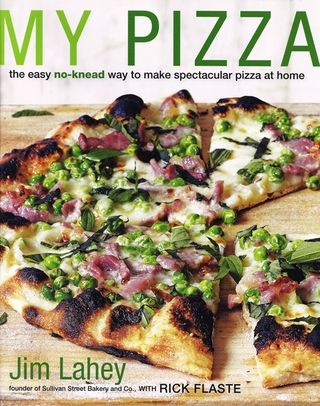
20121110-224811.jpgThe book–My Pizza, written by a baker named Jim Lahey–promises a “no-knead way to make spectacular pizza at home”. The book is filled with wonderful photographs of equally wonderful pizzas. No surprise that they look, and taste, as good as the best of DiMeo’s. Fresh ingredients and loving preparation are everything.

You begin with a pizza stone. Three-quarters thick is best because it retains heat more efficiently than the more common half-inch consumer model; visit a restaurant supply shop if you can’t easily find one online. A pizza “peel”–the paddle–is essential, but the long ones used in pro kitchens may be too long for yours, and a smaller one will be fine.

Leahy is okay with conventional flour but extremely picky about the olive oil. The best comes from Chile. The freshest cheese, the finest available tomatoes, these are critical.

Ovens are tricky. They need to reach high heat. Buy the book, read the chapter, because this part is a little complicated. You can do it–make great pizza in your own kitchen–but take care to do the work properly to avoid incident.

Next chapters: how to make the dough, then the tomato sauce, both from scratch. This is not a quick job. This is a messy job, gloriously so. But then here’s that first tomato pie–your freshly made dough, your freshly made tomato sauce, a touch of fin sea salt, and a drizzle of your best olive oil. Three (!) minutes later, maybe five if you let it cool, you’re eating the best pizza of your young life. A week later, you’re completely addicted to your own variation on Leahy’s veal meatball pie, one of a few dozen specialty pies in this handsome cookbook.

Frozen pizza? Domino? Fuhgeddaboudit. Go buy the book and make your own.

Provocative Economics from C. Christensen

Excellent article in last Sunday’s NY Times by Clayton Christensen.

Christensen is a Harvard professor who studies innovation, and has written several superb books about how and why it works. His theories turn on a key concept: there are several types of innovation, most notably innovation that sustains and incrementally improves a current situation, and innovation that disrupts, changes the rules.

In this article, he expands his thinking to explain why and how capital can and must be freed to fund an emerging new economy.

BTW: C.C. writes an excellent blog.

The picture comes from Harvard Business School. Whether he is or is not the “top” guy, he’s certain high on my list.

Go read the article. Totally worth your time.

Immersive Storytelling

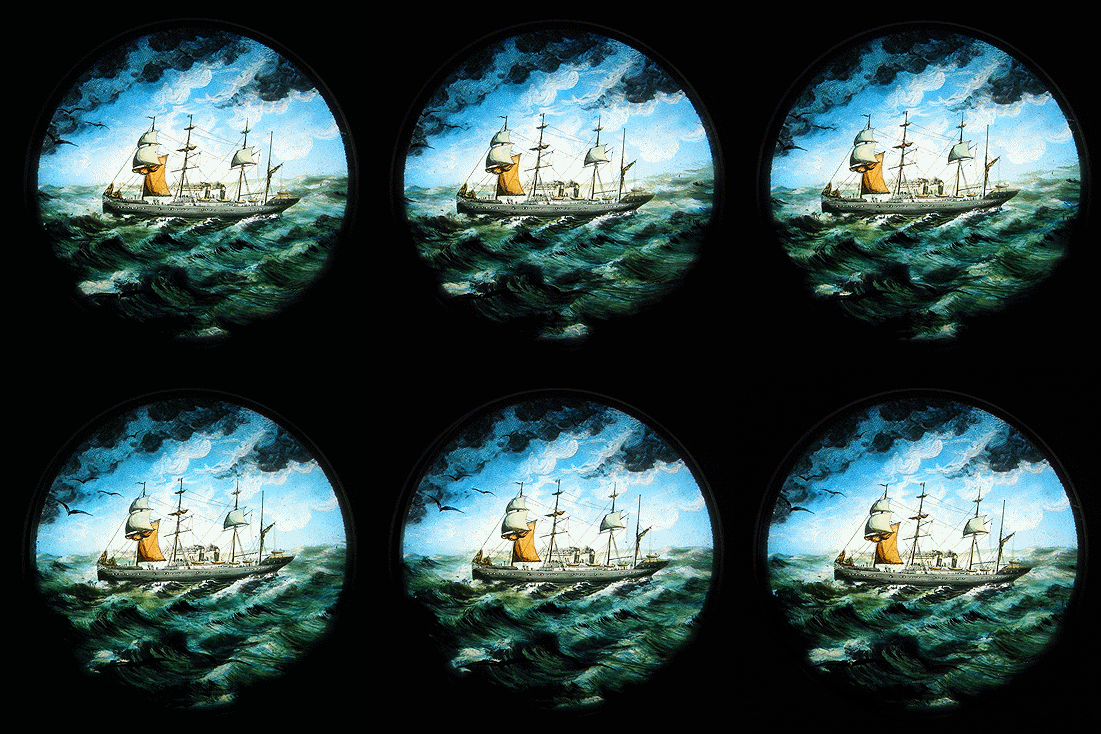
From the Toverlandarn site, an example of a magic lantern image… immersive entertainment from the 1800s.

At its simplest level, immersive storytelling requires nothing more than a good book, or, in simpler form, a really good storyteller, preferably on a chilly night near a campfire.

Immersive storytelling is hardly a new idea. In the days of magic lantern shows (which preceded nickelodeons and movie theaters), a storyteller would captivate an audience in a dark room with his narration of projected images. (For more, here’s a wonderful web site about magic lantern shows that includes thousands of images.) As early as the 1700s, magic lantern shows were popular–and scary–entertainment. At about the same time (give or take a few decades), Daniel Defoe was concocting written tales in novel form, an art perfected by Charles Dickens, whose immersive tales of dreary London captured the attention of large audiences. As theater, and movies, and videogames, and other forms evolved, they have done by building on fundamentals established by these early immersion artists.

Today, the power of computing can provide spectacular realism and the promise of deeply interactive experience–in which the individual participant and the story framework become one. That’s the area that author Frank Rose explores in an interesting new-ish book entitled, appropriately, The Art of Immersion. The more I read, the more I realized that Rose’s interpretation of immersion is more closely aligned with internet communities than large-scale digital immersion on, say, a James Cameron scale.

For much of the book, Rose tells stories about commercial ventures into lite forms of community engagement related to media. These stories are fun to read, and in some cases, familiar, but the intensity of the immersive experience is, often, both minor and fleeting. For example, he tells of Dunder-Mifflin’s virtual employees, paid in Schrute bucks, over a quarter of a million people in all, many more if you count the YouTube video of JK Wedding Entrance Dance. Rose muses on the relative importance of Dr. Horrible’s Sing-Along Blog, Quarterlife, and other early attempts at a web-based version of web-based TV shows with a twist. The discussion continues with various YouTube, Twitter, and, at last, interactive gaming experiences–and that’s where the immersive concept starts coming together. Viewing comedy or music on a modest screen doesn’t quite do it for me, not as immersive storytelling. Dr. Horrible is funny, but not immersive. Immersive takes me a different place, and alters my sense of reality in a convincing way.

My first dose of modern immersion was probably a cineplex viewing of James Cameron’s Titanic. Without the benefit of 3-D, I was on that ship, able to feel the motion, the king of the world freedom, the pull of the sinking ship. It was more than a motion picture. It was an experience that filled my senses. I was in awe. One member of my family were in the bathroom, overcoming a difficult-to-explain feeling which resembled seasickness.

As it turns out, immersion through dramatic audi0-visual presentation or community interaction is the least interesting part of Rose’s book… but it takes over 250 pages to reach the “good part.” The book takes off when immersion is defined not by the external experiences that are manufactured with technological trickery, but by the intense, simple manipulation of mental mechanics… the advanced psychology associated with addiction, game theory, decision science, and emotion–the domains of science fiction innovator Philip K. Dick, and twisted author Lewis Carroll, and, when at his very best, Alfred Hitchcock. Mastery matters. Authenticity overrules realism. Movies do it well. Videogames of the future will do it better than we ever thought possible. The combination of the two is on its way–probably preying more on emotion and psychology than the now-easier-to-achieve realist simulations of fantasy environments. It’s character that drives the narrative, and when you become that character, you won’t shake off the experience in an hour or two. It will take days, and maybe weeks. An immersion vacation.

And that brings us back ’round to the charlatans of the 1700s who could draw their victims into a dark cave, project an unexplainable ship on the wall, and wrap all sorts of spooky storytelling around the mysterious image. One image, perhaps four slides in sequence, not so different from the ocean-going graphic that has been distracting your attention since you started reading this article. We are drawn to these images, drawn in by the darkness and the storyteller’s inescapable magic. Twitter isn’t quite the same thing, and it’s difficult to imagine an internet community with this kind of intense power. Then again, we’ve only seen the start of massively multiple player games, and we’ve only begun to understand what happens when a community of LOST or Star Wars fans authors its own encyclopedia (the Lostpedia and the Wookiepedia, in case you didn’t know). As these worlds collide, as deep information, worlds of characters, movie-making magic, and gaming combine, the era of immersion shall begin to change the way we think about modern storytelling. But that’s the future. The present, sadly, is best represented by the likes of the new TV series, Revolution, and so, we’ve got a ways to go.