Tech Changes Education

The Schoology logo connects classroom management, online learning and social networking.

Late in October, just before the storms, Forbes ran a useful summary of several trends that promise to reshape classroom education. It was swritten by Jeremy Friedmanthe CEO of Schoology, a company that makes software for the classroom.

No surprise that the key trends emphasize individualized learning based upon technology. Certainly, the ubiquity of cloud computing encourages document sharing, and collaboration regardless of each individual student’s location. “The 2012 Horizon Report, which provides insights into education technology trends, predicts that collaborative environments are about one year away from mainstream adoption.” That seems ambitious to me, but I’m sure that the most advanced, well-funded, tech-enabled schools will begin to make this statement true.

Given the realities of most schools, the idea of cross-platform integration may seem like an impossible dream, but vendors are beginning to work together to unify their approaches to digital learning. Forbes believes more strongly in this future than I do, or, perhaps, than most teachers probably do.

It’s now nearly impossible to imagine a classroom without mobile technology, but again, imagination is ahead of reality. Certainly, “(Mobile apps) are abundant, inexpensive and easily accessible…” but the question is not the apps, it’s the devices. A new movement toward BYOD (“Bring Your Own Device,” of course) is gaining traction. In itself, this is remarkable: just two years ago, many teachers, principals and administrators were doing everything they could to keep Twitter, Facebook, Tumblr and other “distractions” away from the classroom. Still, the levels of coordination present major challenges: Apple, Android or Windows? Curriculum at the national, state, district, school, classroom, or individual level? For all students, advanced students, average students, challenged students? Apps are easier to develop and produce than traditional software, but it’s not the software engineering that’s the issue, it’s what it does, and how what it does fits into any sort of master plan.

This raises the issue of adaptive learning, a domain that is already being addressed by at least one company: Knewton “responds in real time to the activity of each user on the system and adjusts to provide the most relevant content…” What’s more: “Knewton is able to capture every move a student makes – scores, speed, accuracy, delays, keystrokes, click-streams and drop-offs. The platform collects this data and the software adapts to challenge and persuade the user to learn based on his/her individual style. Pretty amazing stuff!

The buzz idea of the year seems to be gamification–that is, just about everything becomes a kind of game. At first, this seems to be a frivolous undertaking, but you need to think more broadly about games and how they work. A good game is a simulation of life, a design for activity within bounded rules. In this regard, games are a simplification, a reduction of real life situations that allow learners to focus on specific learning objectives. And, these learning objectives are readily scored, and, under the best of circumstances, presented in a way that connects learning and fun.

There’s funding behind this approach: “Game-based learning is even one of the priorities of the Bill & Melinda Gates Foundation, which earlier this year helped launch the Games, Learning and Assessment (GLASS) Lab. According to the organization, GLASS Lab is “based on the understanding that digital games and simulations can support student learning by providing immediate feedback for students, teachers and parents on students’ progress toward established learning goals”” The article describes even more funding from the game maker Electronic Arts, and the Entertainment Software Association, and, also, from the MacArthur Foundation. The non-profit at the center of all of this: Institute of Play. I looked at their website. I need to visit. Soon.

Hurricane Hackers – A New Way to Help, or Be Helped

“Hola! Welcome to #HurricaneHackers: a shared space for gathering information and organizing tech+social projects related to Hurricane Sandy.”

“Dear Civic Media fans —

If you’re in a safe, powered, Internet’d place, here’s a great opportunity to contribute to realtime and future work around Hurricane Sandy…

http://bit.ly/hurricanehackers-gdoc

Civic’s “Hurricane Hackers” is collecting ideas and datasets to create tools related to the storm…and already building tools with them. Everything is welcome. Well-developed projects already include a dynamic timeline, a map of livestreams, and an incredible set of hurricane-related resources — both historical and for Sandy.” (from their introductory email)

This pop-up site may become a very useful tool in the next 24-72 hours. It’s a contributory document, a group collaboration to gather relevant links and guidance. The organization behind the project is the Center for Civic Media at the MIT Media Lab. Find it here.


It’s best explained by example. Below, some excerpts (1045AM eastern time on Monday):

—–

Project Brainstorming:

What might we make? Add your own idea, or +1 those you like.

Ways to help

  • SandBag.it: a map of places that need sandbagging, and a way for people to sign up to help sandbag at particular locations.
  • AfterSandy Benefit Parties: when Sandy’s over, have people hold house parties as benefits for people who lose something. Start organizing these early, while there’s lots of attention. Maybe just use MeetUp to do this.
  • CrashPads? Matching people with spare rooms with people who need them?

Sandy Impacts

Apologies for the sometimes-ugly formatting. Cut-and-paste is not always perfect.

More later. Be safe.

Bird’s Eye View of the Storm

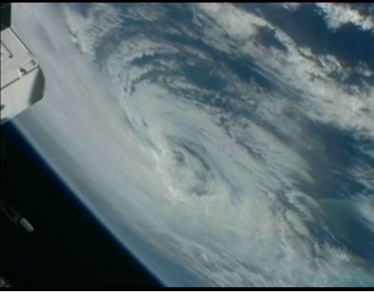
For as long as our east coast power holds out, I plan to keep a weather eye on the storm by visiting NASA’s phenomenal multimedia site. You’re looking at a view of the storm from the International Space Station.

Here’s an equally fascinating video, also from the Space Station. Look below, and you’ll notice some space station hardware on the upper left.

For me, all of this started when I discovered Samir’s Twitter feed and this stunning image:

The clarity of these images, and the fact that they exist at all, seems like a miracle.

Be safe, one and all.

HB

PS – Back here on earth, here’s a visual diary.

Debates Are Ridiculous; Let’s Move On

Associated Press/Pool-Win McNamee – Republican presidential nominee Mitt Romney and President Barack Obama answer a question during the third presidential debate at Lynn University, Monday, Oct. 22, 2012, in Boca Raton, Fla. (AP Photo/Pool-Win McNamee)

A half century ago, the idea of televising a debate between two Presidential candidates was breakthrough thinking. Beginning in 2016, I think we can use our new and emerging media to do a better job, and, presumably, to choose our new leader with greater insight, wisdom, and knowledge.

Let’s begin with some pre-reading materials. During the primary process, each candidate for president should be required to complete and submit a job application. The application should require work history, evidence of compliance with laws (for example, age and place of birth), and so on. Prior to each party’s national convention, each candidate should be required to clearly present his or her platform, in detail, by category, complete with data and factual references (given the dynamic nature of our economy and such, each candidate may revise this document at pre-appointed intervals). Then, each candidate should be required to present the platform by speaking directly to the American public, on television, without interruption. If we’re clever, I’m sure we can come up with a web-based extension of the written and televised presentation. With this mechanism in place, I can easily research where each candidate stands on, say, Syria, or health care. Of course, the people ought to have some digital means of asking questions, and the candidates should provide some reasonable means of answering their questions.

Next up, let’s change our rules regarding the use of television advertising. Whether by law or by policy, candidates should be required to use their commercial airtime to explain their own views, and not to criticize or attack the other candidate (this higher standard should be applied to all elections, at least on television commercials where stations often set policies with regard to acceptable material).

With all of that in place, let’s rethink the debate. Running a grudge match is a waste of everybody’s time, and so is allowing candidates to drift from the questions to their own message points. Candidates are welcome to speechify, but that’s not the purpose of the debates. Instead, I would either eliminate the debates and replace them with one-on-one conversations with everyday people and vetted journalists, or reformat them entirely. Last night’s Bob Schieffer format stopped the candidates from moving around and nearly slugging one another. That’s a start. A quiet, reasoned conversation; mostly, closeups of each candidate so we can study their faces; a journalist who asks the questions and is not overwhelmed by the power of candidates to disobey the rules–this format provides a better opportunity to study the candidates and their presentations. And let’s not call it a debate, or think of it as debate, because we should discourage the unseemly role modeling by potential leaders of the free world. There should be no winner or loser. Instead, the debate ought to be a skillfully moderated conversation by people, each of who believes that he or she can successfully lead the nation and play a very significant role on the world stage. That’s enough for me.

But there’s a piece missing: verification of facts. I’m not very interested in what the network’s commentators have to say about who “won” because the debate should not be reduced to such simple-minded thinking. Instead, immediately following the debate, I’d like to see an intelligent, compelling presentation of what each candidate said, and whether it was factually correct, kinda hazy, or utter nonsense. If the candidates understood that they would be immediately followed by an independent fact-check seen on TV, they would be more likely to curb their fanciful interpretations of fact.

Do we need to see two presidential candidates “go at it” as if they were wrestlers? I think we can do a lot better, and I know we possess the tools and the need to approach the whole intersection between presidential candidates and media. But do we possess the will to shift the entire election process into the 21st century?

Digital Warfare

20121012-224426.jpg

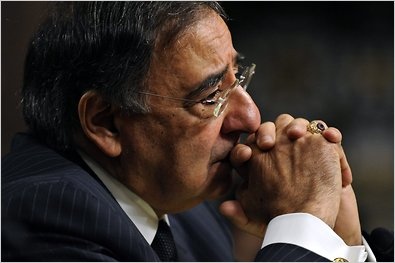
Michael Reynolds/European Pressphoto Agency (NY Times)

Today’s New York Times included an article that may turn some digital heads. The next threat may not involve guns and bombs, but stealthy data intended to destroy telecommunications and other essential infrastructure. This ultimate hack is especially nasty because it is so difficult to detect, faceless, instantaneous, and associated with many so many potential points of failure.

As Defense Secretary Leon Panetta attempts to change minds and law, it’s worth your time to (a) stop dreaming of the new iPad Mini for a moment, and (b) consider the ways in which we could and should defend against 21st century cyberwar. Sounds like a science fiction novel, I’m sure, but this is becoming a powerful, significant nightmare scenario.

Innovation versus Institutions

Innovating from inside of an organization is stunning in its difficulty, frustration, and often, it’s difficult to understand why even the simplest of ideas meets with such a high level of friction and sluggish progress. Again, I’ll thank NYU Professor Clay Shirky for his book, Here Comes Everybody, for some sparks that led to this article.

You may recall that my previous post dealt with the connections between the individuals who form a group or a network of groups. Within an organization, those connections are weighted, in part by company hierarchy, in part by control over resources, and in part on the history and fluidity of past relationships. In other words, connections within an organization are often complicated by internal and external factors. And, of course, not every relationship is equally valued. Some connections are stronger than others. You might recall the old 80/20 rule, for example, in which 80 percent of the work is done by 20 percent of the people.

Well, it turns out that the 80/20 rule doesn’t much apply to innovation, or to community interactions. If you look closely at Wikipedia–easily the largest informal group enterprise we’ve ever generated as humans–“fewer than two percent of Wikipedia users every contribute, yet that is enough to create profound value for millions of users. Wikipedia would not be possible if there were concern for inequality.” With a publish-then-filter model now overtaking the older, highly institutionalized model of research-write-edit-rewrite-publish, much more gets written, and errors are corrected along the way, particularly in articles that matter. (Those that don’t much matter are rarely accessed, and so, rarely corrected.) So we have a small number of people–nowhere near 20 percent of the total Wikipedia user base–contributing large amounts for an operation that is a nonprofit, not a business.

It’s here that the divergence becomes interesting. Imagine a business taking on the writing of the world’s largest encyclopedia, one that is never quite published, but always exists in draft form. Companies just don’t work that way–they have processes, standards, and overhead, project management, deliverables, and the entire structure of jobs and careers relies, mostly, upon incremental improvements to the status quo. Very large projects are within the reach of larger institutions, but the process of planning, developing, politicking, funding, hiring and moving people…none of it is simple, and there are ample opportunities for slowdowns, moving off track, shifting priorities, and so much more. That’s how institutions work: they perfect processes over time, but they struggle with entirely new endeavors because the status quo makes so much more sense than the risky new proposition. Massive shifts in thinking are not easy to absorb. Large-scale systemic change does not make sense.

There are fewer than 100 copies of the EB print edition still available (but none in this binding). If you want one, click on this link now (don’t wait!).

Except, of course, that significant, often large-scale, systemic change is becoming a new normal. There is no more Encyclopaedia Britannica in print, no more Tower Records stores, no more Kodak film (well, almost none), no more barriers to global video distribution, no reason why a clever sentence or article can’t be seen by millions of people just an instant after the draft is complete.

So status quo is part of the reason why institutions and innovation aren’t always BFF. But there’s another component, equally important: freedom to fail. When an institution fails, it risks funding, loss of customers, and shifts in leadership. When innovators fail, they may cry in their beer on Friday night, but on Monday morning, they’re back at work, having learned from the flop. No shareholder worries, no customer loss (okay, maybe a little), and in the end, probably more valuable learning than systemic damage. So institutions do all they can to avoid failure, and often, this means extracting the heart of a project or venture, or obfuscating, or demanding more analysis, or some other status quo maneuver. And individuals who are part of, for example, an open source community, correct the errors and move on without substantial loss of momentum (because the primary reason for that community’s existence is to DO things and to avoid NOT DOING things). In this shifted paradigm, the institution struggles to make substantive progress, knowing that the less encumbered other may well cause the death of their venture.

Shirky: “Open source is a profound threat, not because the open source ecosystem is out-succeeding commercial efforts but because it is out-failing them. Because the open source ecosystem, and by extension open systems generally, rely upon peer production, the work on these systems can be considerably more experimental, at considerably less cost, than any firm can afford. Why? The most important reasons are that open systems lower the cost of failure, they do not create biases in favor of predictable but substandard outcomes, and they make it simpler to integrate the contributions of people who contribute only a single idea. The overall effect of failure is its likelihood times its cost. Most organizations attempt to reduce the effect of failure by reducing its likelihood…(making safe choices). Open source doesn’t reduce the likelihood of failure, it reduces the cost of failure; it essentially gets its failure for free…cheap failure, valuable as it is, is also a key part of a more complex advantage: the exploration of multiple possibilities.”

What now? If you haven’t yet read Clay Shirky’s Here Comes Everybody, do it now. If you’ve already done that, you may take the rest of week off. Here he is at Harvard’s Berkman Center for Internet and Society talking about his work….

Tale of Two Presidents

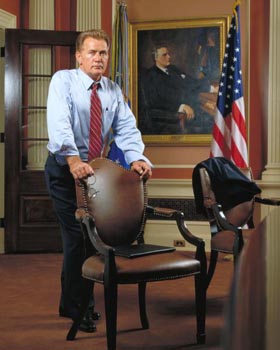
THE WEST WING — NBC Series — Pictured: Martin Sheen as President Josiah Bartlet — Warner Bros. Photo

From this morning’s New York Times, just in case you missed it…Aaron Sorkin mixes real life with his own characters. Even if you’re not much interested in U.S. politics, the dance between reality and fiction is fun.

Two Presidents, Smoking and Scheming

By 

AFTER the debate, I was talking to Aaron Sorkin, who was a little down. Or, as he put it, “nonverbal, shouting incoherently at a squirrel, angrier than when the Jets lost to the 49ers last Sunday without ever really being on the field.”

Aaron was mollified when he learned that President Obama, realizing things were dire, privately sought the counsel of a former Democratic president known for throwing down in debates. I asked Aaron if he knew how the conversation between the two presidents had gone and, as it happened, he did. This is his account.

The lights from the presidential motorcade illuminate a New Hampshire farmhouse at night in the sprawling New England landscape. JED BARTLET steps out onto his porch as the motorcade slows to a stop.

BARTLET (calling out) Don’t even get out of the car!

BARACK OBAMA (opening the door of his limo) Five minutes, that’s all I want.

BARTLET Were you sleepy?

OBAMA Jed —

BARTLET Was that the problem? Had you just taken allergy medication? General anesthesia?

OBAMA I had an off night.

BARTLET What makes you say that? The fact that the Cheesecake Factory is preparing an ad campaign boasting that it served Romney his pre-debate meal? Law school graduates all over America are preparing to take the bar exam by going to the freakin’ Cheesecake Factory!

OBAMA (following Bartlet inside) I can understand why you’re upset, Jed.

BARTLET Did your staff let you know the debate was gonna be on television?

OBAMA (looking in the other room) Is that Jeff Daniels?

BARTLET That’s Will McAvoy, he just looks like Jeff Daniels.

OBAMA Why’s he got Jim Lehrer in a hammerlock?

BARTLET That’s called an Apache Persuasion Hold. McAvoy thinks it’s the responsibility of the moderator to expose — what are they called? — lies.

WILL (shouting) Did Obama remove the work requirement from Welfare-to-Work?!

LEHRER No!

WILL And you didn’t want to ask Romney about that because? It would’ve been impolite?!

BARTLET Let’s go in another room, Mr. President. You want a cigarette?

OBAMA I stopped smoking.

BARTLET Start again. (Leading the way into his study) I’m a father of daughters, you’re a father of daughters. It looked to me like right before you went on stage, Sasha told you she likes a boy in her class who has a tattoo.

OBAMA That’s not what hap —

BARTLET Here’s what you do. You invite the boy over for dinner, you have a couple of fellas from your detail brush their suit coats back just enough so the lad can see the .44 Magnums — problem solved. You have what every father of a daughter dreams of — an army and a good dog.

OBAMA The girls are fine, that wasn’t the problem. In the debate prep we —

BARTLET Whoa … there was prep?

OBAMA (shouting) Enough! (taking a cigarette and lighting it) I appreciate that the view’s pretty good from the cheap seats. Gore chalked up my debate performance to the altitude. He debated at sea level — what was his excuse?

BARTLET They told you to make sure you didn’t seem condescending, right? They told you, “First, do no harm,” and in your case that means don’t appear condescending, and you bought it. ’Cause for the American right, condescension is the worst crime you can commit.

OBAMA What’s your suggestion?

BARTLET Appear condescending. Now it comes naturally to me —

OBAMA I know.

BARTLET It’s a gift, but I’m likable and you’re likable enough. Thirty straight months of job growth — blown off. G.M. showing record profits — unmentioned. “Governor, would you still let Detroit go bankrupt as you urged us to do four years ago?” — unasked. (shouting) I’m talkin’ to you, too, Lehrer!

WILL (in the other room) I got him, sir!

BARTLET All right! (back to OBAMA) And that was quite a display of hard-nosed, fiscal conservatism when he slashed one one-hundredth of 1 percent from the federal budget by canceling “Sesame Street” and “Downton Abbey.” I think we’re halfway home. Mr. President, your prep for the next debate need not consist of anything more than learning to pronounce three words: “Governor, you’re lying.” Let’s replay some of Wednesday night’s more jaw-dropping visits to the Land Where Facts Go to Die. “I don’t have a $5 trillion tax cut. I don’t have a tax cut of a scale you’re talking about.”

OBAMA The Tax Policy Center analysis of your proposal for a 20 percent across-the-board tax cut in all federal income tax rates, eliminating the Alternative Minimum Tax, the estate tax and other reductions, says it would be a $5 trillion tax cut.

BARTLET In other words …

OBAMA You’re lying, Governor.

BARTLET “I saw a study that came out today that said you’re going to raise taxes by $3,000 to $4,000 on middle-income families.”

OBAMA The American Enterprise Institute found my budget actually would reduce the share of taxes that each taxpayer pays to service the debt by $1,289.89 for taxpayers earning in the $100,000 to $200,000 range.

BARTLET Which is another way of saying …

OBAMA You’re lying, Governor.

BARTLET “I want to take that $716 billion you’ve cut and put it back into Medicare.”

OBAMA The $716 billion I’ve cut is from the providers, not the beneficiaries. I think that’s a better idea than cutting the exact same $716 billion and replacing it with a gift certificate, which is what’s contained in the plan that’s named for your running mate.

BARTLET “Pre-existing conditions are covered under my plan.”

OBAMA Not unless you’ve come up with a new plan since this afternoon.

BARTLET “You doubled the deficit.”

OBAMA When I took office in 2009, the deficit was 1.4 trillion. According to the C.B.O., the deficit for 2012 will be 1.1 trillion. Either you have the mathematics aptitude of a Shetland pony or, much more likely, you’re lying.

BARTLET “All of the increase in natural gas has happened on private land, not on government land. On government land, your administration has cut the number of permits and licenses in half.”

OBAMA Maybe your difficulty is with the words “half” and “double.” Oil production on federal land is higher, not lower. And the oil and gas industry are currently sitting on 7,000 approved permits to drill on government land that they’ve not yet begun developing.

BARTLET “I think about half the green firms you’ve invested in have gone out of business.”

OBAMA Yeah, your problem’s definitely with the word “half.” As of this moment there have been 26 recipients of loan guarantees — 23 of which are very much in business. What was Bain’s bankruptcy record again?

BARTLET And finally?

OBAMA Governor, if your ideas are the right ideas for our country, if you have a plan and it’s the best plan for our future, if your vision is the best vision for all of us and not 53 percent of us, why aren’t you able to make that case in the same ZIP code as the truth?

BARTLET And?

OBAMA Tell John Sununu anytime he wants to teach me how to be more American he knows my address for the next four years. He used to have an office there before he was fired.

BARTLET You picked a bad night to have a bad night, that’s all. You’ve got two more chances to change the scoreboard, and Joe unplugged should be pretty good television too. Make Romney your cabana boy in New York.

OBAMA Got it.

BARTLET (taking the cigarette out of OBAMA’s hand and stubbing it out) These things’ll kill you. Pull McAvoy off Lehrer on your way out.

And, hey, this wasn’t the first time that Dowd and Sorkin played this game. Here’s one from 2008!

Group Dynamics – Internet Edition

20121001-220030.jpgOne of the questions that historians may ask about our era is why technology became so ubiquitous, and so central to our lives. The important idea is not technology, of course, but the way we behave as a result of the tools that technology has provided. Mostly, the historian’s answers will focus on new forms of group dynamics, for these provide the underpinning for nearly all of our digital success stories.

(Many of the ideas in this article, and in several articles that follow, were sparked by the brilliant NYU professor Clay Shirky. You should buy his book right now. It is entitled Here Comes Everybody. Stop reading this blog, get your credit card, click here, then c’mon back to finish reading.)

(Welcome back.) While you were away, thirty six of us formed a big circle. And because you were away for a while, we were struggling to pass the time, and the woman next to me proposed a wager. She was willing to bet $50 that no two people in the circle shared a birthday. Nobody took the bet–it seemed like an easy way to lose money.

Shirky: “With 36 people and 365 possible birthdays, it seems like there would be about a one-in-ten chance of a match, leaving you a 90 percent chance of losing fifty dollars. In fact, you should take the bet, since you have better than an 80 percent chance of winning fifty dollars… Most people get the odds of a birthday match wrong… First, in situations involving many people, they think about themselves rather than the group…instead of counting people, you need to count the links between people.”

When counting connections, 1 plus 1 equals 1, but 1 times 4 equals 6. If I’ve done my math correctly, each of the 36 people in the circle has 35 connections, so the equation would be 36*35 or 1,260. If we were calculating unique connections–so we don’t double count both your connection to me and my connection to you, then we would divide by 2, and the number of unique connections would be 630, still a number far larger than 35, the number most people would choose in the bet.

The number of people = 6 (blue circles), but the number of connections = 15 (red lines).

Why does this matter? Consider LinkedIn, an Internet company whose entire operating theory is based in Internet connections. If you are reading this blog, you are likely to be one of my 500+ primary connections (that is, we are directly connected), but you are more likely to be two or three steps away–that is, you may be connected to one of the tens of thousands of people who are connected to my 500+ and even more likely to be connected to the hundreds of thousands (millions?) of people who are connected to the tens of thousands who are two steps away from me.

And why does that matter? It matters because I want to maintain my network, but it is nearly impossible to productively make use of such a large network–the connections are too diffuse, too unreliable, too far out of reach. Instead, my network, and your network, consists of a few dozen people, perhaps as many as a hundred or two hundred. And as long as at least a few of those people–the dozens or hundreds–remain connected to one another, my network remains viable. If, however, I lose contact with a few important connectors, the size and resilience of my network may dissolve.

Shirky again:

“A group’s complexity grows faster than its size…You can see this phenomenon even in small situations, such as when people clink glasses during toast. In a small group, everyone can clink with everyone else; in a larger one, people clink glasses only with those near them.”

And here’s why that matters. If you are trying to accomplish anything meaningful on the Internet that involves connections or interactions between people, you need to understand small world networks. And with that, Shirky closes us out:

“In 1998, Duncan Watts and Steve Strogatz published their research on a pattern they dubbed the “Small World Network.” Small World networks have two characteristics that, when balanced properly, let messages move through the network effectively. The first is that small groups are densely connected. In a small group, the best pattern of connection is that everyone connects with everyone else. The second characteristic of Small World networks is that large groups are sparsely connected. As the size of your your network grew, your small group pattern, where everyone connected to everyone, would become first impractical, then unbuildable. By the time you wanted to connect five thousand people, you would need a half million connections.”

” So what do you do? You adopt both strategies–dense and sparse communities– at different scales…As long as a couple of people in each small group know a couple of people in other groups, you get the advantages of tight connection at the small scale and loose connection at the large scale. The network will be sparse but efficient and robust.”

Thanks to Emil for working out the basic mathematical formula that calculates connections (time prevented us from completing it for all cases). That formula is:

((n)*(n-1)/2 where n = the number of people in the group. Example: ((6)*5)/2 = 15

Since the connection between Person A and Person B is the same connection as Person B and Person A, division by 2 eliminates the double counting.

The formula starts working with 6 people. If anybody knows why the formula falls apart with groups of 5 or fewer group members, please comment below. And, how do we deal with fractions (half a connection divided by two)?

What’s News?

Photo by Norbert Nagel, Mörfelden-Walldorf, Germany via Wikipedia –Creative Commons Attribution-Share Alike 3.0 Unported license.

When a dog bites a man that is not news, but when a man bites a dog that is news.
Charles Anderson Dana, American journalist, 1819-1897

News is what somebody somewhere wants to suppress; all the rest is advertising.
Lord Northcliffe, British publisher 1865-1922

Okay, that’s a good start. We define news as information that is (i) novel, and (ii) potentially disruptive. A more modern journalist broadens the definition to its breaking point:

Well, news is anything that’s interesting, that relates to what’s happening in the world, what’s happening in areas of the culture that would be of interest to your audience.
Kurt Loder, American journalist, b. 1945

So I guess (iii) is, pretty much, anything at all.

Right now (8:48PM on the east coast of the US on Thursday, September 27, 2012), top news stories include:

  • A Florida woman who lost her leg to an alligator
  • A dog who is the only full-time employee (?)  of a New Mexico police force
  • Israeli Prime Minister Netanyahu’s United Nations speech about Iran
  • The launch of a new Facebook service that allows users to send gifts
  • An office shooting in Minnesota in which two people where killed
  • Curiosity, the Mars Rover, finding an ancient stream
  • The imminent opening of the opera La Boheme in Philadelphia

Obviously, these stories represent a small sampling of the day’s news. Most of the stories are (i) novel because they don’t happen every day; but few are (ii) potentially disruptive in a meaningful way. And, per Kurt Loder’s definition, just about all of this would amuse an audience (particularly, and sadly, the alligator story). And that may the point: news as entertainment. Maybe a higher standard is unreasonable, and perhaps, undesirable, but just the same, let’s give the higher standard a try.

So about that alligator story…How many alligator-related accidents occur each year? Turns out, this woman was 84 years old, lived in a trailer park, fell into a canal, and the alligator did the rest. Accidents happen, but how often? The story tells of two other alligator amputations: one hand (a man) and one arm (a teenager), both earlier this year. Are there laws or common sense rules about living near alligators (beyond the obvious, don’t go near them). Why do we allow people to live near alligators? Why do we allow alligators to live near people? Is this a problem specific to Florida? Anyway, that’s what I want to know. But I’m not sure whether that’s news–and the likes of Yahoo! News seems happiest when there are LOTS of news stories, lots of spicy little items to peruse. All of it, you know, “new” because that’s what news (the plural of new) is all about. And I’m pretty sure “new” should not be primary criteria by which ABC News ought to determine the stories that should be told, or the resources it ought to muster in order to keep us informed.

What about highlights of Netanyahu’s U.N. Speech. Why bother reading it? It’s just the story of a politician going on about his country’s foe. Did you click on the link? I wasn’t going to click on it, but I did. And, it turns out, Reuters did a darned good job. Why? Because Reuters chose not to build the story from script excerpts–which is the normal news treatment. Instead, Reuters explained the story in context, and provided just enough history for me to understand why Netanyahu delivered the speech, why he did so today, what he hoped to accomplish, how the rest of the region would likely respond, and what it all might mean. It’s not just a headline with some bland repetitive crap underneath. It’s a story written by Arshad Mohammed and edited by Todd Eastham. Mohammed is a Reuters foreign policy correspondent, and you can read other stories he has written here. The page includes a small bio so that we know something about Mohammed’s professional credentials and their relevance to his written work. Much of what Mohammed wrote in this story is not new. Instead, he uses today’s significant event and explains its importance. This would be the high standard described earlier.

What might happen if every story, by some sort of people’s requirement, was as well-researched and well-told as Mohammaed’s? Well, for one thing, we’d know a lot more about the unfortunate 84-year old woman’s life, and life in a trailer park, and we’d know a lot more about alligators. The higher standard lifts the sensational “man bites dog” headline from the lowest level of human consumption (lust for the novel) to a far more interesting place where we learn something meaningful about the human and gator conditions.

Extend the high standard and the storytelling becomes rich and, perhaps, more deserving of our time. Facebook gifts–how is this likely to change our gift economy and the faceless interactions made so convenient by Facebook? What’s so special about La Boheme? What else does Mars Rover likely to find, and what does this mean in terms of our understanding of the universe? Should we be looking into the increase in public shootings, and insisting that law enforcement approach the problem in new or different ways, or is there reason to be comfortable with current practice?

I sure would like to know a lot more than I’m being told. If it’s new, I really don’t care. If it’s new and important, tell me why so that I will understand.

What’s the best way to accomplish this? (a) Fewer news stories, but more meat on the bones of the ones that are published; (b) More news stories, presented in greater depth and with greater attention to audience needs; (c) Greater attention to advertiser and funder needs? I don’t know, but there’s a lot to discuss in future articles.

Cowboys & Indians

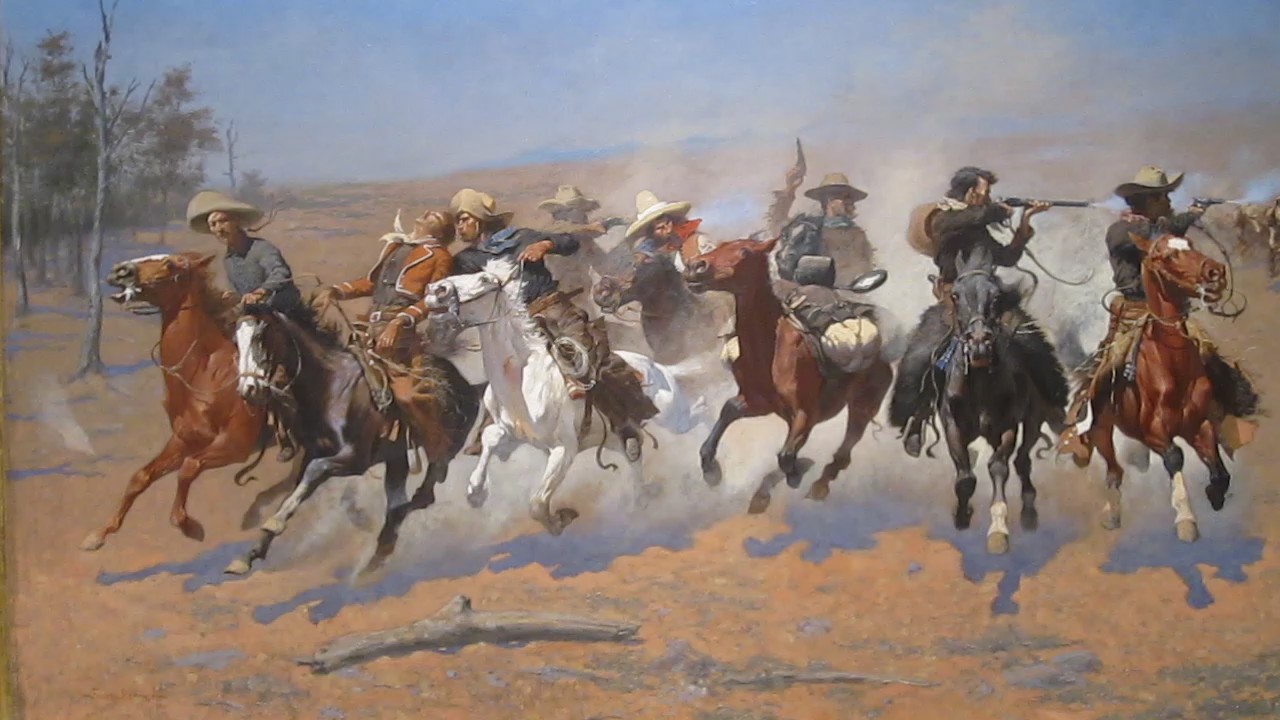
Remington’s got the story right. See below.

Mortal enemies, right? The basis for zillions of all-American children’s games. And, more or less, utter nonsense. It’s amazing how thoroughly we buy into the distortions that media provides each and every day.

Nobody knows how many Native Americans lived in North America before the enemy showed up and killed most of them. In what become the United States, there were probably between 5 and 10 million native people. The vast majority of these natives were killed by European settlers, not “out West” (by which we mean, mostly, the Great Plains), for those deaths came in the 1800s, toward the end of the story. Far more were killed first by the European diseases carried by explorers and traders, and then, by a century of U.S. military actions. By 1871, the U.S. government no longer bothered with Indian treaties–they had already won the war and decimated the native population. Our images of cowboys on the open plains are circa 1880, and by that time, the “Indian problem” was mostly resolved by Manifest Destiny. (Prior to the final third of the 19th century, there wasn’t much of a cattle industry, so there weren’t many cowboys).

Remington had the story right: his painting, above, A Dash for the Timber, U.S. militia–not cowboys–shoot at the Apaches (see in the rear).

Sure, cowboys battled Indians (or, if you prefer, Injuns), but much of the action occurred courtesy of wildly imaginative Wild West Shows operated by the likes of Wild Bill Cody Hickok and Buffalo Bill Cody. As pure show business, these spectacles were extremely popular, and provided a nascent motion picture industry with the necessary creative impetus to produce “Westerns,” most often featuring some version of cowboys and Indians (not so much, “smallpox and Indians,” or “U.S. Army troops and Indians”–cowboys made more sense as entertainment). And with all of that, we’ve bought into this elaborate mythology: our native people were primitive, violent (when provoked with loss of land, family, and health, but that part is forgotten), a class of warriors who deserved no better than their present fate.

It’s a bit of a reach, but not too much of a reach, to wonder about a retelling of the Civil Rights movement through the magic of CGI, or a reconstructed version of Weapons of Mass Destruction emerging from a Jeb Bush White House in 2016 or so. The alternative truth is easily constructed, sold on the big screen and through immersive videogames, and if the stage management is effective, and the bits are in the right places, most people can be made to believe what they know not to be true.

We’re better than this. I sure wish we are smarter today than we were as kids playing cowboys n’ injuns. It’s not about getting the historical facts right–not a bad start, but not the point, either–it’s about teaching our children (and our adults) what really happened, why it happened, and why we might rethink the subject matter that becomes the basis for our entertainment or our children’s games.

Just in case you missed it, here’s a tale about The Battle of Little Big Puck, for thirty years an annual hockey game between Cree Indians and the local cowboy population. The referee is a local Mountie. Here’s the backstory:

“The roots go back to a hot summer day in July where a couple of cowboys and a couple of members of the Nekaneet band met in the old Commercial Hotel over a cold beer,” he said. “And as good friends do, they got to bickering good naturedly as to who could ride the rankest horses, and rope the quickest, and pretty soon it came down to, ‘We can darn sure beat you guys at hockey.’”

BTW: If you can figure out how to write the last sentence of this blog, please post your closing sentence as a comment below. I’m completely at a loss for the best way to close this one out.