Discovering Mary Whyte: A Watercolor Journey

The artist’s name is Mary Whyte. I first encountered her watercolor work in her book, Watercolor for the Serious Beginner. At the time — I’d say around 1999 — I knew very little about painting watercolor pictures. Basically, she was my first teacher, or, maybe, one of two or three people who had written really good books to get me started.
Mostly, though, she discouraged me. The picture on the front of the book was flowers in a vase. Pretty and inviting. Open the front cover and there’s a cute cat resting on top of basket of laundry. I noticed the texture of the fur, and figured I would learn how to do that someday. Then, a two-page spread showing a row of fourteen colorful mailboxes on posts, an unkempt field of flowers and weeds in the foreground and big blue-ish tree in the background, all blurry. Taken one item at a time, I could probably figure out how to draw, then paint, some of these component parts. But then, there was this man riding a bicycle, and an older gent with a farmer/trucker hat, and I felt his presence. This was more than my beginner’s mind could conceive of painting. What was Mary Whyte trying to teach me? The sections about materials, paints, papers, and a studio setup were within reach, but then, just a few pages later, a painting of a girl standing by a window, and I feel like she’s going to tell me her life story. Then, later, there’s Maria, a 95-year-old woman, singing a hymn from her rocking chair on her front porch with a fringed shawl waving in the breeze. Mary Whyte is trying to tell me something — watercolor is about telling stories, and the best stories are the ones about the people who live nearby. A woman at a local church making a quilt. Step-by-step instructions to capture a woman cooking fish in a frying pan. I want to know which yellow and blue I ought to use to mix green. She’s showing me magic.

Clearly, I needed another book. And I bought a bunch of them. And I practiced. And now it’s three decades later, and Mary no longer lives near me, she lives in South Carolina instead. Her pictures are still magical. And there are a lot more of them. And a lot more to her story, too.
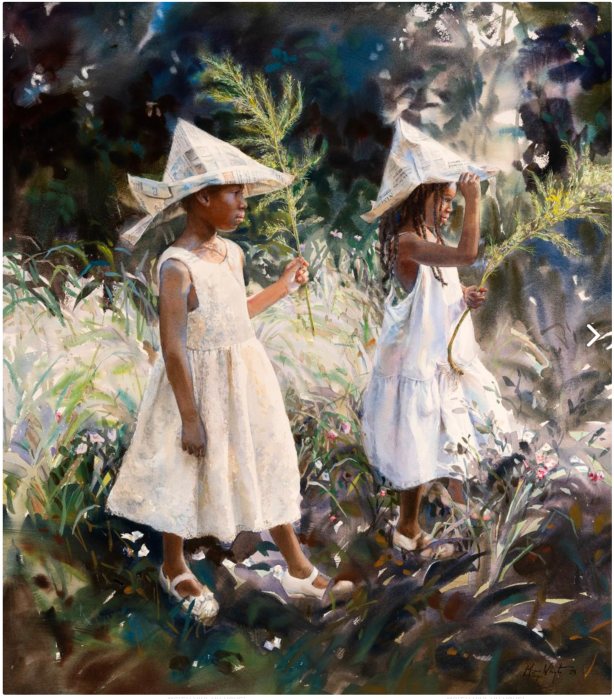
When I first encountered Mary Whyte, I think she was living, or recently lived, not far from me, up north. Watercolor for the Serious Beginner includes more than a few pictures she made of her new life in South Carolina, initially in and around Johns Island. This is low country. It is rural. Mary made friends at a local church and painted welcoming ladies who made quilts together, cooked, and wore fancy hats on special occasions. The pictures are well-collected in a book in a lovely book entitled Down Bohicket Road, and also, in the harder-to-get Alfreda’s World.
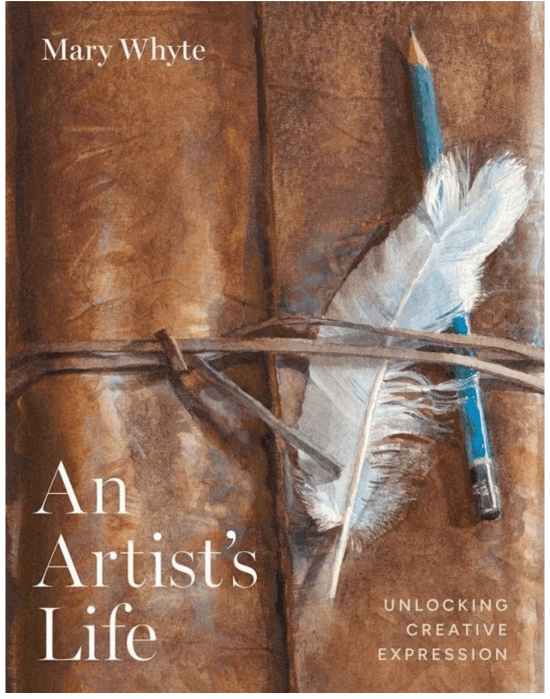
As Mary explains in her 2025 book (which I should have reviewed last year, not in 2026), An Artist’s Life: Unlocking Creative Expression, she explains her process and her growth as an artist. She began to paint people at work, working people in the south, folks with blue color jobs, farming for oysters, washing dishes, construction workers. You can find some of that work in another book, Working South, with more in Salt of the Earth. This then led to a much larger (and somewhat crazy) project, We the People. She found one veteran in each of the fifty states — yes, she traveled to every one of them, took photos, made sketches, and finished some of those watercolors back in her South Carolina studio. It was a resounding success, even featured on CBS Sunday Morning.
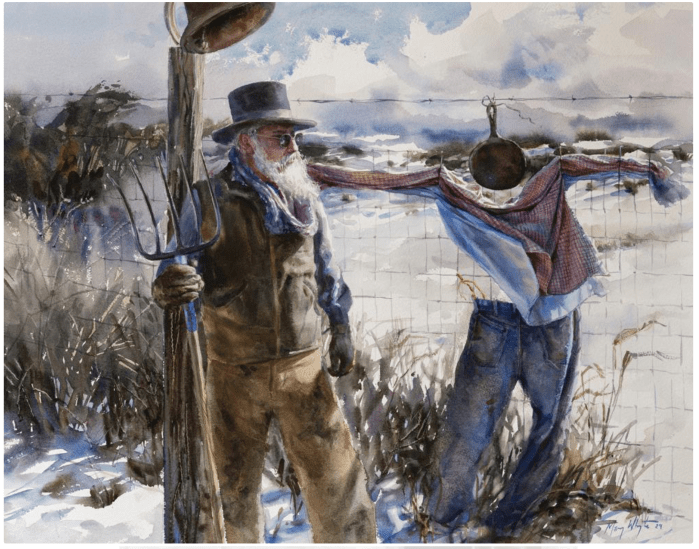
When I started reading An Artist’s Life, I began to appreciate just how much I had missed. There is a wonderful through-line here, and Mary explains herself well. This is a creative life with extraordinary output, in which the artist grows, causing my heart to beat faster. I open to page 130, and there’s a postal worker carrying a clunky package on her shoulder with bags of mail filling the shelf behind her. This is a woman with a job to do, hand on hip, looking to the light. Mary is telling her story, but there’s more to it than that — certainly more than some watercolor paint, water, a few brushes and a 27.75 x 40.25 sheet of paper. There is life here. As the author reminds us with periodic quotes throughout the new book, “We don’t paint a likeness of a person; we paint what it feels like to be that person.”

This is still inconceivable to me as an artist slow to learn. I look at each of these pictures and I see nothing but magic. I want to see technique. I want to study how Mary Whyte can use the same supplies that are sitting on my table, hold them in the same way I do, and create a life force.
A Second Visit to John’s Island, and Bohicket Road

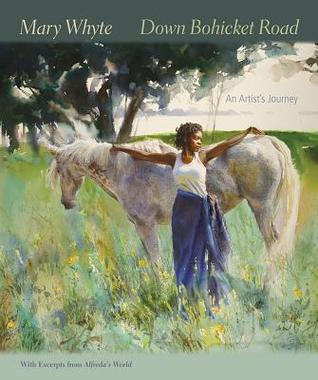
In December, I wrote an article about a book about a watercolor painter named Mary Whyte. Along the way, I found out about an early book which is, in its way, even better than the first one. Here’s the link to the first article. Here’s what I think you ought to know about the earlier title, “Down Bohicket Road.” But first, here’s the cover:

Down Bohicket Road

It’s a lovely picture, posed, a local woman who became a friend after Phiadelphian watercolorist Mary Whyte moved south to, of all places, tiny John’s Island in South Carolina. It may have been the best decision the artist ever made, for there, she encountered a community whose stories needed to be told, and, apparently, she was the one chosen to do just that.

I want to show you every watercolor in the book, and I do recommend that you get a copy of the book so that you may experience them first hand, but here’s a start on the journey. The book begins with a 2011 picture—this all happened very recently—of a neglected church, old Hebron Church, located on a 12-mile stretch called Bohicket Road. There, she was, more or less, adopted by a group of local women who used the church as a community center. One, pictured ironing with a kerchief and a mighty head of steam, is Georgeanna. How Whyte manages to depict the energy and gaseous nothingness of steam in a watercolor is, for me, something of a miracle. When she painted Mariah, years earlier, in 1992, the picture called Queen depicts a woman deep in a quilting activity, fine fingers on the cloth which becomes a soft dream as the viewer approaches. Tesha is the woman on the cover, appearing in several striking setups, including one called September that shows her gathering sunflowers nearly as tall as she is. In the cover image, the horse’s name is Rosie, “a docile old mare that had been fused to teach dozens of children of all levels to ride.” The painting is called Summer Solstice because it was made on the longest day of the year.

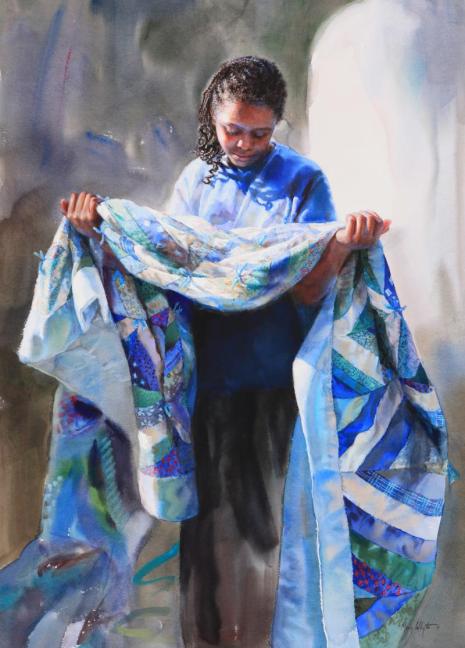
There’s a tender picture of Georgeanna, at ninety years old, wearing one of her favorite hats, and another called Angel in which a young teenaged model stands, spreads a quilt like angel wings, closes her eyes, and dreams.

Not on the website, but as good a digital presentation as I was able to find:

Blue Bird

Friends have asked why I am so taken with Mary Whyte’s work. I can answer simply: she transports me to a different world. It’s rich with special people, a place that she has chosen to depict in ways that artists sometimes do: breathing a special kind of life into otherwise ordinary subjects.

Take a minute, watch the video, and then visit her online gallery. It’s worth the trip.

The Miracles of Mary Whyte

If you can find the time, visit the Facebook page for the Hebron Saint Francis Senior Center located at 2915 Bohicket Road on John’s Island, a ways south of Charleston, SC. It’s an ordinary place, an old church in constant need of loving attention, graveyard over on one side, parking lot on the other. Was about twenty years ago when the watercolorist Mary Whyte wandered in, fresh from Ohio and Pennsylvania, not knowing a soul. Alfreda “recalled their first meeting…

The first time Miss Mary come to the center, we were there sewing and cooking, and in walk this white girl, kind of scraggly an’ all…. Here was this skinny, kind of pitiful white girl comin’ in, not known’ where she was goin’ or what she was looking for, and definitely in need of some love. So the first thing we do is give her a big plate of food. You know, to fatten her up a bit. God know, I’ve been trying to fatten her up for years, but it still not workin’….So I keep feedin’ her and loving’ her because it what she need. It what everybody need.”

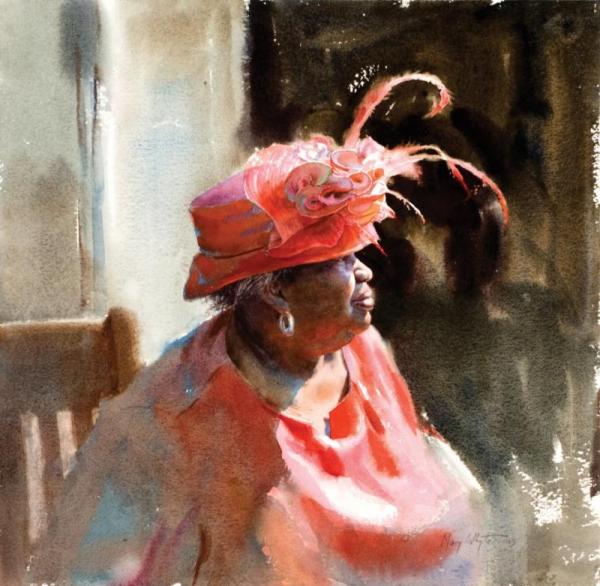
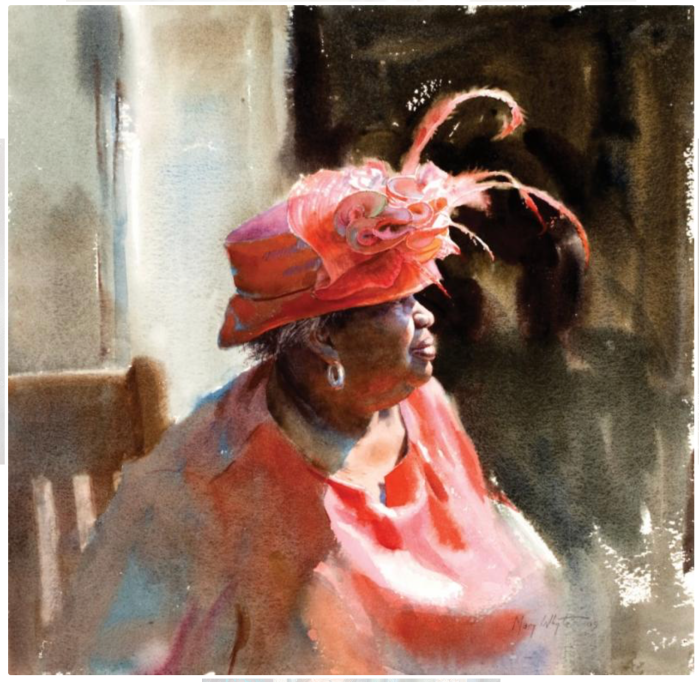
Decades later, Mary writes, “This is my dear friend Alfreda in one of her spectacular hats.”

Alfreda Red Hat

Mary Whyte is one of the finest watercolor artists in the world. I’m especially attached to her because she wrote the first book I ever read on the subject, “Watercolors for the Serious Beginner,” and I remember thinking, “how is it possible for an artist, this artist, my first teacher, to coax that kind of humanity from this set of paints?” It seemed impossible. Nearly fifteen years after I read that book, I remain in awe of the technique, but I’m past that. I’m in awe of the dignity, the humanity, the life that Mary Whyte captures time and again.

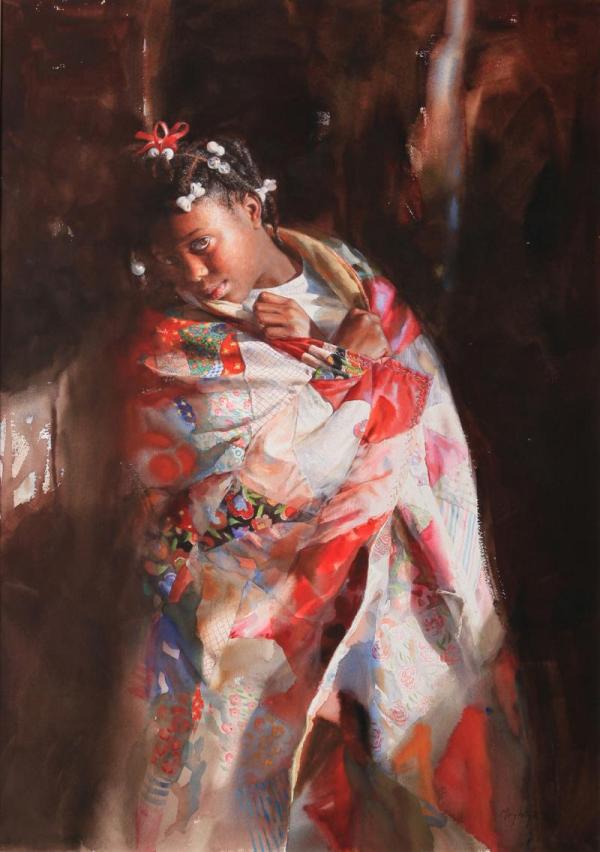
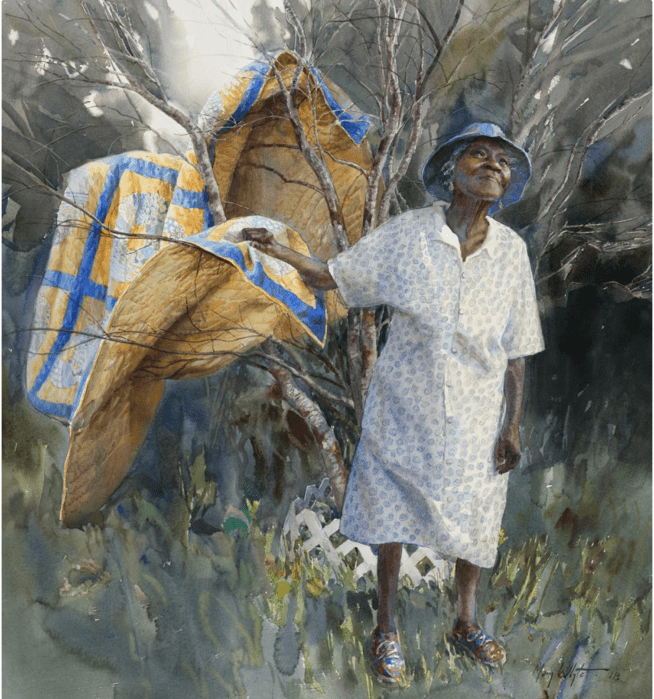
Whyte’s move to the low country of South Carolina has been beautifully documented. Her early visits to the Hebron Center resulted in more inspiration than most artists experience in a lifetime. She shifted from landscapes and everything else to portraiture, and that made all the difference. Once again borrowing from the archive of her website, here’s one the many paintings of local children—many related in some way to the Hebron ladies—with one of the signature quilts that appear so often, and so lovingly, in Whyte’s work. This one is called “Persimmon” (the one with Alfreda in the hat is called “Red”).

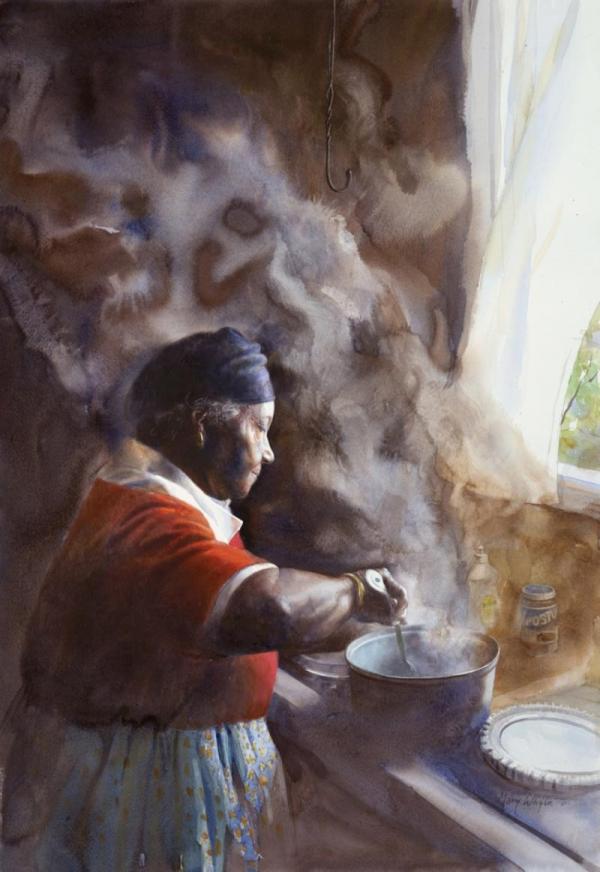
Persimmon - web_08210212One more before I fill-in some more details and tell you about the book. Whyte: “This is Georgeanna, whom I have painted for twenty years and is now almost ninety years old. She lives only a couple of miles from my house. The setting for this painting is her kitchen, where we often spend time visiting.” Two items of note. One, her magnificent handling of steam. Second, the sense of person and place, the warmth, the sense that this woman is someone close to the artist.

sister_heywardArtists grow. I suppose that’s the message that comes across most clearly in a new, altogether wonderful book entitled “More Than a Likeness: The Enduring Art of Mary White.” The book is large format, large enough so that the images are full of life, but smaller than they appear in person (darn! I just did some web research and found out that the Butler Art Museum in Youngstown, Ohio just closed a Whyte exhibit—and I will be there next weekend). I really want to see her work full-sized and in their  glory: to see her work full-size [typically at least two feet on the smallest side] would be a thrill])

Anyway… as I said, artists grow, and it’s fascinating to watch Whyte evolve from her life around the Senior Center to a fuller sense of the Working South, the subject of a book that was featured on CBS Sunday Morning.

Want to see more? There’s a video for her book, Down Bohicket Road, too.

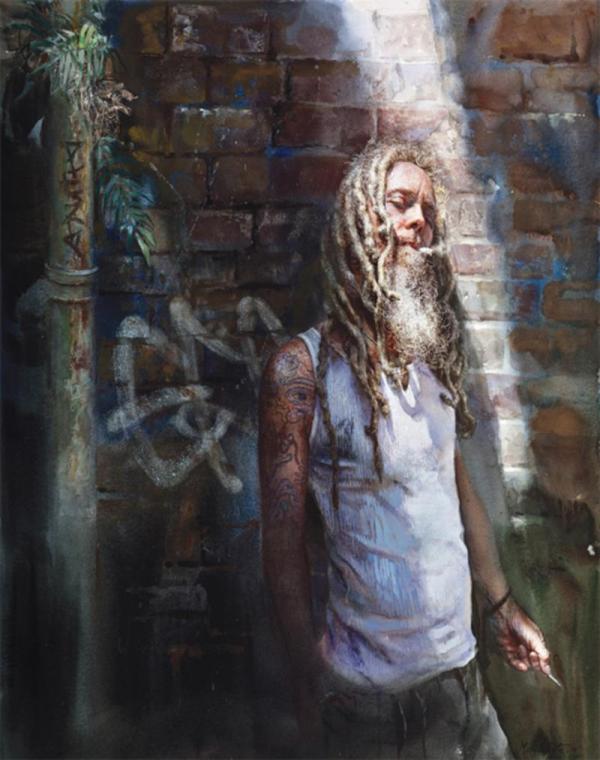
Over time, John’s Island has changed. Tourists become frequent visitors, buy vacation homes, and demand services. Farms become shopping centers. Teenagers, so innocent in her earlier work, deal with different kinds of issues. People get older, and live the way they live. To her great credit, Whyte doesn’t paint an idealized world. She paints what she sees, and tells the contemporary story. From that era, Absolution is one of the highlights. Whyte: “I am always interested in textures, so the idea of painting a model with long hair, a beard and tattoos appealed to me. “Absolution”, refers to our vulnerability as people, and to the seduction of drugs. The shaft of light represents God’s forgiveness, and is also orchestrated as a compositional device to lead the viewer’s eye up and through the painting.”

Absolution

Compare “Absolution” with “Persimmon”—same remarkable artist working in 2010 and, to my delight, 2012. Whyte sees the hard and the soft, and lovingly attends to each of them.
There is so much here to see. And, for me, at least, there is a strong emotional connection to this work. (I don’t feel that way very often, so I figure it’s worth a mention.)
At $75, “More Than a Likeness” is not an inexpensive holiday gift, but it is something special. And as for my missing out on the Butler exhibit, I’m already studying maps and thinking about a drive down to John’s Island to see what Mary Whyte sees, maybe allowing myself some time to draw, but mainly to visit Coleman Fine Art, owned by Whyte and her husband Smith Coleman (a distinguished fine craftsman known for his frames) over on 79 Church Street in Charleston, maybe hit the Blind Tiger, just a few blocks away, for some local crab with “Mitch’s Voodoo Dust” and a side of fried green tomatoes or fried okra, or both. Art, food, and exploring a place like John’s Island with my own eyes. Sounds like a really good long weekend road trip, come spring.