The Wrong Picture

Black Children Play Outside The Ida B. Wells Homes, One Of Chicago's Oldest Housing Projects. There Are 1,652 Apartments Housing 5,920 Persons In 124 Buildings On The South Side, 05/1973

Black Children Play Outside The Ida B. Wells Homes, One Of Chicago’s Oldest Housing Projects. There Are 1,652 Apartments Housing 5,920 Persons In 124 Buildings On The South Side, 05/1973

John H. White was laid off this week. He is a photographer, or, more specifically, an out-of-work photojournalist.

He was replaced by an iPhone.

Black Muslim Women Dressed In White Applaud Elijah Muhammad During The Delivery Of His Annual Savior's Day Message In Chicago, 03/1974

Black Muslim Women Dressed In White Applaud Elijah Muhammad During The Delivery Of His Annual Savior’s Day Message In Chicago, 03/1974

As a much-deserved tribute to Mr. White, Chicago Magazine put together an online portfolio. The two images you see here are my favorite images; click on either one of them to see a portfolio of fifty superb examples of the extraordinary journalism that can be achieved by a skillful photojournalist.  The presentation of White’s work for the EPA is not as well-presented, but this site is also worth a visit.

Before moving on to the sharp point of this article, a word about the poetry of John H. White’s work. Consider the exquisite rhythm of both images, the special timing that allows the jump rope to wiggle and wave, the exquisite visual judgement Mr. White employed when filling his frame with Muslim women all in white. The sunny smile of the girl in orange and the placement of the innocent child in the background. This is photography at a high level; it is exceedingly difficult for most people, even serious amateur photographers with decades of experience, to achieve these results with the best possible equipment. (Imagine trying to achieve these results with an iPhone.)

The Chicago Sun-Times is one of America’s largest newspapers. Somehow, the management of the paper stumbled into what must have seemed like a wonderful idea at the time: teach the reporters to use an iPhone, and fire all of the photojournalists (including Mr. White). There’s been a lot of online chatter about the “difficult decision” and “the future,” but I have placed both phrases in quotation marks because both concepts are so insanely wrong-headed.

In today’s image-is-everything society, I suppose I could construct an equally compelling case for firing all of the writers on the staff of the paper, instead filling every page with photographs. Or, perhaps, establish some clever version of crowd sourcing, in which Chicago takes pictures of itself every day, and then, everyone posts captions (the most popular caption wins the top spot).

Certainly, there is a problem in the newspaper business: most papers have lost their business models, and much of their readership. And they have experienced a terrible cost-cutting decade (and more).

Firing the photojournalists may be a fine example of executive leadership discussions gone astray, but there is a larger problem here. The Chicago Sun-Times, and many other papers, aren’t sure how they should face the uncertain future. There are some answers, and, well, I sure hope the management of the Chicago Sun-Times (at one time, the largest of the 100 newspapers where my newspaper column appeared weekly), will consider them:

1. The Chicago Sun-Times is a very strong local brand. Even in a “newspaper town” like Chicago, the future of the “paper” is online.

2. Online, regardless of the platform, it’s all about multimedia: pictures, videos, infographics. Good writing matters, but anything longer than 1,000 words is too long for current use of the medium.

3. Investment in superior multimedia storytelling is the way to go. If the story makes use of video, some writing, lots of pictures, some audio, and powerful graphics, people respond.

4. If people respond, advertisers respond.

5. Focus on the best possible storytelling. Double down your previous investment in visual storytelling. Invest in more photojournalists, and teach them to become videographers if they’re willing and able. By all means, teach every writer how to shoot still images and video with their iPhones (or, go really crazy and invest in a high-quality pocketable digital camera for each of them–for far better results). Figure out how to get the crowd source journalism operating at its highest possible level, for that, too is the future.

I will steer clear of recommending that the executives who concocted this insane plan may find budget cuts in their own roles at the company, but only on the condition that they focus (a word that photographers often use, and for good reason) on the future of journalism so that the next budget cycle doesn’t require firing all of their writers.

Chi-Trib-Story

To read the Chicago Tribune story and watch the video, click on the image.
Media Quiz – By the Numbers

Hawaii Five 0Duck

I’ve been meaning to write this one for some time. Hopefully, it will be as much for you to play as it was for me to write. Some TV, some from other media. The numbers are fascinating because they provide our collective media diet with a sense of scale. You may want to jot down your answers on a pad and pencil…

1. Which cable network is watched by the most people every day?

  1. Fox News Channel
  2. The Weather Channel
  3. Nickelodeon
  4. ESPN

2. How about the second most-watched?

  1. Disney Channel
  2. Nickelodeon
  3. Food Network
  4. TNT

3. With nearly 10 million viewers for its most popular episode, what was last week’s most popular series on cable?

  1. The Big Bang Theory
  2. NCIS
  3. Sponge Bob Square Pants
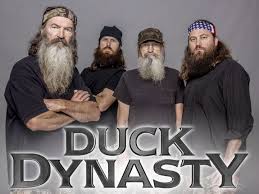
  4. Duck Dynasty

4. Among adults 18-34, which was the most watched cable network in prime time last week?

  1. Comedy Central
  2. MTV
  3. History
  4. TNT

5. How many people watched last Thursday night’s airing of Swamp People on History (the most popular episode of a prime time cable series that night)?

  1. 4 million
  2. 8 million
  3. 12 million
  4. 16 million

6. On that same night, how many people watched The Daily Show’s 11PM airing?

  1. Less than 2 million
  2. 3 million
  3. 4 million
  4. 5 million

7. Daily circulation of USA Today?

  1. Half-million
  2. 1.7 million
  3. 5.2 million
  4. 10 millon

8. Last week’s syndicated programs in order of popularity:

  1. Wheel of Fortune, Jeopardy!, Family Feud, Family Guy
  2. Family Guy, Jeopardy!, Family Feud, Wheel of Fortune
  3. Wheel of Fortune, Family Feud, Family Guy, Jeopardy!
  4. Jeopardy!, Wheel of Fortune, Family Feud, Family Guy

9. Number of people who watched CBS’s Sherlock Holmes drama series, Elementary:

  1. 5 million
  2. 10 million
  3. 15 million
  4. 20 million

10. On the same night, number of people who watched NBC’s The Office:

  1. 1 million
  2. 2 million
  3. 3 million
  4. 7  million

11. Circulation of Sunday New York Times.

  1. 1.2 million
  2. 2.4 million
  3. 4.8 million
  4. 9.6 million

12. You may know that AARP’s magazines top the circulation charts with over 20 million units. What’s next on that chart (with more than 7 million)?

  1. Reader’s Digest
  2. People
  3. Sports Illustrated
  4. Game Informer

13. The Fifty Shades of Grey book series has sold a total of more than ____ ebooks.

  1. 1 million
  2. 5 million
  3. 15 million
  4. 25 million

14. So far, this year, how many copies of Eric Carle’s The Very Hungry Caterpillar have been sold in the U.S.?

  1. 1 thousand
  2. 10 thousand
  3. 50 thousand
  4. More than 100,000

15. In a typical week, roughly how many units of each audiobook on the top 10 best seller list are sold?

  1. Less than 200
  2. 250-500
  3. 500-1,000
  4. 2,500 – 5,000

16. Last week’s best selling videogame in the U.S. was Injustice: Gods Among Us. If you were to combine the sales of units for X360 and PS3, how many units were sold?

  1. 35,000
  2. 135,000
  3. 350,000
  4. 1,350,000

17. Last week’s top grossing film was Oblivion. How many people went to see that movie?

  1. 500,000
  2. 1,500,000
  3. 6 million
  4. 16 million

18. Vinyl has enjoyed something of a resurgence. In fact, the re-release of The Beatles’ Abbey Road turned out to be quite popular How many units did the new vinyl version of Abbey Road sell last year?

  1. 300
  2. 3,000
  3. 30,000
  4. 130,000

All of the answers come from well-regarded sources of media research and data.

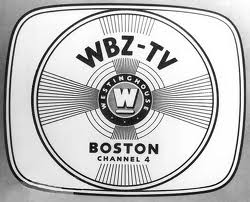
Let’s see how you did. The answers follow the WBZ-TV Test Pattern below.


test pattern

1. Which cable network is watched by the most people every day?

  1. Fox News Channel
  2. The Weather Channel
  3. Nickelodeon
  4. ESPN

(You must consider the sheer number of hours that our children spend in front of TV sets. Far more than just about any sports fan.)

2. How about the second most-watched?

  1. Disney Channel
  2. Nickelodeon
  3. Food Network
  4. TNT

3. With nearly 10 million viewers for its most popular episode, what was last week’s most popular series on cable?

  1. The Big Bang Theory
  2. NCIS
  3. Sponge Bob Square Pants
  4. Duck Dynasty

Duck solidly beats the competition with over 10 million viewers.

4. Among adults 18-34, which was the most watched cable network in prime time last week?

  1. Comedy Central
  2. MTV
  3. History
  4. TNT

5. How many people watched last Thursday night’s airing of Swamp People on History (the most popular episode of a prime time cable series that night)?

  1. 4 million
  2. 8 million
  3. 12 million
  4. 16 million

(Not as many people as I would have thought, but then, television viewership is now very fragmented, so it’s very difficult to garner audiences of any significant size.)

6. On that same night, how many people watched The Daily Show’s 11PM airing?

  1. Less than 2 million
  2. 3 million
  3. 4 million
  4. 5 million

The Daily Show is popular, but night after night, its ratings are fairly modest, especially in comparison with powerhouse series (like Duck Dynasty).

7. Daily circulation of USA Today?

  1. Half-million
  2. 1.7 million
  3. 5.2 million
  4. 10 millon

Actually, the number is above 1.6 million. 

8. Last week’s syndicated programs in order of popularity:

  1. Wheel of Fortune, Jeopardy!, Family Feud, Family Guy
  2. Family Guy, Jeopardy!, Family Feud, Wheel of Fortune
  3. Wheel of Fortune, Family Feud, Family Guy, Jeopardy!
  4. Jeopardy!, Wheel of Fortune, Family Feud, Family Guy

Wheel continues to kill in the ratings, night after night. The other series are in the top ten, but nobody beats Sajak.

9. Number of people who watched CBS’s Sherlock Holmes drama series, Elementary:

  1. 5 million
  2. 10 million
  3. 15 million
  4. 20 million

A good solid prime time series in 2013 rarely tops 10 or 12 million viewers.

10. On the same night, number of people who watched NBC’s The Office:

  1. 1 million
  2. 2 million
  3. 3 million
  4. 7  million

No surprise. The Office is ready for retirement. So, too, is the similarly rated Parks & Recreation.

11. Circulation of Sunday New York Times

  1. 1.2 million
  2. 2.4 million
  3. 4.8 million
  4. 9.6 million

How many readers?  Easily twice that number because the paper often lingers through the week.

12. You may know that AARP’s magazines top the circulation charts with over 20 million units. What’s next on that chart (with more than 7 million)?

  1. Reader’s Digest
  2. People
  3. Sports Illustrated
  4. Game Informer

The surprising answer has increased circulation int he past year by several hundred thousand. Next on the list is Better Homes and Gardens with roughly comparable numbers. Reader’s Digest comes in at about 5.5 million, followed by Good Housekeeping, Family Circle, and National Geographic in the 4 million range. For more, click on this link.

13. The Fifty Shades of Grey book series has sold a total of more than ____ ebooks.

  1. 1 million
  2. 5 million
  3. 15 million
  4. 25 million

14. So far, this year, how many copies of Eric Carle’s The Very Hungry Caterpillar have been sold in the U.S.?

  1. 1 thousand
  2. 10 thousand
  3. 50 thousand
  4. More than 100,000

15. In a typical week, roughly how many units of each audiobook on the top 10 best seller list are sold?

  1. Less than 200
  2. 250-500
  3. 500-1,000
  4. 2,500 – 5,000

16. Last week’s best selling videogame in the U.S. was Injustice: Gods Among Us. If you were to combine the sales of units for X360 and PS3, how many units were sold?

  1. 35,000
  2. 135,000
  3. 350,000
  4. 1,350,000

17. Last week’s top grossing film was Oblivion. How many people went to see that movie?

  1. 500,000
  2. 1,500,000
  3. 6 million
  4. 16 million

18. Vinyl has enjoyed something of a resurgence. In fact, the re-release of The Beatles’ Abbey Road turned out to be quite popular How many units did the new vinyl version of Abbey Road sell last year?

  1. 300
  2. 3,000
  3. 30,000
  4. 130,000

The best selling CD of the year was Adele’s 21; it sold over 4 million units.

4K TV – Sooner Than You Think!

A few days ago, I was on the phone with the FCC and an interesting question came up. Will broadcast stations have enough over-the-air bandwidth to provide 4K service to the public? I was struck by the question because 4K is such a new idea, and because I’d never really thought about it as broadcast idea.

Compare 1080 pixels (dark green0 with 4000 pixels (red) and you get a sense of how much more picture information (resolution, detail) is available on the new 4K TV sets.

Compare 1080 pixels (dark green0 with 4000 pixels (red) and you get a sense of how much more picture information (resolution, detail) is available on the new 4K TV sets.

What’s 4K TV? It’s a much higher-resolution version of HDTV. And the first 4K TV sets are arriving soon (see below0. In order to provide all of that picture information, more data is required, which means larger storage devices, and, in order to provide that data to connected TV sets, more bandwidth is required, too. That’s the basic theory, but it’s important not to think about 4K in terms of the current systems because of that always-astonishing digital magic trick: compression. Yes, 4K requires a lot of data and a lot of bandwidth. But “a lot” is a relative term. And yes, there are new digital broadcast standards on the way. Good news for consumers and for broadcasters, who will be able to pack more and prettier program material into their TV signals, not-so-good news for broadcasters who are attempting to build a coherent strategy related to the upcoming FCC TV spectrum auction, in which many stations will trade their licenses for cash, or for the opportunity to share a channel with another broadcaster in the market.

panel2_imageAnyway… I woke up this morning to an announcement from Sony… with all sorts of enticing promises: improved detail, improved color rendition, better audio, screen mirroring so what’s on your tablet can be viewed on your new TV (albeit it in lesser detail, a service currently available to Apple users).
How much? $5,000 for the 55-inch model, and $7,000 for the 65-inch model.

What are you going to watch? Well, yeah, that’s always the problem at this stage. Here’s a terrific article about “upscaling” the currently available media, which seems to require 24x improvement. More data will require more robust local storage, and so, we move closer to a complete convergence of television, home network, home digital storage devices in sophisticated home library systems, and, perhaps far more likely, streaming solutions in their next phase: advanced versions of Netflix, Hulu, and so forth, tweaked to serve big files for 4K TV sets.

Which brings us back around to the TV station wondering about its 4K future. Sure, it’s technically possible to broadcast 4K, but in the few years remaining for the current broadcast standard, this seems fairly unlikely because (a) it will be expensive for television stations to install in their master control facilities, and (b) relatively few people will leap from their new-ish HDTVs to 4K sets in the next year or two.

Sony-4KTVDo we want or need even more resolution than 1080i HDTV sets provide? Maybe for microscopy or astrophotography or other science work that demands the highest possible resolution. Do I think ESPN is investing in a whole new 4K operation–cameras, video switcher, storage, transmission, etc. so I can watch baseball in even higher resolution. You know they are, or will soon be, doing just that. And when they do, we’ll buy the sets because, you know, people will come…

Masterful Visualizing

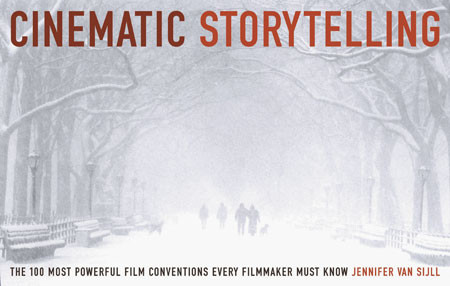
In my last post, I recommended a book entitled The Writer’s Journey: Mythic Structure for Writers by Christopher Vogler. As a companion, I recommend another book from the same publisher, Michael Weise Productions. This one is entitled Cinematic Storytelling: The 100 Most Powerful Film Conventions Every Filmmaker Must Know. It’s written by Jennifer van Sijll. Like The Writer’s Journey, Cinematic Storytelling is useful to the one telling the story, and to the reader or audience member on the receiving end. Why does this book matter? Because we’re rapidly developing into a world of visual storytellers–smartphones and digital cameras in hand–and it would be wonderful if everyone could do their job just that much better.

CInematicStory_website_largeBasically, this book is an encyclopedia of visual storytelling techniques, but it’s fun to browse because every idea is illustrated by frames from a well-known or significant film–and each sequence is presented with the relevant bit of the screenplay along with perceptive commentary from the author.

Some are easily understood by the audience, and as a result, they must be used judiciously by the filmmaker or storyteller: the slow-motion sequence in Martin Scorsese’s Raging Bull; the freeze frame that ends Butch Cassidy and the Sundance Kid; the fast-motion sequence in the French film, Amelie; the famous flashback in the Billy Wilder film, Sunset Boulevard; the visual match cut that transforms a bone into a spaceship in 2001: A Space Odyssey; the long dissolve between young Rose and Old Rose in Titanic.

A specialty lens was used by Orson Welles in Citizen Kane–perhaps the movie most often used as an example to illustrate a variety of techniques. Sometimes, a telephoto is the appropriate storytelling choice, and sometimes, it’s the wide angle. These are not random, on-the-fly choices; instead, they are carefully considered during the storyboard phases of film development.

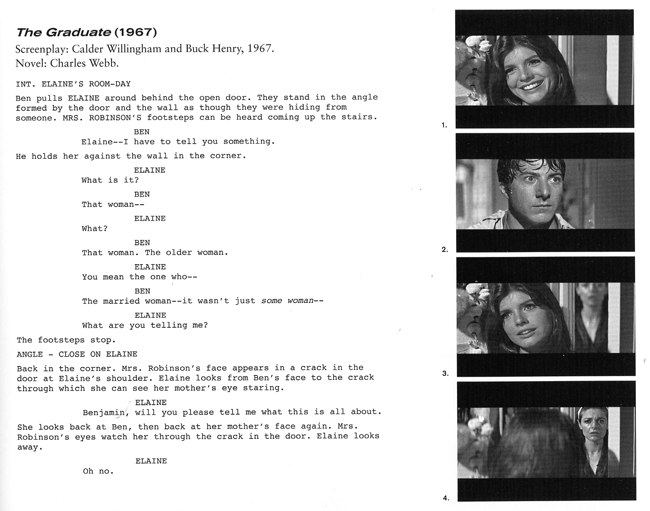
In this entry featuring The Graduate, the author explains the use of a "rack-focus"--here, shifting the focal point from one character to another. The author explains, "Unseen by Elaine, who is still facing Ben, Mrs. Robinson stands in the doorway. Mrs. Robinson is out-of-focus and ghost-like. When Elaine spins around, Mrs. Robinson is pulled into focus, and Elaine is thrown out of focus (Image 4). Every line in Mrs. Robinson's defeated face now shows. After a beat, Mrs. Robinson disappears from the door. When Elaine turns back to Ben, her face remains momentarily blurred, externalizing her confusion. At the moment of recognition, her face is pulled back into focus.

In this entry featuring The Graduate, the author explains the use of a “rack-focus”–here, shifting the focal point from one character to another. The author explains, “Unseen by Elaine, who is still facing Ben, Mrs. Robinson stands in the doorway. Mrs. Robinson is out-of-focus and ghost-like. When Elaine spins around, Mrs. Robinson is pulled into focus, and Elaine is thrown out of focus (Image 4). Every line in Mrs. Robinson’s defeated face now shows. After a beat, Mrs. Robinson disappears from the door. When Elaine turns back to Ben, her face remains momentarily blurred, externalizing her confusion. At the moment of recognition, her face is pulled back into focus.

Selecting a particular point-of-view (POV) can be a critically important aspect of storytelling, as with the below-the-swimmer underwater sequence just before the first swimmer is killed by a shark in JAWS. For which scenes is a low-angle shot most appropriate (character POV for E.T. would be one example), or for which would a high-angle shot be the better creative choice? When does it make sense to use a tracking shot (the camera is mounted on a tripod that glides along tracks; some low-budget achieve similar results by employing a wheelchair)?

Lighting is another variable. In American Beauty, there’s a scene illuminated by candlelight. In E.T., the search is conducted by flashlights and car headlights that illuminate an otherwise dark nighttime landscape.

In Barton Fink, individual shots of props (hotel stationery, an old typewriter) add visual context. Wardrobe is another defining option. So, too, is the use of location as a theme, a concept so masterfully used by director David Lynch in the vaguely creepy Blue Velvet.

It’s not always about what is seen. Sometimes, the scene contains less information, and the story or theme is carried by music or sound effects. Back to Barton Fink for the eerie sense of surreal sound and its ability to paint a picture of each character’s inner world.

Masterful Storytelling

WritersJourney3rddropWe live in remarkable times. Stories are told in every part of the world, and shared with millions of people. Once, this was the domain of the rich and powerful. Today, anybody can tell a story, and share the majesty of their ideas.

Of course, some stories are better than others. There is an art and a craft to all of this, a discipline studied in college programs and in private instruction taught by masters.

One such master is a Hollywood story consultant named Christopher Vogler. Since 1998, Vogler has been the industry expert on a particular, popular type of storytelling and character development. He explains it all in a wonderful book entitled The Writer’s Journey: Mythic Structure for Writers,  now published in its third edition by Michael Weise Productions.

No doubt, you are familiar with the structure of the mythical hero’s journey. You’ve seen it in so many movies. The hero of the story does not begin as a hero. Instead, he or she (more often, he) is an ordinary guy doing ordinary things every day. Then, something happens, and suddenly, he is thrust into an uncomfortable role, reluctant to proceed in anything resembling a heroic journey. Inevitably, the wizened old mentor or the playful talking dog shows up, and the ordinary guy begins to understand that he has no choice, that he must pursue the journey whether or not he wants to do so.

It’s Star WarsThe Wizard of Oz, Sister Act, Big, Raiders of the Lost Ark… you know the routine, but it’s still a story we love to experience, a story we love to tell. It’s the human experience, each time presented anew.

We’re on a mission from God” — Dan Ackroyd and John Landis, screenplay, Blues Brothers

So what’s so special about this book? Well, Vogler has a tidy way of breaking down each of the steps along the journey. For example, after leaving the ordinary world; hearing the call to adventure; refusing the call; meeting with the mentor; encountering tests, enemies and allies; and approaching an innermost cave, the hero is inevitably faced with an ordeal that must be overcome in order to move ahead with the journey. Joseph Campbell, whose book, Hero with A Thousand Faces, covers much of the same territory from a mythological analysis perspective, also arrives, at this point in the journey, at the greatest challenge and the fiercest opponent. So here’s the secret of the ordeal:

Heroes must die so they can be reborn.

To be clear, “the dramatic movement that audiences enjoy more than any other is death and rebirth. In some way, in every story, heroes face death or something like it: their greatest fears, the failure of an enterprise, the end of a relationship, the death of an old personality. Most of the time, they magically survive this death and are literally or symbolically reborn to reap the consequences of having cheated death. They have passed the main test of being a hero.”

Vogler goes on to explain that heroes “don’t just visit death and come home. They return changed, transformed.” So, the ordeal serves as a central core to the story, the place where the variety of story threads begin to tie together in a meaningful way. BUT–the crisis is not the climax of the story. That’s a completely different concept, a part of the story that arrives much later on (near the end, in fact.)

One reason why we love to watch the hero’s journey time and again is because every story is unique. Vogler explains how and why this may be true. Most often, the crisis occurs at the story’s mid-point, which Vogler describes as a tent pole–if it’s too far to one side, the tent sags / the audience’s interest wanes. (He reminds us that our word “crisis” comes from a Greek word meaning “to separate.” Vogler looks at the question of ordeal from many different perspectives, each one a driver that we’ve all experienced in the movies or in good fiction: a crisis of the heart, standing up to a parent, witnessing the death of a loved one, going crazy with emotion, and the list goes on.

If you’re sensing that The Writer’s Journey might be a useful tool for both constructing and de-construcing stories, you’re beginning to understand the value of Volger’s accomplishment. For the writer attempting to tell a story in a way that will ring true for the reader or the audience, this would seem to be an essential tool. For the reader, or the movie fan who wants to better understand the art and craft of storytelling, the deep secrets of the creative team, this book exposes the magic for the trickery that it is, then waves its cape to reveal far deeper magic within. For the English teacher, or professor, in search of a far better way to connect with students who ought to read or write with greater proficiency, here’s the elixir.

Of course, that’s only part of the story: the writing. Next up, from the same publisher: how to tell the visual story to ignite the audience’s imagination.

Changed Channels: 2011 to 2013

All My ChildrenOn January 5, 1070, the ABC Television Network debuted a new half-hour soap opera series called All My Children. After seven years, the series was sufficiently popular to win an hour-long time slot. It remained on the air until September 23, 2011, cancelled due to changing audience and lifestyle behaviors.

On April 29, 2013, All My Children returns, with stories and many original cast members intact, five days a week, in its original half-hour form, but the series will not be seen on broadcast television. Instead, the series will be shown on Hulu’s website and on iTunes (if you want to watch on a tablet or phone, you must subscribe to Hulu Plus). One further inducement: in addition to All My Children, another long-time ABC daytime staple, One Life to Live, is also returning.

Taken as an isolated incident, the return of soap operas (or, politely, daytime dramas) is interesting news for the advertising and television industries. It’s not an isolated incident. Somehow, sometime between 2011 and 2013, something happened.

In my house, we occasionally watch a network television series at the time that it is being broadcast, but this is no longer routine behavior. Instead, we DVR anything we want to watch. The ease of simply pressing a button to record a program–a button that may be remotely operated by smartphone or tablet–turns out to be a radically new idea, different in both utility and convenience when compared with, say, VHS tapes. Alone, this convenience did not shift our behavior. Video-on-demand is also an interesting idea, but we have not used it as often as we thought we would. So that’s not the big shift.

Mel Brooks, Carl Reiner and Jerry Seinfeld eating corned beef sandwiches at Carl's place.

Mel Brooks, Carl Reiner and Jerry Seinfeld eating corned beef sandwiches in Carl’s living room.

Turns out, the big shift is the apps that are now on my TV, computer, iPad and iPhone. At first, I didn’t really understand the importance of the software. For me, HBO GO was the tipping point. The network offered not only current programs, but complete collections of all of their popular series, essentially for free to anyone subscribing to their cable service. Showtime has done the same with its Showtime Anytime app. Between HBO and Showtime, I have access to enough original programming to keep me busy for a decade. Still, the overall composition of our family’s media diet didn’t change as much as I thought it would. Then again, that was only 2012. By 2013, the shift occurred. The tipping point was a new TV set and one app in particular: Amazon Prime. Why this one? Well, it was kinda-sorta free: we buy enough books to justify the $75 annual “free shipping” charge; with this package, Amazon Prime comes as a bonus. We started by catching up on a whole lotta Twilight Zone episodes, then switched to Arrested Development. When we feel like “just watching TV,” we watch three or four Arrested Development episodes. And if we’re more ambitious, we choose a movie. Or, we fill-in with Jerry Seinfeld’s Comedians in Cars Getting Coffee via the Crackle app (two of the best episodes: the one with Carl Reiner and Mel Brooks, and the one with Ricky Gervais). I haven’t yet seen Crackle’s popular thriller series, Chosen starring Milo (Heroes) Ventimiglia. We haven’t yet bothered with Hulu and we’ve just signed on to Netflix, whose selection of online movies is  embarrassing and not worth the money.

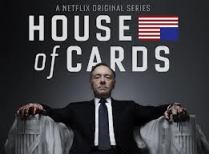
House of CardsWe are not, however, subscribing to Netflix for the movies. Instead, we’re watching its well-publicized entry into the world of high-end television drama: House of Cards with Kevin Spacey. We don’t have much interest in Netflix’s next series, Hemlock Grove, which begins on April 19, because we’re too busy watching West Wing reruns to bother with a werewolf thriller. Netflix has announced a pilot with WGBH for a new children’s series, and will launch its first animated children’s series, made by Dreamworks, based upon its motion picture, Turbo: F.A.S.T. Also from Netflix: a new Ricky Gervais comedy series called Derek seen on TV in the UK on their Channel 4, but here in the U.S., it’s not on TV, it’s on Netflix.

We may, however, sign up for Hulu+, in part because (guilty pleasure) I used to watch All My Children, but mostly because the app/channel (not sure what we’re supposed to call these “not-quite-networks”) is launching four new series, including a promising comedy spoof from the funny Seth (SNL) Meyers, The Awesomes.

On YouTube, you can watch more than forty original episodes of H+ The Digital SeriesThe first episodes ran in August. It’s a sci-fi thriller. Battlestar Gallactica: Blood & Chrome is the prequel to the cult-fave TV series seen on both YouTube and SyFy.

A scene from Tom Hanks' elaborate new Yahoo! Screen animated post-apocalyptic series, Electric City.

A scene from Tom Hanks’ elaborate new Yahoo! Screen animated post-apocalyptic series, Electric City.

On AOL On, On Yahoo! Screen, there’s a spoof of dating reality shows called Burning Lovebut the big news from this online channel is a new Tom Hanks project called Electric City. I’ve been having fun watching Video Game High School, which crosses reality and the cyber world.

Traditional television networks are trying their hand, too. FOX is debuting Short-Com Comedy Hour this summer.

More is on the way. And, I suspect, much of it will be better than average network fare for two reasons. First, creative decisions are being controlled by a smaller executive committee, and producers are being allowed more freedom (that will change, but for now, it’s worth savoring). Second, there’s a lot of talk about “the HBO Model” which assigns greater value to the quality of the property than to a third party relationship (in a typical network’s situation, every decision is affected by the opinion of the sponsor, and again, for this brief shining moment, the focus is on the creative work and not on the needs of the sponsors).

2013. The year that everything changed.

You Know, A Lot Can Happen In A Century

In his time, Al Jolson was a superstar. We've managed to get past the need for blackface, and although it keeps changing, showbiz marches on.

In his time, Al Jolson was a superstar. Thankfully, we’ve managed to get past the need for blackface. Show business keeps changing, adapting to times and tastes. And until recently, there was one place to read about these changes, day after day, year after year. Now, that’s changing, too. How? Read on. (You ain’t heard nothin’ yet!)

Today, we’re digital. We live in modern times. These times, we believe, are so new, so unique, that they have no historical precedent. The mythology is tempting, but that’s because the history is just beyond the edge of our ken. We focus on the new. We forget what happened before. Until, of course, we’re reminded of our history as the result of a really good documentary, or a really good book.

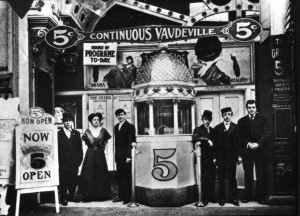
vaudeville theatre

A hundred years ago, minstrel shows were just beginning to lose their luster, but it was unclear whether theater audiences would eventually prefer skating rinks, a vaudeville industry based upon national tours (new, in 1906), or bawdy burlesque as a the most popular ways to spend leisure time. Movies were just starting out with an industry of tiny, dubious start-ups and few places where they could be seen by anyone. Live theater was the popular entertainment; actors traveled from one city to another to perform in popular plays, just as they had since the time of John Wilkes Booth. It was a confusing time… The Great War was just beginning and the large theater lobbies were as useful as recruiting stations as they were for pre-performance gatherings. After the war, everything seemed to coalesce. Charlie Chaplin, who had debuted in a US theater in 1910, was sufficiently powerful by 1918 to join forces with movie stars Douglas Fairbanks, Mary Pickford, and director D.W. Griffith to form United Artists. Then as now, everything happened quickly.

Prior to the 1920s, just about all entertainment was live. The movies were beginning to change that, and as the decade began, a new idea called radio was began as a kind of experiment, it’s post-military use future not yet clear. The year 1920 was one of vaudeville’s best ever. By 1925, radio was becoming popular, but its business model was entirely unclear. From a July 1925 article:

the broadcasters and radio manufacturers continue to tell Department of Commerce officials that no broadcasting station in the country is making money.

Paramount theaterParamount studioBy 1930, 40 percent of US households owned a radio, and by 1940, radio’s penetration was more than 80 percent. By 1930, there was a bona fide motion picture industry with large studios (Fox, Paramount, Loew’s/MGM, RKO and Warner), each with an elaborate distribution network of theaters throughout the country and a distribution infrastructure to service the nation and parts of the world. At the same time, the new NBC and its lesser rival CBS had built a similar structure for radio broadcasting. This structure supported the next level of development: a star system. Lon Chaney, Al Jolson, Fatty Arbuckle, Theda Bara, Duke Ellington, James Cagney, Fred and Adele Astaire, so many others became household names.

The industry grew. There were cartoons from Warner Bros, and Disney, comedy shorts from Hal Roach (Our Gang, Laurel and Hardy), child stars including Shirley Temple, and within a decade, major long-term successes including Gone with the Wind and The Wizard of Oz. There was Mussolini, Hitler, FDR, the Roaring Twenties followed by the Great Depression.

Variety bookVariety covered it all. This small, speciality newspaper, a trade rag, was always at the center of it all. When anything happened in or near show biz, Variety told the world. Everybody in “the business” read it, and to be mentioned in it was a clear indication of career success (I was in it, at lease once, and I still have the clipping).

This week, Variety announced that it would cease publishing its daily edition (the weekly remains in print, at least for the foreseeable future). This is not simply a cost cutting measure. Variety, once the trendiest of publications, has been badly beaten in the online entertainment journalism game, and some industry insiders question its survival as a 21st century brand.

Given its illustrious past, I suspect Variety has more fight in it than pundits allow. If you have any doubt, you must spend some time with a book about Variety’s history published by Rizzoli in a tidy coffee table format. The book is entitled Variety: An Illustrated History of the World from the Modt Important Magazine in Hollywood. The last headline in this volume: “Comcast buys 51% of NBC Universal.” I think it’s interesting to note that neither Comcast nor NBC nor Universal existed when Variety’s story began, and even more interesting to consider just how much has happened over the span of a single century. (Parallels with today’s innovative world are particularly fascinating).

Okay, why not? Here’s one of my favorite Variety headlines. This one was on the front page on July 12, 1950:

VIDEO NOW VAUDE’S VILLAIN
Acts and Agents Fear TV Inroads

Can’t help but wonder about a headline that could be written for July, 2050:

WEB, VID DEAD
TV and internet replaced by…

Digital Hollywood (in NYC)

Summit300x250Digital Hollywood is an ongoing series of media industry conferences held, mostly, in Los Angeles, New York, and Las Vegas. Generally, the conferences focus on media, advertising, programming, consumer behavior, financing of new media, technical platforms and marketing. I have spoken at several of these conferences. This week, in Manhattan, I attended the 2013 Media Summit (their tenth anniversary, by the way). I listened to perhaps a dozen panels populated by industry insiders. And learned.

OreoI learned about the relationship between Oreo cookies and social networking. As ridiculous conversations go, this is sublime. The argument in favor of social networking for cookies goes back to the old arguments about the ultimate value of brand awareness, which remains exceedingly difficult to measure. Still, the hipster panel insisted that there is a new of thinking required here (suspend disbelief). The terminology has revolved, but the arguments echo dot.com marketing strategies circa 1999. Still, the idea of an entire brand team approving Tweets in real time at, say, the Super Bowl, is an image worth remembering. Why? Because marketing teams are no so complicated, and for large brands, so scattered among specialist agencies and specialized departments within larger agencies, with so many complicated political games, consensus has become difficult to achieve. In the brand marketing universe, there is great importance placed on 21st century marketing, doing incredibly cool stuff, and keeping/gaining clients through innovation. Ask the average person whether any of this affected their decision to buy a pack of Oreos, or to eat an Oreo, and it’s unlikely that they would make a connection between the cookie and any of these campaigns.

At another session, I learned about the industry’s high hopes for the new MPEG-DASH format.

The term KPI (Key Performance Indicators) was probably most-often-uttered. In a consumer marketing environment whose changes are both difficult to measure (too much data, too many variables), agencies and corporate marketers are trying to figure out which indicators actually matter. CPM (Cost per Thousand, a long-standing audience measure that is common currency among agencies and media) is losing favor. One might measure brand impact, but there is little agreement about how this can or should be done with any degree of standardization. Nielsen is not well respected; there was consensus that this method of sampling was silly. If I correctly recall, a comparison was drawn as follows: instead of using supermarket cash register data to measure the store’s activity, the Nielsen approach is more similar to asking one in twelve individual shoppers what they purchased.

Verizon Media Server. For more, click on the pic to go to The Verge.

Verizon Media Server. For more, click on the pic to go to The Verge.

I found conversations about large tech companies and their platform strategies to be especially interesting. Verizon’s panelist complained about their high costs of set top boxes, and told attendees about a new Verizon Media Server that would serve all sorts of client devices throughout the house. If I understand this strategy correctly, Verizon wants to charge a monthly fee for Internet and program services, for the connection between home and outside network, and for a single box in each subscriber household. Microsoft claims that half of XBox use is non-videogame, so it is now thinking in terms of program service subscriptions (not unlike Verizon), and producing its own programming (like Netflx and Amazon). Much smaller Boxee is thinking in terms of a cloud-based DVR not only for television programs, but for all types of audio-video media.

One fascinating idea: will consumers control their own data? For example, when I use E-ZPass, or when you browse Amazon or search Google, or watch a VOD or DVR file, where does this data go, where is it stored, and what permission is required for access? Maybe I want all of my data stored by, say, the American Red Cross, which may, in some wildly imaginative future, repackage and resell the donated data in accordance with personal donor’s wishes?

Another: the role of intellectual propery attorneys who must, due to the nature of their profession, remain in a 20th century approach that transforms copyrights into cash, and blocks unauthorized access or use with vigorous enforcement. I mentioned the phrase Creative Commons as part of a question, and only one person in the room of one hundred seemed to understand what was meant by the forward-thinking term. Still, the attorney panel was brilliant in their discussion of negotiation strategies:

  • Start with a phone conversation, do not rely upon emails. Establish a personal relationship based upon humor, warmth, personal connections.
  • Today, there are so many people, projects, companies – slow down, think about partners, need to educate the other side, develop an understanding of everybody’s strengths.
  • Take ego out of the equation.
  • Do not hold grudges, and do not allow yourself to assume anything resembling a victim mentality.
  • Do not make it personal.
  • In television and Internet video, the buyer’s creative team establishes deliverables based upon their own set of standards, but these people do not negotiate the deals. Instead, this work is done by a business affairs team that is closely aligned with the finance department. Be careful about allowing business affairs or finance to control the conversation. If they push too hard–as they often do because they are paid to control their company’s interests–then the creative team will not get the project they ordered, and the producer will, inevitably, be blamed. if the conversation shifts into an unacceptable zine, do not hesitate to suggest that the business affairs staff bring in the creative staff to reset expectations, and, perhaps better yet, off to do so yourself. often, the business affairs response to this awkward request will be: “no, we will deal with this internally,” and then, well, every situation is different.
  • Be very careful about “this is a deal breaker” or drawing a line in the sand.
  • No two deals are ever the same, even if the same people are involved.
  • Moving to yet another panel, I liked the term “Selective Consumption.” Roughly, it seems to mean a a presorted, highly personalized, behavior-based list of currently aailable media assets that miraculously (digitally, enabled by artificial intelligence and algorithms) anticipates each individual consumer need of the nanosecond.

Other interesting ideas and notes:

  • When designing a multi platform, transmedia approach, it’s easy to develop a visual identity on your own platforms but quite difficult to manage this level of control over third party platforms (because each has its own unique technical and design standards and its own strategic agenda).
  • The industry has made something of a mess in the consumer household where multiple boxes, screen interfaces, access codes, remote controls, and a lack of standardization now results in considerable frustration and “we’re not responsible, go talk to those people over there” interoperability problems. Not much progress in this area; in fact, things will probably get a lot worse before the industry gets ahead of the problem.
  • An interesting discussion about “who is the voice of the brand?” Is it the Chief Marketing Officer, the senior agency account person, or the twenty something with her hand on the Twitter keyboard? Plans are made months in advance and approve queues are common practice, but real time communication via social networks seems to subvert these plans. Lots of damage can be done, and so quickly! Then again, there is the urgency of timely messages about (or by) Oreo cookies.
  • About 30 percent of Verizon FiOS use is non-TV. People are shifting, rapidly, to tablets and away from TV for their PRIMARY video viewing experience. That seems significant.

Amazon: Any Thing, Any Where, Any Time

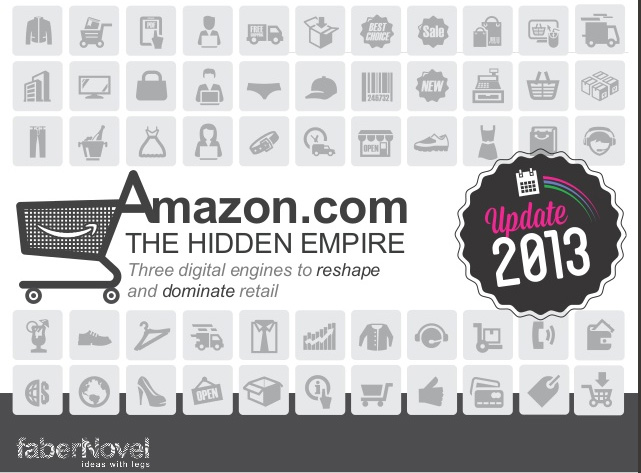
Amazon-HiddenEmpireFaberNovel is a website filled with interesting, well, I’m not sure what to call these packages of visual information. They’re kinda sorta PowerPoint presentations, but they feel more like a new kind of business book.

Originally, I was going to tell you that there’s a good (updated 2013) story of how Amazon is taking over the world. The presentation, above, tells a compelling tale about how the e-commerce giant has grown, offering considerable detail on the business side, and lots of insight about Amazon’s likely future.

As I went through the 84 slides, I became curious about who was telling the story, and became interested in FaberNovel, the publisher who offers this material under a Creative Commons license. As I browsed, I found an All About Google FaberNovel, too. And another about Google, Facebook, HTML5, the list is both impressive and multi-lingual (that is, presentations are available in multiple languages).

The stories are well-told, simply illustrated, and rely upon diagrams and other simple PowerPoint graphic techniques (nobody will be impressed by the visuals, but the stories are good; Edward Tufte’s magic wand would greatly benefit this material).

I’d start with the Amazon story because it contains so many “oh, that’s why!” or “that’s how, that’s a really good idea” or “what an awesome story of business strategy.” moments. Some of it is likely to be familiar, but it’s unlikely that most people have connected the dots. Sure, 84 pages may seem like a lot, but it’s not more than a half-hour of your life, unless you’re a serious student of e-commerce business.

Interesting discovery.

Film with Feeling

Alex Kirke is a director with a keen interest in the cinematic experience, and, as it turns out, an equally keen interest in the measurement of biophysical responses to storytelling. Inevitably, this led Mr. Kirke to the development of software that would read sensors attached to the bodies of audience members. The sensors provide real-time feedback on muscle tension, perspiration, heart rate, and brain wave activity. As the software collects the data, it compiles the results, and, in accordance with the director’s wishes, the film automatically branches from one audio-visual file to another.

By using this technology, a director can amplify or dial-down emotional impact, shorten or lengthen the story, cut to another sequence entirely, and so on. Of course, all of the branching must be worked out before production begins because each sequence must be produced, edited, and integrated into the file management system.

Says one of the actresses:

It will be quite interesting to know, so well, how the audience reacts. The ending they choose reflects their reactions.

Not just the ending, of course. Anywhere in the film, the story can change course. So, too, can the soundtrack. Or any visual or visuals. In theory, there may be a large number of branches (for the professional, this becomes an obsessive, difficult way to tell a story, but it’s interesting to consider the possibilities). And, in theory, the sensors could be connected to the seats or the armrests throughout the theater, but that’s all in the future.

For the present, do watch the video. It’s rough, more of a professorial demonstration that any sort of slick production, and, if time permits, have a look at Mr. Kirke’s blog, too. There, he covers an interesting range of technical innovations related to entertainment and storytelling.