 You’re looking at a very clever approach to playing LPs. No turntable required. Just place the LP on a flat surface, and the RokBlock will drive itself along the grooves. Totally busts any expectation about what a record player ought to be. Use it anywhere!
So here’s the deal. This is an active Kickstarter campaign–they have already met their goal. The RokBlock contains amplification and loudspeakers, so this is all you need. Of course, you can use the built-in Bluetooth to send the sound over to any Bluetooth device–a headphone, a better wireless speaker, even your high-end stereo system.
No, this won’t sound anything as good as a proper sound system, but most people don’t want / cannot afford / could care less about being an audio phone. Most people just want to have some fun and listen to some music. Anywhere. And now there’s a way to do that.
If you want one, the best available KickStarter deal costs $79–that’s still 20% off of the expected $99 retail price. But you, like anyone who orders, will have to wait until September 2017 before the box arrives.
There’s a rechargeable battery that lasts about 4 hours. You can play 33 and 45 rpm records (but not 78s rpm).
It’s a cute gimmick, a clever example of creative thinking in action. Without one in my hands, it’s tough to imagine the sound quality. I’m sure it’s no worse than an old record player, and my guess is that this will sound better than those early devices.
 We started with one of the past century’s best–Herbert von Karajan conducting the Berlin Philharmonic in 1961-2 for Deutsche Grammophon. I had just picked up a $4 LP, in very good shape, from
 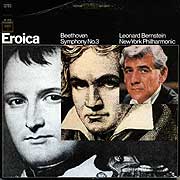 Next up: Leonard Bernstein from the same. Era. This was my LP, purchased decades ago, kept in it boxed set, played maybe ten times. This was a master work from Columbia Records at the label’s prime. The performance is ambitious, engaging, flowing–but the sound of the horns and the strings was compressed, very limited in highs and lows. We wanted to hear the depths of Beethoven explored by Bernstein in his prime–but the recording let us down.
 Before going modern, we decided to go for Toscanini and the NBC Symphony Orchestra, first on LP and then on CD, recorded in 1949–before stereo recording was available. This was state-of-the-art at the time, but the dynamic range was so limited on these recordings, they did not stand up to modern listening. Historical interest only.
 I had high hopes for my treasured 1995 CD set from Colin Davis and the Staastkapelle Dresden. Sure enough the CD really delivered–a full range of highs, lows and everything in-between. Wonderful placement of instruments. Lots of clarity, distinct individual violins and basses, just the right horn sounds. I was excited–but somehow, the listening experience was a few marks less than thrilling. After Karajan and Bernstein, the passion felt a little lacking. A fine performance is not the same as a thrilling performance, and when I’m listening to Beethoven’s Eroica, I want to be thrilled. But the sound was more satisfying here than it was on any of the LPs.
 Now here’s my last one. It’s a digital remaster from 1963, a CD box that I didn’t even know I owned. It’s the Gewandhausorchester Leipzig led by








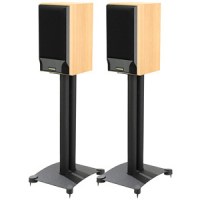
 Fine adjustments matter a lot. When I was first setting up my reference stereo system, I moved each speaker perhaps 1/8 of an inch toward or away from one another, and I routinely heard meaningful changes in the female vocalist’s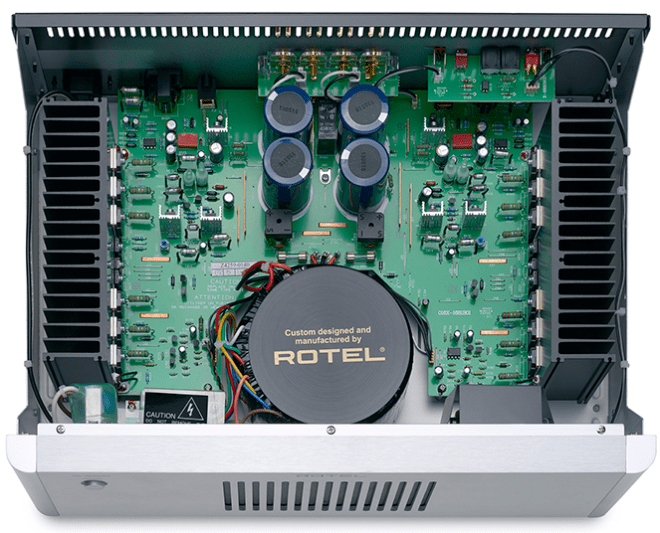


 Too theoretical? Maybe. We can shift back to the practical side of technology. These amplifiers—typical of their class—offer both RCA and XLR (“balanced”) inputs. It’s best if your pre-amp and your amplifier are both equipped with balanced connection. In the high-end community,

 Digital Insider