Only Half of This Is True

Maybe not now. But soon.

Turns out, facts are like radioactive materials, and, for that matter, like anything that’s not going to last forever.

arbesmanMore or less, this is half-life principle, developed just over 100 years ago by Ernest Rutherford, applies to facts, or, at least, a great many facts. This persuasive argument is set forth by Samuel Arbesman in a new book called The Half-Life of Facts. I especially like the sub-title: “What Everything We Know Has an Expiration Date.” Arbesman is a math professor and a network scientist, and, as you would expect, this is a smart book. The book seems more like a musing than a fully worked-out theory, but I suspect that’s because facts are not easy to tame. Herding facts is like herding cats.

HalfLifeOfFactsLet’s begin with “doubling times”–the amount of time it takes for something (anything) to double in quantity. The number of important discoveries; the number of chemical elements known; the accuracy of scientific instruments–these  double every twenty years.  The number of engineers in the U.S. doubles every ten years. Using measures fully detailed in the book, the doubling time for knowledge in mathematics is 63 years, in geology it’s 46 years. In technology knowledge, half lives are quiet brief: a 10 month doubling for the advance of wireless (measured in bits per second), a 20 month doubling time for gigabytes per consumer dollar. With sufficient data, it’s possible to visualize the trend and to project the future.

So that’s part of the story. Of course, it’s one thing to know something, and it’s another to disseminate that information. As the speed of communication began to exceed the speed of transportation (think: telegraph), transfer of knowledge in real time (or, pretty close to real time) became the standard. But not all communications media is instantaneous. Take, for example, a science textbook written in 1999. The textbook probably required several years of development, so let’s peg the information in, say, 1997. If that textbook is still around (which seems likely), then the information is 16 years old. If it’s a geology text, the text is probably valid, but if it’s an astronomy text, Pluto is still a planet, and there are a lot of other discoveries that are absent. And, there are facts rapidly degrading, some well past their half life.

Trans-Neptune

Although you can click to make the image bigger, Pluto still won’t be a planet…

And, then, of course, there are errors. Sometimes, we think we’ve got it right, but we don’t. Along with the dissemination of facts, our system of knowledge distribution transfers errors with great efficiency. We see this all the time on the internet: a writer picks up old or never-accurate information, and republishes it (perhaps adding some of his or her own noise along the way). An author who should know better gets lazy and picks up the so-called fact without bothering to double check, or, more tragically, manages to find the same inaccurate information in a second source, and has no reason to dispute its accuracy. Wikipedia’s editors see this phenomenon every day: they correct a finicky fact, and then, it’s uncorrected an hour later!

Precision is also an issue. As we gain technical sophistication, we also benefit from more precise measures. The system previously used for measurement degrades over time–it has its own half-life. Often, errors and misleading information are the result.

The author lists some of his own findings. One that is especially disturbing:

The greater the financial and other interests and prejudices in a scientific field, the less likely the research findings are to be true.

And, here’s another that should make you think twice about what you see or hear as news:

The hotter a scientific field (with more scientific teams involved), the less likely the research findings are to be true.

My favorite word in the book is idiolect. It is used to describe the sphere of human behavior that affects the ways each of us sends and receives information, the ways in which we understand and use vocabulary, grammar, pronunciation, accent, and other aspects of human communication. A fact may begin one way, but cultural overlays may affect the way the message is sent or received. This, too, exerts an impact on accuracy, precision, and, ultimately, the half-life of facts.

Word usage also enters in the picture. He charts the popularity of the (ridiculous) phrase “very fun” and finds very strong increase beginning in 1980 (the graph begins in 1900, when the term was in use, but was not especially popular).

Time is part of the equation, too. The Long Now Foundation encourages people to think in terms of millennia, not years or centuries. Arbesman wrote a nice essay for WIRED to focus attention not only on big data but on long data as well.

Given all of this, I suspect that the knowledge in the brain of an expert is also subject to the half-life phenomenon. Take Isaac Newton–pretty smart guy in his time–but the year he died, most of England believed that Mary Toft had given birth to sixteen rabbits.

Last week, on CBS Sunday Morning, Lewis Michael Seidman, a Georgetown University professor commented about our strong belief in the power and relevance of the U.S. Constitution (signed 1787, since amended, but not substantially altered):

This is our country. We live in it, and we have a right to the kind of country we want. We would not allow the French or the United Nations to rule us, and neither should we allow people who died over two centuries ago and knew nothing of our country as it exists today.
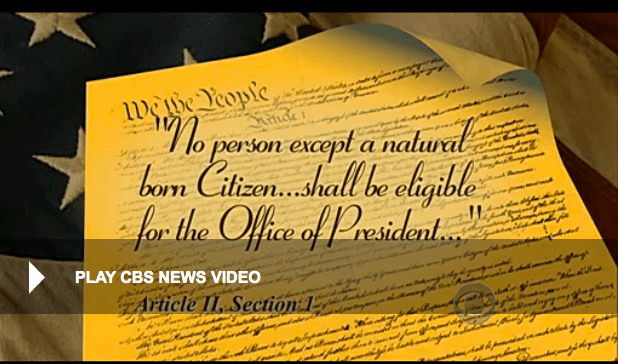
CBS News Constitution

20th Century Triumph

Here we are, deep into the era of home theater and giant screens and digital sound. (Big deal.)

Compare what we have today to what was still around, and popular, a half century ago. I’m a big fan of technology, but I sure wish there were places where we could spend afternoons and evenings watching great movies on a truly gigantic screen. Once upon a time, that was the way people watched movies..in grand palaces. One such theater, a reminder of the era when Jamaica, Queens was one of New York City’s busier shopping districts, was called the Loew’s Valencia. Stars appeared on stage, and major motion pictures were shown to audiences who were grateful not to travel all the way to Brooklyn, Manhattan, the Bronx or Newark, where so many of the showcase theaters were located.

Things have changed. So much about this particular theater has not.

ValenciaAccording to a spectacular article by a NYC movie location scout identified only as “Scout,” this 1929 movie palace is still standing–and it is in fabulous condition. You must read the article, if only to gaze at the pictures of this place. And, yes, you can visit. Today, it’s a Tabernacle.

Designed by John Eberson, the Valencia was the largest theater in Queens, New York. It was lorious. For a look at the theater from street view with a competitive theater across the street (you cross under the subway to get there), click here. Inside, there are over 3,500 seats. The over-the-top decor was inspired by Mexican and Spanish baroque designs, with rows of cherub heads, elaborate tile work, swirls and flourishes (this from the New York Chronology).

Valencia2

Loew’s Valencia is now part of the Registry of Historic Places. If you enjoy the magic of old theaters, the best place on the web to learn about them is Cinema Treasures. In its way, Cinema Treasures is the registry for all sorts of theaters, most of them long gone (cool thing: often, CT explains what happened and why).

Valencia3From its painted sky to the beautiful seats and elegant balconies, the Valencia recalls a time when movie-going was an experience. It may seem incredible, but there were a lot of movie theaters that looked like this…many just a few miles away from this one. The RKO Theater in Flushing was another large one in Queens was one of them. After a very long period of being ignored, the building site will become a high school. Some of the fabulous theaters in Newark, NJ (then, a vibrant city with an exciting movie, theater and nightlife scene) are still represented by their fading facades–and it’s worth a walking trip to get a sense of what was there so many years ago.

We’ve gone from dressing up to sit in a huge, elegant dark room to watch big pictures of even bigger stars to the magic of watching movies on a little B/W box in our own homes to, nowadays, choosing from tens of thousands of films to watch any time, anywhere, just an instant after deciding what to watch.

Along the way, we’ve lost a lot.

The Triple Revolution

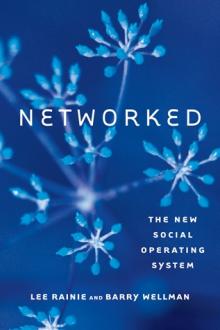
I think I prefer that name to the simpler Networked: The Social Operating System by Lee Rainie, who runs the Pew Research Center for Internet and American Life, and Barry Wellman, a professor who runs NetLab in Toronto. The triple revolution is easy enough to understand: we’re living at intersection of three significant changes in modern life:

  1. Social networks, which encourage connections between people regardless of their physical location
  2. The widespread availability of the internet, which provides a never-before-possible power for information access, and transmission and reception of messages in every medium.
  3. The mobile revolution has transformed digital devices into “body appendages” that allow “people to access friends and information at will, wherever they go…”

These trends define the new space in which we live, and, armed with both the necessary research and a knack for explaining a wide range of interlocking ideas with clarity, the adventure begins.

NetworkedProfessor Wellman’s work helps to make the case that the old idea of groups has become the new idea of networked individuals. At first, the distinction may seem, well, academic. Then again, consider the number of people with whom you interact every day or every week. If you lived in, say, Europe of the 1800s, most of these people would share proximity, language, culture, friends, family members, transportation routes, and more. Today, those ties are not fixed in a group. Instead, the connections are more fluid, more varied, more precisely defined by the individual and not by his or her membership in a group. Boundaries are permeable. Connections may or may not be long-term. Something’s lost here in terms of long-term friendships and relationships with family members (some or many may no longer live nearby), and something’s gained in the richness of more diverse lives.

I remember working for a client named Steve, who carried his cell phone in a case the size of a lunchbox, and I remember working for a successful entrepreneur whose phone was built into her car’s dashboard, like a car radio. Both date back to the 1980s. At the time, not more than a few thousand people owned mobile phones. In fact, that first decade was slow going, but after 1995, the trajectory is very nearly a 45-degree angle, running uphill to over 300 million cell phones today, and more on their way. Fully 83% of the U.S. population owns a cell phone.

Those stats aren’t surprising, but the combination of internet growth, changes in our individual behavior, and the fact that so much can now be accomplished any time and anywhere sets up the story. Public and private spaces begin to blur–think about the number of people you saw on TV during the inauguration who were checking their cell phones. Nowadays, it’s perfectly acceptable to work just about anywhere–and the need for offices is beginning to fade, certainly for creative workers, and now, for many other types of workers, too. Companies are shrinking or closing their offices and instructing employees to conduct their business from home (in one case, a friend was told to “take the office furniture because it is no longer needed.” The authors consider the idea of “place-to-place” networks to be hopelessly old-fashioned; these days, it’s all about “person-to-person” networks. As family composition and roles have shifted (women working outside the home; household free time spend on digital devices; the individual activity of computing; a 25% drop in the average number of hours devoted to housework since 1965), we interact in different ways that don’t always connect generations effectively. For example, the authors describe a young woman who communicates daily with both of her parents while they complain that they never hear from her. What they want is personal touch. What she wants is regular contact. These are not the same, and as a result, there is conflict.

When attempting to explain the changed world of journalism, the explanations do not come so easily, in part because it is so very difficult to understand what’s really happening and why. With so many people writing and communicating on the web, in so many different ways, the old and traditional role of a reporter is difficult to outline in the new world. Where does credibility or experience or context fall? Do we perceive more value in a local person telling a story on the spot in, say, the changing Middle East, or an experienced reporter who provides the experience and wider view? What about people who comment on the work of the local observer or the reporter? Not all are pundits; many are simply trying to understand what happened by reviewing many sources and many stories.

And so the layers are applied, one after another. It’s not just that there’s a remarkable internet or an astonishing Wikipedia, and it’s not just that we’re able to access this material and respond to it at any moment from any location. It’s these phenomena mapped over a much-changed society and dramatically shifted individual behavior patterns. It’s all one large idea, and it’s time that we begin to think about these changes in a more holistic way. The data is here… enough of it to get the conversation started, anyway. And in this iteration, the writing and smart and the analysis is sharp. It was written about 18 months ago–one of the ironies of the book writing, publishing and reviewing process is that it takes more time than our triple revolution deems reasonable.

P.S. After I write each article, I search for pictures. My first search on the term “Networked” yielded a Wikipedia article that provided my evening’s dose of irony:

networked book is an open book designed to be written, edited, and read in a networked environment. It is also a platform for social exchange, and is potentially linked to other books and other discussions. Wikipedia is a networked book.

Colossal is shrinking, but massive continues to grow

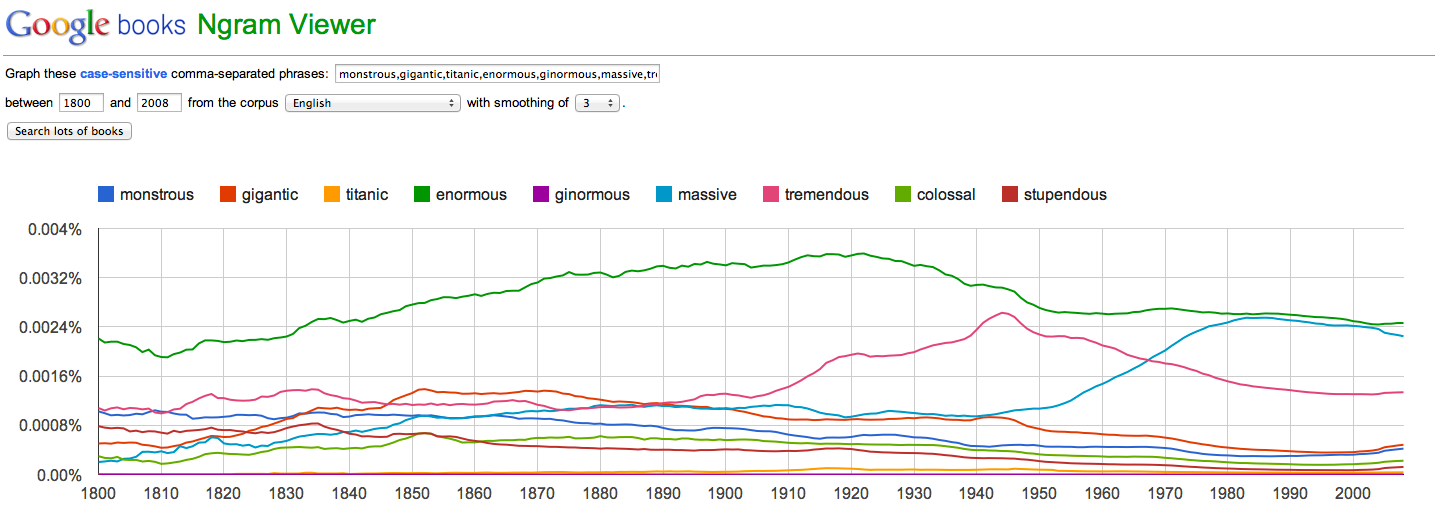
Cool new internet toy: Ngram Viewer. It’s part of Google Books.

To see the graph in a larger size, click on it.

To see the graph in a larger size, click on it.

What did I learn in my little experiment? Well, “tremendous” seems to have peaked in the 1950s and it’s been a slow, gradual decline ever since. Nice jump for “massive” (the turquoise line), probably because of the technology revolution. “Titanic” never really amounted to much, and both “monstrous” and “colossal” gained some popularity in the 1800s, but the 1900s were unkind to them. “Stupendous” was doing a whole lot better before the Civil War. Ngram is fascinating (and addictive) and easy enough to try in just a minute or two.

You simply enter a group of words (proper nouns included) and identify a date range. In my illustration, I searched for words that mean “really, really big” from 1800 to 2008. Then, the Ngram tool searched the entire database of Google books, in a second or so, and returned a nifty graph.

You’ll find it here.

From the FCC: A Summary of the Spectrum Auction Plan

imagesThe FCC posted a useful (11-page) summary that explains the upcoming television spectrum auction with a reasonable level of detail.

Why is the FCC beginning to shut down large amounts of television spectrum? Here’s why:

“In key areas, the United States leads the world in wireless infrastructure and
innovation. However, our successes in building a first-class wireless industry have also
created our greatest challenges; the skyrocketing usage of our wireless networks is
dramatically increasing demands on both licensed and unlicensed spectrum. The mobile
wireless landscape is undergoing a transformation as mobile broadband networks are
emerging not only as the foundation for communications services in the 21st Century,
but also as the infrastructure supporting economic growth and innovation in such wide-
ranging areas as entertainment, health care, public safety, education, and social service.
Like the railroads in the 19th Century, and the electrical grid in the 20th Century, our
mobile broadband networks are primary economic engines for our country. Spectrum is
a critical building block for these networks.”

Here’s more about the law that sets this process in motion:

“Congress, in passing the Middle Class Tax Relief and Job Creation Act of 2012
(“Spectrum Act”) in early 2012, authorized the FCC to conduct incentive auctions, with
the first auction to be of broadcast television spectrum. Congress further directed that
certain net proceeds from the broadcast incentive auction are to be deposited in the
Public Safety Trust Fund to fund a national first responder network, state and local
public safety grants, and public safety research, and the balance is to be used for deficit reduction.”

And how are they going about it?

Well, that’s the complicated part. The FCC needs to acquire spectrum from current users, and it needs to sell that spectrum to future users. This involves a pair of auctions. The mechanics of these auctions are not simple, and sometimes seem to be counter-intutitive.

As citizens, it’s important that people in the U.S. develop an understanding of what the FCC is doing, why, and what will happen as a result.

For those who do not live in the US, where a combination of local television stations, broadcast television networks, cable television networks, and a wide range of other services are commonplace, this whole adventure may be very difficult to understand, and may not make much sense. For those who wonder why the FCC directed a complete conversion from analog to digital television as a project separate from this latest shift, you should count yourself among the many.

CES 2013: What Mattered and Why

Just after Christmas, the Consumer Electronics Show convenes in Las Vegas to showcase all that’s new for the coming year. Most of it is upgrades, retreads, and modest improvements over the past year’s stuff. Some of it suggests a new shape for the industry, and for the ways that we work, play, and communicate. Here’s a brief rundown on what might matter most:

  • The disk drive maker Seagate will soon offer a “local cloud” storage device that you can set up in your home or office. Local storage, easily reached via local wi-fi. IT professionals will recognize this as a NAS, short for Network Attached Storage. At about $250 for 4TB, the lesser configurations don’t save enough money to be worth your time.
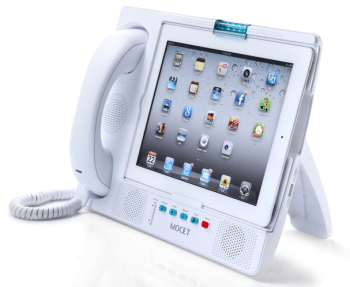
  • Expanded uses for phones and tablets. One shining example is the new MOCET iPad Communicator. Phones and tablets are extremely versatile. Adding capabilities beyond, say, a clock radio or external speakers, will become increasingly commonplace. Remember: you’re carrying a fairly powerful computer. Why not put it to use?

    MOCET

    To go to the site, click on the picture.

  • OLED is a video technology that allows for very thin screens–and flexible ones. The price of manufacture is dropping, so we’ll begin to see OLED screens enter the race between plasma and LED screens. Eventually, this organic (!) technology will win out, and become commonplace. (The “O” in OLED stands for “organic.)
  • Previously, I wrote about the new 4K screens. They’re beginning to be shown as demos.
  • Touch screens and gestures will begin to replace keyboards and remote controls. As the technology allows for greater precision, older ways of interacting with computers (and tablets) and with videogames and TV sets will shift our conception of an interface into the modern age.
  • Smart phones seem to be getting larger–more screen real estate is better for mail, web, games, and movies. Tablets seems to be getting smaller (the line between a small tablet and a big phone is becoming difficult to discern). Tablets are also becoming larger–imagine what you could do with a 20-inch portable tablet! Here, we’re starting to blur the distinction between a computer monitor, a TV set and a tablet. It’s tough to forecast where these trends are heading.
  • Samsung has become the Sony of the 2010s–an exciting company with innovation in every direction. The quality is there, too. But there are still lessons to be learned about user interfaces and design.
  • Very small storage devices are continuing to expand their storage dimensions. Kingston, for example, showed off a 1TB flash drive–larger than the popular thumb drives, but still quite portable.
  • From DPReview's coverage, the latest Fujifilm digital camera. Click on the image to see their story.

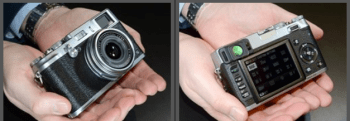
    From DPReview’s coverage, the latest Fujifilm digital camera. Click on the image to see their story.

    It’s now a regular routine: cool new cameras introduced at CES. For a solid rundown, visit DPReview. I think my favorite stuff is the expansion of Fuji small-sensor line. These cameras look like the real think, shoot terrific images, and tend to be somewhat more intuitive in their interfaces. (More on these soon.)

  • Automotive electronics has always been a key aspect of CES. Sure, car stereos and car security systems remain center stage. Now that cars plug into wall sockets, the vehicles themselves are becoming digital devices. This time around, lots of cars as harbingers. Next time, I’ll bet we start seeing hybrid devices that confuse the definitions of bicycles, motorcycles, golf carts, and other short-range transportation devices.
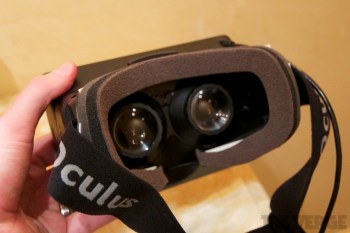
  • Oculus Verge

    To read The Verge’s story about the Oculus Rift, click on the image.

  • Your smartphone and/or your tablet will become a monitoring control center and remote control. You know how we’re beginning to program a DVR from afar? Or read date/time stamps on the foods in the fridge? It won’t be long before we all have a remote dashboard to tell us about the fuel in the car, the meds in the bathroom, when the last time the dog was walked, body fat, etc. add some robotic controls and digital life becomes even more interesting.
  • I’ve wondered why immersive video game displays have taken so long to gain traction in the marketplace. Now, it looks like the (Kickstarter-funded) Oculus Rift will change the way gamers see and experience the experience of game play. There’s good multimedia coverage in The Verge.

The Multiplier Effect

Quickly now… If you multiply 633 by 11, what’s the answer?

No doubt, you recognize the pattern, and you may recall the mental math process:

633 x 10, plus 633 x 1, or 6,330 plus 633, or 6,963, which is the answer (or, in terms used by math teachers, the “product”).

There is another way to solve the problem, a faster way that assures fewer computational errors, and does not involve any sort of digital or mechanical device. It does, however, involve a simple rule and a different way to write the problem down.

The rule is: “write down the number, add the neighbor.” The asterisk just above each number is there only to help you to focus. If you prefer, think of it as a small arrow.

Here’s how it works:

Mult by 11

Try multiplying 942 x 11  and you’ll quickly get the hang of it.

Do it once more, this time with a much larger number: 8,562,320 x 11. It goes quickly, as you’ll see.

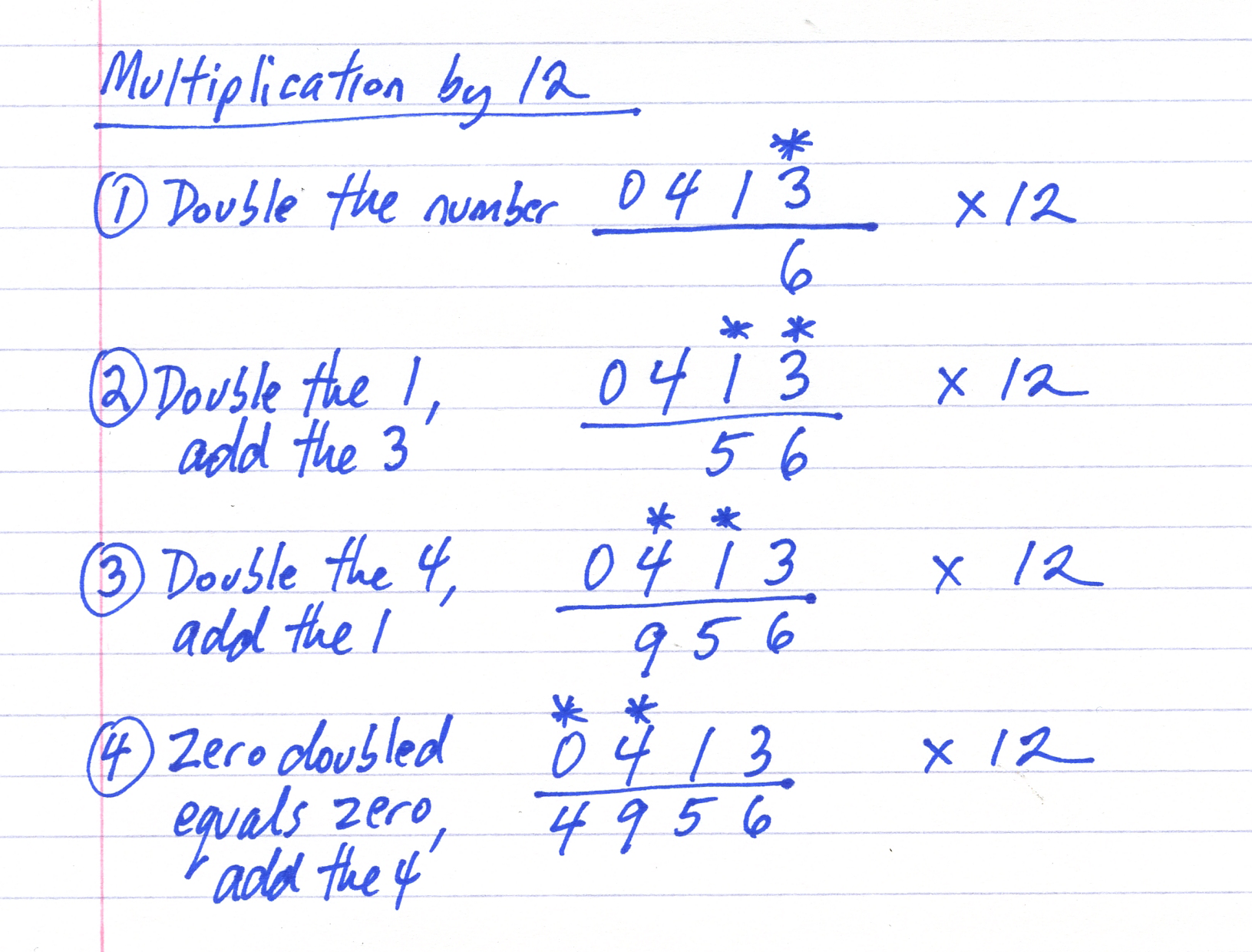
Multiplying by 12 is just as easy, but the rule changes to: “double the number, add the neighbor.” Here, my explanation includes specific numbers.

Mult by 12

In fact, there is a similar rule for multiplication by any number (1-12). And there are rules for quickly adding long, complicated columns of numbers, as there are for division, square roots and more.

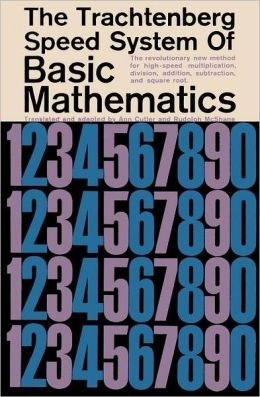
These rules were developed by a man facing his own demise in the Nazi camps during the Second World War. Danger was nothing new to him…this is the story and the enduring legacy of Jakow Trachtenberg, who first escaped the wrath of the Communists as he escaped his native Russia, then became a leading academic voice for world peace. His book, Das Friedensministerium (The Ministry of Peace), was read by FDR and other world leaders. His profile was high; capture was inevitable. He made it out of Austria, got caught in Yugoslavia, and was sentenced to death at a concentration camp. To maintain his sanity, Trachtenberg developed a new system for mathematical calculation. Paper was scarce, so he used it mostly for proofs. The rest, he kept in his head.

Madame Trachtenberg stayed nearby, in safety. She bribed officials, pulled strings, and managed to get Jakow moved to Dresden, which was a mess, allowing him to escape. Then, he was caught again, and was moved to Trieste. More bribes and coercion from Madame. He escaped. The couple maneuvered into a more normal existence beginning at refugee camp in Switzerland. By 1950, they were running the Mathematical Institute in Zurich, teaching young students a new way to think about numbers. A system without multiplication tables. A system based upon logic. A system that somehow survived.

A system that, against all odds, made it into my elementary classroom. One classroom in the New York City school district. For one year. The parents were certain that the teacher was making a terrible mistake, that the people in my class, myself included, would never be able to do math in the conventional way again. Of course, we learned a lot more than an alternative from of arithmetic.

And now, after decades out of print, in an era when arithmetic hardly matters because of calculators and computers, the original book is back in print. The brilliance of system remains awesome, and the book is worth reading just to understand how Trachtenberg conceived an entirely fresh approach under the most extraordinary circumstances.

20130113-222930.jpg

Snow Fall: Two Ways to Tell a Story

Several weeks ago, in the midst of a busy holiday season, The New York Times attempted to understand its future by telling the story of an avalanche. The story requires about a half hour of your time, and it is best experienced in a quiet room with a reasonably large screen.

Snow Fall

The place to begin is with the text-ish story, the one that requires a lot of on-screen reading, the one that includes various animated maps that show just where, how, and why the avalanche happened. Short videos (each one about a minute long) illustrate the story, and bring the people in the story to life. There are audio files of the emergency calls to Ski Patrol. There are slide shows that help us to understand the life of each skier. The writing is strong and skillful. The whole presentation is an impressive demonstration of how we might experience news and features in the rapidly-advancing future.

It feels like an experiment. The writing is long, more like a NY Times Magazine story than a web story. I felt myself drawn into the story and its environment, and found myself pressing the “volume up” buttons on my keyboard in expectation of some sort of soundtrack to accompany the reading of the text.  Short videos satisfied some of the craving for additional stimulation; they were nicely integrated into the flow of the story and the text presentation. The slide shows that introduce each character are a more awkward fit because they require the reader to leave the chronology of the intense storyline–which is told, mostly, in shades of grey–and to consider each character’s past life–which is told, mostly, in vivid digital color. The visual shift is jarring, made worse by the inclusion of completely irrelevant advertisements that are large enough to disrupt the entire experience (for this type of storytelling, I think I’d prefer a micropayment or subscription model, but I wouldn’t mind seeing an opening, mid-break and closing sponsorship presentation).

After I read, looked at the pictures, followed the maps, watched the short videos, and so on, I felt that I understood what happened at Tunnel Creek.

And then, I watched the 11-minute video documentary that told the whole story. I was struck by how much more effectively the documentary told the same story. The story was tight, the characters were crisply defined, the maps and visuals made more sense because they were narrated, the pace was brisk, the emotions were sharp and devastating. Less was a whole lot more. The documentary made the print-pictures-video-maps presentation feel like a bunch of reporters’ notes and script drafts. I felt certain that the doc had been produced by another team, but no, it had been made by the same New York Times staff.

And all of that confused me. I love to read (less so on the screen, moreso from paper), and I was very impressed by the quality of storytelling in the multimedia format. But after watching the documentary, I found myself wondering whether we’re making too much of this transmedia idea, and whether a well-produced audio-video presentation might provide a more reasonable multimedia future.

Sure, this is just one example, and an early one at that. I’m anxious to see what Atavist has online, and will write about their multimedia storytelling in the next few weeks.

In the meantime, do take the take to explore the NY Times presentations. They’re well worth your time and attention.

My Website Doesn’t Look So Good (on my mobile phone)

You’ve got a perfectly good website, looks great on any computer. The only problem: fewer and fewer people are seeing your website on a computer. More and more, it’s the way that the website looks on a mobile device that matters. Oh, sorry, one more problem: there are at least a dozen different mobile devices, and your website will not look the same on any two of them. Some text wraps, some does not. Some graphics are shown, others are cut-off. What a mess?

Check out the images below, and click on any of them to see a more complete picture with even more devices. Try it with your website, and then, either find a pre-made solution (WordPress offers one for blogs, for example), or start thinking about a secondary website design for your business, etc.

Every week, it’s a brave new world.

Diff view of website

Blueprint 2013 – Philanthropy in a Digital Age

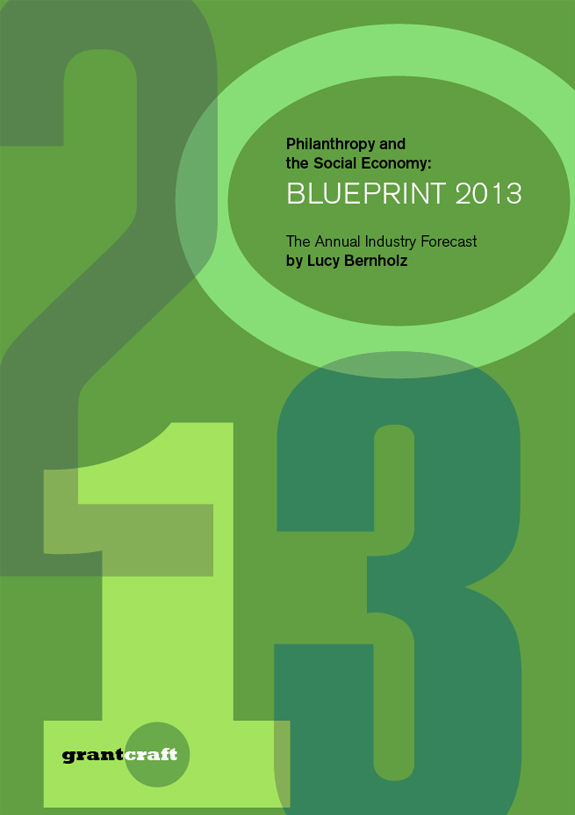
Bernholz reportBy her own admission, Lucy Bernholtz is “…a philanthropy wonk…trying to understand how we create, fund, and distribute shared social goods in the digital age – what she calls the future of good…”

As with everything else in our increasingly digital world, new ways of thinking are transforming the philanthropic industry. Younger donors behave differently from other populations. Kickstarter and other internet project-based giving are now a meaningful trend. Kiva and other micro-giving concepts have gained tremendous traction. For those working at non-profits, and at foundations, these trends are very familiar. For the rest of the population, it’s time to take note of the large role played by the philanthropic and nonprofit structure in education (particularly, but not exclusively, higher education), health care (hospitals, and more), arts and culture, social services, and so much more.

This is a report worth reviewing, and it’s a free download. (But not from this link… you need to answer a few simple questions before you receive the download).

And, it’s probably worth knowing more about Ms. Bernholtz, whose thinking is helping to guide change in what has become a very important part of contemporary society.