Only Half of This Is True

Maybe not now. But soon.

Turns out, facts are like radioactive materials, and, for that matter, like anything that’s not going to last forever.

arbesmanMore or less, this is half-life principle, developed just over 100 years ago by Ernest Rutherford, applies to facts, or, at least, a great many facts. This persuasive argument is set forth by Samuel Arbesman in a new book called The Half-Life of Facts. I especially like the sub-title: “What Everything We Know Has an Expiration Date.” Arbesman is a math professor and a network scientist, and, as you would expect, this is a smart book. The book seems more like a musing than a fully worked-out theory, but I suspect that’s because facts are not easy to tame. Herding facts is like herding cats.

HalfLifeOfFactsLet’s begin with “doubling times”–the amount of time it takes for something (anything) to double in quantity. The number of important discoveries; the number of chemical elements known; the accuracy of scientific instruments–these  double every twenty years.  The number of engineers in the U.S. doubles every ten years. Using measures fully detailed in the book, the doubling time for knowledge in mathematics is 63 years, in geology it’s 46 years. In technology knowledge, half lives are quiet brief: a 10 month doubling for the advance of wireless (measured in bits per second), a 20 month doubling time for gigabytes per consumer dollar. With sufficient data, it’s possible to visualize the trend and to project the future.

So that’s part of the story. Of course, it’s one thing to know something, and it’s another to disseminate that information. As the speed of communication began to exceed the speed of transportation (think: telegraph), transfer of knowledge in real time (or, pretty close to real time) became the standard. But not all communications media is instantaneous. Take, for example, a science textbook written in 1999. The textbook probably required several years of development, so let’s peg the information in, say, 1997. If that textbook is still around (which seems likely), then the information is 16 years old. If it’s a geology text, the text is probably valid, but if it’s an astronomy text, Pluto is still a planet, and there are a lot of other discoveries that are absent. And, there are facts rapidly degrading, some well past their half life.

Trans-Neptune

Although you can click to make the image bigger, Pluto still won’t be a planet…

And, then, of course, there are errors. Sometimes, we think we’ve got it right, but we don’t. Along with the dissemination of facts, our system of knowledge distribution transfers errors with great efficiency. We see this all the time on the internet: a writer picks up old or never-accurate information, and republishes it (perhaps adding some of his or her own noise along the way). An author who should know better gets lazy and picks up the so-called fact without bothering to double check, or, more tragically, manages to find the same inaccurate information in a second source, and has no reason to dispute its accuracy. Wikipedia’s editors see this phenomenon every day: they correct a finicky fact, and then, it’s uncorrected an hour later!

Precision is also an issue. As we gain technical sophistication, we also benefit from more precise measures. The system previously used for measurement degrades over time–it has its own half-life. Often, errors and misleading information are the result.

The author lists some of his own findings. One that is especially disturbing:

The greater the financial and other interests and prejudices in a scientific field, the less likely the research findings are to be true.

And, here’s another that should make you think twice about what you see or hear as news:

The hotter a scientific field (with more scientific teams involved), the less likely the research findings are to be true.

My favorite word in the book is idiolect. It is used to describe the sphere of human behavior that affects the ways each of us sends and receives information, the ways in which we understand and use vocabulary, grammar, pronunciation, accent, and other aspects of human communication. A fact may begin one way, but cultural overlays may affect the way the message is sent or received. This, too, exerts an impact on accuracy, precision, and, ultimately, the half-life of facts.

Word usage also enters in the picture. He charts the popularity of the (ridiculous) phrase “very fun” and finds very strong increase beginning in 1980 (the graph begins in 1900, when the term was in use, but was not especially popular).

Time is part of the equation, too. The Long Now Foundation encourages people to think in terms of millennia, not years or centuries. Arbesman wrote a nice essay for WIRED to focus attention not only on big data but on long data as well.

Given all of this, I suspect that the knowledge in the brain of an expert is also subject to the half-life phenomenon. Take Isaac Newton–pretty smart guy in his time–but the year he died, most of England believed that Mary Toft had given birth to sixteen rabbits.

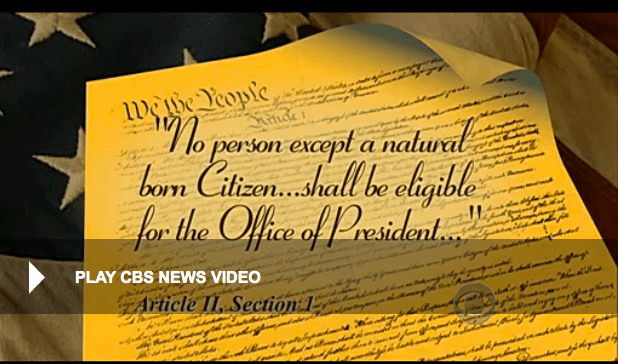
Last week, on CBS Sunday Morning, Lewis Michael Seidman, a Georgetown University professor commented about our strong belief in the power and relevance of the U.S. Constitution (signed 1787, since amended, but not substantially altered):

This is our country. We live in it, and we have a right to the kind of country we want. We would not allow the French or the United Nations to rule us, and neither should we allow people who died over two centuries ago and knew nothing of our country as it exists today.
CBS News Constitution

The Creation of a Remarkable Puppet

While exploring TED, and puppetry, I came upon this TED Talk by the creators of Joey. the horse you’ll recognize from the theatrical production, “War Horse”. Their creative process is fascinating.

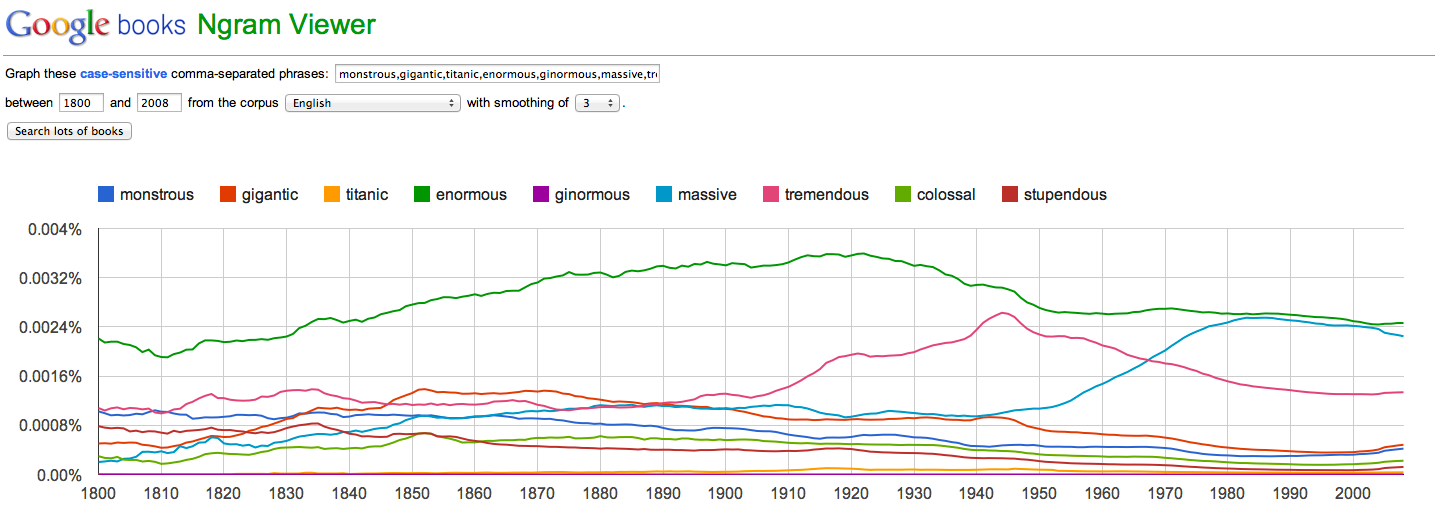
Colossal is shrinking, but massive continues to grow

Cool new internet toy: Ngram Viewer. It’s part of Google Books.

To see the graph in a larger size, click on it.

To see the graph in a larger size, click on it.

What did I learn in my little experiment? Well, “tremendous” seems to have peaked in the 1950s and it’s been a slow, gradual decline ever since. Nice jump for “massive” (the turquoise line), probably because of the technology revolution. “Titanic” never really amounted to much, and both “monstrous” and “colossal” gained some popularity in the 1800s, but the 1900s were unkind to them. “Stupendous” was doing a whole lot better before the Civil War. Ngram is fascinating (and addictive) and easy enough to try in just a minute or two.

You simply enter a group of words (proper nouns included) and identify a date range. In my illustration, I searched for words that mean “really, really big” from 1800 to 2008. Then, the Ngram tool searched the entire database of Google books, in a second or so, and returned a nifty graph.

You’ll find it here.

Imagine the Possibilities

From the innovation consulting firm Idea Champions, Fifty Awesome Quotes on Possibility:

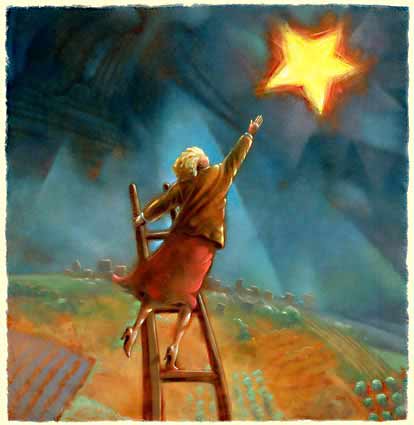
1. “Start by doing what’s necessary; then do what’s possible; and suddenly you are doing the impossible.” – St. Francis of AssisiWoman reaching for star

2. “Sometimes I’ve believed as many as six impossible things before breakfast.” – Lewis Carroll

3. “The Wright brother flew right through the smoke screen of impossibility.” – Charles Kettering

4. “In order to attain the impossible, one must attempt the absurd.” – Miguel de Cervantes

5. “The secret of life is to have a task, something you devote your entire life to, something you bring everything to, every minute of the day for the rest of your life. And the most important thing is, it must be something you cannot possibly do.” – Henry Moore

6. “It’s kind of fun to do the impossible!” – Walt Disney

7. “I am where I am because I believe in all possibilities.” – Whoopi Goldberg

8. “What is now proved, was once only imagined.” – William Blake

9. “Truth is stranger than fiction, but it is because fiction is obliged to stick to possibilities. Truth isn’t.” – Mark Twain

10. “The limits of the possible can only be defined by going beyond them into the impossible.” – Arthur C. Clarke

11. “Never tell a young person that anything cannot be done. God may have been waiting centuries for someone ignorant enough of the impossible to do that very thing.” – John Andrew Holmes

12. “God created a number of possibilities in case some of his prototypes failed. That is the meaning of evolution.” – Graham Greene

13. “Whether you believe you can or not, you’re right.” – Henry Ford

14. “Most people are not really free. They are confined by the niche in the world that they carve out for themselves. They limit themselves to fewer possibilities by the narrowness of their vision.” – V.S. Naipaul

15. “I don’t regret a single excess of my responsive youth. I only regret, in my chilled age, certain occasions and possibilities I didn’t embrace.” – Henry James

16. “In the beginner’s mind there are many possibilities, in the expert’s mind there are few.” – Shunryu Suzuki

17. “The future belongs to those who see possibilities before they become obvious.” – John Sculley

18. “One’s only rival is one’s own potentialities. One’s only failure is failing to live up to one’s own possibilities. In this sense, every man can be a king, and must therefore be treated like a king.” – Abraham Maslow

19. “The possibilities are numerous once we decide to act and not react.” – George Bernard Shaw

20. “We all have possibilities we don’t know about. We can do things we don’t even dream we can do.” – Dale Carnegie

21. “An optimist expects his dreams to come true; a pessimist expects his nightmares to.” – Laurence J. Peter

22. “When nothing is sure, everything is possible.” – Margaret Drabble

23. “Imagination is more important than knowledge. For knowledge is limited to all we now know and understand, while imagination embraces the entire world, and all there ever will be to know and understand.” – Albert Einstein

24. “I am neither an optimist nor pessimist, but a possibilist.” – Max Lerner

25. “If I were to wish for anything, I should not wish for wealth and power, but for the passionate sense of the potential, for the eye which, ever young and ardent, sees the possible. Pleasure disappoints, possibility never. And what wine is so sparkling, what so fragrant, what so intoxicating, as possibility!” – Soren Kierkegaard

26. “All things are possible until they are proved impossible. Even the impossible may only be so, as of now.” – Pearl S. Buck

27. “Until you’re ready to look foolish, you’ll never have the possibility of being great.” – Cher

28. “This has always been a motto of mine: Attempt the impossible in order to improve your work.” – Bette Davis

29. “You and I are essentially infinite choice-makers. In every moment of our existence, we are in that field of all possibilities where we have access to an infinity of choices.” – Deepak Chopra

30. “Some people see things as they are and say ‘Why?’ I dream of things that never were and say ‘Why not?'” – George Bernard Shaw

31. “The thing the sixties did was to show us the possibilities and the responsibility that we all had. It wasn’t the answer. It just gave us a glimpse of the possibility.” – John Lennon

32. “I love those who yearn for the impossible.” – Goethe

33. “Every man is an impossibility until he is born.” – Ralph Waldo Emerson

34. “If you can’t, you must. If you must, you can.” – Tony Robbins

35. “A likely impossibility is always preferable to an unconvincing possibility.” – Aristotle

36. “If someone says can’t, that shows you what to do.” – John Cage

37. “You must do the thing you think you cannot do.” – Eleanor Roosevelt

38. “Apparently there is nothing that cannot happen today.” – Mark Twain

39. “Most of the things worth doing in the world had been declared impossible before they were done.” – Louis D. Brandeis

40. “The possible’s slow fuse is lit by the imagination.” – Emily Dickinson

41. “I am always doing that which I cannot do, in order that I may learn how to do it.” – Pablo Picasso

42. “If we all did the things we are capable of doing, we would literally astound ourselves.” – Thomas Edison

43. “Shoot for the moon. Even if you miss, you’ll land among the stars.” – Les Brown

44. If one advances confidently in the direction of his dreams, and endeavors to live the life which he has imagined, he will meet with a success unexpected in common hours.” – Henry David Thoreau

45. “Everything you can imagine in real.” – Picasso

46. “Everything that is done in the world is done by hope.” – Martin Luther

47. “Dream as if you’ll live forever. Live as if you’ll die today.” – James Dean

48. “I don’t dream at night, I dream all day. I dream for a living.”
– Steven Spielberg

49. “The shell must break before the bird can fly.” – Alfred Tennyson

50. “If not you, who? If not now, when?” – Rabbi Hillel

The Multiplier Effect

Quickly now… If you multiply 633 by 11, what’s the answer?

No doubt, you recognize the pattern, and you may recall the mental math process:

633 x 10, plus 633 x 1, or 6,330 plus 633, or 6,963, which is the answer (or, in terms used by math teachers, the “product”).

There is another way to solve the problem, a faster way that assures fewer computational errors, and does not involve any sort of digital or mechanical device. It does, however, involve a simple rule and a different way to write the problem down.

The rule is: “write down the number, add the neighbor.” The asterisk just above each number is there only to help you to focus. If you prefer, think of it as a small arrow.

Here’s how it works:

Mult by 11

Try multiplying 942 x 11  and you’ll quickly get the hang of it.

Do it once more, this time with a much larger number: 8,562,320 x 11. It goes quickly, as you’ll see.

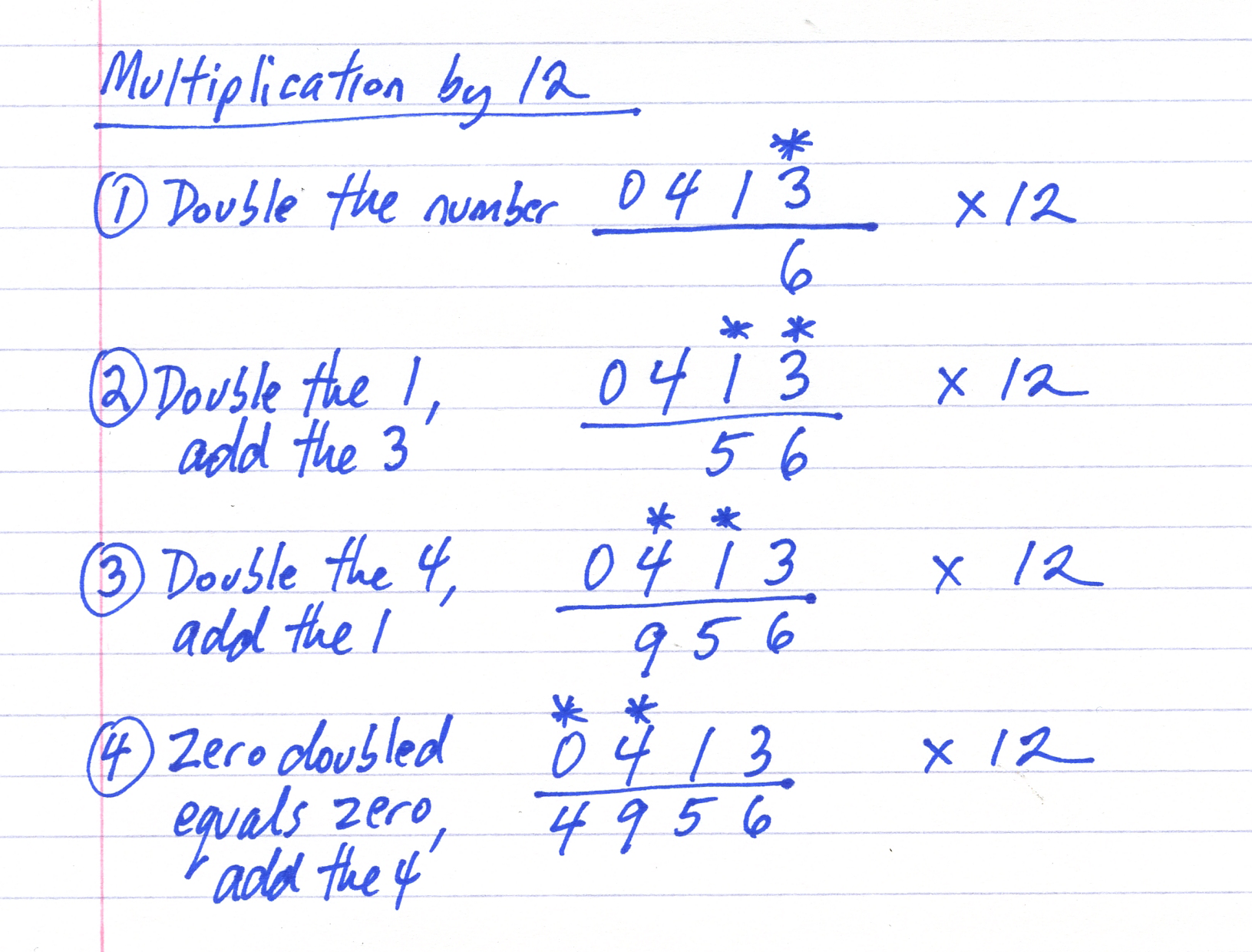
Multiplying by 12 is just as easy, but the rule changes to: “double the number, add the neighbor.” Here, my explanation includes specific numbers.

Mult by 12

In fact, there is a similar rule for multiplication by any number (1-12). And there are rules for quickly adding long, complicated columns of numbers, as there are for division, square roots and more.

These rules were developed by a man facing his own demise in the Nazi camps during the Second World War. Danger was nothing new to him…this is the story and the enduring legacy of Jakow Trachtenberg, who first escaped the wrath of the Communists as he escaped his native Russia, then became a leading academic voice for world peace. His book, Das Friedensministerium (The Ministry of Peace), was read by FDR and other world leaders. His profile was high; capture was inevitable. He made it out of Austria, got caught in Yugoslavia, and was sentenced to death at a concentration camp. To maintain his sanity, Trachtenberg developed a new system for mathematical calculation. Paper was scarce, so he used it mostly for proofs. The rest, he kept in his head.

Madame Trachtenberg stayed nearby, in safety. She bribed officials, pulled strings, and managed to get Jakow moved to Dresden, which was a mess, allowing him to escape. Then, he was caught again, and was moved to Trieste. More bribes and coercion from Madame. He escaped. The couple maneuvered into a more normal existence beginning at refugee camp in Switzerland. By 1950, they were running the Mathematical Institute in Zurich, teaching young students a new way to think about numbers. A system without multiplication tables. A system based upon logic. A system that somehow survived.

A system that, against all odds, made it into my elementary classroom. One classroom in the New York City school district. For one year. The parents were certain that the teacher was making a terrible mistake, that the people in my class, myself included, would never be able to do math in the conventional way again. Of course, we learned a lot more than an alternative from of arithmetic.

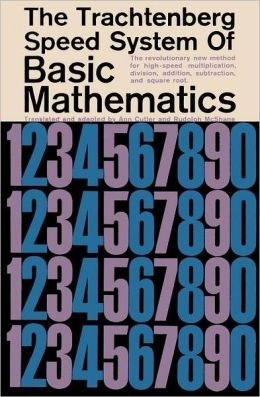
And now, after decades out of print, in an era when arithmetic hardly matters because of calculators and computers, the original book is back in print. The brilliance of system remains awesome, and the book is worth reading just to understand how Trachtenberg conceived an entirely fresh approach under the most extraordinary circumstances.

20130113-222930.jpg

Snow Fall: Two Ways to Tell a Story

Several weeks ago, in the midst of a busy holiday season, The New York Times attempted to understand its future by telling the story of an avalanche. The story requires about a half hour of your time, and it is best experienced in a quiet room with a reasonably large screen.

Snow Fall

The place to begin is with the text-ish story, the one that requires a lot of on-screen reading, the one that includes various animated maps that show just where, how, and why the avalanche happened. Short videos (each one about a minute long) illustrate the story, and bring the people in the story to life. There are audio files of the emergency calls to Ski Patrol. There are slide shows that help us to understand the life of each skier. The writing is strong and skillful. The whole presentation is an impressive demonstration of how we might experience news and features in the rapidly-advancing future.

It feels like an experiment. The writing is long, more like a NY Times Magazine story than a web story. I felt myself drawn into the story and its environment, and found myself pressing the “volume up” buttons on my keyboard in expectation of some sort of soundtrack to accompany the reading of the text.  Short videos satisfied some of the craving for additional stimulation; they were nicely integrated into the flow of the story and the text presentation. The slide shows that introduce each character are a more awkward fit because they require the reader to leave the chronology of the intense storyline–which is told, mostly, in shades of grey–and to consider each character’s past life–which is told, mostly, in vivid digital color. The visual shift is jarring, made worse by the inclusion of completely irrelevant advertisements that are large enough to disrupt the entire experience (for this type of storytelling, I think I’d prefer a micropayment or subscription model, but I wouldn’t mind seeing an opening, mid-break and closing sponsorship presentation).

After I read, looked at the pictures, followed the maps, watched the short videos, and so on, I felt that I understood what happened at Tunnel Creek.

And then, I watched the 11-minute video documentary that told the whole story. I was struck by how much more effectively the documentary told the same story. The story was tight, the characters were crisply defined, the maps and visuals made more sense because they were narrated, the pace was brisk, the emotions were sharp and devastating. Less was a whole lot more. The documentary made the print-pictures-video-maps presentation feel like a bunch of reporters’ notes and script drafts. I felt certain that the doc had been produced by another team, but no, it had been made by the same New York Times staff.

And all of that confused me. I love to read (less so on the screen, moreso from paper), and I was very impressed by the quality of storytelling in the multimedia format. But after watching the documentary, I found myself wondering whether we’re making too much of this transmedia idea, and whether a well-produced audio-video presentation might provide a more reasonable multimedia future.

Sure, this is just one example, and an early one at that. I’m anxious to see what Atavist has online, and will write about their multimedia storytelling in the next few weeks.

In the meantime, do take the take to explore the NY Times presentations. They’re well worth your time and attention.

Chopping Down the Tree of Knowledge

So, during the past few weeks, I’ve been thinking a lot about the visual mapping of ideas.

Scott McCloud suggested that I have a look at the animation being done by Cognitive Media. You’ve probably see their work. I especially enjoy their lectures, often associated with TED-Ed, and their RSA work.

Back to mapping. I’ve been struggling with the tree of knowledge–and its modern equivalent, the mind maps now found in so many places on the internet and in classrooms. This means of structuring information provides the basis for the often-awkward corporate organization chart, now as often undermined by concepts of matrix reporting (you report to me, but we both also report to a lot of other people, kinda, sorta). I’m experimenting with several mind mapping programs, and one (Curio) is especially promising. That’s coming in a later post.

A few years ago, I worked with some folks from Wharton on a new approach to organizational design in which everybody is responsible to everybody else. I liked the idea because (a) I thought it represented what happens in a modern organization with greater precision, and (b) it represented the kind of productive, modern place I wanted to work. The design was a simple circle with about 100 points–and every point was connected to every other point. The concept: simple. The illustration: ridiculously complicated and difficult to understand.

So back to Cognitive Media. They’ve produced a nifty cartoon that helped me to understand the inadequacies of the tree-based design, the plusses and minuses of the network design, and the need for a universal design.

Watch it:

Dream of a Nation: Inspiring Ideas for a Better America

DONCover

Happy new year.

We are the ones we have been waiting for.

That sentence, and the ideas below, are parts of a book entitled Dream of a Nation: Inspiring Ideas for a Better America. Here are some of those ideas:

Shift the rules for campaign financing so that most of the money comes from most of the people. Currently, one-third of one percent of the people provide 90% of campaign funds. This drives special interests, and encourages a system based upon lobbyists that was never a good idea. And, while we on this track, let’s reduce the ratio of lobbyists to legislators: the current ratio of 23:1 (lobbyist to legislator) is probably too high by half (or more).

Let’s take control of our Federal budget (and, in time, our state budgets, too). In Porto Allegro, Brazil, a “citizen participation” approach to budgeting resulted in a 400% percent increase in school funding, and a dramatic increase in funds for clean water and sewers. Budgeting by citizen participation is a new movement that we want to encourage.

If Americans cut bottled water consumption by 80%, then the number of bottles, laid end-to-end, would circle the equator just once a day. Right now, we can circle the equator with bottles every 5 hours.

If each of us thinks more clearly about what we spend, and where we spend it, then the people living in an average American city (say, 750,ooo population) can add over 3,000 new local jobs and shift about $300,000 more into the local economy. How? By spending just 20% more on local, not national, businesses. Go to the local hardware store, the farmer’s market; don’t go to Wal-Mart or Walgreens. In the end, you’ll be richer for it. We all will.

Recognize that the high school drop out crisis is costing the U.S. at least half a trillion dollars each year. Every 26 seconds, a student drops out of school in the U.S. Encourage your legislators to take the time to fully understand the problem and to work with states and school districts to end this problem. The problem is not just the schools: it’s the support systems that do not provide sufficient support for lower-income families. An astonishing one in four American children live in poverty. We know how to change this: we need to focus on what worked during the LBJ years and the Clinton years, and do more of it. And, along the way, we need to invest about $360 million to fix crumbling school buildings. This priority pays off in so many ways: GDP, elimination of crime, family stability, reduction in prison population, so much more. We should no longer accept the idea that 25% of earth’s prison population resides in a U.S. prison–an outsized number for a nation with just 8 percent of the world’s people. Similarly, we should no longer accept the high price of education and the middling results that we achieve with those dollars. Other countries do better because their systems are more reasonable. We need to change the way we think about all of this, and we need to make it clear to legislators that this will be their last term if they do not accomplish what we need done.

Let’s get started on two substantial changes in the ways we work with our money. First, let’s start thinking in terms of a V.A.T., as most Western nations do. If the book’s calculations are correct, this should increase our available funds by about 13%. And second, let’s eliminate the 17% (average) payroll tax, reducing hiring costs for employers, as this model is proving to be more effective than our current approach. For more about this, Get America Working! (not the easiest website for clear presentation of ideas; the book is better).

In Canada, they spend $22 per person on noncommercial educational media (we call it public TV, public radio). In England, they spend $80 per person per year. In the U.S., we spend $1.37 per person per year (less than a bottle of water). If we increase funding to a more reasonable level, of, say, $75 per person per year (one bottle of water per week), we get something as good as the BBC for ourselves and our children. Noncommercial matters.

There’s much longer discussion about carbon footprints, waste, overconsumption, and the need for cars that average 100mpg. And another about rethinking just about everything related to the outsized defense budget and its underlying strategies. We haven’t got the health care concept down yet, but moving it into the public goods shopping cart seems to be a step in an appropriate direction.

We should all become familiar with, and promote, the 8 Global Millennium Development Goals that aim to:

  • Eradicate extreme poverty and hunger
  • Achieve universal primary education
  • Promote gender equality and women’s empowerment
  • Reduce child mortality
  • Improve maternal health
  • Combat HIV/AIDS, malaria, tuberculosis, and other diseases
  • Ensure environmental sustainability and better access to water and sanitation
  • Create a global partnership for development

So that’s a start. It’s going to be a busy year. And, I hope, one of our best.

The Art of Inge

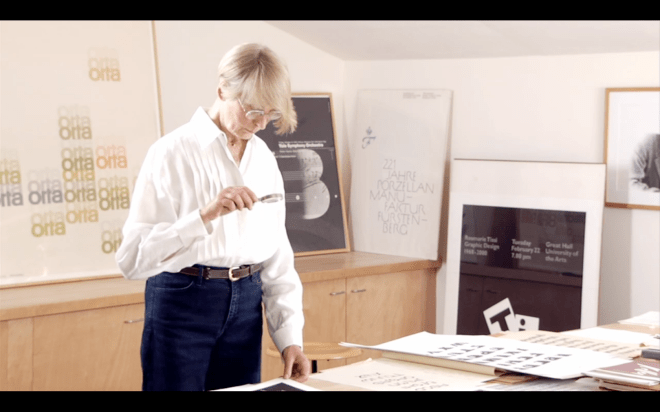
Below, a picture of Inge Druckery with her reducing glass. Why a reducing glass, and not, say, a traditional magnifying glass? Because a reducing glass allows the user to step away from the visual work. By stepping away, the artist/designer can see the whole, and the relationship between the many pieces of a visual presentation.

Inge 1Inge Druckery is one of the world’s truly great teachers of type design, and, more generally, she has provided designers of all kinds with tremendous inspiration, especially in the combinations of typography and graphic design that so dominate our world, our screens, our print materials.

And now, Edward Tufte (one of her students) has executive produced a 37-minute film, available free, about Druckery’s life and work. The images are striking in their simple elegance, and there are plenty of them. You can watch the film by visiting Mr. Tufte’s site, or simply clicking on the video at the top of this article. This is a film to watch full-screen, in a quiet room free from distracting glare, without interruption, with a patience and a keen eye. Do so, and you will be rewarded with an experience very much akin to attending an extremely well-crafted art museum exhibition on an extremely interesting topic. Do not hurry. Do this when your time permits. The images and ideas will stay with your afterwards.

What sorts of things are presented? The extremely precise Roman alphabet, the letterforms that are so solidly architectural in their L, E, T, and V forms, and so much in motion in the S, so beautifully balanced as curves meet straight edges in the B and, especially, the tricky R form. Simple explanation, elegant presentation.

Fascinating.

Here’s a progression of the letter R, rendered by hand with a proper broad lettering brush, with each letterform progressing toward an ideal. Here, the most basic of old analog form presages a perfection now commonplace in digital typography. Commonplace, but not common. And in the common hand, perhaps there is greater perfection, more of the Lord’s hand and the human progress toward excellence, than digital allows.

R Progression

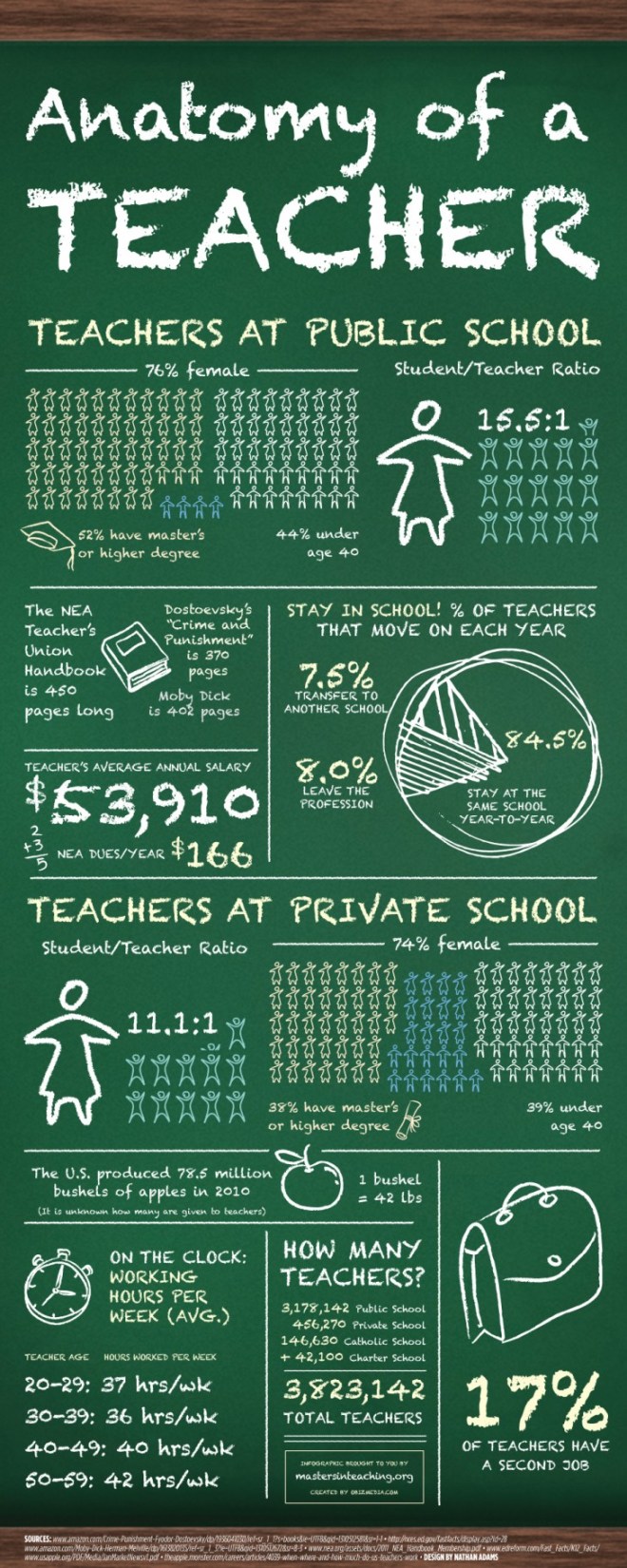
Infographic: Public vs. Private Education

A bit of my own daydreaming, poking around on a site that I had already written about, I discovered this tidy infographic. It’s worth a good, long look. And then, some time to ponder.

standard-teacher-730x1825