Big Data, Bigger Ideas

face pic human face

Every animate and inanimate object on earth will soon be generating data, including our homes, our cars, and yes, even our bodies”— Anthony D. Williams on the back of a big book entitled The Human Face of Big Data

From the dawn of civilization until 2003, humankind generated give exabytes of data. Now, we produce five exabytes every two days.” — Eric Schmidt, Executive Chairman, Google

The average person today processes more data in a single day than a person in the 1500s did in an entire lifetime.

Big Data is much more than big data. It’s also the ability to extract meaning: to sort through masses of numbers and find the hidden pattern, the unexpected correlation, th surprising connection. That ability is growing at astonishing speed, it won’t be long before Amazon’s ability to dazzle customers by suggesting just the right book will seem as quaint as our ancestors’s amazement at horseless carriages.– Dan Gardner, from the book’s introduction

human face big dataClearly, big data is a massive idea. Let’s see if we can’t break it down, if not by components, then, at least, by illustrations of classes and contexts.

The connection between data collection and pattern recognition is not new. In fact, we know the earliest example, which still exists, in book form, in a small, private Library of Human Imagination in Ridgefield, Connecticut. The book is called Bills of Mortality, and it records the weekly causes of death for London in 1664. This data was used to study the geographic (block-by-block) growth of the plague, and to take measures to prevent its future growth.

Two hundred gigabytes per day may not seem like much data, not in the days when you can buy a terabyte drive from Staples for a hundred bucks or so, but collect that much data day and day out, for a few years, and the warehouse becomes a busy place. That’s what MIT Media Lab’s Seb Roy did to learn how his newborn son learned language. The work was done at home with eleven cameras and fourteen microphones recording the child’s every move, every sound. The recording part of the project is over–their son is now seven years old–but analysis of “unexpected connections between the routines of everyday life and how one child learned his first words” continues as a research project.

On the other end of the age scale, there’s Magic Carpet, now in prototype. The carpet contains sensors and accelerometers. When installed in the home of, say, a senior, the carpet observes, records, and learns the person’s typical routine, which it uses as a baseline for further analysis. Then, “the system checks constantly for sudden (or gradual) abnormalities. If Mom is moving more slowly than usual, or it’s 11 a.m., And her bedroom door still hasn’t opened, the system sends an alert to a family member or physician.”

Often, big data intersects with some sort of mapping project. Camden, New Jersey’s Doctor Jeffrey Brenner “built a map linking hospital claims to patient addresses. He analyzed patterns of data, and the result took him by complete surprise: just one percent of patients, about 1,000 people, accounted for 30 percent of hospital bills because these patients were showing up in the hospital time after time…a microcosm for what’s going on in the whole country (in) emergency room visits and hospital admissions…” Subsequently, he established the Camden Coalition of Healthcare Providers to help address this “costly dysfunction.” He collected the data, analyzed it, then brought out meaningful change at a local level.

One of the many superb photographs depicting the intersection between human life and technology use. The book was put together by Rick Smolan, an extraordinary photographer, curator and compiler whose past work includes A Day in the The Life of America and other books in that series.

One of the many superb photographs depicting the intersection between human life and technology use. The book was put together by Rick Smolan, an extraordinary photographer, curator and compiler whose past work includes A Day in the The Life of America and other books in that series.

Yes, there’s a very scary dark side. Bad people could turn off 60,000 pacemakers via their Internet connections. A real time, technology enabled 2008 terrorist attack in Mumbai killed 172 people and injured 300 more thanks to Blackberries, night vision goggles, satellite phones and other devices.

If you control the code, you control the world. There has not been an operating system or a technology that has not been hacked.

Fortunately, the good guys have tools on their side, too. The $40 million Domain Awareness System in Manhattan includes “an array of 3,000 cameras known as ‘The Ring of Steel” that monitor lower and midtown Manhattan as well as license plate readers, radiation detectors, relevant 911 calls, arrest records, related crimes, and vast files on characteristics such as tattoos, body marks, teeth, and even limps. They can also track a suspicious vehicle through time to the many locations where it has been over previous days and weeks.”

Google’s self-driving car is safer than a human-controlled vehicle because the digital car can access and process far more information more quickly than today’s humans.

By 2020, China will complete Compass/Beidou-2. This advanced navigation system will outperform the current (and decades old) GPS system. Greater precision will be used for public safety (emergency response, for example), commercial use (fishing, automotive), and, inevitably, for far more productive war.

Data can mean the difference between life death when the weather turns ugly. Thousands of lives are saved each year by weather earnings in wealthier countries. Yet thousands of lives are lost in poor ones when monsoons, tornadoes and other storms strike with little public warning, an intensifying threat as the planet warms,,,

If you’ve ever wondered what Amazon’s true business is, or why it uses the name of a gigantic river, the answer is big data. Ultimately, Amazon intends to become a public utility for computing services. Take a careful look at Amazon Prime and you will see a prototype. The streaming side of PBS and Netflix are among the enterprises enabled by Amazon’s big data operations.

For FedEx, “the information about the package is as important as the package itself.”

human face big data movementsWhether its eliminating malaria or making art, text messaging for blood donors or tracking asteroids, the future will be defined by the collection, analysis and use of big data. It will shape our individual knowledge about our own bodies, our children’s growth and our parents’ health, our collective tendencies for public good, safety, and bad behavior. It will be embedded in robots and intelligent systems that may, soon, control aspects of life that we once considered wholly human endeavors. It is a change of epic proportions and yet, most of us are unaware of its importance.

The book, The Human Face of Big Data, along with its related website and app, provide a useful gateway into this brave new world.


Amazon: Any Thing, Any Where, Any Time

Amazon-HiddenEmpireFaberNovel is a website filled with interesting, well, I’m not sure what to call these packages of visual information. They’re kinda sorta PowerPoint presentations, but they feel more like a new kind of business book.

Originally, I was going to tell you that there’s a good (updated 2013) story of how Amazon is taking over the world. The presentation, above, tells a compelling tale about how the e-commerce giant has grown, offering considerable detail on the business side, and lots of insight about Amazon’s likely future.

As I went through the 84 slides, I became curious about who was telling the story, and became interested in FaberNovel, the publisher who offers this material under a Creative Commons license. As I browsed, I found an All About Google FaberNovel, too. And another about Google, Facebook, HTML5, the list is both impressive and multi-lingual (that is, presentations are available in multiple languages).

The stories are well-told, simply illustrated, and rely upon diagrams and other simple PowerPoint graphic techniques (nobody will be impressed by the visuals, but the stories are good; Edward Tufte’s magic wand would greatly benefit this material).

I’d start with the Amazon story because it contains so many “oh, that’s why!” or “that’s how, that’s a really good idea” or “what an awesome story of business strategy.” moments. Some of it is likely to be familiar, but it’s unlikely that most people have connected the dots. Sure, 84 pages may seem like a lot, but it’s not more than a half-hour of your life, unless you’re a serious student of e-commerce business.

Interesting discovery.

Before I Shelve These CDs…

It’s winter, so I’ve spent more time indoors than out. And that means weekend afternoons listening to lots of fine music. Before these CDs get lost on the shelves, allow me to share some recommendations:

Fahey Takoma

(Yes, I know this is vinyl, not a CD. Please read on…)

John Fahey was an acoustic guitar player with a nearly mythical story. He lived from 1939 until 2001. Beginning in the mid-1960s and until the early 1970s, Fahey recorded a remarkable series of acoustic guitar albums, each firmly rooted in the 1920s acoustic blues of the south, and yet, in their own way, contemporary and wholly original. For some time, these records were hard to find, but nowadays, there isn’t much music that’s hard to find. And in Fahey’s case, there is now a series of wonderful CDs available at popular prices. Two of my favorites are The Legend of Blind Joe Death and America. In time, I will make it my business to listen to most or all of his work. And, along the way, I intend to track down a film produced about Fahey in 2010. It’s called In Search of Blind Joe Death: The Saga of John Fahey, and it’s the source of the image at the top of this paragraph. Click on the picture and you’ll see the trailer.

Karl Jenkins. Be sure to search on his image on the web. This is a very conservative portrait of a very colorful guy.

Karl Jenkins. Be sure to search on his image on the web. This is a very conservative portrait of a very colorful guy.

When I was visiting the UK this past year, I stopped by Blackwell’s Music in Oxford and requested listening recommendations. I left the store with several Oxford choral CDs, and with a three-CD box by composer Karl Jenkins entitled The Platinum Collection. According to his website, he is “the most performed living composer in the world.” Who knew? I missed him completely, and again, I’m only now getting up to date. Jenkins came up as a jazz guy, playing at the famous Ronnie Scott’s club in London, then forming the popular jazz group Nucleus with Ian Carr, and then, as part of one of my then-favorite British progressive bands, Soft Machine. After a period of writing music for commercials, he composed Adiemus: Songs of Sanctuary which is included in my box set. Like the other two discs, Adiemus combines a contemporary approach to choral music, a wide range of instruments (classical, jazz, rock, whatever works best), and a wonderful range of energy from contemplative to soaring. At first, I’ll admit that I listened to Jenkins as background music (bad idea). This is music that requires full-throttle listening, preferably on a top-notch sound system with the widest possible dynamic range, accuracy, and superior reproduction of vocal parts. Jenkins can be a crowd-pleaser in the sense of, say, music composed for the Olympics, but I found more nourishment when I listened carefully, and allowed myself the time to pay attention to these works in their complete form.

I’m equally intrigued by the Kronos Quartet, a forward-thinking classical ensemble I’ve been following for decades. I missed out on their 2009 2test-600x0release, Floodplain, and now that I’ve got a copy, I’ve been playing it a lot. It’s an album of music from various nations and cultures located in and near the Middle East, mostly instrumentals, some traditional, played with the deep knowledge that this music was composed in the part of the world where “human civilization was born and first flourished.” There is respect and beauty. Respect because this is not Middle Eastern music. Instead, there is “Lullaby,” which is Black Iranian but affected by other cultures, and there is “Wa Habini” a Christian devotional song sung on Good Friday, part of the sacred tradition of Lebanon. “Tew semagn hagere” (Listen to Me, My Fellow Countrymen) comes from Ethiopia, and it is played on instruments constructed for Kronos by their designer, Walter Kitundu, who hails from Tanzania. The album opens with a hit song, from the 1930s, from Egypt: “Ya Habibi Ta’ala.” In fact, many of the songs were hits long ago. This is music you’ll want to buy on CD: the liner notes add texture and important background to the listening experience.

Garth KnoxGarth Knox’s 2012 release, Saltarello, was released by ECM New Series in 2012, and it, too, has become a favorite. Knox performs on viola, viola d’amore, and fiddle. As he performs an interesting selection of old and very new music, he does so with the attentive accompaniment of Agnes Vesterman on cello and Sylvain Lemetre on percussion. The repetoire here begins with the early British composer Henry Purcell (“Music for a While”) and continues on the old track with Hildegarde von Bingen, and John Dowland. I like the idea that this music is contrasted with work by, for example, the contemporary Finnish composer Kaija Saariaho, and that Knox manages to pull it all together as a cohesive whole. The Saariaho piece is challenging, extreme in its special effects. To be honest, I had to check the unfamiliar name–Guillaume de Machaut–to determine whether he was an old composer or a new one (he lived in the 1300s, and was equally famous as a poet whom Geoffrey Chaucer apparently admired).

300px-Machaut_1

Well, I found this tapestry on the Wikipedia site for Machaut. Clearly, he is not a contemporary composer.

Andy Sheppard

Andy Sheppard (click on the link for a bunch of neat pictures of Sheppard at play.)

Also on ECM, and also from 2012, Trio Libero is an album that I’ve enjoyed time and again. It’s one of those albums with a distinctive series of opening notes that sounds wonderfully familiar, and causes me to follow the lead line all the way through the first song (“Libertino”). Here, I’m listening to a terrific saxophone player named Andy Sheppard (he also plays soprano sax). Sheppard’s solo leads to a long, comfortable bass solo by Michel Benita (who is a major presence throughout, moreso than one typically finds on albums by a sax trio). As I said, I’ve listened to this album quite a few times, and now that I’m listening while writing about it, there’s a smile on my face. It’s just really good jazz. It’s quite varied. There’s a nice tender rendition of “I’m Always Chasing Rainbows” on the third track, a Weather Report-like texture entitled “Space Walk, Part 1.” And, the more I listen, the more I come to realize how much I enjoy listening to a well-played soprano sax. This is one of those albums where everything comes together beautifully, and I encourage you to be among the (inevitable) few who come to enjoy it as much as I do.

Okay, everything on this list now gets placed on the shelves, making room for the new, or, at least, for music that’s new to me.

A Parisian History in Color

sennelier_couvertureIn Paris, on the Quai Voltaire, amidst antique dealers of the highest order, along the left bank of the Seine, directly across the river from the famous Louvre museum, there is a shop.

Sennelier-Interieur-In 1887, or, perhaps, 1888, the shop was nearly bankrupt. With the sale, former shop owner M. Prevost, makes dreams come true. The new owner, Gustave Sennelier, always hoped to own a shop where he could manufacture and sell his own artist’s pigments. And so, the shop became known by the sign visible to all of Paris, Sennelier: Couleurs Pour Artistes.

This was an especially exciting time to be selling colors and working with artists in Paris. The impressionists enjoyed their first successful group show in Paris in 1886.  Painters were experimenting with color and light, trying new formulas and new ideas, and often relied upon the good advice of the chemists who were emerging as colorists. (Previously, pigments were sold in pharmacies as a sideline; art supply stores were still a relatively new idea.) As chemistry and art intertwine, artists now regarded as legend were working professionals who purchased their supplies from Sennelier. Cezanne was one of many in Paris who frequented the shop; others included Pierre Bonnard, Robert Delauney, and Pablo Picasso.

Seeking new products and new opportunities, Sennelier’s pigments found popular use for batik (the pigmentation of decorative fabrics), painting on porcelain, and in new formulations for artists, including, for example, new oil pastels. “Picasso adopted it immediately. He asked for it in 48 colors of which–Picasso’s grey period required it–10 were shades of grey, a heresy in the age of colors.” Artists used the new oil pastels to start an oil painting, allowing the fluidity and ease of sketching onto the canvas. Then, the painting would be completed in a classical oil painting style.

facade-quai-GFThe Sennelier family has passed knowledge, chemistry, color sense and business sense from generation to generation. In a sense, the new book, Sennelier: A History in Color by Pascale Richard, is a family biography. As with the Parisian landscape, the family is part of a bolder story: the powerful relationship between science (chemistry) and a tremendous assortment of artistic accomplishments. The book is filled with full-page images of Jackson Pollack paintings and store shelves filled with pigments; photos of antique paint tubes and pastel drawings by Edgar Degas; spectacular old city scape photos of the old shop and inside the old lab and photos of the shop today, a place that hasn’t changed much in a century. If you are planning a visit to the Louvre, do find the time to cross the Seine, make the left turn, follow the classic old buildings until you reach number 3 Quai Voltaire. At the least, you will buy a notebook or a sketchbook (Picasso bought lots of them), and perhaps you will be persuaded to buy a set of Sennelier pastels, which are among the finest in the world, or oils or watercolors, or artist’s pads. You can buy some, or even most, of this merchandise in many U.S. art supply stores, but it’s not the same experience. There is magic in the old shop, magic that is so loving transported into book format.

dan

Daniel Greene is one of my favorite artists. Click on the picture to explore his spectacular work.

It is a joy filled story: the idea of bringing Sennelier products to the U.S., the magic of those pastels in the hands of a great contemporary artist. Daniel Greene is such an artist, and his two-page spread of Manhattan’s Franklin Street subway station is a wonder. So, too, are the simple photos of the neatly-ordered tortillons in a century-0ld drawer in the old shop.

For about ten years, I have so enjoyed using Sennelier pastels. The freshness and depth of their color makes every painting special. When I have a Sennelier pastel in my hand, I sense that there is legend there. I visited the shop in Paris, and sensed some of the history, but it was difficult to understand how the story fit together. When I started reading the book, I loved the combination of new and vintage photographs, art and artists at work, and the story told in both French and English blocks of prose. About a third of the way through the book, I realized that I was grinning. And I wondered about the last time I had grinned my way through the reading of an entire book.

Several years ago, NPR did a wonderful story about the Sennelier shop. Listen to it here.

Even better, I think, is the photo essay and commentary on the blog A Painter in Paris. The photo below should encourage you to visit both the blog and the store. Enjoy!

aa_DSCN3354

The Multiplier Effect

Quickly now… If you multiply 633 by 11, what’s the answer?

No doubt, you recognize the pattern, and you may recall the mental math process:

633 x 10, plus 633 x 1, or 6,330 plus 633, or 6,963, which is the answer (or, in terms used by math teachers, the “product”).

There is another way to solve the problem, a faster way that assures fewer computational errors, and does not involve any sort of digital or mechanical device. It does, however, involve a simple rule and a different way to write the problem down.

The rule is: “write down the number, add the neighbor.” The asterisk just above each number is there only to help you to focus. If you prefer, think of it as a small arrow.

Here’s how it works:

Mult by 11

Try multiplying 942 x 11  and you’ll quickly get the hang of it.

Do it once more, this time with a much larger number: 8,562,320 x 11. It goes quickly, as you’ll see.

Multiplying by 12 is just as easy, but the rule changes to: “double the number, add the neighbor.” Here, my explanation includes specific numbers.

Mult by 12

In fact, there is a similar rule for multiplication by any number (1-12). And there are rules for quickly adding long, complicated columns of numbers, as there are for division, square roots and more.

These rules were developed by a man facing his own demise in the Nazi camps during the Second World War. Danger was nothing new to him…this is the story and the enduring legacy of Jakow Trachtenberg, who first escaped the wrath of the Communists as he escaped his native Russia, then became a leading academic voice for world peace. His book, Das Friedensministerium (The Ministry of Peace), was read by FDR and other world leaders. His profile was high; capture was inevitable. He made it out of Austria, got caught in Yugoslavia, and was sentenced to death at a concentration camp. To maintain his sanity, Trachtenberg developed a new system for mathematical calculation. Paper was scarce, so he used it mostly for proofs. The rest, he kept in his head.

Madame Trachtenberg stayed nearby, in safety. She bribed officials, pulled strings, and managed to get Jakow moved to Dresden, which was a mess, allowing him to escape. Then, he was caught again, and was moved to Trieste. More bribes and coercion from Madame. He escaped. The couple maneuvered into a more normal existence beginning at refugee camp in Switzerland. By 1950, they were running the Mathematical Institute in Zurich, teaching young students a new way to think about numbers. A system without multiplication tables. A system based upon logic. A system that somehow survived.

A system that, against all odds, made it into my elementary classroom. One classroom in the New York City school district. For one year. The parents were certain that the teacher was making a terrible mistake, that the people in my class, myself included, would never be able to do math in the conventional way again. Of course, we learned a lot more than an alternative from of arithmetic.

And now, after decades out of print, in an era when arithmetic hardly matters because of calculators and computers, the original book is back in print. The brilliance of system remains awesome, and the book is worth reading just to understand how Trachtenberg conceived an entirely fresh approach under the most extraordinary circumstances.

20130113-222930.jpg

Dream of a Nation: Inspiring Ideas for a Better America

DONCover

Happy new year.

We are the ones we have been waiting for.

That sentence, and the ideas below, are parts of a book entitled Dream of a Nation: Inspiring Ideas for a Better America. Here are some of those ideas:

Shift the rules for campaign financing so that most of the money comes from most of the people. Currently, one-third of one percent of the people provide 90% of campaign funds. This drives special interests, and encourages a system based upon lobbyists that was never a good idea. And, while we on this track, let’s reduce the ratio of lobbyists to legislators: the current ratio of 23:1 (lobbyist to legislator) is probably too high by half (or more).

Let’s take control of our Federal budget (and, in time, our state budgets, too). In Porto Allegro, Brazil, a “citizen participation” approach to budgeting resulted in a 400% percent increase in school funding, and a dramatic increase in funds for clean water and sewers. Budgeting by citizen participation is a new movement that we want to encourage.

If Americans cut bottled water consumption by 80%, then the number of bottles, laid end-to-end, would circle the equator just once a day. Right now, we can circle the equator with bottles every 5 hours.

If each of us thinks more clearly about what we spend, and where we spend it, then the people living in an average American city (say, 750,ooo population) can add over 3,000 new local jobs and shift about $300,000 more into the local economy. How? By spending just 20% more on local, not national, businesses. Go to the local hardware store, the farmer’s market; don’t go to Wal-Mart or Walgreens. In the end, you’ll be richer for it. We all will.

Recognize that the high school drop out crisis is costing the U.S. at least half a trillion dollars each year. Every 26 seconds, a student drops out of school in the U.S. Encourage your legislators to take the time to fully understand the problem and to work with states and school districts to end this problem. The problem is not just the schools: it’s the support systems that do not provide sufficient support for lower-income families. An astonishing one in four American children live in poverty. We know how to change this: we need to focus on what worked during the LBJ years and the Clinton years, and do more of it. And, along the way, we need to invest about $360 million to fix crumbling school buildings. This priority pays off in so many ways: GDP, elimination of crime, family stability, reduction in prison population, so much more. We should no longer accept the idea that 25% of earth’s prison population resides in a U.S. prison–an outsized number for a nation with just 8 percent of the world’s people. Similarly, we should no longer accept the high price of education and the middling results that we achieve with those dollars. Other countries do better because their systems are more reasonable. We need to change the way we think about all of this, and we need to make it clear to legislators that this will be their last term if they do not accomplish what we need done.

Let’s get started on two substantial changes in the ways we work with our money. First, let’s start thinking in terms of a V.A.T., as most Western nations do. If the book’s calculations are correct, this should increase our available funds by about 13%. And second, let’s eliminate the 17% (average) payroll tax, reducing hiring costs for employers, as this model is proving to be more effective than our current approach. For more about this, Get America Working! (not the easiest website for clear presentation of ideas; the book is better).

In Canada, they spend $22 per person on noncommercial educational media (we call it public TV, public radio). In England, they spend $80 per person per year. In the U.S., we spend $1.37 per person per year (less than a bottle of water). If we increase funding to a more reasonable level, of, say, $75 per person per year (one bottle of water per week), we get something as good as the BBC for ourselves and our children. Noncommercial matters.

There’s much longer discussion about carbon footprints, waste, overconsumption, and the need for cars that average 100mpg. And another about rethinking just about everything related to the outsized defense budget and its underlying strategies. We haven’t got the health care concept down yet, but moving it into the public goods shopping cart seems to be a step in an appropriate direction.

We should all become familiar with, and promote, the 8 Global Millennium Development Goals that aim to:

  • Eradicate extreme poverty and hunger
  • Achieve universal primary education
  • Promote gender equality and women’s empowerment
  • Reduce child mortality
  • Improve maternal health
  • Combat HIV/AIDS, malaria, tuberculosis, and other diseases
  • Ensure environmental sustainability and better access to water and sanitation
  • Create a global partnership for development

So that’s a start. It’s going to be a busy year. And, I hope, one of our best.

Unreasonable

As the year winds down, a call-out to some unreasonable people.

One is called The Unreasonable Institute.

Why We Exist: To create a world in which no one is limited by their circumstances.
Our Mission: To unlock entrepreneurial potential to overcome our world’s greatest challenges.

Three recent college graduates decided to take on the world’s biggest problems–no shortage of idealism here–by causing interactions between promising entrepreneurs with big ideas, mentors, and funders. They do all of this–quite reasonably, I might add–by having everybody work and live together in a big house for several weeks. I’m not sure that “institute” (their term) is the ideal description, but this combination networking fest and dorm experience makes a lot of sense. There are lots of informal interactions between smart, interested, connected people who want to make things happen. I love this idea, and I suspect you will, too.

The second is called Charity: Water.

charity: water is a non-profit organization bringing clean and safe drinking water to people in developing nations.

Two simple ideas here. One is clean water for everyone, everywhere in the world. That’s a tremendous challenge, one that can be solved only on a local level, well-by-well, source-by-source. It’s also a transformative idea: clean water means healthier people, far less time each day caring for the ill; empowerment of women (who, in many places in the world, expend an enormous amount of time at the well or other source, and carrying water home).

20121227-172439.jpg

To play the video, please click on the image.

Both are mentioned here are examples of a new way of thinking about the world’s problems: a small entrepreneurial group with big ideas, unique approaches to management, operations and funding, plenty of attention to details, and, far less reliance upon large organizations to provide solutions. And one more thing: the internet is central to the success of these new conceptions. Be sure to explore Charity: Water’s use of internet mapping for every project, a solid example of things to come.

BTW: while searching for a link, I ran into a Huffington Post story that explains the trend in more detail. It’s definitely worth reading, especially at a time of year when we’re all trying to figure out how to do it even better next week.

Eating One’s Way Through the British Isles

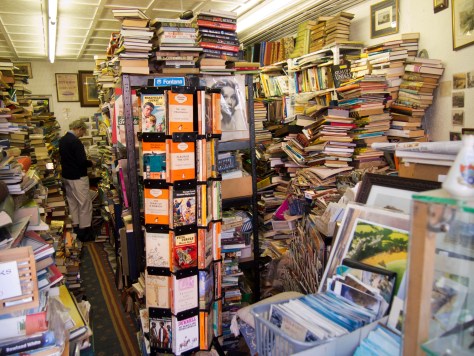
When I turned to page one, I knew I was reading the right book. There’s a half page photo of Plantaneget, a terrific seafood restaurant that hugs the hillside in the old Welsh fishing town of Tenby–the one with my very favorite cluttered bookstore just across the way. How can you not love a bookstore that looks like this one?

Bookstore in Tenby

I digress.

PloughmansLunchCover9781558324138-300x266But I do love wandering around the UK. And when I’m not wandering, on say, a cold winter’s day here in the US, it’s fun to find a book that causes me to think about my next trip. This morning, I enjoyed a wonderful book about British, Welsh, Irish and Scottish food entitled The Ploughman’s Lunch and the Miser’s Feast. It comes with the inconveniently long subtitle, Authentic Pub Food, Restaurant Fare, and Home Cooking from Small Towns, Big Cities and Country Villages Across the British Isles. The title accurately describes the book’s contents, but fails to mention that there are lavish (and luscious) photographs, and lots of recipes, too.

Of course, the names are fun. Let’s begin with breakfast. Scotch Woodcock contains no game; it’s a seasoned approach to scrambled eggs. Jugged Kippers is a herring dish, popular in the north, full of sea-driven flavor, strong for breakfast in a place where the extra nutritional kick in the morning is a good thing.

There’s tea throughout the day, and a nice article about why and how it has become so important to the day.

And there’s a thorough explanation of the ploughman’s lunch, perfectly served with artisanal cheddar cheese, a good thick slice of rare roast beef (often, from last night’s dinner), mixed greens, chutney, and a mini-baguette. Pickled onions are nice, too.

I never acquired a taste for the go-anywhere, anytime Scotch Eggs, a hard-boiled egg coated in sausage and crumbs, and often, carried for lunch away from home.

Author Brian Yarvin and I share something in common: we will travel for food. He, to Stoke-on-Trent in the county of Staffordshire for freshly made oatcakes. These are made on the grill, often purchased by the dozen for use at home, or enjoyed one-at-a-time, filled with, say, cheese and mushroom (Yarvin’s favorite). There’s a distinctly local specialty, but you’ll find various small “cakes” throughout the islands.

Scottish Oatcakes from Brian's  book, "The Ploughman's Lunch and the Miser's Feast"  (Use allowed for book promotions and reviews only.)Author Brian Yarvin is also a superior food photographer. Here's a look at a Curried Mutton Turnover. There's lots more to see--mostly Asian--by clicking on the image.

Scottish Oatcakes from Brian’s book, “The Ploughman’s Lunch and the Miser’s Feast” (Use allowed for book promotions and reviews only.)
Author Brian Yarvin is also a superior food photographer. Here’s a look at a Curried Mutton Turnover. There’s lots more to see–mostly Asian–by clicking on the image.

Cock-a-leekie is another of those wonderful Scottish names, this time assigned to a soup that contains, rather obviously, chicken and leek, and not very obviously, prune, too. The prune recalls a history when dried fruits were quite the delicacy, exotic and expressive of a higher station. Cullen Skink is another great name: it’s potato soup with smoked haddock… spectacular!

Beef Wellington suggests a dish that we made up here, like Chow Mein, but it is, in fact, quite British, and every bit as delicious as it was two decades ago (the last time I had one). Basically, it’s a good piece of beef wrapped in mushrooms and then in puff pastry. Old-school, but terrific.

There’s a nice bit about how to choose the best of fish-n-chips shops, or, in the local lingo, a chip shop. If you see a sign for “fish tea,” that’s a good thing–the term resonates with the locals (who, presumably, know both their fish and their tea). If the menu lists only fish, chips, peas, and tea, that’s a good, thing, too–it suggests focus. It’s not good if the same place lists burgers or kabobs. Anything suggesting “Best in Britain” without appropriate documentation posted in the window. Nix on pre-fried fish in the window, and pre-battered fish, too. Extra points for using local fish (nothing in Britain is very far from the sea).

Also, a useful note regarding bacon. What we call bacon, they call streaked bacon. What they call bacon is a boneless pork chop, sliced thin and fried.

What’s a faggot? It’s a meatball, heavy on the liver. Just so you know. One the next page: Lamb’s Tongue (with Raisin Sauce).

Brian Yarvin

Mr. Yarvin

What’s the most popular food in Britain? Probably Chicken Korma, the lead player in an extensive Indian cuisine that’s found just about everywhere. Nice coverage of various Indian dishes here, resplendent in their bright colours.

When in Britian, I like my pies. Set me in front of a menu with, say, Chicken, Ham and Mushroom Pie, and a local ale, and I’m a happy traveler. Leek Pie, Shepherd’s Pie, Fish Pie with Mashed Potato Crust, all good with me. Not so much for the Steak and Kidney Pie, which is made not with Kidney Beans, but instead, with the kidney of a lamb (tubes removed). No thank you. Yes to Cornish Pasties, essentially a local take on an empañada. And a definite yes to Yorkshire Pudding, which is a pudding in the British sense, which means, well, I’m not sure how the British use the term because it seems to apply to most desserts, of which Yorkshire is not one.

The term Flapjacks was a surprise to me; I picked up a pair at a train station for a quick snack. Turns out, they’re similar to granola bars.

At a tea shop in Cardiff, I tried my first (and probably, my freshest) Clotted Cream. It sounds a bit unappealing, but it is, in fact, it’s a bit sweet, a bit thick, and a perfect accompaniment to, say, a scone.

Other terms I learned… Perry is a pear cider (excellent at the small stand in the local market just next to the West Canterbury train station)… Fairy Cake is, more or less, our cupcake… Bap is something like a cross between a hamburger roll and sandwich roll… and Chocolate Vermicelli is our Chocolate Sprinkles.

What fun! Get the book. Then, go!

It’s official: everything has changed.


I just reviewed an astonishing PowerPoint from Mary Meeker at Kleiner Perkins. It contains a thorough explanation of our rapidly changing, and changed, world. From mobile phones and to the Rose Bowl, newspapers to cash registers, borrowing and lending money to door locks, hiring to education, our contemporary wave of technology  has transformed the world.

The deck is 88 pages long, and worth all of the time you will spend thinking about it today, this week, this year.

I will add to this post tonight. Right now, it’s off to work, transforming an old TV station into something entirely new. (Thanks, Mary, for the encouragement. And for the pile of useful, persuasive data.)

Einstein through a Distant Mirror

Context matters. Today, Einstein is the very model of a modern genius. That’s an easy image in the era of the internet, when folks can say and do pretty much whatever they please. A century ago, when the young theoretician conducted “thought experiments,” things were different. In a world where “innovation” appears in just about every business magazine, it’s difficult to imagine just how different life might have been in those days before the First World War.

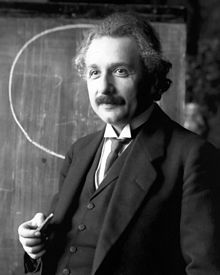
Albert Einstein in 1921, the year he won the Nobel Prize, and first visited the USA.

That’s the key learning from Einstein’s Jewish Science by Steven Gimbel, a professor at Gettysburg College. The author and his book do a wonderful job in framing the time, and the science, and the politics, and the religion, but neither musters much energy from its underlying question. (Spoiler alert: In the end, the author concludes that relativity is not an especially Jewish science.) He explains:

Einstein came to the scientific stage at a time when Western culture was in flux. Old social, political, artistic and intellectual structures were failing. Assumptions that had been protected for centuries were suddenly rejected despite all attempts to maintain them. And here, offering a new and bizarre way to see the entire universe was Einstein. The theory of relativity stands as a symbol of Gestalt shift, a complete change in perspective where you can never view the familiar in the same old way.”

(As I type, I wonder whether the shift that we’ve experienced via the Internet–which now offers instantaneous connections between billions of people all over the planet–would also be “a complete change in perspective where you can never view the familiar in the same old way,” and, if it is (I think it is), why it doesn’t quite feel that way. Maybe because we’ve been consumed by its everyday, now routine, integration into social and commercial life?)

Professor Gimbel of Gettysburg College, author of Einstein’s New Science: Physics at the Intersection of Politics and Religion

Mr. Gimbel goes on, and I continue to wonder about Einstein 2.0, and how he might fare today:

Einstein was vilified by those who clung to the old order. His science, his politics, and his views about religion were all made public in ways that made them difficult to ignore.”

And, my favorite quote from Gimbel:

We take Einstein to be the epitome of the open mind.

If life was so difficult for Einstein and his radical thinking, why do we absorb change in our stride today?

The best answer I’ve found begins about ten years after Einstein passed away.  It’s the subject of a terrific book about the 1960s counter culture, and the bridge that it provided to the 21st century, the digital century where we now live (and read blogs, often instead of books). The book is entitled What the Dormouse Said: How the Sixties Counterculture Shaped the Personal Computer Industry, and it was written by John Markoff. Read a terrific review of this equally terrific book, written by Jaron Lanier, here. Of course, all of this countercultural change was terrifying, and not without its reactionaries. The most robust response is a U.S. Chamber of Commerce document usually called The Powell Memo. It provides a conservative response to the craziness of the revolution, or so the story goes. The Powell Memo is easier to find on liberal websites than on conservative sites. Still, it claims to be the grand plan, the response to radical thinking and the changing of old ideas.

Step-by-step, Professor Gimbel explores the most important questions about science, Judaism, German culture (Weimar, Nazi, post-War), new (20th) century thinking about science and the limits of Newtonian physics, and provides the details in a smart story that is easily read and absorbed (not so, most other books about 20th century science, or religion, for that matter). Still, the core of the book, the essence of it, encourages the reader to think not only about Einstein, but about Einstein’s reflections in a 21st century mirror. How much has changed since Einstein’s time. How thoroughly Albert would enjoy the internet, and the freedom of thought that we now enjoy as American citizens in a digital age, and how profoundly that freedom has affected thinkers around the world.