Digital Yiddish

Yiddish-Book-Center

(Photos by Howard Blumenthal)

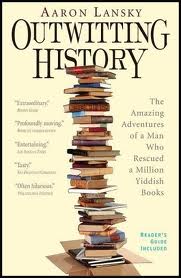
Last week, we spent some time in central Massachusetts–we wanted to buy t-shirts at Hampshire College, and maybe a few children’s books at the Eric Carle Museum of Picture Book Art. We’ve traveled in this area before. Although we’d noticed the shetl-style architecture of the Yiddish Book Center on the same campus, we never visited. It was a picture-perfect summer day in New England, and the last thing I wanted to do was spend any time indoors, but I inside “just for a few minutes.” I could have spent all day. In fact, I spent the next two days reading Outwitting History, written by Outwitting Historythe center’s founder and leader, Aaron Lansky. The book’s subtitle provides only a glimpse of what Lansky, and the Center, has accomplished, and will do: ‘The Amazing Adventures of a Man Who Rescued a Million Jewish Books.’
Much of the book is devoted to Lansky, his friends, co-workers, and friends collecting the inheritance–the books collected by Jews who had brought their culture from Eastern Europe, and other places, often overcoming obstacles before they landed in their small apartment in Brooklyn, the Bronx or New Jersey. Getting to know these people one by one, Lansky would load his rented truck with shopping bags and cartons of books, often from people whose next step was a retirement home. Just about every visit came with an obligatory range of dishes “cooked special for you” so “you shouldn’t be hungry.” In a typical spread, there would be onion bagels and lox, kasha varnishkes, potato latkes, and lokshn kugl (noodle pudding), plus herring, chopped liver, and other traditional dishes. And conversation. Lots of lots of stories, one about every book, the times, the culture, the memories. In time, Lansky learned to travel as one of a team of three people: “two do do the shlepping and the third to be the Designated Eater. the latter was the really hard job. While the others carried boxes, you had to sit with the host at the kitchen table, listening to stories, sipping endless glasses of tea, and valiently working your way through a week’s worth of dishes cooked ‘special’ just for you…”

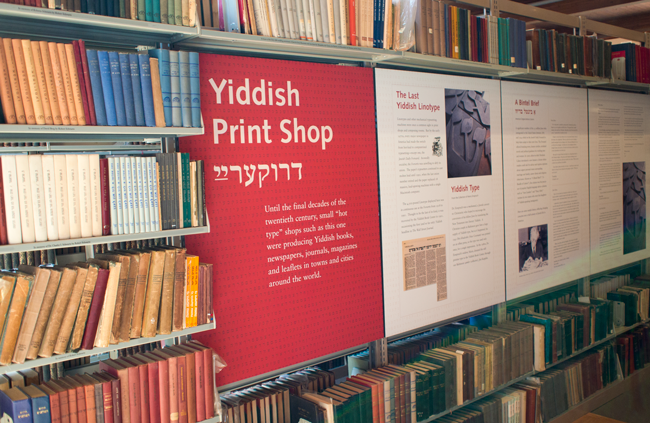
Over two decades or so, Lansky and his colleagues accomplished the impossible–they collected a million copies of Yiddish books. The best ones are now safer than they have ever been; they’re housed in a carved-out mountain that was built as a military facility (remarkably, it’s less than a mile from their Hadley, Massachusetts headquarters). The Center has supplied about 500 university and research libraries with Yiddish book collections (before the Center, only six such collections existed anywhere in North America). If you’re in the area–between Amherst and Northampton, Massachusetts–you can look at any of thousands of books, and you can buy most of them (there are more than enough extra copies around). Some titles are Yiddish translations of popular works by Shakespeare, Hemingway, Poe, Dickinson, and other popular writers. Many are original Yiddish works of fiction, plays, poetry, history books, cookbooks, children’s books, and more. And if you can’t make your way to Massachusetts, you can visit the Steven Spielberg Digital Yiddish Library, an online collection of more than 10,000 Yiddish titles, with each book page scanned (most of the original books were published on pulp paper, and some tend to disintegrate with each page turn, so digital technology saved the day).
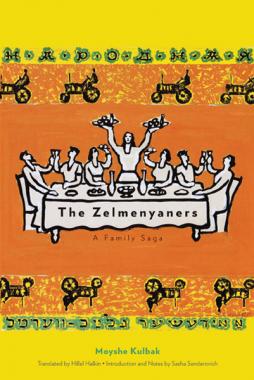
New Yiddish Library's most recent title: Moshe Kulbak's The Zelmenyaners, translated by Hillel Halkin. One of the great comic novels of the twentieth century, The Zelmenyaners describes the travails of a Jewish family in Minsk that is torn asunder by the new Soviet reality.

New Yiddish Library’s most recent title: Moshe Kulbak’s The Zelmenyaners, translated by Hillel Halkin. One of the great comic novels of the twentieth century, The Zelmenyaners describes the travails of a Jewish family in Minsk that is torn asunder by the new Soviet reality.

There is, of course, one problem. The books are written in Yiddish, and must be read in the original language. The Center has a deal with Yale University Press, and some titles are now available in English translation, in book form. More are on the way, but this solution is a minor one.

The major one, of course, is that role of Yiddish has changed, and the people who knew, know, and can claim literacy in Yiddish has been greatly diminished. At one time, more than eleven million people spoke, read, and communicated in Yiddish. That time was 1939, a year before the devastation by the Nazis, and a decade before the the shift into modern times, suburbia, and beginning the end of the old Jewish neighborhoods that once defined so much of New York City, Philadelphia, Baltimore, Boston, Chicago, and other cities where Yiddish was common currency.

When Lansky was a graduate student in search of a few Yiddish books for graduate school, when he traveled by truck to collect books from crumbling old publishing warehouses and Jewish community centers in the neighborhoods where many Jews once lived, his focus was saving books. Now, the agenda for the Center is even more compelling: books continue to arrive, but the people who can translate them, with appropriate cultural context, are few. It’s one thing to translate the words, quite another to present the story in ways that are both true to the original sensibility and sufficiently interesting to contemporary readers. Yiddish was always a people’s language, informal and spoken at home, never the official language of state affairs or religious ceremonies. As Lansky points out, time and again, all of his scholarship, all of the scholarship gathered by his many friends and associates, all of it pales in comparison with the ninety-year-old man who is sitting in his small Newark apartment, sharing tea and Entenmann’s crumb cake, shopping bag full of books at his side, ready to part with his lifetime of favorite Yiddish novels, books he loves because they were so much a part of his life.

His books are safe now. They will be treated with loving care. They will find a new home. Some will be translated into English so that even those of us who cannot read Yiddish can understand the basics of what they have to say. The work will be done by human translators, and in time, perhaps, by digital translators, too. The love, the sense of what the world was like, the passion, the feeling for the characters and situations created by the great Yiddish writers, poets, playwrights, stage performers, radio performers, singers, these will be more difficult to capture and store inside a mountain in Massachusetts.
yiddish-book-shelvesAt the very least, Lansky, his friends, his co-conspirators, the Center’s network of scholars and friends and donors, the network of zammlers (two hundred people who collect books worldwide for the Center) have taken the first step. We now have the books, and nobody is going to take them away from us. And they’ve taken the second step: the books are now available, through various re-disribution schemes, to people everywhere. The third step is the mind-bender. How to republish the works, maintaining the integrity and magic of their original words and ideas in a world where (a) the whole book publishing industry is trying to figure out its digital future and path to thrival (my made-up word that goes beyond survival into thriving); (b) few people read Yiddish; (c) Yiddish culture is becoming  historical fact rather than a cultural reality; and (d) as interested as I may be, I don’t think I have every read a single Yiddish book, and apart from Sholom Alechem (whose work was the basis for Fiddler on the Roof), I don’t think I can name a single Yiddish author.

That will change, of course. Shame on me for missing this part of my cultural education.

Thank you, Norman Temmelman of Atlantic City, Sorell Skolnik of the Mohegan Colony, Mr. Kupferstein, Marjorie Guthrie (Woody’s wife), and Sam and Leah Ostroff, for helping Aaron Lansky. And thank you, Mr. Lansky for opening the door for me. As I read the books, I will pass them along to friends, to my father and my sons, and attempt, in my small way, to be a link in the chain. I suspect there is a Yiddish proverb beneath all of this, or, at least, a few Yiddish words to describe what’s on my mind, but those words are lost to me. Perhaps I will find a few of them along the way.

yiddish-type

Thanks, Bill!

GinLane

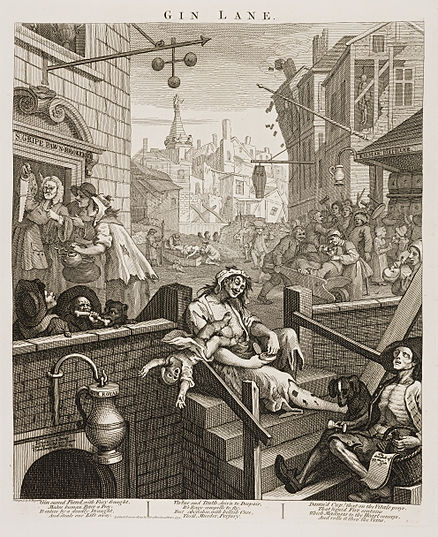
Hogarth worked out every minute detail of even image: the angle of the robe behind the gin-soaked mother so that the eye is draw directly to her head; the leering muncher of the large bone, the position of the pawnbroker’s sign above their heads as a kind of upside down religious symbol; the distant grey of the growing city in which these denizens would never take part; so much more. That was the painter, and illustrator, William Hogarth’s intent: to tell remarkable, compelling stories through a series of images sold in a subscription series. His work was widely pirated.

If Bill Hogarth’s father, Richard, was alive today, he’d probably be writing a blog, cleaning up Wikipedia articles, and spending far too much time watching TED Talks. He was always busy writing what he hoped would be a popular play or a textbook for schoolchildren. As a boy, Bill tagged along with his father as he made the rounds from one coffee house to another, for that’s where the printers tended to meet their clients, customers, and friends. In a word, coffee houses in 1700s London were places to network. In time, Richard Hogarth managed to sell of his manuscripts to a a London printer named Curll; it would become a book that would “bring joy to learning through the playing of games” enabling (a then-radical) idea of learning without the direct assistance of a teacher. With tears of joy in his eyes, Richard Hogarth signed the publishing contract, and that, as would be inevitable in a story of this sort, was his undoing. When Curll demanded money to pay printing costs, Hogarth could not pay the bill, could not fulfill the requirements of a contract that he clearly did not understand. Richard Hogarth was placed in debtor’s prison, a nasty place where bribery could, at least, secure better living quarters for the fledgling author and his small family.

Son William was fortunate to secure an apprenticeship with an engraver, made some contacts, eventually earned some money, and became quite popular as both a painter and a storyteller. His prints, including the one pictured at the top of this article, were published in series, offered by subscription. The originals made money, but they were often copied (pirated) by unscrupulous printers throughout London. As he worked his way up London’s economic and social ladder, William Hogarth became a very popular painter, busy with commissions until the very last years of his long career. Battling syphilis (a very common theme in stories of this era), frequently lusting after young women (especially in his younger years), Hogarth often considered the fate of his father, and devoted much of his life to steering clear of any such problems.

Benefitting from his upscale connections, Hogarth began to pursue a new law, one that would protect creative people from piracy.  At the time, this was extraordinary; in London, and elsewhere, piracy was simply part of the system. Nobody much questioned the many illegal copies of an artist’s work. Printers published whatever they wanted to publish.  Standard business practices were uncommon. An artist who fought the system ran the risk of speaking truth to power, and could well end up in debtor’s prison, or worse (that is,  murders under dark bridges were extremely common at the time).

Hogarth had been painting, on commission, for a Select Committee of Parliament as they investigated gaols (now: “jails”). Hogarth painted the deliberations of the committee, made a friend of Sir Archibald Grant of Monymusk. In time, Hogarth visited the influential man in his home, and over tea and gooseberry tarts, they considered a plan. There was an act of Parliament from Queen Anne’s time that protected writers, so Sir Archibald, in his strong Scots accent, thought aloud:

The connection to the other Act is gud. They like laws that build on other laws.”

Sir Archibald wrote letters to several important people in Parliament. Hogarth hoped that James Oglethorpe would be one of them, but his London home was boarded-up. Sir Archibald explained that Oglethorpe was in the colonies, founding a new one called Georgia. A short time later, Oglethorpe returned, and Hogarth gained his support:

Of course, I’ll support you. The book trade is run by scoundrels and idle incompetents. Always has been, always will be. But we’ll fire a few shots at them, eh, Hogarth?…Show me where to sign!”

Hogarth’s Law eventually passed and became law. Of course, his very next set of prints were his poorest sellers to date–he probably made more money on the previous subscription series, even with the piracy. And then, of course, there was the matter of enforcement of the new law–uneven because there was no system to police the bookseller’s constant practices. Still, times did change, and we benefit from Mr. Hogarth’s good work today.

So: the next time you’re in London, make your way to Leicester Square (Leicester Fields in his day), and take note of the statue of the man who made the world safe for creative professionals.

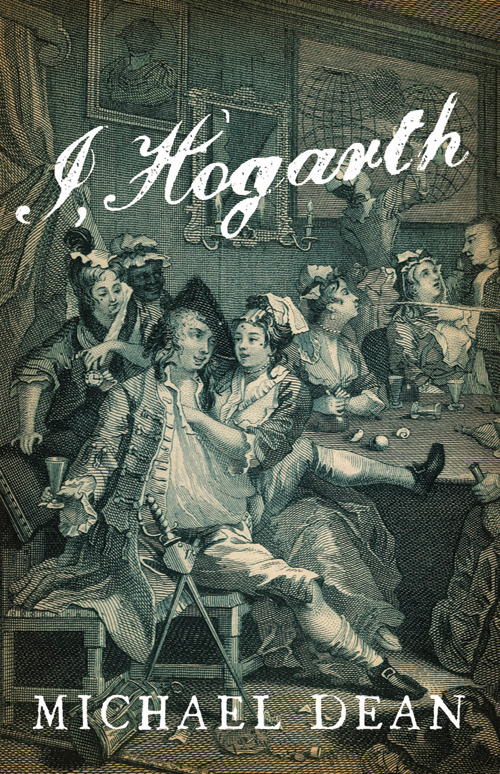
And, if the story intrigues you, pick up a copy of a lovely novelization of his life entitled I, Hogarth by Michael Dean, from which this article is derived. There is much more to Hogarth’s story–a lusty one, in parts–intentionally reminiscent, in its way, of early British novels that were developing at the same time Bill Hogarth was telling his stories in pictures.

I-Hogarth-1-copy

Welcome to the Times Machine

It’s taken a decade or so, but newspapers are finally beginning to get the hang of this new media thing.

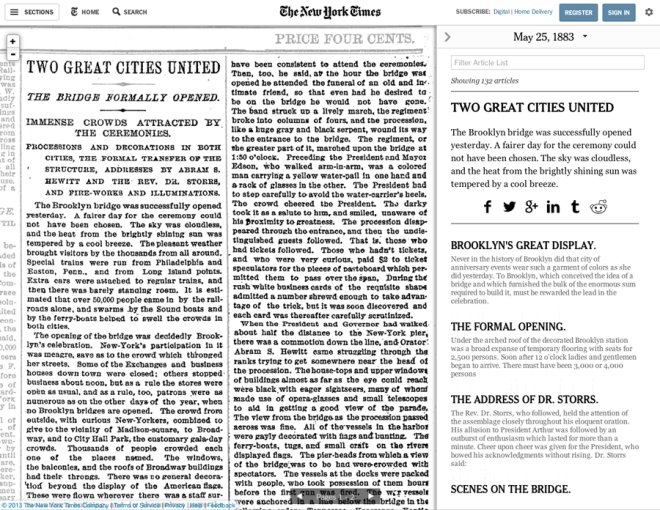
Among the most impressive new offerings: The New York Times Machine, an online experience that allowed me, in an instant, to read a story, originally published on May 25, 1883, entitled: “Two Great Cities United: Bridge Formally Opens.” From the text:

The Brooklyn Bridge was successfully opened yesterday. A fairer day for the ceremony could not have been chosen.”

Train service was extended from Easton, PA, Long Island, and other just-far-enough-away places. The service was decidedly a Brooklyn celebration. The people in New-York (at the time, the hyphen was still in common use) were less ecstatic, but showed up in the tens of thousands to join the celebration.

I know all of this because I am reading the actual printed page of the newspaper, the story in its original font, in its original presentation. I can see what happened on that day by reading other stories. There was an uprising of Italian railroad workers in Philadelphia who demanded their pay before they went back to work. The French government is having trouble with their colonial subjects in Madagascar who seem willing to “fight to the death” for their rights (The New York Times is remarkably even-handed in telling this story.) General Grant arrived in Chicago, and will leave for Galena tomorrow (in fact, that was the whole story).

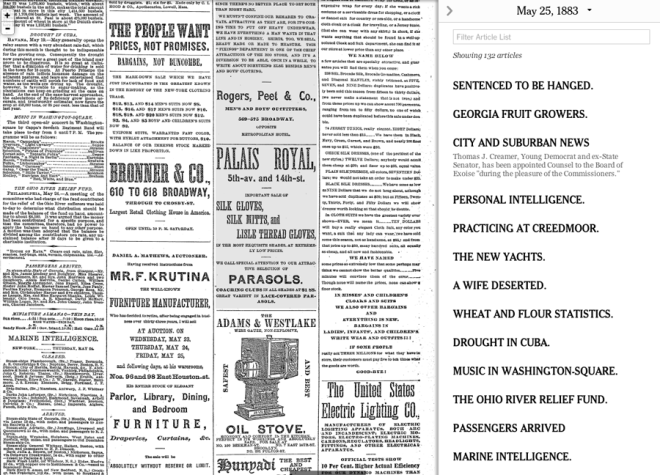
The interface is simple, and well-designed. On the left, which occupies about 3/4 of the screen, there is simply a picture of the newspaper. Click on a story, and it becomes large enough to read. (No way to copy contents just yet, but I hope that will be part of a future release.) On the right is a search window and a list of search results, each with a headline. Some stories are presented with a brief summary. Every story can be forwarded by Facebook, Twitter, Reddit, Google+, and more (this feature doesn’t work just yet, but it will soon).

After writing this initial draft of this article, I decided to explore some more. The Sunday New York Times for July 20, 1969 is filled with fascinating advertisements. I found a real zebra rug offered for just $195, marked down from $395, from Hunting World (“the sought-after high-contrast skins with the darkest stripes and the whitest backgrounds”). And now, the news… A judge in New Jersey determined that the conflict in Vietnam was, legally, a war. TV writer Jack Gould explained how television signals were transmitted from the moon. Bobby Seale led a Black Panther rally with about 3,000 people; most of them were white, and they shouted, repeatedly, “power to the people” while thrusting their fists into the air. Son House, Sleepy John Estes, Brownie McGhee, and Yank Ranchel were among the performers at the Newport Folk Festival (I wish I had been there!). Elsewhere in New England, last night, Ted Kennedy’s car ran off a bridge in Edgartown, Massachusetts, and the yet-unnamed female passenger was killed.  Ted Williams was managing the Washington Senators, host of that year’s baseball All-Star Game, celebrating the 100th anniversary of professional league play. And, the Pope, still watching black-and-white TV, arranged for a color set so that he could watch today’s Apollo moon landing. It is SO cool to see these original stories in their original form. This particular edition included over 450 stories–plus a whole lot of interesting (and not so interesting) advertisements, mostly from department stores.

The current version is a prototype (Beta version), so the range of dates and stories is very limited. Still, it’s fascinating to see what The New York Times Machine will be–and soon.

Below, a sample image. It’s far easier to read the real thing (just click here).

NYTimesMachine NYTimesMachine2

Life with Lenny

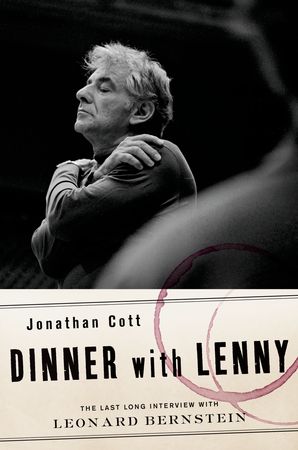
Dinner with LennyFor nearly all of his professional life, journalist Jonathan Cott has written for Rolling Stone magazine. In 1988, he pitched the idea of an interview with Leonard Bernstein to the editors, and a year later, Cott and Bernstein spent twelve hours together at Lenny’s home in Fairfield, Connecticut. They drank vodka (to better enjoy Lenny’s recording of a Sibelius symphony), ate chicken pot pie (Lenny to vegetarian Cott: “Vell, it vouldn’t hoit!,”referring to the old story…)

You don’t know the story? It really happened in the great days of Yiddish theater when the leading actor collapsed onstage during a performance. And a doctor rushed up to help him, but the actor was already dead. And out of the audience came a woman’s voice: “so gif him a little chicken soup!” And the doctor announced that the actor had died…and the woman called back to him, “Vell, it vouldn’t hoit”

For Lenny, it’s all about passion, the great story, the phenomenal breadth and joy of life. That’s the abiding theme of the whole conversation, one that spans, in book form (“Dinner with Lenny: The Last Long Interview with Leonard Bernstein,” written by Jonathan Cott and published by Oxford University Press). Here, he speaks of Alma Mahler–the famous composer’s wife. Cott begins with a question: “I’ve heard that Mahler had to talk to Freud about that problem…”, then Lenny answers:

“You know, Mahler made four appointments with Freud, and three times he broke them because he was scared to find out why he was impotent. His wife, Alma, was then ***ing everybody was was coming by–Gropius, Kokoschka, Werfel, and Bruno Walter, among others–sent him to see Freud. He was twenty years older than she, and she was the prettiest girl in Vienna,–rich, cultured, seductive… She tried to get me to bed. Many years ago, she was staying at the Hotel Pierre in New York–she had attended some of my New York Philharmonic rehearsals–and she invited me for “tea”–which turned out to be “aquavit”–then suggested we go to look at some “memorabilia” of her composer husband in her bedroom. [Laughing] She was generations older than I. And she had her hair frizzed up and was flirting like mad… She really was like a wonderful Viennese operetta. She must have been a great turn-on in her youth. But anyway, Mahler didn’t pay enough attention to her–she needed a lot of satisfying and he was busy writing his Sixth Symphony in his little wood hut all night…”

Cott is a long-time Bernstein fan. The infatuation began when Cott, then eleven years old, on November 14, 1954, watched Bernstein explain Beethoven’s  Fifth Symphony. The the first page of the score had been painted on the studio floor. Musicians, with their instruments, were standing on each stave. Bernstein explained Beethoven’s creative process by dismissing specific instruments from the score–here’s how it sounded with and without this woodwind, that brass instrument–and then, Bernstein conducted the first movement as Beethoven wrote it. Cott “made sure to watch Bernstein’s other Omnibus programs, such as “The World of Jazz,” “The Art of Conducting,” and “What Makes Opera Grand?” At age 15, Cott took Beth (his first “real” date) to see Bernstein’s Broadway smash, “West Side Story.” He became a lifelong fan.

After listening to the solo clarinet that begins his own Columbia LP recording of Sibelius’s first symphony, listening, with Cott, to the clarinet solo that begins the piece, Bernstein announces that the president of Finland had appointed him “Commander of the Order of the Lion,” then “started to sing–humming, crooning, moaning, shouting-out gospel style–as he conducted and danced along to the four movements of the symphony…All the while he added recitative-like interpolations, explanations, words of approval and disapproval, and assorted comments for my benefit about this impassioned, mercurial, wildly inventive work. ‘Listen, child!’ the maestro announced to me. ‘Here’s the Jewish rabbi theme…There’s Beethoven…There’s Tchaikovsky–it’s Swan Lake–and just wait for some Borodin and Mussorgsky later on…Some Grieg (but better than Grieg)…And now comes Sibelius. [L.B. sang and quickly wrote out for me on an old envelope the distinctively Sibelian rhythmic cell we’d just heard…] Now a wind…sighing…And now a pop song…”

So that’s a taste of it. Twelve hours of conversation with one of the 20th century’s iconic figures in music, free-associating with a compadre who was smart enough to keep the conversation going and catch just about all of the references (in fact, Cott called Bernstein for a followup just to make sure he understand everything that Bernstein had said). Lenny is a larger-than-life character in every decade. He was the boy wonder who leaped at the opportunity to first conduct the New York Philharmonic, on national radio, with far less than a full night’s sleep and a reasonably serious hangover. He was the teacher who brought classical music to the baby boomer generation through the clever use of the new TV medium. He was the conductor who performed Beethoven’s Ninth on both sides of what was, moments before, the Berlin Wall. He was the conductor who led the Israel Philharmonic as a celebration of the glory of a new Jewish homeland. He was deeply committed to  Civil Rights and the movement to stop the Vietnam War, despised Nixon, and, as an intellectual, still struggles to understand what happened and why:

That was a very bad time. There was nothing positive about that time. We were living under the thumb of Richard (****ing) Nixon, one of the greatest crooks of all time. But the point I want to make is that anybody who grows up–as those of my generation did not–taking the possibility of immediate destruction of the planet for granted is going to gravitate all the more toward instant gratification–you push the TV button, you drop the acid, you snort the coke, you do the needle. It doesn’t matter that it makes you impotent… Anything of a serious nature isn’t “instant”–you can’t “do” the Sistine Chapel in one hour. And who has time to listen to a Mahler symphony, for God’s sake?”

Cott answers, patiently, “I do.”

From the Dawn of Civilization to the Present Day

In connection with a large project that I’m developing, my office has been pleasantly cluttered with history books. In particular, I’ve been attempting to understand the broad sweep, which is, we all know, a fool’s mission. Stumbling from Mesopotamia to The American Dream has been great fun, far better than I remembered from anything I did in school, and, because of the latest cluster of colorful history books, a fun trip every step of the way.

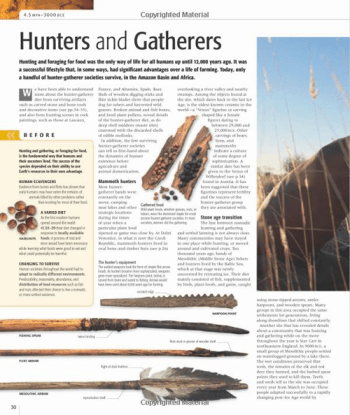
Appropriately entitled History: From the Dawn of Civilization to the Present Day, the 612-page tour of the human story is presented with the full DK Publishing treatment: lots of images, interesting sidebars, full layouts about expected and some unexpected topics (The American Dream, Leonardo DaVinci, Queen Victoria, Science vs. God, The Ming Dynasty, many more). You know the visual style from so many children’s books, Eyewitness Travel guidebooks, and more. Two examples below; in both cases, the links take you to the Amazon “see inside” sequence of selected pages from the book:

DK-First-Harvest-layout

DK-History-Layout

At first, I picked up this book in hopes of finding lots of illustrated timelines. Instead, I found myself browsing a kind of magazine about world history with articles about topics that I figured I should know more about. (In fact, there are timelines, but the type is small, the layout is idiosyncratic, and, candidly, there are better historical timeline books than this one, including the publisher’s own Smithsonian Timelines of History: The Ultimate Visual Guide to the Events that Shaped the World, described below).

This book excels in by telling well-chosen stories in simple, illustrated form, always offering enough depth of information to satisfy the curious. So here’s a two-page spread about Mesopotamia that begins by placing it in the area that now includes Iraq, southwest Iran, east Syria, and southeast Turkey. The name is derived from the Greek, “between two rivers,” which explains the site’s early evolution, noting that similar sites developed in the Indus Valley, and later, in China. Unlike the city-states, Mesopotamia was more like a nation that included several large cities whose names were, in 3,000 BCE, impressive: Uruk, Kish, Akkad, and Ur among them. The society was hierarchical: even in this era, inequality was the norm. There was music; there is a picture of a lyre from the era decorated with the bull’s head that was popular at the time. And there was a mathematical system based upon the number 60. You know the Mesopotamian system: it is the basis for our circle (360 degrees) and the number of minutes per hour (60).

Many pages ahead, there’s a four-page layout on City Life as it transformed normalcy in just 100 years, from 18oo to 1900. By 1819, the city of London was, well, here’s what the English poet Percy Bysshe Shelley wrote as early as 1819:

Hell is a city much like London…”

Creative Commons - Thierry Bézecourt

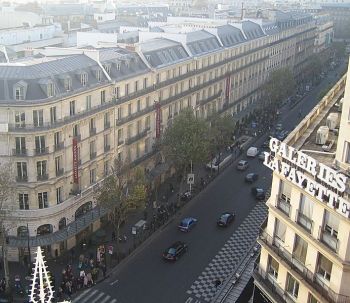
Boulevard Haussmann in Paris. Creative Commons – photo by Thierry Bézecourt

In 18oo, the largest city was Beijing (then, Peking) with not more than 1 million people. A century later, London was home to six times as many people, largely without the benefit of an extended period of growth and time to figure things out. Chicago’s population tripled in just fifty years. To move people around, the cities devised underground railroad systems, cable cars, and trolleys. In the 1850s, Napoleon III hired George Haussman to completely remodel the city, who “replaced entire medieval districts of narrow, cramped streets with wide boulevards…for which the city is now famous.”

Pages ahead, and it’s the Vietnam War, Raising the Iron Curtain, Superpower China, and Climate Change. A very comprehensive story, a terrific browse, a useful addition to the family or classroom library, as much fun as the old World Book Encyclopedia used to be, at least for those of us with a lot of time on our hands on rainy days after school.

The Smithsonian timetables book is more of a coffee table adventure, lavishly put together with artful two-page spreads about, for example, the Qing Dynasty, the Pacific Theater in WWII, the rise of the Ottoman Empire, and, Edo Period, a personal favorite because it pictures a large picture of the Hannya mask (Hannya being a female Noh character turned into a demon by jealousy and anger). Mostly, though, this is a book with an extensive timeline that runs on the bottom fifth of most spreads for more than 450 pages. Explanations appear, in shorter story form, above the timeline. Right now, the book is open to 1780-1784. There’s an engraving, a color picture of a Montgolfier hot air balloon with seven passengers aboard, making their way across Lyons. In 1781, William Herschel, an astronomer, discovered Uranus (on March 13, in case you’re curious). On the following spread, Britain is doing what it can to eliminate the slave trade, including (and I didn’t know this) establishing Sierra Leone as a place for freed slaves (similar to our Liberia, years later). Skipping past the two page spread about steam power, we’re now in 1789, when, within months of one another, we find George Washington becoming the first U.S. President (February 4) and Fletcher Christian leading the mutiny on the HMS Bounty (April 28). The Bastille was stormed that summer (July 14, which you probably knew), and the U.S. Congress proposed the Bill of Rights (September 28).

This book is filled with interesting tidbits: Marie Antoinette was 14 years old when she married Louis XVI; tiny Portugal’s empire was 4.6 million square miles; 2,000 bathers could simultaneously splash around in the Roman Baths of Caracalla; and, for what it’s worth, the number of eunuchs employed by the Ming Dynasty exceeded 100,000. Or, if you prefer, the number of diamonds in King George’s crown: 6,000.

The abiding favorite tidbit is a quote from the President of the United States, then Rutherford B. Hayes, who watched Alexander Graham Bell demonstrate the telephone in 1876 and then said,

That’s an amazing invention, but who would ever want to use one of them?”

Storytelling through Maps and Timelines

Creative Commons license: Nicholas Kenrick

Bagan today. Creative Commons license: Nicholas Kenrick

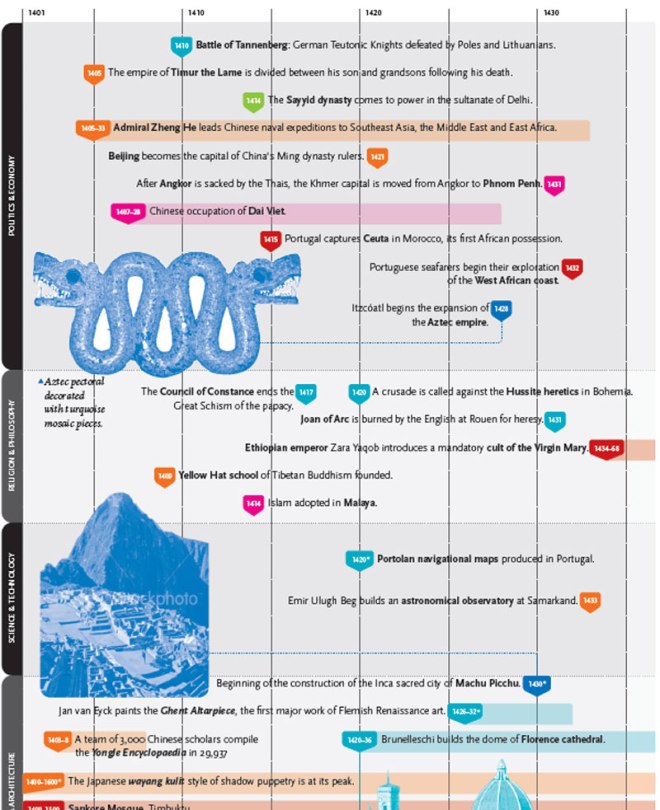
In the year 1100, the largest city, by far, was Kaifeng, which was twice the size of its nearest competitor, Constantinople, three times the size of the third city on the top five list, Marrakech, which was, at the time, about the size of Kalyan and Cairo. Never heard of Kaifeng or Kalyan? If today’s Kaifeng was located in today’s United States, it would be the nation’s second largest city; in China, where it has been a significant city for a very long while, it would be in the top forty or fifty cities. Kalyan is now part of Mumbai. A hundred years later, Bagan makes the list–it’s no longer an active city, but the site is as popular in Cambodia as Angkor Wat. Add another 100 years and the first of the European cities makes the top five list: Paris. By 1492, just as Europe is waking up to the possibility of its role as a global power, there are no European cities on the list. Instead, it’s Beijing with over a half-million people in the number slot followed by Vijayanagara, Cairo, Hangzhou, and from the Americas, Tenochtitlán.

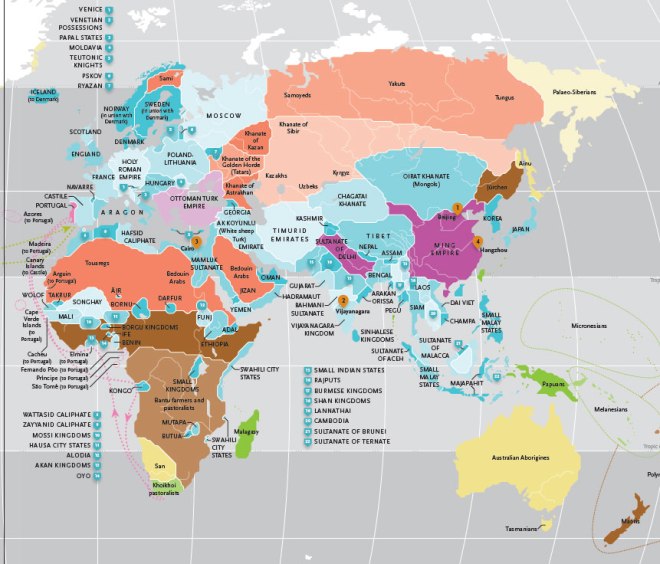
In 1492, the world map is a fascinating place filled with vaguely familiar names. A large swath of what is now Russia was then the Khanate of Siber; the Mongols are firmly in control of the large area that is now Mongolia; the only people in Australia are Aborigines; and the Caribbean and much of South America are under the control of the Arawak people (who will be killed, in large numbers, by European invaders and their diseases, the first of whom is Columbus). You’ve probably heard of Catherine of Aragon, a Henry VIII wife (remember “Divorced, beheaded, died; divorced, beheaded, survived?”–Catherine’s the one who Henry divorced, setting up a major tiff with the Pope). Anyway…Aragon occupies the eastern half of the Iberian Peninsula in 1492. The Inca are all along the Pacific side of what becomes South America, and the Mayas and the Aztecs are all over what becomes Central America and Mexico. Japan is Japan, Korea is Korea, and remarkably, Poland is a large country–actually a kind of joint project, so the place is called Poland Lithuania.

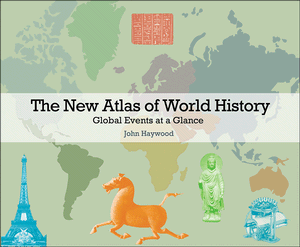
How do I know all of this? Because I’m having a blast browsing through a new combination of world atlas and history book. It’s called The New Atlas of World History: Global Events at a Glance and it’s been put together by research fellow at England’s Lancaster University named John Haywood.

NewAtlas World HistoryQuite sensibly, Mr. Haywood has produced a book whose broad horizontal pages alternate between an atlas view of the world at various intervals, and a timeline of significant events that describe that time in greater detail.

His story begins around 100,000 when ice sheets covered much of today’s Canada, all of today’s United Kingdom, and the rest of northern Europe. From the ancestral starting place in eastern Africa, homo sapiens migrate first into Asia and China, then across two land bridges, one to what becomes North America and the other (who knew?) across present-day Indonesia and the Indian Ocean across to Australia (which is how the place become populated with Aboriginal peoples). In fact, Europe was settled, or, at least, visited in large numbers, about 5,000 years after Australia. It took even longer for the people who took the now-Alaska land bridge to make their way all the down through the current United States and Mexico, eventually finding themselves in what is now South America.

Looking way ahead to, say, 1900, it’s again a fascinating map and story: there is no Poland, for example, because it has been obscured by the giant Russian Empire, and also, if I’m reading the map correctly, by the Austro-Hungarian Empire, too. On that map, Africa is a collection of colonies belonging to Belgium, Holland, Germany and other countries whose international colonization efforts were ended by a pair of wars that provided plenty of good reason to focus on life at home.

So here’s a rough look at the 1492 map of the world (click on it to see a full-screen PDF with far better detail):
Atlas_Map_Smaller

And, to accompany that layout, here’s a look at the adjacent page, this time providing a timeline view of events that mattered at the time (same story, click to see a PDF that’s easier to read):

Timeline

Of course, the book offers more than just these two layouts. One of my favorites shows the migration routes to the United States, mostly from Europe, circa 1900. The same map contains the sobering stories of indentured servants leaving India for British colonies in Africa. Subsequently, a young attorney and activist named Mohandas Gandhi will understand his power by correcting the situation in South Africa (then, the Cape Colony) before returning to his native India.

So: here’s the history of the world in just over 200 pages, full-color, filled with fascinating stories told in some text, but mainly, through descriptive maps and pictures. It’s a thoroughly modern way to tell our story, and, as you might imagine, it has become a favorite. You’ll get some flavor of the work’s value by clicking on some the links on the book’s catalog page, but there’s really nothing quite like having the whole of it in front of you on a hot Sunday afternoon in the cool shade, preferably with an equally cool drink from some far-off land close at hand.

Don’t Take Your Work Too Seriously

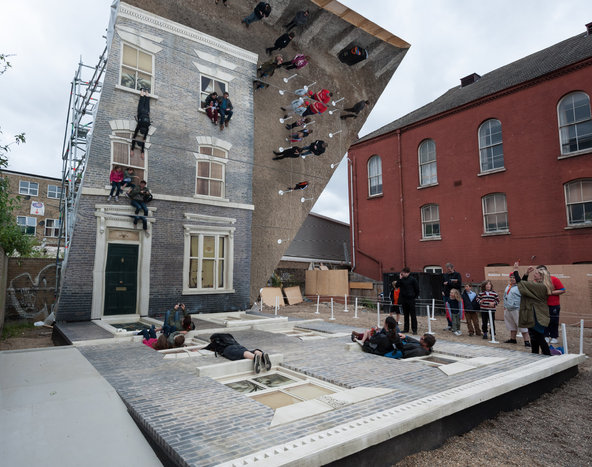
That’s one of the six creative tips offered by Argentine artist Leandro Erlich in a wonderful, small New York Times article. The others are equally good advice, especially for creative professionals.

It’s all about the picture below, provided to The New York Times by Gar Powell-Evans, courtesy of Barbican Art Gallery. Look closely and you’ll understand what it’s all about.

Leandro_house

What About Those Other Countries?

For this blog, most readers are located in the U.S., and Canada. The countries with the fewest readers are in the countries indicated in white. I suspect there is more happening, or not happening, in those nations, and that's what this particular blog article will address.

For this blog, most readers are located in the U.S., and Canada. The countries with the fewest readers are in the countries indicated in white. I suspect there is more happening, or not happening, in those nations, and that’s what this particular blog article will address.

It would be easy for me to dismiss nations with no readers as simply uninterested in the issues, or, in some cases, unable to read the blog in its native English language, but this article about a lot more than this particular blog (though it would be fun to claim readers in every nation on the planet). Before I get into the research, and related thoughts, here’s a list of where this blog is not read. In the case of Africa and Asia, I’m surprised by number of nations where people have read this blog.

In South America, only French Guiana, and in Europe, only Kosovo tallies at zero blog readers to date. No surprise that North Korea is also on that list; the other Asian nations are Kazakhstan, Tajikistan, Turkmenistan. In Africa, there are many counties–probably about half the countries on the continent, not yet in the fold: Western Sahara, Mauritania, Mali, Niger, Chad, Sudan, Eritrea, Ethiopia, Somalia, Burkina Faso, Guinea, Sierra Leone, Liberia, Cote d’Ivoire, Togo, Benin, Cameroon, Central African Republic, Republic of the Congo, Gabon, Equatorial Guinea, Sao Tome and Principe, Democratic Republic of the Congo, Tanzania, Botswana, Mozambique, and Madagascar.

Seeking reliable statistics about some or most of these nations as some sort of a cluster, I discovered a useful United Nations site that listed most of these nations, along with many smaller ones (in Oceania, for example), in category 199, “Least Developed Countries.”

I then reviewed the 2012 report on the UN’s Millennium Development Goals. The goals are focused on poverty, human rights and infrastructure, disease prevention, hunger, gender equality and education, and although education is the only item on this list with an undeniable direct connection to Internet use, much of Africa continues to face severe challenges in labor productivity, one link in the chain to open and available Internet access. Furthermore, more than half of the world’s children not in school live in sub-Saharan Africa, another suggestive indicator. What’s more, only about 1 in 4 people are literate in this region, and only about 1 in 3 are literate in southern Asia, so limited Internet use in these regions may be of lesser importance than sheer literacy.

In 2011, there were 7 billion people on earth. Two thirds of them had no Internet access. Once again, sub-Saharan Africa and other developing regions posted the lowest rates.

So that’s the official global view. I wondered about the local view, and found a site called Edge Kazakhstan with a story about the local popularity of Facebook, and about the popularity of the Internet, generally, in Kazakhstan.

Statistics say social media sites are among the most accessed in the country… Number one is Russian social networking page VKontakte (http://vkontakte.ru), second is world leader Facebook (www.facebook.com) and in the third place is another Russian site, Odnoklassniki (www.odnoklassniki.ru)…Askar Zhumagaliyev, Kazakhstan’s Minister of Communications and Information, in a June Twitter posting said that 34.4 percent of the nation was using the internet as of early 2011 – compared to 18.2 percent in early 2010. He has also tweeted that he plans for the entire country to be covered by high-speed internet by 2015.

Social Bakers keeps track of social media use in nations throughout the world. I checked in Tanzania because Facebook use in Africa is growing very rapidly, despite a relatively low rate of Internet penetration, which is also growing fast, especially in the centers of population. Five years from now, connectivity in all but the most challenged or remote areas of Africa and Asia will not reach international averages, but they will be far higher than today (reliable statistics are hard to find, but Vodafone, a large international supplier, will likely serve between one-third and one-half of the technically available population).

I suspect that what I write may not be what most people want to read in Kazakhstan or Tanzania, but I would be surprised to find the list of nations who have never experienced the pleasure of reading this blog to be reduced by half within the next year (or so). The majority of my readers will continue to be found in U.S., Canada, the U.K., but I know that future map will show a wider distribution than the one I published today.

By the way, if you are reading this blog in a nation other than the U.S., I wonder if you would just comment and tell us where you are in the world. Thanks!

On Other People’s Bookshelves

During the past few months, a clever oblong book entitled My Ideal Bookshelf has been widely covered in the media. Each two-page spread contains a brief essay about books and reading by a cultural somebody, and a painting of that person’s favorite books arranged as they might appear arranged on a shelf (in fact, not one of the painted arrangements includes an actual bookshelf).

Browsing the groupings of favorite books, I did what I always do. I took some notes, and made a list of books I would like to read someday.

I have wandered through a vast number of books about food and cooking, but so far, I have not taken on Larousse Gastronomique. So, thank you to chef and cookbook author Hugh Acheson for that reminder, and to chef Thomas Keller for suggesting the same book.

From author Junot Díaz, a recommendation for Divided Planet: The Ecology of Rich and Poor.

apatow_bookshelfJudd Apatow, famous for his comedy movies, surprised me with James Agee’s A Death in the Family, and reminded me of a popular book about comedians that I wanted to read, but never did: The Last Laugh.
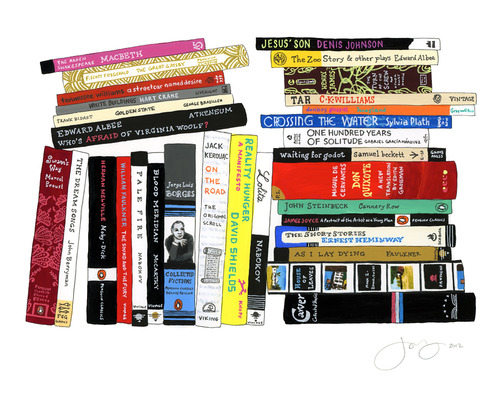
I was happy to see Dave Eggers highlight Edward P. Jones’s The Known World, a story about American slavery that I finished this winter, and now look forward to reading Denis Johnson’s book, Jesus’ Son which is “short, funny and impossibly lyrical…a book nobody doesn’t like.”

It was fun to see some of my all-time favorites, especially the obscure ones, on other people’s shelves: Chuck Klosterman likes Four Arguments for the Elimination of Television and Rudy Rucker’s The Fourth Dimension, and designer David Kelley likes The Care and Feeding of Ideas by Adams and the compendium, An Incomplete Education, and I do, too.

franco_bookshelfJames Franco wins for the most cluttered bookshelf, also the one with the most books. From his stacks, I think I will pick up another set of Raymond Carver stories, and the original scroll version of Kerouac’s On The Road. I suppose I should read Melville’s Moby Dick, which I have avoided so far for no good reason. Ditto for writer Philip Gourevitch’s suggested A Good Man Is Hard to Find by Flannery O’Connor and Dostoevsky’s The Idiot.

I am among the many who believes Professor Lawrence Lessig to be brilliant, so I was anxious to explore his bookshelf. Mostly, it was the scholarly law stuff that appealed to me, but it was encouraging to see Neal Stephenson’s Snow Crash sitting just below The Federalist Papers. 

Writer / designer / photographer Ben Schott included Dylan Thomas’s Under Milk Wood, but I think I will listen to Richard Burton on the BBC rather than reading it in book form. Patti Smith reminded me that I have not gotten my copy of Allen Ginsberg’s Collected Poems, 1947-1980. Editor Lorin Stein’s list includes Chuck Amuck by Warner Brothers animation director Chuck Jones, which I know I will enjoy.

It was interesting to see one of my architectural favorites, A Pattern Language, on chef Alice Waters’s list, and I suspect we both found it by browsing the same source, years ago, The Whole Earth Catalog. Pretty much, I want to read her entire bookshelf, from M.F.K. Fisher’s Consider the Oyster to Maria Montessori’s The Secret of Childhood.

rosanne_cash_bookshelf

Rosanne Cash’s mix of E.B. White, Mallory and The War of Art (another of my favorites, it’s way over on the left), and Tennyson and Solzhenitsyn was among the most intriguing collections.

Finally: good for William Wegman for including not only two Hardy Boys novels, but also bits of the World Book encyclopedia, The Golden Book Encyclopedia, and Girl Scout Badges and Signs.

I was very pleased, and felt very smart, when I saw so many of my personal favorites on other people’s shelves. And, I felt woefully illiterate when I realized just how many of the books–sometimes, whole bookshelves–with both authors and titles that were completely unfamiliar to me.

(So many books. So little time.)

Big Ideas Simply Explained

Three subjects that I can never seem to understand as completely as I would like:

  • Philosophy
  • Economics
  • Psychology

Whenever I read a book about any of these subjects, I feel like a student, which means, I am reading because duty requires me to complete the book. The subjects interest me, but too many of the books I have read on these subjects are dreary, slow-moving, too dense with ideas for any reasonable person to sort out and retain their valuable understanding. Pictures help, but many of the ideas held within these disciplines are difficult to illustrate with anything better than wordy diagrams.

A year or so ago, I noticed a series of three books put together by Dorling Kindersley (DK)’s collaborative teams in the UK and India. They’ve got the formula right, and as a result, I have spent the last year happily browsing, and learning, from:

  • The Philosophy Book: Big Ideas Simply Explained
  • The Economics Book: Big Ideas Simply Explained
  • The Psychology Book: Big Ideas Simply Explained

A month or so ago, the same company released The Politics Book: Big Ideas Simply Explained, and at some point, I’ll get to that one, too. Right now, I’m still working my way through the first three volumes (about 1,000 pages total).

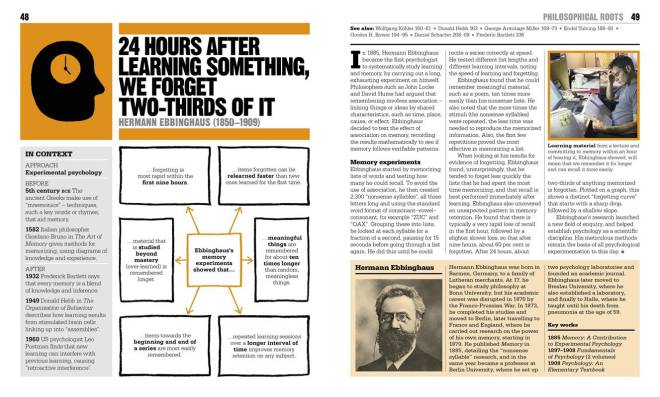
Three DK BooksSo what’s so special?

First,there is no single author. The collaborative approach focuses on presentation, clarity and consistency. This is less the work of a brilliant psychology teacher, more like a good old fashioned browse through, say, The World Book Encyclopedia from days of old. The type treatments are bold. There are pull-out quotes. There is color. No single idea runs more than a few pages. Everything is presented in a logical flow. There are boxes filled with biographical details. There is a clear statement of predecessor ideas and influences for each idea, and there is an equally clear statement about those in the future who built upon each idea. There are color pictures and diagrams. It’s tidy, presented for smart adult readers but certainly suitable research material for any school report.

The Philosophy Book is written by four academics and two writers: Will Buckingham is a philosopher and novelist with a special interest in the interplay between philosophy and narrative storytelling. Marcus Weeks is a writer, and author. Clive Hill is an academic focused on intellectualism in the modern world. Douglas Burnham is a philosophy professor and prolific writer on the subject. Peter J. King is a doctor of Philosophy who lectures at Pembroke College, University of Oxford. John Marenborn is a Fellow of Trinity College, Cambridge, UK, whose expertise is medieval philosophy. Taken as a group, they’ve got their philosophical bases covered (each of the books is put together by a team with similar skills). Marcus Weeks is the connection between all three books.

The bright yellow Philosophy book introduces the whole idea in comfortable language:

Philosophy is…a chance simply to wonder what life and the universe are all about…Philosophy is not so much about coming up with the answers to fundamental questions as it is about the process of trying to find out those answers, using reasoning rather than accepting…conventional views or conventional authority.”

So begins an introductory essay that introduces debate and dialogue, existence and knowledge, logic and language, morality, religion, and systems of thought and beliefs. A red color burst is the bridge into a timeline that begins the conversation in 624 B.C.E. And so, early on, we meet Pythagoras, who should be famous for more than his geometric theorem. In 428 B.C.E.–that’s about 2,500 years ago–Pythagorus developed a remarkable idea, that everything in the universe conforms to mathematical rules and ratios, and determined that this was true both of forms and ideas. Pythagorus was the leader of a religious cult, in which he was the Messiah, and his followers thought of his work as revelations. Here was a man for whom reasoning was the secret of the universe. He wrote, or said:

There is geometry in the humming of the strings, there is music in the spacing of the spheres.”

And:

Reason is immortal. All else is mortal.”

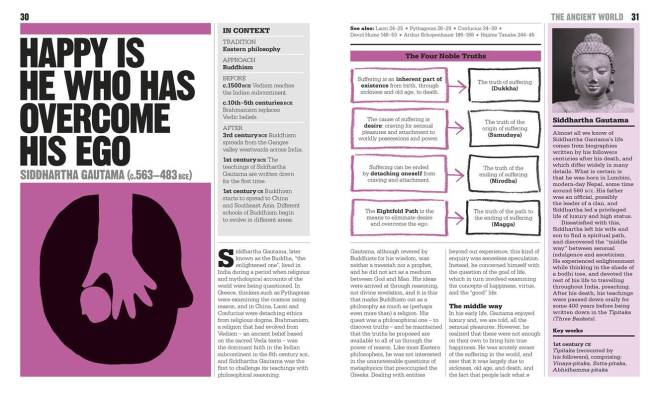
SiddharthaTurn the page and there’s Siddhartha Gautama and Buddhism’s four noble truths, explained in terms that anybody can understand, followed by the Eightfold Path presented in the Dharma Wheel. Siddhartha is covered in four good pages, and then, it’s time for Confucius and his Five Conscious Relationships.

All three of these men–Pythagorus, Siddhartha and Confucius–lived and worked around 500 B.C.E. More or less, they were contemporaries. A century later, philosophy turns to what is later called science, as Democritus and Leucippus come with the idea of atoms and the emptiness of space. (Seemed very early to me, too!) At about the same time, this from Socrates:

The life which is unexamined is not worth living.”

Jumping ahead to the middle of the book, Britain’s David Hume is considering human nature in the mid-1700s, and, in particular, the ways we cobble together facts:

In our reasonings concerning fact, there are all imaginable degrees of assurance. A wise man therefore proportions his beliefs to the evidence.”

Thinking in the present day, Palestinian philosopher Edward Said criticizes imperialism, Australian Peter Singer advocates for animal rights, and Bulgarian-born French philosopher Julia Kristeva questions the relationship between feminism and power. It’s a large field, and with The Philosophy Book, it’s possible for the average person to navigate with greater confidence than before.

The other two books are equally good.

The Economics Book begins with an article about Thomas Aquinas’s thoughts on prices, markets, and morality; the provision of public goods with thoughts by David Hume, whose words from the 1700s certainly resonate today:

Where the riches are engrossed by a few, these must contribute very largely to the supplying of the public necessities.”

Hume is among the few whose ideas appear in more than one of these volumes. And–I just noticed–The Philosophy Book tends to be stories about the people behind the ideas, The Economics Book tends more toward the ideas with less frequent stories about the people behind them (often because economic ideas are credited to multiple sources, I suppose). Making our way through The Age of Reason (“man is a cold, rational calculator;” “the invisible hand of the market brings order”);  on to economic bubbles (beginning with tulip mania in 1640); game theory and John (A Beautiful Mind) Nash; market uncertainty, Asian Tiger economies, the intersection of GDPs and women’s issues, inequality and economic growth, and more. Great book, but a bit slower going than Philosophy.

Psych Book SpreadThird in the trilogy is the bright red volume, The Psychology Book. As early as the year 190 in the current era, Galen of Pergamon (in today’s Turkey) is writing about the four temperaments of personality–melancholic, phlegmatic, choleric, and sanguine. Rene Descartes bridges all three topics–Philosophy, Economics and Psychology overlap with one another–with his thinking on the role of the body and the role of the mind as wholly separate entities. We know the name Binet (Alfred Binet) from the world of standardized testing, but the core of his thinking has nothing whatsoever to do with standardized thinking. Instead, he believed that intelligence and ability change over time. In his early testing, Binet intended to capture a helpful snapshot of one specific moment in a person’s development. And so the tour through human (and animal) behavior continues with Pavlov and his dogs, John B. Watson and his use of research to build the fundamentals of advertising, B.F. Skinner’s birds, Solomon Asch’s experiments to uncover the weirdness of social conformity, Stanley Milgram’s creepy experiments in which people inflict pain on others, Jean Piaget on child development, and work on autism by Simon Baron-Cohen (he’s Sacha Baron Cohen’s cousin).

When I was in high school and college,  I was exposed to all of this stuff, but only a small amount remained in my mind. Perhaps that was because I was also trying to read the complete works of Shakespeare, a book a week of modern utopian fiction, The Canterbury Tales, and studying geology at the same time. In high school and college, these topics were just more stuff to plough through. No context, no life experience, no connection to most of the material. Now, as an adult, it’s different. Like everyone I know, and everyone you know, I’m still juggling way too much in an average week, but I can now read this material with a real hope of understanding and retaining the material. Cover to cover, times three, these books will take you a year or two, but… without a test the next morning, you’ll be surprised how interesting philosophy, psychology and economics turn out to be. Just read them in your spare time, and behold (great word, “behold”) the ways in which humans have put it all together over several millennia. It’s a terrific story!