Next Spring, Near Paris

Start saving your money. Next May, go to Paris. Leave early on the morning–there’s an 820AM from Paris’s Saint-Lazare Station to Vernon, and then, there’s the taxi. The train arrives at 9:05AM at Vernon, and the cab will get you to the front entrance of Monet’s home and gardens by about 9:15AM. You want to arrive early, perhaps catch the mist rising from the water garden, perhaps take a few pictures or just gaze before the crowds populate every view. (Get there earlier, if you can; it’s always best to arrive first-in-line here.)

Sigh.

Summer is ending. There is autumn color: the purples and luminous yellows, the garish reds and the beginnings of orange trees reflected in the water. But there is nothing like spring.

In 1883, Claude Monet settled in Giverny, a village fifty miles outside paris. He rented a house with an orchard, the future Clos Normand, the flower garden at the front of the house that broke with the traditional idea of a pleasure garden.

9781419709609So begins the tale, told mostly in large, vivacious images, of Claude Monet’s extraordinary gardens (and home), told with love and with style through Jean-Pierre Gilson’s photographs, with text by Dominique Lobstein. Published by Abrams–one of the best in the world at this type of book, the visual tour begins, as it should , in the purple haze and tangled wisteria branches hanging over the famous Japanese bridge. The photograph is subdued; there are no bright colors yet. On the next two-page spread, there are brightly–colored bushes and their quiet reflections, house peeking out of the background behind some trees. Flip to the next of these several two-page spreads and it’s a riot of roses, glowing in the sun, red, pink, nearly white, braced by green leaves so dark and sometimes so nearly translucent, bold as can be. The text begins.

And on the next spread, so does spring. After the prelude, spring commences with a field of pink tulips, clean green fences and stair rails, dark green-blue leaves, and the stunning-but-simple house with its own pink facade and blue-green shutters. The effect is stunning, as if in a painting–and here, that’s precisely the effect that the master painter intended. To be at Giverny is to live inside a Monet painting, at least for a morning.

It’s not all cluttered with noisy flowers and oh-so-subtle impressionist gardening. “Monet wanted a garden that could ‘breathe’ with flowers, bushes and an open vista…” so he removed the many trees from the old orchard, and replaced them with Japanese cherry trees that yield, at least for a brief time in the spring, lighter-than-air blossoms, punctuated, here and there, as in any number of his paintings, with spots of bright color; here, red and purple tulips.

I wish I knew the name of every flower (and I wish the author’s captions included this information!). The phenomenal two-page spread showing yellow towers of flowers two stories high, dappled with pink-and-purple irises, golden yellow somethings (frustrated…), and it’s followed by several more. (I want to it to be spring today, and I want to go to Giverny tomorrow.)

And then, when your head is beginning to explode because Monet was such a genius, there’s a pair of small green rowboats, a field of happy daffodils, and in the distance, the Japanese bridge that he painted so often. Here, with a less exhausting spectrum, it’s possible to rest and reflect, and observe. The yellowy green of the locust leaves in contrast with the deep green of the background trees–with just a hint of small violet flowers to set the counterpoint.

The flighty, wavy petals of mauve tulips surprise me every time I see them. Here, they’re pictured with the famous lily pad pond in the fuzzy distance, and the sharp, sun-dappled orange wallflowers in the foreground. Another two-page spread, one of my favorite two-page spreads in the book.

Just checking–I’m not even half way through the book. Some surreal lily pad images–two look as though they were made for a science fiction film, but they are real–and then, with a page turn, there are paths of dry ochre leaves on the ground, paths with strong color of fall, not spring. The quiet beauty of barren trees and cool skies, the yellowing willow and golden hour light, it’s bittersweet. Moreso because the last set of images show the house with shutters now closed tight.

But then, we get to go inside. A row of old copper pans artfully hung in front of a blue-and-turquoise tiled wall with cabinets. A yellow dining room whose walls are filled with Japanese prints (Monet collected them, and they are a highlight of every Giverny tour, but few people spend the time to look at them as closely as the artist once did). It’s a classy old country home, less formal than most. And then, there’s a small staircase leading down to a room with Persian carpets on the floor and a whole lot of miscellaneous Monet paintings almost haphazardly scattered on the walls. It’s his studio.

The book closes with snow. Which means spring is coming again. Soon.

Touched by an Eagle

I was quite taken with Ellen Eagle’s new book, Pastel Painting Atelier.  It’s a classy book, hardcover and quite beautiful, as this atelier series tends to be. Unlike most books about art, unlike most books written for creative people, this one provides several hours of quiet time with the artist at work in her studio, in her mind, with her eyes, with her hands.  She sees beauty in the tiniest of details: the curve of the silhouette of a woman’s face, the arrangement of the old pipes beneath the even older sink in the corner of a Manhattan studio, the private thoughts that take shape in a best friend’s eyes.

Here and there, the book is an instructional work for artists who wish to perfect their pastel technique, but that’s a small part of the whole. (In fact, the obligatory step-by-step demonstrations that end the book are its least essential part). The best parts are small comments that accompany the many sensitive images, often of women who might, in a glance, be dismissed as ordinary. Eagle describes her model, Mei-Chiao, as follows: “the inward gesture of the head to the chest was beautiful to me, and the backward pull of the shoulders is balanced by the triangular opening blouse neckline.” Minor details become a beautiful painting. Same girl, different painting, one that I found by exploring Ellen Eagle’s portrait website, an endeavor I recommend when you have the time to look carefully…

Ellen_Eagle052

The artist’s use of line and color is quite masterful, and throughout the book, it’s easy to get lost in page after page of exquisite, often subtle, portraits. She has a knack for capturing women especially well, almost as if she is drawing and painting their minds as well as their fine features. One of my favorites is below, also taken from her website. She describes the painting below as follows: “In Roseangela’s flesh, I saw warm yellow-greens co-mingling with touches of cool violets and pinks. The planes that faced the light contained color pinks, blues, and greys. Warm tones ran throughout the flesh. Warm, dark burnt sienna defined the depths of her eye sockets. Where the orange dress caught the light, the colors took on a cool temperature. The weight of her clasped hands pulled the dress inward, causing a slight angle away from the light, and the cooler tones gave way to warmer ones.” It’s almost as if she’s writing a poem with colors.

018ee39

This is a gentle book, an inspirational one with the promise of some instruction for the visual artist, but you need not be an artist to see what she sees, and to enjoy the way that Ms. Eagle perceives and so lovingly sees the world.

Here’s the cove. The image on the cover is another favorite. The artist was especially taken with the pose struck by the model. Be sure to visit  Eagle’s website to see the uncropped version.

book

The Spacey McTaggart Lecture

So here’s Kevin Spacey telling the truth about the television industry, the movie industry, and the new reality that places creative people in control of their relationship with the audience. He is harsh, realistic, funny, and deeply experienced–and full of wisdom and insight gained through his Netflix deal, his work with the Old Vic theater in London, and a career that began, with the help of actor Jack Lemmon, at age thirteen.

I especially enjoyed Spacey’s celebration of “the third golden age of television” that began, more or less, with Hill Street Blues, extends through The Sopranos, on through House of Cards. Just in case you’ve missed one or two, he runs through a dozen-plus excellent television series whose connection to the audience is the result of powerful creative risks taken by creative people, and by the small number of laudable television executives with the guts to protect those creators.

Spacey connects the dots in a pattern that’s  obvious to anyone who is willing to face the truth about the television industry–and devastating to those who still believe in the status quo, appointment viewing, watercooler conversations, and television networks as the fundamental organizing principle of the home entertainment industry. Time and again, he celebrates the creative people…and resets expectations for the next generation.

The new generation of creatives is different. We’re no longer living in a world where someone has to decide if they’re an actor, writer, director or producer. These days, kids growing up on YouTube can be all of these things…

The James McTaggart Memorial Lecture opens the Edinburgh Festival. This lecture is 49 minutes long. I encourage you to watch the whole thing.

Let me tell this another way: he tells a heck of a good story.

(Here’s a link to the text version.)

Thanks, Bill!

GinLane

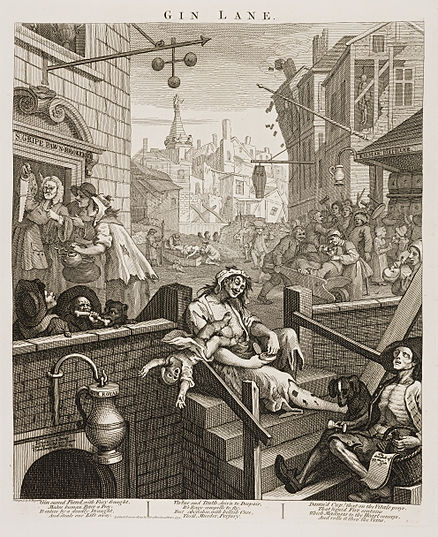
Hogarth worked out every minute detail of even image: the angle of the robe behind the gin-soaked mother so that the eye is draw directly to her head; the leering muncher of the large bone, the position of the pawnbroker’s sign above their heads as a kind of upside down religious symbol; the distant grey of the growing city in which these denizens would never take part; so much more. That was the painter, and illustrator, William Hogarth’s intent: to tell remarkable, compelling stories through a series of images sold in a subscription series. His work was widely pirated.

If Bill Hogarth’s father, Richard, was alive today, he’d probably be writing a blog, cleaning up Wikipedia articles, and spending far too much time watching TED Talks. He was always busy writing what he hoped would be a popular play or a textbook for schoolchildren. As a boy, Bill tagged along with his father as he made the rounds from one coffee house to another, for that’s where the printers tended to meet their clients, customers, and friends. In a word, coffee houses in 1700s London were places to network. In time, Richard Hogarth managed to sell of his manuscripts to a a London printer named Curll; it would become a book that would “bring joy to learning through the playing of games” enabling (a then-radical) idea of learning without the direct assistance of a teacher. With tears of joy in his eyes, Richard Hogarth signed the publishing contract, and that, as would be inevitable in a story of this sort, was his undoing. When Curll demanded money to pay printing costs, Hogarth could not pay the bill, could not fulfill the requirements of a contract that he clearly did not understand. Richard Hogarth was placed in debtor’s prison, a nasty place where bribery could, at least, secure better living quarters for the fledgling author and his small family.

Son William was fortunate to secure an apprenticeship with an engraver, made some contacts, eventually earned some money, and became quite popular as both a painter and a storyteller. His prints, including the one pictured at the top of this article, were published in series, offered by subscription. The originals made money, but they were often copied (pirated) by unscrupulous printers throughout London. As he worked his way up London’s economic and social ladder, William Hogarth became a very popular painter, busy with commissions until the very last years of his long career. Battling syphilis (a very common theme in stories of this era), frequently lusting after young women (especially in his younger years), Hogarth often considered the fate of his father, and devoted much of his life to steering clear of any such problems.

Benefitting from his upscale connections, Hogarth began to pursue a new law, one that would protect creative people from piracy.  At the time, this was extraordinary; in London, and elsewhere, piracy was simply part of the system. Nobody much questioned the many illegal copies of an artist’s work. Printers published whatever they wanted to publish.  Standard business practices were uncommon. An artist who fought the system ran the risk of speaking truth to power, and could well end up in debtor’s prison, or worse (that is,  murders under dark bridges were extremely common at the time).

Hogarth had been painting, on commission, for a Select Committee of Parliament as they investigated gaols (now: “jails”). Hogarth painted the deliberations of the committee, made a friend of Sir Archibald Grant of Monymusk. In time, Hogarth visited the influential man in his home, and over tea and gooseberry tarts, they considered a plan. There was an act of Parliament from Queen Anne’s time that protected writers, so Sir Archibald, in his strong Scots accent, thought aloud:

The connection to the other Act is gud. They like laws that build on other laws.”

Sir Archibald wrote letters to several important people in Parliament. Hogarth hoped that James Oglethorpe would be one of them, but his London home was boarded-up. Sir Archibald explained that Oglethorpe was in the colonies, founding a new one called Georgia. A short time later, Oglethorpe returned, and Hogarth gained his support:

Of course, I’ll support you. The book trade is run by scoundrels and idle incompetents. Always has been, always will be. But we’ll fire a few shots at them, eh, Hogarth?…Show me where to sign!”

Hogarth’s Law eventually passed and became law. Of course, his very next set of prints were his poorest sellers to date–he probably made more money on the previous subscription series, even with the piracy. And then, of course, there was the matter of enforcement of the new law–uneven because there was no system to police the bookseller’s constant practices. Still, times did change, and we benefit from Mr. Hogarth’s good work today.

So: the next time you’re in London, make your way to Leicester Square (Leicester Fields in his day), and take note of the statue of the man who made the world safe for creative professionals.

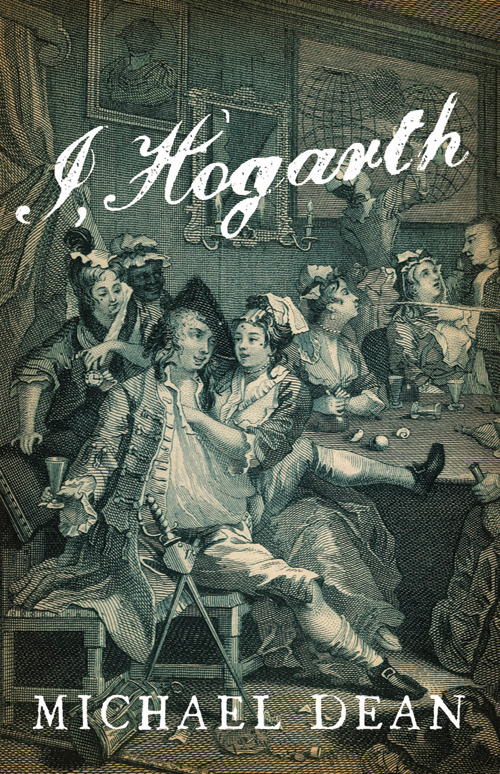
And, if the story intrigues you, pick up a copy of a lovely novelization of his life entitled I, Hogarth by Michael Dean, from which this article is derived. There is much more to Hogarth’s story–a lusty one, in parts–intentionally reminiscent, in its way, of early British novels that were developing at the same time Bill Hogarth was telling his stories in pictures.

I-Hogarth-1-copy

The Brilliant Douglas Engelbart

Douglas Engelbart passed away recently. His name may be unfamiliar. His work is not.

Engelbart was an engineer who invented, among other things, your computer’s mouse, and, by extension, his work made the trackpad possible as well. In his conception, the mouse was a box with several buttons on top and the ability to move what he called an on-screen “tracking point.” In 1968, this idea was radically new. I encourage you to watch Mr. Engelbart in action by screening the video, now widely known as “The Mother of All Demos” in the hardware and software community because of all that he presents. Among the innovations: a video projection system, hyperlinking, WSYWIG (what you see is what you get–the basis of word processing and more), teleconferencing and more. He’s clearly having a wonderful time with this demo, very proud of what has been accomplished, keen on the possibilities for a future that we all now accept as routine.

Douglas Englebart in "The Mother of All Demos," as this hour-plus presentation has come to be known.

Douglas Engelbart in “The Mother of All Demos,” as this hour-plus presentation has come to be known.

You’re actually able to point at the information you’re trying to retrieve, and then move it

Intrigued? Here’s a look at the input station. On the right is the mouse; at the center is the keyboard; and on the left is an interesting five-switch input device that allows quick typing by holding down each of the five keys in various combinations to enter characters without using the keyboard (some of these ideas were later revised for current trackpad use).

A very early version of a computer mouse as explained by its inventor, Douglas Engelbart.

A very early version of a computer mouse as explained by its inventor, Douglas Engelbart.

Still unsure about whether this video is worth your time? Think of it as a TED Talk, circa 1968.

Hungry for more? Watch this video on the Doug Engelbart Institute website. Here, he speaks about collective learning and the need for a central knowledge repository. The video was recorded in 1998, shortly after the internet first became popular. His vision recalls the era when we all dreamed about what the internet might someday be.

The complexity and urgency of the problems faced by us earth-bound humans are increasing much faster than are our aggregate capabilities for understanding and coping with them. This is a very serious problem; and there are strategic actions we can take, collectively. – Doug Engelbart

Life with Lenny

Dinner with LennyFor nearly all of his professional life, journalist Jonathan Cott has written for Rolling Stone magazine. In 1988, he pitched the idea of an interview with Leonard Bernstein to the editors, and a year later, Cott and Bernstein spent twelve hours together at Lenny’s home in Fairfield, Connecticut. They drank vodka (to better enjoy Lenny’s recording of a Sibelius symphony), ate chicken pot pie (Lenny to vegetarian Cott: “Vell, it vouldn’t hoit!,”referring to the old story…)

You don’t know the story? It really happened in the great days of Yiddish theater when the leading actor collapsed onstage during a performance. And a doctor rushed up to help him, but the actor was already dead. And out of the audience came a woman’s voice: “so gif him a little chicken soup!” And the doctor announced that the actor had died…and the woman called back to him, “Vell, it vouldn’t hoit”

For Lenny, it’s all about passion, the great story, the phenomenal breadth and joy of life. That’s the abiding theme of the whole conversation, one that spans, in book form (“Dinner with Lenny: The Last Long Interview with Leonard Bernstein,” written by Jonathan Cott and published by Oxford University Press). Here, he speaks of Alma Mahler–the famous composer’s wife. Cott begins with a question: “I’ve heard that Mahler had to talk to Freud about that problem…”, then Lenny answers:

“You know, Mahler made four appointments with Freud, and three times he broke them because he was scared to find out why he was impotent. His wife, Alma, was then ***ing everybody was was coming by–Gropius, Kokoschka, Werfel, and Bruno Walter, among others–sent him to see Freud. He was twenty years older than she, and she was the prettiest girl in Vienna,–rich, cultured, seductive… She tried to get me to bed. Many years ago, she was staying at the Hotel Pierre in New York–she had attended some of my New York Philharmonic rehearsals–and she invited me for “tea”–which turned out to be “aquavit”–then suggested we go to look at some “memorabilia” of her composer husband in her bedroom. [Laughing] She was generations older than I. And she had her hair frizzed up and was flirting like mad… She really was like a wonderful Viennese operetta. She must have been a great turn-on in her youth. But anyway, Mahler didn’t pay enough attention to her–she needed a lot of satisfying and he was busy writing his Sixth Symphony in his little wood hut all night…”

Cott is a long-time Bernstein fan. The infatuation began when Cott, then eleven years old, on November 14, 1954, watched Bernstein explain Beethoven’s  Fifth Symphony. The the first page of the score had been painted on the studio floor. Musicians, with their instruments, were standing on each stave. Bernstein explained Beethoven’s creative process by dismissing specific instruments from the score–here’s how it sounded with and without this woodwind, that brass instrument–and then, Bernstein conducted the first movement as Beethoven wrote it. Cott “made sure to watch Bernstein’s other Omnibus programs, such as “The World of Jazz,” “The Art of Conducting,” and “What Makes Opera Grand?” At age 15, Cott took Beth (his first “real” date) to see Bernstein’s Broadway smash, “West Side Story.” He became a lifelong fan.

After listening to the solo clarinet that begins his own Columbia LP recording of Sibelius’s first symphony, listening, with Cott, to the clarinet solo that begins the piece, Bernstein announces that the president of Finland had appointed him “Commander of the Order of the Lion,” then “started to sing–humming, crooning, moaning, shouting-out gospel style–as he conducted and danced along to the four movements of the symphony…All the while he added recitative-like interpolations, explanations, words of approval and disapproval, and assorted comments for my benefit about this impassioned, mercurial, wildly inventive work. ‘Listen, child!’ the maestro announced to me. ‘Here’s the Jewish rabbi theme…There’s Beethoven…There’s Tchaikovsky–it’s Swan Lake–and just wait for some Borodin and Mussorgsky later on…Some Grieg (but better than Grieg)…And now comes Sibelius. [L.B. sang and quickly wrote out for me on an old envelope the distinctively Sibelian rhythmic cell we’d just heard…] Now a wind…sighing…And now a pop song…”

So that’s a taste of it. Twelve hours of conversation with one of the 20th century’s iconic figures in music, free-associating with a compadre who was smart enough to keep the conversation going and catch just about all of the references (in fact, Cott called Bernstein for a followup just to make sure he understand everything that Bernstein had said). Lenny is a larger-than-life character in every decade. He was the boy wonder who leaped at the opportunity to first conduct the New York Philharmonic, on national radio, with far less than a full night’s sleep and a reasonably serious hangover. He was the teacher who brought classical music to the baby boomer generation through the clever use of the new TV medium. He was the conductor who performed Beethoven’s Ninth on both sides of what was, moments before, the Berlin Wall. He was the conductor who led the Israel Philharmonic as a celebration of the glory of a new Jewish homeland. He was deeply committed to  Civil Rights and the movement to stop the Vietnam War, despised Nixon, and, as an intellectual, still struggles to understand what happened and why:

That was a very bad time. There was nothing positive about that time. We were living under the thumb of Richard (****ing) Nixon, one of the greatest crooks of all time. But the point I want to make is that anybody who grows up–as those of my generation did not–taking the possibility of immediate destruction of the planet for granted is going to gravitate all the more toward instant gratification–you push the TV button, you drop the acid, you snort the coke, you do the needle. It doesn’t matter that it makes you impotent… Anything of a serious nature isn’t “instant”–you can’t “do” the Sistine Chapel in one hour. And who has time to listen to a Mahler symphony, for God’s sake?”

Cott answers, patiently, “I do.”

Don’t Take Your Work Too Seriously

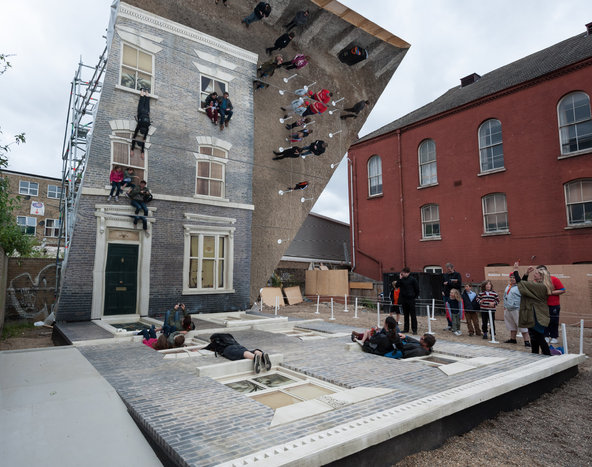
That’s one of the six creative tips offered by Argentine artist Leandro Erlich in a wonderful, small New York Times article. The others are equally good advice, especially for creative professionals.

It’s all about the picture below, provided to The New York Times by Gar Powell-Evans, courtesy of Barbican Art Gallery. Look closely and you’ll understand what it’s all about.

Leandro_house

Literacy in the Era of the Image

The word literacy finds its roots in the eighteenth-century word literatus, which quite literally means ?one who knows the letters. But it has come to refer to much more than the ability to read an alphabet or other script. We think of literacy today as meaning “proficiency”–or more broadly, the ability to comprehend and to express or articulate.”

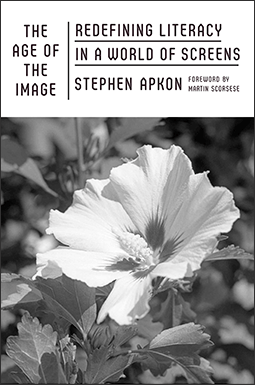
That’s the just the beginning of an interesting book by Stephen Apkon entitled The Age of the Image: Redefining Literacy in a World of Screens. As the title suggests, and as the introduction by director Martin Scorsese illustrates, there is more to 21st century literacy than comfort with the printed word. Apkon directs the Jacob Burns Center for Film and the Media Arts Lab, and so, he spends a fair amount of time thinking about the ways we exchange stories, ideas, and, of course, images.

ageoftheimage_255pxTrying to understand multimedia literacy by reading a book is, of course, absurd, but Apkon does the best he can within the limitations of the printed word. This adventure is made more complicated because of the necessary stops along the way: in order to understand moving images, one must first understand still images, and so, there is the obligatory tour through Civil War-era photography, and so on. I’m geeky on these subjects, so I found these chapters interesting, but the book doesn’t really take off until we get to the chapter about the brain’s responses to visual images, the one that’s called “The Brain Sees Pictures First.” The bottom line message: context is king. Individual images without connection to a story are filtered by the brain and rarely provoke any long-term impact. They may capture attention (the brain is constantly on the lookout for potential danger), but they are quickly and efficiently filtered out and almost always forgotten. Showing portions of Charlie Chaplin’s “City Lights” to an audience, researchers found that “…when you connect images in a fashion that creates a narrative story in a literate way, you elicit powerful responses.”

Apkon further illuminates and magnifies his arguments through extensive conversations with researchers, discussions about the latest MRIs and their ability to measure brain impulses, and considers our image culture from many perspectives. And yet, so much of what he writes, I think we already know from daily experience. We ignore most of the images that we see, but we recall memorable stories. With digital technology, we are as much the creator as the consumer.

Yesterday, at a wedding, I was struck by the number of photographers, and their interaction with the one professional in the room. The pro would set up a shot–a crowd shot of all of the bride and groom’s college alums–and then, he would step back so that twenty other people could take the same picture using their phone/cameras. I’ve become a fan of watching the images that people capture, in real time, on their phones. Often, the results are excellent–the technology takes care of itself so there is no focus or exposure issue (most of the time). Instead, there is only composition, and because everyone see so many images, the composition is often strikingly good.

The interesting theories explored in the first half of the book fade into a discussion of production in the second half. I suppose this is inevitable because, these days, we are all producers, directors, and cinematographers.

That’s the hard part, of course. Here, it’s expressed in book form, but we’re facing the same issue in every classroom, and with every book we read. We’ve become literate consumers, and literate creators. I read a book and then I write about it. I think about what I’ve read, and then I generate additional media. You read what I write, and perhaps, what Stephen Apkon writes, and pass it along to friends where these ideas may take on a life of their own. Memes (old usage) floating around in internet space. Some are images, some are just ideas not yet captured in visual form. Which is the relevant impetus for literacy? Is it the words I wrote so easily by punching buttons on a keyboard without leaving my chair, or is the images that I create by lifting my phone to my eye, pressing just one button to shoot and another to send it to the world? Or is the new proficiency of literacy the ability to discern whether any of this babble is worth even a nanosecond of your time and attention?

(No good way to end this one. Feel free to write your own ending.)

The Crossley ID Guides: Raptors and more!

hawk

Perched on a fifth floor windowsill in downtown Trenton, New Jersey, a young Cooper’s Hawk stood close enough to peer into his (or her?) eyes. A thick glass window separated the hawk from television producer Rich Renner’s camera. The hawk visited frequently. We were interested, and the bird, no less so.

I know this is a Cooper’s Hawk because the bird matches the pictures and description in a new book called Crossley ID Guide: Raptors. If Rich’s photograph included the tail feathers, I could probably tell you whether we’re looking at a male or a female bird. I know a lot more from the descriptive text: this particular bird is probably under a year old because its coloration changes after its first molt, which occurs around age one. Here in the U.S., Cooper’s Hawk is a very common bird, seem most of the year in most of the states (less so in the Great Plains, where it’s mostly seen in warmer or cooler months).

5-Sharp-Shinned-Hawk

The Crossley ID Guide has become especially popular because the birds are shown (or digitally added to) natural habitats. The birds in flight, above, are Sharp-Shinned Hawks–apparently, the adults are often mistaken for Cooper’s Hawks. Here, the hawks are flying around one of the U.S.’s most popular birding sites (home of the annual World Series of Birding), Cape May, New Jersey.

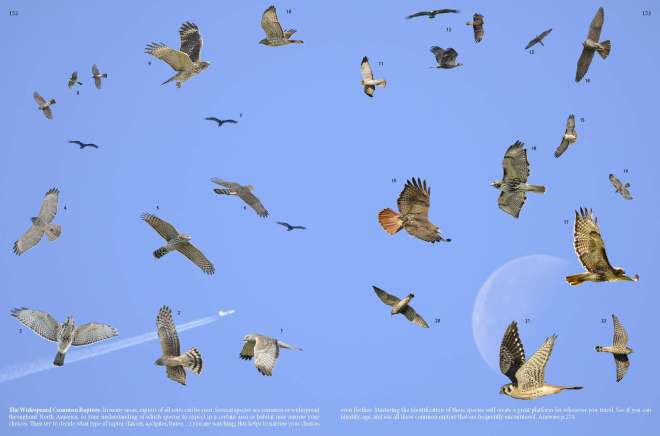
Birding, and books for birders, are more popular than ever before. This is, in part, due to interest from an aging baby boom population (especially with women), the availability of digital photography and the requisite long lenses (especially among the men), and, generally, a growing awareness of nature. In particular, the work of Richard Crossley, a long-time birder and bird photographer, has gained notice because of the inviting visual approach used in the books. The book is filled with lavish natural spreads, or composites, as above, and also with visual quizzes in which readers are asked to identify birds in flight, as below.

13-Widespread-Common-Raptors-Mystery-Plate

I especially like the Raptors book because the birds themselves are both fascinating and often present in the area where I live. When I spot a raptor flying above, I can’t help but stop and watch the bird in flight, often for quite a long time. They are very special birds, both from afar and close up, and the new ID Guide adds texture and context to their visual appeal.

The book about raptors is runs several hundred pages, but it that’s only about half as long as the weighty volume about Eastern Birds. This is a book that will entertain you all summer long, especially if you enjoy watching backyard birds, or if you’re willing to schlep this volume along on vacation. Here’s a layout of Glossy or White-faced Ibis, beautiful page after page featuring the secrets of owls in their habitats: Short-eared, Long-eared, Barred, Barn, Great Horn, Northern Saw-whet, Eastern Screech, Elf, Burrowing, and more. There are both Red-bellied and Red-headed woodpeckers, each in its own full-page layout. Chickadees, robins, thrush, various warblers, and the wonderful Little Blue Heron who seems to enjoy bathing in a creek just across from my home.

These are the birds you see every day, or sometimes, glimpse while traveling. They come alive in these layouts, making the Eastern Birds book one of the best browses around. The Crossley Raptors book has three things that the Eastern Birds book does not: first, those wonderful visual quiz layouts. the wonderful visual quizzes; second, lengthy descriptions about each individual species; and, third, my favorite part, which goes something like this:

On a frigid winter day, a mass of songbirds anxiously feeds on seed strewn in a grassy area cleared of snow, their bustling chatter discernible through the living room window. At once, they freeze, pinning themselves low to the ground in response to alarm calls from nearby jays. From the center of the yard a blue streak appears, seemingly materializing from thin air, moving swiftly toward the flock. The group scatters as a high-speed chase ensues. The small, compact hawk picks its target. It extends its long legs and talons outward and fans its long tail as it banks sharply and snatches a White-throated Sparrow from midair. The hawk disappears into the brambly thickets without moving a branch; the only evidence of the event is a plume of feathers softly floating to the ground.”

Each description begins that way: with an observer’s sense of the birds living their lives.

Special books, indeed. but don’t take my word for it. Try a free sample!

This link takes you to Princeton University Press’s FREE (yes, completely free) download of the new Crossley ID Guide: Raptors book as a .pdf, and also another free book about garden birds. Download here, then add it to your tablet or smartphone for reference wherever you happen to be.

Six Thousand Cheering Fans

MacBookAirI raced home tonight to watch two hours of programming that will never appear on television. You may not even recognize the name of the program: “WWDC2013” I don’t know how many other people watched, but I suspect it’s over a million.

It’s difficult to think of any company whose business partners are also its biggest fans. Throughout today’s Apple Worldwide Developer’s Conference, every time an Apple executive introduced a new feature, the crowd went wild–just like they do on “The Price Is Right.” Here, we’re talking about the addition of tags to file icons in the Finder menus, so the applause (which seemed genuine, and was likely not prompted by the “Applause!” signs that hang above game show audiences).

Think about this: Apple one of the top companies in the world. Twice a year, they hold an event in a large auditorium to tell partners and customers about the latest MacBook Air, or improvements in their  operating system, and they generate more excitement than the majority major league sporting events ( more press, too).

This phenomenon goes far beyond traditional product marketing or consumer behavior. On the very popular MacRumors website, which does nothing but track possible directions that Apple may go, there was a countdown clock with the number of days, hours and seconds until the big event. I checked the site at least once a day (okay, three or four times a day) to see whether anything new was posted. This is obsessive behavior, not at all reasonable, and completely dissimilar to anything else in my life. I’m hardly the only one who is engaging in this silliness.

Today, Apple announced that they now own the number one slots in desktop and notebook computer sales. Their five year growth is more than 5x the entire PC industry. Their iPad and iPhone are industry leaders. The entire ecosystem works together as one–and they’re improving their iCloud systems so that the experience is that much more satisfying, rich, and competitive. Each successful product adds to the value of the whole, not just for the company, for every participant in Apple’s supremely well-constructed and well-managed ecosystem. It’s a brilliant bit of 21st century thinking, and it’s remarkable that there aren’t a dozen other companies with similar schemes.

I probably spent more combined time with my iPhone, iPad and iMac than I do with anything else I own. They contain my creative work, my communications with just about everybody I know, my schedule, my written work… in short, they play a very significant role in my daily life. Do I have an emotional connection to these metal and plastic parts? I want to say no, but I did spend the evening watching two hours of Apple propaganda this evening (and rushed home to do it).

Is this some sort of a man-machine addiction? I do find myself at something of a loss if I’m separated from my stuff for too long. I do spend time with Apple products just as soon as I wake up and in the minutes before I head for my bedroom and sleep. And I’m not disclosing these personal habits because I think they’re unique. I suspect there are a few million people who are behaving in ways that are far more extreme than the ways I think about these tools.

I could go on, but I do have some things I want to do tonight. (No, I’m not going to stroke an iPad while I confirm tomorrow’s schedule. I’m going to watch the Samsung TV downstairs because we recorded the TONY Awards on CBS using the Verizon FiOS DVR last night when we were too busy shopping at IKEA to make it home in time for the show.) I am pleased with all of these brands because they deliver upon their promises, but none of them have managed to become a part of my life in  the way that Apple has managed to do.

Why? Mostly because the Apple stuff works so well (and if it doesn’t there’s the Genius Bar at the Apple stores, and Apple Care by phone). Nothing else I own has achieved that level of interoperability (to use a tech term). Taken individually as products or collectively as a complete system, it’s all elegant, reliable, and cool. And although my iMac tends to crash from time to time, and the iCal sync doesn’t work too tell on one of my devices, the whole thing is very, very impressive. Better, in fact, than just about anything else I own.