I don’t usually post funny little graphics (okay, sometimes I do), but as a CEO of a nonprofit, I certainly recognized the truth in this graphic. It comes from a clever website called The Cooper Review.

I became curious about what The Cooper Review was all about, so I found the source of this graphic and learned about Sarah Cooper. Here’s the start of her bio: “I was born a small blackish child in Jamaica. My mother is half German and my father is half Chinese, which is why I look Colombian. My family moved to Washington, DC when I was three. As soon as I learned to talk I was correcting my parents’ accents and grammar.”
No need to go on and on Sarah’s stuff when it’s only a click away. I did some exploring, and if every item from this former Google designer’s site doesn’t hit the mark, her batting average is really impressive. I especially liked her analysis of nodding behavior at meetings, a good place to begin.
Ms. Cooper’s first book will be published in October. I’m guessing it will become quite popular.

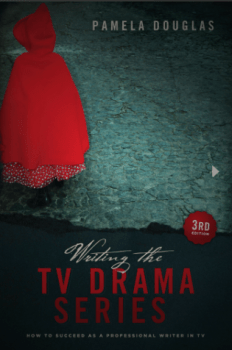 Moving from the old world of traditional broadcast networks through hybrid innovators including cable networks then into the new world of internet services and alternative funding models, she covers the waterfront. There are interviews with knowledgable leaders from Netflix, Kickstarter, HBO, and other companies whose work matters a great deal in 2015.
 Nowadays, most cable networks are coming to the same conclusion: their future is going to be defined by original programming (scripted and unscripted, both have their place), and by events (which tend to work only sometimes, in part because they’re expensive and also because they’re difficult to construct with any frequency). So there’s the conundrum for the deeper future: as each cable network, and each subscription service, develops and markets their own unique programs, the audience becomes that much more fragmented. The pie slices become smaller, the ability for any individual player to make an impact becomes that much more challenging.
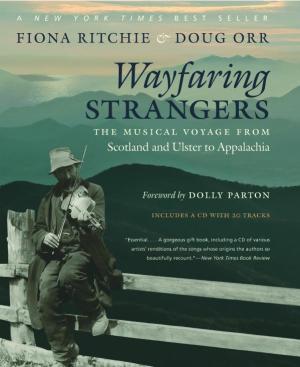 Every once in a while, I’ll catch an episode of The Thistle & The Shamrock on a public radio station. Seems to me, the show has been on forever, but I’ve never thought much about the program’s title. Of course, it refers to music from Scotland and from Ireland, but that’s a very small part of the story that its host / producer tells in her new book, Wayfaring Strangers: The Musical Voyage from Scotland and Ulster to Appalachia. (From the start, I should point out that this is a fabulous book, a work deserving of all kinds of awards and many quiet hours of reading accompanied by many more spent listening, preferably to live music.) In fact, it’s not just Ms. Ritchie’s book: storytelling and scholarly research duties are shared by an equally talented music lover, Doug Orr, whose Swannanoa Gathering is, among many good things, the place where the idea of the Carolina Chocolate Drops took shape: “they have helped revive an old African American banjo tradition that was fast disappearing.”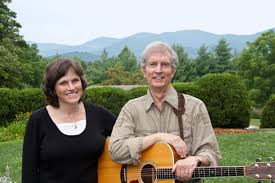
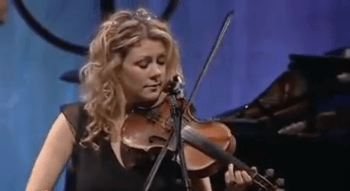
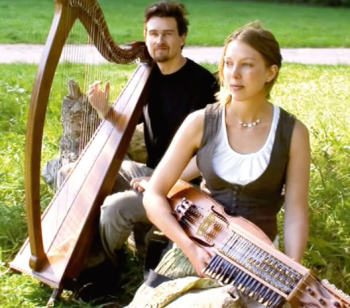
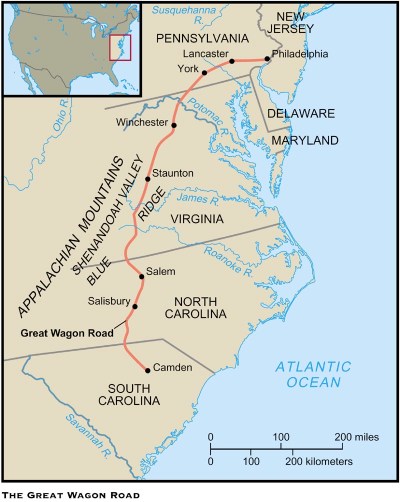 The authors have done just that, and so, in their way, have Bob Dylan, Woody Guthrie, Pete Seeger, and dozens of others whose names may be less familiar. But the authors have accomplished more. They’ve managed to weave a very complicated story together, a saga of migration and evolution, Viking travels and minstrel shows, song fragments that survived for nearly a millennium, wonderful artists from Scottish poet Robert Burns to Kathy Mattea. There is so much love and passion for the history, the music, the instruments, the people, the land. There’s a CD bound into the back cover so you can hear the music, with every track explained in fascinating detail. There are dozens of handsome full page photographs that provide a sense of the land, plus illustrations of the instruments. Every time I wanted to know more about an interesting concept, I’d turn the page and find a very comprehensive briefing on, for example, “The Ceili, or Ceilidh” (a social event with music that originated in the eighteenth and nineteenth century in Scotland and Ireland); the dulcimer; “Child ballads” (Scots and Irish ballads classified by Harvard Professor Francis James Child, and often referred to by their numbers). I had never heard of The Great Philadelphia Wagon Road. but now I understand its importance. Before Ellis Island, Philadelphia was the American point of entry for most immigrants from Ulster. They’d travel this early highway west and then south, ferrying across the Susquehanna River to Winchester, Virginia (home of Patsy Cline) and the Shenandoah Valley and on to the Yadkin Valley terminus in North Carolina (think in terms of today’s Boone, NC); Daniel Boone extended the trail to what became the Wilderness Road out to Kentucky’s Cumberland Gap.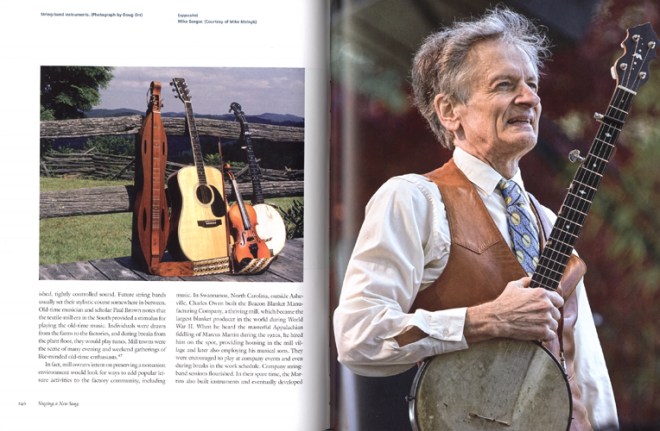

 In book, lecture and conversation, Scott McCloud has taught me a lot. But it’s one thing to be a teacher and another to be the creator of the material. The expectations become unreasonably high. The student wants to see every lesson incorporated in exquisite elegant prose and picture. The story must be perfect. The storytelling, better than perfect.
 As David tells his story, the evidence of Scott’s visual storytelling skill propels the sense of reality. There are extreme close-ups and wide streetscapes, frames without dialog that communicate more than those with words, and an interesting isolation technique in which David is fully inked against a world that is rendered only in sketch form. There’s a girl, of course, an angel of sorts, and as in the second act of Stephen Sondheim’s Sunday in the Park with George, a difficult-to-fathom big city art scene (Scott and Stephen wrestle with some similar themes.) Main character David tells us that he hates parties and by extension, the whole scene, but those pages are among Scott’s very finest: a crowded multi-page sequence where you can feel the energy of a noisy large-scale party and the frustration in coping with the idiots who won’t leave you alone while you’re trying to keep some girl within your visual range, while you’re trying to chase her before she’s gone forever. (Gee, he does this well!)
 For me, that’s the treat, same as reading Understanding Comics, same as watching Scott lecture, same as spending time with him. We’re living in a world filled with stories and ideas, and clever ways of communicating. If it’s all as simple as A-B-C, then the magic isn’t so magical. Life’s more complicated than a straight series of logical events—and that’s the beauty of a well0-crafted graphic novel. No shopping mall cinema audiences to satisfy with a clearly articulated happy ending. No need for extreme helicopter crashes or uncomfortable explosions punctuated with graphic violence. The story can be personal, it can be told by a single storyteller (provided the storyteller is willing and able to spend several years writing and drawing his epic), and it can be somewhat nonlinear. With that, a reader’s note: do it in one day. That is, find yourself a good stormy day, turn off the cell phone, and just lose yourself. Don’t think too much—just allow the storyteller control your mind for a few hours. We do this for movies all the time—with this book, you don’t want to disengage. You want to pay attention, and grab the ideas as they’re unfolding, then return to study the craft. Last weekend, I read the book. Today, a Saturday, I returned to study the construction of the visual sequences, the use of characters, my favorite scenes and how they were put together.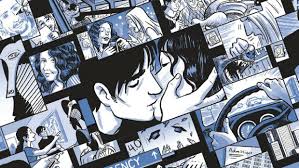
 This is going to take about fifteen minutes, but I think it’s worth the time.

 Walter Isaacson is one of the smarter people in the media industry. As a keynote speaker for this past week’s Digital Book World conference, he talked about the limitations of his most recent book,
  For example, maybe a digital book is not a book at all, but a kind of game. Scholastic, a leader in a teen (YA, or Young Adult) fiction publishes a new book in each series at four-month intervals. The publisher wants to maintain a relationship with the reader, and the reader wants to continue to connect with the author and the characters. So what’s in-between, what happens during those (empty) months between reading one book and the publication of the next one in the series? And at what point does the experience (a game, a social community) overtake the book? NEVER! — or so says a Scholastic multimedia producer working in that interstitial space. The book is the thing; everything else is secondary. In fact, I don’t believe him—I think that may be true for some books, but the clever souls at Scholastic are very likely to come up with a compelling between-the-books experience that eventually overshadows the book itself.



 It’s a salad with the obvious fresh greens and toasted scallops, smaller than the ones we find in the U.S., and a bit saltier, too. There are bits of a local bacon, too, which enhances the salty favor. The sauce is a red pepper puree, which adds the necessary sweetness to balance the salty flavor. Bit of polenta toast complete the dish.





 Digital Insider