I’m always impressed with The RSA’s animations. This one was just released. It tells an important and urgent story about climate change. Acknowledging the nastiness of dealing with two catastrophes at the same time, this video runs less than five minutes–and the visuals bring the topic to life.
Be safe, everyone.
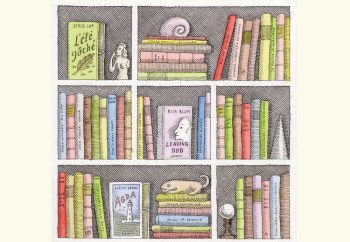
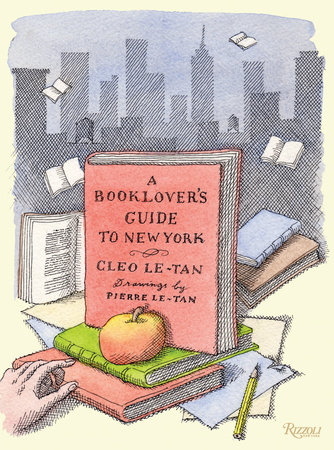
 Although the idea of writing a book about books and bookstores for people who enjoy books seems to be both precious and redundant, I find browsing, then reading, these books to be irresistible. The newest in this genre is
  Within walking distance:
  As time and interest allow, there’s John Steinbeck’s apartment at 190 East 72 Street, walkable but again, a subway is faster. And if you want to further explore Manhattan’s Upper East Side, check the schedule for the
 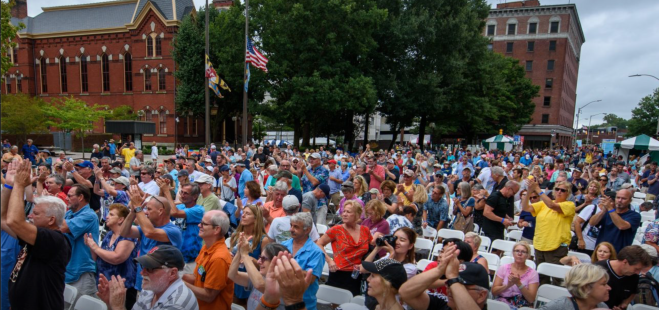 The success of Third Fridays encouraged the city leaders to pursue a larger dream. They applied to serve as the host city for the
  We started out with an acoustic band out of Pittsburgh called
 The variety of things to do at a folk festival is striking, and provocative. We wandered from Appalachian storytelling to the juke joint electric guitar of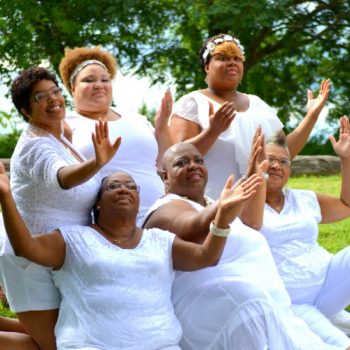
 We missed them onstage, but we spent an hour chatting with the
 Professor Susan Engel remembers growing up. She recalls small details. Not only did she eat bugs, she remembers when and where, and which bugs she ate (potato bugs). As a pre-schooler, she remembers watching TV while sitting under the ironing board, comfortably asking all sorts of questions of Nonna, who was ironing the family’s clothes above her. In a one-room school house, Mrs. Grubb’s imbalanced approach to curiosity and education began a lifetime of inquiry. One of Professor Engel’s works-in-progress is a evaluative measure for curiosity, which seems consistent with the way most people think about school in the 21st century, and, to me, wildly counterintuitive.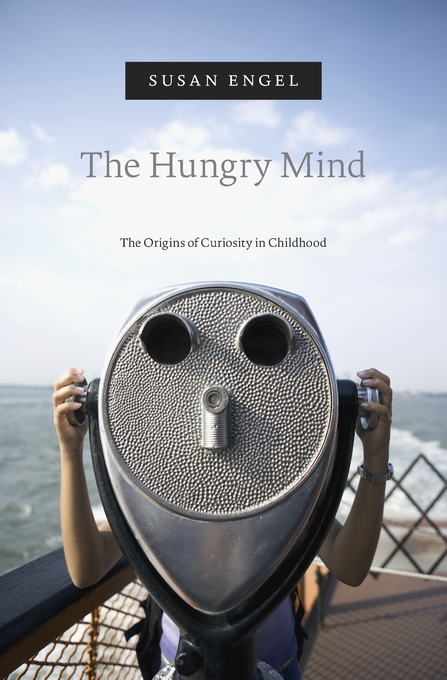

 The tiger is George’s Clemenceau, great friend of hedgehog Claude Monet, who turns out to be the last of the impressionists. The story picks up long after Monet had moved to his lovely garden home in Giverny, about halfway upriver from Paris on the way to Rouen. And may recall Rouen because that’s home to the ancient cathedral that Monet painted more than thirty times under all sorts of light. Monet was that kind of artist—obsessive, meticulous, perfectly happy to spend endless hours interpreting the London fog or wheat stacks (similar to hay stracks) not far from his home in the country. When author Ross King picks up Monet’s story, the artist is less enthusiastic about travel, but eager to serve and take healthy part in a lavish lunch before touring the beautiful Giverny garden, visiting the pond and lily pads, or showing off his latest work, most often very large paintings. By now, Monet is far more active than many men his age, still active enough to build a new studio adjacent to the house and fill it with new paintings. Cataracts and other health problems make seeing, and therefore painting with the specific colors he requires, a terrifying challenge. And there is a Great War on the horizon, so his life’s work may be destroyed by the German forces already notorious for precisely this sort of mayhem.
 He is also an extraordinarily difficult, insecure, proud man who feels that he must do more for France, provided that doing more is possible on his own exacting terms.
 Author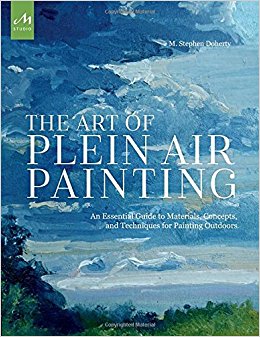
 Willingness to paint outdoors requires more than straightforward skills. It requires a real desire to be part of the place that you’re painting. It’s a mindset, an attitude, a combination of willingness to be flexible and a desire to capture the light and sensibility that you cannot quite find by referring to a photograph. That’s why the book begins not with a discussion of portable easels (that comes later), but with an insightful illustrated essay posing as Chapter 1: “Why Paint Outdoors?” He focuses on the mental game and also shows himself in the game, on the street, easel set up just beside a construction site so he can get just the right view, messy paint-covered sweatshirt and slight scowl and all. He ponders how much of the work needs to be done outdoors–if you finish up indoors, which is often tempting if the weather or other conditions aren’t ideal–does a plein air painting retain its plein air status if it’s only 20 or 30 percent painted outdoors? How about 70 or 80 percent? No matter. If you do any of the work outdoors, Doherty says it counts.
 As with most books of this sort, there are profiles of artists that the author admires, and lessons to be learned from each of them. There are also good large photographs of many types of plein air paintings, useful both for inspiration and also for studying technique. I like to see a good history chapter, too, in part because it’s fun to consider myself part of a longer tradition that once included John Constable, and Jean-Baptiste Corot, and best of all, painters who were part of the majestic Hudson River School.


