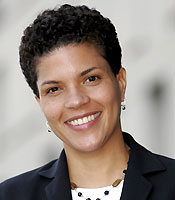
From Ohio State’s website: Professor Alexander joined the OSU faculty in 2005. She holds a joint appointment with the Moritz College of Law and the Kirwan Institute for the Study of Race and Ethnicity. Prior to joining the OSU faculty, she was a member of the Stanford Law School faculty, where she served as Director of the Civil Rights Clinic.
Professor Alexander has significant experience in the field of civil rights advocacy and litigation. She has litigated civil rights cases in private practice as well as engaged in innovative litigation and advocacy efforts in the non-profit sector. For several years, Professor Alexander served as the Director of the Racial Justice Project for the ACLU of Northern California, which spearheaded a national campaign against racial profiling by law enforcement. While an associate at Saperstein, Goldstein, Demchak & Baller, she specialized in plaintiff-side class action suits alleging race and gender discrimination.
Professor Alexander is a graduate of Stanford Law School and Vanderbilt University. Following law school, she clerked for Justice Harry A. Blackmun on the United States Supreme Court, and for Chief Judge Abner Mikva on the United States Court of Appeals for the D.C. Circuit.
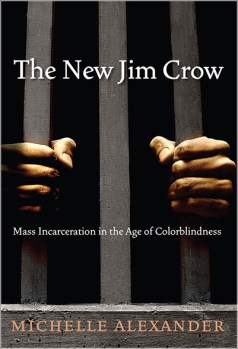
Sometimes, a book is just the thing: a clear explanation running several hundred pages, written by an expert, vetted by other experts, building a powerful case to its logical conclusion. Several years ago, an associate professor at The Ohio State University wrote a book, a history, a manifesto based upon a dangerous idea. Her name is Michelle Alexander and her book, republished a year or so ago with a new forward by Cornel West, is entitled The New Jim Crow. The subtitle just begins to suggest the storyline: “Mass Incarceration in the Age of Colorblindness.”
Often, when I read a nonfiction book, I dog-ear the parts I want to remember. I’ve dog-eared a third of this book. Here’s part of a dog-eared page, written by an American Bar Association task force and quoted by the author:
[The] offender may be sentences to a term of probation, community service and court costs. Unbeknownst to this offender, and perhaps, any other actor in the sentencing process, as a result of his conviction, he may be ineligible for many federally-funded health and welfare benefits, food stamps, public housing, and federal educational assistance. His driver’s license may be automatically suspended, and he may no longer qualify for certain employment and professional licenses. If he is convicted of another crime, he may be subject to imprisonment as a repeat offender. He will not be permitted to enlist in the military, or possess a firearm, or obtain a federal security clearance. If a citizen, he may lose the right to vote; if not [a citizen], he may become immediately deportable.”
On the surface, this may sound like get-tough-on-crime, perhaps stronger than some would like it to be, maybe not so surprising.
 Professor Alexander’s point becomes clear when this idea is added:
…the system of incarceration operates with stunning efficiency to sweep people of color off the streets, lock them in cages, and then release them into an inferior second-class status.”
For the most part, she explains, incarceration is not due to violent crimes. Instead, mostly, incarceration is due to relatively small amounts of drugs, often found as a result of policies, rules, laws, and Supreme Court judgments that encourage law enforcement to focus their attention on minority (most often, Black) people, even though drug sales and drug use tend to be about equal among all racial and ethnic groups.
It’s one thing to understand the problem as a social issue. It’s another when you “Imagine you are Erma Faye Stewart, a thirty-one year old, single African American mother of two who was arrested as part of a drug sweep in Hearne, Texas. All but one of the people arrested were African American. After a week in jail, you have no one to care for your two small children and are eager to get home. Your court-appointed attorney urges you to plead guilty to a drug distribution charge, saying the prosecutor has offered probation. You refuse, steadfastly proclaiming your innocence. Finally, after almost a month in jail, you decide to plead guilty so you can return home to your children. Unwilling to risk a trial and years of imprisonment, you are sentenced to ten years probation order ordered to pay $1,000 in fines, as well as court and probation costs. You are now also branded a drug felon. You are no eligible for food stamps; you may be discriminated against in employment; you cannot vote for at least twelve years; and you are about to be evicted from public housing. Once homeless, your children will be taken from you and put in foster care.”
Turns out, the entire sweep was based upon a lie. Eventually, a judge dismissed all cases against the defendants–except those who pled guilty. “You, however, are still a drug felon, homeless, and desperate to regain custody of your children.”
Sure, we see stories like these all the time, mostly on TV, sometimes in the movies, but their truth, and the reasons behind their truth, are disturbing because we (all of us, that is) must face one of two nasty realities:
(1) We are comfortable with the system that we our society has in place, even though it is often severe and places a very high percentage of Black citizens into the system; or
(2) We are comfortable with the system because American continues to support a racial divide with unequal rights, and severe lifetime punishment for a large number of people who live in the United States.
I suppose most people are only vaguely aware of the issue–that was my excuse–but this book removes that defense. The legal system is ferociously complicated. We must be fair but we must also be safe. You know the arguments, but that’s not much of a starting place to make things right.
One positive step is to bring this important topic to a study group. There is a free study guide available for groups willing to engage. Details below:
Drawing from and expanding on the themes of Michelle Alexander’s acclaimed best-seller, The New Jim Crow, this in-depth guide provides a launching pad for groups wishing to engage in deep, meaningful dialogue about race, racism, and structural inequality in the age of mass incarceration. The Study Guide and Call to Action spans the entirety of The New Jim Crow, engaging the critical questions of how we managed to create, nearly overnight, a penal system unprecedented in world history, and how that system actually functions — as opposed to the way it is advertised. This important new resource also challenges us to search for and admit the truth about ourselves, our own biases, stereotypes, and misconceptions, and the many ways in which we might actually be part of the problem.
This is one of several video recordings of Dr. Alexander’s speeches. This one was delivered at the Riverside Church in Manhattan. You can find others on this page.
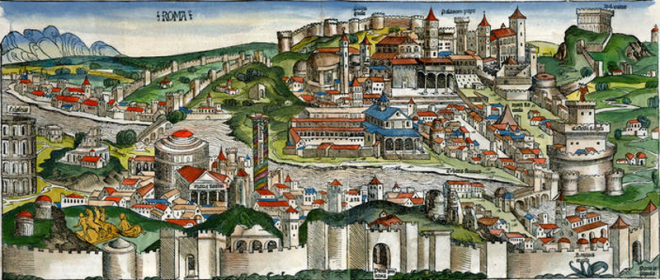
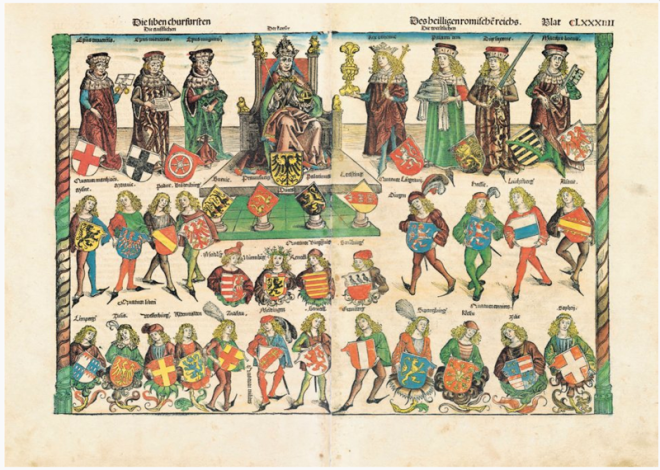 It’s a big, old book, the kind of illustrated, illuminated, hand-lettered book that I would never expected to see in my own home. But here it is, nearly 2 inches thick, reproduced by the always-intrepid Taschen publishing company. As you can see, it’s quite a beautiful old book, with colorful illustrations of kings and townscapes on every page. Looking carefully, I can make out a page about Florencia, also known as Florenz, today’s Florence, Italy, and on another page, the now-German town of Wurtzburg. There’s Rom, or Roma, with its bridges and towers, and the formidable city gates. Here’s a stylist family tree, but the old lettering is difficult for me to understand. A book like this might occupy a few minutes in a museum, and then, I’d move on. But to have it in my hands, well, that’s another thing. Its age demands respect, and time to study, not to peruse but to study, every page, slowly and with a sense of insight and discovery.
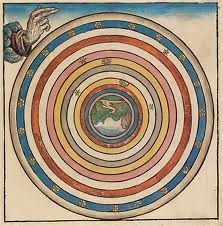 Fortunately, the cardboard slipcase includes not only the main volume, but a large-format color paperback book entitled The Book of Chronicles. In essence, it’s a guidebook, written in English, nicely illustrated, and it helps to make sense of the larger volume. It begins,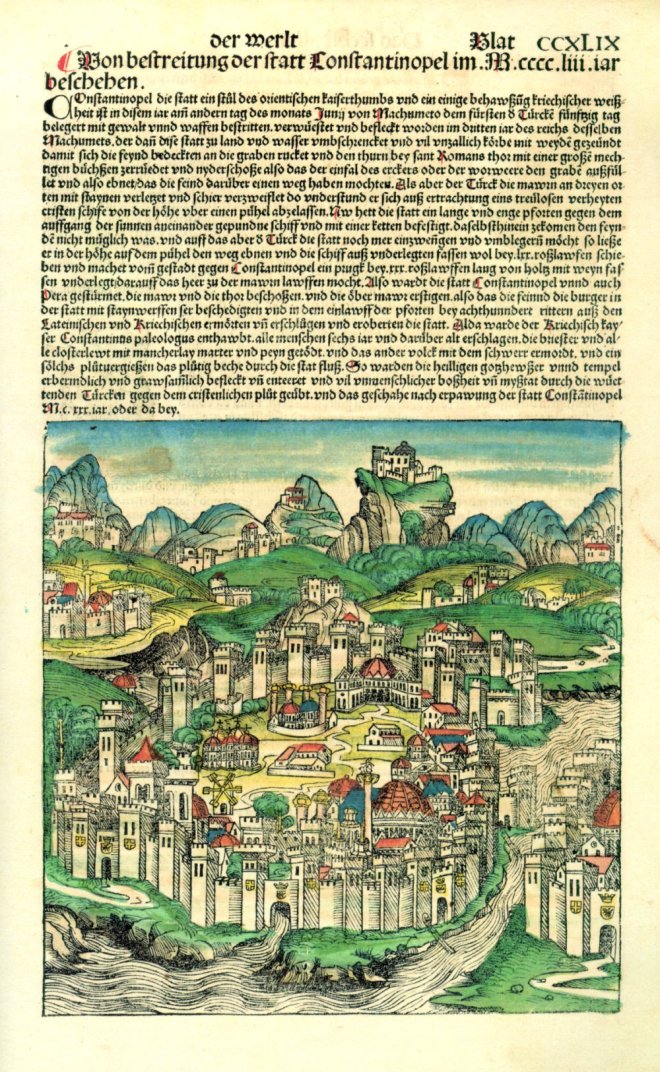
 Birthday: August 4, 1961
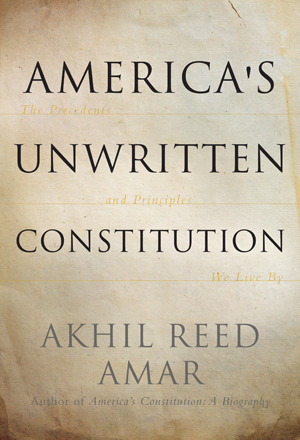
 I started reading Amar’s book,
 Yeah, well, my list isn’t very long, either. Easy enough to list Mao, Chang Kai-Shek, Chao en-Lai, maybe the classical pianist Lang Lang, and the basketball player Yao Ming. Maybe Jet Li, who is probably from Hong Kong (I checked; he is from Hong Kong).
 There are good stories about emperor Kublai Khan, and the beginning of Chinese drama as initiated by Guan Hanqing. You may know Zheng He, an admiral who led a large fleet to Africa and other far away places a few decades before Christopher Columbus was toilet-trained (I wonder whether there were toilets in Genoa in the 1450s?) Rumors about Zheng He discovering the American mainland are, apparently, quite wrong, the work of someone who mistranslated Chinese historical documents.
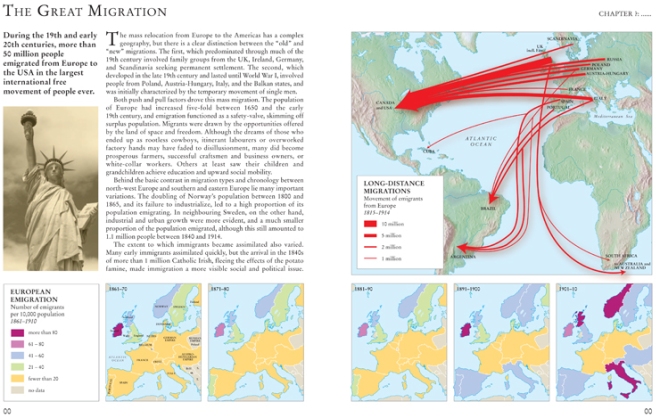 So that’s one migration. There’s another 13.5 million people moving during the period 1815-1915. Those people are moving, mostly, from Europe to America. Lots from Ireland, England, Scandinavia, and later, Spain, Italy, and eastern Europe–the peopling of America.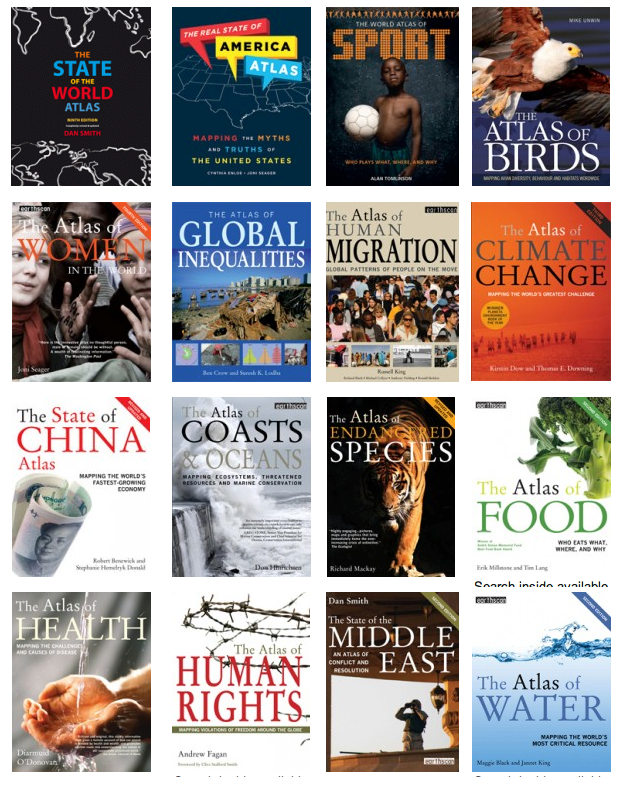



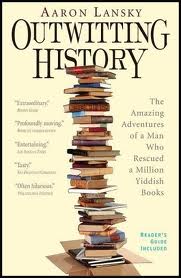

 At the very least, Lansky, his friends, his co-conspirators, the Center’s network of scholars and friends and donors, the network of zammlers (two hundred people who collect books worldwide for the Center) have taken the first step. We now have the books, and nobody is going to take them away from us. And they’ve taken the second step: the books are now available, through various re-disribution schemes, to people everywhere. The third step is the mind-bender. How to republish the works, maintaining the integrity and magic of their original words and ideas in a world where (a) the whole book publishing industry is trying to figure out its digital future and path to thrival (my made-up word that goes beyond survival into thriving); (b) few people read Yiddish; (c) Yiddish culture is becoming historical fact rather than a cultural reality; and (d) as interested as I may be, I don’t think I have every read a single Yiddish book, and apart from Sholom Alechem (whose work was the basis for Fiddler on the Roof), I don’t think I can name a single Yiddish author.


 Digital Insider