Six Good Ideas from a Former Supreme Court Justice


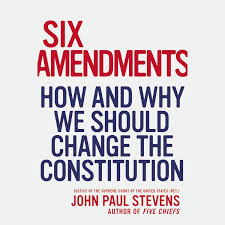
The book is entitled “Six Amendments: How and Why We Should Change the Constitution,” and it’s written by a justice who retired in 2010. While it’s difficult to read the book without wondering why Justice Stevens didn’t magically bring about change while in office, I suspect that the article that I found in The Atlantic is unreasonably harsh in its pursuit of this argument. As in:

The retired Supreme Court justice would like to add five words to the Eight Amendment and do away with capital punishment in America. It’s a shame he didn’t vote that way during his 35 years on the Supreme Court.

Those words would have abolished the death penalty by constitutional amendment. The new eighth amendment might include the italicized words:

Excessive bail shall not be required, nor excessive fines imposed, nor cruel and unusual punishments such as the death penalty inflicted.”

If you’re on death row, or if you care deeply about someone there, those five words make all the difference.

Similarly, Justice Stevens would add five words to the second amendment, forever clarifying the confusion about personal gun use as a constitutional right:

A well regulated Militia, being necessary to the security of a free State, the right of the people to keep and bear Arms when serving in the Militia shall not be infringed.”

So far, just ten words, and we end up with a vastly different free and criminal culture. And even if I am several months late in reviewing Stevens’ book and his ideas, I think every American citizen ought to be thinking about what we want from our amazingly effective governing document. Here’s another, this time about the practice of reorganizing election districts for political gain (“gerrymandering” dates back to 1812—it’s named for Massachusetts governor Elbridge Gerry). This is all new, and a bit dense:

Districts represented by members of Congress, or by members of any state legislative body, shall be compact and composed of contiguous territory. The state shall have the burden of justifying any departures from this requirement by reference to neutral criteria such as natural, political or demographic changes. The interest in enhancing or preserving the political power of the party in control of the state government is not such a neutral criterion.”
UnknownAfter reading this suggestion carefully, I’m left wondering how it would be enforced, and whether politicians would pay it any mind. Maybe it’s the wording, maybe its the concept, maybe its a matter of “giving up” on the political system. That last statement, about giving up, is the whole point. We’re giving up on a system that doesn’t work as it should, perhaps because it has been gerrymandered beyond reason or recognition. Maybe Stevens has the right idea or the wrong words.

Moving on to campaign finance…

Neither the First Amendment nor any other provision of this Constitution shall be construed to prohibit the Congress or any state from imposing reasonable limits on the amount of money that candidates for public office, or their supporters, may spend in election campaigns.

New words, good idea, but we’re caught in the non-virtuous circle of politicians making rules for themselves and other politicians. Interesting article in The New York Times focuses on this issue, and on Justice Stevens’ book. (And yes, Stevens dissented on the Citizens United decision.)

One of the reasons I am writing this article is selfish. I want a good clean list of the former justice’s ideas, and I couldn’t find one on the internet, so I wrote it myself.

The last two are more complicated and require a deeper understanding of Constitutional law and government action. He would like to add “and other public officials” to

All debts contracted and engagements entered into, before the adoption of this Constitution, shall be as valid against the United States under this Constitution, as under the Confederation.

This Constitution, and the laws of the United States which shall be made in pursuance thereof; and all treaties made, or which shall be made, under the authority of the United States, shall be the supreme law of the land; and the judges in every state shall be bound thereby, anything in the Constitution or laws of any State to the contrary notwithstanding.

The Senators and Representatives before mentioned, and the members of the several state legislatures, and all executive and judicial officers, both of the United States and of the several states, and other public officials, shall be bound by oath or affirmation, to support this Constitution; but no religious test shall ever be required as a qualification to any office or public trust under the United States.

The final item is entitled Sovereign Immunity, and it’s more difficult to understand than the others. His suggested amendment:

Neither the Tenth Amendment, the Eleventh Amendment, nor any other provision of this Constitution, shall be construed to provide any state, state agency or state officer with an immunity from liability for violating any act of Congress, or any provision of this Constitution.”

OUnknownn the surface, this is clear, but it’s made more clear by the Justice’s twenty pages of commentary. In that endeavor, I’m sometimes a fan—his historical and contextual understanding is, well, supreme, but his ability to connect with a broad audience sometimes falters. The history becomes too complicated, the issues too tangled, nods to other justices sometimes adding complexity. On the other hand, we’re talking about a book that’s less than 150 pages and contains a whole lot of provocative, clearly presented material.

Wouldn’t it be interesting if every Supreme Court justice wrote a similar book?


Beyond the Decisive Moment

Cartier-BressonHenri Cartier-Bresson was one of the great photographers of the 20th century. Best known as a prolific street photographer (for whom color was a commercial concession, not an aesthetic option), HCB’s life story is no less compelling than his lifetime of images. His career and personal commitments were well-described last year at an extensive exhibition at the Centre Pompidou in Paris. Happily, the exhibition has been packaged as a coffee table book by Clément Chéroux and published by Thames & Hudson. It’s expensive ($75) and it’s worth the money, in part because Mr. Chéroux curated the 2014 exhibition.

Students of photography associated HCB with “the decisive moment. Just as Martin Luther King (okay, “MLK”)’s life work far exceeds the brief period of his “I Have a Dream” speech, Cartier-Bresson’s infatuation with the precise instant when a photograph ought to be made is only part of an expansive range of artistic and journalist expression.

Born in 1908, Cartier-Bresson grew up in a comfortable Parisian household; the family owned a large cotton and thread manufacturing company. 1908 was also the year that, in England, Robert Baden-Powell published “Scouting for Boys” to support his new progressive approach to education known as the Boy Scouts. The organization’s combination of an active life for boys, with ample freedom and discipline, was a good match. At age 14, as a Scout, Henri began to experiment with photography, but only as  hobby. The family’s plan for Henri was all business—he was sent to the best schools so he could, sometime, lead the large family business. Of course, things didn’t work out as planned. Instead, with the blessings of his family, he studied art. Mostly cubism. Which he found “boring” because it was “too systematic.” He preferred the more expansive world view offered by surrealism. In October, 1930, by now free from both his formal education and military service, Cartier-Bresson followed Europeans curious about “the Dark Continent.” He spent nearly a year in Cote D’Ivoire, Cameroon, the French Sudan, Togo, and along the Niger River, he photographed children on the streets and people at work—avoiding the exotic and tribal imagery, just focusing on the day-to-day. Over the next few years, his casual interest in travel photography became a passion, then, a career. He traveled to, and photographed street activities in, Paris, Marseilles, Milan, Florence, Sienna, Trieste, Madrid, various parts of Mexico, and more.

Along the way, he learned by copying the styles of Eugene Atget (streets of Paris, store windows); European photographers intrigued by the geometry of city life (mostly); the golden section that is key to classic composition; various less-than-compressible surrealistic sketches and distortions. In time, he worked out his own style. Before he turned 30, he had created enough distinctive images to display his work in a successful exhibition.

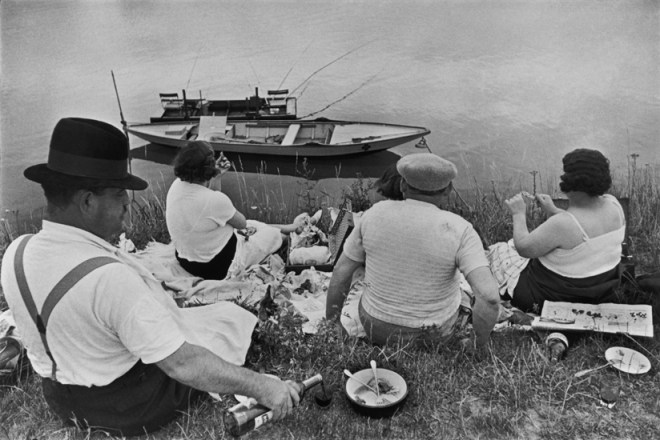
The story becomes more interesting as HCB moves from travel photography and street work (often one and the same) to work with a more specific purpose: often, related to his attachment to the ideals of Communism. Stories of the Spanish Civil War, Mussolini, and the utter transformation of Europe are among the best stories—supported by some of the best images—in this book. He becomes concerned about poverty and tells his visual stories so they will provoke attention. He attends to the facial expression and behavior of crowds, often ignoring (and needing to caption) just what they are looking at. He documents free time—a relatively new idea in 1938 France, at least for the working class—and this is probably my favorite selection of his work. For example, a Sunday on the banks of the Seine from that year:

sfmoma-hcb-03-near-juvisy-1938

In truth, what I love about this book is the arc of the creative story. It begins with a smart teenager who decides he likes art and photography better than college and business, who grows up quickly as he travels and makes stunning pictures. Then, he finds his political and social conscience, and plays a very active role, using his photography as a very effective tool. Then, he realizes that his political affiliations will become a career problem, so he co-founds Magnum, a journalistic photo agency with Robert Capa and several other extraordinary photojournalists, and becomes one of LIFE magazine’s active contributors. Then, he explores topics that interest him: the growing connection between people and machines (a project for the IBM of the 1960s, for example), icons of power (very powerful—and decidedly odd—image of a giant Lenin in front of the Winter Palace in Leningrad as a man and his small child stroll in the foreground), and the ways that crowds behave. And then, in this 60s, he begins to slow down, to take images that are more focused on the feeling than the moment. And he begins to draw, picking up on something he loved to do as a child. He visits art museums, and spends hours sketching great works. He takes pictures of the family with his legendary Leicas. It’s a lovely life story, wonderfully punctuated by his pencil on paper self portraits from 1987 and 1992. One of the better free bios on the web is here. And there are a lot of smaller books filled with specific HCB projects that you can find on Goodreads, along with the compendium Henri Cartier-Bresson: The Man, The Image and His World, also from Thames & Hudson.

Henri-Cartier Bresson was born in August, 1908 and died in August, 2004—he lived, and documented, the better part of a century. And nobody did it better.

On the left, a picture of an American woman in 1947. On the right, “Giant Effigy of Lenin” from 1973.

american_woman-and-lenin


More Thoughts on Digital Book Publishing

Sometimes—but not often enough—I attend a conference that really gets me thinking. That’s what happened earlier this month when I attended Digital Book World in Manhattan.

In session after session, the elephant remained in the room. Fundamentally, books are physical objects, sometimes treasured, certainly thought to be more valuable than other forms of mass merchandise because they contain ideas intended to linger in the home or office for many years, and, perhaps, a lifetime. In this regard, the physical books that we buy at a local independent bookstore, or from a bricks-and-mortar Barnes & Noble store, or from Amazon, are vastly different from the pillows that we buy from the Bed, Bath and Beyond. We associate books with stories, characters, important events, the people who recommended particular volumes, the rainy afternoon spent reading, and so on.

At the same time, books filled with text are easily digitized, and, unlike most merchandise, they can be delivered almost instantly to any connected device. These devices also serve as a reader. So books are suitable for digital distribution as files. As technology advances, books with pictures pose no less of a technology challenge. As evidenced by speakers at this particular conference, some publishers, authors and producers are attempting to transform some aspects of some books into interactive and social media.

More or less, traditional book publishing follows rules. The book is written by an author who receives either a flat fee or the promise of royalties based upon the number of books sold (some authors also receive an advance against royalties, which is a measure of the publisher’s commitment to the project). The publisher’s staff chooses its titles and authors with care, then assigns expert copy editors and other staff to the process of moving manuscript to printed book. Various marketing, distribution, warehousing, logistics and trucking companies make the business go. Physical bookstores sell books, and so do digital bookstores. Maybe 2/3 of Americans buy books, but most buy fewer than five books per year.

With digital publishing, the rules don’t apply—and for so many reasons. For example, publishers need not limit the number of titles they publish for any practical reason—there is no scarcity of shelf space. (They may limit releases due to marketing considerations, but that’s another story altogether.) Of course, bookstores are helpful parts of the marketing and distribution system, but they are no longer mandatory—Amazon ships just about any book, next day.

Still, the roadmap is fragmented. Healthy experimentation seems like the best thing to do. And so, there’s a working session at the Digital Book Conference about book trailers (kind of like movie trailers, but they’re selling books), and another about whether HTML5 is the magic bullet that will ease book production burdens, and another about subscriptions for eBooks (like Netflix: all you can read for about $100 per year, sometimes less). Maybe the solution is a game format—to engage readers who already love the characters. Maybe it’s all about brands—that’s been the key to success in so many genres, including mystery, romance, young adult, etc. No, the answer isn’t traditional at all. Instead, the focus ought to be on search engine optimization and digital means of discovery—people will find books the same way they find out about other things, on Google! Maybe authors don’t need publishers as much as they did in the past: think about indie bands and their schism with record labels. Certainly, data analysis is the key to growth—if you know who your customers are (exceedingly difficult with individual buyers of books on paper, far more practical if the merchandise is digital). Is it unreasonable for Amazon and Apple to control the digital business by essentially duopolizing both the players and the file formats? Should there be another open format and should that format be supported by an industry that promises to thrive on  independence? Maybe global thinking is the key—publish for a worldwide audience because there are so many more people outside the U.S. than inside it.

What are the answers? Gosh! There are no clear answers. Not only is every reader and every bookstore unique, every book is unique, too. The first book by a new author could be a blockbuster and the followup could be a dud. An author who makes his mark on YouTube or Kindle could become the next transmedia sensation. An Young Adult book could (and often does) become a hit among older readers. Just as hipsters rediscovered vinyl records, they might continue to propel indie bookstores as the next big thing (though readers 18-30 are notoriously challenging customers).

What do I love about this discussion? Just about everything. There’s the intrigue of large vs. small companies, comfortable analog behaviors that stubbornly won’t go away, the big bad Amazon that’s “destroying” the book business as those of us who complain love the deep discounts and free shipping, the inevitability of the end of the bookstore that’s been inevitable for as long as anyone can remember. The fact that I am writing about books on a computer’s screen so you can read about books on an iPad—without spilling any ink at all. It’s screwy, it’s fun, it’s a business that can and does move in a hundred directions at once. And that’s why I find this industry, in some ways, even more interesting that television, software, or the other dozen industries I deal with every day.


The Isaacson Paradox

isaacsonWalter Isaacson is one of the smarter people in the media industry. As a keynote speaker for this past week’s Digital Book World conference, he talked about the limitations of his most recent book, The Innovators. (You probably know him as the author of the spectacularly successful biography of Steve Jobs.) Nowadays, he’s the leader of the Aspen Institute, the latest in a series of senior roles that include, for example, the chairmanship of CNN and the various old and new media roles at TIME Magazine. Frustrated by the lack of innovation in the slow-moving book business, he encouraged the audience to think beyond the printed volume and its close relative, the eBook filled with the same words and ideas.

Fresh from a deep investigation into media and technology innovation, Isaacson told the story of Dan Bricklin, inventor of the spreadsheet, whose innovation story deserved more space and more attention than Isaacson’s innovation book could reasonably provide. Bricklin told Isaacson the story, and Isaacson was appropriately fascinated. Somehow, Isaacson wanted to extend the conversation with Bricklin, open the book (the whole concept of a book) up to to a broader discussion so that other innovators could tell their stories, and readers could gain a much broader, deeper, more nuanced understanding of the subject matter that so fascinates Isaacson. A book should be more than a book, it should be the beginning of a conversation, an interactive gateway to more information, a means to connect interested parties. Books don’t do that, but given the available technology and associated behaviors of the digital generation, maybe they ought to do more than they do today.

I like the way Walter Isaacson tells a story. I like to watch and listen to him on stage, and I enjoy reading his books. I enjoyed reading his biography about Einstein, and I know that I will read his book about Ben Franklin in 2015 (I bought it for my wife, as a birthday gift when it was new in 2004—so many books, so little time!). There aren’t many biographers or historians I would place next to David McCullough, but Isaacson is one of them. He is one of America’s finest authors.

Walter, you just published 560 words about innovators. You’ve made sense of the science and divergent thinking pursued by Vannevar Bush, Alan Turing, J.C.R. Licklider, Doug Engelbart, Tim Berners-Lee and other technology heroes. The story is neither simple nor easy to tell, but you’ve managed to put the pieces together in a very appealing package that I can buy for 20 bucks (hardcover), or 10 bucks (Kindle). Two words for you: good job!

Seriously, you do a terrific job with every book. That’s why we buy your books. You’re a reliably strong author who finds just the right details, composes just the right stories, paints a coherent picture, and provides a satisfying experience. Not many people do the job as well as you do, but plenty of people try, and some come pretty close.

At the risk of typecasting, and at the greater risk of being accused of being stuck in the 20th (or 19th) century, I’m really happy with your work. If I want to know more about Albert Einstein and his world, I can pick up Ronald Clark’s biography, or read the scientist’s own books. If you suggest another book, or perhaps a documentary or a good museum, I’ll jot it down and follow it up. I don’t need or want an expanded version of “The Innovators.” I’m sure you’ve collected far more information than you could possibly corral into a single book, and if you feel there’s a follow-on book, I’m sure you’ll write it and I’m equally certain that it will become a best seller, too. But I would prefer that you moved on, as I will do. I’ve gotten a good and healthy dose of the innovators’ story. I want you to write another great book that illuminates a part of life that I don’t know I want to know more about. I’m sure you’ve got a list of a dozen new ideas for next books. You’re going to be 63 years old in March—and your pace tends to be a new book every 2-4 years (let’s say 3). Keep writing until your 93rd birthday, and we can look forward to perhaps 10 more Walter Isaacson books.

Better for you to explore the wild new worlds of digital publishing and invent some new forms? Sure, go ahead, but do not stop writing books, and don’t slow things down too much. We need more Walter Isaacson books.

So there’s the paradox. Although Isaacson is eloquent about the future, his great value to society is in the present (in fact, telling stories about the past). And if he spends too much time on the future, we lose something wonderful about the present and the past, which diminishes the future.

Same idea, different words: Mr. Isaacson is one of the best hopes in the publishing industry for credible, popular new directions for books. On the other, we simply want him to be a wonderful author. If the author’s job is to tell a great story, does it make more sense to mess with the medium or master the message? Or to just keep doing and allow the road to lead where it may?

Reinforcing the paradox: on the first day of Digital Book World, I learned about the new interactive exploration application that children’s author/illustrator David Wiesner is going to release through Houghton Mifflin Harcourt. It’s called “SPOT,” and I plan to write about it soon. Why am I so excited about a new interactive venture from one of our best children’s authors, but so conflicted about how I hope Mr. Isaacson will spend his next thirty years? ‘Tis a paradox.


The New Rectangle

The old rectangle turned out to be a pretty good idea. Take a stack of papers, imprint each one, on both sides, with words and pictures, bind it all up, and sell it at a reasonable price. Printed books for children date back about 500 years (a fine article from a January 1888 of The Atlantic tells the story of the early years). Today, children’s books account for 37 percent of all books sold in the United States. In survey after survey, reading books shows up as a top activity for children from one to ten or eleven years old. About 70 percent of children in this age group read books for pleasure—compared with about 20 percent of adults. For most American children, reading books is a wonderful part of childhood.

By age 14, many children find other ways to occupy their time. Out-of-date mandatory school readings don’t help matters—“A Catcher in the Rye” and “To Kill a Mockingbird” are dubious “must reads” for 21st century middle schoolers. Is the answer a newer rectangle? Perhaps a new style of novel with some sort of built-in social network? A book on an iPad with snazzy interactive features?

Roughly 1 in 5 books sold in the United States is an eBook. Parents are interested in seeing their children read—so they buy lots of books, encourage literacy at every opportunity, and justify investments in iPads because these devices could encourage children to read more books, and spend more time reading. For some parents, that may seem reasonable, but 66 percent of teenagers read for pleasure–and they strongly prefer printed books!

And yet, I can’t help but wonder whether traditional books offer one type of experience, and iBooks / eBooks / digital books provide another. (The usual argument: when home video became popular, the movie theaters did not go out of business.) I love the idea of reading a non-fiction book and AFTER my time with the book ends, I love to do a bit more research to learn more about the concepts that the author failed to discuss in detail. Do I need all of that in one digital package? Not really—I am fine reading the book in my comfy leather chair, then meandering over to the computer, or picking up the iPad, to learn more. But that’s a very narrow interpretation of what a digital book experience might be.

scaled_OM-BookBeginnerCollection1-Screen0-w997L-(255,255,255)-iPad.jpgFor example, maybe a digital book is not a book at all, but a kind of game. Scholastic, a leader in a teen (YA, or Young Adult) fiction publishes a new book in each series at four-month intervals. The publisher wants to maintain a relationship with the reader, and the reader wants to continue to connect with the author and the characters. So what’s in-between, what happens during those (empty) months between reading one book and the publication of the next one in the series? And at what point does the experience (a game, a social community) overtake the book? NEVER! — or so says a Scholastic multimedia producer working in that interstitial space. The book is the thing; everything else is secondary. In fact, I don’t believe him—I think that may be true for some books, but the clever souls at Scholastic are very likely to come up with a compelling between-the-books experience that eventually overshadows the book itself.
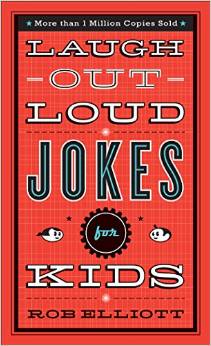
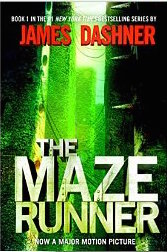
And what of the attics of the future? Your child—a grandpa with a dusty old attic in 2085—ought to have a carton filled with Rick Riordan stories and “Diary of a Wimpy Kid” that he can pass on to the young ones. He ought not mumble through some lame excuse about how every one of his favorite books was digital, and how those books were zapped from the cloud during the great digital storm of 2042.

So do we leave it there? Children’s books ought to be printed and saved, placed on library shelves and in attic boxes for the ages? Not when there’s a new rectangle! Imagine a book that makes sounds and flashes pictures on command, that builds a bridge to the imagination in a way that enhances the experience of a parent reading a book to a very young child (or, an older one). Gee, this must be done carefully! We want to retain so much that is special and unique about the old ways—the ways that we have perfected over hundreds of years, and really managed to get right during the past fifty or one hundred—and yet, we’re raising a digitally native population. So far, 58 percent of children enjoy daily access to a tablet (often, an iPad). Much of what will be invented has been invented—at least until there is a massive new injection of innovation. Today’s tablet probably resembles the tablet of 2018, but it might be smaller, thinner, more flexible. What we have now is a reasonably stable rectangle. But what to do, for children, within its four digital walls?

Last week, I spent a day pondering this issue with a few hundred people in the children’s book publishing industry at a conference called Digital Book World—the special section being entitled LaunchKIDS. Mostly, it was populated by people who work within the old rectangles, but remain curious about the new. Here and there, we learned about newer ones. Blloon (yes, it is spelled correctly) is encouraging people 18-34 (typically, less bookish than other populations) to subscribe to their service by using the number of pages read as a kind of currency (consumers pay for a certain number of pages, and engage in social activities to earn more). Google wants to “massively transform” the space (Google seems to say that about everything it sees or smells). Amazon is trying to make sense of analog vs. digital books, comparing the paradigm to hardcover vs. softcover books, for example.

Of course, there are no easy long-term answers. Except one. Kids like books. And parents like to buy books for their kids. So far, that doesn’t seem to be changing very much at all.

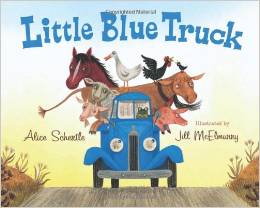
The four most popular children’s books (based upon Amazon’s sales—bookstore sales may vary).

Unknown Unknown-151-zzvOrrRL._BO2,204,203,200_PIsitb-sticker-v3-big,TopRight,0,-55_SX278_SY278_PIkin4,BottomRight,1,22_AA300_SH20_OU01_Unknown-2

And, a popular Scholastic books into multimedia project, Spirit Animals.

Spirit Animals


Ellen Rocks On

I am beginning to read what Ellen Willis wrote. Some of it is familiar, but I lost track of her sometime last in the last century. She wrote about the counter culture, and, apparently, continued on that path long after everyone else had moved on. Willisimage_mini was an extraordinarily clear thinker about things that matter. That clarity, and her passion, and her just-plain-good writing are the reasons why I will spend the winter reading every one of about fifty articles and essays in a book that her daughter Nona put together. It’s called “The Essential Ellen Willis.” I’m guessing you won’t find it in many bookstores despite the best efforts of the University of Minnesota Press, but it’s certainly available online. For someone who enjoys smart writing with more than a small dose of social conscience, it’s an ideal holiday choice.
Lots and lots of interesting material about Ellen on this Tumblr page.

Lots and lots of interesting material about Ellen on this Tumblr page. To go there, click on the picture.

Who was she? Ellen Willis was born in 1941 and died in 2006. She was the first rock critic for The New Yorker, a columnist who wrote regularly for the Village Voice, and an educator at New York University (she founded the Cultural Reporting and Criticism program). She was a feminist, and an authentic, long-term voice for what was, in the 1960s and 1970s, a movement, and became, in the 1980s and 1990s, a reasoned approach to social outrage. Her daughter Nona, who caused Willis such consternation about her own feminist place as a mother, is the protagonist in one of this book’s best articles, a Voice column entitled “The Diaper Manifesto.” Grown up, Nona Willis Aronowitz is a fellow at the Rockefeller Institute, an author, and, now, the compiler and editor of her mom’s best stuff. (This is the second effort: the first collected Willis’s rock articles and criticism in a book called “Out of the Vinyl Depths” from the same publisher.)

I wasn’t sure where to start navigating 536 pages of a writer’s collected work, so I started with an article about Bob Dylan that she wrote for Cheetah in 1967. Dylan’s “John Wesley Harding” was a new release, nearly two years after his serious motorcycle accident. It’s been nearly fifty (!) years since she wrote the article. She starts at the beginning, assessing the emerging folk music scene and his place in it:

When Bob Dylan first showed up at Gerde’s [Folk City] in the spring of 1961, fresh skinned and baby faced, and wearing a school boy’s corduroy hat, the manager asked him for proof of age. He was nineteen only recently arrived in New York. Skinny, nervous, manic, the bohemian patina of jeans and boots, scruffy hair, hip jargon and hitchhiking mileage barely settled on nice Bobby Zimmerman, he has been trying to catch on at the coffeehouses. His material and style were a cud of half-digested influences: Guthrie-cum-Elliot, Blind Lemon Jefferson-cum-Leadbelly-cum-Van Ronk, the hillbilly sounds of Hank Williams and Jimmy Rodgers; the rock-and-roll of Chuck Berry and Elvis Presley. He was constantly writing new songs. Onstage, he varied poignancy with clownishness. His interpretations of traditional songs—especially blues—were pretentious, and his harsh, flat voice kept slipping over the edge of plaintiveness into strident self-pity. But he shone as a comedian, charming audiences with Charlie Chaplin routines, playing with his hair and his cap, burlesquing his own mannerism and simply enjoying himself.”

From July, 1986’s “The Diaper Manifesto,” which begins with Willis exploring her conflicted feelings about hiring someone to care for her child so that she can continue to write…

Before I had a child, I had lots of opinions on the subject. Two years afterward, some of them have stuck with me: I’m still convinced that staying home full-time with a healthy, rambuctious kid would turn me into squirrel food, that child care should be as much men’s job as women’s, that communal child rearing in some form holds the most hope of resolving the collision between adults’ and children’s needs, as well as the emotional cannibalism of the nuclear family. But for the most part, figuring out what kind of care best meets my daughter’s needs has been—continues to be—a processing of disentangling prejudice from experience.”

Progress is made.

“In the end, we hired a Haitian woman who, as a friend drily put it, ‘fit the demographic profile for the job’ and quickly put to shame all my stereotypes. Without the benefit of higher education, middle class choices, or green card, Philomese had all the psychological smarts I could ask for and tended to the baby with love and imagination…Quite aside from our own needs as working parents, Nona was clearly better off having an intimate daily relationship with another adult.”

From September 2009, outrage and clear thinking about the drug war:

According to the drug warriors, I and my ilk are personally responsible not only for the death of Janis Joplin and Jimi Hendrix but for the crack crisis. Taken literally,, this is scurrilous nonsense: the counterculture never looked kindly on hard drugs, and the age of crack is a product not of the 60s but of Reaganism. Yet there’s a sense in which I do feel responsible. Cultural radicals are committed to extending freedom, and that commitment, by its nature, is dangerous. It encourages people to take risks, some of them foolish or worse….If I support the struggle for freedom, I can’t disclaim responsibility for its costs. I can only argue that the cost of suppressing freedom are, in the end, far higher. All wars are hell. The question is which ones are worth fighting.”


A Thousand Moments in Time

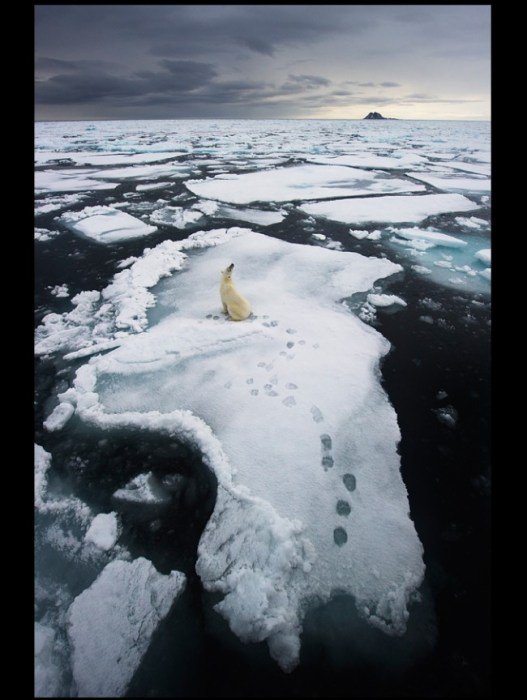
The image is not entirely white. The paw prints — very big paw prints —are indigo, the color of the surrounding sea. Apart from the burst of white light near the sun, the sky is rendered in various shades of indigo, too. Most of the remaining ice floes are  pure white, tinged with indigo’s inky blue. The ice seems to be melting by the minute. It is no longer a solid mass. A polar bear sits on one of  larger ice floes, polar bear looks to the sky. His or her coat is faded yellow, the color of a baby chick.

That’s the second image in the new 478-page compact coffee table book by one of my favorite authors of photography books. This one handsome volume is entitled, “Photography: The Definitive Visual History,” and it’s a wonderful way to make someone very happy this holiday season ($50, but less than $40 on the internet).

The first image is very familiar: “Migrant Mother,” also called “Prairie Mother,” created in March, 1936, the heart of the Depression, by Dorothea Lange. At the time, Lange was working for the Resettlement Administration, a New Deal program that became a part of the Farm Security Administration a year later. The location: a camp of pea pickers in Niporno, California. Lange: “I saw and approached the hungry and desperate mother, as if drawn to a magnet.” The family had recently “sold the tires of their car to pay for food.” The woman in the picture’s name was Florence Owen Thompson. She knew her own name, but she couldn’t do much good with that knowledge. Thompson was a poor Native American woman, and at age 80, when she was dying of cancer, she won an appeal and received $32,000. In 1998, the “Getty Museum paid $244,500 for a print.”

Here’s the image from the U.S. Library of Congress.

8b29516r

The image above is the one that became famous, but, as Ang explains, it was not the only one. “Using a Graflex camera…Lange made a total of six exposures…within a mere ten minutes or so. For each image, Lange moved in closer. The first image was wide, to show context. The final one is above. The second image below was a step along the way.

03054r

8b29523r

Ang goes on to explain how the famous photo is constructed: the “careworn face,” the way the each of the older children frame their mother, the sleeping baby, so apparent in the mid-shot, so nearly absent in closely-cropped image.

Way back in the book in the section labelled “2000-Present: The Digital Age,” this is a small but striking picture of four lions. They seem to be heading directly for the photographer (his name: Chris McLellan). It was shot in 2013—last year. He used a Nikon D800E with a very wide angle lens to take the picture—and many more like it—but the camera was not in his hands. Instead, the camera was mounted on a remote control buggy, and the 18mm lens was installed in order to capture the images of the lions that it passed by, or got curious.

Chris-McLennan_buggy_011-780x520

According to Ang, “the resulting shots were viewed more than two million times within three days.”

For me, the heart of the book is the (mostly) black-and-white middle section where Robert Doisneau’s “Kiss by the Hotel de Ville,” is followed by the remarkable Zeiss 80mm Planar medium format lens (Ang mostly features photography, but also devotes some spreads to important equipment innovations, the likes of LIFE and LOOK magazine, and other parts of photography’s long story), and Andreas Feininger’s “Midtown Manhattan Seen From Weehawken, New Jersey,” and Edward Steichen’s “monumental” (a good word for the project) 1955 book and exhibit, “The Family of Man,” fashion magazines and their aesthetic, and just before the spread on the Nikon F 35mm SLR camera, a few photographs by Alfred Eisenstaedt, who worked for 36 years as a LIFE magazine photojournalist. A few pages later, there is the famous quote by Lennart Nilsson:

Patience is the most important tool. Patience. Patience. Patience.”

And, Lennart’s 1965 photograph of a human fetus. “The first time he saw a fetus sucking his thumb, he was ecstatic and took a picture.” But nothing happened—the flash was broken (remember, he’s shooting inside a human body with an endoscope. The image shown below is his most famous. Sadly, the child was easier to photograph because the child was no longer alive.

Lennart-Nilsson-100

Others survived, thrived, and were photographed by Nilsson along the way.

Lennart Nilsson

This collection of Lennart Nilsson images comes from another fine book about photography, “A Child Is Born.”

Photography can take your breath away.


Here’s the book cover, just so you don’t pass it by when visiting your local bookseller. It’s a very special holiday gift.

Photography-History_cover

BTW: On final note. If you’re even remotely serious about digital photography, Tom Ang’s your man. He’s a wonderful teacher, and his many other books about digital photography are among the best in the industry.


An Old Master

Kudos to Jules Feiffer for creating, writing and illustrating a graphic novel in a fantasy space that he clearly adores. Why the kudos? Who cares that the guy is in his 80s—he tells a helluva story.

FeifferobamaOkay, more about Jules before begin. Actually, you get a fair sense of him from his 2008 cartoon for NYC’s Village Voice. I found it on Wikipedia. He won a Pulitzer Prize for political cartooning, was awarded a lifetime achievement award by the Writer’s Guild of America, and he’s got his place in the Comic Book Hall of Fame. And now, he’s got this new book.
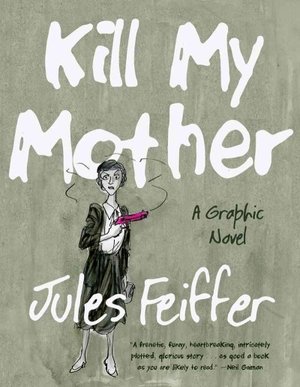
It’s called “Kill My Mother,” and I like this description: it’s a “noir-action-romance.” It’s a story dominated by powerful, smart women—a story where men are rather foolish, easily misled, or weak. The plot winds through 1940s Los Angeles, and through a World War II battle zone—it looks and feels like a cross between a graphic novel and a rough storyboard for a post war-time black-and-white film, one that has its doubts about what happened and why. In fact, it’s the sort of noir tale that works best when it makes it way through dark and ambiguous questions. Annie is the protagonist (and the gal on the cover of the book). Her dad is dead. He was a cop. Somebody killed him. She wants to know who did the deed and why. Her mother, well, Annie despises her mother, in Annie’s eyes, a coward of a woman who deserves the worst.

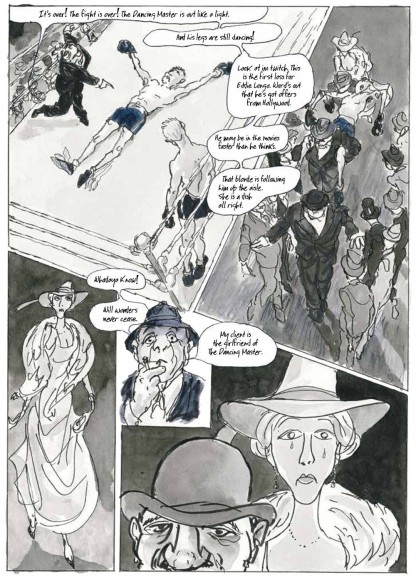
Feiffer bookIn theory, it’s the book that drives the story, but in practice, here, it’s the pictures. Actually, it’s the whole page, the whole well-designed, elegantly organized duotone watercolors and pen-and-ink that feel so dark, so thick with intrigue. Most of the book is rendered in sepia—not the old tones of photographs, but lively, contrasty, vaguely seedy renditions of what otherwise might have been black. The accent is usually a very pale green, the color of a Hollywood swimming pool on page, a cadaver on the next.
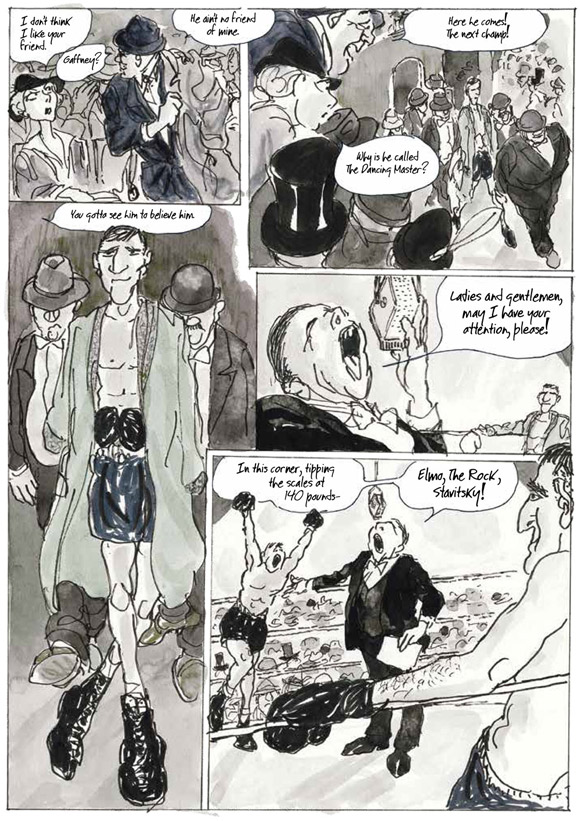
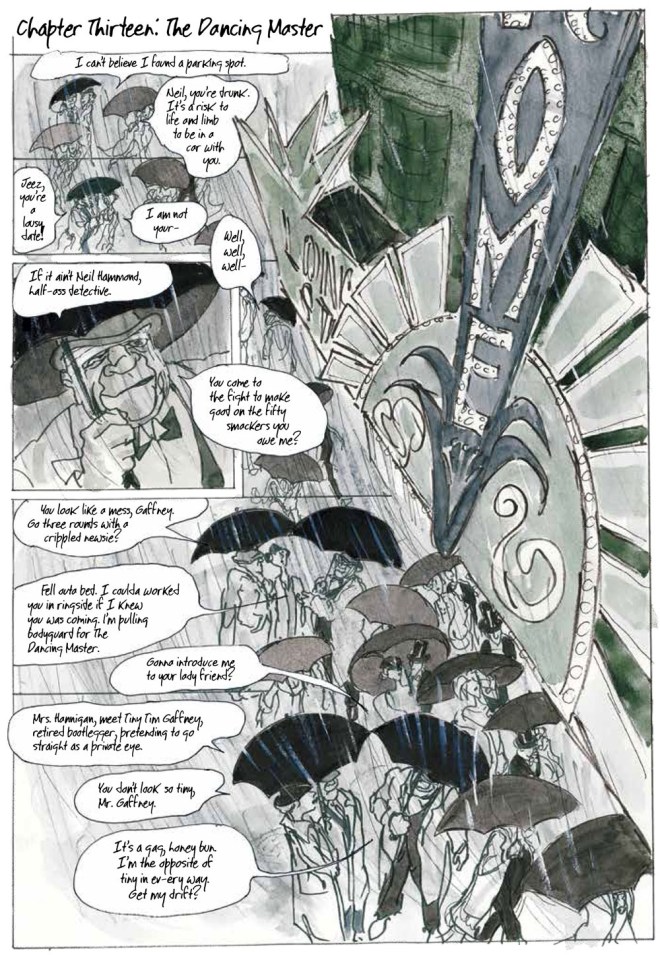
It’s vengeful and bluesy, jivey and filled with songs sung way too late at night by a tall woman with a long past. It’s not jokey—this is serious work by a serious creative pro whose resume is dates back before most of the people who will read this article, or that book. There’s nudity and violence, crude language and tenderness, idiotic situations that feel quite real, and a wonderful sense of place and time.

What works best for me? Just scanning every page, considering the creative decisions that a long life are capable of producing. This isn’t just a good graphic novel. It’s a late stage work by one of our twentieth, and now, twenty-first century masters. I love the way he sets up a page, brings his print characters to life on the page, uses flowing line and dabs of color to fill my head, and feed my imagination. Gosh, he’s good.

Pages-from-KMM_feiffer-4-1000-580-BPages-from-KMM_feiffer-2-1000-580 Pages-from-KMM_feiffer-1-1000in-kill-my-mother-erzaehlt-jules-feiffer-von-seiner-jugend-in-einem-amerika-dessen-werte-er-noch-nachvollziehen-konnte


The Bathypelagic Zone, or Where the Sperm Whales Go

The most experienced freedivers manage to go no more than a few hundred feet below the surface—they play in the Epipelagic Zone. Dolphins are good to about 1,000 feet m the heart of the Mesopelagic. After that, the Bathypelagic Zone is home to electric rays, sperm whales, and a lot of unfamiliar creatures. Terms unfamiliar? Think about a bathysphere—the spherical submarine for deep exploration.

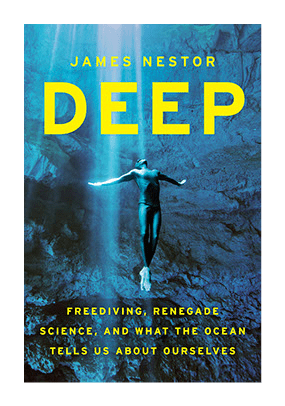
deep_cover-u2245Freediving is “the most direct and intimate way to connect with the ocean.” During a three-minute freedive, “the (human) body bears only a passing resemblance to its terrestrial form and function. The ocean changes us physically, and psychically.” Unfortunately, “sometimes you don’t make it back alive.” Those words were written by James Nestor in his new book, “Deep: Freediving, Renegade Science and What the Ocean Tells Us about Ourselves.” It’s one of the best books I’ve read this year, an introduction to a part of our world that is unfamiliar to nearly everyone on the planet, and an adventure story, too.
Continuing. “At sixty feet down, we are not quite ourselves. The heart beats at half its normal rate. Blood starts racing from the extremities toward the more critical areas of the body’s core. The lungs shrink to a third of their usual size…” And, “at 250 feet, the pressure is so extreme that your lungs shrink to the size of fist…” Human freediving is a story in itself, a dangerous way to explore because, often, one emerges from the water with blood coming out of the nose and mouth, and sometimes, if the pace of re-emergence is too rapid, blackout is common and, drowning, implosion and death are distinct possibilities.

As grossly fascinating as the extreme sport may be, the magnetoreception used by sharks, who can dive below six hundred feet, is more compelling. Sharks are tuned to “the magnetic pulses of the Earth’s magnetic core.” Echolocation seems less magical—it’s the basis of sonar and sonograms—but the coded language used by sperm whales, or dolphins, as they echolocate, well, that’s something extraordinary. Going further, cetaceans (including, for example, dolphins) possess brains that differ from the human ones that we are just beginning to understand. “…dolphins…could hold two separate, simultaneous conversations with two separate modes of communication, clicks and whistles—the equivalent of a human talking on the phone while chatting online” (to which I would add: we pretend to do two things at once—texting while driving, for example, but do neither well when multitasking).

Way down in the bathypalegic zone, the author and some compadres are watching the burning sea—bioluminescence—“chemical production of light by living organisms” in a inky-black sea so far from the surface that it exists in darkness (“night never becomes day”). “The grotesque-looking anglerfish uses a little light on the top of its head to attract prey. Giant squids—which can grow more than sixty feet long…use bright flashes to communicate with other squid using something similar to Morse code.”

He becomes fascinated with bioelectricity, and explains that “every cell in your body contains an electrical charge…the electricity travels by way of a series of circuits called ion channels, tiny proteins in the membranes of cells.” Nestor goes on to discuss electric rays, animals whose design concentrates this electrical power so that it can “emit a shock of more than 22o volts.” He considers the body’s energy that the Chinese call chi, and wonders what we can learn from the ocean in order to control and maximize the use of our power.

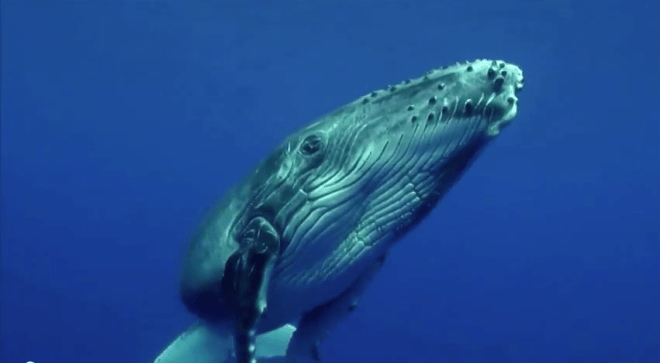
WhaleBack, for a moment, to sperm whales, “the loudest animals on earth.” He explains, “at their maximum level of 236 decibels, (their) clicks are louder than two thousand pounds of TNT exploding two hundred feet away from you, and much louder than the space shuttle taking off from two hundred and fifty feet away. They’re so loud that they cannot be heard in air, only in water, which is dense enough to propagate such powerful noises.” They could “vibrate a human body to death.”

8056812127_5874633d63_z

This is a spectacular journey, written so that the reader goes deeper and deeper into the depths of the ocean, then emerges with newfound knowledge and appreciation of earth’s wonder.

I could go on, but it’s late, and there’s not much more to say besides, “buy the book.”


The Warmth of Isabel Wilkerson

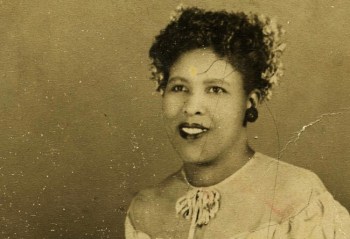
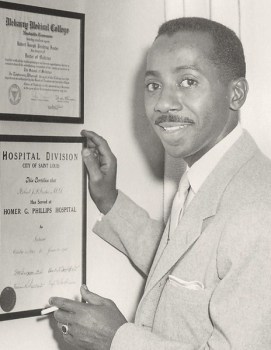
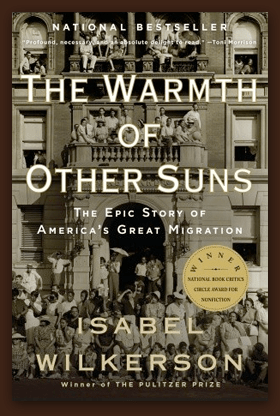
cover_bookBeginning around 1915, six million people left their native land hoping for a better life. Nearly all of them were Americans, but they were poor, without prospects. For the next half century, they left the South, many for northern cities where they knew a relative or felt they could find work, some for the west, where they hoped Jim Crow would not be a factor in their lives. They left in faith, and without much information. Three of them were fortunate because their stories were told, in considerable detail, by a compassionate, literate, well-informed journalist named Isabel Wilkerson. Her work, which she completed in 2010, involved thirteen years of her life and over a thousand interviews. the book is a solid ten-hour read (it’s over 500 pages), and you won’t want to miss a single story about her chosen few, the Americans whose stories she tells so well. They are: Ida Mae Brandon Gladney, Robert Joseph Pershing Foster and George Swanson Starling. Ida Mae starts out in Van Vleet, Mississippi in 1928, and survives the completion of the book. Leaving Monroe, Louisiana far behind, Robert survives a punishing trip to the California of his dreams, and becomes a wealthy doctor in Los Angeles with a soft spot for people in need. George is a bit of troublemaker in his native Florida, and ends up working on a New York-Florida train while living a new life in Harlem. (I use their first names because of the kinship that the author kindled in me; I feel as though I knew them from the neighborhood.)

Ida Mae, with flowers in her hair, sharecroppers’ daughter, living in Chicago in the 1930s

Ida Mae, with flowers in her hair, sharecroppers’ daughter, living in Chicago in the 1930s

Wilkerson takes care to paint a full picture of these people, their lives back down South, their struggles in making the decision to leave, the tough times they endured during their period of relocation, family and friends who weave in and out of their lives. The sense of never quite being at home is a constant companion; so is the the sense that they don’t completely belong where they ended up. They resolve these conflicts in their own minds, sometimes rationalizing, sometimes considering just how fortunate their lives became, sometimes trying to untangle the equally tangled thoughts and behaviors of others.

Young Doctor Robert Foster in the years before he made enough money to do anything he pleased.

Young Doctor Robert Foster in the years before he made enough money to do anything he pleased.

George was known as “schoolboy” because he was among the few citrus workers in his area who had attended any college at all. His father talked him out of the idea, and George spent the rest of his life wondering what might have been.

George was known as “schoolboy” because he was among the few citrus workers in his area who had attended any college at all. His father talked him out of the idea, and George spent the rest of his life wondering what might have been.

Wilkerson also scores scholarly points by resolving not to accept common knowledge. Her responsibility to Ida Mae, Robert and George is powerful, and she insists on providing commentary and context to keep the reader on track and clear about what actually happened, and why it matters.

Intrigued? Watch an excellent hour-plus interview with Ms. Wilkerson on the award-winning public affairs series that survived the old New Jersey Network and now resides at Rutgers University. Find it here.