What about Black-and-White?

Back in the analog stone age, shooting in monochrome was a creative choice made in advance. You’d buy a few ISO 400 rolls of Ilford HP5 or Kodak Tri-X, and head out for a day of serious photography, hoping for just one image worthy of framing.

In fact, black-and-white analog photography offers several advantages. There is at least four times as much picture information, so contrasts can be stronger, textures can be more refined, and enlargements can be, well, larger. About half of this work is done in the field, mostly by selecting and composing with intelligence, and by selecting an appropriate optical filter to place on the lens. For example, sky contrast can be dramatically increased by using a red filter, but sometimes, detail in shadows is lost with a red filter, so an orange filter may be more suitable. Corrections are then made in the analog or digital darkroom, a trial-and-error process that becomes easier after a lot of hours of experimentation and instruction.

Working with a digital camera, the best black-and-white images are derived from color images, but maybe not in the way you’d think. The adventure begins with a digital camera that can shoot RAW images–so plan to spend at least $500 on the camera. Lesser cameras, and less-than-serious photographers with better cameras, shoot in JPG to jam more images onto an SD card. If you start with a JPG created in the camera, your black-and-white images will lack detail, clarity and snap. Your expensive digital camera offers an instant monochrome option. No, you shouldn’t use it, not if you are serious about your photography.

Instead, you can achieve miracles by post processing your RAW image in Aperture, Photoshop, or other software capable of handling RAW images. With desktop software, you can add the equivalent of colored filters and gradient filters, with a level of precision unavailable in the field, and unavailable in old school darkrooms.

In his book, Hoffmann goes into considerable detail about how this picture was made, and why it is so effective. He’s a very good teacher.

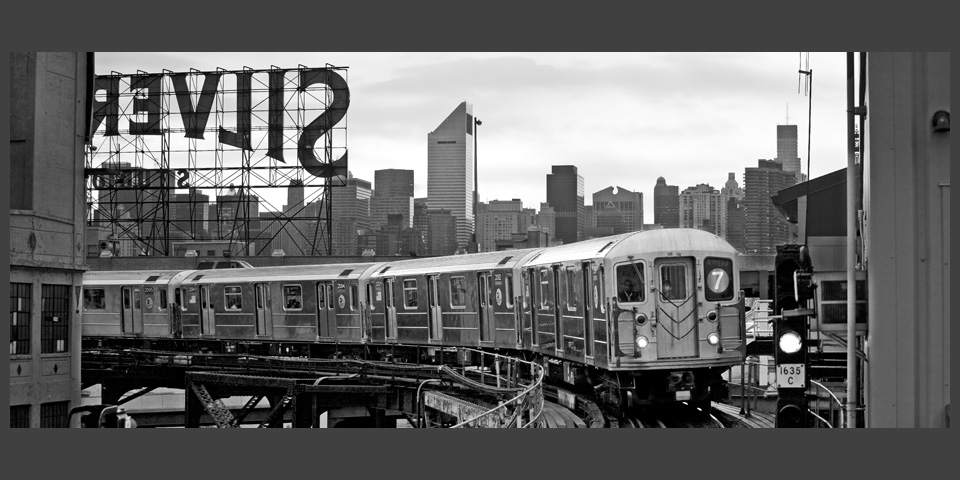
Is it worth the time? It’s worth the time if you train yourself to create the best possible images by learning a lot about composition, mood, street photography, landscape work, architectural photography, and abstract work from a master teacher. I’ve spent the past month or two studying the second edition of a fine book entitled The Art of Black and White Photography by Torsten Andreas Hoffmann, published by Rocky Nook Press. He provides the necessary technical information, but spends most of his instructional time on important photographic ideas: how to avoid the cliché, achieving balance, dealing with visual irritations that cannot be moved, capturing people in their natural surroundings, visual rhythm, form and composition. Hoffmann is especially effective when he writes about, and photographs in, a strongly graphic style: strong contrasts, superior use of line and form, repetition to suggest speed or solidity. (Study the three Hoffmann images in this article, and notice, for example, the repeated pattern of small verticals–the fence posts in the top image, the decorative balusters in the second, and the train doors in the third supported in the distance by the verticals of the Manhattan skyline). These are not snapshots–they are photographs–and if there was any doubt about a blurry line between those two ideas, it disappears here. These are advanced ideas, most suitable for the experienced photographer or for the ambitious newcomer. The reward is in the learning, of course, and also in the tour of Hoffmann’s portfolio, which is sampled in this article and offered in expansive form on the photographer’s website.

The photographer is based in NYC. This image is one my favorites, but it comes from his website, and does not appear in the book.

Bye Bye Bookstore (Mea Culpa)


I love bookstores. Also, record stores, art supply stores, just about any kind of store where creative work defines the merchandise.

And, I’ve been fortunate because there are three good independent bookstores less than a half-hour from my home: one in the county seat, one in a town dominated by tourists, and one in a university town that’s also an easy drive (plus, several more that sell used books).

Unfortunately, this month, we’re losing the neighborhood bookstore that’s just five minutes from home. They didn’t make it. They cite e-books, internet bookstores, and the nearby Barnes & Noble (the nearby Borders closed a few years ago). The economics confuse me. Maybe you can make sense of it all.

My family buys a lot of books: probably 40 or 50 books each year. We buy more books, for personal use, than anybody we know. Assume 50 books at $20 per book, and that’s $1,000 in retail business per year. I would be proud to say that we’ve bought all of them from our local independent booksellers, but I can’t say that because it’s not the truth. It would be fair to say that we’ve bought about 1/4 of those books while traveling (we especially like Toadstool Bookshop in New Hampshire, for example), and half of them online because of the convenience, price, or quick delivery. The other 1/4, we probably buy locally.

One good example: a biography of the old superstar, Will Rogers, priced at $24.95 in paperback from a local bookstore, available for $16.47 from Amazon (with free shipping). We’re smart consumers–we saved $8.48 because we bought from Amazon. In a year, we make this decision maybe 20 times, so maybe we save $200 per year by buying this way. As I said, we’re smart consumers.

But we’re stupid citizens. Our extra $200 per year matters to a local bookseller. If 100 customers paid the higher price instead of saving the money, that’s an additional $20,000 per year for the local bookseller. If 1,000 customers, the additional revenue nears a quarter-million dollars.

So here we are, all of us, the book lovers and the book consumers, happily saving money by shopping late at night and taking advantage of super saver shipping and the deep inventory that online booksellers provide… all the while forgetting about our neighbor, the small business person, who is spending every late night trying to figure out how to keep the local bookstore’s doors open.

When I think about this, I feel stupid. As I said, I really like bookstores, but just this morning, I ordered two books from Amazon, and I saved $7.33 on one of them and $15.78 on the other. This afternoon, I thought about visiting my local bookstore, the one that has been five minutes away from my house for the past few years.

It was closed.

I feel foolish. Why didn’t I do more to keep a community institution in place?

Save the Country!

In our hearts, we know what’s wrong, and we know that it’s not about Democrats or Republicans. It’s about the money that flows into political campaigns, the revolving door between industry and agencies that should be regulating without industry influence, the political bashing that obscures the real issues, the real reasons why our food is unsafe, our cellphones were never properly tested to assure that they do not produce cancer, why our financial system collapsed, why the jobs went away and people lost their houses while the big banks and the big car companies somehow made out okay.

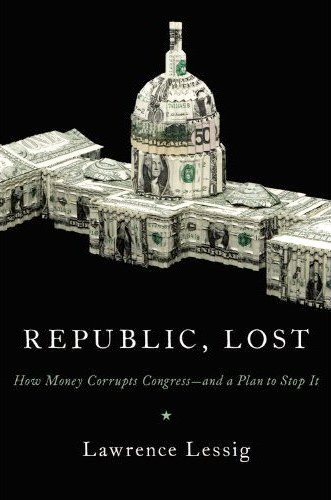
Sometimes, it takes a smart professor to parse the issues, and present them in a way that makes logical sense. Here, the professor is Lawrence Lessig, well-known for his work in the synchronization of copyright issues with the realities of new technologies. Lessig has shifted focus. In his new book, Republic, Lost, Lessig explains how and why we have accomplished the decimation of our democracy, and what we ought to do about it. This is not a book about politics. Instead, it’s a book about economics, foolish decisions, and fundamental thinking about what a country ought to do, ought to be.

The fundamental problem is relatively simple. Special interest groups, including big companies, big industries, unions, and others with vast money to spend, now control the agenda, and the decisions, made by our legislators. This is accomplished by funding political campaigns that now cost so much money, candidates are unable to raise the funds in any other way. Money is distributed not as bribes, but within a “gift economy,” in which lobbyists control the flow of funds, favors, and even the words in legislation that few legislators ever manage to read before voting. The size of this gift economy is spectacular in its size and influence, resulting in a sustained distraction for even the best-intentioned legislators whose time and decision-making processes are, according to Lessig, dominated by this system.

Where Lessig is clear about what the problem is, why and how it has gobbled up our representative form of government, and how much money is involved, he is less wonderful when it comes to solutions (which is to say, Lessig is clear thinking and often quite brilliant in his assessment of the current situation, but even his big brain struggles with what the heck we should do now). Still, he does present several seemingly sensible ideas.

Of course, the first solution is the simplest: let’s eliminate large contributions, and instead, share the burden with many small contributions. (In this regard, Obama had the right idea.) The Grant and Franklin project would allow each person in the U.S. to contribute $50 (Grant) of their Federal taxes plus $100 (Franklin) more to one or more individual candidates, or to their favorite political party. No more PAC or political party funding–candidates can receive a maximum of $150 per person. Here’s the kicker: for candidates, this would be voluntary. That is, each individual candidate would decide to follow the Grant and Franklin path–and those who do not, well, the American people would know who they are. Lessig: “If a substantial number of candidates opted into this system, then no one could believe that money was buying results.”

Then, the “clever lawyer” part of Lessig kicks in with an idea that’s intriguing, if not altogether practical (why should we rely upon practical ideas?–this is nation built by dreamers!). Lessig again: “Here’s a quiz. What’s required to be elected to the House of Representatives? You’d think that one requirement is that you be a resident of the district from which you’re to be elected. All the Constitution requires is that at the time fo the election, you be ‘an inhabitant of that State in which you shall be chosen'” And with that, Lessig is off and running…

Why not, he asks, run one candidate in several districts with a flash of anarchy in his or her midst. The only reason he or she is running is to force the other candidate to “publicly commit” to the Grant and Franklin approach. And for those candidates who do manage to get elected (inevitably, some will), he or she commits to: holding the government hostage until Congress enacts a program to remove the fundamental corruption that is now the rule in our government, and once that program is enacted, he or she will resign from office.

Lessig goes further: he wants a constitutional amendment.  Here, he enters a deeply analytical, harshly critical approach to his own idea, using his legal powers to define a path that could make an amendment possible. And, he reckons, some rich and powerful people are likely to come along for the ride.

He’s better on describing the cause and current situation than he is on prescribing the proper solution, but it’s unreasonable to expect one person, however smart, well-educated and clever, to define a plan to rebuild the republic. But he has taken the first step: he has clearly detailed the current situation and analyzed it in ways that break through any specific political dogma or belief system or party affiliation. And I know that his thinking has affected my thinking, and, presumably, some tens of thousands of other people’s thinking, and that’s a start.

So here’s the question from my side: I buy the analysis, and I want to be part of the solution. My starting place follows Lessig’s suggestion: I need to spend some time visiting a few websites, and figure out how I might insert myself into the process. His suggested websites:

Call a Convention

Public Citizen

Voters First Pledge

Fund for the Republic

Rootstrikers

BTW: The publisher is Twelve Publishers. It’s an imprint of Hachette, a larger publisher, but Twelve is delivering on a small, powerful idea: publish a dozen important books each year.  And make them count. I like their approach enough to include it here:

  1. Each book will enliven the national conversation.
  2. Each book will be singular in voice, authority, or subject matter.
  3. Each book will be carefully edited, designed, and produced.
  4. Each book will have a month-long launch in which it is the imprint’s sole focus.
  5. Each book will be nationally advertised.
  6. Each book will have a national publicity campaign.
  7. Each book will have a digital strategy.
  8. Each book will be worthy of the attention of discerning book reviewers.
  9. Each book will have the potential to sell at least 50,000 copies in its lifetime.
  10. Each book will be marketed and distributed by the Hachette Book Group, the company with the best hit ratio in the American publishing business.
  11. Each book will be promoted well into its paperback life.
  12. Each book will matter.

On his way in, Mr. Elbaz meets Mr. Smelie, on his way out

Gil Elbaz’s new company plans to collect, organize and distribute every fact on the face of the earth (and, presumably, above and below it). His company was featured on the front page of today’s New York Times Sunday Business Section.

The sum of human knowledge from a hundred years ago.

Colin Macfarquhar’s old company dates back to about 1770, when Colin and partner Andrew Bell hired William Smelie to put together the first edition of the Encyclopaedia Britannica. Smelie was 28 years old at the time, and he managed to produce, with collaborators, over 2,500 pages in three volumes. This month, after 15 editions, and all sorts of contortionist moves to contain and present an increasing vast store of information, the old EB gave up. No more editions. They’re done. After more than 200 years of successful publication of facts in books, the task became overwhelming as the publication business was overwhelmed by the crowd sourced newcomer, not yet a decade old, called Wikipedia. And the old Britannica ceased publication.

‘Tis a sad day, I suppose, but neither the Encyclopedia Britannica, nor the World Book Encyclopedia (which was always easier to read and more enjoyable to browse because of its reliance upon pictures), nor Colliers or the others, were superior reference tools.

From the NY Timesarticle about the EB’s demise:

William Smelie was responsible for the first Encyclopaedia Britannica, a stunning accomplishment that lasted centuries, but never overcame the digital revolution.

(In) one widely publicized study, published in 2005 by Nature, called into question Britannica’s presumed accuracy advantage over Wikipedia. The study said that out of 42 competing entries, Wikipedia made an average of four errors in each article, and Britannica three. Britannica responded with a lengthy rebuttal saying the study was error-laden and “completely without merit.”

Early in my career, I wrote and researched questions for television game shows, where a contestant’s knowledge (and memory) of facts could be converted into thousands of dollars. We kept several encyclopedias in the office. Each one had a pad above it, where writers and researchers made note of errors. Each pad was dozens of pages long. There were lots and lots of mistakes, some stunning in their stupidity: Paris was the capital of Egypt, that sort of thing, resulting from too many pages being pushed through a manual system at speeds that made sense only to a publisher.

Gil Elbaz, founder of Factual.

Factual’s plan, outlined in a big orange room with a few tables and walled with whiteboards, is to build the world’s chief reference point for thousands of interconnected supercomputing clouds.” Based upon the NY Times article, it would be fair to assume that Factual and EB are looking at information differently–both in terms of process and scale:

Geared to both big companies and smaller software developers, it includes available government data, terabytes of corporate data and information on 60 million places in 50 countries, each described by 17 to 40 attributes. Factual knows more than 800,000 restaurants in 30 different ways, including location, ownership and ratings by diners and health boards. It also contains information on half a billion Web pages, a list of America’s high schools and data on the offices, specialties and insurance preferences of 1.8 million United States health care professionals. There are also listings of 14,000 wine grape varietals, of military aircraft accidents from 1950 to 1974, and of body masses of major celebrities.

There is reason to be confident in Mr. Elbaz’s vision and ability to execute: his prior company, “Applied Semantics software quickly scanned thousands of Web pages for their meaning. By parsing content, it could tell businesses what kind of ads would work well on a particular page. It had 45 employees and was profitable when Google acquired it in 2003 for $102 million in cash and pre-I.P.O. stock.”

So, say goodbye to yet another long-standing institution, acknowledge the intermediary step that caused the change, and welcome yet another new way of thinking enabled by the massive technology shifts that we’ve experienced in our recent lifetimes. Gee, this is moving along quickly!…

Food: The Meta-layer

Past few months, everybody’s talking about the meta-layer. We don’t just watch TV. We add a meta-layer, tweeting about the Academy Awards, commenting on comments–ideas piled on ideas. We’re learning to comment on everything, with or without the requisite knowledge of the facts involved, rarely with the research needed to form a coherent opinion.

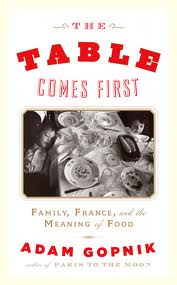
Not so with Mr. Gopnik, whose past stories about his young family’s life in Paris (Paris to the Moon) and their return to Manhattan (Through the Children’s Gate) are among my most-recommended books, and whose 2011 book, The Table Comes First: Family, France, and the Meaning of Food has provided several months of nourishing food for thought, or thoughts about food, probably some of each.

Where did restaurants come from? Who came up with the idea of not just eating outside the home, but dining there? (Long answer, begins around the French revolution). Quite rightly, he compares the restaurant customer to an aristocrat, accustomed to being served (and served beautifully). Gopnik delights in grazing through the thoughts of Brillat-Savarin and Grimod–two early, influential writers about food and dining–but I like the bit that he found in Robert Frost best:

“Home is a place where, when you have to go there, they have to take you in. A restaurant is a place where, when you go there, they not only have to take you in but act as though they were glad to see you. In cities of strangers, this pretense can be very dear.”

This is a book in which New Yorker writer Adam Gopnik thinks about food, and thinks about how others think, and have thought, about food. He goes deep, with some chapters so mired in philosophy or history that they eventually become indigestible. Fortunately, these are exceptions. And when the going becomes thick, he pauses for to write an email to Elizabeth Pennell, who wrote with intelligence and wisdom about food about a century ago; these chatty emails cover the true benefits of cinnamon, the best ways to cook lamb, the extraordinary use of hot air in the hard-to-find and hard-to-cook pommel soufflés, his dog Butterscotch’s love for steak, and other lighthearted stuff.

Adam Gopnik is a regular contributor to The New Yorker.

This is not a book to read over a single meal. It is, instead, book to be savored, bit by bit, over several months. There is simply too much information, too many glimpses and meta ideas, too much richness and provocation and serious research, to be enjoyed quickly. It is slow food for the brain–imagine that, in an era of emails and tweets–much of it about topics I’ve never really thought much about.

For example, Gopnik compares “cook it at home” recipe books that restaurants sell with the home game version of, say, Hollywood Squares. Certainly, there is a resemblance, but the resources and the spicing are entirely different, and so is the experience. He tells a long and funny/odd story about his search for a live chicken that can be purchased, cooked, and eaten within the bounds of New York City, and another about the cleverness of farming tilapia to feed large urban populations, then adds the zesty meta-layer, invoking Adam Smith and the total cost associated with what he believes to be a current fad for localism. And so:

“If Kenyan greens take less total energy than Plattsburgh tomatoes, then we should revel in them no matter how far they have to travel.”

And so it goes, through questions about whether we really can taste the differences between wines (or whether the situation and the artifice overpower the actual human capacity for taste), the imperfection of memory as it applies to the fancy French restaurants of 20th century Manhattan, why sugar was used mostly to flavor tea in England but became the impetus for the pasty industry in France, the various ethical arguments for and against the slaughter of animals for human consumption, and so much more.

As with his own food choices–today, spicy beans and rice, tomorrow, a complicated and challenging attempt at a classic French dish from a century ago–some sections are rich with friendly storytelling and some are thick with pretense, serious thinking, and historical reconsiderations. Unlike Twitter, you need not absorb every idea in an instant. There is time enough to consider the meta-layer, to appreciate the fine writing that has long been Gopnik’s strong suit, time enough to think about what Gopnik has said about what others have said and done, and perchance, to learn something about their ideas by reading Brillat-Savarin in the original (on my list, but not for this year).

You Bought the Camera. Now Buy the Book.

You spend $300, maybe $400, on a feature-rich digital camera. You start by shooting in automatic mode, then experiment with aperture or shutter priority, white balance, low light shooting and maybe a few special effects.

You want to understand image manipulation, image processing, image retouching, but these are not easy to learn, and they are difficult to master.

There’s a large gap between (a) what today’s cameras and software can do, and (b) our understanding of these features and how to use them.

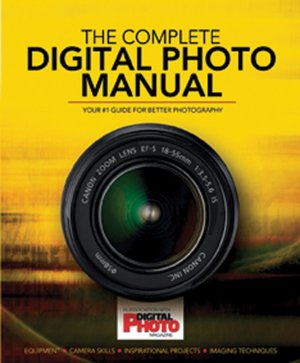
After a Goldilocks routine (too artsy, too techy, etc), I found a wonderful guide in The Complete Digital Photo Manual. Just the right balance for me–written in plain language with lots of helpful diagrams and photographs.

The book begins with an illustrated section about compact cameras–higher end models like Canon’s G10, cameras built for extreme conditions, super zooms–followed by a walk through various types of DSLR cameras and the most common features. There’s an important sidebar about image sensors. Then, it’s on to a similar section about lenses.

Next, the book explains how to set up the camera, explaining each of the features commonly offered on digital camera menus. The are good, clear explanations about metering patterns and histograms, white balance and image sharpness.

And then, about 1/3 of the way through the book, comes the best stuff. Every significant Photoshop tool and menu item is simply explained, often with step-by-step diagrams and abundant examples and illustrations. Two-page spreads include Hue/Saturation, clone Stamp and Healing Brush, Layer Masks, Channels, Hand Coloring, and more.

Then, there’s another group of spreads offering specific direction to, for example, Replace a Boring Sky, Blur Waves with a Long Exposure, lots more.

The last of the truly helpful sections explains how to make good use of RAW images, a feature viable on most serious cameras.

The Complete Digital Photo Manual was produced in association with England’s Digital Photo Magazine.

The book costs less than $25 at Barnes & Noble (and other fine retailers). Think about it: you spent how much on the digital camera? Why wouldn’t you make this investment?

The Ultimate Road Trip

It’s the biggest thing we’ve ever built–bigger than the pyramids of Egypt, about a hundred times as long as the Panama Canal, easily eight times the length of The Great Wall of China. It’s newer, too. And, soon, we’ll probably build it all over again.

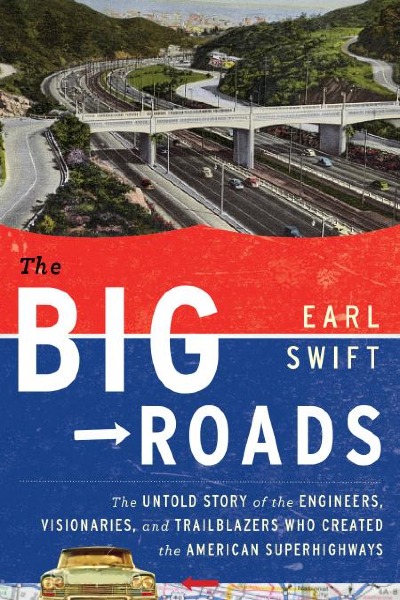
As Earl Swift explains in The Big Roads: The Untold Stories of the Engineers, Visionaries and Trailblazers Who Created the American Superhighways, the U.S. interstate highway system is forty-seven thousand miles long, and it is the “greatest public works project in history.”

Messy as our current dilemma about infrastructure may seem, life was worse before the interstates, before modern roads. In the good old days, New York City’s horses output 2.5 million pounds of manure every day, plus 60 thousand pounds of urine. In 1893, the agriculture department got things rolling with a new Office of Road Inquiry, whose boss, a Civil War veteran, declared Americans “have the worst roads in the civilized world.” Still, intrepid automobiling pioneers attempted a cross-country race in 1903 (one car included a dog, Bud, who wore goggles and “became a hit in every town they visited.”) This was the beginning of an industry, complete with sales stunts on a grand scale: Carl Fisher, whose early days were consistently colorful (and completely crazy), “rigged a Stoddard-Dayton roadster to a massive balloon and flew it over Indianapolis, vowing to drive it back into town from wherever he landed.” (Actually, Fisher stripped the floating car and drove home in a look-a-like spare). Not long after, Fisher partnered with two other car crazy businessmen  and built the Indianapolis Speedway. Fisher was among the first to campaign for a big interstate highway system.

A half-century later, in 1956, “nearly $2.6 billion had been committed to the work… contracts had been awarded on more than a thousand bridges… construction was under way or about to begin on nearly two thousand miles of highway.” Half the book is about the wrangling, the engineering and politics, the slowdowns due to the Great Depression and World War II, and all sorts of rational and irrational arguments about the nature of the undertaking, the roles of the states versus the Federal government, the best ways to pay (tolls? gas tax? Federal funds? State funds?), and much more. In fact, the weakest part of the book attempts to describe this wrangling–Swift (great name for the author of a book about fast highways, BTW) does his to craft a story from his astonishing collection of arcane research. With Detroit pumping out over 5 million cars per year (1 in 3.5 citizens owned a car), America had a mess on its hands. Far too many cars driving on roads that were designed decades earlier. Trucks made the situation worse, both by contributing to congestion and also by damaging roads never built for a big truck’s combination of weight and speed. “Snarls at New York’s George Washington Bridge were traced back eighty-four miles–seriously, eight-four miles–to Monticello, New York.”

Even in these early stages, Swift explains that the highway system had its critics: Lewis Mumford published articles and books about the loss of city neighborhoods, and the economic destruction of towns and villages across the nation. By the 1960s, the environment movement gradually imposed restrictions on engineers who were once able to construct interstate highways pretty much anywhere, regardless of impact on animals, ecosystems, even city parks. Several Baltimore neighborhoods fought tremendous battles, and today, there is no interstate highway system cutting across Baltimore–the local activists won their battle. Visitors to Baltimore’s lovely old Fell’s Point neighborhood can thank those activists–if the interstate was built as planned, that neighborhood would be gone.

Swift goes on the record to give credit where it’s due, often to government functionaries who exceeded the call of duty, but his writing is far more interesting when he’s on the road himself, or when he’s telling the (too-brief) stories of how Howard Johnson’s or other roadside co-conspirators grew to be a part of American life on the road.

What’s more, I wish he had told us more about the next fifty years, or perhaps, the next twenty. Apparently, the interstate highway system was built for about a half century’s useful life. It has not been properly maintained. As the most dedicated of the government figures, Frank Turner, pointed out, “Highways grow old and wear out at a fairly predictable ages and lifespans, and therefore must be replaced or restored.”

Swift explains, “One federal study suggested that all levels of government should spend a combined $225 billion a year for the next fifty years to rehabilitate surface transportation…they’re currently spending just 40 percent of that, in a country that does 96 percent of its traveling by car and truck.”

So begins a brief discussion about dedicated truck lanes, alternative fuels and other incremental improvements. The bigger question is potentially world-changing and certainly mind-bending, so I offer it as the basis for Swift’s next book. A century ago, visionaries came up with the idea of cars (and trucks), and then, a connected interstate highway system to move people and goods in a safe, reliable, cost-effective way. By the time the interstate highway system was completed in the late 1960s, most of those people were either gone or too old to drive. Given the astonishing public good, the modernization of America, and the tremendous downside associated with our current system, I wish Swift would encourage a discussion so we can decide whether to, and how to:

(a) spend another $11 trillion ($225 x 50 years) to fix and upgrade a highway system conceived before television, McDonalds, cell phones, FedEx or the internet, or

(b) come up with an equally bold conception of transportation that could sustain us until, say, 2112?

Here’s the photo of author Earl Swift as published on the literary festival’s website.

Looks like a strange, unimaginable number, that 2112, but in 1912, when Fisher and his friends were tooling around Indianapolis in their early model cars, 2012 must have seemed as far away, and as impossible, as a 47,000 mile highway system connecting every city and town in what is now called the lower 48 states.

BTW: In researching the author, I found this impressive bit about his interests: “An avid outdoorsman, Swift has through-hiked the Appalachian Trail, circumnavigated the Chesapeake Bay by sea kayak, and traveled the 435-mile length of the James River by foot, canoe, and kayak.” I found it here.

The Big Roads was published in 2011 by Houghton Mifflin Harcourt.

Buy it from Powell’s Books.

Tools: Publish your own eBook (or, iBook)

Within the next 30 days, I am going to publish my first eBook. How I wish Mashable had published this chart of eBook publishing software applications before I got started. I struggled through Adobe InDesign and gave up. I would have used Apple iBook Author but it was not available. For me, Scrivener was the best available solution–and it seems to be working, but Apple has upped the game with its (and free) software.

Have a look, and be sure to pass this post on to anyone who might be considering their first eBook.

A chart comparing all the ePub tools available to users.

How iBooks Author Stacks Up to the Competition [CHART]

Siri, meet the family

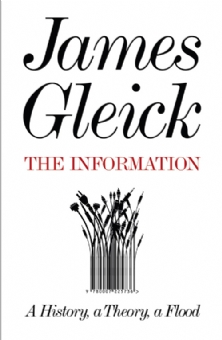
The UK cover is more interesting than the US cover, which is, somewhat appropriately, covered with the repeated words "The Information."

James Gleick nearly won a Pulitzer Prize for a biography about Isaac Newton, and another about Richard Feynmann, a colorful physicist who pioneered nanotechnology and quantum mechanics. His best selling book (more than a million copies sold) is the step-by-step, scientist-by-scientist, idea-by idea story of chaos theory entitled Chaos: Making a New Science.

Gleick’s 2011 book is called The Information. it begins with the European discovery of African talking drums in the 1840s, a percussive idea he eventually connects to Samuel Morse’s dots-and-dashes telegraph code, and, we’re off on a long tale not unlike the best of James Burke’s TV series, Connections. Gleick takes us through the development of letters and alphabets, numbers and mathematics, numerical tables and algorithms, dictionaries and encyclopedias. These stories, and their many tangents, set us up for Charles Babbage whose boredom with the Cambridge curriculum in mathematics leads to an early, impossible-to-build, 25,000 piece machine, awesome in its analog, mechanical, Victorian design. This, then, leads to the further develop of the telegraph, now caught up in a new conception called a “network” that connected much of France, for example.

By the early 20th century, MIT becomes one of several institutions concerned with the training of electrical engineers–then, a new discipline–and with it, machinery to solve second-order differential equations (“rates of change within rates of change: from position to velocity to acceleration”). This, plus the logic associated with relay switches in telegraph networks, provides MIT graduate student Claude Shannon with his thesis idea: connecting electricity with logical interactions in a network. Shannon’s path leads to Bell Labs, where he works on the “transmission of intelligence.” By 1936, a 22-year old Cambridge graduate named Alan Turing had begun thinking about a machine that could compute.

Well, that’s about half the book. Now, things become more complex, harder to follow, dull for all but the most interested reader. The interweaving connects DNA and memes (and, inevitably, memetics, which is the study of memes), cybernetics and randomness, quantification of information, and Jorge Luis Borges’ 1941 conception of an ultimate library with “all books, in all languages, books of apology and prophecy, the gospel and commentary on that gospel, and commentary upon the commentary upon the gospel…”

Eventually we obsolete CD-ROMs (too much information, too little space), and create Wikipedia and the whole of the Internet. In the global googleplex, the term “information overload” becomes inadequate. And yet, Gleick promises, it is not the quantity that matters, it is the meaning that matters. After 420 pages of historical text, I’m still wondering what it all means–and whether the purpose is mere conveyance as opposed to deeper meaning or its hopeful result, understanding.