Film with Feeling

Alex Kirke is a director with a keen interest in the cinematic experience, and, as it turns out, an equally keen interest in the measurement of biophysical responses to storytelling. Inevitably, this led Mr. Kirke to the development of software that would read sensors attached to the bodies of audience members. The sensors provide real-time feedback on muscle tension, perspiration, heart rate, and brain wave activity. As the software collects the data, it compiles the results, and, in accordance with the director’s wishes, the film automatically branches from one audio-visual file to another.

By using this technology, a director can amplify or dial-down emotional impact, shorten or lengthen the story, cut to another sequence entirely, and so on. Of course, all of the branching must be worked out before production begins because each sequence must be produced, edited, and integrated into the file management system.

Says one of the actresses:

It will be quite interesting to know, so well, how the audience reacts. The ending they choose reflects their reactions.

Not just the ending, of course. Anywhere in the film, the story can change course. So, too, can the soundtrack. Or any visual or visuals. In theory, there may be a large number of branches (for the professional, this becomes an obsessive, difficult way to tell a story, but it’s interesting to consider the possibilities). And, in theory, the sensors could be connected to the seats or the armrests throughout the theater, but that’s all in the future.

For the present, do watch the video. It’s rough, more of a professorial demonstration that any sort of slick production, and, if time permits, have a look at Mr. Kirke’s blog, too. There, he covers an interesting range of technical innovations related to entertainment and storytelling.

Peacock in the Coal Mine

Josef Adalian wrote a very provocative article about NBC and the network prime time model in his Vulture column for New York magazine. Based upon both prime time flops and shifts in audience attention, he wonders whether the network model is still viable, and if so, how much longer it will survive.
It was far easier to climb out of the Nielsen basement when there was just a handful of legitimate competitors. Now NBC is fighting for eyeballs at a time when millions of viewers don’t even watch TV on TV.
You can buy the "NBC Stress Toy" from the NBC Universal Store.

You can buy the “NBC Stress Toy” from the NBC Universal Store. Just click on the image.

Adalian presents a case that’s based upon three key factors: (a) NBC is performing very poorly throughout its prime time schedule, (b) temporary short-term solutions have masked the truth for several years and (c) the media environment no longer allows the kinds of turnarounds that ABC, for example, achieved when LOST, Desperate Housewives and Grey’s Anatomy all caught fire after the responsible programmers were long gone. With all of the noise from so many media outlets, Adalian discounts even the potential of star vehicles and the old tentpole strategy (Cosby and Seinfeld, for example).

He’s close to the industry, and perhaps, a bit too close. He analyzes the moves of senior executives in an industry where those moves often defy logic and reason. And, he makes it clear, this is not really an article about NBC, but about the future of prime time network television on all of the broadcast networks:
Networks can pretend all they want that the broadcast model isn’t broken, but denial didn’t forestall the end of big record-store chains, and it didn’t save Borders Books or Hostess. Five or ten years from now, there’s a good chance we’ll recognize NBC as the Peacock in the coal mine.

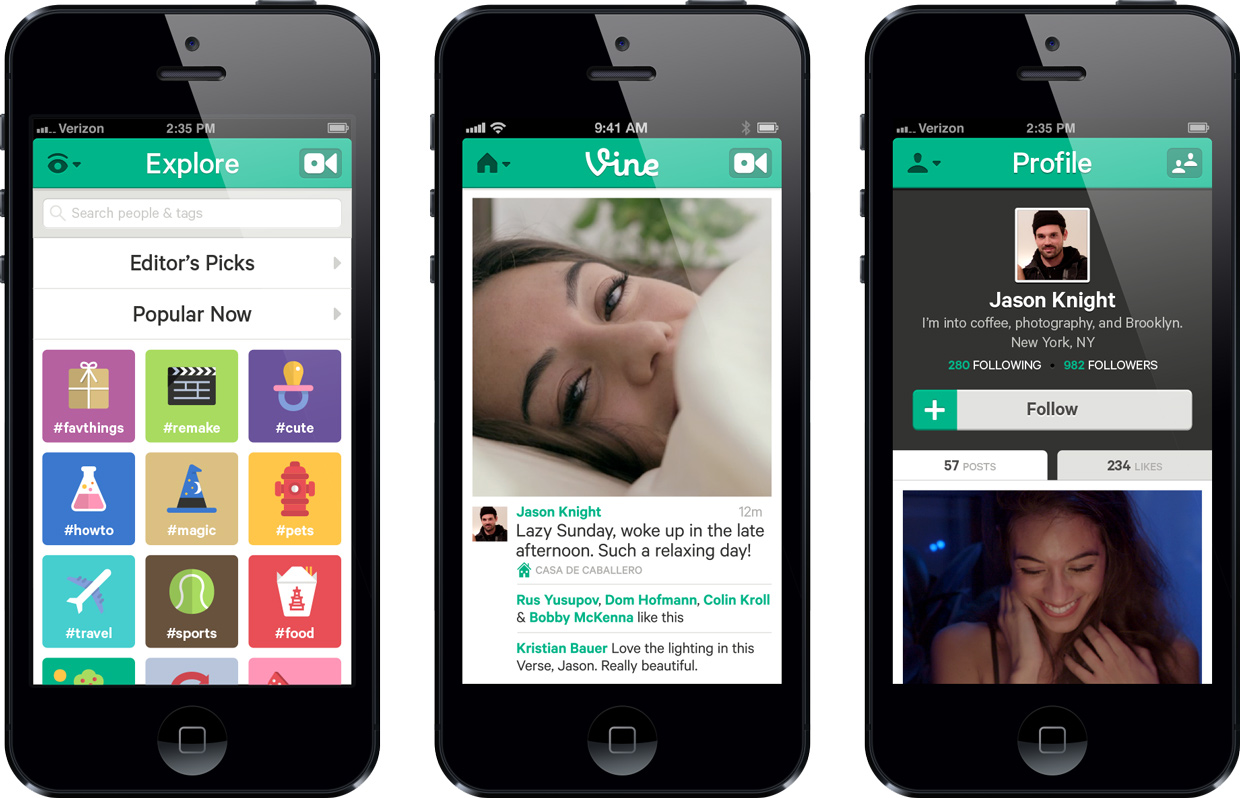
Mashup: Twitter, YouTube, Flickr, Tumblr = Vine

design02

What the world needs is… looping videos.

  • Norman, the Scooter Dog
  • A quick scream-filled ride downhill on a roller coaster
  • Laundry flapping in the breeze on a windy, cloudy day
  • A car covered in snow, with snow removed in a stop-action sequence
  • A banana being sliced
  • A little boy and a little girl, holding hands as they ride in an open-top train
  • A cartoon sketch of an elephant head shaking from side to side
  • Scenes from Chinese New Year in NYC
  • A teenage girl making funny faces
  • Hot air balloons in flight
  • A girl washing her face and brushing her teeth
  • A paper clip that unbends itself into a heart
  • A guy riding a bicycle and ringing a bell

So here’s Vine, now being used for local coverage of street news, brief documentation of automobile rides and walks on the beach, a great many people posing for the camera and sticking out their tongues (each in his or her own Vine video), producers whose stop-motion animation desperately needs a tripod, (inevitably) porn (find it on your own; there’s enough of it to require warnings and generate complaints).

Will it succeed? Well, Vine has been live for just two weeks, so it’s early days. But the company has already been acquired by a larger one that is likely to affect its prospects. Vine has been purchased by Twitter.

iPad4: Slightly Smaller, Lighter Package

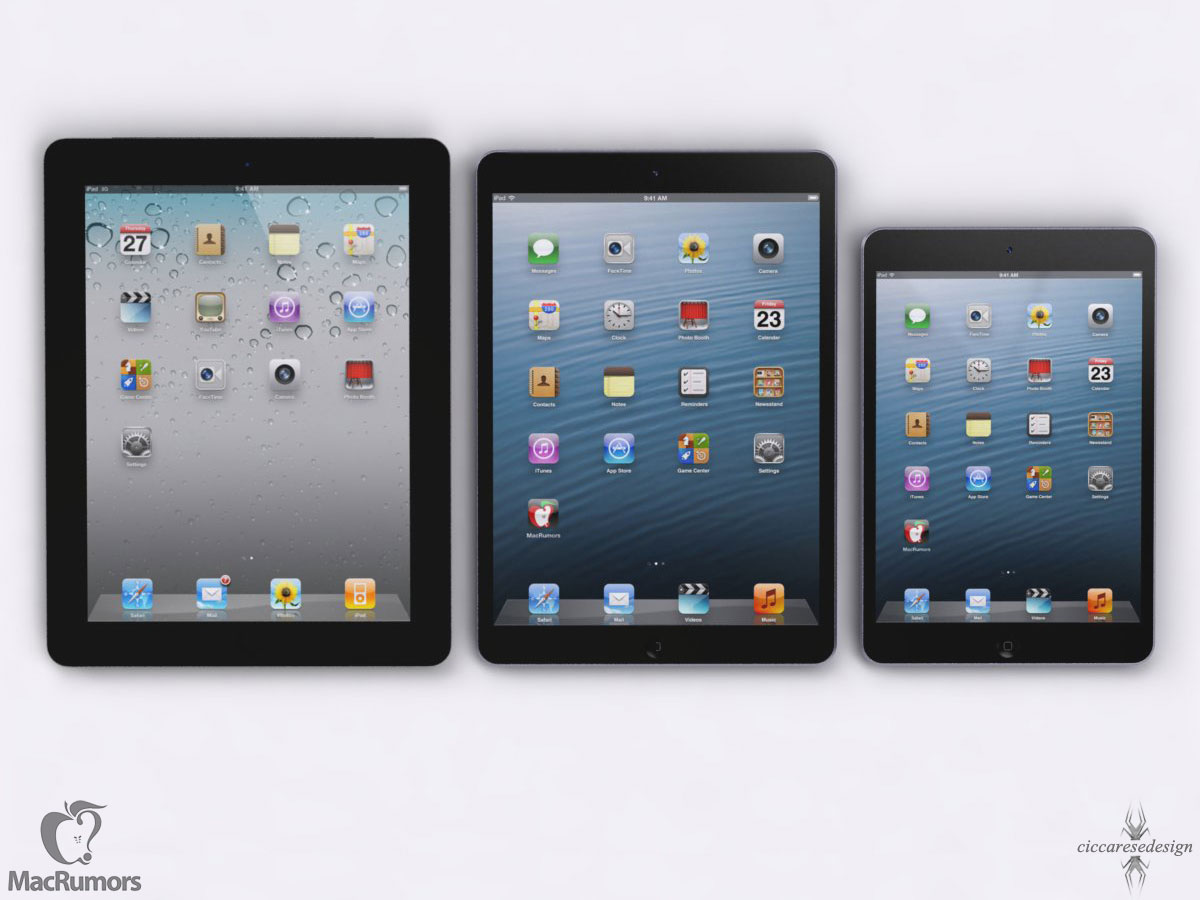
macrumors-ipad5cMacRumors published an interesting article about the new full-sized iPad, the one that will become available by September or October of this year.

The new model will be about 1 inch less wide, and about 2mm thinner than the current iPad Retina Display. It will resemble the current iPad Mini, which employs a far thinner border on the left and right sides of the screen.

And, in case you missed it, Apple introduced a new 128 GB version of the current iPad this week. It’s now available, and, I suspect, autumn will bring a 32 GB, 64 GB and 128 GB model, with no more 16 GB iPads after this year.

I really like MacRumors. They hold their sources to very high standards, and if they’re not always 100% on the money, their revelations are consistently sane, reasonable, and forward-thinking.

A Parisian History in Color

sennelier_couvertureIn Paris, on the Quai Voltaire, amidst antique dealers of the highest order, along the left bank of the Seine, directly across the river from the famous Louvre museum, there is a shop.

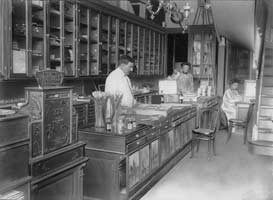
Sennelier-Interieur-In 1887, or, perhaps, 1888, the shop was nearly bankrupt. With the sale, former shop owner M. Prevost, makes dreams come true. The new owner, Gustave Sennelier, always hoped to own a shop where he could manufacture and sell his own artist’s pigments. And so, the shop became known by the sign visible to all of Paris, Sennelier: Couleurs Pour Artistes.

This was an especially exciting time to be selling colors and working with artists in Paris. The impressionists enjoyed their first successful group show in Paris in 1886.  Painters were experimenting with color and light, trying new formulas and new ideas, and often relied upon the good advice of the chemists who were emerging as colorists. (Previously, pigments were sold in pharmacies as a sideline; art supply stores were still a relatively new idea.) As chemistry and art intertwine, artists now regarded as legend were working professionals who purchased their supplies from Sennelier. Cezanne was one of many in Paris who frequented the shop; others included Pierre Bonnard, Robert Delauney, and Pablo Picasso.

Seeking new products and new opportunities, Sennelier’s pigments found popular use for batik (the pigmentation of decorative fabrics), painting on porcelain, and in new formulations for artists, including, for example, new oil pastels. “Picasso adopted it immediately. He asked for it in 48 colors of which–Picasso’s grey period required it–10 were shades of grey, a heresy in the age of colors.” Artists used the new oil pastels to start an oil painting, allowing the fluidity and ease of sketching onto the canvas. Then, the painting would be completed in a classical oil painting style.

facade-quai-GFThe Sennelier family has passed knowledge, chemistry, color sense and business sense from generation to generation. In a sense, the new book, Sennelier: A History in Color by Pascale Richard, is a family biography. As with the Parisian landscape, the family is part of a bolder story: the powerful relationship between science (chemistry) and a tremendous assortment of artistic accomplishments. The book is filled with full-page images of Jackson Pollack paintings and store shelves filled with pigments; photos of antique paint tubes and pastel drawings by Edgar Degas; spectacular old city scape photos of the old shop and inside the old lab and photos of the shop today, a place that hasn’t changed much in a century. If you are planning a visit to the Louvre, do find the time to cross the Seine, make the left turn, follow the classic old buildings until you reach number 3 Quai Voltaire. At the least, you will buy a notebook or a sketchbook (Picasso bought lots of them), and perhaps you will be persuaded to buy a set of Sennelier pastels, which are among the finest in the world, or oils or watercolors, or artist’s pads. You can buy some, or even most, of this merchandise in many U.S. art supply stores, but it’s not the same experience. There is magic in the old shop, magic that is so loving transported into book format.

dan

Daniel Greene is one of my favorite artists. Click on the picture to explore his spectacular work.

It is a joy filled story: the idea of bringing Sennelier products to the U.S., the magic of those pastels in the hands of a great contemporary artist. Daniel Greene is such an artist, and his two-page spread of Manhattan’s Franklin Street subway station is a wonder. So, too, are the simple photos of the neatly-ordered tortillons in a century-0ld drawer in the old shop.

For about ten years, I have so enjoyed using Sennelier pastels. The freshness and depth of their color makes every painting special. When I have a Sennelier pastel in my hand, I sense that there is legend there. I visited the shop in Paris, and sensed some of the history, but it was difficult to understand how the story fit together. When I started reading the book, I loved the combination of new and vintage photographs, art and artists at work, and the story told in both French and English blocks of prose. About a third of the way through the book, I realized that I was grinning. And I wondered about the last time I had grinned my way through the reading of an entire book.

Several years ago, NPR did a wonderful story about the Sennelier shop. Listen to it here.

Even better, I think, is the photo essay and commentary on the blog A Painter in Paris. The photo below should encourage you to visit both the blog and the store. Enjoy!

aa_DSCN3354

Only Half of This Is True

Maybe not now. But soon.

Turns out, facts are like radioactive materials, and, for that matter, like anything that’s not going to last forever.

arbesmanMore or less, this is half-life principle, developed just over 100 years ago by Ernest Rutherford, applies to facts, or, at least, a great many facts. This persuasive argument is set forth by Samuel Arbesman in a new book called The Half-Life of Facts. I especially like the sub-title: “What Everything We Know Has an Expiration Date.” Arbesman is a math professor and a network scientist, and, as you would expect, this is a smart book. The book seems more like a musing than a fully worked-out theory, but I suspect that’s because facts are not easy to tame. Herding facts is like herding cats.

HalfLifeOfFactsLet’s begin with “doubling times”–the amount of time it takes for something (anything) to double in quantity. The number of important discoveries; the number of chemical elements known; the accuracy of scientific instruments–these  double every twenty years.  The number of engineers in the U.S. doubles every ten years. Using measures fully detailed in the book, the doubling time for knowledge in mathematics is 63 years, in geology it’s 46 years. In technology knowledge, half lives are quiet brief: a 10 month doubling for the advance of wireless (measured in bits per second), a 20 month doubling time for gigabytes per consumer dollar. With sufficient data, it’s possible to visualize the trend and to project the future.

So that’s part of the story. Of course, it’s one thing to know something, and it’s another to disseminate that information. As the speed of communication began to exceed the speed of transportation (think: telegraph), transfer of knowledge in real time (or, pretty close to real time) became the standard. But not all communications media is instantaneous. Take, for example, a science textbook written in 1999. The textbook probably required several years of development, so let’s peg the information in, say, 1997. If that textbook is still around (which seems likely), then the information is 16 years old. If it’s a geology text, the text is probably valid, but if it’s an astronomy text, Pluto is still a planet, and there are a lot of other discoveries that are absent. And, there are facts rapidly degrading, some well past their half life.

Trans-Neptune

Although you can click to make the image bigger, Pluto still won’t be a planet…

And, then, of course, there are errors. Sometimes, we think we’ve got it right, but we don’t. Along with the dissemination of facts, our system of knowledge distribution transfers errors with great efficiency. We see this all the time on the internet: a writer picks up old or never-accurate information, and republishes it (perhaps adding some of his or her own noise along the way). An author who should know better gets lazy and picks up the so-called fact without bothering to double check, or, more tragically, manages to find the same inaccurate information in a second source, and has no reason to dispute its accuracy. Wikipedia’s editors see this phenomenon every day: they correct a finicky fact, and then, it’s uncorrected an hour later!

Precision is also an issue. As we gain technical sophistication, we also benefit from more precise measures. The system previously used for measurement degrades over time–it has its own half-life. Often, errors and misleading information are the result.

The author lists some of his own findings. One that is especially disturbing:

The greater the financial and other interests and prejudices in a scientific field, the less likely the research findings are to be true.

And, here’s another that should make you think twice about what you see or hear as news:

The hotter a scientific field (with more scientific teams involved), the less likely the research findings are to be true.

My favorite word in the book is idiolect. It is used to describe the sphere of human behavior that affects the ways each of us sends and receives information, the ways in which we understand and use vocabulary, grammar, pronunciation, accent, and other aspects of human communication. A fact may begin one way, but cultural overlays may affect the way the message is sent or received. This, too, exerts an impact on accuracy, precision, and, ultimately, the half-life of facts.

Word usage also enters in the picture. He charts the popularity of the (ridiculous) phrase “very fun” and finds very strong increase beginning in 1980 (the graph begins in 1900, when the term was in use, but was not especially popular).

Time is part of the equation, too. The Long Now Foundation encourages people to think in terms of millennia, not years or centuries. Arbesman wrote a nice essay for WIRED to focus attention not only on big data but on long data as well.

Given all of this, I suspect that the knowledge in the brain of an expert is also subject to the half-life phenomenon. Take Isaac Newton–pretty smart guy in his time–but the year he died, most of England believed that Mary Toft had given birth to sixteen rabbits.

Last week, on CBS Sunday Morning, Lewis Michael Seidman, a Georgetown University professor commented about our strong belief in the power and relevance of the U.S. Constitution (signed 1787, since amended, but not substantially altered):

This is our country. We live in it, and we have a right to the kind of country we want. We would not allow the French or the United Nations to rule us, and neither should we allow people who died over two centuries ago and knew nothing of our country as it exists today.

CBS News Constitution

20th Century Triumph

Here we are, deep into the era of home theater and giant screens and digital sound. (Big deal.)

Compare what we have today to what was still around, and popular, a half century ago. I’m a big fan of technology, but I sure wish there were places where we could spend afternoons and evenings watching great movies on a truly gigantic screen. Once upon a time, that was the way people watched movies..in grand palaces. One such theater, a reminder of the era when Jamaica, Queens was one of New York City’s busier shopping districts, was called the Loew’s Valencia. Stars appeared on stage, and major motion pictures were shown to audiences who were grateful not to travel all the way to Brooklyn, Manhattan, the Bronx or Newark, where so many of the showcase theaters were located.

Things have changed. So much about this particular theater has not.

ValenciaAccording to a spectacular article by a NYC movie location scout identified only as “Scout,” this 1929 movie palace is still standing–and it is in fabulous condition. You must read the article, if only to gaze at the pictures of this place. And, yes, you can visit. Today, it’s a Tabernacle.

Designed by John Eberson, the Valencia was the largest theater in Queens, New York. It was lorious. For a look at the theater from street view with a competitive theater across the street (you cross under the subway to get there), click here. Inside, there are over 3,500 seats. The over-the-top decor was inspired by Mexican and Spanish baroque designs, with rows of cherub heads, elaborate tile work, swirls and flourishes (this from the New York Chronology).

Valencia2

Loew’s Valencia is now part of the Registry of Historic Places. If you enjoy the magic of old theaters, the best place on the web to learn about them is Cinema Treasures. In its way, Cinema Treasures is the registry for all sorts of theaters, most of them long gone (cool thing: often, CT explains what happened and why).

Valencia3From its painted sky to the beautiful seats and elegant balconies, the Valencia recalls a time when movie-going was an experience. It may seem incredible, but there were a lot of movie theaters that looked like this…many just a few miles away from this one. The RKO Theater in Flushing was another large one in Queens was one of them. After a very long period of being ignored, the building site will become a high school. Some of the fabulous theaters in Newark, NJ (then, a vibrant city with an exciting movie, theater and nightlife scene) are still represented by their fading facades–and it’s worth a walking trip to get a sense of what was there so many years ago.

We’ve gone from dressing up to sit in a huge, elegant dark room to watch big pictures of even bigger stars to the magic of watching movies on a little B/W box in our own homes to, nowadays, choosing from tens of thousands of films to watch any time, anywhere, just an instant after deciding what to watch.

Along the way, we’ve lost a lot.

The Perfect Gift (for the Couple Who Has Everything)

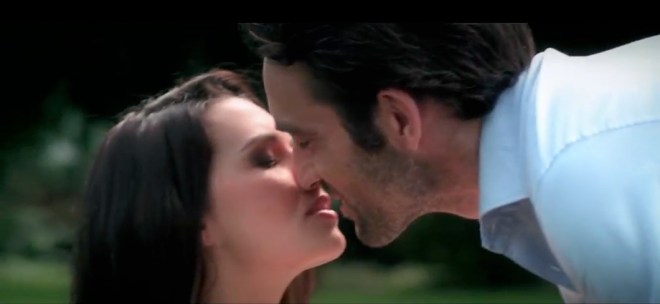
Couple

To watch the (short) video, click on the pic. I wonder if the term “conspicuous consumption” applies if (a) the object of affection is concealed in the backyard, and (b) if it can be stowed underground.

The Creation of a Remarkable Puppet

While exploring TED, and puppetry, I came upon this TED Talk by the creators of Joey. the horse you’ll recognize from the theatrical production, “War Horse”. Their creative process is fascinating.

The Triple Revolution

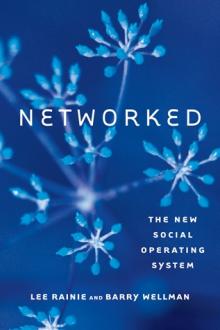
I think I prefer that name to the simpler Networked: The Social Operating System by Lee Rainie, who runs the Pew Research Center for Internet and American Life, and Barry Wellman, a professor who runs NetLab in Toronto. The triple revolution is easy enough to understand: we’re living at intersection of three significant changes in modern life:

  1. Social networks, which encourage connections between people regardless of their physical location
  2. The widespread availability of the internet, which provides a never-before-possible power for information access, and transmission and reception of messages in every medium.
  3. The mobile revolution has transformed digital devices into “body appendages” that allow “people to access friends and information at will, wherever they go…”

These trends define the new space in which we live, and, armed with both the necessary research and a knack for explaining a wide range of interlocking ideas with clarity, the adventure begins.

NetworkedProfessor Wellman’s work helps to make the case that the old idea of groups has become the new idea of networked individuals. At first, the distinction may seem, well, academic. Then again, consider the number of people with whom you interact every day or every week. If you lived in, say, Europe of the 1800s, most of these people would share proximity, language, culture, friends, family members, transportation routes, and more. Today, those ties are not fixed in a group. Instead, the connections are more fluid, more varied, more precisely defined by the individual and not by his or her membership in a group. Boundaries are permeable. Connections may or may not be long-term. Something’s lost here in terms of long-term friendships and relationships with family members (some or many may no longer live nearby), and something’s gained in the richness of more diverse lives.

I remember working for a client named Steve, who carried his cell phone in a case the size of a lunchbox, and I remember working for a successful entrepreneur whose phone was built into her car’s dashboard, like a car radio. Both date back to the 1980s. At the time, not more than a few thousand people owned mobile phones. In fact, that first decade was slow going, but after 1995, the trajectory is very nearly a 45-degree angle, running uphill to over 300 million cell phones today, and more on their way. Fully 83% of the U.S. population owns a cell phone.

Those stats aren’t surprising, but the combination of internet growth, changes in our individual behavior, and the fact that so much can now be accomplished any time and anywhere sets up the story. Public and private spaces begin to blur–think about the number of people you saw on TV during the inauguration who were checking their cell phones. Nowadays, it’s perfectly acceptable to work just about anywhere–and the need for offices is beginning to fade, certainly for creative workers, and now, for many other types of workers, too. Companies are shrinking or closing their offices and instructing employees to conduct their business from home (in one case, a friend was told to “take the office furniture because it is no longer needed.” The authors consider the idea of “place-to-place” networks to be hopelessly old-fashioned; these days, it’s all about “person-to-person” networks. As family composition and roles have shifted (women working outside the home; household free time spend on digital devices; the individual activity of computing; a 25% drop in the average number of hours devoted to housework since 1965), we interact in different ways that don’t always connect generations effectively. For example, the authors describe a young woman who communicates daily with both of her parents while they complain that they never hear from her. What they want is personal touch. What she wants is regular contact. These are not the same, and as a result, there is conflict.

When attempting to explain the changed world of journalism, the explanations do not come so easily, in part because it is so very difficult to understand what’s really happening and why. With so many people writing and communicating on the web, in so many different ways, the old and traditional role of a reporter is difficult to outline in the new world. Where does credibility or experience or context fall? Do we perceive more value in a local person telling a story on the spot in, say, the changing Middle East, or an experienced reporter who provides the experience and wider view? What about people who comment on the work of the local observer or the reporter? Not all are pundits; many are simply trying to understand what happened by reviewing many sources and many stories.

And so the layers are applied, one after another. It’s not just that there’s a remarkable internet or an astonishing Wikipedia, and it’s not just that we’re able to access this material and respond to it at any moment from any location. It’s these phenomena mapped over a much-changed society and dramatically shifted individual behavior patterns. It’s all one large idea, and it’s time that we begin to think about these changes in a more holistic way. The data is here… enough of it to get the conversation started, anyway. And in this iteration, the writing and smart and the analysis is sharp. It was written about 18 months ago–one of the ironies of the book writing, publishing and reviewing process is that it takes more time than our triple revolution deems reasonable.

P.S. After I write each article, I search for pictures. My first search on the term “Networked” yielded a Wikipedia article that provided my evening’s dose of irony:

networked book is an open book designed to be written, edited, and read in a networked environment. It is also a platform for social exchange, and is potentially linked to other books and other discussions. Wikipedia is a networked book.