If you read this article before the live show airs, you’ll find a countdown clock on NBC’s “Peter Pan Live” website. At the moment this article was published, the countdown clock read, precisely, 6 days, 8 hours, 0 minutes and 0 seconds. In live television, countdowns matter. Every second is precisely measured.
On Thursday, December 7, at precisely 8PM, NBC will broadcast one of the most ambitious television productions ever attempted. While the world focuses on just how wonderful Brian Williams’ daughter Allison can be, how fetching the young Darling children, how cleverly Christopher Walken dances and turns into a monstrous pirate, how great a real Broadway cast can be, it’s worth a moment to consider just what these (crazy!) people will be doing for very nearly three hours, live, on national television.
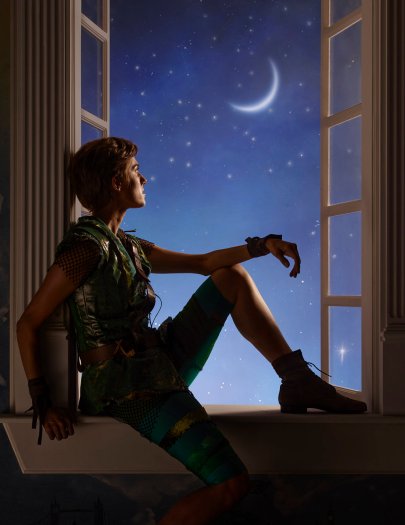 They’ve been planning for at least year, rehearsing for months, and spending endless hours in a 37,000 square foot soundstage in a former, and notable, manufacturing plant (Apollo’s Lunar Modules were built there). This is the largest studio space on the east coast of the United States, and, I suspect they’re overflowing from Stage 3 to add another 14,641 square feet. (A good-sized suburban house is 3,500 square feet—so picture enough space for 15 or 20 houses—that’s their workspace!) Stage 3 is 33 feet high—which is probably just high enough for Peter, Wendy, Michael and John to fly.
Apparently, there is a company that specializes in stage productions of Peter Pan. Flying by Foy, founded, appropriately, by a man whose first name was Peter. They’re the people to do the job: “With global headquarters in Las Vegas, Nevada, locations in the Eastern United States and the United Kingdom, Foy provides flying effects, Aereography® and state-of-the-art automation for Broadway shows, London’s West End, professional and not-for-profit theatres, ballet and opera companies, high school and university theatre programs, churches, theme parks, cruise ships, concert tours, industrial events, feature films and television productions worldwide.” Apparently, they’ve done quite a few productions of Peter Pan.
So, we’ve got actors flying around. Including two boys who are not yet teenagers, and two women who in their twenties.
And there’s a dog. A dog who must perform on cue, bark on cue, on live television in the midst of a phenomenally distracting production environment. Nana is very well trained, and by all counts, Nana will be fine.
Tinkerbelle adds a bit of digital puppetry to the mix. In the midst of a production that relies, in part, upon well-placed shadows, Tink adds an interesting challenge for the actors. They won’t be able to see Tink. (She’s digital, added to the live stream.) Executive Producer Neil Meron told Entertainment Weekly: “Tink is going to be computer generated and manually guided around the screen by a technician. The actors won’t be able to see her, but that technician will be able to move Tink with the actors and change her size and color to indicate what she’s feeling.”
 There is an enormous stage set—again, think in terms of a dozen houses or more, each one a ranch-style so that everything is on a floor that measures about 120 feet by 120 feet. On that floor, the Darling family’s home will magically (mechanically, electrically, digitally) split in two to show the vista below flying Peter and the children, with an appropriate nightside townscape below. On that floor, a pirate ship that rocks back and forth, a gigantic fantastic Neverland, the Lost Boys’ home, and a vast amount of technical equipment. There will be 17 cameras—up on fake hills, hand-held roaming about getting close-ups of actors as they’re dancing (lots and lots of dancing in this production), on jibs, on pedestals, everywhere. And they must remain out of sight for two hours and forty five minutes, lest the fantasy be broken. There are two directors and many assistants and associates, stage managers, production assistants and more. Everyone has a job. The job of Glenn Weiss is to direct the television production—you know him because you’ve seen him accept more than one Tony Award while directing the Emmy Awards. You probably know the name Rob Ashford, too.
  He’s a theater director and choreographer with a list of impressive, and recent, credits. This extreme form of live television began with last year’s “The Sound of Music,” which was directed by Weiss (for television) and Ashford (staging). In fact, many of the people working backstage this year also worked together, in the same facility, last year. How many people? I don’t know the answer off-hand, but I would guess the number is between 200 and 300, perhaps more. Camera operators, audio engineers, lighting directors, makeup artists, wardrobe dressers, production assistants, video engineers, dancers, nurses (just in case somebody skins a knee), scenic painters, stage hands who do carpentry, stage hands who do electric, stage hands who do props, dog handlers, stage flight specialists, (no doubt: stage fright specialists, too), network executives, producers, associate producers, Tinkerbelle’s digital team (a digital designer/puppeteer and a live musician to give her voice)—and all of these people must get it right the first time. There is only the first time.
Every one of those people is acutely aware of: (a) the countdown clock, (b) the fact that no matter what happens, good/bad/otherwise, this insanity will be over in precisely 6 days, 10 hours, and 45 minutes, (c) there are thousands of things that could go wrong, but few of them will, and almost nobody will notice anyway, (d) the fact that this will happen only one time and only for less than three hours, (c) they will never experience anything so unbelievably cool in their professional lives. Until next year, when, if the announcements are true, we’ll be watching one bass, trumpeters improvising a full octave higher than the score, bassoons, copper-bottomed tympani, double-bell euphoniums, one-hundred and ten cornets and seventy-six trombones marching all over the small city of River City, Iowa, lovingly recreated in Stage 3 in Bethpage, Long Island, not too far from Hicksville.
On Wednesday evening, NBC ran a delightful “making of” hour to promote the special. Be sure to catch the videos and the energy before the pre-show promotion site goes away!

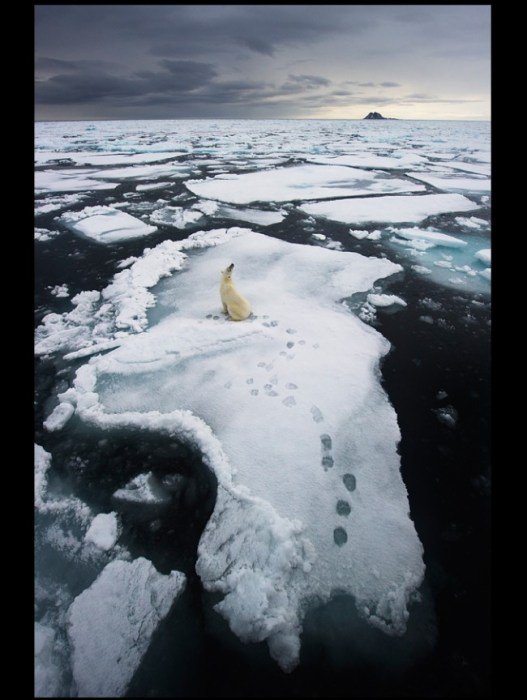


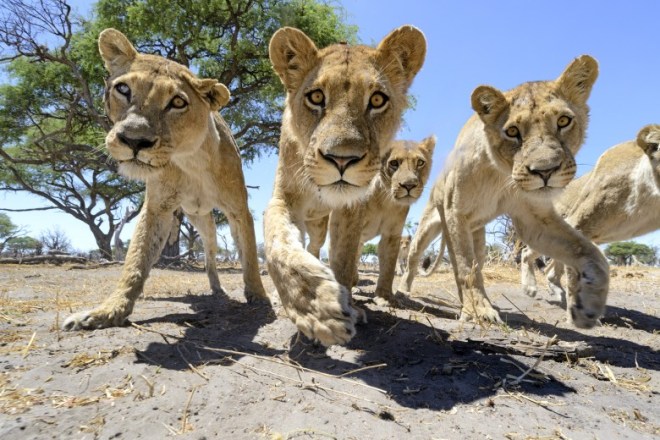



 Okay, more about Jules before begin. Actually, you get a fair sense of him from his 2008 cartoon for NYC’s Village Voice. I found it on Wikipedia. He won a Pulitzer Prize for political cartooning, was awarded a lifetime achievement award by the Writer’s Guild of America, and he’s got his place in the Comic Book Hall of Fame. And now, he’s got this new book.
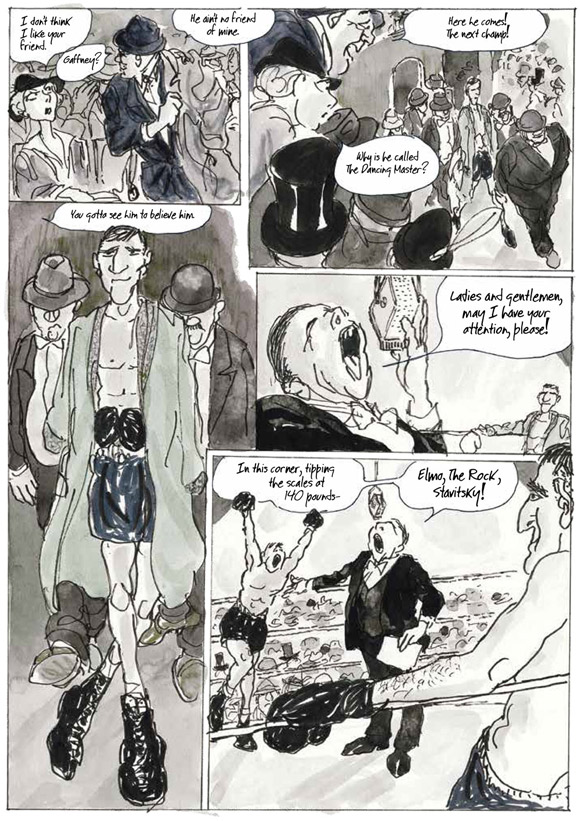
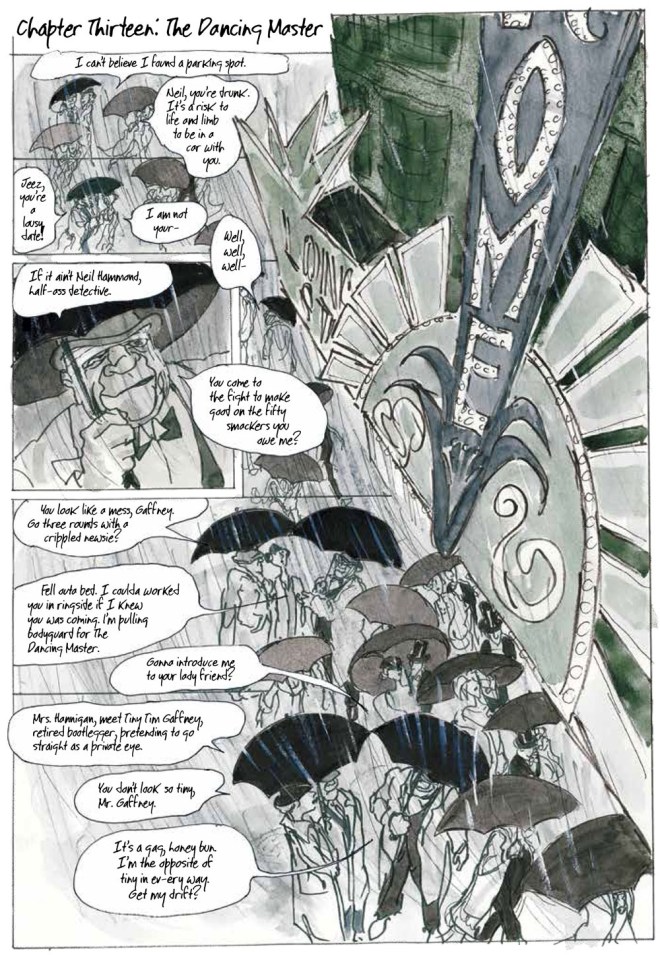
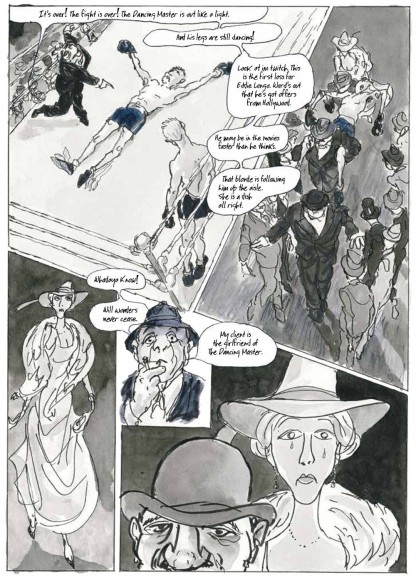
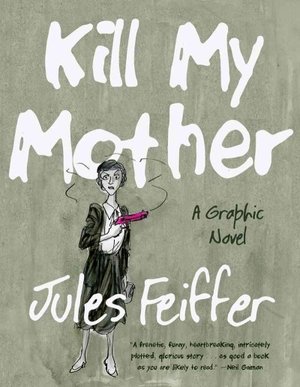 In theory, it’s the book that drives the story, but in practice, here, it’s the pictures. Actually, it’s the whole page, the whole well-designed, elegantly organized duotone watercolors and pen-and-ink that feel so dark, so thick with intrigue. Most of the book is rendered in sepia—not the old tones of photographs, but lively, contrasty, vaguely seedy renditions of what otherwise might have been black. The accent is usually a very pale green, the color of a Hollywood swimming pool on page, a cadaver on the next.
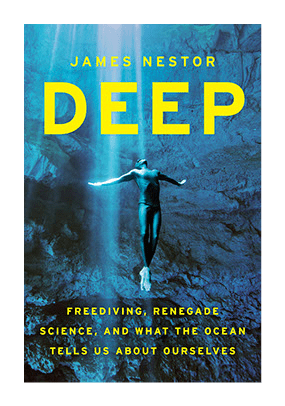 Freediving is “the most direct and intimate way to connect with the ocean.” During a three-minute freedive, “the (human) body bears only a passing resemblance to its terrestrial form and function. The ocean changes us physically, and psychically.” Unfortunately, “sometimes you don’t make it back alive.” Those words were written by James Nestor in his new book, “Deep: Freediving, Renegade Science and What the Ocean Tells Us about Ourselves.” It’s one of the best books I’ve read this year, an introduction to a part of our world that is unfamiliar to nearly everyone on the planet, and an adventure story, too.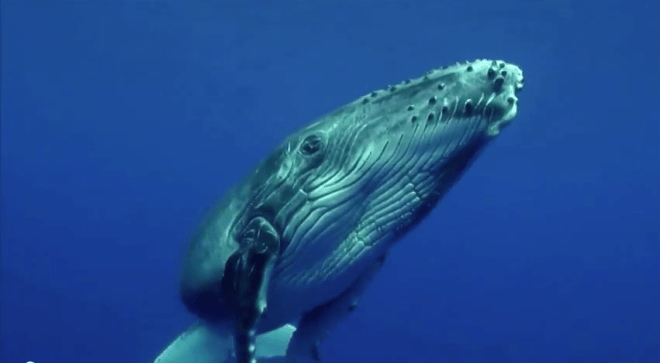

 New CD + DVD set: “Jazz & The Philharmonic,” recorded in Miami, dozens of performers doing a lovely job with jazz, classical (with a modern twist), traditional music, beautifully produced and engineered. You may have seen it on PBS—last February—but if you are among the many millions who missed out, this is a gift that you might consider for this year’s holiday season. Notably, it is one of the last recorded works supervised by Phil Ramone, whose list of
 To begin, think not about the objects, but about our desires. We want to know it all—but not all of the time. Sometimes, we just want to know whether it’s cold outside, or whether the dog has been fed. We don’t know the details, don’t really need to know the precise temperature or the moment in time when the dog’s bowl was filled with food. So instead of a thermometer, or, more intensely, a digital thermometer that reports temperature to the tenth of a degree, how about a glowing orb? Or, as author-scientist-innovator-professor David Rose describes his invention, an Ambient Orb. He writes, in his new-ish book, Enchanted Objects, “They aren’t disruptive. They have a calm presence. They don’t require you to do anything…They are there, in every room of the house with the exact information you expect from them.” So he reimagined a crystal ball that contains LEDs that change color, and report the information you need by glowing in your choice of hues. “As the colors change, you glance and know if the pollen count in the air is higher than usual.”
 Why not a jacket that hugs the wearer every time she receives a “like” on her Facebook page? (This, from one of David’s students.) Or a toothbrush that knows it is being used (and being used properly), and recognizes your good work, rewarding you with a discount at the dentist? (Oy. The gamification of dentistry! Nah, not in David’s hands. He’s smarter than that—check this out.) One of his entrepreneurial firms was hired by a big pharmaceutical firm to bring some life to the little plastic pill containers. Hoping to change the behavior of the the many patients who do not take our prescribed meds, David’s company, Vitality, changed the cap. The cap glows when you’re supposed to take a pill. Even better, the GlowCap texts you when you’ve forgotten to take a pill, and automatically sends refill messages your local pharmacy. The “adherence rate” is up to 94 percent, far better than the 71 percent achieved by a standard (boring, non-glowing, non-internet connected) vial. It’s information at a glance, again non-disruptive.
 David’s vision of the future: whatever the device may do, it must be affordable, indestructible, easily used, and, when it makes sense, wearable. Lovable, too—his clever illustration of interactive medicine packaging are based upon faces that transform themselves. They’re happy when you’re doing the right thing, grumpy if you’re not.
 David dreams of on-demand objects, and objects that learn and respond to personal needs. Vending machines, for example, that customize their offerings based upon “a prediction of what the person will like.” He envisions “digital shadows” for objects—information associated with physical objects enhanced by digital projection.
 Digital Insider