Venice is a small city overrun not with cars, but with tourists. It is a charming place to stroll, romantic in the dark alleys of the night, a bit spooky when a rat crosses the path (the place is filled with canals and infrastructure that pre-dates Columbus), charming in so many ways. Venetian cuisine differs from traditional Italian cuisine—this is not the place where you will find fried breaded meats in tomato sauce covered with mozzarella cheese. Instead, it is a place where fish dominates, and cuisines have been shaped by constant trade with the far east, the near east, northern Africa and the rest of Europe. You’d never know it to walk into just any restaurant in touristy San Marco, but I headed to the edge of town to enjoy a proper meal of Venetian specialties prepared by a gloriously obsessive restauranteur whose past history includes years as a session musician (a bassist) in the recording studios of Paris, GP Cremonini.
My meal began with fish. Not one fish. Lots of small crudo (raw) pieces of fish that resembled, but did not taste like sushi.

On the upper left, that’s salmon covered by stracciatella and alfalfa sprouts. I savored the red snapper—number two on the top—but I could not figure out what the green flavor might be—it turned out to be a very fresh lime, a delightful companion. The strawberry rests on a morsel of sea bass, and it’s followed by a piece of sea bream with a bit of fresh mint. The second row begins with sea bass and wild fennel, then swordfish with a slender stick of vanilla, and finally, that’s passion fruit relish on amberjack. There were eight fish—the one that I ate before I took the picture was tuna with a bit of citrus, probably orange. Overall, a wonderful introduction to the region’s fresh fish, and a clever way to present their flavors in a fresh and inviting way. But there’s more to the story…consider the level of commitment to ingredients, the experimentation to find just the right combination. That’s the obsession that plays out with nearly 200 food suppliers to Riveria. GP had spent much of the day meeting with his grappa supplier, and talked to me about the herb gardener whose tiny backyard garden is the best in the region. He cares a great deal about the food. We’ll see what comes next.
 It’s a salad with the obvious fresh greens and toasted scallops, smaller than the ones we find in the U.S., and a bit saltier, too. There are bits of a local bacon, too, which enhances the salty favor. The sauce is a red pepper puree, which adds the necessary sweetness to balance the salty flavor. Bit of polenta toast complete the dish.
Along the way, wine with the early courses—but in time, I felt I ought to focus on the food, so I slowed down. I started with a Bianco Secco from Quintarelli, then moved on to a more robust unfiltered white wine called Sassia from Angiolini Maule. “Only the grape, you’re tasting only the grape,” GP explained and instructed me about the importance of simplicity in this wine and in his whole approach to food. Unadorned, wonderful, carefully selected ingredients are his secret, and Venice and the Veneto region is superb place to find them. But it takes a great deal of time to find these ingredients, to get the mixes right, to train the staff to do things differently. For the first six months, the staff struggled to understand GP’s unorthodox approach and his combinations of flavors, and his working style, but in time, they came to understand what he was doing, and why it was important to both preserve and update the Venetian traditions. This was decidedly different from the routines at other area restaurants where they had worked, so it took time. It was great fun to understand the backstory and enjoy the highly-evolved meals. There are nineteen tables here, and 173 suppliers—“one for the bread flour, another for the mozzarella,, for the polenta.” Everything is done properly, nothing is rushed. It is the way that GP and his partner want to run their business.
On the previous night, I had sampled Sior with local sardines, and they were tasty, but not extraordinary. Here, the dish of Venice’s fisherman—preserved fish with onions—took on a different character. The key was the scampi—the word translates as our langostini, not as an Italian restaurant’s garlicky butter sauce for shrimp—“one is a scampo, more than one is scampi,” GP explained. He went on, “this is a very traditional dish, with any available fish. Sailors would take it to sea. Here, we prepare it at least a day in advance.” With thin slices of fresh apple.

The next dish was my favorite. Gnocchi, but a gnocchi unlike any I have tasted before. This is pasta made with potato flour, but most preparations tend to be heavy, thick and gummy. Riviera’s gnocchi was light and airy, and as prepared with a thin basil pesto with crackling fresh broccoli and bits of sea bass and small tomatoes, it was the kind of dream dish that one hopes to encounter in a superior restaurant.
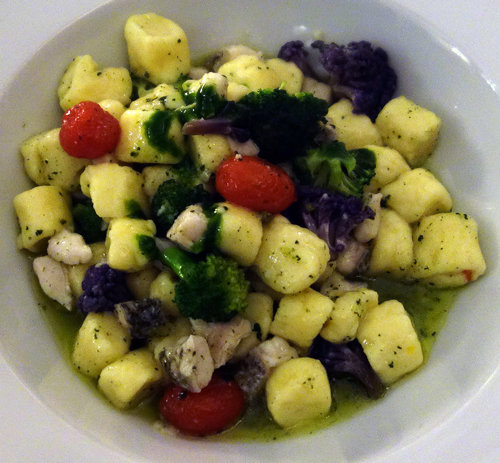
I’m beginning to fill up. Our strategy of small dishes was working well—until the gnocchi showed up. I ate all of it, and that curtailed my ability to try another half-dozen courses (good reason for a second visit). Still, there were two more dishes that I was destined to try. The first was a single large ravioli colored by squid ink and filled with scallop. You’ll excuse me—I took a first bite before I remembered to snap the picture. The dish is called cappallechi, and the tomatoes are called detereno. The sauce is lovely, but I don’t recall why I loved it so (my notes are limited to “lovely sauce.”

We’re still going. Next and last among the mains is a sea bass with a pool of pumpkin sauce. There are tiny poppy seeds on the side of the fish to add punch and texture. The salty slivers of fresh artichoke complement the mild fish flavor.

Time for dessert. A lineup of five small portions, each one special in its way. Once again, I’m impressed by the care and creativity associated with so many different presentations. Here, the lineup includes a hazelnut mousse, then the best sachertorte I have ever tasted (noting that my time in Venice was followed by a short week in Vienna), a cream puff with a bit of strawberry, a pannacotta (texture of flan but a vastly different sweet flavor), and a tiny tiramisu with fresh espresso dust. Not pretentious—just simple preparations made by a very skillful baker and pastry chef.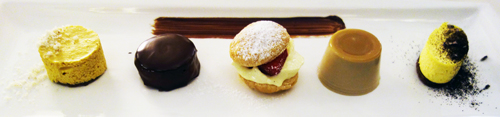
And just when I thought the meal was ending, another small taste of sweets to complete an extraordinary session. The biscuits were standard issue, but oh those little chocolate balls! Cold and alcoholic (rum), with coconut overtones, they’re called puncetti, and I wish I could find or make them at home. What a nice way to end a meal.
GP invited me to sample a deeply personal, thoroughly modern excursion through traditional Venetian dishes. The meal came with more than a few friendly conversations and background stories, making it that much more special. Riviera is not standard tourist fare, and it requires willingness to walk perhaps fifteen minutes beyond the tourist section, but the restaurant is part of a larger story. Venice is sacrificing its authentic past, its artisanal approach to the arts, because tourists expect less. Here, it is reasonable to expect more, and to engage in a conversation about the Venice of the 21st century.
Here’s how to find it. Be sure to reserve—everything in Venice becomes busy when the tourists arrive.

 Just keep walking. Morning tea at the Florian, an old and not especially crowded coffee house (the first two weeks of December, nobody is in town, so I had the place to myself). It’s a landmark on the Piazza San Marco, and has been since the 1720s, when the Turkish invaders introduced coffee to the city. Casanova, Proust and Dickens hung out there, and now, so have I. The place is gorgeous, inside and out. I enjoy my $15 tea—it’s served in a clear teapot with a blooming cluster of leaves that open up as the tea brews. I contemplate the pigeons on the far side of the square—and the San Marco Basilica which seems to need a good cleaning. The treasured mosaics do not sparkle in the sunny day. They are obscured, in part, by inevitable scaffolding. The place is surrounded by expensive Fifth Avenue fashion shops, and Italian brands (Loriblu, for example, with splendidly silly crystalline boots in the window). Time to move on to more interesting surroundings. I keep walking. Time for lunch. Closed on Sundays (today is Thursday), the place to go is
 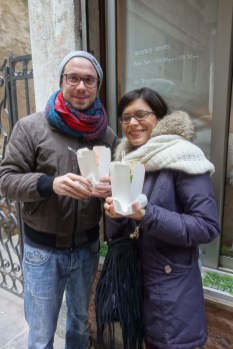 We chat for a bit, then I move on to a favorite campo in the Santa Croce area of town. It’s square dominated by a very old church called San Giacomo dell’Orio, and it dates back to 1225 (“Tradition says that the church


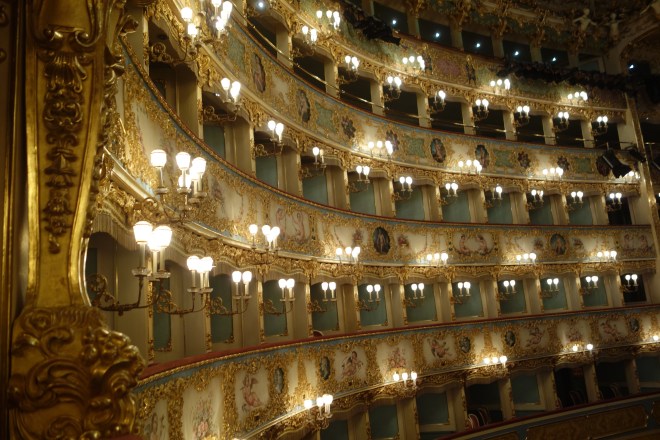
 Why did I care about this particular theater? The history, mostly. And the way it looks on the inside. Just being there, even if there isn’t the same there that was there before. This is the opera house where Verdi’s “La Traviata” made its debut. Same for “Simon Boccanegra,” where Maria Callas became a star. It is, or was, a remarkable place in the history of music. Why the dancing verbs? Because the place has a history that’s as crazy as any opera plot. Originally built as the San Benedetto Theatre in the 1730s, it burned down in 1774, and was rebuilt as Teatro La Fenice (“Fenice” translates as “phoenix”) to begin anew in 1792. Immediately, there was squabbles, the theater survived and by early 1800s, it was a world-class venue, mounting operas by Rossini, Bellini and Donizetti, the big names in Italy at that time. In 1836, it burned down again, and was quickly rebuilt a year or so later. That’s when Verdi started writing operas for La Fenice, including “Rigoletto” and “La Traviata,” which debuted there. So began a century and a half of magic—until 1996, when two electricians burned it to the ground. Remarkably, engineers had measured the theater’s acoustics only two months before, so the theater was rebuilt sounding much the same as its predecessor.
 That’s the theater that I visited, the 1,000 seat theater that hosted the premiere of “La grande guerra (vista con gli occhi di un bambino)” – a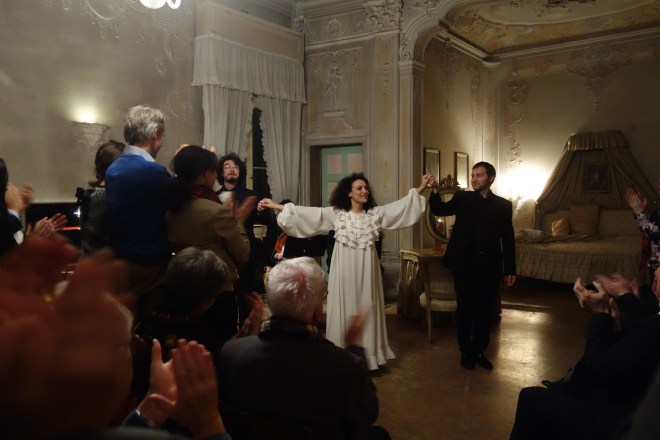
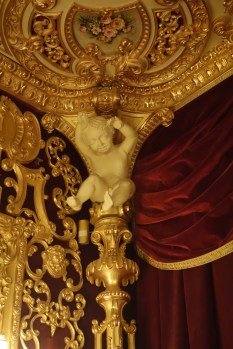 The contrast was fun to contemplate. On the one hand, a classic old opera house rebuilt from its own ashes less than twenty years ago presenting material from World War I in a 21st century setting. On the other, an old mansion dating back two centuries— Ca’Barbagio presenting an opera that debuted at La Fenice in 1853 for 21st century tourists visiting an old city of just 50,000 permanent residents whose long decline probably began more than 500 years ago. Today, the city exists mostly for its history and tourism—more than 20 million people visit Venice every year. I was lucky enough to spend my time at La Fenice sitting next to a local woman, Mirella, whose love for La Fenice has less to do with classic old operas and more to do with the many contemporary works, like those by Ambrosini, for this is, after all, her neighborhood music house.
 was an extraordinarily clear thinker about things that matter. That clarity, and her passion, and her just-plain-good writing are the reasons why I will spend the winter reading every one of about fifty articles and essays in a book that her daughter Nona put together. It’s called “The Essential Ellen Willis.” I’m guessing you won’t find it in many bookstores despite the best efforts of the University of Minnesota Press, but it’s certainly available online. For someone who enjoys smart writing with more than a small dose of social conscience, it’s an ideal holiday choice.

 You may recognize “Blue Diamond Mines,” or may think it sounds familiar (the chorus is similar to to “In the Pines,” a . It’s a bluesy bluegrass tune performed by
  When I first saw Apple TV, I wondered what it was, and whether it was worth $100. By the time I saw Google’s Chromecast, I thought I understood what it was, and why it was worth $35. Neither device looks like much. Apple TV looks like a square hockey puck. Chrome cast looks like a thumb drive. Looks can be deceiving.
 ather Channel wasn’t at all concerned with weather forecasting. Instead, TWC was running an episode of “Fat Guys in the Woods” (in case there was any doubt that TV is in its pitiful final stages…). Nowadays, when I want a weather forecast, I no longer consult the TV; I find extremely local, extremely detailed, extremely up to date weather information on the internet.
 etflix, HBO GO, Showtime Anytime, YouTube, and a hundred other 21st century channels.
 Although many business leaders proceed with a comfortable pair of blinders that protect their minds from digital interference, every 21st century broadcaster, network, local TV channel must assume that the business of scheduled television is not a long-term proposition, and must also also assume that their job is to promote viewership of individual programs anytime anywhere via any device that the viewer wants to use. Apart from QVC, almost none of the original 24/7 cable experiences remains intact (MTV no longer shows music videos 24/7, CNN no longer shows news 24/7, The Weather Channel no longer shows weather 24/7, etc.) Still, the old TV channel brands face a bright future—on many platforms, not as TV channels.
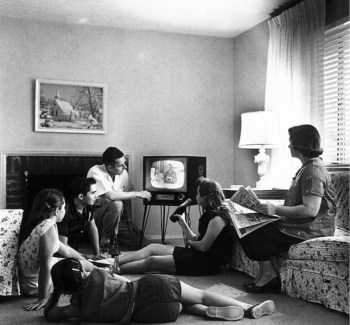 The broadcast spectrum is free, but we allowed, and encouraged, the likes of Comcast, to replace the use of free TV spectrum with a service that now costs more than a thousand dollars per year. Quite reasonably, the U.S. government figures, why reserve the spectrum for television broadcasters if so few people are watching those broadcasts over-the-air. In fact, why not sell off the spectrum for other purposes? That’s starting in 2016—probably about 10-15% of the TV spectrum will be sold by local TV stations to the government, which will flip the spectrum and resell it for wireless internet use.

 He’s a theater director and choreographer with a list of impressive, and recent,






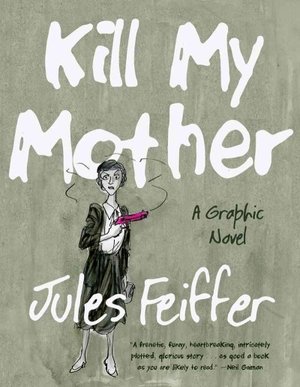
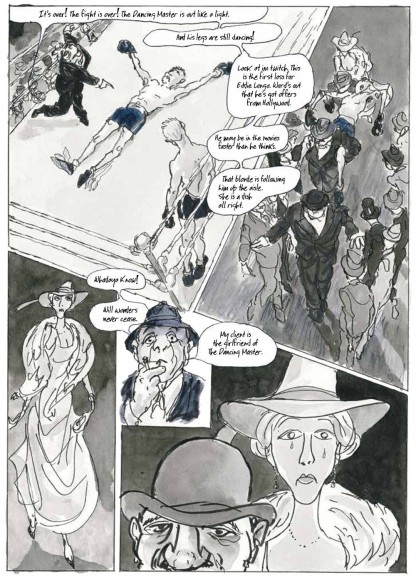
 Okay, more about Jules before begin. Actually, you get a fair sense of him from his 2008 cartoon for NYC’s Village Voice. I found it on Wikipedia. He won a Pulitzer Prize for political cartooning, was awarded a lifetime achievement award by the Writer’s Guild of America, and he’s got his place in the Comic Book Hall of Fame. And now, he’s got this new book.
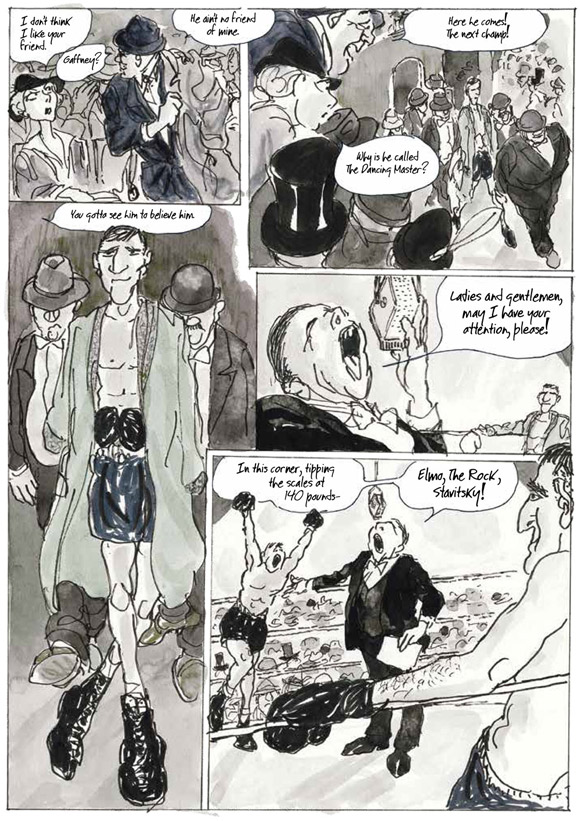
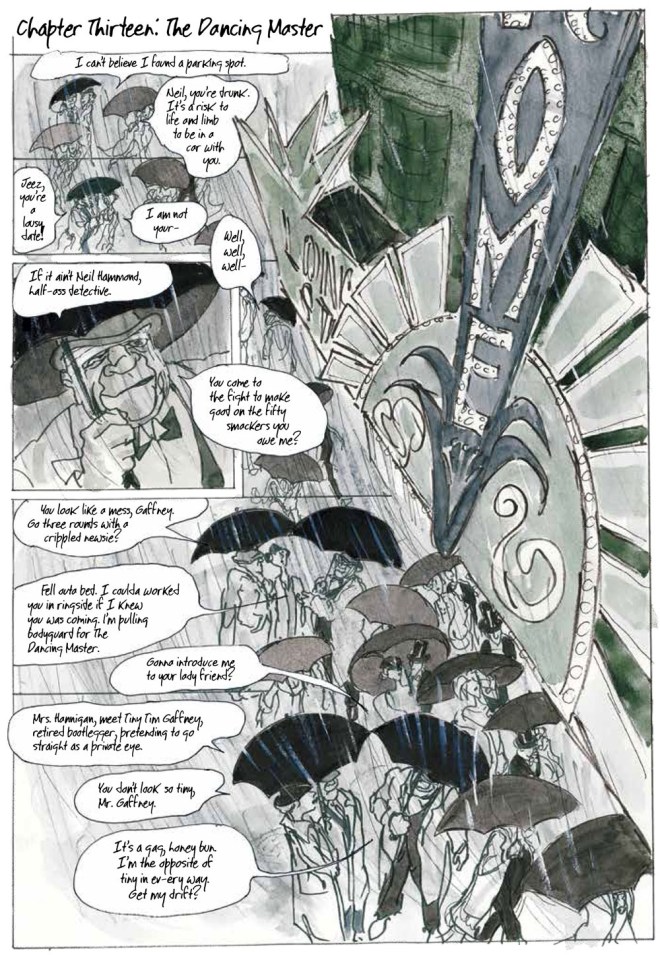
 In theory, it’s the book that drives the story, but in practice, here, it’s the pictures. Actually, it’s the whole page, the whole well-designed, elegantly organized duotone watercolors and pen-and-ink that feel so dark, so thick with intrigue. Most of the book is rendered in sepia—not the old tones of photographs, but lively, contrasty, vaguely seedy renditions of what otherwise might have been black. The accent is usually a very pale green, the color of a Hollywood swimming pool on page, a cadaver on the next.
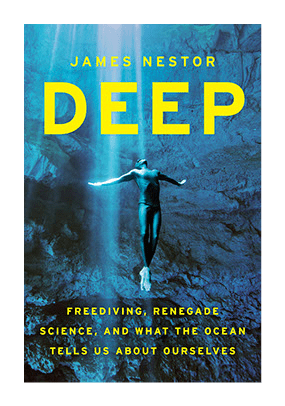 Freediving is “the most direct and intimate way to connect with the ocean.” During a three-minute freedive, “the (human) body bears only a passing resemblance to its terrestrial form and function. The ocean changes us physically, and psychically.” Unfortunately, “sometimes you don’t make it back alive.” Those words were written by James Nestor in his new book, “Deep: Freediving, Renegade Science and What the Ocean Tells Us about Ourselves.” It’s one of the best books I’ve read this year, an introduction to a part of our world that is unfamiliar to nearly everyone on the planet, and an adventure story, too.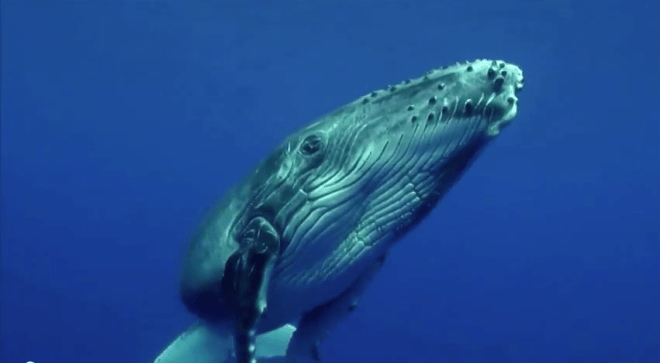


 Digital Insider