In this season of abundant music, I wanted to draw your attention toward something quite special and quite unique. Sixty years ago, Chris Strachwitz founded a record label to celebrate authentic folk music and blues. The label’s first release remains a personal favorite: Mance Lipscomb: Texas Sharecropper and Songster, recorded in rural Texas and released in 1961.
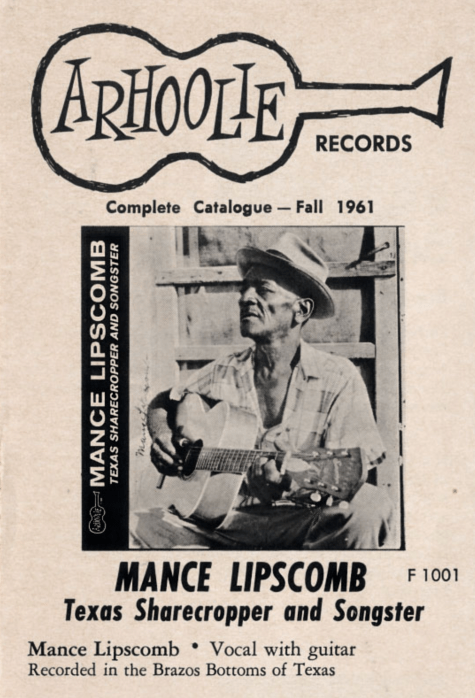
It’s wonderful that the story continues to this day. Even better that there is a free (please donate) documentary featuring the history and lots and lots of really terrific performances by and in memory of Arhoolie Records artists. Right now, I am thoroughly enjoying “Morning Train” by The Campbell Brothers band–so much fun to see this spectacular rendition recorded simply and so effectively. (It begins at 1:28:40 on the YouTube video.)
Man, this is great stuff! Taj Mahal opens with a Mance Lipscomb tune, and that’s followed by a rocking Ry Cooder version of a track from Big Joe Williams Tough Times, an album he remembers buying (his father hated it). The song is “Sloppy Drunk.”
Some of the best music here comes from the label’s dedication to Mexican music. Arhoolie released several albums by Lydia Mendoza, remembered here with a fresh and impassioned La Marisoul, backed up by Max Baca, whose own band, Los Texmaniacs updates a song recorded by Flaco Jimenez, who recorded for Arhoolie. (Jimenez “was introduced to the outside world by Ry Cooder–everything is connected!) “Un Mojado Sin Licencia (A Wetbaack Without a License)” is sung first by Jimenez, then by Los Texmaniacs, and both are terrific.
What am I missing? There’s Cajun music with BeauSoleil, several members of the Treme, and the Preservation Hall Jazz Band, Z.Z. Top’s Billy Gibbons (singing a Lightnin’ Hopkins song), a story by the Hungarian Csôkolom, blues star Charlie Musselwhite (who used to earn money on the side by delivering records for Chris). You might know Sugar Pie DeSanto, Ruthie Foster, or Barbie Dane, but you’ll know them after you watch this documentary–and you’ll not soon forget them.
And then, and at last in the documentary, there’s Mississippi Fred MacDowell, celebrated by Bonnie Raitt. She offers a big hug and thank you to Chris, then sings and plays a lovely version of MacDowell’s “Write Me a Few Lines” and “Kokomo Blues.” Gorgeous. So great!
Hosted by American Routes radio host Nick Spitzer, the documentary was released on Thursday, December 10. It’s nearly two hours long. I loved every minute of it. UPDATE: Unfortunately, it’s no longer available online.
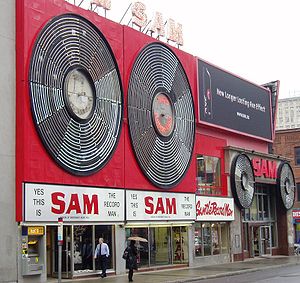 For many years, the very best place on planet earth to shop for LPs (or, if you prefer, records), was Yonge Street in Toronto, Canada. As it happens, Yonge (pronounced “Young”) is one of the world’s longest streets, but that’s not why I visited as often as possible. There were two very large record stores on Yonge Street around Gould and Dundas Streets — A&A Records, and my multi-floor, multi-building favorite, the flagship store for what became a 140-store chain,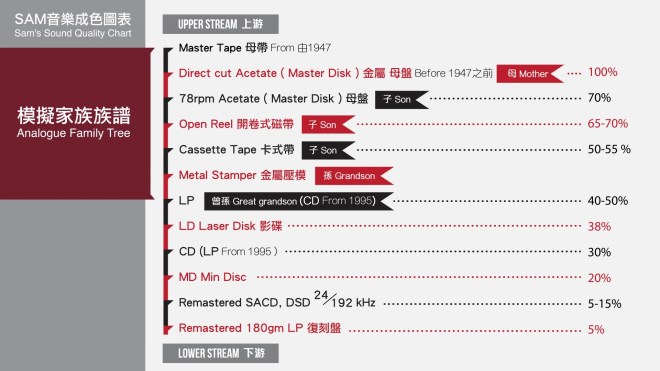
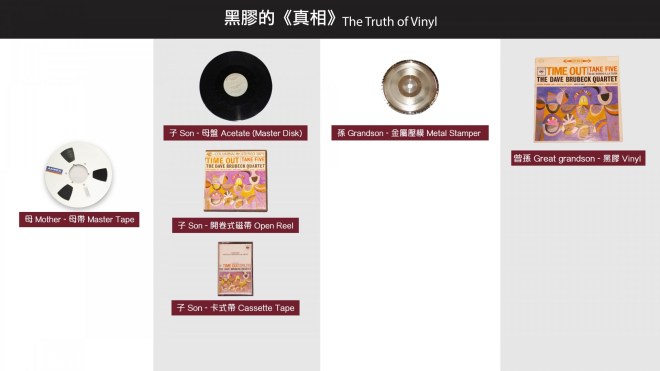 The process begins with the master tape, but the metal stamper used to make the vinyl record is already second generation (“grandson” to the master tape), and the first pressing of the consumer record is the third generation, or great grandson. To James’s ears, you’re hearing less than half of the sound, and sound quality, that you would hear on the master tape. And that’s with a first pressing, under ideal conditions, listening to product from a record label that took the time and spent the money to get things right. Of course, most record companies don’t, or did not, lavish so much attention, which is why even the best used vinyl recordings from the golden age (say, 1960s and early 1970s before the oil crisis) don’t score much more than a 40 percent.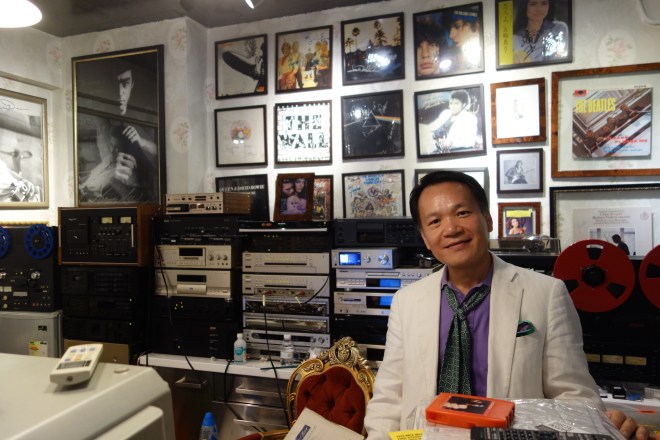
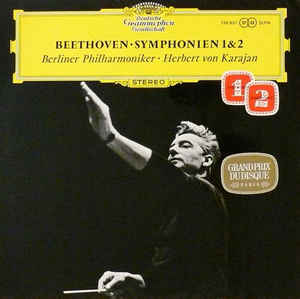 We started with one of the past century’s best–Herbert von Karajan conducting the Berlin Philharmonic in 1961-2 for Deutsche Grammophon. I had just picked up a $4 LP, in very good shape, from
 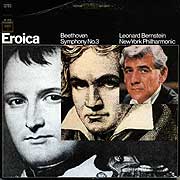 Next up: Leonard Bernstein from the same. Era. This was my LP, purchased decades ago, kept in it boxed set, played maybe ten times. This was a master work from Columbia Records at the label’s prime. The performance is ambitious, engaging, flowing–but the sound of the horns and the strings was compressed, very limited in highs and lows. We wanted to hear the depths of Beethoven explored by Bernstein in his prime–but the recording let us down.
 Before going modern, we decided to go for Toscanini and the NBC Symphony Orchestra, first on LP and then on CD, recorded in 1949–before stereo recording was available. This was state-of-the-art at the time, but the dynamic range was so limited on these recordings, they did not stand up to modern listening. Historical interest only.
 I had high hopes for my treasured 1995 CD set from Colin Davis and the Staastkapelle Dresden. Sure enough the CD really delivered–a full range of highs, lows and everything in-between. Wonderful placement of instruments. Lots of clarity, distinct individual violins and basses, just the right horn sounds. I was excited–but somehow, the listening experience was a few marks less than thrilling. After Karajan and Bernstein, the passion felt a little lacking. A fine performance is not the same as a thrilling performance, and when I’m listening to Beethoven’s Eroica, I want to be thrilled. But the sound was more satisfying here than it was on any of the LPs.
 Now here’s my last one. It’s a digital remaster from 1963, a CD box that I didn’t even know I owned. It’s the Gewandhausorchester Leipzig led by

 Digital Insider