The Multiplier Effect

Quickly now… If you multiply 633 by 11, what’s the answer?

No doubt, you recognize the pattern, and you may recall the mental math process:

633 x 10, plus 633 x 1, or 6,330 plus 633, or 6,963, which is the answer (or, in terms used by math teachers, the “product”).

There is another way to solve the problem, a faster way that assures fewer computational errors, and does not involve any sort of digital or mechanical device. It does, however, involve a simple rule and a different way to write the problem down.

The rule is: “write down the number, add the neighbor.” The asterisk just above each number is there only to help you to focus. If you prefer, think of it as a small arrow.

Here’s how it works:

Mult by 11

Try multiplying 942 x 11  and you’ll quickly get the hang of it.

Do it once more, this time with a much larger number: 8,562,320 x 11. It goes quickly, as you’ll see.

Multiplying by 12 is just as easy, but the rule changes to: “double the number, add the neighbor.” Here, my explanation includes specific numbers.

Mult by 12

In fact, there is a similar rule for multiplication by any number (1-12). And there are rules for quickly adding long, complicated columns of numbers, as there are for division, square roots and more.

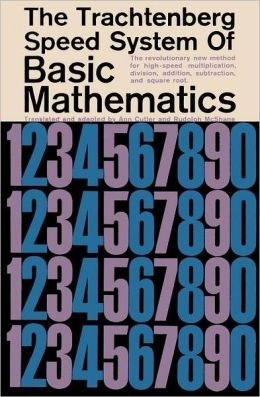
These rules were developed by a man facing his own demise in the Nazi camps during the Second World War. Danger was nothing new to him…this is the story and the enduring legacy of Jakow Trachtenberg, who first escaped the wrath of the Communists as he escaped his native Russia, then became a leading academic voice for world peace. His book, Das Friedensministerium (The Ministry of Peace), was read by FDR and other world leaders. His profile was high; capture was inevitable. He made it out of Austria, got caught in Yugoslavia, and was sentenced to death at a concentration camp. To maintain his sanity, Trachtenberg developed a new system for mathematical calculation. Paper was scarce, so he used it mostly for proofs. The rest, he kept in his head.

Madame Trachtenberg stayed nearby, in safety. She bribed officials, pulled strings, and managed to get Jakow moved to Dresden, which was a mess, allowing him to escape. Then, he was caught again, and was moved to Trieste. More bribes and coercion from Madame. He escaped. The couple maneuvered into a more normal existence beginning at refugee camp in Switzerland. By 1950, they were running the Mathematical Institute in Zurich, teaching young students a new way to think about numbers. A system without multiplication tables. A system based upon logic. A system that somehow survived.

A system that, against all odds, made it into my elementary classroom. One classroom in the New York City school district. For one year. The parents were certain that the teacher was making a terrible mistake, that the people in my class, myself included, would never be able to do math in the conventional way again. Of course, we learned a lot more than an alternative from of arithmetic.

And now, after decades out of print, in an era when arithmetic hardly matters because of calculators and computers, the original book is back in print. The brilliance of system remains awesome, and the book is worth reading just to understand how Trachtenberg conceived an entirely fresh approach under the most extraordinary circumstances.

20130113-222930.jpg

Unreasonable

As the year winds down, a call-out to some unreasonable people.

One is called The Unreasonable Institute.

Why We Exist: To create a world in which no one is limited by their circumstances.
Our Mission: To unlock entrepreneurial potential to overcome our world’s greatest challenges.

Three recent college graduates decided to take on the world’s biggest problems–no shortage of idealism here–by causing interactions between promising entrepreneurs with big ideas, mentors, and funders. They do all of this–quite reasonably, I might add–by having everybody work and live together in a big house for several weeks. I’m not sure that “institute” (their term) is the ideal description, but this combination networking fest and dorm experience makes a lot of sense. There are lots of informal interactions between smart, interested, connected people who want to make things happen. I love this idea, and I suspect you will, too.

The second is called Charity: Water.

charity: water is a non-profit organization bringing clean and safe drinking water to people in developing nations.

Two simple ideas here. One is clean water for everyone, everywhere in the world. That’s a tremendous challenge, one that can be solved only on a local level, well-by-well, source-by-source. It’s also a transformative idea: clean water means healthier people, far less time each day caring for the ill; empowerment of women (who, in many places in the world, expend an enormous amount of time at the well or other source, and carrying water home).

20121227-172439.jpg

To play the video, please click on the image.

Both are mentioned here are examples of a new way of thinking about the world’s problems: a small entrepreneurial group with big ideas, unique approaches to management, operations and funding, plenty of attention to details, and, far less reliance upon large organizations to provide solutions. And one more thing: the internet is central to the success of these new conceptions. Be sure to explore Charity: Water’s use of internet mapping for every project, a solid example of things to come.

BTW: while searching for a link, I ran into a Huffington Post story that explains the trend in more detail. It’s definitely worth reading, especially at a time of year when we’re all trying to figure out how to do it even better next week.

A Fact Can Be a Beautiful Thing

It’s often tempting to consider the past through a present-day lens, and that causes distortion. Take, for example, the idea of a fact. Our ancestors did not elevate the fact as anything of importance. Instead, they considered facts to be evil, in opposition with God’s plan. This way of thinking begins with perception, a capacity that we share with animals. “For them, knowledge had to be something more than what we learn from our senses, because it is such a distinctly human capability of our God-given and God-like soul.”

Thomas Bacon, known for the Scientific Method and for his cool combination of dapper hat, moustache-goatee combo, and stylish  collar.

Thomas Bacon, known for the Scientific Method and for his cool combination of dapper hat, moustache-goatee combo, and stylish collar.

It isn’t until the 1700s that the current idea of a fact takes shape. In the Italy of the 1500s, double-entry bookkeeping is among the first presentations of fact as a decision-making tool. In England, in the 1700s, Francis Bacon’s work on the scientific method led the way toward building theories based upon “particulars,” not deduced from a grand theory. Of course, this way of thinking sidelined generally accepted beliefs, a radical idea at that time, and in our times, too.

220px-Thomas_Malthus

Thomas Malthus

You may recall that Thomas Malthus theorized that food supply would not keep pace with population growth. His initial documents were based, mostly, upon deduction. His later documents were based upon well-researched fact. The shift in thinking occurred during his watch, before and after the year 1800.

Portrait of Jeremy Bentham by Henry William Pickersgill

Portrait of Jeremy Bentham by Henry William Pickersgill

Enter Jeremy Bentham, a Malthus contemporary. Bentham’s theory, simplified: government ought to provide “the greatest happiness of the greatest number [of people]” In order to do the job, government would need a clear picture of the people it served (also a new idea, government as service, but that requires another article).

The word “statistics” enters the language around this time: stat, of course, is German for the state.

By the 1830s, the British government is obsessed with this powerful tool: facts. They commission a series of Blue Books filled with facts, statistics, anecdotes, interviews and more. The Blue Books are reports about “poverty, crime, education, and other social concerns.”

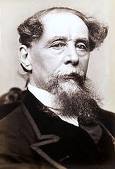
Charles Dickens, who made fun of his government's newfound love for facts.

Charles Dickens, who made fun of his government’s newfound love for facts.

By the 1850s, the clever novelist Charles Dickens grows weary of the fact-based Blue Books. From Dickens’ Hard Times, “We hope to have, before long, composed of commissioners of facts, who will force the people to be a people of fact and of nothing but fact.”

By around the 1900s, fact-finding missions had become common, and World War I becomes the first war fought, largely, upon the basis of facts.

At the risk of capturing the obvious idea, our contemporary media environment is skewed because opinion and pontificating is, often, more entertaining than fact-based thinking. Rush Limbaugh gets the ratings; the Encyclopedia Britannica ceases publication. Constitutional scholar Cass Sunstein says, “Many people are mostly hearing more and louder echoes of their own voices.” His context is the internet, where groups of like-minded people share their beliefs, and by their numbers, magnify ideas that may not be fact-based into cultural touchstones. He goes further to explain that members of those groups are becoming less likely to communicate with people outside the group, and wonders whether this supportive groupthink is detrimental to democracy. (So much for the hope that the abundance of information, and facts, on the internet would encourage interaction between these groups.)

And that leads to Nicholas Carr, author of The Shallows: What the Internet Is Doing to Our Brains, who believes that the internet is “weakening our capacity for the kind of ‘deep processing’ that underpins ‘mindful knowledge acquisition, inductive analysis, critical thinking, imagination, and reflection.”

220px-Al_Gore_at_SapphireNow_2010_croppedA parallel path also leads to Al Gore, who asked this question in his book, The Assault on Reason: Why do reason, logic and truth seem to play a sharply diminished role in the way American now makes its important decisions?”

Perhaps the answer to Mr. Gore’s question is complexity. We learn arithmetic but not calculus, we have been taught to think in simple linear terms, not in terms that help us to understand the complex, dynamic system that our society has become. Our contribution to the chain begun by Bacon: the mapping of complex systems that change over time. It is these systems that draw facts into the future, and these models that provide potent vaccination against those who theorize on the basis of beliefs, not facts.

On another parallel path is the passionate amateur. Included in that class would be both Charles Darwin and Gregor Mendel, neither one a scientist, each a relentless cataloguer of observations, and, as a result, a theorist whose ideas are based upon endless study and analysis.

Jenny_McCarthy_at_E3_2006And, there is the celebrity whose role is related to a megaphone. Ideas that might not otherwise reach a large audience become popularized because a celebrity become involved. When former Playboy model Jenny McCarthy and actress Jenny McCarthy started making noise about vaccinating our children, people paid attention. The Michael J. Fox Foundation is attempting to resolve the delicate balance between Mr. Fox’s own story and fame, and the broader agenda that must drive the Parkinson’s foundation (that carries his name). The Fox foundation has been intelligent and thoughtful in its use of social media, engaging individuals, on a large scale, to participate in trials and other research. Here, the “particulars” are the individual cases, the undeniable truth of daily life with a disease not yet cured.

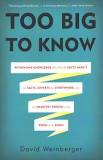
Too Big To Know

How does all of this come together? The fact is, we’re still figuring out the answer to that question. David Weinberger’s book, Too Big To Know, the source of many of the ideas and all of the quotes in this article, does a fine job in raising questions and providing examples. Addressing the crisis of knowledge (his belief, with which I do not wholeheartedly agree), Weinberger suggests that we open up access to a much broader range of facts; link everything in sight; dig deeply into institutions to make their knowledge available to a larger population; and relentless teach so that we all gain a better understanding of how our world works, and how it might work in the future.

BTW: The article’s title, A Fact Can Be a Beautiful Thing refers to love as explained by lyricist Hal David for the Broadway musical, Promises, Promises.

Cowboys & Indians

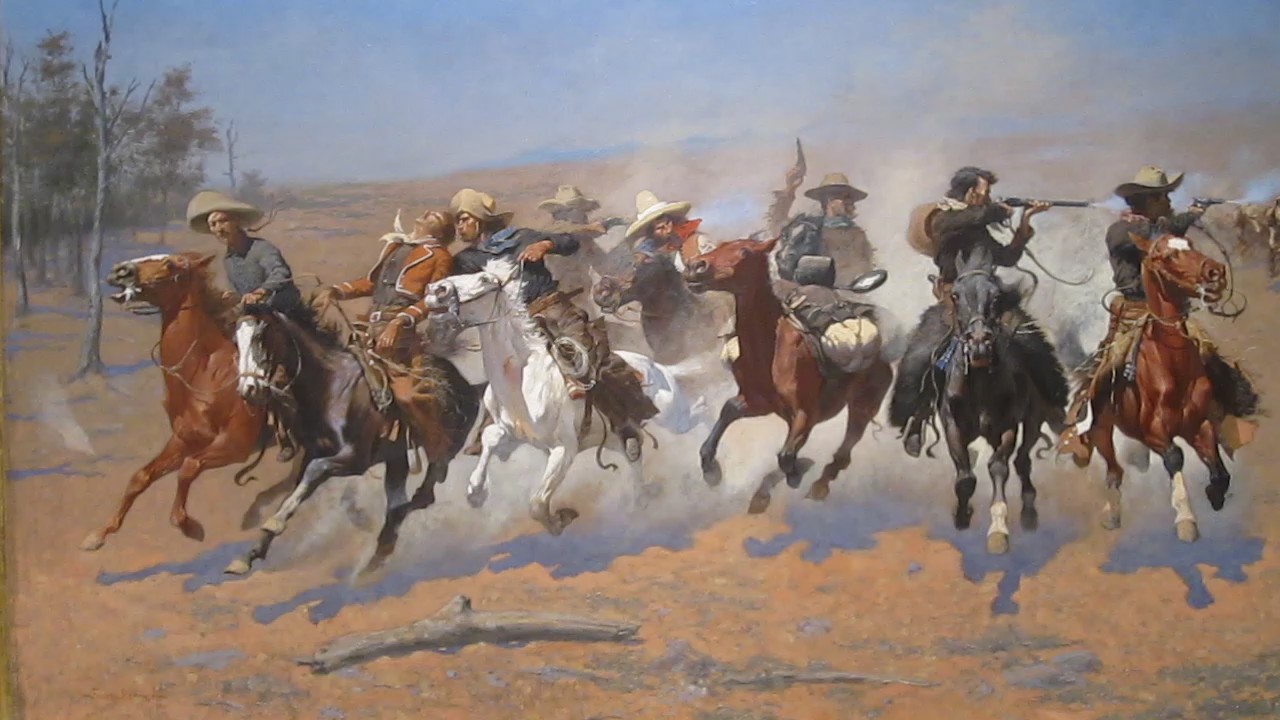
Remington’s got the story right. See below.

Mortal enemies, right? The basis for zillions of all-American children’s games. And, more or less, utter nonsense. It’s amazing how thoroughly we buy into the distortions that media provides each and every day.

Nobody knows how many Native Americans lived in North America before the enemy showed up and killed most of them. In what become the United States, there were probably between 5 and 10 million native people. The vast majority of these natives were killed by European settlers, not “out West” (by which we mean, mostly, the Great Plains), for those deaths came in the 1800s, toward the end of the story. Far more were killed first by the European diseases carried by explorers and traders, and then, by a century of U.S. military actions. By 1871, the U.S. government no longer bothered with Indian treaties–they had already won the war and decimated the native population. Our images of cowboys on the open plains are circa 1880, and by that time, the “Indian problem” was mostly resolved by Manifest Destiny. (Prior to the final third of the 19th century, there wasn’t much of a cattle industry, so there weren’t many cowboys).

Remington had the story right: his painting, above, A Dash for the Timber, U.S. militia–not cowboys–shoot at the Apaches (see in the rear).

Sure, cowboys battled Indians (or, if you prefer, Injuns), but much of the action occurred courtesy of wildly imaginative Wild West Shows operated by the likes of Wild Bill Cody Hickok and Buffalo Bill Cody. As pure show business, these spectacles were extremely popular, and provided a nascent motion picture industry with the necessary creative impetus to produce “Westerns,” most often featuring some version of cowboys and Indians (not so much, “smallpox and Indians,” or “U.S. Army troops and Indians”–cowboys made more sense as entertainment). And with all of that, we’ve bought into this elaborate mythology: our native people were primitive, violent (when provoked with loss of land, family, and health, but that part is forgotten), a class of warriors who deserved no better than their present fate.

It’s a bit of a reach, but not too much of a reach, to wonder about a retelling of the Civil Rights movement through the magic of CGI, or a reconstructed version of Weapons of Mass Destruction emerging from a Jeb Bush White House in 2016 or so. The alternative truth is easily constructed, sold on the big screen and through immersive videogames, and if the stage management is effective, and the bits are in the right places, most people can be made to believe what they know not to be true.

We’re better than this. I sure wish we are smarter today than we were as kids playing cowboys n’ injuns. It’s not about getting the historical facts right–not a bad start, but not the point, either–it’s about teaching our children (and our adults) what really happened, why it happened, and why we might rethink the subject matter that becomes the basis for our entertainment or our children’s games.

Just in case you missed it, here’s a tale about The Battle of Little Big Puck, for thirty years an annual hockey game between Cree Indians and the local cowboy population. The referee is a local Mountie. Here’s the backstory:

“The roots go back to a hot summer day in July where a couple of cowboys and a couple of members of the Nekaneet band met in the old Commercial Hotel over a cold beer,” he said. “And as good friends do, they got to bickering good naturedly as to who could ride the rankest horses, and rope the quickest, and pretty soon it came down to, ‘We can darn sure beat you guys at hockey.’”

BTW: If you can figure out how to write the last sentence of this blog, please post your closing sentence as a comment below. I’m completely at a loss for the best way to close this one out.