 Sure, there’s been a lot of hubbub about how television has changed and will change, but I think the conversation is over-rated. For seventy years, people have watched news, sports, comedies, dramas, movies by pressing a button and staring at a screen. We’ve added stereo, color, lots and lots of TV channels, on-demand viewing. Ask the average person about the revolution in the television industry and they’ll tell you that that they thought The Tonight Show was kind of funny last night. They probably would have said the same thing in 1954.
What has changed is the industry that provides the programs. Once, there were three or four. networks Now, the number is uncountable because nobody’s sure how to classify Netflix, YouTube, or HBO NOW. Kudos to Pamela Douglas for trying to make sense of a very messy industry. She wrote a book—a very good book, in fact—entitled The Future of Television: Your Guide to Creating TV in the New World. We got to know one another, and talked about why she took on such an impossible project, how she approached the subject matter, and what she learned along the way. I should explain that Professor Douglas works at USC, that she has done her share of writing for prime time television, and that she is the author of a popular book entitled Writing the TV Drama Series for the same publisher (Michael Wiese Productions, a publisher also active in the production world).
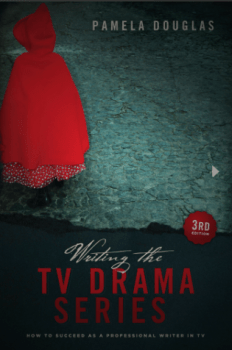 Moving from the old world of traditional broadcast networks through hybrid innovators including cable networks then into the new world of internet services and alternative funding models, she covers the waterfront. There are interviews with knowledgable leaders from Netflix, Kickstarter, HBO, and other companies whose work matters a great deal in 2015.
I knew she was on the right track when I read this sentence, part of an interview with longtime Writer’s Guild executive Charlie Slocum: “…some writers are introverts and they don’t want to deal with all the people who are production managers, accountants, location scouts and so forth. Fine, so partner with a producer who loves all that and doesn’t have the patience to sit down with a blank page. That’s the path to being an entrepreneur in a partnership.”
He goes on: “On broadcast, the priority is to be similar….The classic example…what they have on at eight they hope is compatible with what they have on at nine so they keep the audience. It’s audience flow programming strategy.”
And here’s the important point that informs not only the conversation, but the whole book: “…individuals pay for HBO and Netflix. So if your base is subscribers, your goal is to have as many different subscribers as you can. That means when you have one show like House of Cards, you want the next show to be as different as possible [italics mine]…On subscription TV the goal is to get as many different people as possible to be happy to pay the monthly bill. One series, maybe two, can lock you in for the whole 12 months.”
The strategy comes to life in a conversation with Dan Pasternak of IFC. “…our brand is silly and smart. Our tagline is ‘Always On. Slightly Off.’ I said let’s not try to be Comedy Central. Let’s not be Adult Swim. Let’s program content that feels uniquely like IFC. So one of the first shows I helped to develop was Portlandia. And fortunately it became brand-defining.”
(In the 2010s, brand definition is the major challenge for every cable network, and every subscription service. It’s the most effective way to rise above the competition.)
He goes on: “(Portlandia) doesn’t belong anywhere else. Sketch comedy has evolved in the era of the digital short. Essentially each episode of Portlandia is eight little movies. But it’s really one unified perspective, voice, look, and feel.
The philosophy that drives an IFC is vastly different from the strategy that drives NBC’s prime time schedule. Often—and this is the reason why Pam wrote the book—it’s about the writer’s vision. That’s confirmed in her interview with HBO’s Michael Lombardo, who explains, “HBO starts with great writing. There’s no cheat to it…that has been our mania since early on.”
In the new world, the starting place is Netflix. Pam writes, “My writer friends and I love Netflix because it provides (a) place for our best work. But this isn’t our first romance. At the dawn of the 21st century, we were sweet on HBO for Oz and The Sopranos; in the first decade of the century, we had a big crush on AMC for Mad Men and Breaking Bad. Now we welcome Netflix into the second decade.
If you’re sensing a pattern here, you’re beginning to understand why Pam wrote the book. It’s all about the writing, the stories, the characters, the writer’s vision, and, of course, a place for all of that creative energy in a well-defined marketplace.
Netflix’s Ted Sarandos: “It’s about the product. Netflix was the only way to see House of Cards.”
So that’s the key for the subscription services—the only place to watch. This is a vastly different strategy from the one employed by A&E or TBS in order to achieve their current success (they used reruns to build audience).
 Nowadays, most cable networks are coming to the same conclusion: their future is going to be defined by original programming (scripted and unscripted, both have their place), and by events (which tend to work only sometimes, in part because they’re expensive and also because they’re difficult to construct with any frequency). So there’s the conundrum for the deeper future: as each cable network, and each subscription service, develops and markets their own unique programs, the audience becomes that much more fragmented. The pie slices become smaller, the ability for any individual player to make an impact becomes that much more challenging.
If you’re a cable programmer, or you’re responsible for one of the growing number of subscription services, your job relies upon your ability to generate programs that can be seen and heard above the crowd. If you’re a writer, or an aspiring writer, you now need to understand the nuances of the programming marketplace in ways that were never required in the past. Everything is more complicated. And it’s not.
In the end, nothing has changed. A writer has an idea, pitches it, somehow survives the development and production process, and connects with an audience. That fundamental formula has been around for a century (longer, if you dig back to the days when John Wilkes Booth was widely known as one of America’s most popular stage actors).
The message: be a diligent student, but spend most of your energy dreaming up great stuff.
 A monthly subscription fee buys access to a library of short- and long-form programs in four general categories: science, technology, civilization and the human spirit. Some programs are produced by Curiosity Studios—mostly, these are short-form interviews with scientists and other experts, often illustrated with animation. At the start, many of the long-form programs will come from TVO (that’s TVOntario, one of the best non-fiction producers in Canada), Japan’s NHK, France’s ZED, and of course, the BBC Worldwide. With two or three years, the service anticipates 2-3,000 titles; this year, subscribers will have access to about half that number of programs. Happily, John recognizes the challenges associated with VOD navigation, and I’m hoping to see Curiosity Stream reinvent the visual interface so that their programs are easy to find.
 The assortment of programs being assembled for the March 18, 2015 launch. Many are reminiscent of what The Discovery Channel used to be—before its prime time schedule began to resemble other cable channels (“Naked and Afraid,” etc.). Among the titles announced so far: “The Nano Revolution,” “Simon Schama: Shakespeare and Us,” “The Age of Robots,” “Destination Pluto,” and “Scotland: Rome’s Last Frontier.” There will be 4K programming, too—UltraHD for those who own the newer high-resolution TV sets—including a newly commissioned project called “Big Picture Earth” by the filmmaker responsible for “Sunrise Earth.”
 month, you can watch in standard resolution—a terrific on-ramp for viewers who are either new to SVOD or are more likely to be fairly light users, at least the start. At this price, it’s almost a trial subscription with an easy upsell to 720 HD resolution at $3.99 per month (which is all that most people probably need right now). For those with more extravagant viewing habits, 1080 HD resolution costs $5.99 per month; the 4K Ultra HD service costs $9.99 per month (but at the start, there won’t be a lot of 4K programming available—still, some is far more than most other services offer today).
 example, let’s assume that a high quality outdoor production costs about $750K to produce. If one company foots the bill, their programming budget only goes so far. But if Curiosity, for example, puts in $250K to control North American rights, and finds two partners, perhaps one in Asia and another in Europe, and each of them also puts in $250K for their respective territories, then nobody is out of pocket for more than $250K. Rights beyond North America, Europe and Asia provide additional revenue, which is typically shared by the funding producers. This “split exploitation” concept has been around since the 198os, and it works. In the SVOD marketplace, there will be many opportunities for future exploitation, which makes the venture progressively more profitable, and steadily increases the programming budgets, which generate more and better programming, and more subscribers… the circle continues to grow.
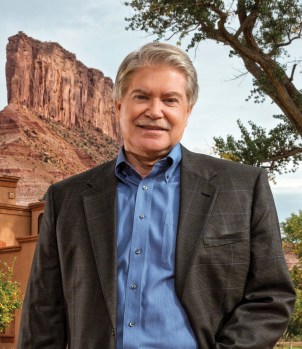 Unlike Ted Turner, whose approach to cable was mass market (TBS, TNT, and very broad-based news with CNN), Hendricks has always focused on nonfiction, documentaries, outdoors and reality (in the best sense, and also with many programming ventures way down market—Discovery owns TLC, so you can thank him for “Honey Boo Boo”). The point: he knows how to play the game, understands how to segment the market. His first pass: a three-bucket breakdown that includes (a) historically light TV viewers, the 1 in 8 of us, the 17 million U.S. households for whom TV is not a big part of daily life; (b) the connected world of perhaps 100 million cable and satellite homes, the ones that often complain that “there’s nothing good on TV” where he hopes to capture about 10 million households; and the rising 4K market, which he projects at 10 million households total and perhaps 5 million subscribers to Curiosity. By playing a more upmarket game from the start—he’s betting that there are enough documentary, adventure, curious viewers willing to pay at least a few dollars per month to see what Curiosity offers and to support what would seem to be a very promising future.
 Could he be defeated by Netflix hiring a former Discovery executive assigned to buying up lots of rights to Curiosity / Discovery -type programming from the short list of global suppliers? Sure, but it’s not likely that Netflix will zero-in on the nonfiction programs that Curiosity Stream plans to acquire. The nuanced understanding of programming for, and marketing to, this particular audience is not something that Netflix can easily replicate. Hulu probably won’t go there, and neither will Amazon. YouTube is interested in other aspects of the business, so it’s likely that John and his team will be able to build the same kind of success that they enjoyed with Discovery.

 Yup. Why? Because Amazon, and Netflix, and to some extent Hulu, are not carrying 20th century baggage. They operate by analyze the actual viewing habits of real customers. It’s a good model and a not-so-good model. The good: their judgments will be right much more often than they are wrong. And that provides a solid foundation for a business. The not-so-good: gut instinct, loyalty, and softer judgments will ride a rougher road. In an extreme situation, where machines make all of the decisions, there would be no Seinfeld, no situation where an eager program convinced other executives to stick with a show despite its crumby ratings. In real world, that programmer’s ability to persuade will be blunted, not all of the time, but often, because the “data doesn’t lie.”
 When the day winds down, my wife and I try to catch at least an hour’s worth of television viewing. Apart from two or three network series, we mostly forget that CBS, ABC, FOX, and NBC exist. We watch HBO, but never when the network schedules programs. Just about all viewing is on-demand, and nowadays, most of that viewing is done on Netflix.


 Digital Insider