 You’re looking at a very clever approach to playing LPs. No turntable required. Just place the LP on a flat surface, and the RokBlock will drive itself along the grooves. Totally busts any expectation about what a record player ought to be. Use it anywhere!
So here’s the deal. This is an active Kickstarter campaign–they have already met their goal. The RokBlock contains amplification and loudspeakers, so this is all you need. Of course, you can use the built-in Bluetooth to send the sound over to any Bluetooth device–a headphone, a better wireless speaker, even your high-end stereo system.
No, this won’t sound anything as good as a proper sound system, but most people don’t want / cannot afford / could care less about being an audio phone. Most people just want to have some fun and listen to some music. Anywhere. And now there’s a way to do that.
If you want one, the best available KickStarter deal costs $79–that’s still 20% off of the expected $99 retail price. But you, like anyone who orders, will have to wait until September 2017 before the box arrives.
There’s a rechargeable battery that lasts about 4 hours. You can play 33 and 45 rpm records (but not 78s rpm).
It’s a cute gimmick, a clever example of creative thinking in action. Without one in my hands, it’s tough to imagine the sound quality. I’m sure it’s no worse than an old record player, and my guess is that this will sound better than those early devices.

 AirStash. Simple idea: load some movies on a 8GB or 16GB SD card–the ones you use in a camera that are about the size of a postage stamp–then wirelessly connect the small AirStash device to watch movies (or review documents) on your iPad, iPhone, or Android device. It costs about $125. Use it once and you’ll carry it everywhere, as I do.
 A ZOOM Q2H2. With cameras and camcorders now built into phones, why buy a small video recorder for $199? Because the sound and the picture quality is outstanding, but the device is small. What do I mean by “outstanding?” Video: 1920×1080, 30p HD. Audio: 24 bit, 96 kHz PCM. Record the results on an SD card.

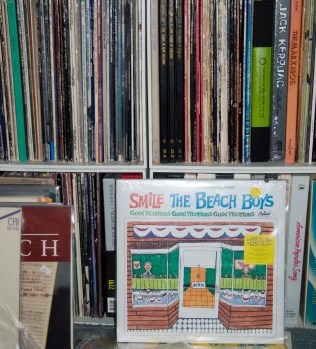 1980s: I’m buying lots of LPs.


 Digital Insider