Or do LPs sound better than CDs? Or, in the end, is it all about the performance and the recording, not the stereo system? Or is there no good answer because every record, every CD and every stereo system presents a unique listening situation?
Just for fun, we decided to listen to several recordings of Beethoven’s Third Symphony (also known as Eroica). Just about every recording was an award winner, or the work of a notable conductor working with one of the world’s most highly regarded orchestras. People who are serious about their two-channel stereo systems often use classical recordings to test their systems because (a) the instruments are acoustic, unadorned by digital special effects, and (b) by and large, classical recordings are made by serious engineers working to the high standards of deeply experienced conductors and label executives.
 We started with one of the past century’s best–Herbert von Karajan conducting the Berlin Philharmonic in 1961-2 for Deutsche Grammophon. I had just picked up a $4 LP, in very good shape, from Bop Shop Records in Rochester, NY. And I was anxious to do some critical listening with a more sophisticated phono stage pre-amplifier, the Sutherland Insight (which will be the topic of an upcoming article). Everything else in my system remained as it has been for nearly twenty years, except a replacement phono cartridge that’s easily five years old, the Shure Vx15. A very good system, but not an extravagant setup. We would be able to hear the recordings clearly. And we planned to test both LPs and CDs from various eras, various labels, to determine which we liked best. Not a scientific survey, but a reasonable way to spend a winter afternoon.
So: Karajan… Energetic, punchy, but the instruments were not clearly delineated from one another. The record looked pretty new, but we heard a lot of clicks and pops. Not much energy in the mid-highs or the mid-lows. A violin section sounded like a single, thick violin. Some strain evident–the playback was not as stable or confident as I hoped it would be. All in all, not we had hoped for.
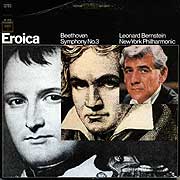 Next up: Leonard Bernstein from the same. Era. This was my LP, purchased decades ago, kept in it boxed set, played maybe ten times. This was a master work from Columbia Records at the label’s prime. The performance is ambitious, engaging, flowing–but the sound of the horns and the strings was compressed, very limited in highs and lows. We wanted to hear the depths of Beethoven explored by Bernstein in his prime–but the recording let us down.
 Before going modern, we decided to go for Toscanini and the NBC Symphony Orchestra, first on LP and then on CD, recorded in 1949–before stereo recording was available. This was state-of-the-art at the time, but the dynamic range was so limited on these recordings, they did not stand up to modern listening. Historical interest only.
 I had high hopes for my treasured 1995 CD set from Colin Davis and the Staastkapelle Dresden. Sure enough the CD really delivered–a full range of highs, lows and everything in-between. Wonderful placement of instruments. Lots of clarity, distinct individual violins and basses, just the right horn sounds. I was excited–but somehow, the listening experience was a few marks less than thrilling. After Karajan and Bernstein, the passion felt a little lacking. A fine performance is not the same as a thrilling performance, and when I’m listening to Beethoven’s Eroica, I want to be thrilled. But the sound was more satisfying here than it was on any of the LPs.
Two more shots. Strangely, it’s the same Dresden orchestra, this time led by Herbert Blomstedt in the 1970s and released by the lesser-known Berlin Classics. Again, very good orchestra, very good conductor. This is digitally remastered, perhaps a strike against. The sound is a little thin, not as robust as the Karajan LP, but the performance is full-bodied and fun, if a little slow. The horns sound like horns, the violins sound like violins, there some separation between instruments, and it’s fun. Some of the highs are not reproducing perfectly, but they’re more than acceptable. And it’s a remastered CD. If there’s any logic to the argument that CDs are better than LPs, or vice-versa, I can’t even remember what I was supposed to think.
 Now here’s my last one. It’s a digital remaster from 1963, a CD box that I didn’t even know I owned. It’s the Gewandhausorchester Leipzig led by Franz Konwitschny, a notable if not famous European leader. And it’s very good. The energy is there, the instruments sound like real instruments, and it’s compelling. And it’s a remastered CD. I’m listening now, and overall, it’s just plain better than anything else I’ve heard today.
How is this possible? A world class LP from one of the world’s most revered Beethoven conductors on one of the world’s most meticulous record labels, played on a very good stereo system, ought outdistance everything else in the category. Right?
Let’s give Karajan from 1962 another try. As it happens, I just found a box of all 9 Beethoven symphonies, on DG (Deutsche Grammophon), that I bought in very clean condition for $8. (The box was misfiled; I just spotted it.) I’m getting up to remove Konwitschny from the CD player to play a record–and I’m finding that I really want to listen to that CD. I’m engaged, involved…but I also want to finish and publish this article.
From the start, the Karajan is very good. The orchestra is towering, formidable, lovely and sensitive, propulsive. The musicians are spectacular. When the orchestra gets busy on a thick and aggressive passage, my room is filled with life and extreme energy. But the strings are thinner, the horns are less clearly defined, the highs not quite right, the lows are not offering quite the thrill I just heard on CD.
I want to hear this classic record properly, but I am maxing-out the capabilities of my current stereo system. My sense is that the Karajan, and probably the Bernstein, can and will sound better, perhaps much better, if I swap my lower-priced (though highly-regarded) cartridge for something better, a cartridge that excels in presenting mid-highs and mid-lows now so understated when I audition these LPs. I also hope the horns will be more stable, the strings and complicated passages reproduced without the strain that I can now hear too clearly, and the tympani will hit me in the solar plexus.
Sometimes LPs sound better than CDs and sometimes CDs sound better than LPs.
At the same time, I am more and more confident that my CD player, though 20 years old, sounds quite wonderful, holding its own against my rapidly-improving analog phono setup. I hold the other components in equally high esteem. I am especially pleased with the improvements made possible by the Sutherland Insight, now holding the place long held by an inexpensive but competent phono stage–as a result of the Insight, I can hear all of my LPs with far greater clarity, punch, and fidelity to original instrument sounds.
Back to the original questions:
Do LPs sound better than CDs? – Sometimes LPs sound better than CDs and sometimes CDs sound better than LPs. The answer depends upon the quality of the performance, the quality of the recording, and as we’ll see in future articles, the quality of the manufactured CD or LP (the pressing, etc.)
In the end, is it all about the performance and the recording, not the stereo system? Yes. Almost always. Except when the performance is so special, even a crappy recording does not detract from the pleasure of listening.
Is there no good answer because every record, every CD and every stereo system presents a unique listening situation? Oh, there’s a plenty good answer. A very good performance on a very good LP can be spectacular, and the same is true of a very good CD. The quality of the equipment matters as much as the quality of the recording. And you can GREATLY increase the quality of the LP with surprising ease–by washing it. More on that in an upcoming article.
 Now that I’ve written that title, let me check.
  Jarrett’s work is immediately magical, glorious in its improvisation and sonic exploration. He’s been doing these albums for decades, and yet, every time I put a Jarrett CD on (or, for that matter, an LP), I’m immediately transported into the filagree of his imagination, sipping a drink at an after-hours jazz bar where the player is extraordinary and I just don’t want the evening to ever end. Recorded live at the KKL Luzern Concert Hall, the CD called Somewhere begins with the mind-bending “Deep Space,” and here, it’s Jarrett’s show with just the right additional color and light provided by double bassist Gary Peacock and drummer Jack DeJohnette; later in the track (the second part is Miles Davis’s “Solar,” their interplay moves the music into an even more interesting exploration, a testament to the extreme skill, experience and love of experimentation that these three musicians consistently offer. So that’s one track, again the first, and again, a favorite. (And I suppose I should mention that the sonic fidelity of these recordings is at such a high level, it would be difficult to imagine a disc sounding any better.) There are some favorite standards here (mine, anyway); it’s difficult for me not to be captivated by Leonard Bernstein’s “Somewhere;” and the less-often-heard “Stars Fell on Alabama” and the Jimmy van Heusen- Johnny Mercer tune, “I Thought About You.” Ooops–I’m listening to the wrong track–that’s really catchy, and less schticky than I remembered: “Between the Devil and the Deep Blue Sea”–well, a little schtick for me. Back to the dark night sky and mystery of “Stars Fell…” and my mind easily drifts to Perseids and stardust. What a lovely album.
 The old guy in the crowd–Gary Burton is 70 to Keith Jarrett’s 68–opens with a Antonio Sanchez’s rocking drum, instantly establishing a more ambitious, brighter tone for the new Guided Tour, also from Mack Avenue. This is a quartet with Burton leading as one might do with a piano. Sanchez really drives this music. It’s a bigger sound than you would typically expect from a quartet. Burton is leading an exploration not entirely different from Jarrett, but more clearly articulated, more melodic, catchier. The difference is the way that Julian Lage is playing electric guitar, almost as if he’s playing in the style of Burton and his vibes on “Jane Fonda Called Again,” never passive or receding or relaxed, but instead, aggressive and punchy. Yes, they play pretty, too, working the pastoral mood on “Jackalope,” and the Latin romance of “Helena” (especially nice guitar from Lage on this one), but it is so much more fun when these guys really go for it, with Burton playing fast and strong. Best example is probably the last track, written by drummer Sanchez, called “Monk Fish.” Scott Colley is the capable, but less showy, bassist; tough to get a word in edge-wise when the other players are clearly having so much fun. Far livelier than the other two CDs, Guided Tour is a terrific introduction to the Burton’s massive catalog.
 Western New York turns out to be one of those creative hotbeds that most people don’t know much about. Ever since 1874, summers at
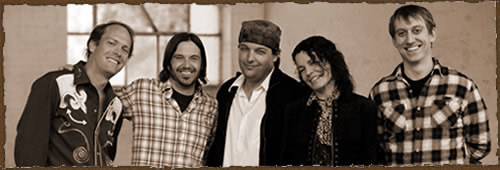
  On every album, there’s a great feel for Americana, healthy doses of country and bluegrass, an old-timey sensibility when it feels right, pure form rock n’ roll, bits of soul and funk. It all comes together with a superior sense of how it all ought to be arranged and presented. What do I like about this music? I guess I like the sound of the two lead vocalists: Tara Nevins with her country style on some tunes, and Jeb Puryear with a folk / rock / rockabilly / country style on others, but that’s just the start. There’s Tara’s fiddle keeping time on “Tomorrow Never Knows,” and Jeb’s pedal steel on “Temporary Misery.” I like the way Kathy Ziegler sounds on backup vocals, a nice complement to Tara’s voice. I like the way the music dips into country music and rock, then goes funky.
![DIGIPAK-4PANEL 1TRAY [Converted]](https://diginsider.com/wp-content/uploads/2013/03/4064_taranevins_woodandstone_hires.jpg?w=350&h=313)





 1980s: I’m buying lots of LPs.



 Digital Insider