When the formidable Greta Thunberg barked about climate change, she didn’t do it to become famous. She did it so that adults would take the time to learn about the science. I decided to take her up on the challenge. Fortunately, I happened upon a useful tool: a book written by an apolitical scientist who writes clearly. His name is Robert Henson, and his book is sensibly called The Thinking Person’s Guide to Climate Change. (Second Edition.)
I learned a lot, and I wanted to share. Here’s rundown on some of the more important ideas:
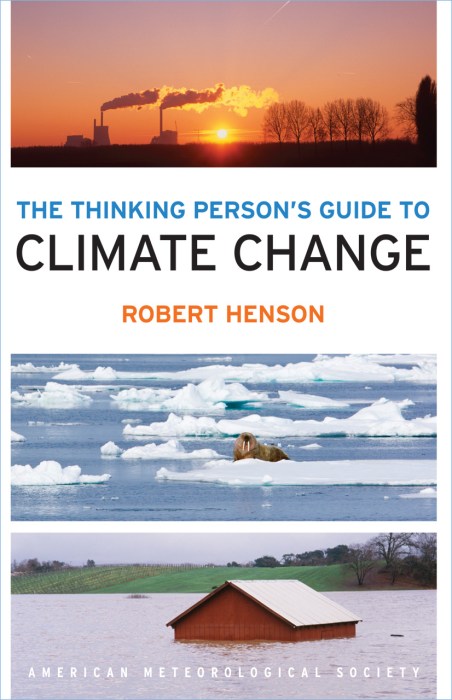 Earth is definitely warming. We know this because independent scientists have analyzed more than a century’s data. Overall, the rise is about 1 degree Celsius, but the increases have been greater in some parts of the world, and less in others. We also know that the earth is warming because the ice in major glaciers, large areas of Greenland, and the interior of Antartica is melting rapidly. In addition, the growing season in the Northern Hemisphere is longer than before, and certain annual events are occurring earlier because of the warming: the Sakura (Cherry Blossom) Festival in Japan, the appearances of daffodils in England’s Royal Botanical Gardens, the high bush blueberries around Walden Pond. You’ve probably noticed this plant behavior in your area, too. One more indicator: mosquitoes, birds and other creatures are being driven to higher altitudes, and, in a parallel development, marine life seems to be migrating toward the poles. Taken as individual instances, none of these indicate much of anything. When they are considered as part of a larger pattern, scientists strongly believe that this activity to be a clear indicator of warming.
One degree may not seem like much, but remember that’s an average across a very wide range of regions. Better to consider the hot spells experienced by, for example, Chicago, where hundreds of people died from heat-related causes in 1995, followed by thousands in Paris in 2003 and more in Moscow in 2010. Cities become “heat islands” where nighttime temperatures do not cool as they did before, so the buildings and the streets trap the heat and cause temperatures to remain well above normal for extended periods. Air conditioning is a potential remedy, but many cities are not structured for large-scale use of air conditioning, a technology related to electricity and fossil fuels–not an ideal solution.
You’ll have to read the book to satisfy your curiosity about how much of this warming is due to human action–the answer is a lot–but it’s far safer to assume that we are too blame, so we can take as much corrective action as possible (the alternative only makes things worse).
Browsing the chart on page 57 (there are many charts and illustrations, all helpful in navigating the collected wisdom), it’s clear that the big game is change the behavior of two large countries–China and the U.S.–because they are responsible for 43% of the global carbon dioxide emissions in the world (counting only fossil fuels, cement, and gas flaring). Add India and Russia, and the four culprit total is 54%. Focusing on the big stuff seems sensible–there is reason for concern about Qatar’s very large per capita contribution, but Qatar has less than 3 million people, so its total contribution is small. It’s comforting to see real progress from, for example, the U.K., and Mexico, and Brazil–but deeply disturbing to compare their numbers with the U.S. and China (each seemingly more concerned with tariff brinksmanship than dealing with gigantic problem in which they are the most significant perpetrators). Moving on…
Climate change does not exist in a vacuum. “Many victims of heat waves die not because the air is so warm, but because it’s so dirty. The sunny, stagnant conditions prevalent during heat waves make an ideal platform for…” and here, the list of dangers becomes very nasty, causing serious lung conditions and heart attacks. The cause is fine particulate matter that enters the indoor environments, and tends to be very difficult to manage. With global warming, we consistently exacerbate the potential for human tragedy–especially among the elderly, the pregnant and the youngest children. This heartless approach to environmental management now seems to permeate many aspects of life on earth.
Climate change is also related to floods and droughts–which seem contradictory but they occur when the land can no longer do the job of absorbing water. Along with several other factors, these provide good reason for people to migrate to areas that were previously too hot, cold, wet, dry, or otherwise unappealing or nonproductive. With time, they are changing so that new agricultural lands are indeed opening up. Problem is, the additional warm, or wetness, or dryness, causes unpredictable responses from flora and fauna, and new weather patterns. The new kind of wheat may successfully grow in the new region, but it may also become home to previously dormant microbes that wreak havoc hundreds or thousands of miles away. (These patterns are utterly normal, but scientists are losing their ability to keep track of what’s happening because much of the science is still developing and because the climate is changing faster and in less predictable ways than anyone thought possible.)
While trying to manage the impact of what we do know–and deal with the sluggish government response to problems that seem so overwhelming and yet tend to be difficult to comprehend–scientists are discovering the impact of all sorts of scary phenomena. Some of this is related to melting ice. The Permafrost layer in eastern Siberia, and large Arctic regions are experiencing environmental and physical changes that are downright spooky. In Fairbanks, Alaska, for example, bicycle paths buckle and sinkholes emerge from construction sites. In time, they will probably emerge on their own. As they do, as the Permafrost continues to melt, everything could become a lot worse because massive amounts trapped methane and carbon dioxide may be released–causing lots more melting, and sea level rise with positive impacts all the way down the eastern seaboard of the United States (that is, flooded subways in New York City; destruction of Atlantic beach communities; submerging low-lying cities and fishing communities).
This is not alarmist writing. This is the science that Greta Thunberg wanted adults to learn. As you can see, I’m only touching a few points–we haven’t discussed oceans, rivers, hurricanes, trees, or anything related to the likely statistical impact of each of our possible individual and global actions.
The book is terrific, but most people don’t read books, and fewer still read 500 page science books. So: the information is available, but so far, adults are not doing a very good job capturing hearts and minds. Greta did, and she caused street protests and some media attention. That’s important because raising awareness is part of the game, and because big decisions and social change are often driven by emotion, not scientific fact. Still, we lack a clear picture of what is happening, in a form that most people can comprehend, remember, and share. Every adult must be able to explain climate change to their children, and to one another. Every teacher must be equipped to teach these lessons every day (a great deal of the current curriculum can be pointed toward global understanding of climate). The American Meteorological Association seems like the kind of organization that could step up as a kind of source authority, as it has attempted to do with the publication of this particular book. Somebody needs to step up and make the story clear so that we can all become partners. I want to help. I hope you do, too.


 With digital publishing, the rules don’t apply—and for so many reasons. For example, publishers need not limit the number of titles they publish for any practical reason—there is no scarcity of shelf space. (They may limit releases due to marketing considerations, but that’s another story altogether.) Of course, bookstores are helpful parts of the marketing and distribution system, but they are no longer mandatory—Amazon ships just about any book, next day.
 For example, maybe a digital book is not a book at all, but a kind of game. Scholastic, a leader in a teen (YA, or Young Adult) fiction publishes a new book in each series at four-month intervals. The publisher wants to maintain a relationship with the reader, and the reader wants to continue to connect with the author and the characters. So what’s in-between, what happens during those (empty) months between reading one book and the publication of the next one in the series? And at what point does the experience (a game, a social community) overtake the book? NEVER! — or so says a Scholastic multimedia producer working in that interstitial space. The book is the thing; everything else is secondary. In fact, I don’t believe him—I think that may be true for some books, but the clever souls at Scholastic are very likely to come up with a compelling between-the-books experience that eventually overshadows the book itself.

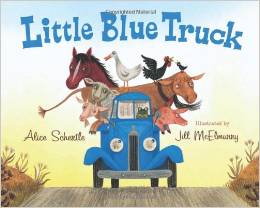

 Three across, seats A, B, and C in a exit row. All three of us reading a book. The ten year old girl who happened to sit in the window seat: a fat novel by Rick Riordan. My wife: The One Hundred Mile Walk, now being released as a Helen Mirren motion picture. Me, a terrific long novel by New York City newspaper legend Pete Hamill, who writes about his city with street smarts and an appealing sense of mysticism.
 The old ratio was 3 by 4: a reliable compression of reality, the extra window in every household that looked out at the world. It offered a limited view, controlled by powerful producers and directors, versatile performers, intense journalists who learned the trade by explaining why and how the Germans were bombing the guts out of London during World War II. Very few people were allowed to put anything into that window: NBC, CBS, ABC and a few local television companies controlled every minute of the broadcast day. It was radio with pictures, a new medium that learned its way through visual storytelling when the only colors were shades of grey.
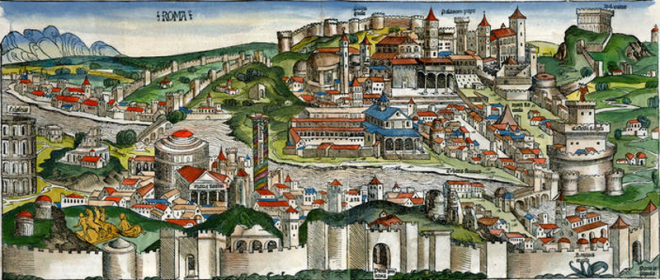
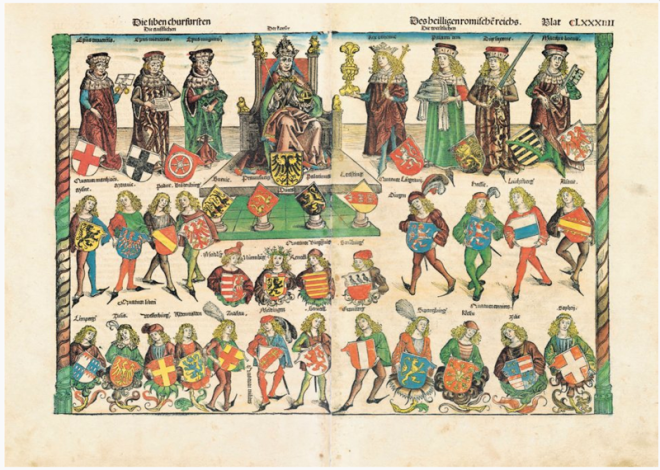 It’s a big, old book, the kind of illustrated, illuminated, hand-lettered book that I would never expected to see in my own home. But here it is, nearly 2 inches thick, reproduced by the always-intrepid Taschen publishing company. As you can see, it’s quite a beautiful old book, with colorful illustrations of kings and townscapes on every page. Looking carefully, I can make out a page about Florencia, also known as Florenz, today’s Florence, Italy, and on another page, the now-German town of Wurtzburg. There’s Rom, or Roma, with its bridges and towers, and the formidable city gates. Here’s a stylist family tree, but the old lettering is difficult for me to understand. A book like this might occupy a few minutes in a museum, and then, I’d move on. But to have it in my hands, well, that’s another thing. Its age demands respect, and time to study, not to peruse but to study, every page, slowly and with a sense of insight and discovery.
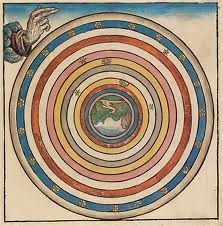 Fortunately, the cardboard slipcase includes not only the main volume, but a large-format color paperback book entitled The Book of Chronicles. In essence, it’s a guidebook, written in English, nicely illustrated, and it helps to make sense of the larger volume. It begins,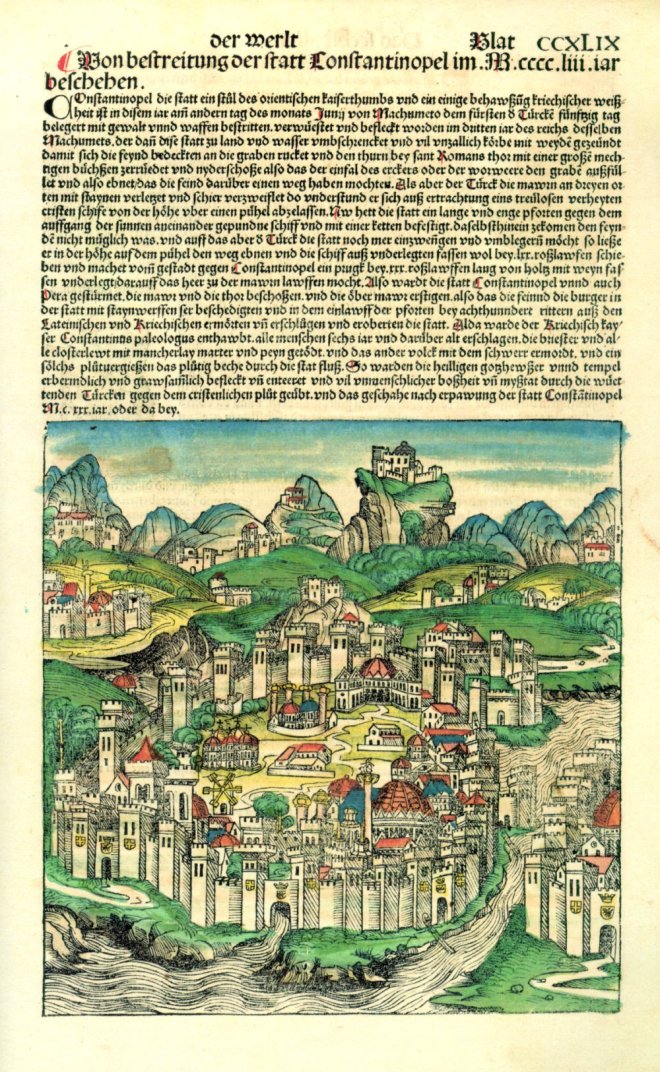
 Birthday: August 4, 1961
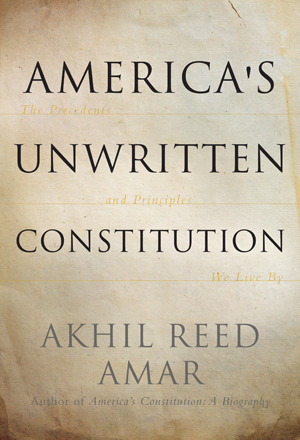
 I started reading Amar’s book,

 Digital Insider