 Back in the 1970s, most Americans thought television would be free forever. There weren’t many channels—just CBS, NBC, ABC, PBS, and a few independents—but that seemed sufficient—so the audience looked forward to the addition of even one additional channel to watch reruns, baseball games, or old black-and-white movies. At that time, cable television was a sluggish industry for four reasons: (1) there was no wired infrastructure, no way to connect most households to a local cable television system; (2) the principal value of cable was improved broadcast reception, which was an issue for a relatively small number of viewers; (3) cable systems mostly served small cities and towns, so the economics of scale were absent; (4) apart from the few low-budget, hyper-local cable channels (“local origination”), there were almost no cable-only television channels, and no economic model to support the idea; and (5) almost nobody was willing to pay to watch television.
It took about twenty years, but by 1998, there were 171 cable networks, and today, there are nearly 1,000. In 1998, there were nearly 70 million households paying a monthly fee to a cable television system operator. How much? Nowadays, that’s not a figure to calculate because internet services and cable subscriptions are bundled, but if that number is $500 per year x even 50 million households (assume severe cord-cutting), that’s $25,000,000,000 per year—$25 billion, plus advertising and other services that brings the industry closer to the $40-50 billion mark. That’s several times larger than our U.S. automobile industry, several times the size of our retail industry, and about the size of our energy industry.
This will not last forever. In fact, it’s changing very quickly because cable can no longer protect the near-monopoly that it constructed for itself in the 20th century. The problem is Google, the problem is Apple, the problem is the cable industry itself that has grown fat and happy by collecting those monthly fees. The cable industry did not, could not, or didn’t bother to protect its essential territory: the TV screen. Sure, it controls the DVR, but that’s not enough. With every HBO Now, every YouTube video watched on an iPhone, the traditional cable industry is cut out of the equation.
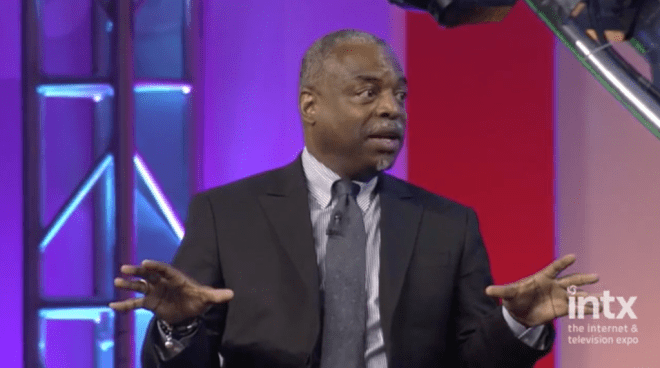
At the recent INTX conference (no longer called “The Cable Show” or the “NCTA” for National Cable Television Association) earlier this month, the emphasis was not on program services (though there were small booths from large cable network operations like NBC Universal and Disney), but on hardware that combines the cable and internet viewing experience into a single set-top box. If you want to watch HBO, or ESPN, or YouTube, it’s all in one place. And often, that box is made by TiVO (which still sells DVRs, but was aced out of that sector by the cable operators).
If you’ve been waiting for a decent YouTube search interface on your TV set, it’s coming, thanks to cable. And if you’re liking the idea of TV Anywhere—watch the program on your TV, then switch to your tablet—that’s the new iteration of cable, too.
Mostly, cable has successfully pivoted. On the surface, we think of the cable industry as the provider of television channels, and now, some VOD services, and we pay a monthly fee for those services. But that’s not the way cable operators see the future. In order to survive, they must control your screen, and that means, they must control your internet service because internet services are becoming wireless, and that will, in time, eliminate the need for the physical cables that defined the industry a half-century ago.
When all of this got started, the cable operators walked a path laden with gold. They would enter a small city, perhaps Fort Wayne, Indiana, and make all sorts of ridiculous promises to local government officials (building schools, swimming pools, new government buildings, senior centers, and so on), and sometimes ease the way with skanky business practices and celebrity appearances (famous Warner Bros. movie stars visit the city, kiss the Mayor, and dazzle the locals so that its cable division could sweep up the local rights—the franchise—to build the local cable television system). Now, things are different. It’s not the people of River City who must be won over. It’s the blaze of battle against some of the world’s wealthiest companies, and they possess a technology advantage far beyond the reach of most cable operators. So: if they cannot compete against Google or Apple, they do the next best things: they buy their competitors (Time-Warner Cable was just sold), and they attempt to control the content (Comcast owns not only NBC Universal but now Dreamworks Animation, too).
We’ve seen this play before. Gigantic companies buy the entertainment companies, and then, those companies fall into the hands of the finance people who make decisions that drive the creative community to smaller, more entrepreneurial companies.
So where does that leave you and me? Paying $1,ooo-2,ooo per year for combined cable and internet services, with a voice-controlled remote control and some artificial intelligence to recommend programs we might enjoy. We’ll watch John Oliver tell us everything that’s wrong, and we’ll do our best to forget that he’s employed by a $30 billion company, one of the few that controls what we watch, what we see and what we know.
And so, we complete the circle. There are far better toys in our house than there were in the 1970s, but our viewing choices are still controlled by a small number of big companies. The only real difference: those big companies are much, much richer than they were fifty years ago. Meanwhile, we’re still kicking back for 30 or 40 hours a week devoting our free time to the less-than-satisfying hobby of watching television programs and commercials.
BTW: The man in the picture is LeVar Burton who starred in ABC’s original version of ROOTS in 1977, and is now co-executive producer of a new version which debts on several cable networks in this month, around the world.


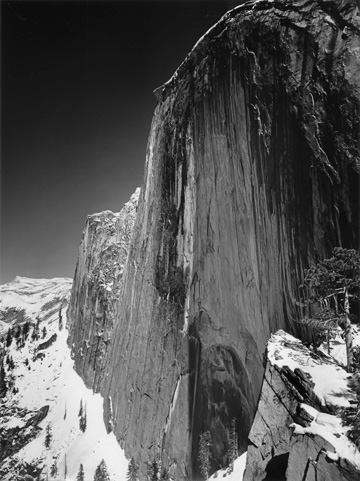
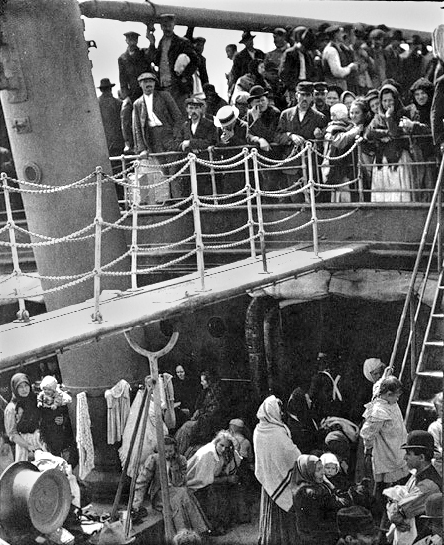
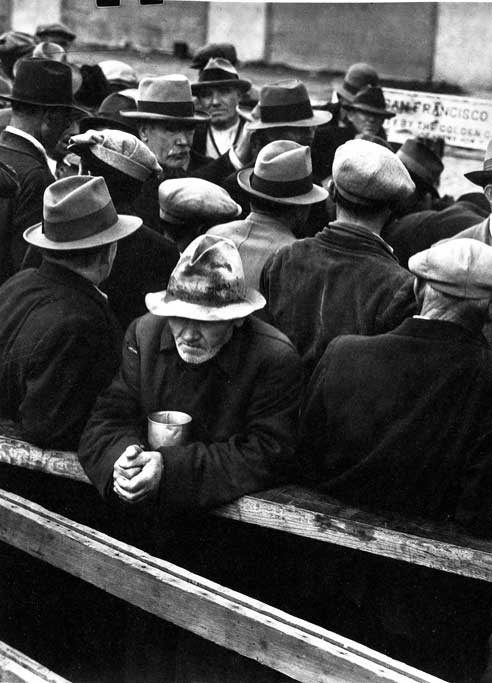
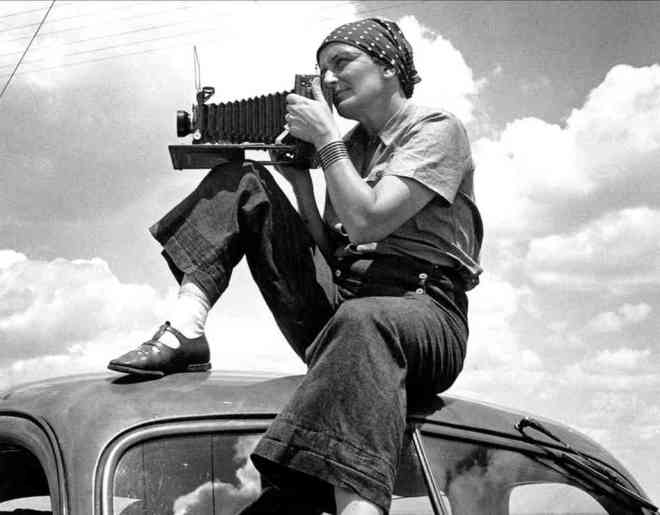
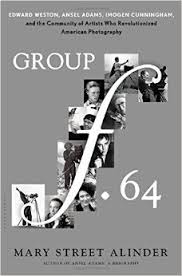 When the photographers in Group f.64 started out, they found themselves in what, today, seems to be an unlikely situation. Photographers on the east coast followed a mostly European tradition anchored in painting. On the West Coast, the fad was pictorialism in which photographs were not considered viable unless they were altered to look like other forms of art. For example, the pictorial photographers often hand-colored their work, used soft focus lenses, and created faux brushstrokes during the photographic development process. Pictorialism found some rather odd expressions: one very popular West Coast photographer named William Mortensen was, according to Alinder, “the very vocal champion of the Pictorialists. He applied his expertise in set design and the latest in Hollywood makeup artistry: elaborately costumed historical portraits and tableaux. He staged each picture’s setting, building a fictional alternative universe, often of a teasing salaciousness or portraying scenes of horror, his models transformed into monsters with heavy makeup.” Mortensen was among America’s most famous photographers and easily photography’s most prolific teacher. In a series of well-described articles in Camera Craft magazine, he sparred with Ansel Adams who took the position of photography as pure art form that required none of the nonsense that Mortensen promoted.



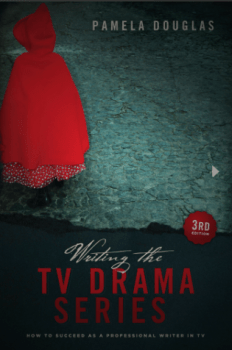 Moving from the old world of traditional broadcast networks through hybrid innovators including cable networks then into the new world of internet services and alternative funding models, she covers the waterfront. There are interviews with knowledgable leaders from Netflix, Kickstarter, HBO, and other companies whose work matters a great deal in 2015.
 Nowadays, most cable networks are coming to the same conclusion: their future is going to be defined by original programming (scripted and unscripted, both have their place), and by events (which tend to work only sometimes, in part because they’re expensive and also because they’re difficult to construct with any frequency). So there’s the conundrum for the deeper future: as each cable network, and each subscription service, develops and markets their own unique programs, the audience becomes that much more fragmented. The pie slices become smaller, the ability for any individual player to make an impact becomes that much more challenging.
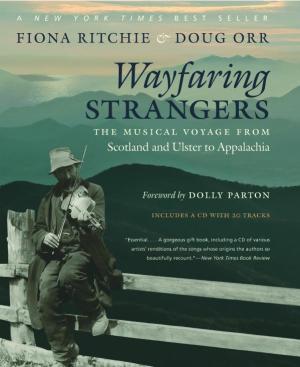 Every once in a while, I’ll catch an episode of The Thistle & The Shamrock on a public radio station. Seems to me, the show has been on forever, but I’ve never thought much about the program’s title. Of course, it refers to music from Scotland and from Ireland, but that’s a very small part of the story that its host / producer tells in her new book, Wayfaring Strangers: The Musical Voyage from Scotland and Ulster to Appalachia. (From the start, I should point out that this is a fabulous book, a work deserving of all kinds of awards and many quiet hours of reading accompanied by many more spent listening, preferably to live music.) In fact, it’s not just Ms. Ritchie’s book: storytelling and scholarly research duties are shared by an equally talented music lover, Doug Orr, whose Swannanoa Gathering is, among many good things, the place where the idea of the Carolina Chocolate Drops took shape: “they have helped revive an old African American banjo tradition that was fast disappearing.”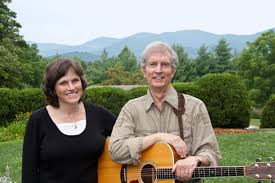
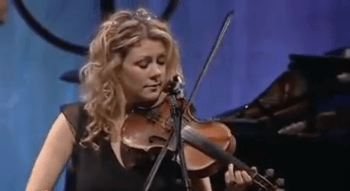
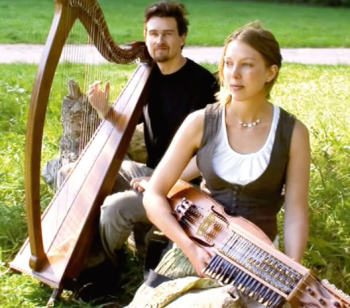
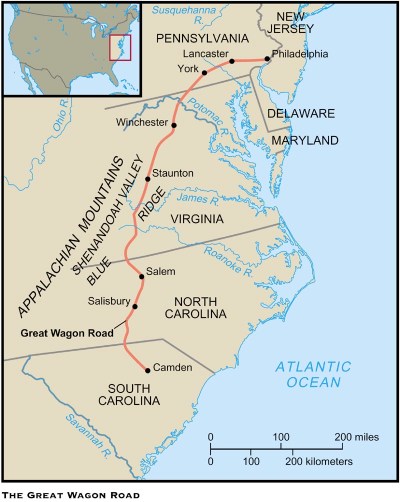 The authors have done just that, and so, in their way, have Bob Dylan, Woody Guthrie, Pete Seeger, and dozens of others whose names may be less familiar. But the authors have accomplished more. They’ve managed to weave a very complicated story together, a saga of migration and evolution, Viking travels and minstrel shows, song fragments that survived for nearly a millennium, wonderful artists from Scottish poet Robert Burns to Kathy Mattea. There is so much love and passion for the history, the music, the instruments, the people, the land. There’s a CD bound into the back cover so you can hear the music, with every track explained in fascinating detail. There are dozens of handsome full page photographs that provide a sense of the land, plus illustrations of the instruments. Every time I wanted to know more about an interesting concept, I’d turn the page and find a very comprehensive briefing on, for example, “The Ceili, or Ceilidh” (a social event with music that originated in the eighteenth and nineteenth century in Scotland and Ireland); the dulcimer; “Child ballads” (Scots and Irish ballads classified by Harvard Professor Francis James Child, and often referred to by their numbers). I had never heard of The Great Philadelphia Wagon Road. but now I understand its importance. Before Ellis Island, Philadelphia was the American point of entry for most immigrants from Ulster. They’d travel this early highway west and then south, ferrying across the Susquehanna River to Winchester, Virginia (home of Patsy Cline) and the Shenandoah Valley and on to the Yadkin Valley terminus in North Carolina (think in terms of today’s Boone, NC); Daniel Boone extended the trail to what became the Wilderness Road out to Kentucky’s Cumberland Gap.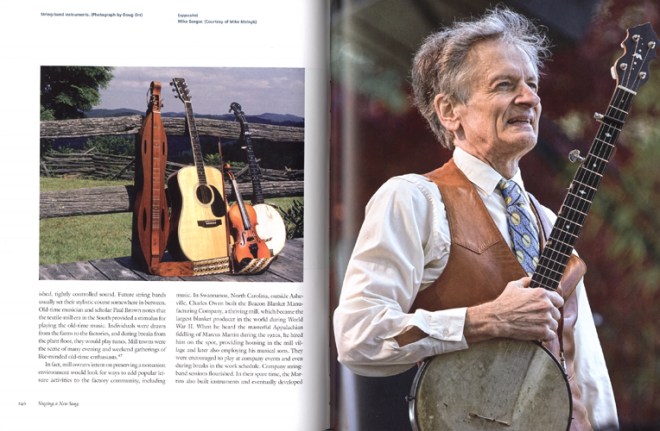





 Digital Insider