The Global Art Gallery

oil229SAbove, a lovely British landscape, described, in the words of the artist Rob Adams on his Painter’s Blog, as follows:

This is towards the end of the day on the charmingly named “Hogs Trough Hill”. The light was super, though once I stopped it was very cold! 20in by 12in.”

Here’s another picture by Rob, one that he likes very much, and I do, too.

2010S01S

I mention Rob, and his paintings, in part because I enjoyed my visit to his site and the art I found there, but also to note a remarkable phenomenon.

Rob’s site is filled with his work. Some of it is very, very good. Some of it, by his own admission, needs more time and attention, and yet, he is perfectly comfortable posting both the good and the not-great, along with comments that detail where he feels he fell short, what he intends to complete or rework later on.

In itself, this is a rather new way to think about the interactions between artists and their public. It’s very much like visiting an artist in his (or her) studio, and being allowed to see everything the artist has on hand, including works-in-progress, complete with extensive commentary. Rob is a good writer, too, and he often writes interesting essays about his work, some instructional, some musings, many quite interesting. So here we are, citizens of the world, with the newfound ability to visit art studios throughout the world, to gain insights from artists about their work, and, if we like, we can grab the occasional jpeg or png and use their work as digital wallpaper (with or without their knowledge or permission–a pitfall of the present system).

Some of Rob’s artwork is oil, a bit of it is acrylic, much of it sketchbook work from life drawing classes, and, to my delight, some of it is watercolor.

Water116SI have never met Rob, but he mentioned that he enjoys painting old church graveyards, even though nobody buys those paintings. That made me think about my role in all of this. A few hours ago, I did not know that Rob existed. I’ve enjoyed Rob’s portfolio this evening, and I liked this particular painting enough to show it to you, and to suggest that you explore the carousel of images available by clicking on the graveyard work. So here I am, promoting the efforts of an artist in a far off nation, and here you are, contemplating the way he gets the texture of the stones just right, how the light plays in the path and on the green grass, and maybe, just maybe, you will click on the image to see more of his work. Who knows, you might even buy one of his paintings.

We’ve all been at this internet thing for a good long while now. It never ceases to amaze me, the ways that we’re all connected, the ways in which we influence one another’s time and behavior via little more than a screen, a keyboard and some circuitry.

Rob, I wish I could paint half as well as you do. I learned a lot by looking at your paintings. And I will do so again, soon.


A Parisian History in Color

sennelier_couvertureIn Paris, on the Quai Voltaire, amidst antique dealers of the highest order, along the left bank of the Seine, directly across the river from the famous Louvre museum, there is a shop.

Sennelier-Interieur-In 1887, or, perhaps, 1888, the shop was nearly bankrupt. With the sale, former shop owner M. Prevost, makes dreams come true. The new owner, Gustave Sennelier, always hoped to own a shop where he could manufacture and sell his own artist’s pigments. And so, the shop became known by the sign visible to all of Paris, Sennelier: Couleurs Pour Artistes.

This was an especially exciting time to be selling colors and working with artists in Paris. The impressionists enjoyed their first successful group show in Paris in 1886.  Painters were experimenting with color and light, trying new formulas and new ideas, and often relied upon the good advice of the chemists who were emerging as colorists. (Previously, pigments were sold in pharmacies as a sideline; art supply stores were still a relatively new idea.) As chemistry and art intertwine, artists now regarded as legend were working professionals who purchased their supplies from Sennelier. Cezanne was one of many in Paris who frequented the shop; others included Pierre Bonnard, Robert Delauney, and Pablo Picasso.

Seeking new products and new opportunities, Sennelier’s pigments found popular use for batik (the pigmentation of decorative fabrics), painting on porcelain, and in new formulations for artists, including, for example, new oil pastels. “Picasso adopted it immediately. He asked for it in 48 colors of which–Picasso’s grey period required it–10 were shades of grey, a heresy in the age of colors.” Artists used the new oil pastels to start an oil painting, allowing the fluidity and ease of sketching onto the canvas. Then, the painting would be completed in a classical oil painting style.

facade-quai-GFThe Sennelier family has passed knowledge, chemistry, color sense and business sense from generation to generation. In a sense, the new book, Sennelier: A History in Color by Pascale Richard, is a family biography. As with the Parisian landscape, the family is part of a bolder story: the powerful relationship between science (chemistry) and a tremendous assortment of artistic accomplishments. The book is filled with full-page images of Jackson Pollack paintings and store shelves filled with pigments; photos of antique paint tubes and pastel drawings by Edgar Degas; spectacular old city scape photos of the old shop and inside the old lab and photos of the shop today, a place that hasn’t changed much in a century. If you are planning a visit to the Louvre, do find the time to cross the Seine, make the left turn, follow the classic old buildings until you reach number 3 Quai Voltaire. At the least, you will buy a notebook or a sketchbook (Picasso bought lots of them), and perhaps you will be persuaded to buy a set of Sennelier pastels, which are among the finest in the world, or oils or watercolors, or artist’s pads. You can buy some, or even most, of this merchandise in many U.S. art supply stores, but it’s not the same experience. There is magic in the old shop, magic that is so loving transported into book format.

dan

Daniel Greene is one of my favorite artists. Click on the picture to explore his spectacular work.

It is a joy filled story: the idea of bringing Sennelier products to the U.S., the magic of those pastels in the hands of a great contemporary artist. Daniel Greene is such an artist, and his two-page spread of Manhattan’s Franklin Street subway station is a wonder. So, too, are the simple photos of the neatly-ordered tortillons in a century-0ld drawer in the old shop.

For about ten years, I have so enjoyed using Sennelier pastels. The freshness and depth of their color makes every painting special. When I have a Sennelier pastel in my hand, I sense that there is legend there. I visited the shop in Paris, and sensed some of the history, but it was difficult to understand how the story fit together. When I started reading the book, I loved the combination of new and vintage photographs, art and artists at work, and the story told in both French and English blocks of prose. About a third of the way through the book, I realized that I was grinning. And I wondered about the last time I had grinned my way through the reading of an entire book.

Several years ago, NPR did a wonderful story about the Sennelier shop. Listen to it here.

Even better, I think, is the photo essay and commentary on the blog A Painter in Paris. The photo below should encourage you to visit both the blog and the store. Enjoy!

aa_DSCN3354

Eating One’s Way Through the British Isles

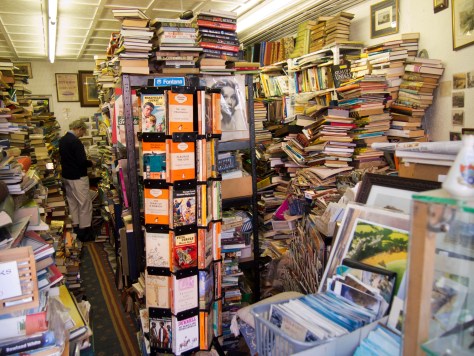
When I turned to page one, I knew I was reading the right book. There’s a half page photo of Plantaneget, a terrific seafood restaurant that hugs the hillside in the old Welsh fishing town of Tenby–the one with my very favorite cluttered bookstore just across the way. How can you not love a bookstore that looks like this one?

Bookstore in Tenby

I digress.

PloughmansLunchCover9781558324138-300x266But I do love wandering around the UK. And when I’m not wandering, on say, a cold winter’s day here in the US, it’s fun to find a book that causes me to think about my next trip. This morning, I enjoyed a wonderful book about British, Welsh, Irish and Scottish food entitled The Ploughman’s Lunch and the Miser’s Feast. It comes with the inconveniently long subtitle, Authentic Pub Food, Restaurant Fare, and Home Cooking from Small Towns, Big Cities and Country Villages Across the British Isles. The title accurately describes the book’s contents, but fails to mention that there are lavish (and luscious) photographs, and lots of recipes, too.

Of course, the names are fun. Let’s begin with breakfast. Scotch Woodcock contains no game; it’s a seasoned approach to scrambled eggs. Jugged Kippers is a herring dish, popular in the north, full of sea-driven flavor, strong for breakfast in a place where the extra nutritional kick in the morning is a good thing.

There’s tea throughout the day, and a nice article about why and how it has become so important to the day.

And there’s a thorough explanation of the ploughman’s lunch, perfectly served with artisanal cheddar cheese, a good thick slice of rare roast beef (often, from last night’s dinner), mixed greens, chutney, and a mini-baguette. Pickled onions are nice, too.

I never acquired a taste for the go-anywhere, anytime Scotch Eggs, a hard-boiled egg coated in sausage and crumbs, and often, carried for lunch away from home.

Author Brian Yarvin and I share something in common: we will travel for food. He, to Stoke-on-Trent in the county of Staffordshire for freshly made oatcakes. These are made on the grill, often purchased by the dozen for use at home, or enjoyed one-at-a-time, filled with, say, cheese and mushroom (Yarvin’s favorite). There’s a distinctly local specialty, but you’ll find various small “cakes” throughout the islands.

Scottish Oatcakes from Brian's  book, "The Ploughman's Lunch and the Miser's Feast"  (Use allowed for book promotions and reviews only.)Author Brian Yarvin is also a superior food photographer. Here's a look at a Curried Mutton Turnover. There's lots more to see--mostly Asian--by clicking on the image.

Scottish Oatcakes from Brian’s book, “The Ploughman’s Lunch and the Miser’s Feast” (Use allowed for book promotions and reviews only.)
Author Brian Yarvin is also a superior food photographer. Here’s a look at a Curried Mutton Turnover. There’s lots more to see–mostly Asian–by clicking on the image.

Cock-a-leekie is another of those wonderful Scottish names, this time assigned to a soup that contains, rather obviously, chicken and leek, and not very obviously, prune, too. The prune recalls a history when dried fruits were quite the delicacy, exotic and expressive of a higher station. Cullen Skink is another great name: it’s potato soup with smoked haddock… spectacular!

Beef Wellington suggests a dish that we made up here, like Chow Mein, but it is, in fact, quite British, and every bit as delicious as it was two decades ago (the last time I had one). Basically, it’s a good piece of beef wrapped in mushrooms and then in puff pastry. Old-school, but terrific.

There’s a nice bit about how to choose the best of fish-n-chips shops, or, in the local lingo, a chip shop. If you see a sign for “fish tea,” that’s a good thing–the term resonates with the locals (who, presumably, know both their fish and their tea). If the menu lists only fish, chips, peas, and tea, that’s a good, thing, too–it suggests focus. It’s not good if the same place lists burgers or kabobs. Anything suggesting “Best in Britain” without appropriate documentation posted in the window. Nix on pre-fried fish in the window, and pre-battered fish, too. Extra points for using local fish (nothing in Britain is very far from the sea).

Also, a useful note regarding bacon. What we call bacon, they call streaked bacon. What they call bacon is a boneless pork chop, sliced thin and fried.

What’s a faggot? It’s a meatball, heavy on the liver. Just so you know. One the next page: Lamb’s Tongue (with Raisin Sauce).

Brian Yarvin

Mr. Yarvin

What’s the most popular food in Britain? Probably Chicken Korma, the lead player in an extensive Indian cuisine that’s found just about everywhere. Nice coverage of various Indian dishes here, resplendent in their bright colours.

When in Britian, I like my pies. Set me in front of a menu with, say, Chicken, Ham and Mushroom Pie, and a local ale, and I’m a happy traveler. Leek Pie, Shepherd’s Pie, Fish Pie with Mashed Potato Crust, all good with me. Not so much for the Steak and Kidney Pie, which is made not with Kidney Beans, but instead, with the kidney of a lamb (tubes removed). No thank you. Yes to Cornish Pasties, essentially a local take on an empañada. And a definite yes to Yorkshire Pudding, which is a pudding in the British sense, which means, well, I’m not sure how the British use the term because it seems to apply to most desserts, of which Yorkshire is not one.

The term Flapjacks was a surprise to me; I picked up a pair at a train station for a quick snack. Turns out, they’re similar to granola bars.

At a tea shop in Cardiff, I tried my first (and probably, my freshest) Clotted Cream. It sounds a bit unappealing, but it is, in fact, it’s a bit sweet, a bit thick, and a perfect accompaniment to, say, a scone.

Other terms I learned… Perry is a pear cider (excellent at the small stand in the local market just next to the West Canterbury train station)… Fairy Cake is, more or less, our cupcake… Bap is something like a cross between a hamburger roll and sandwich roll… and Chocolate Vermicelli is our Chocolate Sprinkles.

What fun! Get the book. Then, go!

An Antidote for Pizza

I steer clear of the gummy crap that’s delivered in pizza boxes from the chain stores. No Pizza Hut for me; the ingredients, the preparation, the lack of loving care, all are good reasons to buy pizza elsewhere.

More often than not, the local pizza shop is only a bit better. The dough is rarely fresh, the mozzarella is pre-shredded and made weeks or mints before it becomes a pizza topping. The sauce may or may not come out of a can, but it’s exceedingly rare to find an actual tomato anywhere in a pizzeria. Some pizza places make some of their own stuff, and add some love. Certainly, there are some of NYC pizza places where it all comes together nicely, but they are the exception.

So, what do I want? I want what DiMeo Brothers does. It’s worth a trip to (of all places) Wilmington, Delaware (an hour from Philly) to taste the fresh cheese, the fresh dough, the fresh sauce. This particular pizza restaurant imports ingredients from Italy. Even the water used in dough. Baked in a perfect brick oven, the pizza is sublime–and only vaguely resembles the round, flat, gutless things that Pizza Hut / Papa John / Domino are selling.

Too far away from Wilmington (or their new place in Philadelphia’s Andorra neighborhood) to make a go of it? There are options. One is a book.

20121110-224811.jpgThe book–My Pizza, written by a baker named Jim Lahey–promises a “no-knead way to make spectacular pizza at home”. The book is filled with wonderful photographs of equally wonderful pizzas. No surprise that they look, and taste, as good as the best of DiMeo’s. Fresh ingredients and loving preparation are everything.

You begin with a pizza stone. Three-quarters thick is best because it retains heat more efficiently than the more common half-inch consumer model; visit a restaurant supply shop if you can’t easily find one online. A pizza “peel”–the paddle–is essential, but the long ones used in pro kitchens may be too long for yours, and a smaller one will be fine.

Leahy is okay with conventional flour but extremely picky about the olive oil. The best comes from Chile. The freshest cheese, the finest available tomatoes, these are critical.

Ovens are tricky. They need to reach high heat. Buy the book, read the chapter, because this part is a little complicated. You can do it–make great pizza in your own kitchen–but take care to do the work properly to avoid incident.

Next chapters: how to make the dough, then the tomato sauce, both from scratch. This is not a quick job. This is a messy job, gloriously so. But then here’s that first tomato pie–your freshly made dough, your freshly made tomato sauce, a touch of fin sea salt, and a drizzle of your best olive oil. Three (!) minutes later, maybe five if you let it cool, you’re eating the best pizza of your young life. A week later, you’re completely addicted to your own variation on Leahy’s veal meatball pie, one of a few dozen specialty pies in this handsome cookbook.

Frozen pizza? Domino? Fuhgeddaboudit. Go buy the book and make your own.

Pastrami…on the road

(Hey! Don’t start here!! Start with the first part of this article.

When we last met, we discussed the excellence of the pastrami sandwich available at Manhattan’s Second Avenue Deli and Katz’s. If you’ve let a week go by without one of their sandwiches, there’s still time to correct the error of your ways.

Once a familiar sign throughout the five boroughs (okay, maybe not Staten Island), the kosher delicatessen is becoming an endangered species. (Those three Hebrew letters, read from right to left, spell the word Kosher, but some also feature non-Kosher foods on the menu.)

With David Sax as our guide (see his book, Save the Deli), we first travel to the Bronx for “hush puppies”–little hot dogs wrapped in potato–at Liebman’s, which carries a full New York deli menu, and continues a generation-old tradition. It’s a neighborhood place, worth the easy trip from Manhattan. Then, not so far from Yankee Stadium, there’s Loeser’s, a comfy old fashioned place that David describes in his blog. In Queens, the queen is Ben’s (with restaurants on Long Island and Manhattan), but neighborhood places like Buddy’s remain.

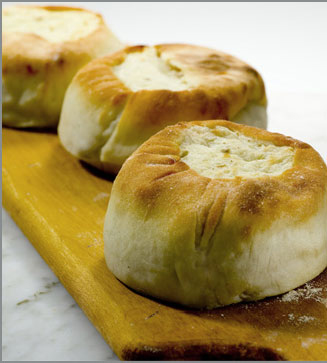
Knishes from Knish Nosh in Queens (and now, in Manhattan, too!). They don’t get much better than this.

While in Queens, there is one place where you must eat. It’s called Knish Nosh (for the uninitiated: a Knish [KUH-nish] is a large baked dumpling, and Nosh is casual eating, nibbling–the noun form would be a nosh, and the verb form, noshing). Few may disagree, but this is probably the place to buy the best knishes in New York City (maybe even the world). Potato or kasha would be the purist’s choice, but mushroom, mushroom/carrot, sweet potato, and spinach would also score on a top knishes list. And–who knew?–there are now Knish Nosh outposts near Central Park and 106 Street, near CitiField (where the NY Mets play) around Flushing Meadow Park, and in Florida, too.

In Brooklyn, where there may have been as many kosher delis as churches, choices are few, but the few choices are good ones. There’s Adelman’s, a throwback to the era when Brooklyn might have been the center of the world, and here’s a rundown on the others–with pix of tasty sandwiches.

A good home-cured corned beef sandwich served in Newark, NJ at the long-running Hobby’s.

Across the Hudson, Hobby’s Deli is all that remains of a once-grand tradition in downtown Newark. It’s favored by the city’s power elite, quite the place to meet friends and business associates while enjoying a corned beef or pastrami sandwich. In northern New Jersey, it’s Eppes Essen in Livingston, and others celebrating the old style, often with a more generalized deli menu alongside the kosher favorites. Outside of NYC and its suburbs, demand is lower, so options are few. Philadelphia has Famous 4th Street, and Baltimore, Attman’s, where you can enjoy a terrific sandwich and then wander by the Inner Harbor or Fell’s Point, both nearby.

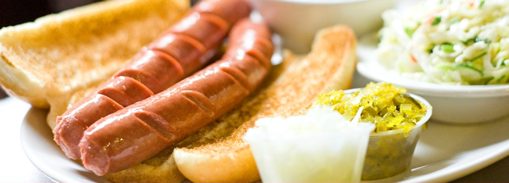
Old-style delis are famous for pastrami and corned beef, chicken soup and kneidlach (matzo balls), but there’s nothing quite like a kosher hot dog. In fact, there’s a wonderful category of Jewish sausages–frankfurters, “specials” (fat hot dogs), Kosher bologna, Kosher salami (soft or, for connoisseurs, the garlicky hard version). Here’s Nate N’ Al’s take on the simple dog.

For old-style New York City deli, however, you’ll need to follow the Jews to southern California. Nate n’ Al’s is the Beverly Hills institution–the place where Larry King and half of the entertainment industry seem to gather on a regular basis. The sandwiches are worth the trip (for years, my NYC-LA routine required lunch at Nate n’ Al’s immediately after landing at LAX). Here, the sandwiches are special, but it’s the chicken soup that reminds everyone of their bubba (translation from the Yiddish = grandma). Sax calls it “some of the finest chicken soup known to man–a wide bowl of silky broth dominated by a single, almost meaty matzo ball.” He also recommends the kishke (KISH-kuh) at Brent’s–a once-standard, now hard-to-find slice of Jewish sausage made by stuffing a cow’s intestine with matzo meal and schmalz (chicken fat); remember, all of this is based upon peasant food! (In fact, kishke is delicious, but only when freshly prepared; the frozen alternative is just awful.) One LA old-school favorite is found downtown, near the La Brea Tar Pits (no, it’s not that old): Langer’s. Here, it’s all about the perfect pastrami sandwich. Again, Sax:

How do you describe the taste of a perfect pastrami sandwich?…The specific flavor profile–at once peppery, smelling of the sea, and hinting of butterscotch–would sound contradictory and confusing. Any turn of phrase or illustrative metaphor–how the peppercorns and salt and sugars dazzled my taste buds like a Chinese New Year’s fireworks show going off in my mouth00would never measure up to the real thing. It is simply legendary…”

So it’s off to Las Vegas, where the casino outposts of the Carnegie and Stage Delis smell as sweet but taste nowhere near as good as the NY originals, and then, down the road to nearby Henderson, where New Jersey’s Michael Weiss takes the craft seriously, and “pickled his own corned beef and tongues, cured and smoked his own pastrami, and baked his own bread and pastry,” according to Sax. The result is deli magic. Deli done right. Worth a trip just to rediscover the roots of this fading cuisine. Houston is home to “a traditionalist succeeding jun a modern market”, Kenny and Ziggy’s, where “the giant noodle kugel [pudding] had the consistency of a soufflé.” Watch them on Food Network.

Outside the U.S., three delis belong on every foodie’s bucket list.

The first is Schwartz’s in Montreal, where the smoked meat sandwich more or less combines all that is sacred about corned beef and pastrami. Here, the spectacular sandwich begins as “raw brisket from Alberta” which is then “rubbed with a mixture of coarse salt, cracked peppercorns, and Schwartz’s special spice mix, which involves much less sugar than a New York style pastrami, with more pepper and fewer aromatic spices. Briskets are then cured in plastic barrels for a…week…ready to enter the smokehouse…stained with burnt fat and old spices…[where they] smoke for five to seven hours…” (While in Montreal, be sure to sample the uniquely sweet, smallish, delicious bagels from St. Viateur.

The second must-visit is to B&K Salt Beef Bar, home to “stupendous” chopped liver (made from ox, not chicken, as is the US tradition), followed by a sandwich of either hand-cut tongue or salted beef, cured for a remarkable two-and-a-half weeks. Both are made with good Scotch beef, and that makes all the difference.

The third diverges from the peasant food history. It’s located in Antwerp’s diamond district. Hoffy’s treats delicatessen as fine food, with small portion sizes (take that, Carnegie Deli!). Start with the pickles, which are always difficult to get right. In New York delis, the brine must contain the right balance of salt, dill, garlic, and other herbs and spices–otherwise, they just don’t taste like sour pickles or, with a different recipe, half-sours. Here at Hoffy’s, the focus is on the garlic, and the flavor soars. Meats are lean (never the case in a New York deli), extremely tender (similar to NY deli), and according to Sax, the best is the veal–a meat not often associated with NY deli–“creamy pink and tasted almost sweet.” Portions are small, and elegant: bite-sized portions of stuffed cabbage, gefilte fish, chopped liver, and apple kugel.

There are so many Jewish specialities, so many variations, such unique flavors and delicacies, each wrapped in years of tradition. Blintzes and lox, the bialy and the plateful of rugeluch; the mushroom barley soup and latkes. But the tradition is fading. The people who opened the delis came from an Eastern Europe that no longer exists. There will be no more Jews with the old traditions emigrating from Poland or Lithuania or the Ukraine. They’re gone. There are fewer Jewish neighborhoods to support the delis–the people who used to live, in great (but poor) communities, in Brooklyn or lower Manhattan now live with everybody else. The small delis can no longer support themselves–except in areas where the tradition lives strong, as it does, largely due to the Jewish show business community, in Los Angeles. And yet, this is a cuisine worth nurturing, worth embracing. How? I guess that’s why Sax calls his book Save the Deli! Without a concerted effort, the few remaining delis will be gone, and with them, a great cuisine may vanish, or, perhaps worse, may be reduced to Nathan’s hot dogs, Einstein’s bagels, and the occasional frozen knish.

Long may it wave! A corned beef sandwich from Attman’s in Baltimore, founded 1915. Will they survive the next 100 years?

A Nice Pastrami Sandwich…

It started in Poland. And Romania and Russia. And, of course, Germany. Two million Jews, long separated, settled in the US, many  in a small parcel of Manhattan known as the Lower East Side. They lived in tenements, they bought food from pushcarts. and in time, those pushcarts became markets and small sit-down restaurants.

A century later, not much remains. Except Katz’s, of course. The corner of Houston and Ludlow Streets has seen its share of changes–from a Jewish community to a dangerous place popular with drug addicts and ne’er-do-wells, to its modern incarnation as home to various dot.coms, NYU students, and those with enough money to live in the neighborhood. It’s the oldest deli in the country, and among the survivors. (Not a bad starting place: learn some Yiddish from Katz’s.)

Pastrami on rye from Katz’s on NYC’s lower east side. To the left, a half-sour pickle, and to the right, a sour pickle.

Like good barbecue (which uses similar cuts of beef, including the brisket and the navel), the proper preparation of pastrami requires a great deal of loving care. It’s dry-rubbed, then allowed to cure for as long as two weeks, then smoked for about five hours. It’s a costly process that involves a few dozen steps, some at the meat processor, more at the store. Most stores cut corners and buy meat injected with flavor. The best stores have their own processes, including the best way to cut the meat (always hand-cut, never by machine!) A good sandwich contains about a half pound of the succulent, slightly fatty, slightly salty, slight smoky red meat; a ridiculous sandwich, served, mostly, to tourists who now frequent Manhattan’s The Stage and the Carnegie Deli (both located between Times Square and Carnegie Hall), weighs a pound. (These are very smart, if very full, tourists. The pastrami at both the Stage and the Carnegie smells, and tastes, fabulous. But there is lot of it!)

Sadly, I’ve just named half of Manhattan’s Jewish delicatessens. In times past, New York’s kosher delis (not always completely kosher; times change), there were dozens. Now, there are a handful. All good. Some better than the best. Katz’s is in the better category, a definite must-do for visitors to Manhattan. Arguably, the reopened 2nd Avenue Deli is better still. There’s Artie’s on the upper west side. Sarge’s is a good neighborhood place (once, I sat next to Abbie Hoffman). On Manhattan’s upper east side, Pastrami Queen is another good choice. (Update: I recently tried Pastrami King in Merrick, on Long Island; it’s the newer version of the Queens, New York Pastrami King, and, to be honest, rather under-spiced, lightweight and devoid of interesting flavor—but the dining room was a white tablecloth design and sadly the deli sandwiches occupied a relatively small portion of the Pastrami King menu;; I’d give it a meh.)

Sliced pastrami from the reopened 2nd Avenue Deli in Manhattan. One of the world’s best, it rose from the ashes in 2007, and remains very popular in its new location on east 33rd street, a mile or two from the original lower east side site.

So what’s so special? Start with a good pastrami sandwich. The flavor is powerful, sweet and peppery, salty and smoky, a blend that smells wonderful and tastes even better–when the meat is prepared the right way, it’s over-the-top, or as Food Network’s Guy Fieri would say, “a one way trip to flavor town!” Pastrami can be eaten on a roll, but it is so much finer with good crusty Jewish rye bread (must be fresh). Many people insist upon a dark brown mustard (Gulden’s), but I’m not a fan. I do, however, insist upon both half-sour and sour pickles on the side. A proper pickle will make a cracking sound when you bite in, and will explode with some juice. The appropriate beverage accompaniment would be a (vanilla) cream soda or a black cherry soda, made by a long-time Brooklyn brand: Dr. Brown’s. If you’re a purist, Dr. Brown’s Cel-Ray soda is an even better choice (it’s made with celery seeds). Dr. Brown’s soda is still independently made, and you can (and should) buy it in New York City and Florida grocery stores (or online).

Again, the source is 2nd Avenue Deli. In a kosher deli, these come from, just for sitting down at the table. In most places, you’ll get a small stack of sliced rye bread and maybe some cole slaw, too. BTW: the egg-shaped light-colored pickle is pickled plum tomato, a sure sign of a deli that knows what it’s doing.

Okay, back to the deli menu. For some, the powerful punch of pastrami is too much, so the fall-back choice is corned beef. This is not Irish corned beef, but it is similar. It’s salty and a bit smoky, but not peppery. It’s milder. It’s delicious–but beware of corned beef sold in places that are not serious about their pastrami. The result will be salty, but ordinary, just a wad a salted meat. Of course, you can go for roast beef or turkey (often freshly cut), and these are just fine, but not so different from what you will find elsewhere. Sometimes, you’ll find rolled beef (sort of a cross between pastrami and roast beef), and often, you’ll find tongue. Yes, cow’s tongue, sliced as deli meet. The tongue is cured, like corned beef, and it tastes great, but then, you find yourself thinking that you are eating a slice of a cow’s tongue, and well, pastrami may be an easier choice.

A good pastrami sandwich can be quite filling, not something you should enjoy alone. Bring a friend. That way, you can rationalize a side dish. And there is no better side dish than a potato knish (KUH-nish). It’s a fist-sized potato dumpling, filled with mashed potato, onion and spices, then baked in a very, very thin pastry shell. Actually, even better (and even more filling, a meal in itself) is the kasha knish. Kasha is a buckwheat groat, enjoyed either as a knish or as part of another deli favorite, kasha varnishkis (same kasha, this time with pasta bow ties and, in the best delis, a thin brown gravy).

The popular side dish–easy to make at home, in fact–Kasha Varnishkes as served, perfectly, at 2nd Avenue Deli. Click on the pic for lots more images of menu items.

Hey, this blog article is already getting long, and we haven’t even left Manhattan. There’s good stuff to be eaten in the other four boroughs, and (many would say) even better stuff in Los Angeles (where the NY delis best customers moved), and wonderful surprises in a handful of other places in the US and abroad. The tour continues next week.

Meantime, if this article has made you hungry, two options. First, get yourself to Manhattan this week. (Katz’s is open late.) Second, dig into Save the Deli by David Sax. Nobody knows more, and I suspect, few people care more, than this traveling author.

Secrets of the Rijsttafel

The rijstaffel at Ramayani. For link, see below.

Three things you need to know: (a) translated from the Dutch, the word means “rice table;” (b) in order to taste this Indonesian speciality at its best, you should consider traveling to Amsterdam, where rijsttaffel has been popular for several hundred years; (c) the dish, or, more accurately, the presentation of dishes is a blend of Dutch and Indonesian, and not quite native to either place; and (d) for reasons I don’t understand, this appealing combination of Asian food has never found its place in America.

A typical Dutch rijsttaffel usually consists of several dozen small dishes (often, forty dishes is the count), so this is the kind of meal that you’ll want to enjoy with several friends. Beer is your most likely accompaniment: the most popular Indonesian beer is a lager called Bintang, but if you’re dining in Amsterdam, you’ll find a wide range of superior Dutch and German beers just about everywhere.

A good rijsttaffel will feature dishes that highlight specific colors, spices, flavors, and textures. At first, the textures may be off-putting as they may run from crunchy to soggy to runny to gelatinous. And the array of colors may overwhelm. Relax–there’s just a bit of everything, and there’s no law that requires that everything be tasted by every person at the table.

From Wikipedia, banana leaves, rice, and a meat filling. It’s called lemper.

The grilled banana leaves–green in color–are likely to be lemper. Inside, there’s a bit of sticky rice and a meat or fish filling (think in terms of an Asian tamale) with rice in place of cornmeal.  Also wrapped: lumpia, which will be familiar as a deep-fried, crispy spring roll.

Golden in color, perkedel are a mix of ground meat and mashed potato, fried up so that it looks like a flat meatball. If you are familiar with frikadeller (flat Danish or German meatballs).

From Wikipedia, an Indonesian fried rice platter with shredded egg omelette, meat floss, and a pair of spiced meat dishes. And more.

Nasi kuning will be familiar as fried rice, often served on a larger platter surrounded by serundeng (a relish of coconut and spices), urap (cooked vegetable salad, often shredded, also with coconut), balado udang (shrimp in a chili sauce). Sometimes, the rice is served in its own bowl, and these side dishes are served among the many small bowls that fill the rijstaffel.

You’re likely to find some flavorful soups and stews, too. Sayur Iodeh is a coconut soup with vegetables (jackfruit, various types of Asian squash, melinjo, and more. Semur is a beef stew in a sweet soy gravy with ginger, onions, garlic and other (generally) familiar spices.

Pisang goreng is more of street food, and perhaps, more of a breakfast or lunch snack than a dinner staple, but you’ll often find this sweet dish on the rijstaffel as well.

Ayam gurang is fried chicken with special spices. Satay will also be familiar–it’s marinated meat on a thin skewer. There are various curries, some similar to those you would find in an Indian restaurant, some with different spices (a curry is a blend of spices, not a particular spice, so variety should come as no surprise).

From Wikipedia – Traditional sambal terasi served on stone mortar with garlic and lime.

Keep your eyes open for the sambal dishes–the dishes made from peppers of every variety and every degree on the Scoville Scale. Indonesians love their peppers, and it’s not unusual to find several sambals on the buffet, including dishes made with lemon, mango and other fruits, including the (very smelly) durian. Not all sambals contain pepper.

Of course, specialties abound. For example, Indonesia Restaurant (see below) features Kepiting mask telor, which is crab served on egg with sweet and sour sauce. And you may find something different, just for the sake of giving a new food a try, as with the same restaurant’s mutton satay.

I know it’s difficult to imagine all of this in a single meal (and I’ve named less than half of what you’re likely to find in a rijsttaffel), but as I say, the dishes are small, and all of this is intended to be shared by several people. But do you really need to travel to Amsterdam to enjoy this dining experience?If all of this is sounding a bit like a cross between Indian food and Chinese dim sum, you’re getting the right idea. I wish I could communicate more about the delicate, powerful, varied spicing and “mouth feel” of these dishes–it’s great fun to jump from one dish to a very different one–but you’ll need to fly to Amsterdam or try one of the restaurants below for that experience. A rijsttaffel is not the sort of dish that any reasonable person would prepare for casual dining at home.

Well, no… you could poke around Yelp and find some viable options closer to home. I did, and here’s what I found:

Indonesia Restaurant – Philadelphia. Choose from one of four different rijsttaffel menus, priced at $15, $17.50 or $20, $25.

Hardena/Waroeng Surabaya Restaurant, also in Philly. Very popular.

Mie Jakarta – No surprise that some of the best Indonesian food in New York City can be found in the international borough of Queens.

Java Indonesian Rijsttafel – This one’s in Park Slope, Brooklyn.

Satay Sarinah – A more upscale place in Alexandria, Virginia, outside Washington, DC. Very instructive website.

Borobudur – Great place in San Francisco. Very instructive menu online, too.

Jayakarta – Berkeley, California

Ramayani Westwood – Los Angeles, California. Unassuming, but a great neighborhood place.

Bandung – Madison, Wisconsin

Indomania – Miami Beach, Florida

For updated information, visit Dutch in America from time to time.

And how about the best rijsttafel restaurants in Amsterdam and Europe?

Tempo Doeloe Indonesia – Amsterdam. Good detailed menu info here. Check online for latest reviews.

Sampurna – Amsterdam. Probably the best choice; consistently great reviews.

Kantjil & de Tijger – Amsterdam. Upscale with a varied menu. Temptations abound, but talk the group into joining together for the rijsttafel–you’ll be glad you did!

Bali Bali – London, in the West End.

Here’s a look at just a few of the rijsttafel dishes served in Amsterdam’s Kantjil & de Tijger restaurant.

Peru: Serious Food Gaining Global Popularity

Ceviche with a Chinese influence, as served at El Tule in Lambertville, New Jersey. In the US, New Jersey is a significant population center for Peruvians. Sharing its menu with Mexican food, El Tule provides superior examples of traditional Peruvian dishes.

Start with a (non-alcoholic) iced glass of Chicha Morada, traditionally made from purple maize blended with pineapple, quinces, cinnamon and cloves. Then, have a look at the menu, a mix of traditional Latino cuisine with (of all things) Chinese influences.

Lomo Saltado is a good example of the cultural mix. Beef strips are marinated in soy sauce, vinegar, and spices, then stir-fried with tomatoes, yellow peppers, and red onions. It’s typically served with cut potatoes that resemble thick french fries, and with rice.

Why the Chinese influence? Apparently, roughly 1 in 10 people living in Peru are Chinese or claim Chinese origin. The history dates back to the 1850s, when contract workers from Macau (in the day’s vernacular, “coolies”) who replaced the slaves on the sugar plantations and guano mines. As their contracts expired in the 1860s and 1870s, they brought family, married Peruvian women, and opened small businesses, including restaurants. In fact, the largest Chinatown in Latin America is located in Lima: El Barrio Chino de Lima.

As with most Latin cuisines, the roots cross with other cultures (often, conquering cultures), but the deepest layers are native. In this vein, the ancient Carapulcra stew is based up0n a rich mix of pork, spice, a thick and richly flavored brown sauce, and potatoes.

In fact, Peruvian vegetables are fascinating in their own right, a range of vegetables that has not yet reached public markets and popular tastes in the US: caigua, or stuffing cucumber, similar to a pumpkin; yuca, also known as cassava, which replaces the potato (and must be carefully prepared to remove the toxic cyanide); and maiz morado, or purple corn. There’s an emphasis on root vegetables, and, in some cases, health benefits (explained on the linked page).

Escabeche is a Spanish dish, imported by Peru and by a large number of other Spanish-conquered nations. Meat or fish is marinated in an acidic mixture, sometimes with vinegar, sometimes with a citrus juice.

Ceviche is also common to many cultures, but Peruvians have evolved an impressive range of ceviche variations. Start with the basics: a white fish, lemon and/or lime juice (and there are all sorts of ongoing arguments about which lemon, which lime, because there are many varieties), salt, garlic, cilantro, and, often, some sort of fish concentrate. There’s a nice introduction to the Lima street version of ceviche here, and it includes some video. The roots of ceviche precede the Spanish conquest, and, according to this article, it was the Spaniards who added onions and lime. Ceviche is not easy to cook–the timing of the acid must be perfect, the balance of flavors is difficult to manage, especially in a busy restaurant kitchen.

One key ingredient, distinctive to Peru, is a spice called  huacatay.  A relative of the marigold, it’s also known as Peruvian black mint. Another is the aji, or pepper, some quite hot. Sweet potatoes are also common: recently, I tried the Peruvian version of a tamale, with mashed corn replaced by sweet potato (and excellent idea).

For more about Peruvian food, try these links:

World’s Best

The one familiar piece of local Peruvian cooking that has made its way to the US, the UK, and elsewhere is quinoa, a grain. Clearly, there’s lots more to explore. Here’s a list of restaurants and menus that specialize in traditional food from Peru:

Lima’s Taste, Greenwich Village, NY

Panca, Greenwich Village, NY

Macchu Picchu, Chicago, IL

Andina, Portland, OR

Puro Peru, Sunnyvale, CA

Aromas del Peru, Coral Gables (near Miami), FL

Sabor a Peru, Miami, FL

Ceviche, London, UK

Inca’s, New South Wales, Australia

Astrid & Gaston, various global locations, mostly in Latin America

Italian + Peruvian – Taranta, Boston

Thai + Peruvian – Thai Peru, Ventura, CA

Mexican + Peruvian – El Tule, Lambertville, NJ

As I scanned a wide range of websites, many promised that Peruvian cooking would be the next big thing. Some were old, some were new. All made me hungry.

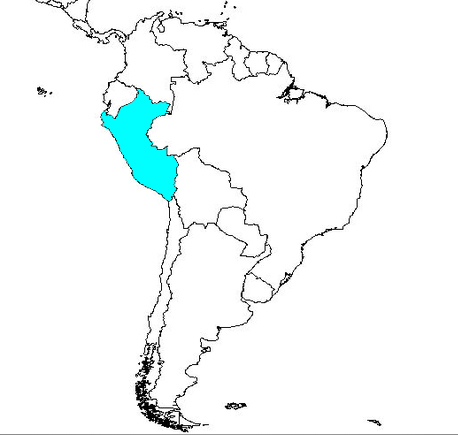
Just as a reminder, here’s Peru on the map of South America.

Food, Wales, Delicious!

Sure, I knew about Welsh Rarebit, and sure, I knew about cockles. Kinda sure, anyway, so let’s begin there.

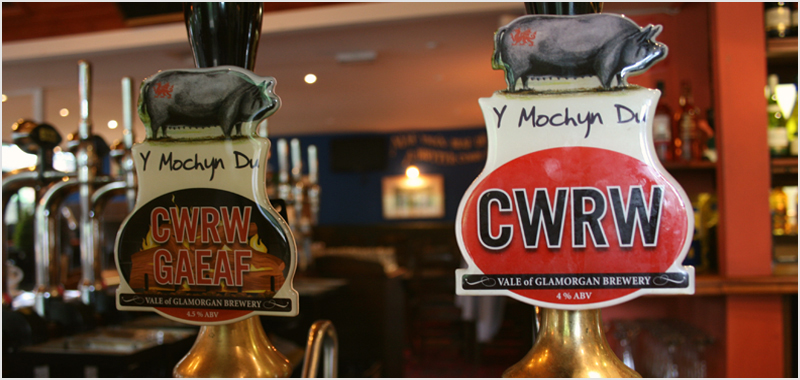
My choice of good local ales at the Mochyn Du, I chose CWRW.

The term “rarebit” is not a corruption of rabbit, but is, instead, a kind of open faced grilled cheese sandwich. Its ingredients include toasted bread (rye, or any other substantial loaf), melted cheddar (preferably thick strands, not slices, with good ale, salt, fresh pepper, a bit of mustard, Worcestershire, and more bits of good Welsh bacon (more like a cross between American grilled ham and Canadian bacon). Cockles may be associated with mussels (but then, that would be in Dublin’s fair city, not in Wales). Here, as there, cockles are small clams, found throughout the world in saltwater. In Wales, they may be served in combination with well-buttered toast, and bits of Welsh ham, and they may be quite tiny. Both Welsh Rarebit and cockles are best enjoyed with a good pub ale; I did just that in Cardiff, just before the 9PM kitchen closing time, at Y Mochyn Du (The Black Pig), and then enjoyed some fresh sea bass, while my compadre, Paul Harris (local guide and expert on Wales; owns See Wales) enjoyed Honey Roasted Ham with a pair of free-range (we would call then sunny side up) eggs.

The laver cake anchors a good Welsh breakfast consisting of wonderful smoked salmon and my gigantic fluffy omelette.

I will now recall Cardiff as the site of the fluffiest omelette I’ve ever eaten–and I could eat only about half of it. The place: Lincoln House Hotel, just a few blocks from the center of town, on a beautiful old (and probably, once, quite wealthy) Cathedral Avenue. The next morning, I opted for the perfect smoked salmon as my main dish. Both mornings, my favorite tastings were small, round, and local to Wales. The Welsh Tea Cake, about 3 inches round, a cakey cookie similar to a fruit scone (raisins or currants inside) dusted with granulated sugar, but only about half an inch thick (like a cookie). Laver is a seaweed and oatmeal cake, meaty enough for a meal, slightly salty and sea-tasty, I loved it from my very first taste.

My big breakfast turned out to be a problem because I had intended to visit the Pettigrew Tea Rooms located in Cardiff Castle’s old gatehouse. Fortunately, the Castle tour was long enough for me to work up a bit of an appetite, so I enjoyed a perfect peppermint tea (with full leaves, not flakes) and another Welsh speciality, a cake called Bara Brith, loaded with tea-soaked raisins.

Bara Brith cake at the Pettigrew Tea Rooms, just beside Cardiff Castle

With a consistency similar to carrot cake, the taste is pleasantly spicy and fruity, and, apparently, this is quite traditional. Time limitations kept me away from St. Fagan’s, another Cardiff location where the baked goods are made fresh, and with love, so I missed out on the revival of Shearing Cake. That’ll wait until next time.

On the other side of southern Wales, the far western side, I spent a day walking around Skomer Island, and saw the (fabulous!) puffins. And I spent about two days in the seaside towns Saundersfoot and Tenby. Before a day of coastal hiking, a hearty breakfast can be just the thing; it’s part of the package at Saundersfoot’s Claremont House (and Sue is terrific at home cooking!). I tried my first serious version of fish and chips at a charming old restaurant, down some medieval stairs (not far from an equally charming bookstore). Among the many very good fish restaurants in seaside Tenby, I’m confident that you will enjoy Plantagenet as much as I did (be sure to ask your server to see the very tall Flemish chimney, large enough, at its base, to fit two large dining tables).

Fish, chips and mashed peas at Plantagenet in Tenby, Wales.and chips at a Tenby restaurant well-known for its fresh fish: Plantagenet. And I’ve learned that fish and chips comes with fresh and yummy mashed green English peas. Lunch at Mulberry’s, with its Dutch chef, provided my introduction to whitebait, a two-inch fish that’s served in bunches, battered and fried, and also, a snapping fresh shrimp dish involving butter, garlic, parsley, a scampi of sorts.

My high-class respite on the inevitable rainy afternoon was St. Bride’s, a spa hotel with a wonderful restaurant located just across a windy street from the Claremont in Saundersfoot. I sat for hours, watching day become night, harbor lights below, big sea and sky view with tiny sailboats in the mid-ground and larger, industrial vessels further out at sea. I started with tea–after a rainy afternoon outdoors, British tea tastes so right–then warmed my still-chilled innards with a nice squash soup (ingredients from a nearby farm). Then, the perfect Welsh lamb, crispy and properly spiced on the outside, red enough to be slightly lukewarm at the center, again from a source just down the road. St. Bride’s turned out to be a special part of my Saundersfoot experience. I so enjoyed the view, the table, and the relaxed ambience, I returned for a second night, hoping to enjoy Gressingham Duck, or Dover Sole, or free-range chicken from not-far-away Fishguard, perhaps topping off with a Sticky Toffee Pudding or a Warm Treacle Tart with Clotted Cream, but I had to admit the truth.  I was still quite full from my fish and chips lunch, so I went for smoked salmon and a cooling Iced Apple Parfait with Bramble Sauce (a red and purple berry sauce).

Big disappointment: I was hoping to visit the well-regarded ffresh, located in the spectacular Cardiff Millennium Center (a performing arts center), but I was there on a Monday, and it was closed. Sigh.

Digital Travel Guides and the Future of Publishing

As the Kent & Sussex chapter of a traveler’s eBook begins, the page shows the current temperature. Just a hint of what’s to come in digital travel guides…

Not enough room in the suitcase? Maybe it’s time to ditch the travel guidebook and try the eBook version instead. I did, and learned a lot about what a traveler’s eBook ought to be.

Travel guides are very different from other types of fiction and nonfiction books. They are only partially read. They are intensely used, but only for a few weeks. They are out of date shortly after they are published. And if you’re doing a lot of traveling, they can become quite heavy.

An eBook on an iPad? Less weight. Full color. An opportunity to integrate with digital maps and Trip Advisor, build an itinerary, make reservations, maybe connect with chapters in history or nature books.

Well, we’re not there yet, but we are seeing the beginning of a new era in travel guides.

Lonely Planet has yet to make its big move into iPad publishing, but they offer one excellent idea: the purchase of individual chapters as PDF files for just under $5 a piece. For example, Lonely Planet’s digital England book can be purchased for $17.49, or you can buy the Devon & Cornwall chapter for $4.95. Either way, it’s mostly well-written text with very helpful guidance, plenty of links, and, take note, designed for iPhone with only with 2x magnification feature on.

Fodor’s London Travel Guide is a full-featured app with plenty of maps, color images, lists with links, and easy access to places to visit, lodgings, restaurants, and nightlife. In fact, the app is organized so that it’s easy to read the text blurb about the London Zoo, then quickly refer to a restaurant map to find Lemonia, a highly-regarded Greek restaurant nearby. Read the description of Portobello Market, click, then there it is on a full-screen map. It’s easy to use and effective.

Working with an eBook design firm called Inkling, Frommer’s offers a more ambitious take on the digital travel guide. The eBook is organized in chapters, but each chapter begins with several points of entry: favorite moments in the region, a three-day trip, a five-day journey, favorite sites to visit, popular destinations in detail, and more. Choose the Cotswolds village of Moreton-on-the-Marsh and there’s a well-written description of the village, tips about what’s nearby, quick access to area maps, and an overall design that’s clearly designed for digital devices. This series is called “Day by Day”, so I expected an itinerary planner to coordinate with my iPad’s Calendar app. That’s not yet a feature, but I suspect it was discussed during this superior product’s design phases.

I used all three guides, often and successfully, and never once missed the books that I did not carry with me. My favorite: Frommer’s. But I suspect that next week’s BookExpo will find publishers to introducing the next generation of interactive travel guides.

What’s next? Certainly, full integration with Google Maps, Trip Advisor, Kayak and other reservations systems, Calendar, email. Those seem to be within reach, but they only scratch the surface of what could be done. There’s a gigantic social network opportunity here, whether it’s couch surfing or house swapping, or simply asking whether anybody in the Pembrokeshire area feels like taking a hike today. Right now, publishers are cautiously experimenting with books that become books on screens, but this caution may result in the demise of yet another industry. Travel publishers possess a unique opportunity to bring places to life, to involve community members (think Zagat’s but on a massive scale), to truly invent the future of publishing on a large, interactive scale. It’s interesting to contemplate whether this work can be done, or will be done, by travel publishers owned by much larger publishing conglomerates, or whether smaller, more flexible and potentially more innovative publishers will map this particular journey into the future.