My 500-Year-Old CD

Day by day, there’s not much that we encounter from the year 1611. Shakespeare was busy writing The Tempest. Henry Hudson died. Marco de Dominis published a scientific explanation of rainbows. A year later, tobacco was first planted in Virginia, and the Dutch started using Manhattan Island as a trading center.

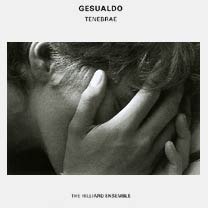
In 1611, Carlo Gesualdo wrote some of the most uplifting music for voices in the history of the medium, a book of madrigals. This creative work did not come easily. Count Gesualdo of Venoso’s story involves his instigation of the gang murder of his own wildly unfaithful wife (he plunged the sword into her body, and not just once, shouting, repeatedly, “she’s not dead yet!”), then moves through remarkable bouts with depression and abuse, including the dozen men to beat him daily (I’ll spare you details, but you can find them here and in lots of places on the internet). As crazy stories of composers lives go, he’s the hands-down winner. His story is deeply disturbing. His music is miraculous. Witness his captivating Tenebrae, one of the classic items from the formidable ECM catalog, first released in 1991, and consistently astonishing, a record I return to on a regular basis, a record that I recommend with little hesitation to any serious listener. And now, for 2012, witness the same Hilliard Ensemble treating five hundred year old music as if it was contemporary art. The newer disc is called Quinto Libre di Madrigali, and it is fascinating. The title and notes explain: this is the fifth of six books of madrigals, this one created late in the composer’s life. From the liner notes: “The whole collection constitutes a gallery of dramatically lit portraits of human emotions with a heavy emphasis on the extremes of joy and despair.”
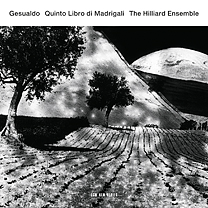
There are six voices: a soprano, a pair of countertenors, a pair of tenors, and a baritone. (Soprano Monika Mauch and second countertenor David Gould frequently sing with the four-man Hilliard Ensemble; on this recording, Mauch is stunning.) All six singers sound like angels, and if you close your eyes, it’s easy to imagine these voices climbing up a heavenly spire in search of their lord. They sing in unison, they sing in pairs, they sing in harmony, they sing alone. They climb. They intertwine. They rest and they bounce. They exchange leads almost as if they contain the souls of jazz musicians to come. In musical terms, Gesualdo’s music is often described as “deeply chromatic”–a madman coloring with the brightest possible pigments and an extraordinary level of precision, probably based upon some sort of serious mental illness that caused his creative light to burn just a little too brightly. Two years after he composed these madrigals, he was dead.

Gesualdo’s work is not background music. It is music that captures the imagination, and elevates the spirit in a primal, deeply human way. There are no musical instruments, only voices, and open space.

This is not the best choice of music to play through computer speakers. ECM sets high standards for each of its recording projects, and this one, in particular, demonstrates the care that must be taken in order to record a wide range of vocal performances. The precision, the soaring thrusts, the extraordinary quiet passages, the contemplative quality of the whole, all of this has been meticulously prepared for your enjoyment. Listening through inferior equipment is like trying to contemplate the Mona Lisa by looking at a postage stamp. Best to listen through quality headphones, or on a good stereo system. The CD sounds a whole lot better than a computer file with reduced clarity and range. Trust me on this one: buy the CD, and allow yourself the time and space to listen with your whole being.

The Hilliard Ensemble, plus two additional vocalists. If you’re intrigued, be sure to explore the ensemble’s work with composer Arvo Pärt as well.

Learning from Woody

On July 12, 2012, Woody Guthrie would have been 100 years old. This poster commemorates a life well-lived, and a voice that has never rested. You can support the Woody Guthrie Foundation if you buy this poster. You can learn a lot from Woody. I did, as explained below.

“Hey kids, want to sing a song? Some of you might know this song, but the words can be hard to remember. Here’s a sheet with the lyrics…”

This land is your land, this land is my land

From California to the New York Island

From the Redwood Forest to the Gulf Stream waters

This land was made for you and me.

Singing “This Land Is Your Land” as a group exercise begins an exploration of surprising dimensions. Note how broad, deep and wide Woody Guthrie’s river of highway manages to travel.

Just as most people’s knowledge of Martin Luther King begins and ends with an “I Have a Dream” speech and a murder in Memphis, most people’s knowledge of Woody Guthrie begins and ends with one popular song. Turns out, there was a lot more to Woody, and, a lot more to this particular song. Here’s a lyric that you might not have heard Woody sing:

 There was a big high wall there that tried to stop me;

Sign was painted, it said private property.

But on the back side it didn’t say nothing;

That side was made for you and me.

Woody sang this song (and many of his songs) with different verses (see note 1 below). Among folk singers, and storytellers, this remains common practice (also, among jazz musicians, but rarely among the commercial performers whose recordings are usually the definitive versions of their songs). In fact, Woody’s own life story can be difficult to follow because he often recalled his own life as a storyteller might– with different details depending upon his audience.

As I think about Woody Guthrie, and about how people learn, I envision a different kind of education than most people find at school, an education based upon individual learning and ideas that connect with one another, and with the heart and soul. I think that’s a better way to learn, or, at least, i think that’s the way I learn.

Turns out, Woody’s full name was Woodrow Wilson Guthrie, and he was named for a presidential candidate, then president of Princeton University. By age 14, Woody was living pretty much on his own in his hometown, Okemah, Oklahoma; his mother had been institutionalized with the Huntington’s Disease that would later take her life, and his father was living in Texas (see note 2 below). Woody becomes a street musician, then leaves for promise of California, one more Okie whose life was shaped by the Dust Bowl tragedy. In Los Angeles, he sang hillbilly music on the radio as part of a duo, but spent lots of his spare time thinking about, and writing about, working class people who could not find work. Woody wrote protest songs, and, for a few months, wrote for a Communist newspaper (though he was never a member of the Party).

Learning about Woody in the 1930s leads the interested student (me, among them) into the plight of real people during the Depression; ways in which creative people somehow earn a living; why creative people sometimes find traditional work difficult to do; the importance of unions for the working man; the story of the Grand Coulee Dam and the Columbia River; socialism and communal living; the blacklists of the early 1950s; life in a singing group; writing an autobiography; the usefulness of cartooning (Woody drew cartoons); the work of the Library of Congress in preserving the nation’s heritage; the slow demise of Coney Island and Brooklyn in the 1940s; deportation of immigrants; the emergence of Bob Dylan and 1960s folk singers in Greenwich Village; the life of Leadbelly, an ex-convict (doing time for murder) who sang his way out of lifetime in prison to become a popular folksinger (he was Woody’s friend; “Goodnight Irene” was one of his songs); Sacco & Vanzetti and questions regarding fair trials; the concept of an artist’s legacy; a son carrying on his father’s work and then finding his own way as an artist and a man; a granddaughter finding her way through the music industry, too.

Clearly, Woody’s music and Woody’s story appeals to me. In writing these two pages, I’ve learned a lot, and I’m certain that I will follow up. That’s how I learn. I wonder whether most people learn this way. I suspect they do.

Notes:

1 – An interesting question for aspiring musicians: when is a song “finished?” Is a song a continuing work of art that should be malleable, or is it final at the time it is recorded. This conversation quickly leads to another about copyrights and how they work: which version of the song would be protected by copyright, and why?

2 – Later, Woody Guthrie would die from the same hereditary disease. This leads the student to a study of genetics, family trees and genealogy, and diseases of the nervous system. George Huntington’s 1872 discovery of the disease is an interesting story about how diseases are identified, and how medical research has evolved. Back further, one theory of the “witches” burned in 1672 in Salem, Massachusetts connects the women involved with symptoms associated with Huntington’s disease. Playwright Arthur Miller told this Salem story differently when he wrote his play, The Crucible, to get people to think more critically about anti-Communist campaign waged by the dubious Senator Joseph McCarthy.

3 – Further encouragement: I’m not the first to see the value of Woody Guthrie’s life and art as a platform for further learning in a many related areas of knowledge. Guthrie curriculum materials can be found here.

Music and Activism… A Master Class

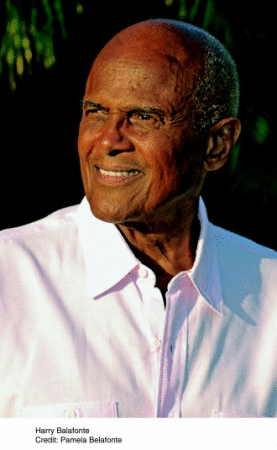
In August, 1964, $70,000 was a lot of money (it would be worth over a half-million today). Harry Belafonte filled a doctor’s bag with small bills, talked his buddy Sidney Poitier into traveling with him, and they boarded a plane from New York City bound for Jackson, Mississippi, then hopped a small Cessna for Greenwood, then drove in convoy to the Elks Lodge where they delivered the secret cash. The money was needed to keep the volunteers on site in Mississippi to encourage the Black population to register and vote. The Klan and the local police wanted the volunteers to go home. Harry and his show business friends saved the day. Turns out, this was not an altogether unusual day for Mr. Belafonte.

When I started reading Harry Belafonte’s autobiography, My Song, I didn’t know much about him. His song makes for quite a story.

No surprise that the started out poor, and became quite rich. What he did with the money, and the power of celebrity, is remarkable.

And how things happened, even more so.

The first few chapters set the scene: an angry young man who discovers the magic of theater, then tries to become an actor in New York City. He talks his way into the Dramatic Workshop at The New School for Social Research, where his classmates include Walter Matthau, Bea Arthur, Rod Steiger, Marlon Brando, Bernie Schwartz (later known as Tony Curtis), and Brando’s motorcycling buddy, Wally Cox. His early acting adventures aren’t going so well, so Belafonte is crying in his beer at the Royal Roost, a Harlem jazz club. Saxophone player Lester Young asks, “How’s your feelings?” and Harry tells him, “My feelings aren’t so good!” and Lester says “Why don’t you ask (club owner) Monte (Kay) to give you a gig?” Kay says “yes,” and Lester gives his young friend a send-off by backing Belafonte’s little intermission gig with his buddies, including Charlie Parker and Max Roach. Belafonte becomes a pop singer, and later, a folk singer specializing in music from his native Caribbean Islands, and story songs. And the list of “firsts” begins–the first Black to play the Coconut Grove in L.A., selling a spectacular number of records (competing with Elvis for the number one records in 1956, etc.), appearing on Broadway and in the movies (he had a deep crush on Dorothy Dandridge, being the first Black performer to host NBC’s Tonight Show (which he did for a full week  in 1968 with guests including Bobby Kennedy, Paul Newman, Bill Cosby, the troublesome Smothers Brothers, and Martin Luther King, Jr.) and as with any celebrity bio, the list of famous names is vast), and tremendous success in Las Vegas, first at the Rivera, then at the then-new Caesar’s Palace, and with that success, friendships with the mob.

And, then, in his words, “One day in the spring of 1956, I picked up the phone to hear a courtly southern voice. ‘You don’t know me, Mr. Belafonte, but my name is Martin Luther King, Jr.” So began a fast friendship and a very deep lifelong involvement in civil rights and social justice. With Paul Robeson as a role model, and Eleanor Roosevelt as an early friend in social reform, Belafonte agreed to perform at Carnegie Hall to raise money for the Wiltwyck School, where “mostly black children who had committed serious crimes but were too young to be incarcerated” were taught. With the Kennedy White House, his reach grew, providing guidance and often serving as a conduit between John, and more often, Robert Kennedy and the movement. He marched. He served in Martin Luther King’s kitchen cabinet, which often met at Belafonte’s Upper West Side apartment in Manhattan (Martin stayed there, too, and had his own bottle of Bristol Cream liquor for relaxing evening chats). He was King’s confidant, a close friend, and a principal fund-raiser for the entire Civil Rights movement. He was deeply involved in the SLCC and SNCC. He worked on the strategy side, and the movement benefitted from Belafonte’s gigantic rolodex and his ability to raise funds or contact celebrities for favors, often granted. He became deeply involved in improving life in Africa, first helping to build a (never built) performing arts center in Guinea, and later serving as a UN and UNICEF ambassador (replacing Danny Kaye), also with an African focus.

He introduced performers to American audiences, and helped Mariam Makeba (already a South African star) to build a powerful career. Much later, as a result of his encouragement, Fidel Castro established a facility for Cuban rap artists. But before that, it was Harry Belafonte who came up with the idea for “We are the World,” getting Michael Jackson and Lionel Ritchie and Quincy Jones involved, then fading into the background until the hard work of distributing funds to Africa was to be done, and he supervised. He helped to free Nelson Mandela, and then served as Mandela’s personal guide for his first visit to the USA, where he answered so many questions about the U.S. Civil Rights movement.

With the help of co-author Michael Shnayerson, Belafonte is a very good storyteller with a very good memory. At 84, he’s candid about his show business successes and failures, attempts to tell his version of the truth about civil rights and entertaining personalities, family matters, and his half century of therapy and shaky love and family relationships (TMI). The showbiz story is fun, but the book shines as Belafonte provides context and backstory about the day to day struggles of the American civil rights story. For that, this becomes an essential accompaniment to the Taylor Branch trilogy about Martin Luther King, Jr., and the equally remarkable (but lesser known) The Race Beat by newspaper reporters Hank Klibanoff and Gene Roberts.

Jack DeJohnette: One of The Best


Jack DeJohnette is one of those extraordinary jazz musicians whose career is largely unknown to those who do not follow jazz. Too bad. (Let’s do what we can to remedy the situation.)

Background: He came up through Chicago’s avant-garde scene, working as part of the AACM (Association for the Advancement of Creative Musicians); played with John Coltrane’s quintet in 1966; then worked with a young Keith Jarrett in Charles Lloyd’s group; then made some history as a drummer on Miles Davis’s Bitches Brew sessions (and on eight other albums from the early 1970s); soon, his circle included John McLaughlin, Chick Corea and Dave Holland. In fact, for 25 years, he has been a part of a trio with Keith Jarrett on piano, and Gary Peacock on bass–their series of Standards albums are extraordinary (watch them here). The complete list of DeJohnette albums and collaborations is a long one; fortunately, Wikipedia maintains a good list. As both a leader and a co-conspirator, DeJohnette’s portfolio includes so many albums, so much excellent work, that it may be difficult to know where to begin.

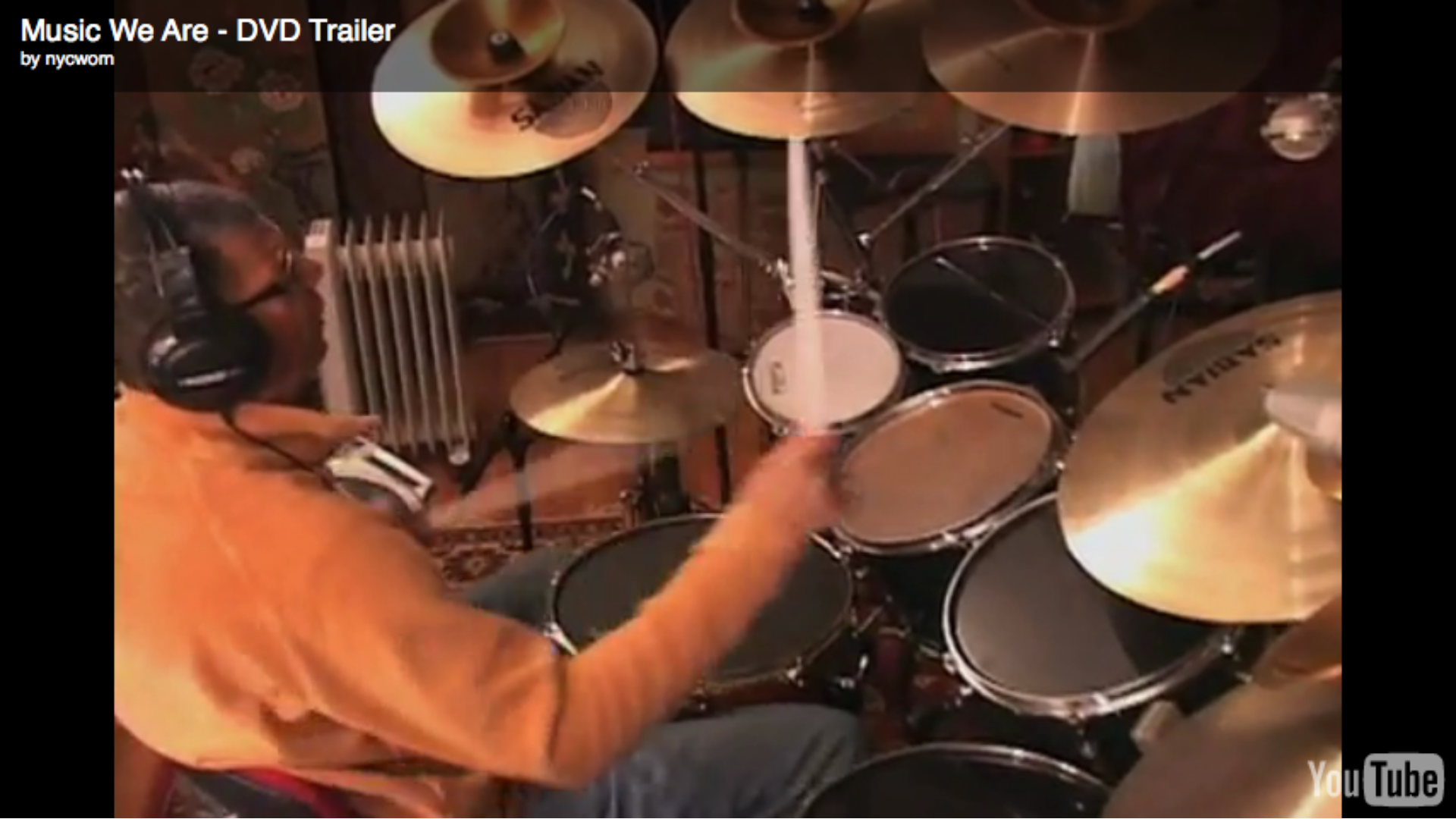
For starters, I’d suggest a 1984 CD called Album Album because it offers both an avant-garde sensibility and easy access for anyone willing to take the time to listen. The interplay between saxophones–the formidable David Murray on tenor,  the lesser known John Purcell on alto and soprano, and a young Howard Johnson on tuba and baritone sax–is consistently inventive, with a relentless flow of interesting ideas, varied textures, and explorations of old ideas made new. DeJohnette is the controlling influence, ever present, often leading the way. Plus, there’s this sense of style, short bursts in lavish settings, that provide the basis for an album released in 2009–that’s 25 years later–called Music We Are.

For DeJohnette, the melodica is an old friend: he played melodica on his first significant solo album, excerpted here on YouTube. On the 2009 release, the melodica provides a winning c

ombination of tango sensibility, bits of remaining avant-garde (sounding more mainstream here, perhaps due to the passage of time), and the kind of atmospheric soundscape that was central to Weather Report’s earliest work. The creative collaboration here is with pianist Danilo Perez, who explains, in the album’s liner notes, that he has been playing with DeJohnette since 1992, and that his first encounter with the famous drummer was listening to DeJohnette playing “some beautiful piano.” John Patitucci plays electric and upright bass. They work together beautifully. That is to say: this is a very special album, one that pulls together so many different jazz styles, so successfully, that it defies categorization. It swings, it makes you think, it makes you dance, it does a whole lot of stuff really well.

In fact, they explain how it all comes together on a 25-minute DVD that comes, free, with the Music We Are CD. This is a solid documentary, explaining the creative process from composition and performance through recording and editing. After watching it, you will wonder why every CD doesn’t include an accompanying “how we did it” DVD.

Hey, I was going to write about the newest DeJohnette CD, Sound Travels, but this article is probably long enough. I will write about Sound Travels soon, I promise.

Nico? On the top of the list?

On newsstands until July 25, 2012

Number 13 on the list of all-time best albums, according to Rolling Stone, is the 1967 Verve Records release, The Velvet Underground and Nico. It’s also the number 1 album on The  Observer’s 2005 list, “The 50 Albums that Changed Music,” which is, in fact, more interesting than the new Rolling Stone standalone $11.95 magazine now on newsstands.

I decided to explore the web in search of other top 500 lists, and their kin.

My very favorite list comes from the British music magazine, The Wire because it discards the arbitrary distinctions and deals with music, not categories. So we’ve got  work by Igor Stravinsky, Bessie Smith, Louis Armstrong, Jelly Roll Morton, Cecil Taylor, Lennie Tristano, Oliver Messaien next to the inevitable Stevie Wonder, Joni Mitchell, the Rolling Stones, the Beatles, and Marvin Gaye.

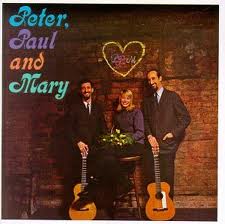
I especially like The Observer list because it acknowledges world music, beginning with their #24, Youssou N’Dour’s Immigres, and because each of the list’s entries are explained in a clever way: “Without this … N’Dour wouldn’t have met Peter Gabriel, there’d have been no African presence at Live 8. In fact, ‘world music’ would not exist as a section in Western collections.” Similarly, the Fairport Convention gets its due for introducing folk music into the British rock scene as #45, Liege and Lief, an absolutely lovely album with a lineup that includes the spectacular Sandy Denny as female lead vocalist. (Similar due should have been paid to Peter, Paul & Mary on the American / Rolling Stone side, as the celebrated Bob Dylan’s career (he occupies RS slots #4, #9, #16, #31… ten slots in all) would have mattered less without the spectacular success of their top ten single versions of Dylan’s “Blowin’ in the Wind” and “Don’t Think Twice, It’s Alright.”

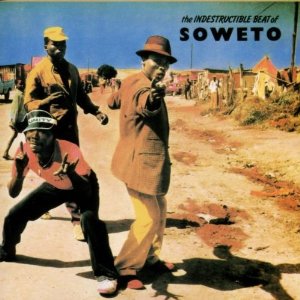
The Virgin 1000 list is fun because it is massive. And, sure enough, there’s that critically acclaimed Nico album in the top 15, with Miles Davis’s Kind of Blue nearby (these lists don’t quite know what to make of jazz, or country, or most of the other genres–no bluegrass, a bit of gospel, etc.), but every list seems to include Kind of Blue and John Coltrane’s A Love Supreme. For those who wish to explore jazz beyond the limited view of Rolling Stone and other mainstream music publications, one good starting place is an Amazon list of jazz recordings, whose top ten includes Ella Fitzgerald, Dizzy Gillespie, João Gilberto, Charles Mingus, and Thelonious Monk. An equally worthwhile list of world music recordings is also found on Amazon, a category mostly ignored by the RS list, save for Bob Marley albums, and, happily, The Indestructable Beat of Soweto, a stunning collection of South African music from the mid-1990s. On that Amazon world music list, I’m not sure that I would have placed Fela Kuti’s adventure with Cream drummer Ginger Baker at #3, but I’m sure glad to see the Bulgarian State Television Women’s Choir hanging out near Ali Farka Toure, Gal Costa, and Huun-Huur Tu, all artists with spectacular albums and names that most Americans have never heard before.

The top 200 albums on RS’s list also confused me because just three of those top 200 were made in the 21st century (Radiohead’s Kid A, Kanye West’s Late Registration, and Arcade Fire’s Funeral), just five if you go up to the top 250 (add: Green Day’s American Idiot and Eminem’s Marshall Mathers LP). Sure, there are the weird choices–that happens with any list like this–so The Zombies’ Odessey and Oracle claims slot #100, and  Quicksilver Messenger Service’s 1969 album, Happy Trails, makes it to #189.

And you know that I’m ending this article with my list of albums that Rolling Stone missed, but should have included:

  • T-Bone Walker – Complete Imperial Recordings
  • Folkways: The Original Vision – mostly songs by Leadbelly and Woody Guthrie
  • The Essential Pete Seeger – or any of the various compilations of his work for Columbia Records
  • Chet Atkins – Guitar Legend: The RCA Years
  • Peter, Paul & Mary – Moving or Album 1700 or Ten Years Together
  • Harry Nilsson – Harry and also Nilsson Sings Newman
  • Larua Nyro – Eli and the Thirteenth Confession, Gonna Take a Miracle, and the spectacular, surprising Time and Love 3-CD collection
  • Blood Sweat & Tears – their second album
  • John Sebastian – Best of, or his first solo album, John B. Sebastian
  • Billy Joel – Piano Man (among some of his best character / story work)
  • Elton John – his first album, as sweet as they come
  • Weather Report – the jazz group’s first album, self-titled
  • Van Morrison – Tupelo Honey
  • The Traveling Wilburys – their first album

Sorry my list isn’t longer or more interesting (kinda heavy on the late 1960s early 1970s–just as the RS was, in fact!). I’m writing away from home. More later on this.

On Our Side

Ani DiFranco marching in DC for Women’s Lives in 2004. Her new album is entitled Which Side Are You On?

I love Ani DiFranco’s commanding version of Pete Seeger’s classic, “¿Which Side Are You On?” Her vocal is strident and scolding, hopeful and demanding. With each verse, she raises important questions, and insists that we, at least, think about the answers. The backup voices, percussion and increasing distortion suggests a dark revolutionary march; she’s in front of the angry crowd, instructing, inciting, leading the charge. She’s terrific.

She’s provocative when she sings about “Promiscuity,” offering a cool lyrical analysis with “promiscuity is nothing more than traveling, there’s more than one way to see the world.” She’s fully exposed on “Life Boat,” a song about a failed mom’s sadness and self-image featuring “red scabby hands” and “purple scabby feet.” She’s political and forceful when she proposes an “Amendment” to provide civil rights to women, a good song that promotes the “right to civil union with equal rights and equal protection, intolerance finally ruined.”

This is Ani DiFranco’s ambitious, righteous, significant side. She is a songwriter and a performer who thinks, and isn’t at all afraid to tell us what she thinks and why.

Then, there’s the other side, the side that confuses me, the writer who takes the easy way out, as on “Zoo,” where we’re treated to “I can no longer watch TV cuz that shit really melts my brain…” and “I go to do my food shopping and all I can see is packaging and a mountain of garbage about to be happening…” Sure, every record’s got its B-sides, but DiFranco’s good work is so strong, I wince when I hear work I wish she had done better. Moreso because her lyrics are both interesting to the ear and smart enough to be worth reading. And, even moreso because her songs quickly become old friends, worthy of replays for weeks on end. The more I listen, the more I like what I hear.

But I do keep coming back to the Seeger song. He plays some banjo at the start of it, but it’s Ani DiFranco’s power that electrifies the song and its meaning. And it’s that song that anchors this album, a nod from one authentic performer to another. Wouldn’t it be fun to hear her perform an album filled with Seeger songs, a female counter to Bruce Springsteen’s We Shall Overcome: The Seeger Sessions, or maybe, even better, an album exposing lesser-knowns who took sides in their time: Phil Ochs, Tom Paxton, maybe Joan Baez, too.

Buy the album directly from the artist’s Righteous Babe label.

Vinyl for sale


As LPs continue to gain popularity, here’s a list of stores that sell used LPs. Fair prices (mostly, around $5, some as low as $1-2, as high as $7-8). Very good to excellent condition (free from noisy scratches, sometimes, a nice sheen). Jacket with significant rips, marks or other degradation. Check your local yellow pages–most urban areas support at least one good used record store. Please comment additions or corrections, and I will update the list from time to time.

Some favorites and recommendations I have not yet visited. Some of these stores stock only vinyl, and some mix it up with CDs:

Princeton Record Exchange – Princeton, NJ

The Bop Shop – Rochester, NY

Record Archive – Rochester, NY

Siren Records – Doylestown, PA (near Philadelphia)

Jerry’s Records Pittsburgh, PA

Stereo Jack’s – Cambridge, MA

Bull Moose Records – Portsmouth, NH

The Sound Garden – Baltimore, MD

Encore Recordings – Ann Arbor, MI

Grimey’s New and Preloved Music – Nashville, TN

Waterloo Records – Austin, TX

Dave’s Records – Chicago, IL

Twist & Shout – Denver, CO

Music Millennium – Portland, OR

Amoeba Music – Berkeley, CA, and both San Francisco and Los Angeles (I haven’t been there in a few years– are the prices still reasonable?)

Jive Time Records – Seattle, WA

One good web source for new vinyl:

Soundstage Direct

Extremely Long Player

1980s: I’m buying lots of LPs.

1990s: I’m buying lots of CDs.

2000s: I’m downloading lots of music files.

2010s: I’m buying lots of LPs.

What’s going on? As record companies contemplate the end of CD production, LPs are gaining popularity. TIME magazine caught the trend early, but failed to mention activity in vast used LP stores (separate blog post, in the works).

For newcomers, or those whose memory was fogged by digital d-rays, here’s what you need to know…

You need a turntable, a tone arm, a cartridge, a stylus, some cables, a phono per-amp, an amplifier, more cables, and loudspeakers. Back in the day, all of this stuff was combined in a “record player.”

Here in 2011-12, it’s more complicated–and that’s without the USB connection to your computer.

One popular, convenient choice is Audio-Technica’s PL-120, available for about $300. It includes everything you need except the amp and speakers. And, you can connect it to your computer to create digital versions of your LPs.

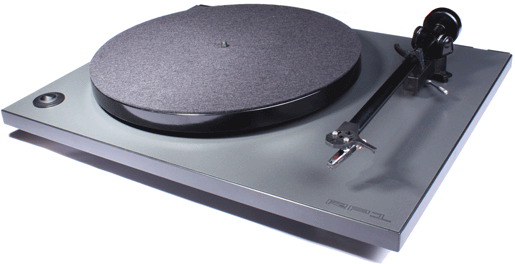
Rega's RP1 Turntable, an audiophile choice.

If you’re willing to invest more money for better sound, the audiophile choice is Rega’s RP-1, which includes a superior tone arm, a better drive system (to spin the platter) and other features that contribute to a cleaner, more focused presentation. The cartridge (which typically includes the stylus) is an accessory–each cartridge design possesses unique sonic characteristics–is a separate purchase. Rega’s RP1 accessory kit costs an additional $200, and includes Rega’s Bias 2 cartridge and several useful accessories.

Audio-Technica's all-in-one, lower-priced USB turntable.

Better would be another favorite cartridge, Audio-Technica’s ML-440. With turntable, tone arm and cartridge in place, you need a phono preamp. At about $150, one good choice is Music Hall’s PA 1.2. I leave the choice of amplifier and loudspeakers to you–the old system stored in your basement or found in a good used stereo shop will be just fine. Audiogon.com is an online store specializing in audiophile equipment, but a local dealer may provide both friendly advice and a place to listen before you buy.

How about a used turntable? Maybe from a reliable high-end dealer, but not from some random eBay source. Used cartridge? I wouldn’t do that. Instead, I would opt for the all-in-one Audio-Technica PL-120. But first, learn from:

Jerry Raskin’s Needle Doctor, which sells all sorts of cool stuff, not just needles!

Audio Advisor

Music Direct

“Absolutely, extraordinarily bad”

That’s how innerfidelity.com editor-in-chief Tyll Hertsens described the sound quality of  Beats by Dr. Dre headphones on the front page of this morning’s NY Times Business section (link below).

Yeah, they’re very heavy on the bass. And they’re best for music where bass drives the musical experience. And sometimes, if you listen loud, there’s distortion. On the other hand, Beats are fashion statement, and people wear them not only to listen, but to be seen listening.

Headphones as pictured (from the company website): $349. That’s a lot of money for a pair of headphones. Industry observers are impressed by the team of Dr. Dre and Monster Cable because they’ve opened a new market where price sensitivity matters less than lifestyle choices.

By comparison, a pair of AKG K240 Professional Studio Headphones cost $199.

If you have a pair of Beats, or manage to try a pair in a store, share your impressions.

http://beatsbydre.com/Default.aspx

http://www.nytimes.com/2011/11/20/business/beats-headphones-expand-dr-dres-business-world.html?partner=yahoofinance

http://www.innerfidelity.com/

Bill Evans: Last & Found

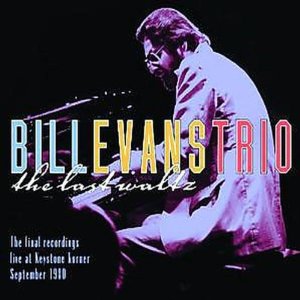
Late in the summer of 1980, pianist Bill Evans played several trio sessions at San Francisco’s Keystone Korner. Marc Johnson played bass. Joe LaBarbera played drums. Evans knew he was dying, knew that these would be his last sessions. Fortunately, the sessions were recorded. Two weeks later, he was gone.

Twenty years later, in 2000, Milestone released a box of eight CDs, one for each evening’s performance. For the past week or so, I’ve been listening to the discs. (You can, too: I just checked, and you can buy them on Amazon. The link is below.)

The performances are wonderful. Evans’ work has always been described as lyrical, poetic, introspective, relaxed, and a kin to European salon music.

Everybody Loves Bill Evans is one of his most popular single albums–perhaps a place to begin before buying the more expensive box. In a review from a long-ago book about jazz, I wrote: “Classic 1958 piano jazz, played by a musician so widely respected that Miles Davis, George Shearing, Ahmad Jamal, and Cannonball Adderley signed their written praises for use as the album’s cover art. Most songs are confident variations on jazz standards like Sonny Rollins’s “Oleo” and Cole Porter’s “Night and Day.” Leonard Bernstein’s “Some Other Time” is also a highlight. Bassist Sam Jones and (unrelated) drummer Philly Joe Jones keep things moving. More distinctive are Evans’s unaccompanied solos, particularly “Peace Piece” and “Tenderly,” both haunting because of the pianist’s light touch, tiny flourishes, patience, and willingness to allow the piano to resonate.”

In fact, I rediscovered the Last Sessions box after hearing one of Evans’ duets with Tony Bennett on the radio. When the albums was recorded, Bennett was just beginning to taste a possible comeback, and it was this album that led to his remarkable second-round success. I wrote: “Bennett was in his mid-fifties when he recorded this album in 1975. HIs voice is a tad husky and a bit light on the high notes, but his endless experience shapes and sells every word of every song. This adds meaning and depth to “Some Other Time,” “Waltz for Debby,” and other titles that had been in Evans’s repertoire for almost two decades. Evans’s accompaniment is perfect, and his solos are magnificent, fitting ever so perfectly between Bennett’s verses (“Some Other Time” includes a particularly fine example). Some songs such as “The Touch of Your Lips” and “We’ll Be Together Again,” are generally romantic and often sentimental.” The album was called The Tony Bennett/Bill Evans Album.

There are lots of Evans albums, and most are still available. But the more I listen, the more I favor the Last Sessions box, partly for its intimate club feel, partly because he speaks directly to the audience from time to time, mostly because the work causes me to sit up and listen because it is so clean, so well crafted, and so compelling. Nicely recorded, too.