Life with Lenny

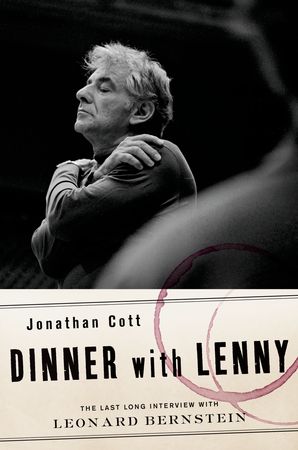
Dinner with LennyFor nearly all of his professional life, journalist Jonathan Cott has written for Rolling Stone magazine. In 1988, he pitched the idea of an interview with Leonard Bernstein to the editors, and a year later, Cott and Bernstein spent twelve hours together at Lenny’s home in Fairfield, Connecticut. They drank vodka (to better enjoy Lenny’s recording of a Sibelius symphony), ate chicken pot pie (Lenny to vegetarian Cott: “Vell, it vouldn’t hoit!,”referring to the old story…)

You don’t know the story? It really happened in the great days of Yiddish theater when the leading actor collapsed onstage during a performance. And a doctor rushed up to help him, but the actor was already dead. And out of the audience came a woman’s voice: “so gif him a little chicken soup!” And the doctor announced that the actor had died…and the woman called back to him, “Vell, it vouldn’t hoit”

For Lenny, it’s all about passion, the great story, the phenomenal breadth and joy of life. That’s the abiding theme of the whole conversation, one that spans, in book form (“Dinner with Lenny: The Last Long Interview with Leonard Bernstein,” written by Jonathan Cott and published by Oxford University Press). Here, he speaks of Alma Mahler–the famous composer’s wife. Cott begins with a question: “I’ve heard that Mahler had to talk to Freud about that problem…”, then Lenny answers:

“You know, Mahler made four appointments with Freud, and three times he broke them because he was scared to find out why he was impotent. His wife, Alma, was then ***ing everybody was was coming by–Gropius, Kokoschka, Werfel, and Bruno Walter, among others–sent him to see Freud. He was twenty years older than she, and she was the prettiest girl in Vienna,–rich, cultured, seductive… She tried to get me to bed. Many years ago, she was staying at the Hotel Pierre in New York–she had attended some of my New York Philharmonic rehearsals–and she invited me for “tea”–which turned out to be “aquavit”–then suggested we go to look at some “memorabilia” of her composer husband in her bedroom. [Laughing] She was generations older than I. And she had her hair frizzed up and was flirting like mad… She really was like a wonderful Viennese operetta. She must have been a great turn-on in her youth. But anyway, Mahler didn’t pay enough attention to her–she needed a lot of satisfying and he was busy writing his Sixth Symphony in his little wood hut all night…”

Cott is a long-time Bernstein fan. The infatuation began when Cott, then eleven years old, on November 14, 1954, watched Bernstein explain Beethoven’s  Fifth Symphony. The the first page of the score had been painted on the studio floor. Musicians, with their instruments, were standing on each stave. Bernstein explained Beethoven’s creative process by dismissing specific instruments from the score–here’s how it sounded with and without this woodwind, that brass instrument–and then, Bernstein conducted the first movement as Beethoven wrote it. Cott “made sure to watch Bernstein’s other Omnibus programs, such as “The World of Jazz,” “The Art of Conducting,” and “What Makes Opera Grand?” At age 15, Cott took Beth (his first “real” date) to see Bernstein’s Broadway smash, “West Side Story.” He became a lifelong fan.

After listening to the solo clarinet that begins his own Columbia LP recording of Sibelius’s first symphony, listening, with Cott, to the clarinet solo that begins the piece, Bernstein announces that the president of Finland had appointed him “Commander of the Order of the Lion,” then “started to sing–humming, crooning, moaning, shouting-out gospel style–as he conducted and danced along to the four movements of the symphony…All the while he added recitative-like interpolations, explanations, words of approval and disapproval, and assorted comments for my benefit about this impassioned, mercurial, wildly inventive work. ‘Listen, child!’ the maestro announced to me. ‘Here’s the Jewish rabbi theme…There’s Beethoven…There’s Tchaikovsky–it’s Swan Lake–and just wait for some Borodin and Mussorgsky later on…Some Grieg (but better than Grieg)…And now comes Sibelius. [L.B. sang and quickly wrote out for me on an old envelope the distinctively Sibelian rhythmic cell we’d just heard…] Now a wind…sighing…And now a pop song…”

So that’s a taste of it. Twelve hours of conversation with one of the 20th century’s iconic figures in music, free-associating with a compadre who was smart enough to keep the conversation going and catch just about all of the references (in fact, Cott called Bernstein for a followup just to make sure he understand everything that Bernstein had said). Lenny is a larger-than-life character in every decade. He was the boy wonder who leaped at the opportunity to first conduct the New York Philharmonic, on national radio, with far less than a full night’s sleep and a reasonably serious hangover. He was the teacher who brought classical music to the baby boomer generation through the clever use of the new TV medium. He was the conductor who performed Beethoven’s Ninth on both sides of what was, moments before, the Berlin Wall. He was the conductor who led the Israel Philharmonic as a celebration of the glory of a new Jewish homeland. He was deeply committed to  Civil Rights and the movement to stop the Vietnam War, despised Nixon, and, as an intellectual, still struggles to understand what happened and why:

That was a very bad time. There was nothing positive about that time. We were living under the thumb of Richard (****ing) Nixon, one of the greatest crooks of all time. But the point I want to make is that anybody who grows up–as those of my generation did not–taking the possibility of immediate destruction of the planet for granted is going to gravitate all the more toward instant gratification–you push the TV button, you drop the acid, you snort the coke, you do the needle. It doesn’t matter that it makes you impotent… Anything of a serious nature isn’t “instant”–you can’t “do” the Sistine Chapel in one hour. And who has time to listen to a Mahler symphony, for God’s sake?”

Cott answers, patiently, “I do.”

Chipping in for Mother’s or Father’s Day

Some ideas, most of them digital:

A turntable. Yes, this may seem a bit retro, but vinyl is in the midst of a wonderful comeback. New records cost more than their CD equivalents, but it’s easy to build a terrific library of good used records by spending about $5 per disc (so you can surprise mom or dad with a whole box filled with favorites!). Assuming you still own some sort of stereo receiver and a pair of good loudspeakers–most likely as part of your home theater setup–you’ll be set. One good starter choice: Audio-Technica’s AT-LP60, which costs less than $75 including cartridge. Online research will turn up rigs costing up to a thousand times as much, but a few hundred dollars will place you on the quality path. To review good choices for several hundred dollars, visit the online store, Audio Advisor.

Apple TV. Before we bought one of these small plastic boxes for my office TV, I wasn’t completely sure what to think. Connect an Ethernet cable to your network, an HDMI cable to your TV, power up, and you can watch Netflix, Hulu Plus, movies and TV shows from iTunes, YouTube, Major League Baseball, HBO GO, and more (for some, a subscription is required). AND you can wirelessly connect your iPhone, iPad or Mac to the screen. For $99, it makes watching TV a lot more interesting.

airstashAirStash. Simple idea: load some movies on a 8GB or 16GB SD card–the ones you use in a camera that are about the size of a postage stamp–then wirelessly connect the small AirStash device to watch movies (or review documents) on your iPad, iPhone, or Android device. It costs about $125. Use it once and you’ll carry it everywhere, as I do.

A good pair of binoculars. If you’re contemplating an outdoor hobby such a birding, Bushnell’s 10×42 NatureView is a good tool to get you started; it costs about $125. In fact, you can buy binoculars specifically designed for safari, sports stadiums, theater, opera (fancy!), sailboating, marine exploration, the list goes on. For more information about binoculars than I have ever seen, visit Best Binoculars Reviews. There are digital binoculars, but optical binoculars remain far more popular than their initial counterparts.

A monopod. Yes, that’s right, the equivalent of a one-legged tripod. Not as steady as a tripod, but not as heavy either, and far more likely to be taken along. Used properly, a monopod can provide enough additional stability to allow your camera or camcorder to shoot with a bit less light, or to with a bit slower shutter speed. The best ones are made by Manfrotto, and Gitzo, and cost about $150-350, but good monopods are available from Slik, Cullman, Oben, Velbon, and other companies. A large selection of monopods and tripods are available from B&H and other online retailers.

Zoom-VideoA ZOOM Q2H2. With cameras and camcorders now built into phones, why buy a small video recorder for $199? Because the sound and the picture quality is outstanding, but the device is small. What do I mean by “outstanding?” Video: 1920×1080, 30p HD. Audio: 24 bit, 96 kHz PCM. Record the results on an SD card.
A Røde VideoMic Pro. Whether you’re using a DSLR or a camcorder to make your own home movies or independent films, this $230 investment will make at least some of your work sound a whole lot better. It mounts directly on the camera’s hot shoe, and its design won’t make your camera (or, most cameras) unbalanced or difficult to carry.

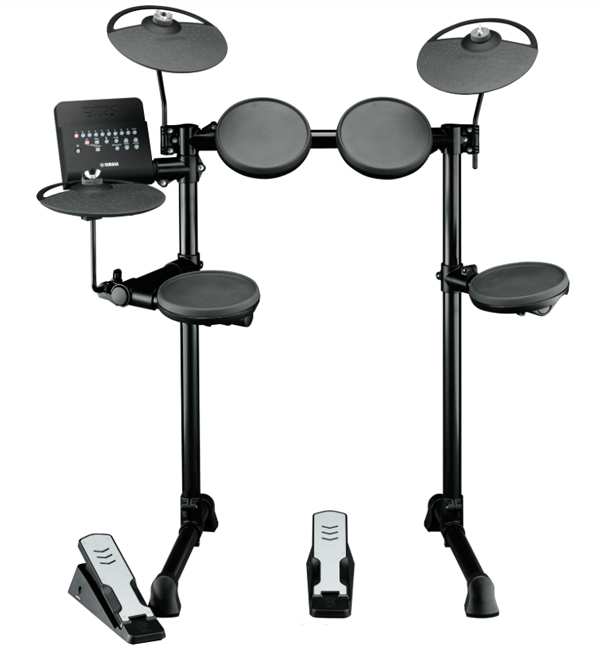
A digital drum kit.. You know you’ve always wanted one! Nowadays, you can buy a decent setup for a few hundred dollars. Yamaha’s Electronic Drum Kit DTX400K costs $500 and includes a 7.5-inch snare, three similar sized toms, a 10-inch hi-hat and other cymbals, and 169 digital voices. You can spend half as much (PylePro’s PED04M), twice as much (Roland’s TD-11K), more. Once again, B&H is a good source, but musicians may prefer Sweetwater.

DrumKit

Enjoy spring, enjoy the holidays!

Donna and The Herd

Donna the BuffaloWestern New York turns out to be one of those creative hotbeds that most people don’t know much about. Ever since 1874, summers at Chautauqua have been filled, for a fortunate 100,000 visitors, with recreation, arts, lectures, and spiritual fulfillment. Buffalo, Rochester and Ithaca have long supported outsized music scenes. And then, there’s Donna the Buffalo.

Donna is one of those bands I’ve heard from time to time, but never really discovered. They come from the Finger Lakes region, and they remain the creative core of the annual Finger Lakes Grassroots Festival of Music and Dance in tiny Trumansburg, New York (this year, the festival begins on Thursday, July 18, and I’m hoping to be a part of it). Donna the Buffalo has been playing and recording together for over twenty years. It’s not too late to join the party.

Truth be told, before I started writing this article, I had never completely listened to a Donna the Buffalo album. For the past month or two, I’ve been listening to a half dozen DTB CDs over and over again. They’re terrific. I really like this band. They’re authentic, deeply rooted, and seem to be having a whole lot of fun. They seem to get the commercial thing–this music is neither experimental nor challenging–but they’ve managed to keep their integrity, to stay just to the side of the commercial craziness of the music business.

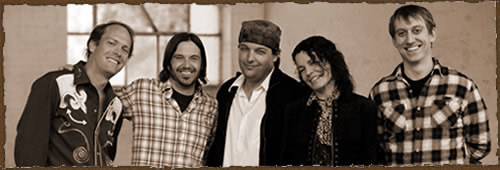
Tara-NevinsOn every album, there’s a great feel for Americana, healthy doses of country and bluegrass, an old-timey sensibility when it feels right, pure form rock n’ roll, bits of soul and funk. It all comes together with a superior sense of how it all ought to be arranged and presented. What do I like about this music? I guess I like the sound of the two lead vocalists: Tara Nevins with her country style on some tunes, and Jeb Puryear with a folk / rock / rockabilly / country style on others, but that’s just the start. There’s Tara’s fiddle keeping time on “Tomorrow Never Knows,” and Jeb’s pedal steel on “Temporary Misery.” I like the way Kathy Ziegler sounds on backup vocals, a nice complement to Tara’s voice. I like the way the music dips into country music and rock, then goes funky.
The work is really tight–I love it when a band is really tight, really together, hitting every musical idea with perfect timing. Most, but not all, of the work is original, the vast majority written by the band’s lead singers, Nevins and Puryear. They tend to write catchy songs with memorable hooks, and after nearly 200 original compositions for this wonderful group, they know how to make it all work. They do touch base with respected influences: an especially handsome version of “Man of Constant Sorrow” pays homage to Ralph Stanley, for example.

Allow me recommend a few of the albums I’ve especially enjoyed.

PositiveFrictionSo far, I think my favorite is Positive Friction, released in 2000. This is album that I seem to play most often, probably because I enjoy Tara’s vocals, the chorus, and the arrangement, the catchy “No Place Like the Right Time” almost as much as I enjoy one of her other tunes, “Yonder.” The latter is both appealing as a catchy tune and as the kind of earnest social commentary that is so much of Donna the Buffalo’s creative approach. Nice lyrical treatment, too; here’s an example:

The waters led to the promised land

Seeds of  greed washed upon its shore

White footprints in the settling sand

Brought the ways of an ignorant man

Silverlined is a newer album, circa 2008, is a more mature work, more subtle, more varied in its instrumentation and soundscape. Puryear’s “Meant to Be,” for example, reminds me of Emmylou Harris’ work on Red Dirt Girl. “I Don’t Need a Riddle” combines Nevins’ more mature voice with a Cajun accordion and an interesting, vaguely funky rhythm track. The songs roll on, but they seem to be more contemporary, more artful, arranged less to please an audience ready to dance than a single listener enjoying a handsome combination of an interesting arrangement, a plaintive voice, and thoughtful lyrics; “Beauty Within” is a good example with Nevins on lead vocals.

DIGIPAK-4PANEL 1TRAY [Converted]A band that counts its time together in decades ought to encourage some solo work, and that’s precisely the approach here. Right now, I’m enjoying Wood and Stone, a 2011 solo album by Tara Nevins. Here, there’s a healthy amount of straight-ahead country (perhaps bluegrass / old-time / country is a more accurate description), as in “The Wrong Side” with some lovely instrumental breaks. Nice version of “Stars Fell on Alabama,” too. It’s all easy, natural, and a wonderful side journey just close enough to her work with Donna to keep fans happy (I’ll include myself here).

After I wrote all of this, I figured I would check on what others have written about Donna the Buffalo. On Amazon, Alanna Nash wrote this:

Donna the Buffalo–hard to categorize, but easy to love–are meant to be heard live. The six-member group thrives on jams and grooves, blending, bending, and veering from Appalachian country to Cajun, reggae, zydeco, folk, and roots rock often in the same song (check out the nearly 13-minute “Conscious Evolution”).

Intrigued, I kept reading:

Frequently compared to the Grateful Dead, DTB evoke Jerry Garcia and pals, both musically and with their rabid, nomadic fan base (the Herd). But in mixing tribal celebration with spiritual, social, and political issues, the band, which travels the country in a 1960 tour bus, recalls so many other hippie-era ensembles.

Not so sure I agree. DTB reminds me of at least a dozen other bands, but the Dead wouldn’t be high on that list. This doesn’t feel like a California band, not to me, anyway. Instead, I’m hearing a distinctly Appalachian vibe here, probably by way of Nashville, with a mix of lots of other styles I associate with Mississippi, Virginia, and other places on this side of the country.

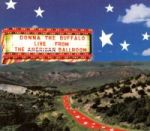
LiveFromTheAmericanBallroomThen again… there’s this live album from 2001, probably a better representation of the band than the individual CDs. It’s a compilation of tour recordings called Live from the American Ballroom. The sixties are alive and well on “Conscious Evolution,” a kind of tribal chant by way of rock n’ roll, world music, Cajun, funk, lots of styles bubbling up to the surface, then fading into the next musical idea. In fact, the whole album is filled with long songs and the kinds of improvisation that filled so many live albums in the 1970s. I think my favorite is “Standing Room Only,” kind of Cajun, kind of a chant, great dance song for a Saturday night.

Those days are gone (but available online and from any well-stocked vinyl-oriented record store), but Donna the Buffalo keeps on going. A few months ago, I wasn’t sure what these guys were all about. Now, I like them enough to recommend them to you. Who knows? Maybe we’ll all meet up in the Finger Lakes in July.

Enjoy.

P.S. Lots of Donna the Buffalo video on You Tube.

Before I Shelve These CDs…

It’s winter, so I’ve spent more time indoors than out. And that means weekend afternoons listening to lots of fine music. Before these CDs get lost on the shelves, allow me to share some recommendations:

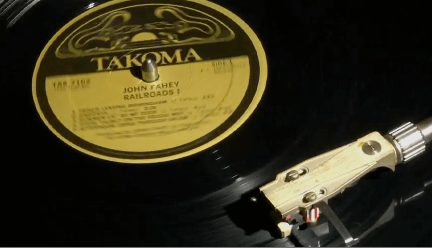
Fahey Takoma

(Yes, I know this is vinyl, not a CD. Please read on…)

John Fahey was an acoustic guitar player with a nearly mythical story. He lived from 1939 until 2001. Beginning in the mid-1960s and until the early 1970s, Fahey recorded a remarkable series of acoustic guitar albums, each firmly rooted in the 1920s acoustic blues of the south, and yet, in their own way, contemporary and wholly original. For some time, these records were hard to find, but nowadays, there isn’t much music that’s hard to find. And in Fahey’s case, there is now a series of wonderful CDs available at popular prices. Two of my favorites are The Legend of Blind Joe Death and America. In time, I will make it my business to listen to most or all of his work. And, along the way, I intend to track down a film produced about Fahey in 2010. It’s called In Search of Blind Joe Death: The Saga of John Fahey, and it’s the source of the image at the top of this paragraph. Click on the picture and you’ll see the trailer.

Karl Jenkins. Be sure to search on his image on the web. This is a very conservative portrait of a very colorful guy.

Karl Jenkins. Be sure to search on his image on the web. This is a very conservative portrait of a very colorful guy.

When I was visiting the UK this past year, I stopped by Blackwell’s Music in Oxford and requested listening recommendations. I left the store with several Oxford choral CDs, and with a three-CD box by composer Karl Jenkins entitled The Platinum Collection. According to his website, he is “the most performed living composer in the world.” Who knew? I missed him completely, and again, I’m only now getting up to date. Jenkins came up as a jazz guy, playing at the famous Ronnie Scott’s club in London, then forming the popular jazz group Nucleus with Ian Carr, and then, as part of one of my then-favorite British progressive bands, Soft Machine. After a period of writing music for commercials, he composed Adiemus: Songs of Sanctuary which is included in my box set. Like the other two discs, Adiemus combines a contemporary approach to choral music, a wide range of instruments (classical, jazz, rock, whatever works best), and a wonderful range of energy from contemplative to soaring. At first, I’ll admit that I listened to Jenkins as background music (bad idea). This is music that requires full-throttle listening, preferably on a top-notch sound system with the widest possible dynamic range, accuracy, and superior reproduction of vocal parts. Jenkins can be a crowd-pleaser in the sense of, say, music composed for the Olympics, but I found more nourishment when I listened carefully, and allowed myself the time to pay attention to these works in their complete form.

I’m equally intrigued by the Kronos Quartet, a forward-thinking classical ensemble I’ve been following for decades. I missed out on their 2009 2test-600x0release, Floodplain, and now that I’ve got a copy, I’ve been playing it a lot. It’s an album of music from various nations and cultures located in and near the Middle East, mostly instrumentals, some traditional, played with the deep knowledge that this music was composed in the part of the world where “human civilization was born and first flourished.” There is respect and beauty. Respect because this is not Middle Eastern music. Instead, there is “Lullaby,” which is Black Iranian but affected by other cultures, and there is “Wa Habini” a Christian devotional song sung on Good Friday, part of the sacred tradition of Lebanon. “Tew semagn hagere” (Listen to Me, My Fellow Countrymen) comes from Ethiopia, and it is played on instruments constructed for Kronos by their designer, Walter Kitundu, who hails from Tanzania. The album opens with a hit song, from the 1930s, from Egypt: “Ya Habibi Ta’ala.” In fact, many of the songs were hits long ago. This is music you’ll want to buy on CD: the liner notes add texture and important background to the listening experience.

Garth KnoxGarth Knox’s 2012 release, Saltarello, was released by ECM New Series in 2012, and it, too, has become a favorite. Knox performs on viola, viola d’amore, and fiddle. As he performs an interesting selection of old and very new music, he does so with the attentive accompaniment of Agnes Vesterman on cello and Sylvain Lemetre on percussion. The repetoire here begins with the early British composer Henry Purcell (“Music for a While”) and continues on the old track with Hildegarde von Bingen, and John Dowland. I like the idea that this music is contrasted with work by, for example, the contemporary Finnish composer Kaija Saariaho, and that Knox manages to pull it all together as a cohesive whole. The Saariaho piece is challenging, extreme in its special effects. To be honest, I had to check the unfamiliar name–Guillaume de Machaut–to determine whether he was an old composer or a new one (he lived in the 1300s, and was equally famous as a poet whom Geoffrey Chaucer apparently admired).

300px-Machaut_1

Well, I found this tapestry on the Wikipedia site for Machaut. Clearly, he is not a contemporary composer.

Andy Sheppard

Andy Sheppard (click on the link for a bunch of neat pictures of Sheppard at play.)

Also on ECM, and also from 2012, Trio Libero is an album that I’ve enjoyed time and again. It’s one of those albums with a distinctive series of opening notes that sounds wonderfully familiar, and causes me to follow the lead line all the way through the first song (“Libertino”). Here, I’m listening to a terrific saxophone player named Andy Sheppard (he also plays soprano sax). Sheppard’s solo leads to a long, comfortable bass solo by Michel Benita (who is a major presence throughout, moreso than one typically finds on albums by a sax trio). As I said, I’ve listened to this album quite a few times, and now that I’m listening while writing about it, there’s a smile on my face. It’s just really good jazz. It’s quite varied. There’s a nice tender rendition of “I’m Always Chasing Rainbows” on the third track, a Weather Report-like texture entitled “Space Walk, Part 1.” And, the more I listen, the more I come to realize how much I enjoy listening to a well-played soprano sax. This is one of those albums where everything comes together beautifully, and I encourage you to be among the (inevitable) few who come to enjoy it as much as I do.

Okay, everything on this list now gets placed on the shelves, making room for the new, or, at least, for music that’s new to me.

Film with Feeling

Alex Kirke is a director with a keen interest in the cinematic experience, and, as it turns out, an equally keen interest in the measurement of biophysical responses to storytelling. Inevitably, this led Mr. Kirke to the development of software that would read sensors attached to the bodies of audience members. The sensors provide real-time feedback on muscle tension, perspiration, heart rate, and brain wave activity. As the software collects the data, it compiles the results, and, in accordance with the director’s wishes, the film automatically branches from one audio-visual file to another.

By using this technology, a director can amplify or dial-down emotional impact, shorten or lengthen the story, cut to another sequence entirely, and so on. Of course, all of the branching must be worked out before production begins because each sequence must be produced, edited, and integrated into the file management system.

Says one of the actresses:

It will be quite interesting to know, so well, how the audience reacts. The ending they choose reflects their reactions.

Not just the ending, of course. Anywhere in the film, the story can change course. So, too, can the soundtrack. Or any visual or visuals. In theory, there may be a large number of branches (for the professional, this becomes an obsessive, difficult way to tell a story, but it’s interesting to consider the possibilities). And, in theory, the sensors could be connected to the seats or the armrests throughout the theater, but that’s all in the future.

For the present, do watch the video. It’s rough, more of a professorial demonstration that any sort of slick production, and, if time permits, have a look at Mr. Kirke’s blog, too. There, he covers an interesting range of technical innovations related to entertainment and storytelling.

Best in Class

I guess I ought to begin with the obvious question: what is common thread that connects Louis Armstrong, Bob Dylan, Johnny Cash, Michael Jackson, Bruce Springsteen, Barbra Streisand, Frank Sinatra, Leonard Bernstein, Aaron Copland, Adele, and Beyoncé?

The answer is Columbia Records. Founded in 1888, it’s probably the oldest record label. Along with sister labels Epic, Okeh, and a few others–set the standard for the U.S. recording industry for half of the 20th century. This story, now in book form by Princeton history professor Sean Wilentz, is, well, epic. The book is called 360 Sound: The Columbia Records Story (the term “360 Sound” refers to a tagline associated with Columbia’s stereo LPs).

220px-BertWilliamsPhotoPortraitWithCigarette

“(I Ain’t Got) Nobody” was one of the many songs that made Bert Williams famous. He was among the first non-white stars in the United States.

After some novelty acts, Columbia establishes a firm footing with vaudeville superstar Al Jolson; the great singer and comedian who later starred in the Ziegfield Follies, Bert Williams, and one of the fathers of country music, Emmett Miller. A short time later, John Philip Sousa joined the label (at the time, his full band could not be recorded due to early microphones, so the sound was thinner than it was in live performances). Add W.C. Handy, and an equally impressive range of classical performers.

Columbia became a major force in “race records,” recognizing, early on, White consumer interest in Black performers. From this era came Bessie Smith, Louis Armstrong, Duke Ellington and artists that those familiar with the genres continue to buy: Blind Willie Johnson, for example. There was country (and western) music, too: Gene Autry, Bob Wills, Roy Acuff. Next came jazz pianist Art Tatum, Cab Calloway, and Count Basie. And Benny Goodman and Bing Crosby. And gospel music: The Golden Gate Quartet, Mahalia Jackson. And that’s all before the organization really found its way.

(As I said, this is an astonishing story. It’s wave after wave of the superb artists in every genre, all working, at one time or another, for the same label, or cluster of labels.)

So here comes the 1950s with Tony Bennett, Leonard Bernstein, West Side Story, My Fair Lady, South Pacific, Glenn Gould, Doris Day, Rosemary Clooney… and almost no rock n’ roll. Mitch Miller–a company executive and in his own right, a very popular recording artist as a leader of a singing group–was against the whole idea. Still, they were strong in every other genre–classical in particular, and jazz. It was here that Miles Davis recorded most of his best work, with Thelonious Monk, Dave Brubeck, and so many others. Unfortunately, although quite classy, there wasn’t much profit in classical, jazz or (most) Broadway recordings. Country was better: Flatt and Scruggs, Lefty Frizell, The Stanley Brothers, and eventually, Johnny Cash.

Along the way, there’s some tasty back-and-forth between Columbia and its long-time arch-rival (in just about every musical category), RCA Victor (which, in its golden age, was owned by RCA, which owned NBC to Columbia’s CBS). The two companies do their best to mess with the other, stealing artists, introducing competing record formats (the LP came from Columbia and the 45 came from RCA).

For a while longer, they stick with easy choices, and steer clear of the growing revolution: they sign Barbra Streisand, Andy Williams, Johnny Mathis (who sells an insane number of records), and Robert Goulet.

Columbia RecordsAnd then, it happens. They sign Bob Dylan. Everything begins to change. Simon & Garfunkel come next. Suddenly, the cool jazz label, the reliable country label, the powerhouse classical label, becomes the unbelievably great rock label. The Byrds are covering Dylan songs and selling lots of Byrds and Dylan records. Donovan is signed to Epic, and debuts with a hit (“Sunshine Superman”). There’s a new executive in charge (much of the whole story is told through the eras of individual executives). His name is Clive Davis, and now, Columbia is the place to hear Janis Joplin and Santana, Sly and the Family Stone, Leonard Cohen, Blood Sweat & Tears, and Chicago. They sign Earth Wind and Fire; Johnny Cash records an album at Folsom Prison; Monk and Miles are selling lots of jazz, with Miles into fusion, and appealing to rock audiences. And then, by the mid-1970s, there’s another wave of newcomers: Billy Joel, Aerosmith, and Bruce Springsteen. A great story is becoming better and better.

And then, another wave, this time bringing Willie Nelson to the company and making him a star. The jazz story continues to heat up with Weather Report, Herbie Hancock, and a newcomer from the young lions of jazz, Wynton Marsalis. On the classical side, Yo-Yo Ma is becoming a star.

All of this is one company, basically one record label. Of course, the story continues through hip-hop, Ricky Martin, an aging Bob Dylan, Michael Bolton and Lauryn Hill, Destiny’s Child and John Mayer. Chris Botti and Joshua Bell.

Yes, they’ve been bought and sold, multiple times (now owned by Sony). For me, the best part of the journey (oh yes, Journey was one of theirs, too), the best part of this coffee table book, is the era that picks up in the early 1950s and winds down about twenty years later. That’s when CBS was a very special place, in part because Columbia was just about the coolest record label around. It’s a good story, fun because of the memories, remarkable because of the achievement. And, I think, the best way to experience the era is on the vinyl records that Columbia invented, most of them now available, used, for about $5 at just about any good used record store.

columbia labels

So, I’ve been thinking about other labels with equally rich histories. The Warner Music Group includes Atlantic, Elektra, Nonesuch, and Warner Bros. Records. Historically, Atlantic’s strengths have been R&B and rock; Elektra’s have been folk and rock; Nonesuch has evolved into something like a (smaller) modern day Columbia Records with interesting artists, Broadway, classical, and international; Warner Bros. is, more or less, a popular music label. The crazy history of the labels that became Sony Music now encompasses Columbia’s long-time competitor RCA (Victor) as well as the Columbia labels; in just about every category, from Broadway to classical to country, RCA and Columbia were head-to-head, and although I want to write that Columbia did it just that much better on the rock and pop side, I’m reminded of the Jefferson Airplane (less so, the Starship), John Denver and others from the heyday (none were Dylan or Miles Davis–so maybe Columbia did do it better). In classical music, the labels now assembled under the current Decca Label Group, now part of Universal, include London/Decca and Deutsche Grammophon, but neither attempted the breadth of genres associated with Columbia. Similarly, the likes of Verve, A&M, and other Universal labels, lacked the grand ambition (and, probably, the monies available from CBS). EMI’s story is more complicated, and although its U.S. division, Capitol Records, released many pop and rock records, and some Broadway, it never established the breadth of material available from Columbia.

So, in terms of wide-ranging, deep-repetoire, and long history, it’s Columbia Records and its best competitor, RCA (Victor), but I urge you to have a look at all that Nonesuch has done, too.

A Bridge Called Feinstein

Nearly a century has passed, but the music lingers, and, I hope it always will. “Someone to Watch Over Me” is an absolutely lovely song. It was written 13 years short of 100 years ago, in 1926, for a Broadway show called “Oh, Kay,” a musical about bootleggers, an idea that seems no less distant. By any measure, “Someone to Watch Over Me” is an old song. And yet, the list of singers who have performed it make me question that 1926 date: Keith Jarrett, Barbra Streisand, Willie Nelson, Bennie Wallace (in fact, I bought the album last month, and “Someone” is the title track), Elton John, Sinéad O’Connor, Susan Boyle, Marcus Roberts…the list goes on.

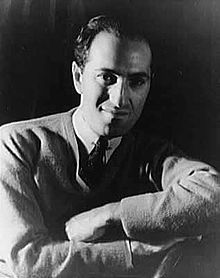
George GerhswinWhen he wrote the music for “Oh, Kay,” George Gershwin was 28 years old, That was seven years after his first hit song, “Swanee,” sung by the era’s superstar, Al Jolson, and if not quite the standard it was for half of the 20th century, it remains a classic. The same year that he first recorded another song that has run the better part of century, “Fascinatin’ Rhythm” with another pair of very famous stars, Fred and his sister/partner Adele Astaire. By that time, Gershwin had already composed, and become justly famous for, a more serious work commissioned by bandleader Paul Whiteman called “Rhapsody in Blue,” written in a form that wasn’t quite classical, wasn’t quite jazz, and wasn’t quite what we would now call pops. Still to come was Porgy and Bess, Hollywood, and in 1937, at age 38, the brain tumor that ended his life. By that time, George Gershwin was a national treasure.

Time passed. There was a war, then significant changes in the nation’s culture. The old songs, well, they didn’t matter so much any more. Sure, they were played on the radio, but newer forms of entertainment eclipsed many of the first half century’s great success stories.

And that’s why, when most people met a teenager who was crazy for the old songwriters and the old 78 rpm records, they didn’t make much of his hobby. In time, the collection required serious shelving (78s are quite heavy, and quite fragile), and the collector was learning the names of the composers who wrote those songs. Eventually, he made his way to Los Angeles, where he haunted the used record stores in hopes of finding treasures. He found a collection of records by Oscar Levant, a Gershwin friend, which led to Levant’s surviving spouse, which led to a dream job.

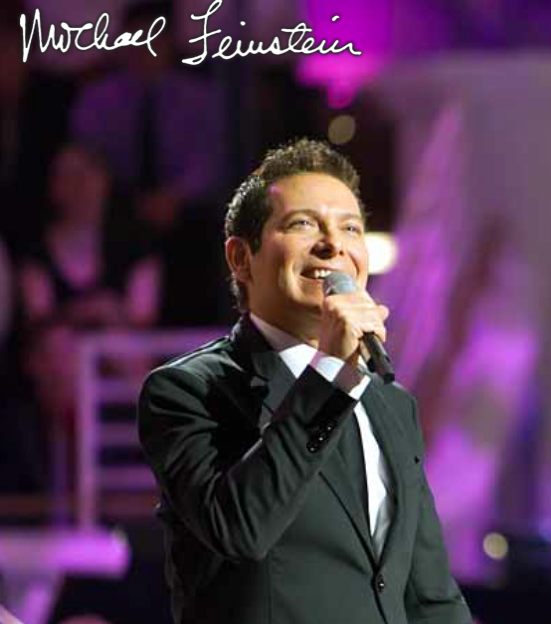
Ira Gershwin was looking for a new secretary–his long-time helpmate was dying–and our young hero got the job. He astonished the aging lyricist with his encyclopaedic knowledge of the music of the 1920s and 1930s (and 1940s, for that matter), and his astonishing depth of detail about all things Gershwin. And that’s how Michael Feinstein, born September 7, 1956 became the world’s greatest expert on Ira Gershwin, born December 6, 1896 (and on his brother, George, born two years later, in 1898). But Michael Feinstein had just begun.

Michael FeinsteinBy the mid-1980s, Michael Feinstein was recording these songs, breathing new life (and a great deal of love) into the old records. And, because he had researched, catalogued and organized the entire Gershwin library, his work combined the verve of a dedicated performer with the wisdom of an academic. This led to recordings of music by Irving Berlin, then more Gershwin and more by other songwriters (sometimes, singing alongside them). In short, Michael Feinstein built a bridge from gentlemen songwriters born at the turn of the last century, and generated enough excitement to build a career for himself, energize any number of other performers to pay attention to this music, and then, he opened a cabaret so that the music could be heard live.

And then, he wrote a book about all of this, about his adventures in with the Gershwins, his love affair with the music, the history of the era and why it resonates today, and lots more. The book includes a CD filled with a dozen tracks, some rare, all interesting. It’s there to make absolutely certain that everybody who owns the book will have the opportunity to enjoy the music.

One small warning: Mr. Feinstein is not lacking in enthusiasm, and he is not lacking in detail. This coffee-table book is also a longish read, perhaps something to be enjoyed by reading a chapter every once in a while rather than reading it all through, in a single sitting, as if it was a novel or a traditional biography. It’s more than that, and so, it’s got an unusual title: The Gershwins and Me: A Personal History in Twelve Songs.

Gershwin book

It’s a Clean Machine

Spending too much time in the dusty bins of used record stores, I often buy “perfectly good” LPs for less than $5. It’s a bargain: terrific old Leonard Bernstein (or, if you prefer, Jethro Tull or Blondie) recordings for far less than their CD equivalents would cost, and far more fun than their digital file equivalents.

The Spin-Clean is a cost-effective ($79) way to bathe a vinyl record.

The Spin-Clean is a cost-effective ($79) way to bathe a vinyl record. Click on the picture for more infromation.

But old records are often dirty. And they’re not always easy to wash. For one thing, you don’t want to wet the paper labels (one on each side), so submersion is out of the question. This leaves the listener in the decidedly odd position of either dipping the vertical LP and spinning it in a trough, or wiping it ’round, which is both awkward and potentially damaging.

So what’s a listener to do?

Buy a cleaning machine.

There are several kinds. One involves a bin, and looks kinda awkward. Most people use a rectangular box with a vacuum cleaner inside (seriously!). In this category, the long-time industry leader is a company that I recall from decades ago: Nitty Gritty.

Nitty Gritty 1

The Nitty Gritty 1.0 is the lowest priced product in the company’s line. It contains a vacuum cleaner.

You’re looking at the least expensive Nitty Gritty machine, the Model 1.0. A quick tour helps to explain what this cleaning machine does, and suggests the options available on the more expensive models.

On the left, the low cylinder is, in fact, the top half of a sandwich. Lift the wooden part and you’ll find that it’s the top pad, and that the bottom pad is on the machine. Place the vinyl record in-between, and the pads cover the top and bottom labels. The rest of the record is exposed. And that takes us to the slot in the middle of the machine. It’s covered in velvet, because this is the place where the vinyl is exposed to a powerful vacuum cleaner that sits just below the slot. With this model, you hand-turn the LP by finger-control (there’s a slight indent in the top pad, just about visible in the photo). The remaining items are a wet solution (see below) and a small brush. And, over on the far right, there’s an on-off switch. For more on how it works, click here.

Does it work? Yes, the system works really well. A record that’s dusty will be cleaned, and much of the surface noise will disappear. Results are much improved with the application of the Pure 2 solution; 16 ounces will keep most listeners going for a year or two.

The Nitty Gritty products are well-made, and so, they’re not inexpensive. Budget $500 plus shipping and you’ll be fine with an oak-grained model or something equally attractive. For twice the price, the record turns automatically and the fluid is dispensed by the machine, not by hand. The product line is explained on Nitty Gritty’s website.

Is it worth the money? I guess that question can only be answered “yes” by someone who (a) frequently listens to vinyl; (b) believes that a $500 turntable is in the inexpensive / affordable range, and (c) has invested in a full-scale, grown-up stereo system. If you’re among those people, this would seem to be an essential accessory in an analog world, one that’s often overlooked, in part, because few people seem to know that such a contraption exists. It does, and for serious listeners, it’s a good investment.

For even more information, watch this video from someone who cares deeply, and knows a lot, about keeping records clean.

It’s official: everything has changed.


I just reviewed an astonishing PowerPoint from Mary Meeker at Kleiner Perkins. It contains a thorough explanation of our rapidly changing, and changed, world. From mobile phones and to the Rose Bowl, newspapers to cash registers, borrowing and lending money to door locks, hiring to education, our contemporary wave of technology  has transformed the world.

The deck is 88 pages long, and worth all of the time you will spend thinking about it today, this week, this year.

I will add to this post tonight. Right now, it’s off to work, transforming an old TV station into something entirely new. (Thanks, Mary, for the encouragement. And for the pile of useful, persuasive data.)

Superior Gift: Piano CDs by Corea, Jarrett and Lubimov

Yeah, it took me a while to understand what I was listening to, or two, and why I kept playing a pair of paired discs time and again. (Okay, sorry, I will slow down.)

For much of this past month, I have been listening to passionate, impressionistic performances by several extraordinary piano players (plus one more).

This sequence of listening began when I attended a wonderful performance by Chick Corea and his friend and frequent collaborator, Gary Burton. They’ve been on tour with the Harlem String Quartet, presenting a remarkably consistent, and now quite differentiated, version of late 20th and early 21st century jazz. Corea is a tireless composer, a man filled with ideas, a creative person never satisfied with one course of action. Like Yo-Yo Ma, Bela Fleck (also a Corea collaborator), and others who have been performing for several decades, Corea has one career with Burton, another as part of a jazz trio (with Christian McBridge and Brian Blade), and still another with Bobby McFerrin. The Burton performance was stunning, perfect in its way, endlessly interesting, and sufficiently inspiring to make me want to see Corea in his other formats.

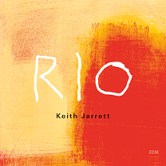
Which leads (at long last!) to the focus of this particular blog post, whose initial conception did not include Corea at all. Instead, it was to focus on Keith Jarrett, whose career has been somewhat more conventional in that he plays fabulous solo concerts–the newest being Rio, which was recorded in Rio de Janeiro–and as part of a trio with Gary Peacock on bass and Jack DeJohnette on percussion. There are probably two dozen Jarrett solo recordings, and every one is similar, but in its way, exhilarating, original, compelling, and consistently inventive. This is probably one of the best of the lot, but there are so many fine examples, it’s difficult to choose (and you certainly won’t go wrong if you purchase any of them). Rather than recommending one or two, I think it’s wiser for me to point you to a page that lists all of them on the wonderful All Music Guide site.

Jarrett and Corea worked together in Miles Davis’s band in 1970–a very long time ago in musical terms. It’s fascinating to listen to those nearly-a-half-century-old recordings, those initial flights into a fresher, freer, easier, less structured form of jazz and to consider the stops along the way, a way that has been so elaborately documented on some many recordings (for the most part, excellent recordings, with only the occasional excursion into dubious territory).

Now I find myself comparing Jarrett’s RIO with something much older, but very much from the same spring. Here, the composer is Claude Debussy. The pianist is Alexei Lubimov, sometimes playing his Bechstein beside another Alexei, in this case, Alexei Zuev, on his Steinway piano. Perhaps it’s the elegance, the presentation, the combination of control and fireworks, the seriousness… or the extraordinary skill that compels me to consider Debussy and Jarrett’s recordings as ideal companions for an extended listening session on a gloriously rainy or snowy afternoon. The latter is not new music–it predates Jarrett by more than a century–but the sense of freedom, the phrasing, the flights of fantasy and ecsstacy on, for example, “La puerta del vino,” sounds more like 21st century jazz to my ears than it sounds like traditional classical music.

At a certain point, writing about music really is like dancing about architecture, so I’ll stop here and not embarrass myself with a flurry of comments about Debussy’s individual preludes and how nicely they’re carried off by Lubimov on Preludes.

As the music begins to fade, and friends are pulling up to the house after a long drive (they’ll be hungry), allow me to simply recommend a pair of very good piano recordings, each a pair in itself (each is a 2-CD set), perhaps the ideal gift for just about anybody willing to take the time to really listen. Both packages are excellent.

Let me end with a note to myself: I need to learn a lot more about Alexei Lubimov, and spend time listening to his past work. He’s a new name for me, and after of month of listening to him play the piano, I am beginning to understand the many internet claims… he may be one of our contemporary keyboard musicians. I suspect Lubimov deserves a proper article of his own. Getting to work right now…