 New CD + DVD set: “Jazz & The Philharmonic,” recorded in Miami, dozens of performers doing a lovely job with jazz, classical (with a modern twist), traditional music, beautifully produced and engineered. You may have seen it on PBS—last February—but if you are among the many millions who missed out, this is a gift that you might consider for this year’s holiday season. Notably, it is one of the last recorded works supervised by Phil Ramone, whose list of credits is among the most impressive in American music history.
Want a sample? Try “Simple Gifts,” a theme that you will recognize from Aaron Copland’s “Appalachian Spring.” The performance (Mark O’Connor on violin, Dave Grusin at the piano) and the recording are spectacular.
 Also on the web page (click on above), a straight ahead performance of Johnny Mercer’s “Autumn Leaves” by Bobby McFerrin with some solid scat. (Later, on “Soloings,” McFerrin plays with his voice and the audience.) Backing McFerrin on “Autumn Leaves” is Grusin, Chick Corea, and The Henry Mancini Institute Orchestra (they are the “Philharmonic” in this concert). Corea returns for “Spanish Suite,” based upon the familiar classical work by Joaquin Rodrigo, “Concerto de Aranjuez.” It’s easy to forget how terrific Corea can be—this is a lovely setting for his piano work. The wonderful trumpet player Terence Blanchard (he is the Mancini Institute’s Artistic Director) contributes an interesting duet with vocalist Eric Owens on Bach’s “Fugue in C Major.,” then joins in on “Spanish Suite,” and later, on “Solfeggietto” by C.P.E. Bach. It’s great to hear this work performed with soloists and a full orchestra—reminds me of the good old days when the Boston Pops showed up with celebrity soloists on public TV.
For me, this concert was an introduction to a modern classical piano player named Elizabeth Joy Roe. She performers with Blanchard on “Solfeggietto,” and with Mancini director Shelly Berg on a piano duet version of Gershwin’s “The Man I Love.” Curious, I looked her up. Roe records classic music for Deutsche Gramophone, but she’s unique because she often performs duets. Not just any songs—an intriguing combination of Michael Jackson, ragtime and classical. Her version—on her website, not on the Jazz & The Philharmonic CD/DVD includes an all-out duet with Greg Anderson on Jackson’s “Billie Jean.” The video is as much fun as the piano work. Watch this (now)! She’s someone I want to know more about.
Okay—sorry—easily distracted by great music—back to the main story. What have I missed? Actually, one track, and it’s terrific. It’s called “Mountain Dance,” and it’s performed by Grusin and O’Connor with the Mancini Orchestra. Why terrific? It feels great, especially on a fine-tuned stereo system where the bass is as clear as the high notes. Again, a tribute to a recording that sounds much better than most.
There’s more on the DVD—a second McFerrin “Soloings”, another piece by Chick Corea entitled “Armadas Rhumba,” and, why not, a rousing version of “Also Sprach Zarathustra” (you know, the “2001: A Space Odyssey” theme).
What fun.
 Geri Allen is one of those extraordinary jazz musicians whose influence runs wide and deep, but somehow, has not become as well-known as it ought to be. She’s a pianist with a resume that begins with a serious educational foundation: a master’s degree in ethnomusicology that has served her well (easy for me to see this because I’m approaching her life’s work some 35 years into a very good story). Her professional work begins with Mary Wilson and the Supremes in the early 1980s, and Brooklyn’s
  The awards began to roll in. Allen was in and out of the remaining avant-garde, which sounds much less radical now than in 1996 when she recorded “Hidden Man” with Ornette Coleman’s Sound Museum. In fact, by 1999, she was sounding very comfortable in a commercial setting, recording her popular CD, The Gathering, with Wallace Roney on flugelhorn and trumpet, Robin Eubanks on trombone, Buster Williams on bass, and Lenny White on drums, and others whose names are well-known from mainstream jazz records. A 2010 record, “Flying Toward the Sound,” made it to the top of many critic’s best-of-the-year lists.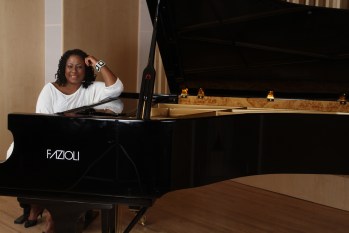
 Geri Allen has been one of those artists that I’ve wanted to know more about. Now that I’ve written this article, now that I’ve done some concentrated listening, I’m realizing that I am just beginning to understand what she’s all about. The latest album is elegant and wonderful, soulful and reflective, sophisticated and consistently interesting, but my collection is now woefully incomplete. I have listened to the two predecessors in the trilogy, but I want them for my very own. The same is true for the work she did with Paul Motian and Charlie Haden, and for the work she did in 2010 with her group, Timeline.
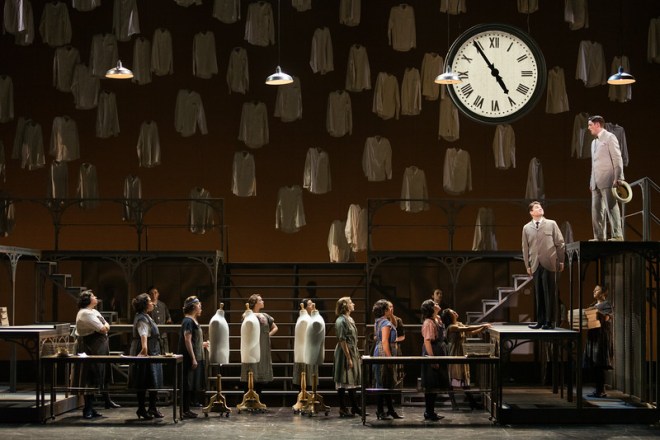 The next character in what turned out to a fascinating Saturday night at the Glimmerglass Festival just north of Cooperstown NY is Tobias Picker. If you don’t know the name, you should. “An American Tragedy” is his fourth opera (and one of several he has written with Gene Scheer’s libretto—you may know


 In 1969, most people, even those who were following the progression from jazz to fusion, hadn’t yet heard the work of a British guitar player named John McLaughlin. That was the year that he recorded his first album, “Extrapolation.” At the time, it was wildly experimental, but as I listen to it in the background while writing this article, it’s really delightful, gentle, meditative, not at all explosive. McLaughlin is a gifted guitar player and composer. He shares the stage with an another young British musician, a man who plays the somewhat unusual combination of soprano and baritone sax. His name is John Surman. At the time, Surman was already recording on his own for the
 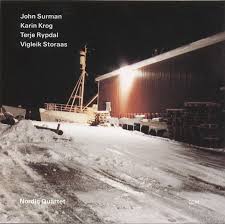 Traces, there is a deep female voice whose sound more closely resembles an instrument than an upfront vocalist—and she’s singing phrases that feel more like poetry than lyrics. She was not credited as a singer, but instead, as “voice.” Her name is Karin Krog.
 Earlier this year, late at night, I decided to do a Google Search on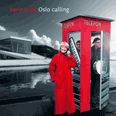
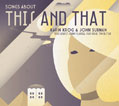
 Of the three CDs, the most interesting is also the most experimental, a cycle of songs originally composed for a 2010 jazz festival. It’s called “Songs About This and That,” and I like it because it recalls my earlier interest in their exuberant experimental side, but places it in a more artful, more carefully arranged setting. There is a sense of open time and space to explore, to allow for long lines, an ease with the maturation of Karin’s voice. On this CD, I think my favorite track may be “Cherry Tree Song” because the poetic lyrics wind so gracefully around John’s baritone sax and bass clarinet, a warm combination of electric guitar, vibraphone, and John’s bass recorder. In fact, I jotted down some other favorite tracks, and found the list was too long to manage, but I will mention the vibe solo that begins “Moonlight Song” and Karin’s waking-up voice, looking backward on memory. Wrapping up an article I’ve so enjoyed writing, I happened to notice that Karin’s credit on this CD is what it was so many years before, not “vocals” but simply, “voice.”

 There was a wonderful innocence about Harry Nilsson in those days. Like
 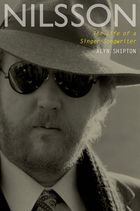 The early days, and the dreadful slide into substance abuse, crappy behavior and, ultimately, death, is told with appropriate accuracy and sensitivity by biographer

 The most ambitious track is Secrets of the Sun (Son) featuring wonderful vocal work by formidable performer, vocal arranger and composer
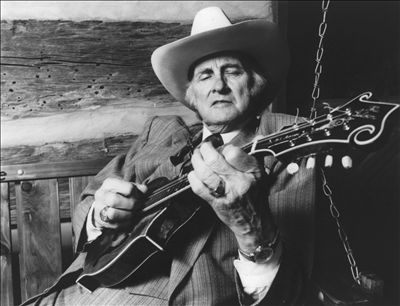


 Now that I’ve written that title, let me check.
  Jarrett’s work is immediately magical, glorious in its improvisation and sonic exploration. He’s been doing these albums for decades, and yet, every time I put a Jarrett CD on (or, for that matter, an LP), I’m immediately transported into the filagree of his imagination, sipping a drink at an after-hours jazz bar where the player is extraordinary and I just don’t want the evening to ever end. Recorded live at the KKL Luzern Concert Hall, the CD called Somewhere begins with the mind-bending “Deep Space,” and here, it’s Jarrett’s show with just the right additional color and light provided by double bassist Gary Peacock and drummer Jack DeJohnette; later in the track (the second part is Miles Davis’s “Solar,” their interplay moves the music into an even more interesting exploration, a testament to the extreme skill, experience and love of experimentation that these three musicians consistently offer. So that’s one track, again the first, and again, a favorite. (And I suppose I should mention that the sonic fidelity of these recordings is at such a high level, it would be difficult to imagine a disc sounding any better.) There are some favorite standards here (mine, anyway); it’s difficult for me not to be captivated by Leonard Bernstein’s “Somewhere;” and the less-often-heard “Stars Fell on Alabama” and the Jimmy van Heusen- Johnny Mercer tune, “I Thought About You.” Ooops–I’m listening to the wrong track–that’s really catchy, and less schticky than I remembered: “Between the Devil and the Deep Blue Sea”–well, a little schtick for me. Back to the dark night sky and mystery of “Stars Fell…” and my mind easily drifts to Perseids and stardust. What a lovely album.
 The old guy in the crowd–Gary Burton is 70 to Keith Jarrett’s 68–opens with a Antonio Sanchez’s rocking drum, instantly establishing a more ambitious, brighter tone for the new Guided Tour, also from Mack Avenue. This is a quartet with Burton leading as one might do with a piano. Sanchez really drives this music. It’s a bigger sound than you would typically expect from a quartet. Burton is leading an exploration not entirely different from Jarrett, but more clearly articulated, more melodic, catchier. The difference is the way that Julian Lage is playing electric guitar, almost as if he’s playing in the style of Burton and his vibes on “Jane Fonda Called Again,” never passive or receding or relaxed, but instead, aggressive and punchy. Yes, they play pretty, too, working the pastoral mood on “Jackalope,” and the Latin romance of “Helena” (especially nice guitar from Lage on this one), but it is so much more fun when these guys really go for it, with Burton playing fast and strong. Best example is probably the last track, written by drummer Sanchez, called “Monk Fish.” Scott Colley is the capable, but less showy, bassist; tough to get a word in edge-wise when the other players are clearly having so much fun. Far livelier than the other two CDs, Guided Tour is a terrific introduction to the Burton’s massive catalog.
 Digital Insider