The Virtues of Daydreaming

From the author of a very good article (see below) about challenging our assumptions about learning:

Among its many benefits, daydreaming has been associated with longer attention span, increased resolve, creativity and even higher IQ.

To which I am tempted to add:

If a creative person does not spend at least a half hour a day, half paying attention to the world, lost in thoughts about what might be, how it might be done, and how everything could change, he or she is not doing what needs to be done. Drifting off, checking out from the “normal,” simply shutting out the real world for a bit… if you don’t do that, how in the world will you accomplish anything useful at all.

Daydream

Now, consider these assumptions:

  1. Playing scary and violent video games help children master their fears in real life
  2. Practical classroom science lab work provides children little learning
  3. Gardening improves children’s desire to learn and boosts their confidence
  4. Teaching kids at a very early age is counterproductive to their learning
  5. Green spaces elevate children’s learning through discovery
  6. Learning is affected by classroom acoustics, artificial learning, and windows
  7. Young children learn about prejudice by instruction, older children by experience
  8. Laughing results in increased memory retention

Now, read the article from InfomED: An online commentary for the education industry.  And allow yourself a good half hour to further explore other terrific articles including “Can We Teach Compassion?” (an infographic); “Facilitating Collaborative Learning: 20 Things You Need to Know from the Pros” and “The Tyranny of Homework…”
Playing, Studying and Designing Games

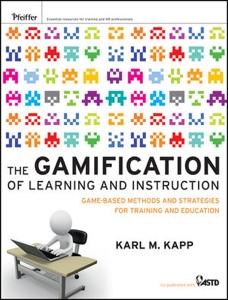
20121209-124333.jpgI’ve been searching for a book like this one for a while. A comprehensive overview of game play, academic research, application of games in all sorts of learning situations, lots of ideas and examples written in a fast-paced format filled with examples, illustrations and recommendations for further investigation. Give Bloomsburg University professor Karl M. Kapp the full one- thousand points for a terrific, accessible, smart book, but deduct a few points from the publisher’s total because the appealing title, The Gamification of Learning and Instruction isn’t really what this book is about…mostly, Kapp is writing about game design and not gamification.

What’s the difference? Well, that’s precisely the kind of issue that the professor addresses. Turns out, the distinction matters.

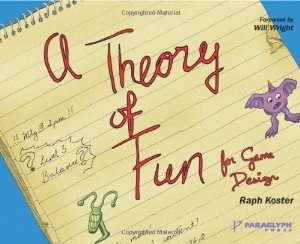
I like this definition of a game, provided by Raph Koster in a Theory of Fun and quoted by Kapp;

20121209-152224.jpg

a game is a system in which players engage in an abstract challenge, defined by rules, that results in a quantifiable outcome often soliciting an emotional reaction.

Kapp attempts to define gamification as:

…using game-based mechanics, aesthetics, and game thinking to engage people, motivate action, promote learning, and solve problems.

In short, gamification seems to be game design with a pro-social purpose.

Certainly, the book is filled with examples of purpose-built games for use in elementary school classrooms, training for firefighters, process improvement instruction, road safety, medical operations, and so on.

Most of the book is about game design, and associated psychology. Some examples:

When designing to teach high-level skills and high-order thinking, as applied to teaching leadership talent, it’s important to focus on ultra-quick decision making, the split-second shifts that a leader must make when considering and sometimes over-riding consensus, the encouragement of risk-taking for greater success, and thinking about leadership not as a role but as a task that can be passed among team members as the situation requires. The overarching idea here is “game thinking” – shorthand for an immersive environment in which real-life is reshaped to emphasize specific issues and de-emphasize others.

20121209-152426.jpg

I appreciated Kapp’s recap of Man, Play, and Games by the French philosopher, Roger Caillois. It was Caillois who identified for types of games: Agôn (competition), Alea (chance), Mimicary (simulation, role play) and Ilinx (state of dizziness and disorder). The last of these, Ilinx, is “the pursuit of vertigo, and trying to destroy the stability of perception”–children spinning around, and mountain climbing are examples.

There is a rundown on studies by serious researchers that suggest a string connection between games and learning, most with small sample sizes and narrow perspectives. To a greater extent than we may wish to admit, the connections between games, intent and measurement are young. We’re all learning what all of this means, and, in a world where digital engagement can be so closely aligned with learning, what it’s all going to mean as schools, K-12 education, and adult learning take their rightful place in the 21st century.

Michael Freeman’s Eye, Vision and Mind

Over time, I’ve bought, or browsed, dozens of books about photography. Most of these books are either too basic, too technical, or remarkably unfocused on the impact of picture making. Several books by Michael Freeman set a high standard for smart books with a strong aesthetic and storytelling sense, and yet, they are written at a level that provides solid, practical advice for even the most casual photographer. I’ve become a big fan of these books, and I would recommend one, two or all three volumes as holiday gifts for anyone with even a passing interest in digital photography, and, I would strengthen that recommendation if the gifts are intended for someone who is serious about photography.

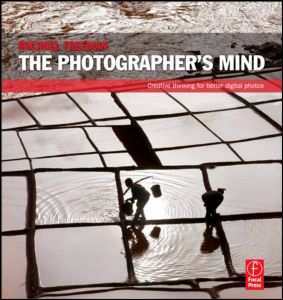
Photographers MindOf the three, I think I like The Photographer’s Mind best. The opening chapter is not about lenses or exposure. Instead, the book opens with a chapter entitled, “Intent.”

If you want people to pay attention to your photography and enjoy it, you have to give them a reason to look at it for longer than a glance… [and this is] more about why than how.

And so begins a well-illustrated consideration of beauty, cliche, irony, the mundane, revelation, and other core concepts that go far beyond the snapshot. The second chapter, “Style,” explores harmonics and balance, relationships between visual style and musical style, opposition, minimalism, engineered disorder… you get the idea. This is a smart, thinking person’s approach to photography, aspirational but practical, nicely written but the focus is on the (many) sample images. And the pictures really are terrific–Freeman’s intelligent, emotional approach to teaching is well-represented by his work.

Photographer's EyeAll three books are personal favorites, but the second book I would buy is (rhymingly) The Photographer’s Eye, a book about design. Freeman considers the relative merits and artistic potential of various frame formats, horizons, frames within frames, and other tools/tricks of the trade. My favorite chapter is the second one, in which musical and aesthetic concepts offered in opposing pairs: soft/hard, thick/thin, diagonal/circular, much/little, sweet/sour, and more. Consider figure and ground, rhythm, single vs. multiple points, dynamic tension. I know that these ideas are dancing in my head when I’m out shooting for the day, but they’ve always been disorganized, and never quite coherent. With Freeman as a teacher, my perspective changes. I study his images, read his words, and understand the tool in my hands differently. And I want to spend hours and hours practicing.

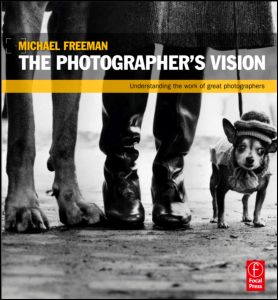
Photographer's VisionI think of the third volume, The Photographer’s Vision, as the most advanced of the three. This is the one that considers purpose and greatness, the volume that places Lee Friedlander, Robert Capa and Brassaï in contexts where their work, or, at least, their unique creative approaches, are presented so that a contemporary amateur can both appreciate and perhaps emulate the work of legendary professionals.

Gosh, these books are good.

And then, I take a deep breath. I search for Michael Freeman online, and it turns out, he is a cottage industry. So many great ideas, so much valuable instruction, so little time.

Buy these books for a family member or a friend. They’ll be counted among this year’s favorites, I promise.

It’s official: everything has changed.


I just reviewed an astonishing PowerPoint from Mary Meeker at Kleiner Perkins. It contains a thorough explanation of our rapidly changing, and changed, world. From mobile phones and to the Rose Bowl, newspapers to cash registers, borrowing and lending money to door locks, hiring to education, our contemporary wave of technology  has transformed the world.

The deck is 88 pages long, and worth all of the time you will spend thinking about it today, this week, this year.

I will add to this post tonight. Right now, it’s off to work, transforming an old TV station into something entirely new. (Thanks, Mary, for the encouragement. And for the pile of useful, persuasive data.)

A Fact Can Be a Beautiful Thing

It’s often tempting to consider the past through a present-day lens, and that causes distortion. Take, for example, the idea of a fact. Our ancestors did not elevate the fact as anything of importance. Instead, they considered facts to be evil, in opposition with God’s plan. This way of thinking begins with perception, a capacity that we share with animals. “For them, knowledge had to be something more than what we learn from our senses, because it is such a distinctly human capability of our God-given and God-like soul.”

Thomas Bacon, known for the Scientific Method and for his cool combination of dapper hat, moustache-goatee combo, and stylish  collar.

Thomas Bacon, known for the Scientific Method and for his cool combination of dapper hat, moustache-goatee combo, and stylish collar.

It isn’t until the 1700s that the current idea of a fact takes shape. In the Italy of the 1500s, double-entry bookkeeping is among the first presentations of fact as a decision-making tool. In England, in the 1700s, Francis Bacon’s work on the scientific method led the way toward building theories based upon “particulars,” not deduced from a grand theory. Of course, this way of thinking sidelined generally accepted beliefs, a radical idea at that time, and in our times, too.

220px-Thomas_Malthus

Thomas Malthus

You may recall that Thomas Malthus theorized that food supply would not keep pace with population growth. His initial documents were based, mostly, upon deduction. His later documents were based upon well-researched fact. The shift in thinking occurred during his watch, before and after the year 1800.

Portrait of Jeremy Bentham by Henry William Pickersgill

Portrait of Jeremy Bentham by Henry William Pickersgill

Enter Jeremy Bentham, a Malthus contemporary. Bentham’s theory, simplified: government ought to provide “the greatest happiness of the greatest number [of people]” In order to do the job, government would need a clear picture of the people it served (also a new idea, government as service, but that requires another article).

The word “statistics” enters the language around this time: stat, of course, is German for the state.

By the 1830s, the British government is obsessed with this powerful tool: facts. They commission a series of Blue Books filled with facts, statistics, anecdotes, interviews and more. The Blue Books are reports about “poverty, crime, education, and other social concerns.”

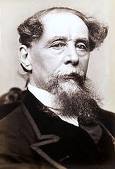
Charles Dickens, who made fun of his government's newfound love for facts.

Charles Dickens, who made fun of his government’s newfound love for facts.

By the 1850s, the clever novelist Charles Dickens grows weary of the fact-based Blue Books. From Dickens’ Hard Times, “We hope to have, before long, composed of commissioners of facts, who will force the people to be a people of fact and of nothing but fact.”

By around the 1900s, fact-finding missions had become common, and World War I becomes the first war fought, largely, upon the basis of facts.

At the risk of capturing the obvious idea, our contemporary media environment is skewed because opinion and pontificating is, often, more entertaining than fact-based thinking. Rush Limbaugh gets the ratings; the Encyclopedia Britannica ceases publication. Constitutional scholar Cass Sunstein says, “Many people are mostly hearing more and louder echoes of their own voices.” His context is the internet, where groups of like-minded people share their beliefs, and by their numbers, magnify ideas that may not be fact-based into cultural touchstones. He goes further to explain that members of those groups are becoming less likely to communicate with people outside the group, and wonders whether this supportive groupthink is detrimental to democracy. (So much for the hope that the abundance of information, and facts, on the internet would encourage interaction between these groups.)

And that leads to Nicholas Carr, author of The Shallows: What the Internet Is Doing to Our Brains, who believes that the internet is “weakening our capacity for the kind of ‘deep processing’ that underpins ‘mindful knowledge acquisition, inductive analysis, critical thinking, imagination, and reflection.”

220px-Al_Gore_at_SapphireNow_2010_croppedA parallel path also leads to Al Gore, who asked this question in his book, The Assault on Reason: Why do reason, logic and truth seem to play a sharply diminished role in the way American now makes its important decisions?”

Perhaps the answer to Mr. Gore’s question is complexity. We learn arithmetic but not calculus, we have been taught to think in simple linear terms, not in terms that help us to understand the complex, dynamic system that our society has become. Our contribution to the chain begun by Bacon: the mapping of complex systems that change over time. It is these systems that draw facts into the future, and these models that provide potent vaccination against those who theorize on the basis of beliefs, not facts.

On another parallel path is the passionate amateur. Included in that class would be both Charles Darwin and Gregor Mendel, neither one a scientist, each a relentless cataloguer of observations, and, as a result, a theorist whose ideas are based upon endless study and analysis.

Jenny_McCarthy_at_E3_2006And, there is the celebrity whose role is related to a megaphone. Ideas that might not otherwise reach a large audience become popularized because a celebrity become involved. When former Playboy model Jenny McCarthy and actress Jenny McCarthy started making noise about vaccinating our children, people paid attention. The Michael J. Fox Foundation is attempting to resolve the delicate balance between Mr. Fox’s own story and fame, and the broader agenda that must drive the Parkinson’s foundation (that carries his name). The Fox foundation has been intelligent and thoughtful in its use of social media, engaging individuals, on a large scale, to participate in trials and other research. Here, the “particulars” are the individual cases, the undeniable truth of daily life with a disease not yet cured.

Too Big To Know

How does all of this come together? The fact is, we’re still figuring out the answer to that question. David Weinberger’s book, Too Big To Know, the source of many of the ideas and all of the quotes in this article, does a fine job in raising questions and providing examples. Addressing the crisis of knowledge (his belief, with which I do not wholeheartedly agree), Weinberger suggests that we open up access to a much broader range of facts; link everything in sight; dig deeply into institutions to make their knowledge available to a larger population; and relentless teach so that we all gain a better understanding of how our world works, and how it might work in the future.

BTW: The article’s title, A Fact Can Be a Beautiful Thing refers to love as explained by lyricist Hal David for the Broadway musical, Promises, Promises.

Einstein through a Distant Mirror

Context matters. Today, Einstein is the very model of a modern genius. That’s an easy image in the era of the internet, when folks can say and do pretty much whatever they please. A century ago, when the young theoretician conducted “thought experiments,” things were different. In a world where “innovation” appears in just about every business magazine, it’s difficult to imagine just how different life might have been in those days before the First World War.

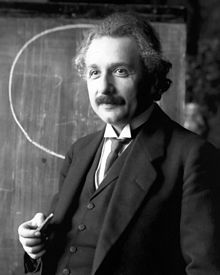
Albert Einstein in 1921, the year he won the Nobel Prize, and first visited the USA.

That’s the key learning from Einstein’s Jewish Science by Steven Gimbel, a professor at Gettysburg College. The author and his book do a wonderful job in framing the time, and the science, and the politics, and the religion, but neither musters much energy from its underlying question. (Spoiler alert: In the end, the author concludes that relativity is not an especially Jewish science.) He explains:

Einstein came to the scientific stage at a time when Western culture was in flux. Old social, political, artistic and intellectual structures were failing. Assumptions that had been protected for centuries were suddenly rejected despite all attempts to maintain them. And here, offering a new and bizarre way to see the entire universe was Einstein. The theory of relativity stands as a symbol of Gestalt shift, a complete change in perspective where you can never view the familiar in the same old way.”

(As I type, I wonder whether the shift that we’ve experienced via the Internet–which now offers instantaneous connections between billions of people all over the planet–would also be “a complete change in perspective where you can never view the familiar in the same old way,” and, if it is (I think it is), why it doesn’t quite feel that way. Maybe because we’ve been consumed by its everyday, now routine, integration into social and commercial life?)

Professor Gimbel of Gettysburg College, author of Einstein’s New Science: Physics at the Intersection of Politics and Religion

Mr. Gimbel goes on, and I continue to wonder about Einstein 2.0, and how he might fare today:

Einstein was vilified by those who clung to the old order. His science, his politics, and his views about religion were all made public in ways that made them difficult to ignore.”

And, my favorite quote from Gimbel:

We take Einstein to be the epitome of the open mind.

If life was so difficult for Einstein and his radical thinking, why do we absorb change in our stride today?

The best answer I’ve found begins about ten years after Einstein passed away.  It’s the subject of a terrific book about the 1960s counter culture, and the bridge that it provided to the 21st century, the digital century where we now live (and read blogs, often instead of books). The book is entitled What the Dormouse Said: How the Sixties Counterculture Shaped the Personal Computer Industry, and it was written by John Markoff. Read a terrific review of this equally terrific book, written by Jaron Lanier, here. Of course, all of this countercultural change was terrifying, and not without its reactionaries. The most robust response is a U.S. Chamber of Commerce document usually called The Powell Memo. It provides a conservative response to the craziness of the revolution, or so the story goes. The Powell Memo is easier to find on liberal websites than on conservative sites. Still, it claims to be the grand plan, the response to radical thinking and the changing of old ideas.

Step-by-step, Professor Gimbel explores the most important questions about science, Judaism, German culture (Weimar, Nazi, post-War), new (20th) century thinking about science and the limits of Newtonian physics, and provides the details in a smart story that is easily read and absorbed (not so, most other books about 20th century science, or religion, for that matter). Still, the core of the book, the essence of it, encourages the reader to think not only about Einstein, but about Einstein’s reflections in a 21st century mirror. How much has changed since Einstein’s time. How thoroughly Albert would enjoy the internet, and the freedom of thought that we now enjoy as American citizens in a digital age, and how profoundly that freedom has affected thinkers around the world.

Five Rules for Happiness

20121111-225133.jpgRayChambers is the first link in the chain. Ray has been an inspiring force in New Jersey generally, and in Newark, specifically. (I’ve seen it first hand, both at the New Jersey Peace Education Summit and in the midst of a New Jersey Network gala).

For LinkedIn CEO Jeff Weiner, Ray has been a mentor, and man who passed on five rules for happiness that Weiner now passes along in today’s New York Times.

  1. Live in the moment.
  2.  It’s better to be loving than to be right.
  3. Be a spectator to your own thoughts, especially when you become emotional.
  4. Be grateful for at least one thing every day.
  5. Every chance you get, help others.
20121111-225216.jpg

Peter DaSilva for The New York Times

When Weiner speaks with students, he adds thoughtful consideration of his own:. He asks students, “Looking back on your own career, what do you want to say you accomplished?” If a student cannot answer quickly and easily, Weiner strongly encourages a thought process leading to an answer.

He adds more advice. His own: “surround yourself with amazing people.” And from MIT Media Lab leader Joi Ito: “maintain a childlike sense of wonder throughout your entire life.”

And, finally, from Einstein: “There are only two ways to live your life. One is as though nothing is a miracle. The other is as though everything is a miracle.”

I prefer the latter. And if you’ve read this far, I suspect that you do, too.

Read the article. It’s a good one.

Tech Changes Education

The Schoology logo connects classroom management, online learning and social networking.

Late in October, just before the storms, Forbes ran a useful summary of several trends that promise to reshape classroom education. It was swritten by Jeremy Friedmanthe CEO of Schoology, a company that makes software for the classroom.

No surprise that the key trends emphasize individualized learning based upon technology. Certainly, the ubiquity of cloud computing encourages document sharing, and collaboration regardless of each individual student’s location. “The 2012 Horizon Report, which provides insights into education technology trends, predicts that collaborative environments are about one year away from mainstream adoption.” That seems ambitious to me, but I’m sure that the most advanced, well-funded, tech-enabled schools will begin to make this statement true.

Given the realities of most schools, the idea of cross-platform integration may seem like an impossible dream, but vendors are beginning to work together to unify their approaches to digital learning. Forbes believes more strongly in this future than I do, or, perhaps, than most teachers probably do.

It’s now nearly impossible to imagine a classroom without mobile technology, but again, imagination is ahead of reality. Certainly, “(Mobile apps) are abundant, inexpensive and easily accessible…” but the question is not the apps, it’s the devices. A new movement toward BYOD (“Bring Your Own Device,” of course) is gaining traction. In itself, this is remarkable: just two years ago, many teachers, principals and administrators were doing everything they could to keep Twitter, Facebook, Tumblr and other “distractions” away from the classroom. Still, the levels of coordination present major challenges: Apple, Android or Windows? Curriculum at the national, state, district, school, classroom, or individual level? For all students, advanced students, average students, challenged students? Apps are easier to develop and produce than traditional software, but it’s not the software engineering that’s the issue, it’s what it does, and how what it does fits into any sort of master plan.

This raises the issue of adaptive learning, a domain that is already being addressed by at least one company: Knewton “responds in real time to the activity of each user on the system and adjusts to provide the most relevant content…” What’s more: “Knewton is able to capture every move a student makes – scores, speed, accuracy, delays, keystrokes, click-streams and drop-offs. The platform collects this data and the software adapts to challenge and persuade the user to learn based on his/her individual style. Pretty amazing stuff!

The buzz idea of the year seems to be gamification–that is, just about everything becomes a kind of game. At first, this seems to be a frivolous undertaking, but you need to think more broadly about games and how they work. A good game is a simulation of life, a design for activity within bounded rules. In this regard, games are a simplification, a reduction of real life situations that allow learners to focus on specific learning objectives. And, these learning objectives are readily scored, and, under the best of circumstances, presented in a way that connects learning and fun.

There’s funding behind this approach: “Game-based learning is even one of the priorities of the Bill & Melinda Gates Foundation, which earlier this year helped launch the Games, Learning and Assessment (GLASS) Lab. According to the organization, GLASS Lab is “based on the understanding that digital games and simulations can support student learning by providing immediate feedback for students, teachers and parents on students’ progress toward established learning goals”” The article describes even more funding from the game maker Electronic Arts, and the Entertainment Software Association, and, also, from the MacArthur Foundation. The non-profit at the center of all of this: Institute of Play. I looked at their website. I need to visit. Soon.

Innovation versus Institutions

Innovating from inside of an organization is stunning in its difficulty, frustration, and often, it’s difficult to understand why even the simplest of ideas meets with such a high level of friction and sluggish progress. Again, I’ll thank NYU Professor Clay Shirky for his book, Here Comes Everybody, for some sparks that led to this article.

You may recall that my previous post dealt with the connections between the individuals who form a group or a network of groups. Within an organization, those connections are weighted, in part by company hierarchy, in part by control over resources, and in part on the history and fluidity of past relationships. In other words, connections within an organization are often complicated by internal and external factors. And, of course, not every relationship is equally valued. Some connections are stronger than others. You might recall the old 80/20 rule, for example, in which 80 percent of the work is done by 20 percent of the people.

Well, it turns out that the 80/20 rule doesn’t much apply to innovation, or to community interactions. If you look closely at Wikipedia–easily the largest informal group enterprise we’ve ever generated as humans–“fewer than two percent of Wikipedia users every contribute, yet that is enough to create profound value for millions of users. Wikipedia would not be possible if there were concern for inequality.” With a publish-then-filter model now overtaking the older, highly institutionalized model of research-write-edit-rewrite-publish, much more gets written, and errors are corrected along the way, particularly in articles that matter. (Those that don’t much matter are rarely accessed, and so, rarely corrected.) So we have a small number of people–nowhere near 20 percent of the total Wikipedia user base–contributing large amounts for an operation that is a nonprofit, not a business.

It’s here that the divergence becomes interesting. Imagine a business taking on the writing of the world’s largest encyclopedia, one that is never quite published, but always exists in draft form. Companies just don’t work that way–they have processes, standards, and overhead, project management, deliverables, and the entire structure of jobs and careers relies, mostly, upon incremental improvements to the status quo. Very large projects are within the reach of larger institutions, but the process of planning, developing, politicking, funding, hiring and moving people…none of it is simple, and there are ample opportunities for slowdowns, moving off track, shifting priorities, and so much more. That’s how institutions work: they perfect processes over time, but they struggle with entirely new endeavors because the status quo makes so much more sense than the risky new proposition. Massive shifts in thinking are not easy to absorb. Large-scale systemic change does not make sense.

There are fewer than 100 copies of the EB print edition still available (but none in this binding). If you want one, click on this link now (don’t wait!).

Except, of course, that significant, often large-scale, systemic change is becoming a new normal. There is no more Encyclopaedia Britannica in print, no more Tower Records stores, no more Kodak film (well, almost none), no more barriers to global video distribution, no reason why a clever sentence or article can’t be seen by millions of people just an instant after the draft is complete.

So status quo is part of the reason why institutions and innovation aren’t always BFF. But there’s another component, equally important: freedom to fail. When an institution fails, it risks funding, loss of customers, and shifts in leadership. When innovators fail, they may cry in their beer on Friday night, but on Monday morning, they’re back at work, having learned from the flop. No shareholder worries, no customer loss (okay, maybe a little), and in the end, probably more valuable learning than systemic damage. So institutions do all they can to avoid failure, and often, this means extracting the heart of a project or venture, or obfuscating, or demanding more analysis, or some other status quo maneuver. And individuals who are part of, for example, an open source community, correct the errors and move on without substantial loss of momentum (because the primary reason for that community’s existence is to DO things and to avoid NOT DOING things). In this shifted paradigm, the institution struggles to make substantive progress, knowing that the less encumbered other may well cause the death of their venture.

Shirky: “Open source is a profound threat, not because the open source ecosystem is out-succeeding commercial efforts but because it is out-failing them. Because the open source ecosystem, and by extension open systems generally, rely upon peer production, the work on these systems can be considerably more experimental, at considerably less cost, than any firm can afford. Why? The most important reasons are that open systems lower the cost of failure, they do not create biases in favor of predictable but substandard outcomes, and they make it simpler to integrate the contributions of people who contribute only a single idea. The overall effect of failure is its likelihood times its cost. Most organizations attempt to reduce the effect of failure by reducing its likelihood…(making safe choices). Open source doesn’t reduce the likelihood of failure, it reduces the cost of failure; it essentially gets its failure for free…cheap failure, valuable as it is, is also a key part of a more complex advantage: the exploration of multiple possibilities.”

What now? If you haven’t yet read Clay Shirky’s Here Comes Everybody, do it now. If you’ve already done that, you may take the rest of week off. Here he is at Harvard’s Berkman Center for Internet and Society talking about his work….

Group Dynamics – Internet Edition

20121001-220030.jpgOne of the questions that historians may ask about our era is why technology became so ubiquitous, and so central to our lives. The important idea is not technology, of course, but the way we behave as a result of the tools that technology has provided. Mostly, the historian’s answers will focus on new forms of group dynamics, for these provide the underpinning for nearly all of our digital success stories.

(Many of the ideas in this article, and in several articles that follow, were sparked by the brilliant NYU professor Clay Shirky. You should buy his book right now. It is entitled Here Comes Everybody. Stop reading this blog, get your credit card, click here, then c’mon back to finish reading.)

(Welcome back.) While you were away, thirty six of us formed a big circle. And because you were away for a while, we were struggling to pass the time, and the woman next to me proposed a wager. She was willing to bet $50 that no two people in the circle shared a birthday. Nobody took the bet–it seemed like an easy way to lose money.

Shirky: “With 36 people and 365 possible birthdays, it seems like there would be about a one-in-ten chance of a match, leaving you a 90 percent chance of losing fifty dollars. In fact, you should take the bet, since you have better than an 80 percent chance of winning fifty dollars… Most people get the odds of a birthday match wrong… First, in situations involving many people, they think about themselves rather than the group…instead of counting people, you need to count the links between people.”

When counting connections, 1 plus 1 equals 1, but 1 times 4 equals 6. If I’ve done my math correctly, each of the 36 people in the circle has 35 connections, so the equation would be 36*35 or 1,260. If we were calculating unique connections–so we don’t double count both your connection to me and my connection to you, then we would divide by 2, and the number of unique connections would be 630, still a number far larger than 35, the number most people would choose in the bet.

The number of people = 6 (blue circles), but the number of connections = 15 (red lines).

Why does this matter? Consider LinkedIn, an Internet company whose entire operating theory is based in Internet connections. If you are reading this blog, you are likely to be one of my 500+ primary connections (that is, we are directly connected), but you are more likely to be two or three steps away–that is, you may be connected to one of the tens of thousands of people who are connected to my 500+ and even more likely to be connected to the hundreds of thousands (millions?) of people who are connected to the tens of thousands who are two steps away from me.

And why does that matter? It matters because I want to maintain my network, but it is nearly impossible to productively make use of such a large network–the connections are too diffuse, too unreliable, too far out of reach. Instead, my network, and your network, consists of a few dozen people, perhaps as many as a hundred or two hundred. And as long as at least a few of those people–the dozens or hundreds–remain connected to one another, my network remains viable. If, however, I lose contact with a few important connectors, the size and resilience of my network may dissolve.

Shirky again:

“A group’s complexity grows faster than its size…You can see this phenomenon even in small situations, such as when people clink glasses during toast. In a small group, everyone can clink with everyone else; in a larger one, people clink glasses only with those near them.”

And here’s why that matters. If you are trying to accomplish anything meaningful on the Internet that involves connections or interactions between people, you need to understand small world networks. And with that, Shirky closes us out:

“In 1998, Duncan Watts and Steve Strogatz published their research on a pattern they dubbed the “Small World Network.” Small World networks have two characteristics that, when balanced properly, let messages move through the network effectively. The first is that small groups are densely connected. In a small group, the best pattern of connection is that everyone connects with everyone else. The second characteristic of Small World networks is that large groups are sparsely connected. As the size of your your network grew, your small group pattern, where everyone connected to everyone, would become first impractical, then unbuildable. By the time you wanted to connect five thousand people, you would need a half million connections.”

” So what do you do? You adopt both strategies–dense and sparse communities– at different scales…As long as a couple of people in each small group know a couple of people in other groups, you get the advantages of tight connection at the small scale and loose connection at the large scale. The network will be sparse but efficient and robust.”

Thanks to Emil for working out the basic mathematical formula that calculates connections (time prevented us from completing it for all cases). That formula is:

((n)*(n-1)/2 where n = the number of people in the group. Example: ((6)*5)/2 = 15

Since the connection between Person A and Person B is the same connection as Person B and Person A, division by 2 eliminates the double counting.

The formula starts working with 6 people. If anybody knows why the formula falls apart with groups of 5 or fewer group members, please comment below. And, how do we deal with fractions (half a connection divided by two)?