Around the World with Joe Boyd

Every night, for the past two months, I have gone to bed with Joe Boyd. He wrote a book that’s more than 900 pages long — far too cumbersome to be read anyplace except on my pillow.

Here’s a photo of the author, the UK cover art, and the US cover art.

As it happens, it’s a terrific book, and I loved every minute of it. The title is: And the Roots of Rhythm Remain: A Journey Through Global Music. Basically, this is a social and political tour, a history of the cultures that produced music we’ve come to associate with Jamaica, D.R. Congo, Brazil, Mexico, and dozens of other places around the globe whose artists have defined the concept of “world music.” The terminology is cumbersome, but the storytelling is not. It’s clear, and as engaging as any good history book, but this particular book explains, for example, how and why the likes of reggae, flamenco (see below), and the cha-cha are all part of a hyperlocal and a wonderfully global story. Happily, the story goes back a ways — back to the fifteenth century in some cases.

For example, you’re probably familiar with flamenco music, from Spain. Well, not exactly from Spain. Flamenco is more like gypsy music than Spanish music, but where’s the gypsy connection? And what, exactly, is a gypsy? The word gypsy derives from Egyptian, because that’s where these people sometimes claimed they had originated. But they didn’t. They came from India, but they often played on the streets, and saying they were Egyptian caused the people who were listening to give them more money. So, sure, they’re from Egypt. Or maybe they’re from Hungary — part of their story takes shape, there, too, which leads to Béla Bartók, and later, to world music star Márta Sebestyén. So, back to India: there were about 10,000 musicians imported from India to what becomes Pakistan, then dismissed when they were no longer wanted in Pakistan due to change of regime. So they traveled toward Europe, scattered, stayed close to one another, and continued to perform music for themselves and to earn the money they needed to stay alive. Later, when the king of Spain forbade the use of the term gitano in the late 18th century — the gitanos were gypsies — he determined that they were from Flanders, hence the term, flamenco. But that’s such a small part of the story, and music is only one aspect of the gypsy culture — if there even is a single gypsy culture because the people scattered to so many different places in Europe (and often seeded what is perceived to be music of specific local cultures).

The reason I love this book is simple. It’s not a linear history. Instead, it’s the grand story of interwoven cultures, places, peoples, instruments, political pressures against certain kinds of music (in many places, at various times in history, rulers prohibited the use of drums, for example). And so, the Rastafarians connect Ethiopia to Jamaica, and Cuba is connected to the Congo, Senegal and Ghana to England, and England to what was the empire.

In one chapter, we’re on the dance floor in the Latin jazz clubs of New York City, or in Cuba when Cuba was still an exciting place to visit and do things that might not be okay at home. In another, jazz saxophone player Stan Getz is making a record with João Gilberto, building a foundation that would solve a problem for middle-of-the-road singers as they tried to make their way through the 1960s. Traditionally, these singers relied upon songwriters we now associate with the great American songbook — Gershwin, Rogers & Hart, Rogers & Hammerstein, Cole Porter — but those sources had aged out, and they were replaced by rock musicians who wrote and performed their own material. The older singers needed a new source of fresh material — and found it in, of all places, Brazil. When Brazilian musician Sergio Mendez recorded a song by Antonio Carlos Jobim, the likes of Tony Bennett and Frank Sinatra paid close attention. Jazz provided the bridge. And, of course, jazz was rooted in blues, and blues was rooted in music brought from Africa.

Joe Boyd is a wonderful storytelling, and a well-organized historian, but he is also a music producer who was often in the room where it happened — because he was the one who flew to Bulgaria or India, attended the performance of a magical artist with a spectacular local following, gained their trust, signed them, and got them into the studio to make records. Those backstage stories are fascinating because, more often than not, they take place in clubs and other venues in far away places with magic of their own.

You probably know at least some of the musicians in the book, but many others are likely to be new to you. Heck, I wrote a book (for Billboard Books) about world music CDs, and many of the names are now on my buy lists (yes, I still buy CDs). My sloppy list would certainly include Los Van Van, Ali Farka Touré (from Mali, in Africa, along with many other musicians from that vital country), Celia Cruz, Ravi Shankar, Nusrat Fateh Ali Khan, Fela Kuti, Tabu Ley Rochereau, Kanda Bongo Man — so many names, so much music that I want to hear again and again (much of my world music listening took place in the previous century!)

I should probably mention the many unlikely names in this book, too, because their stories provide a lot of valuable connective tissue, and lots of points of entry: Desi Arnaz, Igor Stravinsky, Dizzy Gillespie, Fidel Castro, Nikolai Rimsky-Korsakov…

This is not a book to read on a lazy weekend afternoon, but each (long) chapter is filled with a lovely combination of deep history and context. Taking it slow and easy is my recommendation. And, I would suggest you do something that I should have done — take notes. You will want to hear a lot of the music that the author discusses, but over nearly 1,000 pages, you will forget most of what you wanted to hear. Now, I find myself going page-by-page, constructing a proper list, finding some of the music on YouTube and some of it in my own collection, and, inevitably, buying more. It makes me very happy to buy a CD of ¡Cubanismo!, used, for $1.99, and to find out that there are concert videos on YouTube if I want to listen more, or listen for free.

That is: reading a very good book about music is not the end of the journey. It’s only the beginning.

We Have Some of the Answers

There’s a new book called Another World Is Possible: Lessons for America from Around the Globe, but I think the subtitle under-sells the book. The subtitle should probably be Lessons for Every Country from Around the Globe. The author is Natasha Hakimi Zapata, a journalist and university lecturer based in London.

Answers to big questions may not be so hard to find. Better public schools? Renewable energy? Health care? These problems are being solved all over the world, but most people don’t know much about what’s being done and why it might just work in our own countries.

She begins a book of nine solutions with health care, and describes “the United Kingdom’s groundbreaking universal health care system.” It’s not perfect, but Zapata believes, and offers convincing reasons, why this model could and should work in the U.S. (and elsewhere). As she outlines the history — “prior to the twentieth century, health care in the United Kingdom was provided by a disjoined mix of charity hospitals, the local welfare committees that ran so-called poor law workhouses, and private care.” The system was oriented toward low income communities, leaving those in the middle class with few good options, so they came to rely upon emergency care in emergency care facilities at local hospitals. In the U.S. today, we are trying to solve a similar problem, this time for our lower income residents. Government programs incrementally improved the situation, but did not solve it, but the situation changed with the end of the Second World War, when Britain was in dire straits. “The key principle enshrined in the 1946 Bill was that health was a right, not a community to be bought or sold, or subject to market forces.”

And there’s the pivot. The 1946 Act was an “extraordinary success” because it “incontrovertibly made people’s lives better.” Service began in 1948. In England and Wales, it now employs 68 thousand nurses, 12 thousand doctors, and 22 thousand midwives — and they are a small portion of a workforce of 1.4 million people. (And this does not include Scotland.) It’s funded by general taxation. The range of services is vast, including not only ambulance, maternity care, dental care, prescriptions, mental health, long-term care, and optical care. “Patients rare, if ever, pay out of pocket for anything.”

Yes, there has been enormous political capital poured into the service and its growth, and yes, there are special issues of all sorts — an “immigration health surcharge,” for example.” Overall, the system works, and because it is right and not a privilege, it is very much a part of British life.

The important idea here: it is possible for a large country to operate a national health service. There is a model. More people ought to know how it works, and the power of large numbers of people should make sure the success is widely known so it can become the basis for a new U.S. healthcare system. Certainly, there are reasons why this will never work, but that has been the rallying cry for the (hugely successful) opposition. Zapata provides a useful starting place for discussion, here and in other large area of life.

Estonia is a much smaller country, but it has pursued a very big idea. It’s a simple one: access to the internet is a human right (yes, human rights are a theme in this book). This is a country that was part of the Soviet world, with clunky technology, crumby infrastructure, not a lot of money, and political inflexibility. As the nation began to enjoy the new realities of independence, several organizations worked with government to make free internet connections possible. “In 1992, two of the biggest universities in the country [were] provided with free internet service. Soon enough, fiber optic cables were being laid throughout the country.” The pathways led through government, and a new concept of “e-government” was established as a means to operate the nation by, essentially, distributing power and responsibility to the people. This ignited a very different way of thinking about the relationship between a citizen and the government. “One of the main ideas behind Tiger Leap,” which placed education at the center of Estonia’s future, “was to raise a new generation of computer- and internet-savvy Estonians that could create innovations that could spur socioeconomic growth.” In time, Estonia’s Look@World Foundation helped Estonians of all ages to collaboration “in close cooperation,” and begin to see the importance of 100 percent internet access for all Estonians. And the story continues to unfold, with nearby Finland providing more examples and fueling a competitive spirit, too. Estonia is ahead of international curve on I-voting (via the internet, e-ID systems, and more. Estonia raises serious questions about private control of digital technology in the U.S. — they have certainly demonstrated the value of public-private partnerships, respect for the needs of individuals and the evolving role of government.

The author tells similar stories about Portugal and its drug policy; Norway and its family-friendly laws; Uruguay’s approach to renewable energy, and Aotearoa New Zealand’s approach to universal pensions.

Indeed, another world is not only possible, it has taken shape, but the future is not evenly distributed. In many ways, the U.S. seems to be far behind, a remnant of old thinking about power and the unproductive alliances between government, big money and big companies. There are other ways to think about running countries on behalf of their people, and Zapata’s book is enormously useful in imagining what could and should be.


Dogmen & Dynasty

The castle and the surrounding landscape are magnificent, so I thought I would begin with a big picture.

Martyn Rady is a historian and a very good storyteller. He is a Professor Emeritus of Central European History at University College London. He is also a leading expert on the history of Central Europe, which happens to be one of the regions of the world that is, for many people, myself included, very difficult to capture as a coherent idea. Along the way, I’ll place Rady pretty high on my list of historian / storytellers — and I hope he will write another book that is equally wide-ranging.

Rady begins long ago, when early Christian scholars debated the existence of dogmen — creatures with canine and human characteristics who lived on the margins of the known world. He is specific: “One ninth-century account tells of how a missionary bishop in what is now Austria denied a place at the table to visiting pagan chieftains, instead laying out bowls on the floor.” A few centuries later, Turks were “described as agents of Satan, with an insatiable taste for blood…and all sorts of extravagances including bestiality and sexual relations with fish… but from the very first, they, too, were associated with dogmen.”

Where, exactly, does Central Europe begin and end? That question is difficult to answer. Depends upon when, of course, because countries keep expanding and contracting, and gaining/losing parts of their territory. Roughly, Central Europe seems to be what is now Germany to the West, what is now Russia to the East, not quite Scandinavia to the North, and down into what was once Yugoslavia to the South, but sometimes, parts of what is now Italy, Ukraine, and Greece, too. It is here that the vague and changeable boundaries of Prussia take shape and shape-shift, where Poland is and then is not a country, where unimaginable violence was the rule for many of the centuries covered in this 500+ page volume, and where Beethoven, Mozart, Chopin and Western classical music originated and continues to thrive. There are knights, castles, pogroms, insane monarchs, endless political intrigue, war after war after war, peasants galore, Catholics dominating religious beliefs, and, generally, miserable lives for the people who lived there until very, very recently.

It’s the story of people whose names you may have heard, but don’t know much about. One example: Louis Kossuth (“spell-binding orator who could hold audiences of both politicians and peasants mesmerized in speeches that lasted more than three hours…a master of self-advertisement … [who] led Hungary to disaster.”

Another: “Otto von Bismarck remained a gluttonous, hard-drinking oaf for the rest of his life — eventually, even his doctor refused to treat him, recommending instead that he consult a veterinarian.”

Another: “as a ruler, Frederick William [of Brandenburg, a hotchpotch of territories reaching from the Lower Rhine to the Polish frontier] avoided war as much as possible, while doubling the size of his army to make it the fourth largest in Europe. Frederick’s drillmaster instilled discipline with ferocious punishments and by having his troops learn to march in goose step….[which showed at a glance whether the troops were marching in unison]. But Frederick William’s quest for abnormally large grenadiers was a pointless conceit because the men were often disabled as a result of their height. Altogether, the king had several thousand of these giants, whom he personally drilled and tried to marry off to equally tall women. All had to be at least 188 centimeters (6 feet 3 inches), but there were plenty who hit 213 centimeters (7 feet) . In order to magnify their appearance, Frederick William gave them tall mitre cap, and we are told, deliberately dressed them in uniforms that were too small. Frederick William himself measured just 160 centimeters (5 feet 3 inches).”

Sensationalism and goofy stories aside, this is an extraordinarily well-constructed saga of what is now Slovenia and Slovakia, Latvia and Poland, Moldova and Belarus, the Czech Republic and Lithuania, Russia and Germany, Austria and Hungary, and countries that no longer exist. It is the origin story of much of Europe, with tales of the Huns and the Mongol-Tatars and the Goths, the Hapsburgs and the Holy Roman Empire. And it is the story of the Nazis.

If this book was assigned to me, I never would have read it. If this book was suggested by a friend, I might have wondered whether I would ever take the time to read a book about the history of central Europe. Probably not. But there it was in the library, with the magnificent castle on the cover, so I picked it up and started browsing. Rady’s prose and storytelling invited me in. And, just as he began this tale with dogmen, that’s where he ends it, too: “Today’s dogmen may lack the imaginary snouts and tails of their forebears, but with their rocket launchers, tanks, and drones, they are just as terrible and no less subversive…”

LAND, from the prolific Simon Winchester

Simon Winchester has taught me a great deal. Including: in any given used bookshop, there will always be at least one nonfiction book by Simon Winchester that I have not read before. Past encounters, each one a pleasure, include: Outposts: Journeys to the Surviving Relics of the British Empire; Hong Kong: Here Be Dragons; Korea: A Walk Through the Land of Miracles; Pacific Rising; The Map that Changed the World, or was it A Crack at the Edge of the World; Atlantic (or, maybe, Pacific); Oxford; and probably several more. I believe The Map That Changed the World and The Professor and the Madman are patiently waiting for my attention.

So why another? And why this book? Mostly, because he’s interested, and, as a rule, if Simon Winchester is interested, then I am, too. The new book is called LAND: How the Hunger for Ownership Shaped the Modern World. If my count is correct, this is his 33rd book, but even the publisher is reluctant to name a number (“the acclaimed author of many books).

His fascination begins with his own land, formerly owned by “a plumber named Ceasare,” a “second-generation Sicilian-American.” The tract is “123 1/4 acres of forested and rocky mountainside, located in the hamlet of Wassaic, in the village of Amenia, the town of Dover, the County of Duchess, in the state of New York.” That’s quite a lot to unpack, a string of political decisions organized, in part, to claim title to land that once belonged to nobody, but was certainly taken, in a series of shameful acts, from the natives who once relied upon the area for sustenance. Before British royalty determined that their might gave them the right, long before, there was a long history, dating back over hundreds of millions of years–“geological turmoil executed on a titanic scale…a tortured and spectacular history that begins with volcanic land formation, and is given over to eons of sudden fracturing, splitting, compressing, heating, pummeling, twisting, folding, and breaking, followed by millions more years of inundations by tropical seas…” (you get the idea).

The author is British but based in the United States, and so, there is a lengthy discussion about North American natives and how they were stripped of their land. Happily, Winchester’s view is global. And one of the most important questions about global land use is just how much of it exists–and how it might be measured. And mapped. The mapping of the earth is a very complicated project, a crazy idea promoted by glacier expert Professor Albrecht Penck, who nearly succeeded in mapping the entire planet at a scale of one to one million. Penck’s design would have resulted in a scale model about the size of a house. And it would have disallowed the likes of Terra Incognito, or Here Be Dragons. But there were fierce arguments between governments that would need to cooperate–the French, for example, insisted upon the Metric System, and the English refused to go in that direction. Remarkably, the project moved ahead, albeit nearly two decades later than planned. Remnants remain, including the use of Greenwich (Prime) Meridian), and an abundance of really good maps–“France mapped much of francophone Africa. Germany made maps of all German-speaking countries in Europe. The entirety of the Roman Empire was mapped.” There was a fifty-sheet series on Brazil, and 107 sheets on Hispanic America, and more. It took eight years of trekking and wandering to map Mongolia and Chinese Turkestan; it was done by forty scientists from six countries protected by thirty infantrymen and more than three hundred camels, plus a large number of local helpers. Mapping 37 billion acres of land, without much technology, was an amazing accomplishment, but the job was completed. Still, the project remained alive, if on life support, until December, 1986. By that time, airline maps (which were simpler, easier to produce and update) served global needs.

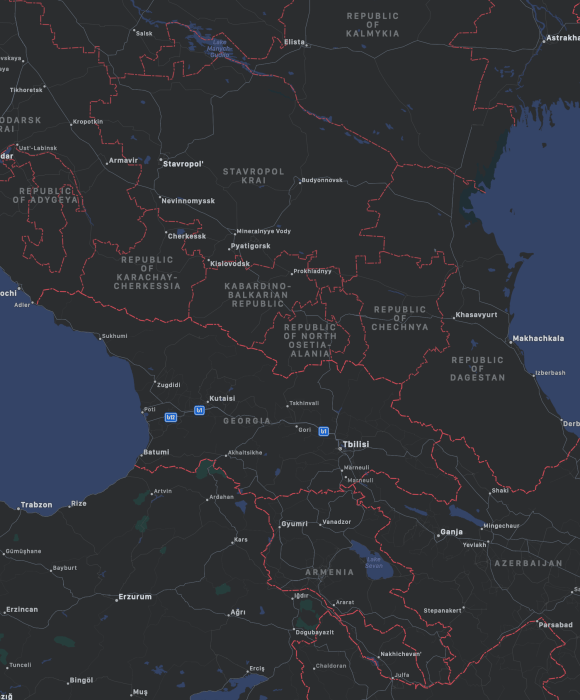
As I learned this morning, there is still quite a bit that I don’t know about the distinction between, say, a republic and a nation, or a nation and a country. All the same thing? Although the author does not address the question directly, he did cause me to look more closely at Apple’s Maps application when I was speaking with a colleague in Armenia. Yes, Armenia is a country, because it is a nation with its own government which occupies a particular territory. The part about a nation is related to people with common interests, and this is certainly true of Armenia. It’s a republic. It’s located west of Azerbaijan, which is also a republic–but part of Azerbaijan is separated by the rest. That is, Armenia is both east and west of Azerbaijan. Armenia also borders Iran, Georgia, and Turkey. But if you look just a bit further north, you’ll find a bunch of republics with unfamiliar names: the Kabardino-Balkarian Republic; the Republic of Karachi-Cherkessia, The Republic, of Adygeya, The Republic of North Osetia-Alania, and the Republic of Dagestan. There’s also the Republic of Chechnya, which is familiar. CIA Factbook to the rescue: “46 provinces (oblasti, singular – oblast), 21 republics (respubliki, singular – respublika), 4 autonomous okrugs (avtonomnyye okrugi, singular – avtonomnyy okrug), 9 krays (kraya, singular – kray), 2 federal cities (goroda, singular – gorod), and 1 autonomous oblast (avtonomnaya oblast’) Ah, but just what is a republic? Wikipedia’s definition: “Kabardino-Balkariya is a ‘Federal subject’ of Russia.” As Winchester points out, there are often stories that explain what happened and how we found ourselves in the present situation, but there are so many conceptions of land, ownership, colonization, nations, and so on, with such a long and twisted history, not much of it is guided by reason or consistent practice. This is unfortunate for social studies teachers who are already overburdened, and fortunate for those of who live in 2021 because there are online resources that can, at least, clarify these stunningly complicated ways to say, “this is my land” or, perhaps as often, “this is not your land.”

If you begin with the assumption that nothing makes sense except power, it’s easier to navigate the strange story of Japanese farmers in California who made unproductive land productive, but were then chased from their land because of World War II paranoia, never to return. Or the complexities associated with Scotland’s potential as a new country, independent from the British Empire after all of these years. Or, perhaps this book provides the framework to comprehend the ways in which colonists redesigned Africa’s borders to form countries whose borders still exist, but rarely make sense. And then, there’s climate change and the potential for natural borders to wash away, for productive land to become useless, for icebound land to become productive.

The book is filled with stories, some familiar, some astonishing, all useful in gaining a contextual understanding of how humans interact with land. The book is, in essence, a really good course in global social studies, written for adults who really ought to know enough about the subject to teach our children. Most of us cannot do that. I know a lot about geography and I cannot do that. Simon Winchester can, did, and I hope he’ll do it again. I want to read Land: The Saga Continues or whatever he decides to call his second book on the subject. If he’s not working on this book just yet, perhaps we can encourage him to do so.

Indonesian Food!

Now is not the very best time to try new restaurants, but it is a very good time to try new cookbooks, and perhaps, new cuisines as well.

Let’s begin with Eleanor Ford’s Fire Islands: Recipes from Indonesia. Like many of today’s cookbooks, this one is visually beautiful, with photographs for each of the dishes and locales. Indonesia is one of the world’s largest nations–it’s just behind the U.S. with 270 million people, making it the world’s fourth-largest country. We don’t see a lot of Indonesian restaurants, but the numbers seem to be growing: according to Yelp, there are 4 in the Boston area, 10 in the Philadelphia region, a half dozen in and near Seattle (some are food trucks, others are mixed with Malaysian). Indonesia is an archipelago, and it emerged as a unified nation coming out of World War II, but the islands were previously unified as the Dutch East Indies, a colony in 1800. Indonesia is a very large country–with more than 17,000 islands.

Start in the west (above left) with Sumatra. Aceh, on its northern tip, was “capitol of a spice empire”–if you remember your world history, Columbus and others were in search of spice islands, and Sumatra was one of the largest, a source for cinnamon, nutmeg, clove, fennel, star anise. “The Minangkabau people…have developed a sophisticated cuisine that has traveled to become Indonesia’s most popular. No town in the archipelago is without a Padang restaurant, named for the region’s largest city. They serve delectable dishes, rich with coconut and scented with kaffir lime. The crowning glory is rending, beef or buffalo that is slow-cooked until caramelized and infused with chili, lemongrass, turmeric, and ginger.”

Next, on to Java, “the center of Indonesian politics, economy and culture.” Here, you’ll find the mega-city of Jakarta. Try “asinan, a…pickled vegetable salad swathed in peanut sauce.” Or, fish in a banana leaf with the scent of basil and lemongrass.

The island of Bali is a tourist center, where you might try Babi Guling, which is a suckling pig steam with hot stones in an earthen oven. Order it with lawar, a green bean dish with coconut dressing.

And we’ve begun. Let’s cook something.

“It starts with bumbu — “the bass note to almost every Indonesian recipe is a spice paste called bumbu. This gives depth and resonance with a combination of heat, sharpness, and space. Candlenuts are often added, which give body.”

Easy enough to begin by cooking up some street food. Begin with Peanut & Lime Leaf Crackers. These are super-crispy, and it takes some practice to ladle the batter so it slides into the hot oil and finds its way to the hot center of the pan for “final crisping.” What’s inside? Skin-on peanuts, garlic, candlenut (or almonds), coriander seeds, salt, rice flour, some black peppercorns, and two lime leaves. Nothing that’s difficult to find.

Still on the streets, IFC (Indonesian Fried Chicken) is very popular, and there are lots of different recipes, but the author strongly favors a Yogyakarta version (see map) with spice-scented coconut water. Other ingredients: Asian shallots, garlic, coriander, salt, flour. We’re seeing a pattern here. You know Chicken Sate from other Asian restaurants–this is a good introduction for the reluctant-to-try, and always a favorite with children because it’s fun to eat off a skewer.

Indonesia is influenced by many different cultures, including India, which is not very far away. No surprise to find a Lamb Korma recipe here–and a suggested recipe for golden lace pancakes as a suitable side dish.

Indonesia is an island nation–lots of fresh fish. Scallops gulai introduces gulai sauce, which is “spicy, sunny colored, and coconutty.” It’s quick to prepare (it uses bumbu spice paste, prepared in advance), and ridiculously tasty.

Clearly, one of the author’s favorites in Ayam tailiwang, which she describes as “truly everything you could hope for in a grilled chicken. The skin is burnished and glazed, contrasting with the succulent meat inside. There is a fiery smack of charred chili and deeply smoky savoriness from the garlic.” Her recipe comes from a local chef in Lombok, who got it from his mother.

Vegetable urap

Vegetable urap with fresh spiced coconut has its roots in Bali. It’s a salad with green beans, beansprouts, coconut oil, shallots, garlic, chili, black-eyed peas, and lime. She recommends pakis, which are fern fronds, but if you catch the time of year just right, you could probably pop a few fiddlehead ferns into the salad in addition or instead. For a variation, try Sweet Coconut & Basil Salad, which features kencur (it’s fun to experiment with unfamiliar ingredients; it’s are aromatic gingers).

“There’s not a tourist restaurant in Indonesia that doesn’t serve Nasi goreng, which is a “Unami-packed fried rice.” You’ll want to get to know your rices, too: there’s red rice, which is nutty and a bit chewy; black rice, also sometimes purple rice, high in antioxidants (the color comes from the same pigment as blueberries), often served in a pudding with salted coconut cream; white rice, which is brown when the bran layer is intact), best if you buy the long-grained Jasmine which carries a delicate perfume.

You’ll want to know about sambal, too: it’s a “spicy crescendo” and often a complement to bumbu. Sambal is a relish, not cooked into the dish but dropped onto the top. There are lots of variations from Padang Red Chili Sambal to Sweet Tomato Sambal to Strawberry Sambal.

For dessert, you could go for the Coconut Custard Pie, leftover from the colonial era, but ambitious bakers will give Terang bulan a try. It’s a street food sandwich “rather like a giant crumpet” and you choose your own filling. “A rubble of roasted peanuts and sesame seeds, frosted with lots of sugar and a little salt is good.” She also recommends a surprising combination of chocolate and cheese as a homemade filling. If you’re a fan of peanut brittle, give coconut brittle a try.

Magical World: Nom Wah!

If you happen to wander through Chinatown, in New York City or in Philadelphia, the name Nom Wah may mean something to you. Sure, it’s a Chinese restaurant, but not many Chinese restaurants date back to 1920–a hundred years ago! Nom Wah Tea Parlor has roots in the Chinese Exclusion Act, which restricted immigration to the U.S. from China. Mostly, the now-restaurant began as a bakery serving tea, moon cakes filled with red bean paste (a particular delicacy, made very well by Nom Wah), and as a pre-lunch meal, Dim Sum. In time, in accordance with the market needs of its times, Nom Wah was a popular supplier of Chinese baked goods to other restaurants, and eventually, the Dim Sum business became the center of it all. Not many U.S. restaurants do Dim Sum better. And now, there’s a Nom Wah cookbook (now begins a relative term, as explained below).

In a world without COVID-19, Nom Wah would be a place I would visit several times each year. A great place to bring a small crowd of co-workers, family, friends. For the best Dim Sum in town. Ordered off a menu, so everything is freshly made (most Dim Sum palaces serve off rolling carts, which is fine if the place is big and busy, but Nom Wah is neither big nor busy). And so, it’s a place where Dim Sum can be ordered on demand, not based upon what happens to roll by. And I wanted to eat some of that food, in situ, prior to writing about this cookbook.

Begin with the hardware. You’ll need a proper wok, a wok lid, a wok ring, and a wok chuan (a spatula with a curved end to make its way around the wok), and also a spider (a long-handled mesh spoon to fetch the dim sum from a hot liquid). Also, a bamboo steamer and a Chinese cleaver. In the pantry, your checklist includes dark and light soy sauce, toasted sesame oil, chicken powder, fermented black beans (which smells in a distinctive way), two kinds of rice wine, rice vinegar, rice flour, cornstarch, potato starch, and several other items. You can find everything online, or from a good Asian supermarket or grocery store. Much of it can be stored for later use.

Now, think in terms of two types parts of Dim Sum: the fillings and the wrappers. And begin to practice three techniques, all essential: steaming, pan-frying and stir-frying in a wok. Next, before you attempt to cook anything, just sit down and read about the history, ingredients, and processes associated with Bao, and the Bao dough that you’ll use to make, for example, Char Siu Bao, or House Special Roast Pork Buns–in your own home. To me, this seems like magic, but when I review the ingredients and try it myself, it’s not as impossible as it seems: oil, white onion, sugar, light soy sauce, oyster sauce, sesame oil, dark soy sauce, chopped pork, cornstarch, water and the basic ingredients of the Bao dough: yeast, water, flour, sugar, oil, baking powder. It’s all in the instructions–but it is neither easy nor simple to get everything right without a lot of practice and a fair number of mistakes.

Ah, but when you do get something right, and it either looks or smells or tastes as it does in the restaurant, there’s good reason to grin. And to practice by making even more buns, and more mistakes. Stay focused. Get the buns right, and the dumplings become that much easier, too.

That’s the next step: the master fillings associated with dumplings: pork, shrimp, and “no pork no shrimp,” a vegetable filling. There are a lot of different types of fillings here, distinguished not only by their preparation (fried, for example), but their shape and their color. Then, there are Har Gow, the dumplings made in a bamboo steamer. and the Shanghai Soup Dumplings (Hiro Long Bao), which contain liquid and just be managed just-so, lest you make a gloppy mess.

Everyone is familiar with fried rolls–egg rolls and spring rolls, for example, but the floppy and slippery version, sometimes called a rice roll, is far more difficult to control.

And then, there are the cakes. You probably know Scallion Pancakes, but there are other kinds, too, perhaps more familiar in Asian than other households. And, rice and noodle dishes–but you won’t be making your own noodles this time around.

We’re about 2/3 done. There are feasts and various chef’s specialities, all wonderful, but I think of Dim Sum when I think about Nom Wah, I decided to concentrate my efforts on those dishes.

Perhaps I’ve given the impression that The Nom Wah Cookbook is a book filled with recipes from one of my favorite Chinese restaurants. Yes, it’s all that, but I’ve omitted the sub-title: “Recipes and Stories from 100 Years at New York City’s Iconic Dim Sum Restaurant.” Of course, the food is terrific, but the stories and the people and the places are so much a part of this book. There’s “The Man: Uncle Wally Tang,” a sixty-year employee who worked his way up from dishwasher to Dim Sum master. We learn about tea from “The Tea Guru: Timothy Hsu,” shopping in Chinatown from “The Queen of Pearl River: Joanne Kwong of Pearl River Mart,” and “The Grocery Store Goddess: Sophia Ng Tsao of Po Wing Hong.” And related: “The Tofu Kid: Paul Eng of Fong On.” All of this is a bit like traveling to a place that you’ve seen but never entered to explore. People who live and work in the community, who eat together, and share their food because that’s what friends and family do.

Many cookbooks attempt to combine technique, recipes and a sense of people and place in a single volume. It’s not easy to do, or to do well. Here, Wilson Tang and Joshua David Stein make it all work–and Alex Lau’s photographs make it all seem possible. For me, I love the book, but it draws me more toward the restaurant than to endless practice with results that will never be as good as the food I buy and eat at Nom Wah Tea Parlor. But that’s not exactly the point. For me, the point is owning, touching and feeling a part of Nom Wah, and, from time to time, attempting to conjure some of its magic in my own kitchen.

CDs, LPs and the Future of a Record Label

The problem is, we’re easily convinced to do foolish things. We started with a few very good ideas, but then, we followed the crowd.

The first of the good ideas goes back to Edison in the late 1880s: record about two minutes of sound on a rotating tube coated with wax. Technology improved: two minutes became three and four minutes; microphones were invented and allowed far greater fidelity by the 1920s, and, of course, the world adopted the 78rpm disc as the industry standard that became known as a “record.” By the late 1950s, the long-playing (“LP”) increased running time so that a full symphony or a Broadway cast recording could be presented on a single disc. By the 1950s, the 33 1/3 rpm disc became the industry standard as a record “album” (replacing the old album filled with several 78 rpm discs). The 45 rpm single came along at about the same time. With proper care, these plastic (vinyl) discs could last a very long time, but the combination of scratches (even with the best of care), and dust (few people washed their LPs, but today, many people do) gave the record industry good reason to pivot to a new format: CDs. And so, many of us re-bought the same titles we owned on LP and enjoyed what we had been led to believe was a more durable, better-sounding format. Smaller and portable, too. Then, we were convinced to re-buy our music track-by-track for inclusion on even smaller, more versatile listening devices, including iPods and later, our phones and iPads. And then, we were convinced that there was no need to own music, that subscribing to music was a much better idea. And for casual listening to popular music, it is, indeed, a better idea.

However. Only about half of recorded music is popular music. The other half is less popular, but often, more interesting. While everyone else seemed to be spending money on subscription services, I frequented record stores that sold large quantities of classical, opera, choral, jazz, Broadway, blues, folk, country, classic rock, and other forms of music for remarkably low prices. Nearly all in superb condition. Along the way, I became more enamored of music from the 1950s through the 1980s than contemporary work. Then, I started to think about that. What was I missing? What happened to the record label? Were there labels that were continuing to release interesting work that, somehow, I was not seeing online, not reading about in newspapers, not showing up on the counter of my local record store?

Yup! Pi Recordings is a very good example. There are others, and I will write about them as I continue to listen to the good work they’ve released, and continue to release, most often on–gasp!–CD.

If we go back a bit, record labels were associated with distinctive personalities. For example, Stax Records, in Memphis, released a particular type of soul music. Blue Note Records, in NYC, focused on small group jazz, then modern jazz. Chess Records, in Chicago, concentrated on blues and some R&B. Later, and ongoing, ECM Records, in Munich, Germany, developed a unique brand with a combination of avant-garde jazz and classical music with a modernist sensibility. Most former labels are now reduced to imprints, sub-brands within far larger companies, notably Concord and Universal. ECM Records remains independent, but it relies upon larger companies for marketing and distribution throughout the world. Larger companies may or may not respect the unique brand identity of the original label.

And so, back to Pi. Here is a modern label with a distinct personality, a reliably avant-garde profile with a consistent run of superb, modern, interesting, 21st century music. It is a delight to listen to each of the CDs, and to learn about a distinctive group of rather special artists.

This morning, I’ve been listening to one of Pi’s most consistent sellers, Verisimilitude by drummer/percussionist Tyshawn Sorey. It was recorded about five years ago, but no matter. It is fresh, filled with original ideas and a flow that makes for casual listening, background, or sit-up-and-pay-attention listening. It is abstract, it floats along, and I find myself writing for a while, then stopping to listen more carefully and playing a particular passage two or three times to get a better listen. It’s trio music. Chris Tordini is the bassist, and Corey Smythe plays piano, toy piano and electronic instruments. But…if you asked me to identify the instruments, or count them, I would find it difficult to answer because the sounds themselves are distinct, different from the usual concept of instrumental songs. Instead, it’s a soundscape, sometimes musical, sometimes something else that is provocative, intelligent and enjoyable, but does not require academic study for comprehension. It just feels modern, and it feels good. In fact, Sorey is both the modern musician and the academic–he is now on the faculty of The University of Pennsylvania, teaching composition. He is often offered as an exemplar of modern abstract music, the subject of magazine articles about contemporary music. And yet, his work is entirely accessible, and I’m thrilled to tell you that each of his Pi Recordings are worth owning. Uncertain? Watch the videos, but allow yourself the time and space to pay attention.

And yes, I wrote “owning” this music. Sure, that may be a divergent idea for 2021, but listening to this music with a good CD player and a good pair of headphones is a delightful way to spend a summer day. If you have the option don’t listen to this music on an inferior sound system. It’s all about the subtlety of sound, the feeling brought on by particular instruments and sound patterns. Pi Recordings are prepared, and produced, with such care, you’ll miss a lot if you’re not listening in the best possible way (not to say that the recordings are inferior on lesser systems, but there is so much here, and I want you to enjoy all of it). If I were to recommend a second purchase, I suppose it would be The Inner Spectrum of Variables, but there’s ample opportunity to sample a lot of his work online, so please, go explore.

I like the idea of “label-mates,” a term not so often heard these days. With Chess Records, I enjoyed listening to, say, Muddy Waters, and I trusted Chess to offer more good records by more good artists, so it was an easy jump to Willie Dixon or Howlin’ Wolf. I found Arvo Pärt because I trusted ECM’s musical judgement with regard to Keith Jarrett. With streaming services, we do have recommendation engines–if you liked this artist, then you’d like this one, too–but this is algorithmic, so it’s not based upon the creative instincts of label executives dedicated to the music. And there is a difference.

I trust Pi Recordings, so I’m more likely to open, say, a more ambitious release by, say, the Steve Lehman Trio. And when I hear Lehman’s alto sax meander through “Prelude,” which opens a 2019 recording called The People I Love, I’m primed to pay attention and enjoy. And suddenly, I’m following a line of musical thinking that leads me into “Ih Calam & Ynnus,” which begins calmly with Craig Taborn’s piano and quickly jumps into a far more abstract improvisation (sounds like an improvisation, anyway) with Damion Reed rolling through drums. Long lines, complex stuff, but Pi has built the necessary scaffolding. Things calm down with “Curse Fraction,” and if you’re getting the impression that is is, somehow, smart music, or music for smart people, maybe that’s part of the brand. Again, accessible and welcome, but the music does provide a bit of a ride. As it should. I feel as though I am listening to something new, extraordinary well-done, and crafted with the greatest of care. The sound mix on this track, for example, seems especially well-balanced–again, providing good reason for fully-engaged listening, again, preferably on a sound system that allows you to hear the artists’ work as it was played and recorded.

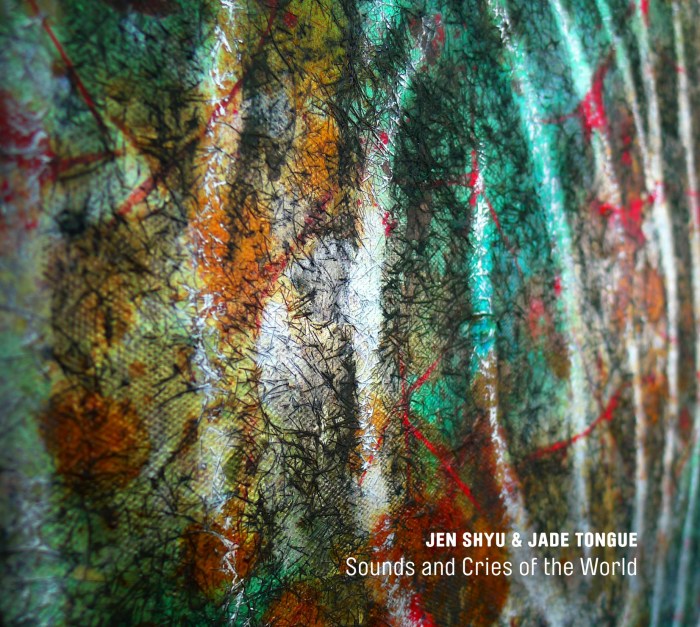
Trust matters. I like what I hear, so I trust the label and allow myself to listen to an artist whose name, instrument choice, style and sensibility is unfamiliar, even strange to me. So here’s Jen Shyu, who plays the 2-stringed Taiwanese Moon Lute, the 12-stringed Korean zither, the Korean gong, and the Javanese gamelan idiophone (that is, the gat kim, gayaguem, ggwaenggwari and kemanak), and sings in a combination of traditional and new ways. Accompanied by trumpet, viola, bass and drums, Sounds and Cries of the World is a multi-cultural musical enterprise. And it works. Like other titles in the growing Pi Recordings catalog, this one comes from an academic arts tradition, growing from the artist’s cultural studies with The Asia Society and the Asian Cultural Council. Given the wonderful popularity of Rhiannon Giddens, on Nonesuch, whose work (post Carolina Chocolate Drops) has been concerned with historical and cultural aspects of music from her heritage, music that grows from musicology doesn’t seem as strange or foreign as it did in the past century. And the combination of those sounds with more modern arrangements and practices makes the music even more interesting.

And the label continues to grow. There’s a new Jen Shyu album, just released, entitled Zero Grasses: Ritual for the Losses, and “devoted to the marginalized voices of women around the world.” Happily, this album follows Song of Silver Geese, which The New York Times recognized as one of the year’s best several years ago. Even more happily, you can listen to, and watch, the work of Jen Shyu by visiting Pi’s website.

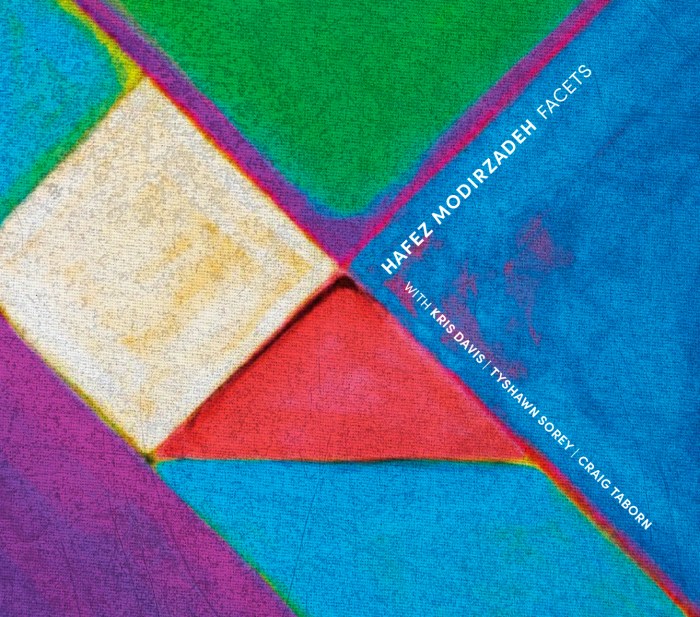
This is no minor effort, this notion of a 21st century record label. There are now about 100 CDs in the Pi Recordings catalog. Included are several by long-time jazz leader Henry Threadgill–the label’s first artist, and Hafez Modirzadeh, a Professor of Creative/World Music at San Francisco State University, whose recent release, Facets, also features Craig Taborn and Tyshawn Sorey (when musicians play together in different combinations for the same label, sometimes, good things happen). That one’s on my list for future listening, as are the two albums by Miles Okazaki, the newer one, The Sky Below, and a very well-reviewed and well-regarded 2017 release called Trickster.

I could easily lose myself in a full summer’s exploration of the Pi Recordings catalog, catching up with what is likely to be even more new releases to accompany our post-pandemic world. Thing is, I find myself stopping everything else I’m doing in order to listen more carefully. To listen more carefully–isn’t that the reason for all of this? Streaming seems to me another way to say, listen less carefully. I prefer the Pi formula. Music is worth the time, and I am extremely appreciative of the effort, care, love, and intelligence that this (now 20-year-old) label has brought to the marketplace and the cultural landscape. Please listen. And buy yourself a CD today. (Or, listen via Bandcamp–these guys are living in the 21st century, and doing the best they can to keep a lot of plates spinning.)

Not incidentally, those guys do have names, an office and a website. They are Seth Rosner and Yulun Wang, their office is in Brooklyn, and you can learn more about them by visiting their About page, which leads to 2011 New York Times article about their story.


We Were Not Alone

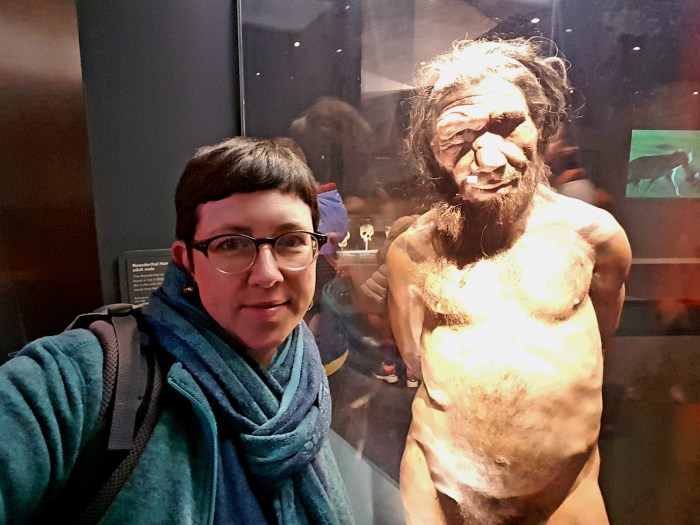
Seems like science fiction, but for a long time, Homo sapiens were not the only human beings on earth. And there were a lot of them. And they lived in a very large area that included most of Europe, much of Asia, and probably, in many other places, too (but we haven’t yet found the evidence). They were far more sophisticated than you might imagine, very similar to our own kind as we evolved, in parallel, from about 350,000 years ago until (fairly recently?) until about 40,000 years ago. If we extended our individual family trees back to that time, most or many of us would find parents, aunts, and uncles, and plenty of cousins who were Neanderthal or mixed with our own kind, and quite likely, mixed with other early humans, too (and, probably, other species). This is not some exotic scientific story. This is the story of our own lives. And no less messy.

This morning, I happened to see a cartoon drawing of two large bears inspecting a minivan. On the back window of the vehicle were stick figures of a human family. One bear remarks, “Look! A menu!” It’s not easy to study the Neanderthals, or other early hominids, because they were eaten, destroyed in battle and accidents, burned, and buried. In fact, buried is good–if you know where to look. So far, we’ve been lucky enough to find bones, tools, settlements, but not many of them. Still, it’s a start, and we’ll no doubt find a lot more throughout the 21st century as we improve our satellite imaging (for example). In the meantime, scientists and historians have figured out some parts of the puzzle. Bear in mind that humans have been pursuing archeology for just over 150 years–and for the first 50-100 years, there were a lot of questions about validity, integrity, and there was astonished disbelief because humans (and their religions) didn’t want to consider the possibility that we were not alone as a human race. Getting past the idea of a “missing link” between humans and apes was, and perhaps remains, a problem, too. And this is made more complicated because Neanderthals are “extremely similar creatures to us” but “many simultaneous pathways existed, some finishing in dead ends, others like Neanderthals developing their own unique bodies and minds that were a match from our own.”

I’m quoting Rebecca Wragg Sykes, a remarkably talented storytelling and scientific historian whose book, KINDRED: Neanderthal Life, Love, Death and Art is an absolute delight. She keeps the story interesting (fascinating would be a better word), piling on the historical details, open questions, likely facts, and the vast vastness of things we don’t know. I love that.

So far, we’ve found about 250 Neanderthal bodies, or enough parts and pieces of bodies to develop some ideas about their lives. We will certainly find a lot more. Their brains and our brains–about the same size (“just as big and deliberating as your own”) Their brow–more expansive than ours. Their babies’ chins–less prominent, so our babies are, or were, probably cuter than their babies. Their eyes–bigger than ours, noting that “people from higher latitudes have eyeballs up to 20 percent bigger than those from near the equator.” Their ears–very similar to our own, inside and out. Their noses–certainly larger, so they could “snort in the air at almost twice the rate we do.” But why? Here’s the speculative layer that’s found throughout the book–questions about whether the larger nose provided greater airflow, more air filtering and conditioning, or a more powerful or refined sense of smell. “…in some ways, Neanderthals’ large internal structures resemble reindeer and saga antelope, which have extensive mucous membranes to reduce dehydration and heat loss…[but] the internal structures in Neanderthals appears to be worse at air conditioning than our own.”

There’s a strangeness about discovering Neanderthal life expressed in time and distance. They lived for several hundred years in an expanse from Spain to Siberia. When something is discovered about a particular body or settlement, one must consider not only where it was found but also when. That’s because cultures and communities are always in motion–so a place-based assumption may, in fact, be more of a time-based assumption. Think in terms of discovering a human body from the Middle Ages in France and another from two years ago in Vancouver, British Columbia, and making statements about their dental care, or their diet. Assumptions must be carefully considered. Now, expand the time scale from a thousand years to twenty thousand years–the assumptions become that much flakier.

Tools: “More artisans than klutzes, [Neanderthals] appreciated the right tools for the job. Selecting hammers…was crucial. Small cobbles have the necessary mass to hit hard for big flakes, but for more delicate work, pebbles are better. And using soft rather than hard hammers produces different effects. Elastic organic materials like antler and bone or even dense rock like limestone spread out the kinetic energy and produce thinner, longer flakes…Tools were often retouched, sometimes to give a particular edge, but often to resharpen them–flakes dull very fast even when cutting meat.” So: yes, Neanderthals made and used a variety of tools for a variety of purposes, just as we did, and do today. This suggests the range of activities they pursued–hardly anything as simple as hitting a bear with a wooden club, though they may have done that, too. They used wood to make spears: “far from pointed sticks…finely crafted from thin spruce and a single Scots pine, their tips are all at the stump end: the hardest part. The shafts were systematically carved off-center for increased strength…Experiments show that the shorter-throwing spears easily range to 30 meters (30 yards).”

Their diet was varied. “Beavers’ fatty tails would have been succulent treats…they certainly gorged on tortoises…dolphins, seal and large fish…ticks and lice might have been nibbled while grooming hair…Neanderthals hunted [bears] more than other predators…burning hints at cooking right there in the den.” They ate plants, too–pine, mushrooms, moss. They cooked stews. They soaked acorns, then boiled them, a far more sophisticated conception than eating only raw meat. They fermented food, one of many examples of planning and preparation.

I could go on through where they lived, how they raised their children and families, the art they made, their customs and care for the dead, and more. There is so much in KINDRED, and so much of it is captivating. And I am so looking forward to the next book from Ms. Sykes. I have found a new favorite author.

Just Beyond Penzance

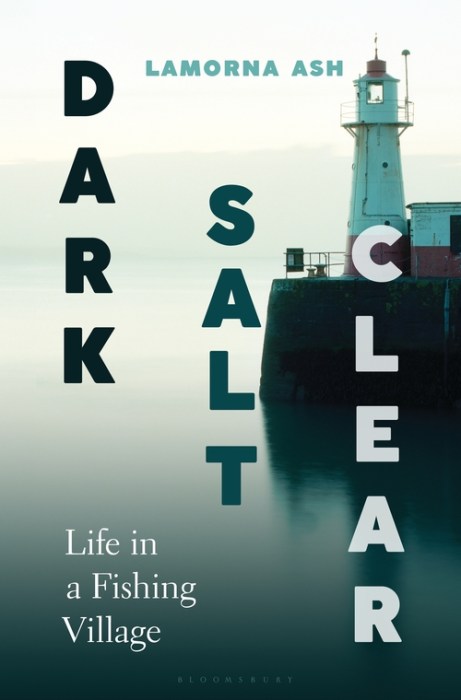
Penzance is the big place, the one with the proper harbor, and renown of Humphry Davy, the renowned chemist who invented the miner’s headlamp and, with Michael Faraday, figured out diamonds were pure carbon. Just beyond Penzance, and well within its local government authority, is the town of Mousehole, apparently a fairly dull place, but before Mousehole, there’s Newlyn. And that’s where this particular story takes place. In Newlyn, and in the water which provides Newlyn with its distinction as the largest fishing port in all of England. More than a hundred years ago, Newlyn was an artist’s colony. Now, Newlyn is popular with weekenders. There’s a healthy number of pleasure boats, some quite costly, and some pubs and restaurants cater to the upscale trade, but that’s not the interest of Lamorna Ash, a London-based writer whose unusual given name has its roots in the Newlyn region. Ms. Ash has written a very good account of her immersive adventure in the fishing life of Newlyn. It’s called Dark Salt Clear: The Life of a Fishing Town.

The book straddles a good traveler’s adventure–she spends much of her time among fisherman (rarely a fisherwoman)–but it’s also a solid bit of natural, historical, nautical and personal storytelling. This is not an easy balance to achieve, especially for a first-time author, but she has done the job well. Of course, the real fun is on the fishing boat, crammed into close quarters on the Filadelfia, first coping with the inevitable seasickness, eventually learning to gut, finding various bits of fish innards in her hair even after a good shower, and working her way up to filleting. She learns the peculiarities and challenges associated with monkfish (nasty), sole (exceedingly difficult to handle), turbot (which must be sliced just-so in order to maintain their bright white color). She manages well past the issues related to a women among men, gaining acceptance through relentless willingness to do the work. She works hard, and we’re alongside her every step of the way. Not much emotion here, not much complaining. A good sense of humor, and a wonderful sense of just how much she is attempting and the gumption required to succeed. She’s a good companion, and when you’re at sea on a fairly small vessel for days on end, that matters a lot.

Her explanations of history, economics, and geography are clear and well-informed. “In 1968, the biologist and ecologist Garrett Hardin published a paper called ‘The Tragedy of the Commons,’ in which he argued that individuals are motivated by their own sense of self-interest to overuse common property. If the seas are left unchecked as a communal resource, Hardin explains, each man will ensure he spends as much time and effort at sea as to be certain no one else can take his share. The tragedy of the commons, as with most economic theories designed to make sense of an unpredictable world, is not as simplistic as first outlined; humans cannot simply be reduced to inherently selfish agents, as they cannot be reduced to purely good or evil. Rather it seems clearer now that the rising competition over the produce of the seas is also intrinsically tied to the expansion of capitalism around Europe, the advancement of fishing technology and the more desperate conditions created by post-war austerity.”

There’s serious food here, too. Fresh fish, of course, but also elaborate meals prepared in a tiny kitchen: their fish curry, hake and onions with thyme butter, haddock on a bed of shallots (‘but not so French’) with Gruyère cheese and bacon; and “a roast with all the trimmings every other day.” Fishing is hard, physical work. The food fuels the effort.

Amidst references to Wozzeck, Ovid’s Metamorphosis, ghosts, phosphorescent fishing nets, pilchards, the dangers, the joys, the pub, the friendship, Ash finds her place among 21st-century authors with a fine first book and at least one reader who looks forward to the next. I hope she’s writing it today.

Seeing 10 Years into the Future

Somehow, even in the shadow of the virus, we can see 2030 with surprising clarity. We know a lot, and we can make good guesses about much of what we don’t know. In fact, I’ve been doing this for several years, traveling the world, speaking to university audiences, explaining how and why Southern Asia and Sub-Saharan Africa are the places that today’s students must study because of their enormous population increases and their associated growth as consumer markets. I’ve been focused on the lives and futures of young people growing up in the 21st century, much of it connection with Kids on Earth, a global interview project, and my work as a Senior Scholar at The University of Pennsylvania.

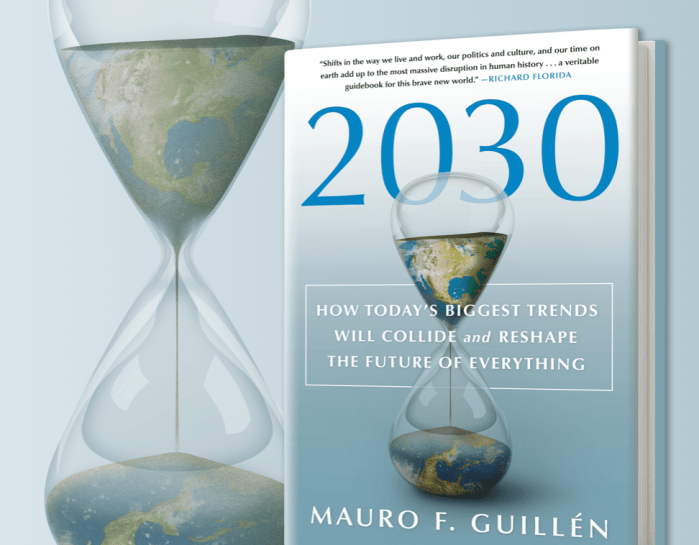
In fact, it was a browse through a UPenn newsletter that led me to Professor Mauro F. Guillén, a colleague at UPenn’s Wharton School. About two months ago, Guillén published a book entitled 2020: How Today’s Biggest Trends Will Collide and Reshape the Future of Everything. My interest in children, teenagers, parents, and schools; his is business, economics and government, but our circles overlap with plenty of shared space.

For both of us, the key to the secrets of the 21st century is the number of babies being born, where they are being born, the number of people who are living long lives, and where they are living those lives. He sets the stage with the rapid growth of the world’s population: 3 billion by 1960, 4 billion by 1975, 5 billion by 1987, 6 billion by 2000, and 7 billion by 2010.

And then: “The reality is that by 2030 we will be facing a baby drought.”

Take a closer look: “for every baby born in the United States, 4.4 are being born in China, 6.5 in India, and 10.2 in Africa” and “improvements in nutrition and disease prevention in the poorest parts of the world have made it possible for an increasing number of babies to reach adulthood and become parents themselves.” And so, by 2030: “South Asia (including India) will consolidate its position as the number-one region in terms of population size. Africa will become the second-largest region, while East Asia (including China) will be relegated to third place. Europe, which in 1950 was the second largest, will fall to sixth place, behind Southeast Asia…and Latin America.”

If 21st-century governments were more open to immigrants, the trends could equalize, but they’re going in the opposite direction–limiting incoming populations from countries whose people they need in order to maintain not only sufficiently large populations but also sufficiently young ones. That is, Europe and The United States will become increasingly old–which is terrible for the economy (the success of Social Security in the U.S., for example, relies upon income from the younger population, which disappears if there aren’t enough babies and aren’t enough immigrants). As we make these (okay, the correct word really is “stupid”) decisions, we are making an economic and social mess for ourselves.

It’s always instructive to study maps. One of my current favorites compares the size of the African continent with various countries. If you move the countries around like jigsaw puzzle pieces, you can fit all of China into the part of Africa that’s south of the equator, with all of India and all of the United States, and Eastern Europe, and France, Germany, and Spain, and still find enough space on the continent for The U.K., Japan, Italy, Switzerland, and a bunch of other countries. It’s not easy to think clearly about Africa, or any other place unless you understand its size, its history, and its potential for the future. Incredibly, people in the countries listed above know very little about Africa (challenge yourself: how many African countries can you name? how many cities?)

Perhaps women will think more clearly than men have done. This is the other huge trend: women graduating from higher education, with more advanced degrees than men, and gradually gaining power in both industry and government. They marry later–average age of first time mothers is now 28 years old. For example, “in the 1950s, about 7 percent of women between the ages of 25 and 29 had a college degree, half the rate of men. Nowadays, the proportion of women with a college degree is 40 percent, while the figure for men is only 32 percent.”

Now, let’s think about old age. People really are living longer–science, medicine, biotech, nutrition, hygiene, education, social programs–everything contributes to longevity. “By 2030, the average 70 year old will live like today’s average 50 year old.” We’ll be aided by robotics, and devices that make it easier to climb stairs, maintain balance, diagnose disease more quickly, and more–all of this takes shape during the current decade. In many ways, this is driven by necessity. For example, “by 2025, Japan will need 1 million nurses the country currently doesn’t have.” In the U.S., as in most countries, “about 90 percent of paid senior care is done by immigrants”–but our present-day policies are limiting the number of available workers. If Japan solves the problem with robots–a significant current effort–perhaps the U.S. will benefit.

Forget about “keeping up with the Joneses.” Now, we’re “keeping up with the Singhs and the Wangs.” Forget about your current notions of cities as a great place to live and work. (We’re seeing this in the real estate market as many people leave the crowded cities for locations with fewer people, less crowding, and increasingly excellent services.) Many cities exist near bodies of water, and with climate change, water levels are rising, and storms are causing chaos. Also on the subject of water, several cities in India are illustrating a nasty future in which water supply is insufficient for population needs. (“A majority will face formidable challenges related to pollution, congestion, and security. The cities most exposed to climate change will suffer from a shortage of freshwater and an excess of saltwater.”) Less so, perhaps, for food needs as vertical farming is becoming to take hold. And yet, some cities are flourishing–even during the pandemic, and hopefully, afterwards–because of creative class and knowledge workers–but these are precisely the folks who can work just about anywhere.

Present-day assumptions about ownership may be giving way to newer assumptions about sharing (a phenomenon slowed by the pandemic). Assumptions about the ways money and banking work are also taking shape in new ways–look at the progress made by PayPal, Venmo, and credit cards in a marketplace where so many people are now reluctant to handle paper currency and coins. We may be seeing the end of non-digital money by 2030.

I like the quote from William Faulkner that begins the end of the book: “You cannot swim for new horizons until you have courage to lose sight of the shore.” So here we are, stuck in the pandemic, questioning whether we all ever return to the old normal, strikingly unaware of so many of the realities already in the “high likelihood” category for 2030. We’ve already lost sight of the shore; we just haven’t accepted that reality.

The author’s suggestion that we “approach uncertainty with optimism” may be the only approach that makes sense in what is now a fairly crazy world of the future.