Your New Digicar Subscription

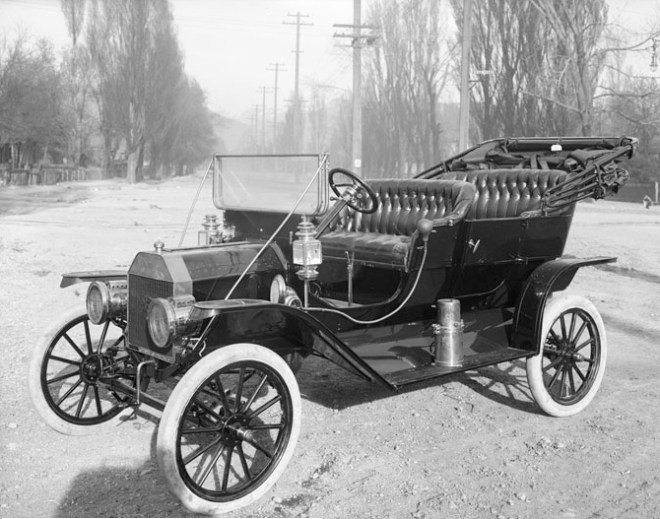
Ford Model T, circa 1910. Buy it for $850 or rent it for 10 cents a mile.

Ford Model T, circa 1910. By 1916, you could buy one for $850 or rent one for 10 cents a mile.

Robotic cars that drive themselves–that’s the comic book version of the future currently in advanced stages of development at Google, Mercedes-Benz, and, I would guess, just about every significant vehicle and technology maker on earth. Before the end of the 2020s, these cars will be as common as a Toyota Prius. In theory, cars that drive themselves will reinvigorate the automotive industry.

But that’s not the big story.

For a moment, think about your telephone(s). In your pocket or bag, you carry an expensive digital multi-purpose device that multitasks as a telephone, messaging center, emailer, web browser, camera, clock… so on. At home, you may still pay for a relatively stupid device that is little more than an old school telephone. Which one will go away? Easy answer.

Now, transpose that thinking to the car of the future. It’s foolish to impose old expectations on a new paradigm. A digital car will probably reinvent the whole idea of cars as well as our relationship with personal vehicles. We saw the start of this idea with rental cars. ZipCars showed up in the US around 2000, an idea borrowed from Europe. City dwellers and college students are Zip’s best customers because the opportunity to pay a membership fee for occasional use of a car is more sensible than owning, maintaining, parking, and otherwise caring for a physical product. In essence, ZipCar transfers the customer relationship from product purchase to service/subscription.

From last weekend’s Wall Street Journal:

Brace yourself. In a few years, your car will be able to drop you off at the door of a shopping center or airport terminal, go park itself, and return when summoned with a smartphone app.”

Presumably, the new cars won’t crash–saving enough lives to repopulate Newport, Rhode Island or Key West, Florida every year, and then some.

From the same WSJ article:

private vehicles spend 90% of their time parked and unoccupied

Let’s pull together several ideas. Texting while driving is just plain dumb. And yet, for most people, driving a car is less interesting than playing with an iPhone. If there was some way to move from place to place and allow texting (or emailing, playing a game, or learning), that might be preferable to our 2013 status quo. Me, I’m happier reading a book than doing daily battle with aggressive trucks exceeding the interstate’s speed limit. Let my digicar’s radar system, wide-baseline stereoscopic camera, massive processing power (think: computer chess applied to the calculus of high-speed traffic or crazy curvy country roads). Let vehicles talk to one another (“hey, I’m in the wrong lane–would you please slow down so that I can make that right hand turn coming 2.348 feet at longitude X and latitude Y?” “sure, anytime, have a nice day”)

How does EZ-Pass and privacy fit into all of this? For those who still honestly believe that their travels are not easily recorded, stored and compared with every shopping receipt, it’s both another loss of freedom and another realization that privacy is something that one cannot easily or simply protect in a digital age. Certainly, this information could become the property of bad people (or governments or large corporations, who may or may not define ‘reasonable’ as individuals do).

A digital car would certainly know where it is going, where it has been, and where it needs to go. And it would know, and record, passenger identities. When traveling, we’ve been balancing time, money and privacy for a long time. Here’s the current situation–consider how similar a digicar service and the “rental” of your airline seat can be:

If I want to travel from Times Square to Hollywood, I can drive for about 40 hours (more, if there’s traffic, but my digicar might know how to circumvent it). If I drive 8 hours/day, that’s 5 days of driving, 4 hotel nights (about $500), and 2,800 miles (100 gallons of gas, or about $400 worth), plus wear-and-tear of about $200 (if all goes well)–5 days of my life plus over a $1,000 of my money. I could take the train for 20 hours and spend about $450, but if I want to sleep on the train, it’s 43 hours and $1,200, plus the time and money required to get to and from the train stations. If I fly, my time expense is about 8 hours door-to-door and my dollar expense is $500 including ground transportation. Train and air travel requires me to surrender personal information about my identity and my precise travel plans; car travel does not (except when I use a credit card to fill the tank, which I will do about 8 times, pay a toll with EZ-Pass, or sleep in a hotel, or eat, making it easy to track my progress).

A long paragraph for a short idea: we routinely exchange privacy for time and money. Are we ready to surrender those expensive machines that sit idle all but 10% of their lives. Is the car of the future more likely to be a product (buy one at your local Ford dealer) or a service (lease one with an app, or sign up for a rental subscription service).

The answer is pretty clear to me. After the vehicle drops me off at the supermarket, I don’t much care what it does or where it goes, and, in most situations, I don’t  care whether it’s Holly, Dolly, Lolly, Molly or Folly The Digital Car that picks me up when I’m ready to go home. I just want to know that it will be there, on time, clean, reliable, capable, and right-sized for my needs (smaller if I have no bags). If I need the car for an extended period, I’m sure I could pay a higher subscription rate, perhaps by the month or year, perhaps by the trip. Will I be able to reserve? Will the vehicle show up? What if we get lost? What if there aren’t enough cars?

How many cars is enough cars? Right now, we’ve got about a billion cars for about seven billion people on planet earth–but that’s only because China’s ratio is about 7 people to one vehicle (in the US, it’s about 1.3 people per car).

More cars, more roads, more paved-over nature, more crowded national parks, more traffic jams, more stress on an interstate infrastructure that’s already stressed. Fewer cars? How about more efficient use of the whole idea of cars? Think about my imperfect math: if every car’s use was doubled in its efficiency, and was used 50% of the time, maybe we could reduce the number of cars on the planet by a third or more. If the cars were smart enough to avoid accidents, there would be no more time or energy spent on drinking and driving, or texting while driving, and no more arguments between teenagers who are probably too young to drive and parents who are terrified every time their child backs up out of the driveway.

For details about specific companies and their progress, click on the Wall Street Journal’s car below.


WSJ Car

Say It Ain’t So

The above image shows a practice with a few members of the 1886 White River Base Ball Club of Conner Prairie Living History Museum. Pictured are, from left to right: "Thunderbolt," "Digger" (hitting), "Hay Wagon" (pitching), "Scooter" (catching), and "Steamboat."

The above image shows a practice with a few members of the 1886 White River Base Ball Club of Conner Prairie Living History Museum. Pictured are, from left to right: “Thunderbolt,” “Digger” (hitting), “Hay Wagon” (pitching), “Scooter” (catching), and “Steamboat.”

From a recent Sunday edition of The New York Times, just before this year’s baseball playoffs began, a comment followed by a quote from forever sportscaster Bob Costas:

Think for a moment about the very phrase, ‘national pastime’ now, in 2013. What sorts of images does it conjure? ‘It sounds like a guy sitting on a rocking chair on his porch listening to a game on the radio and maybe he’s whittling.”

Another concerning quote from the same article, this one from Mark Twain during the game’s early days, preceded and followed by the newspaper’s comment:

Mark Twain called (baseball) a symbol of  ‘the drive and push and rush and stubble of the raging, tearing, booming 19th century!’ (From the Times:) ‘The 21st century, not so much.”

What happened? Pro football, mostly. Certainly, football more closely matches Mark Twain’s description of thrilling competition.

One more thought, first from the Times and then, from Mr. Costas:

When the post season rolls around and it’s time for baseball to take the national stage–well, it doesn’t unless the Yankees or the Red Sox are involved. (From Costas:) ‘If Tampa bay plays Cincinnati in the World Series, I don’t care if the series goes seven games and every game goes into extra innings, baseball is screwed. That’s not fair to the Rays or the Reds, but it’s true.”

It’s not easy to reinvent a sport, or a religion (where numbers are also down, except, as you may have read, among  Mormons and  Muslims). Their value is deeply rooted in belief systems, legacy and traditions. Clearly, building a new church or a new ball field suggests modernism and causes a bump, but neither solves the problem. Digital distribution of Rosh Hashanah services and every local baseball game will get you only so far. Eventually, the “what happened to us?” question must be answered.

Violence is the new American Way (as a rule,  prime time dramas feature at least one violent act, a corpse, and a conversation in a morgue).

Football benefits from simulated (and, on occasion, actual) violence. Baseball is  thoughtful, careful, complex, complicated, and not often violent game. Individual contributions and team competition elegantly balanced.

Unfortunately (for baseball, fortunately for many of us), baseball contains less action, fewer pile-ons. We like action. Maybe baseball players should run all of the time, and knock one another down? Maybe priests and school teachers should rap their lessons. Maybe every sport has its day.

Seems unlikely. But how do you reinvent a part of America? How do you reinvent schools, or church, or baseball, or cars, or suburbs? The 21st century is such a strange place, particularly in  “we used to be king of the world” America.

So where do we start? (How do we get to first base?) Long ago in the America of Mark Twain, we did things bottoms-up: town hall meetings, neighbors helping neighbors. Now, we do things top down (this being the basis of CBS’s “Undercover Boss,” where gap between boss and working stiff is vast). Traveling to and from the U.S. from other countries, it’s striking to see just how big the houses, the corporations, the school systems, the baseball leagues, the salaries have become. Big government, now shut down, in part, because of its own enormity. Big generates its own expectations and ecosystems. Big forces a universal top-down approach to problem-solving.

Small struggles to survive. We underfund small because big is more powerful. We underfund simple because the neighborhood playground lacks a business plan. We fix the interstate (because its traffic numbers are, you know, big), but the local street’s potholes remain, and there aren’t enough cops on the local beats. We ignore our local newspapers, and local news, because we’ve been led to believe that what happens in big Washington is more important than what happens in small Indianapolis. We don’t bother to vote, in part, because elections are, by and large, boring. Small, for the most part, and boring.

So? Baseball? Yeah, it’s a slower game than baseball, and no, it doesn’t attract the big celebrities like basketball or football does. Baseball competitive without the rough contact. It’s a game of numbers where a smart guy like Billy Beane can, in the words of Wikipedia, do well because of “the team’s analytical, evidence-based, sabermetric approach to assembling a competitive baseball team, despite Oakland’s disadvantaged revenue situation.” The joy of baseball is local, and small, even if the business of baseball is big. Perhaps the same could be said of high school football, where community is illuminated by the Friday night lights.

If the point of baseball is a pleasant sunny afternoon, not too far from home, scheduled so that I can grab a few games a year and, perhaps, revisit one of the 19th century’s better inventions, that’s going to be okay for a while, at least for me. Better, maybe, than calling a championship a “World Series” while failing to invite all but one other country to participate in the big competition.

Still, a pleasant afternoon in Status Quo Stadium won’t sustain baseball, not in the long-term. Maybe we’re willing to watch baseball go the way of Kodachrome, bookstores and schoolteachers (oh, sorry, that one doesn’t happen until 2027), that’s fine, I guess. But I sure want to see the game back up on its feet, not through easy gimmicks, but because it lives up to Yogi’s quote about being ninety percent mental and the other half physical.

What’s a MOOC Good For, Anyway?

This week, I’ve spent several hours with a friend whose intellect is recognized by a Ph.D. from an Ivy League university. We’re both deeply engaged at the intersection of media and learning, most often for some form of public good. Yesterday, we talked about why people go to school.  To be more specific, why people go to school beyond the point where law requires them (us) to do so.

Harvard-MOOCWhen I read this readwrite article, an interview with Harvard’s new vice provost of advances in learning (excellent job title!), I started thinking about why anybody bothers with, say, TED Talks, or for that matter, why we read non-fiction books.

Just as we’ve managed to bottle up massive quantities of spirituality into the structures we call religions, we’ve managed to do the same with massive quantities of learning into the notion of school and organized education. MOOCs shake up that formula. A MOOC–a massively open online course–carries no price tag, and, although it may be offered by the likes of Harvard or Stanford or UPenn, it carries no credit, either. You take the course because, well, because you want to learn.

The distinction is a simple one, or so one might argue. There is learning, and there is education, and if they sometimes overlap (as they are intended to do), they might serve different purposes. Learning is all about personal development, and refinement of understanding. Education’s purpose is a degree, a formal recognition, typically for a price, that serves as an admission ticket into parts of the job marketplace that are otherwise inaccessible.

So what’s a MOOC good for? Same thing as a book, I think. It’s for learning. Turns out, millions of people simply want to learn, on line, for their own development and understanding.

Of course, that’s not the whole story. Do read the readwrite article (interesting phrase, that), and you’ll find that a bit more of the picture comes into focus.

Shooting with an iPhone

richardson-featured

So the new iPhone 5s includes an 8 megapixel camera. What can you do with a camera phone?

Turns out, quite a lot, especially if you happen to be an extremely skillful photographer whose credits include National Geographic.

Confirming the “it’s not the camera, it’s the photographer” theory, have a look at this work, read the article, and take the time to read the comments.

Here, then, is a sample image, a bit of the article in a Nat Geo blog, and a sampling of comments. Find it all here.

The photographer is Jim Richardson.

What surprised me most was that the pictures did not look like compromises. They didn’t look like I was having to settle for second best because it was a mobile phone. They just looked good. Nothing visually profound is being produced here, I would have to say. But it feels good, and I even noticed some of the folks on our tour putting big digital cameras aside once in a while and pulling out their cell phones when they just wanted to make a nice picture.

Alex of Virtual Wayfarer.com had this to say:

Not a fan of the either or approach that has been floating around, but definitely love the flexibility of using my phone as a camera. Scotland is incredibly difficult to photograph, so kudos for some wonderful shots. I actually find that with some vistas and views I have a much easier time capturing it accurately with my phone than my Canon. Interestingly, there were a number of shots I took on a recent Scottish roadtrip that were much better on the iphone (landscapes and Panoramas really are great on there if the light is right) than on my dSLR. Kudos!

Not quite convinced? Try the photographer’s Instagram exhibit, where you will find several dozen superb photographs. Among them, this image.

instagram

The Nuremberg Chronicle

Or, more or less, the Wikipedia of 1493, the year Columbus first visited the Western Hemisphere.

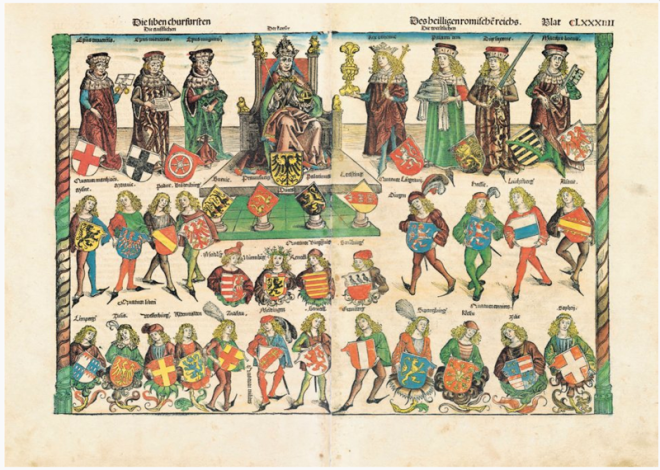
Nuremberg3It’s a big, old book, the kind of illustrated, illuminated, hand-lettered book that I would never expected to see in my own home. But here it is, nearly 2 inches thick, reproduced by the always-intrepid Taschen publishing company. As you can see, it’s quite a beautiful old book, with colorful illustrations of kings and townscapes on every page. Looking carefully, I can make out a page about Florencia, also known as Florenz, today’s Florence, Italy, and on another page, the now-German town of Wurtzburg. There’s Rom, or Roma, with its bridges and towers, and the formidable city gates. Here’s a stylist family tree, but the old lettering is difficult for me to understand. A book like this might occupy a few minutes in a museum, and then, I’d move on. But to have it in my hands, well, that’s another thing. Its age demands respect, and time to study, not to peruse but to study, every page, slowly and with a sense of insight and discovery.
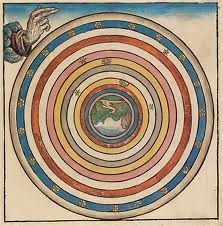
imagesFortunately, the cardboard slipcase includes not only the main volume, but a large-format color paperback book entitled The Book of Chronicles. In essence, it’s a guidebook, written in English, nicely illustrated, and it helps to make sense of the larger volume.  It begins,
The handwritten layout for Hartmann Schedel’s Weltchronik, or Chronicle of the World, widely known as the Nuremberg Chronicle, has survived in the municipal library of Nuremberg… This chronicle is structured as follows: the First Age from Creation to the Deluge; the Second Age from the Deluge to the Birth of Abraham; the Third Age from the Birth of Abraham to the Kingdom of David; the Fourth Age from the beginning of the Kingdom of David to the Babylonian Captivity; the Sixth (and longest) Age from the Birth of Christ to the present day. A brief Seventh Age follows, reporting from the coming of the Antichrist at the end of the world and predicting the Last Judgement. This is followed, somewhat unsystematically, by descriptions of various towns…digressions on the subject of natural catastrophes, wars, reports on the founding of cities…biblical stories.”

The work was put together at the pleasure of several benefactors, financial backers who are credited. (Their names and stories are explained in the paperback, but none will be familiar to contemporary readers.) One familiar name is the artist Albrecht Dürer, whose sketches may have been the basis for the many woodcuts found in the Chronicle.

Approximately 2,000 copies were published, and about half went unsold. Many of the copies were sold by booksellers–nice to know that there were booksellers around 1500, sad to think that there may be none within our lifetimes. Books were sold sold by banking and trading houses, and their clients. Academics also sold books as a means to earn some extra money. Many books were sold in and near Nuremberg, but they were also sold in Milan, Florence, Geneva, Venice, Lyon, and Paris. The majority of the books were published in Latin, but some were published in German. It surprises me that we know so much about the publishing and marketing of a book that was current more than 500 years ago.

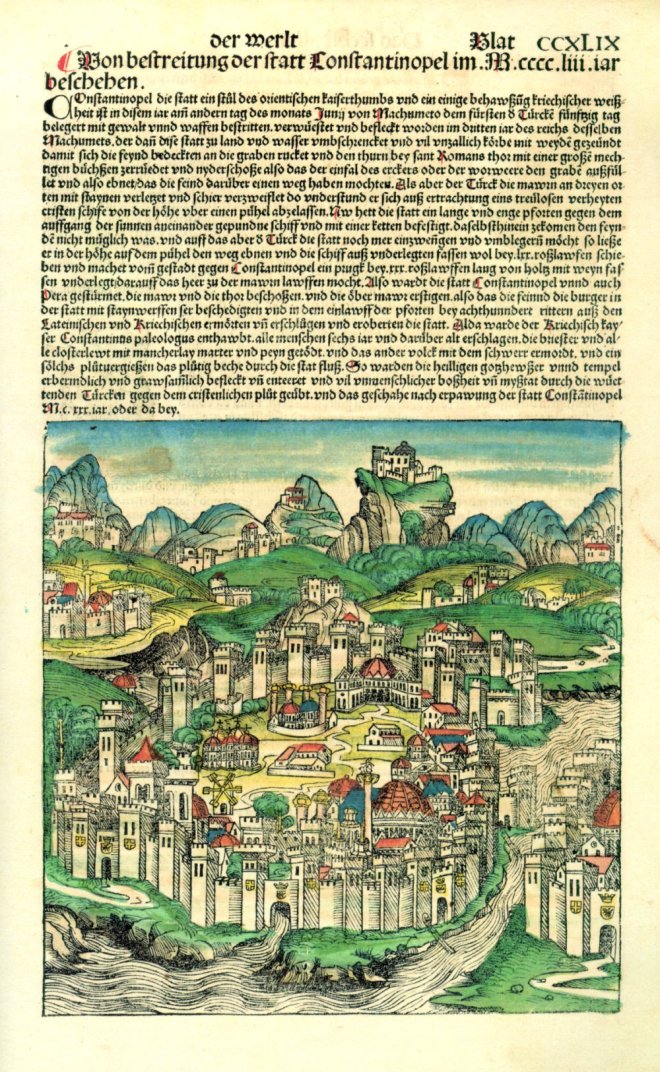
Here’s the scoop on Constantinople, circa 1493:

Schedel_konstantinopel

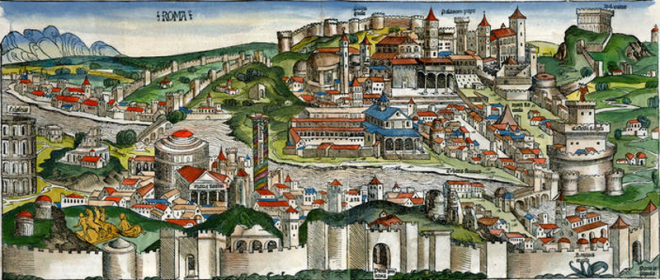
Here’s a look at Rome, slightly improved through digital technology:

Rome

Here’s what you’re seeing: “On the left we can see the huge Coliseum. To its right are the ruins of the Theater of Marcellus and Santa Maria Rotunda, formerly the Pantheon, the best-preserved of all Rome’s ancient buildings (27 BC), rededicated under Pope Bonafacio IV (AD 609) to Mary and all the martyrs. In the foreground, we see the Aurelian Wall with various city gates. From left to right, they are Porto Quirinale, the Porta Pinciana, and the Porta del Popolo, which was the first church visited by pilgrims arriving from the north and Germany. Just behind it is the bridge of St. Angelo which leads across the Tiber to the Castellum S. Angeli. From there, the pilgrim can continue straight ahead to the Vatican or left to the (old) St. Peter’s. At the top of the picture, in the middle of the Vatican walls and to the far right of the papal residence, is the Villa del Belvedere, built under Pope Innocent VIII (1484-1492).

Page after page, I kept wondering how I might touch the page and magically transform the old Latin or German text into words I could read. Odd to be wondering why a half-millenium old book won’t behave like an iPad, but that’s the way we’re now thinking about the world. Perhaps that’s progress.

Watercolor Artist Mark Stewart

Mark Stewart - Pink Dress GirlEvery once in a while, I’ll find an artist on the web whose work I truly admire. I recently stumbled upon a Texas watercolorist named Mark Stewart, and I thought you might enjoy seeing some of his work. Of course, there’s no reason why you should read any of what I have to say… just go directly to his gallery pages and see for yourself.

At this level of excellence, artists are one-of-a-kind, but stylistic comparisons with other artists are part of the viewing experience. Somewhere between the watercolors of Andrew Wyeth and the southern portraiture of Mary Whyte (the subject of an upcoming article; watch this space), I find pleasure in the simplicity and near-realism of Stewart’s fine work.

Mark Stewart farmhouse

Here’s a painting called Colonial Day. Bear in mind that these are watercolor paintings–a medium notorious for its free-flowing, mind-of-its-own paint. What I suppose I like best here: the artist’s willingness to combine go-with-the-flow with an extreme level of precision and control. If you’ve looked twice and wondered whether you are, in fact, seeing a photograph, look more closely as the drape of her skirt, the green patch on the right side of the road, and you’ll find yourself in a watercolor-photographic dreamland. The artist is in control of your imagination. As life should be.

10014_450

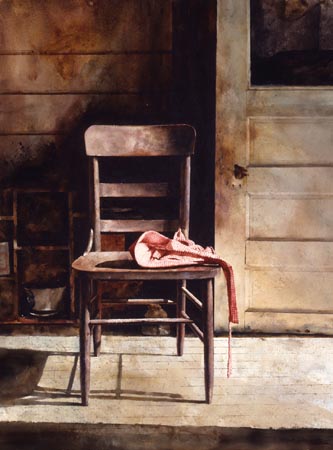
One more simple pleasure: a still life that seems to want to tell its full and detailed story. It’s called Bonnet Chair.

Bonnet Chair

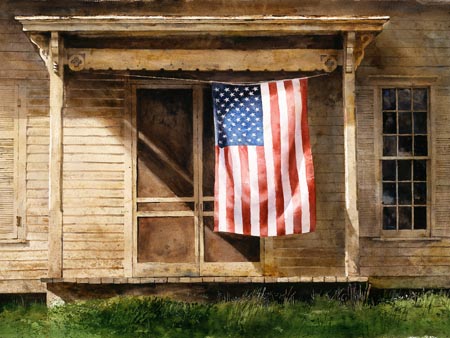
So who is this man? He’s a working artist, one of perhaps a few thousand who can claim that distinction within the specialized world of watercolors. He makes his living by selling paintings, greeting cards, prints, and books–just like so many other artists who find their own way. For those who wish to dig deeper, he and his wife Sue enjoy writing about their lives, his process, his art, her feelings, and more. They do in book form (read it online), and also as a kind of ongoing dialogue. The conversations and interactions add texture to the visuals, but in the end, it’s the visuals that are so very compelling because they are so plain and so elegant. Here’s another, but I do hope you will visit the site and browse the gallery, and perhaps, support the artist as well.

Mark Stewart Flag

One final note: I started a meeting today with a favorite quote (which appears in many different forms) from Albert Einstein:

The most beautiful experience we can have is the mysterious–the fundamental emotion which stands at the cradle of true art and true science.”

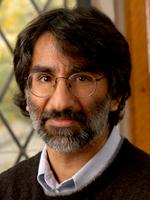
I’m writing this blog article at the very end of the day, just before bedtime. As I was closing up shop for the day, I happened to glance back at Mark Stewart’s website, and I saw this quote, image, and artist’s photo blend together. A nice way to end the day.

Einstein-Stewart

Never Thought About It That Way Before…

brochure1-mBirthday: August 4, 1961

Statehood: August 21, 1959

The first is the birthdate of the current President of the United States. The second is the date that Hawaii was transformed, by law, from a U.S. Territory to a U.S. State. The two dates are separated by two years, and just about two weeks. If Mr. Obama had been born on, say, August 20, 1959, he could not become  President.

On October 5, 2004, a Yale Law Professor named Akhil Reed Amar testified before the United States Senate. At the time, the Senate was exploring the reasons why, in today’s world, an immigrant was not allowed to become President. Professor Amar knows a great deal about the U.S. Constitution. He points out, “the Founders did exclude…immigrants from the Presidency. But they did so because some at the time feared that a scheming foreign earl or duke might cross the Atlantic with a huge retinue of loyalists and a boatload of European gold, and then try to bully or bribe his way into the Presidency…In a young America, when a fledgling New World democracy was struggling to establish itself alongside an Old World dominated by monarchy and aristocracy, this ban on foreign-born presidents made a lot more sense than it does in the twenty-first century.”

He goes on to explain that seven of the Constitution’s thirty-nine signers were immigrants; that three of the first ten Supreme Court justices were foreign-born; and that similar statistics applied to other key government figures. What’s more, the Constitution was approved by an enormous number of people who were not born here; the same is true of nearly all of the Constitution’s amendments. People who serve on juries, people who vote, people who want to run for Governor of any state…all of these people may be foreign-born. But not the U.S. President.

It took me a bit to get past my emotional responses to Amar’s arguments, but after reading nearly 1,000 pages of his analysis and provocative investigations, my mind is now becoming accustomed to the kind of workout that a law professor can provide.

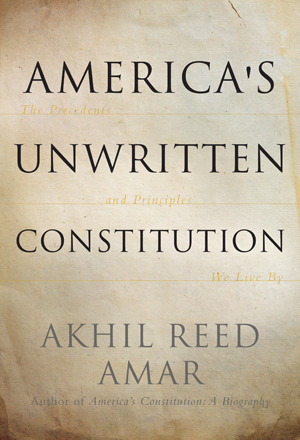
amar_akhilI started reading Amar’s book, American’s Unwritten Constitution: The Precedents and Principles We Live By last spring, but quickly realized that the book would make a lot more sense if I first read America’s Constitution: A Biography. The first book explains how the Constitution came together, and how its ideas have been interpreted, applied, shifted, calcified, de-calcified, respected, and transformed. The second book is more provocative; it requires the reader to consider his or her place, the decisions that we make within and beside the Constitution, the responsibilities that we accept as, for examples, voters and jurors.

The word juror, for example, is derived from the French and Latin words for “swear.” Not what I would have thought, but then, Amar shines the light on the concept of swearing an oath. What does the oath promise. In essence, we take an oath to use our conscience effectively. That is, we are swearing that we will, to the best of our ability, exercise a reasonable, moral, ethical judgment based upon the information provided to the jury. Which is to say, “when a juror is not told what punishments she is actually voting to inflict, and not told that she has a legal right to just say no and a legal duty to consult her conscience, then the moral foundations of the entire system begin to crumble.”

He goes on–these are long books, best appreciated over an entire summer of quiet nights–“Current practice…all too often instrumentalizes and infantalizes jurors by disrespecting or derailing their moral judgment. When a juror finds a man guilty of having shoplifted a baseball glove and only later finds out from a local newspaper or lawyerly acquaintance that what she really voted for was in the jury room was to send this poor soul to prison for life (and at taxpayer expense), she is apt to feel ill-used–as is the defendant, of course.

I think I’ve dog-eared the bottom corners of perhaps fifty pages–each containing a notable idea that I want to think about, learn more about.

Professor Amar, loose and having a good time as a guest on The Colbert Report last January.

Professor Amar, loose and having a good time as a guest on The Colbert Report last January.

In the second book, much is made about the Northwest Ordinance, a subject I vaguely remember from seventh grade, and perhaps, tenth grade in slightly greater detail. The key idea–and you’ll see why this phrase was so important in a moment–the key phrase in that document was “There shall be neither slavery nor involuntary servitude in the said territory, otherwise than in the punishment of crimes whereof the party shall have been duly convicted.” No slavery in what would become the states of Ohio, Michigan, Illinois, Wisconsin and Minnesota. Amar points out, “(these states) formed the backbone of the Republican Party. Men from these places filled the Union Army at every level, from Grant and Sherman on down. Without these northwesterners, there would have been no President Lincoln, no Civil War victory, and no Abolition Amendment… Residents of this region arrived there from many different places (especially from the free states, of course), and inclined toward a distinctly nationalist worldview. Whereas nineteenth-century Virginians like Robert E. Lee gave pride of place to their home state (which had pre-existed the Union by more than a century…), northwesterners tended to see themselves as Americans first and state residents second. America had chronologically preceded the states they now called home.”

I kept finding myself thinking, “gee, I never thought about it that way.” I suppose that’s why, through all of the details of Supreme Court cases, nuances of amendment wording, minute details about the judicial process, I stuck with it. I have fifteen pages remaining. I will finish my summer’s reading before I fall asleep tonight. This summer, Professor Amar taught me a lot. And based upon the dog-ears, I’m not going to finish with these ideas for a long while.

As it should be.

Amar-Americas_UnwrittenHORIZ

A Fight Over A Postage Stamp

Korean War Stamp_1On September 20, 2013, the U.S. Postal Service was ordered to pay well over a half-million dollars to Frank Gaylord. He is a sculptor, the artist responsible for the Korean War Veterans Memorial in Washington, D.C., which is managed by the National Park Service for the American People. (Let’s not forget: when the U.S. Postal Service writes the big check, they’re paying him with my money, and yours).
The U.S. Postal Service issued a stamp picturing the work,  based upon a photograph whose rights were cleared prior to the stamp’s publication.

For several years, the Postal Service and Mr. Gaylord have been caught in a legal tussle about copyright infringement. It’s interesting, confusing (as these cases tend to be), and provides a useful snapshot of U.S. Copyright Law, Fair Use, the rights of artists, questions about public property, and more.

Here’s a quick rundown on the story from Stanford University’s CIS (Center for Internet and Law):

One of the important questions the case presents is whether this stamp makes fair use of the statue that appears in it. The image you see is a photograph of a sculpture taken at dawn in a snowstorm. The sculpture itself is called The Column, and is part of the Korean War Veterans’ Memorial in Washington DC. It features nineteen larger-than-life soldiers arranged in two columns, representing a platoon of soldiers on patrol in the Korean War. The Postal Service got permission to use the photograph that appears on the stamp, but not the column depicted in it, so the sculptor sued the Postal Service for infringing his copyrights in the sculpture.

The ruling is here.

A detailed analysis prepared by Harvard University’s Berkman Center for Internet and Society is here, and well worth reading, especially if you’re (a) interested in the ways of copyright law, and/or (b) a creative professional whose understanding of fair use could be more complete.

The story about the ruling, and the reason why the case is suddenly in the news, is here on Digital Photography Review. DPReview does a fine job in explaining the story, so there’s no reason for me to repeat it here.

I will, however, offer a picture of the stamp. In fact, I could not find a US Postal Service image of the stamp, but I did find a picture of the stamp from the Stanford CIS site:

So here are questions in my mind at the moment:

1 – If I reprint Stanford’s picture of a U.S. stamp on this website, am I violating Stanford’s rights? Is such a clearance necessary?

2 – Did Stanford get permission from the U.S. Postal Service to show the picture of that stamp on its website? Was such a clearance necessary?

3 – If Stanford did not get permission, do I need to get permission?

4 – If you decide to forward this article, stamp included, do you need to get permission from me, or have I already granted that permission through some online agreement with WordPress that I’ve forgotten all about?

I am still wading through the articles myself. I can’t help but wonder whether the sculptor ought to  share compensation with general or specific Korean War Veterans whose images were depicted as statues or, at least, served as inspiration. And, like you, I am confused because I thought a Memorial was, somehow, public property.

Comments always welcome.

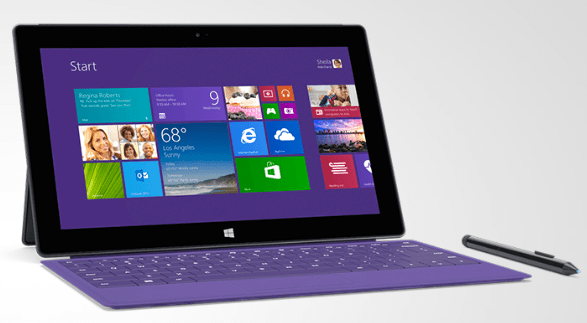
Surface Is Resurfacing

You may recall Microsoft’s Surface–kinda looks like an iPad, but it’s a real Windows 8 computer in a very thin portable package. As an iPad user, I am jealous of the Surface’s nicely designed flat keyboard, and the way it’s built into the iPad-like front cover of the device.  I like the way Windows 8 looks, but the story fell apart for me when I realized that so much of Windows 8 is, sadly, a lot like Windows 7, which was too much like earlier versions of Windows for me to switch back to the Microsoft side.

Surface2-ProWell, it may be time to reconsider. The new Surface 2 and Surface 2 Pro are coming, There’s a new metallic look that brings the device into the iPad category, at least in terms of the way it looks and feels. Think in terms of a MacBook Air when you consider that the SSD drive (the solid state drive) can be upgraded to 500 GB, and the Haswell (same as Air) processor is fast, efficient, and gentle on battery life. It costs nearly a thousand dollars ($899, and that’s not fully loaded)–seems a bit high to me–but it comes with some free cloud storage, and a free year of international Skype calling, which may turn this into a terrific deal for some users. (The ordinary Surface 2 has lesser specs and costs about half as much, still quite a bargain for someone who adores Windows 8, full computer functionality and an iPad-style form factor).

The “Touch Cover” is much improved, too, with many more sensors for an experience that feels both more reliable and more like a true computer keyboard. Given the price of the whole device, I think the cover should be part of the package, and not a $100+ add-on. At perhaps twice the price (price not yet announced), here’s something very cool: a Power Cover–that is, a Touch Cover with a built-in battery supply that you can use to nearly double the computer’s own battery supply. Very nifty idea.

And, there’s a dock with a USB 3.0 jack, and so on. Gee, I wish there was something just like that for an iPad–sometimes! At other times, I find myself quite happy with the well-designed, deeply limited range of options for the iPad. It does what it does, it does the job about 98% of the time, and it’s both reliable and easy. When I see a Windows computer anywhere nearby, “easy” is rarely a word that comes to mind, but I’m the first to admit that, after decades of life as an Apple guy, I may not be seeing things clearly.

If you’d like to know more about the new Surface products–the Surface 2 and the Surface Pro 2, try these stories:

Tech Crunch: Meet Microsoft’s Surface 2 and Surface 2 Pro

The Verge:  Hands-on with Microsoft’s New Tablet Powerhouse

PC Magazine: Microsoft Surface 2 vs. iPad Showdown

USA Today: Microsoft’s Surface Pro 2: So Right But So Wrong


Accessories After the Fact

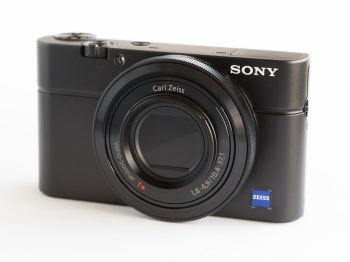
It was time to buy a new digital camera, and I think I’ve made a very good decision with Sony’s RX-100. This is a remarkably small, convenient, and capable product: 20 megapixels; a ring around the lens for manual focus (or other uses that I can easily set through menus); very good image quality; the ability to shoot RAW as well as JPG images; panoramic images; very good low light sensitivity with little visible grain; the list goes on. (In fact, one very good place to read about this, and other digital cameras is Digital Photography Review.

Here's an example of the level of detail offered by Digital Photography Review. Their 10+ page review of this camera is typical of their excellent work--the site is the best source of information about digital cameras on the web.

Here’s an example of the level of detail offered by Digital Photography Review. Their 10+ page review of this camera is typical of their excellent work–the site is the best source of information about digital cameras on the web.

Before I bought the camera, I studied review of the RX-100 and comparable cameras on the dpreview.com website.  I found a newer model, RX-100 II, but decided to save the extra $150 and forego the tilting rear screen and a few other interesting features.

As I started using the camera, I began to understand why this camera was so well-reviewed. And I began to understand what it was, well, missing.

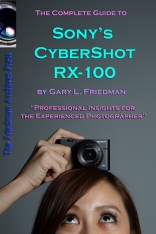
First and foremost, the camera comes with a pretty crumby manual. Having spent over $500 on a camera, it seemed reasonable to assume that Sony would tell me how to use it. I poked around on the web, and found a terrific solution to my dilemma. Imagine: a 400+ page book, fully illustrated, written specifically for people who bought the Sony RX-100. Unbelievable, but true. Turns out, this is one of a product line of ebooks from a small publisher, Friedman Archives.

Friedman-bookThose who follow digital photography will note that each of Friedman’s books addresses the needs of a more sophisticated photographer: the Sony RX100 takes its place beside the Olympus E-M1, the Fuji X100S, the Sony NEX-7 and other better speciality cameras. All of these cameras are packed with features, and these books provide an extraordinary amount of information and an abundance of visual examples, written in a style that is easy to understand. There is little tech-talk in these books. In fact, there is personal advice, written, in many cases, by Gary Friedman, who manages this small publishing operation. I read the Sony RX-100 book from cover to cover, then re-read sections of it. I loved Gary’s rundown on the settings that he uses for shooting, and the variations that he suggests for special shooting situations. Take a moment to consider  this: there are dozens of available settings, and this author not only takes the time to explain how to use each KONICA MINOLTA DIGITAL CAMERAone, but also how and why he selects, for example, “Drive Mode: ‘Single Shooting,’ unless I’m shooting either sports or grandchildren, in which case it’s ‘Continuous’ (with a lot of image deletions afterward. For more see page 90; or “Red Eye Reduction: I hate this feature. Off. Page 205.” or “Face Priority Tracking: Do you want the camera to give priority to faces when using Tracking Focus. I keep it On because, when shooting home movies, this feature can help the camera make better decision. Page 222.” Gary is a fine teacher. I keep the book on my iPhone (most smartphones include pdf readers) so that I can take my teacher along with me on every shooting expedition. (A great comfort.)

I cannot imagine buying an RX-100, or any other high-end camera, without also buying the how-to book from Friedman Archive. (Highest possible recommendation!) Still not sold? Have a look at the (many) sample pages from this book that Gary includes on his web site.

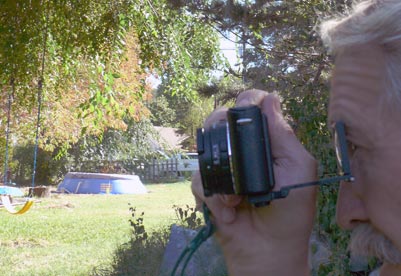
Another necessity: a viewfinder. Problem is, this camera has no way to attach a viewfinder. Except, perhaps, the tripod screw hole at the bottom of the camera? Here’s a clever entrepreneur at work. The company and product are called ClearViewer. Basically, what you’re buying is a magnifying glass that can be held parallel to the rear LCD screen, or folded up and away when it’s not in use. I place my eye directly against the ClearViewer magnifier, and sure enough, I can see the whole rear screen in tremendous detail. This is useful for settings, for focus, for composition–well, I don’t need to sell you on the idea of a camera viewfinder. On the plus side, this is small, inexpensive (under $40) and utter transforms the process of taking pictures with a compact digital camera. I can comfortably suggest that every serious compact camera user should own one.

Clear Viewer Tripod(For cameras with a hot shoe–the place where you would insert a flash, a similar model is available. The difference: the magnifier is suspended from the top, not connected to the bottom of the camera.)
ClearViewer is a great idea, very useful, small enough to carry everywhere (without even removing it from the camera), but I sure wish there was a deluxe model, one with a better magnifying lens. Still, this is a very useful invention, and it always comes along with my camera.

But wait! There’s more!!

One of the bizarre design non-features of many digital cameras absence of a place to screw-in a filter. Why does that matter? First, when shooting outdoors, you can both deeper sky colors, eliminate glare, and generally improve the whole image by shooting through a polarizing filter. And, in case you want to shoot with increased depth-of-field, which is useful if you like blurry backgrounds or silky smooth shots of babbling brooks, you may wish to shoot through a neutral density filter. (On the RX-100, this is a near-necessity because the camera’s few wide-open f/stops are available only with the widest-angle uses of the built-in zoom).

So how do you attach a filter to a camera that doesn’t accept filters?

Sony solved the problem with an adhesive add-on ring that must be carefully placed on the front of the camera, around the lens. I looked at Sony’s solution and instead opted for a slicker version of the same idea, this one from a small company called Lensmate. This video explains how the system works in detail, but here’s the essence: a small plastic rig allows you to precisely place the adhesive ring on the front of the camera; the ring (now part of the camera) is built to accept a bayonet mount (turn and snap into place–easy!); a second ring attaches to the bayonet mount and to a 52mm filter. Quick, simple, and it works.

Here’s a look at the Sony RX-100 with the adhesive filter ring attached, ready to accept the bayonet-and-filter assembly (you will not be able to see the ring very easily–it’s quite small and unobtrusive). The video link (above) also takes you to a lot of information about this product–I love small companies because they work hard to satisfy the customer.

rx100 website-1643

Lensmate offers after-the-fact accessories for many of the same cameras that are covered in Mr. Friedman’s books. More than filter adapters, they also offer grips, thumb rests, straps, and lots of other useful stuff that might have otherwise escaped your attention.

One remarkably good idea is a grip that attaches to the front of the RX-100 and, well, allows most people a more secure sense that their small $500+ box is well-in-hand. The distinguished, popular and versatile maker of these camera grips is a man named Richard Franiec whose products are available through his own kleptography website as well.

rx100gripThere’s a good closeup look at the grip over on the left side of the camera (compare this to the grip-less version in the smaller image a paragraph or so up the page). The grip is meticulously designed, and, like the filter ring, it relies upon a super-strong, super-reliable adhesive. Once again, there is an installation video, a suggested rehearsal process before making the connection between grip and camera, and a pride in doing things right. It feels good to carry the camera with the grip, in part because it’s well-made and in part because you know that it’s the work of a man who identified the smallest possible niche within what is already a niche market, and built himself a business. It’s uncommon for grips to be reviewed, but Franiec can boast several, all quite positive. Here’s an example.